Ratecki March (reblog)

Tomorrow I fly to Thessaloniki to join the March for Aleppo for some talking (and not walking) days. I do not know what we shall talk about but I will suppose it will be that…

Janusz Ratecki

Since 26th december I have been marching for peace with #CivilMarchForAleppo. We started in Berlin, and daily, with only small stops in big cities, we crossed many borders, met thousends of people. The march is 4+ months old and certainly it has reached its maturity. After 4 months of non disrupted travel I decided to return to Poland, to work, to take a deep breath, to see the situation from the oustide. I will return on 26/27 May to Greece to continue my journey.

At home, the questions about the identity of the march appeared with a double intensity. Why do I march? What is our purpose? Do I (we) march for Aleppo or to Aleppo? Or both? What can we change with our marching and which of our plans can we realise?

 Civil March For Aleppo 03.03.2017 Photo Janusz Ratecki

People used to ask me the same questions all the time. Why do you want to enter the war zone? Is it possible? And what if someone is hurt or injured? Do you think you can change someting? There are hundreds of those questions, and even though we discucssed it on the march, on daily basis, we havent reached yet a common decision. Nor we achieved peace in our small group.

If you feel that I am complaining, well I am not. I am hoping. I hope this march will change again, as it changed many times before. I wish this march will get a proper leader who will take the responsibility of taking the crucial decisions. I hope this march will, once more, gain the spirit, the energy and the global audience it deserves.

Foto Marek Kowalczyk

I hope we will share the peace message instead of run. Running, to be as fast as possible, to a yet unknown destination is kind of desperate. I hope no one will suffer in the march group because other people force their ideas. I hope we will reach peace to share it among others. I hope we will not leave anyone behind.
Last but not least, I wish we will find a good ending to our project.

Hope dies last.

Author is a freelance photographer interested in human rights. At the moment taking part in #civilmarchforaleppo

Berlin, you are so wonderful

Since April 1st, 2017

For Jacek with many thanks for telling me about

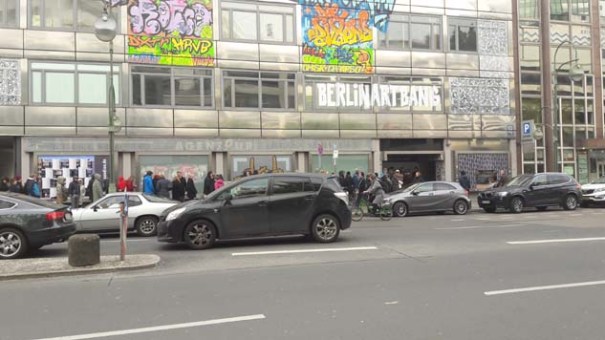
It is how The Haus is looking now. And do not think, I do not know how to write the house. I know. It is it’s name: The Haus.

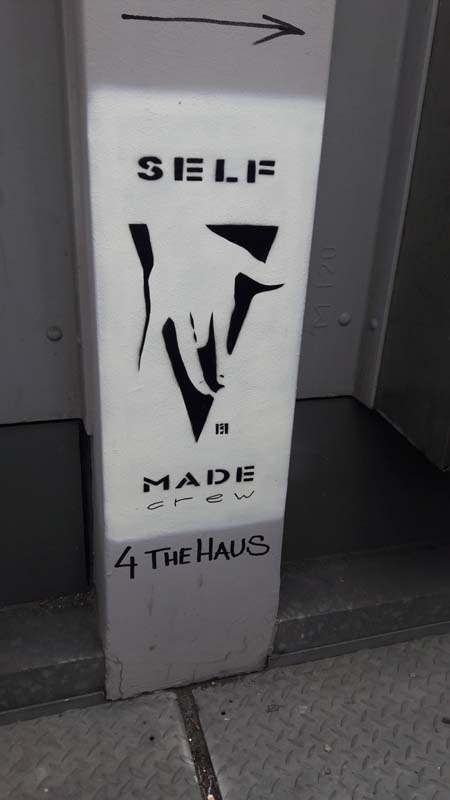
It was given to the artists and artist’s groups for doing what they like all over the house. In every room and space in the entire building. Five floors. Staircases, corridors, toilets, ceilings, walls, windows, rooms.

108 dope artworks (spaces) are waiting to be seen, to be experienced and to be memorized by you. Every single piece is created by one of the 165 artists from Berlin and all over the world. But be aware that THE HAUS is created to be destroyed – in the end of May the gallery is going to close and the wrecking ball will follow.

Visit!

THE HAUS – BERLIN ART BANG
Nürnbergerstrasse 68/69
10787 Berlin – Germany

 Visit it now because later will be to late!

THE PHOTOS

Please do not take any pictures in THE HAUS. Enjoy the art, the atmosphere and the moment. Look through your eyes and not through the screen of your phone. Every visitor gets a bag for his or her phone at the entrance. Cameras are not allowed. Please respect the artists and this rule – it’s totally worth it.

 So I did pics only from outside. For the other pictures just look HERE: making the art – or HERE: pieces of art – or HERE: the crew.

It is how The Hause will be look like.

THE OPENING HOURS

 Tuesday to Sunday  // 10.00 am to 8.00 pm – last entrance between 18.30-19.00

THE LIMITATION

Only 199 persons can visit THE HAUS at the same time – please note that you maybe have to wait.

O yeah! I waited 2 hours. And it was so cold in Berlin! 6 degree and icy wind! And please notice the line in front of the building.

THE ENTRY

Pay what you can and what you’d like to – THE HAUS is a place for everybody who wants to know how to experience art in a proper way.

I spend 2 hours visiting all spaces in The Hause. It is just a big big playground for street artists. A lot of graffiti. What I liked? Everything, but especially:

The room made of moos with the white table staying there with a laptop on it – author: Senor Schnu.
The room od mirrors by Wizet.
The room made by Notes of Berlin with so many funny or sad notes founded in Berlin and just taken or photographed.
And a wonderfull she artist – Anna Bengard – with blue hair, who made the room number 301. Her art is a horror, I mean, she pictures horror, and it is a big deep black hole between her looking like and that what she is creating…


Hi stranger

Hi stranger ist ein Kunstprojekt von Kerstin Lepore, amerikanischer Filmanimatorin, wurde schon von 1,5 Milionen Zuschauer angeklickt. Das geschlechtlose Knetwesen von Lepore sieht wie ein Wurm aus. Ist es ekelhaft oder androgyn modern?

Hi stranger to projekt artystyczny amerykańskiej autorki filmów animowanych Kerstin Lepore. Biała bezpłciowa istota z modeliny wygląda jak blada gąsienica i jest (chyba) odrażająca, ale może raczej wyraża nasze marzenia o androgynicznej ponadpłciowej równości. W każdym razie film obejrzało już 1,5 miliona widzów.

Civil March in Sarajevo

Civil March for Aleppo has reached an important milestone. We are in Sarajevo now.

It is a very special time here. The city is about to commemorate 25 anniversary of the siege. We decided to pay a tribute to the victims in a symbolic way, leaving our footprints on the ground.

#CivilMarchForAleppo

Der Zivile März für Aleppo hat einen wichtigen Meilenstein erreicht. Wir befinden uns jetzt in Sarajevo.

Es ist eine sehr besondere Zeit hier. Die Stadt wird etwa 25 Jahrestag der Belagerung begehen. Wir haben beschlossen, die Opfer auf symbolische Weise zu würdigen und unsere Spuren auf dem Boden zu hinterlassen.

Reblog: Breakfast in the literature

 And please do not tell me every year the same that you hate Valentine’s Day, because… just read HERE if you can (it is in Polish), but anyway look for Valentine’s Day by Samuel Pepys, Shakespeare (Hamlet) and Picknick at the Hanging Rock to know better…

Waverley, by Sir Walter Scott At the home of Baron Bradwardine, Waverley enjoys a true Scottish breakfast: “The table loaded with warm bread, both of flour, oatmeal, and barleymeal, in the shape of loaves, cakes, biscuits, and other varieties, together with eggs, reindeer ham, mutton and beef ditto, smoked salmon, and marmalade.” There’s porridge with cream and buttermilk too.

Ulysses, by James Joyce Leopold Bloom sees breakfast in the butcher’s shop window. “A kidney oozed bloodgouts on the willowpatterned dish: the last.” We see and smell it cooking in butter and pepper, almost burnt when it goes upstairs to his wife, but just saved. “He tossed it off the pan on to a plate and let the scanty brown gravy trickle over it.”

(we also wrote about that breakfast)

Crotchet Castle, by Thomas Love Peacock The Rev Dr Folliot expresses his breakfast preferences. “Chocolate, coffee, tea, cream, eggs, ham, tongue, cold fowl, all these are good, and bespeak good knowledge in him who sets them forth: but the touchstone is fish.” The divine then composes his spirits “by the gentle sedative of a large cup of tea, the demulcent of a well-buttered muffin, and the tonic of a small lobster.”

From Russia with Love, by Ian Fleming James Bond’s breakfast, supposed to demonstrate his fine taste, is a memorable exercise in prissiness. Coffee from De Bry in New Oxford Street, toast with Norwegian heather honey from Fortnum’s, a single brown egg from a French Marans hen.

Och no, dear Guardian, let’s have it a bit longer:

When in London, Bond maintains a simple routine. Sitting down to The Times, he breakfasts on two large cups of “very strong coffee, from De Bry in New Oxford Street” brewed in a Chemex coffee maker and an egg served in a dark blue egg cup with a gold ring round the top, boiled for three and a third minutes. There is also wholewheat toast, Jersey butter and a choice of Tiptree ‘Little Scarlet’ strawberry jam, Cooper’s Vintage Oxford marmalade and Norwegian Heather Honey from Fortnum and Mason, served on blue Minton china. Breakfast is prepared by May, his Scottish housekeeper, whose friend supplies the speckled brown eggs from French Marans hens.

Yeah, an English breakfast is what Fleming knew, but when he wrote that Tatiana Romanova,  Russian she agent, eat in Moscow yoghurt for supper, you could see, he had no idea at all, what was eaten in Moscow in fifties i.e. in communistic time; for sure no yoghurt as American girls was doing those times.

However In Russia with love Bond will have also a Turkish breakfast:

The yoghourt, in a blue china bowl, was deep yellow and with the consistency of thick cream. The green figs, ready peeled, were bursting with ripeness, and the Turkish coffee was jet black and with the burned taste that showed it had been freshly ground.

The Hobbit, by JRR Tolkien Bilbo spends much of his adventure lamenting the lack of a decent breakfast, while the only real morning feast is consumed by Gandalf: “Two whole loaves (with masses of butter and honey and clotted cream) and at least a quart of mead,” finished off, of course, with a delicious breakfast pipe of tobacco.

(well sure, we also wrote about delicious eating by Tolkien)

Jane Eyre, by Charlotte Brontë On Jane’s first morning at Lowood School, the pupils are served basins of something hot, which “sent forth an odour far from inviting”. “I devoured a spoonful or two of my portion without thinking of its taste . . . burnt porridge is almost as bad as rotten potatoes; famine itself soon sickens over it”.

(times are changing, burnt eating is “in” 2017, at least in Berlin 🙂 look HERE)

“Filboid Studge, the Story of a Mouse that Helped”, by Saki A ghastly breakfast cereal called Pipenta is rebranded as Filboid Studge, with an irresistible ad campaign. “One huge sombre poster depicted the Damned in Hell suffering a new torment from their inability to get at the Filboid Studge”. Soon it is every Puritan’s breakfast.

Jeeves Takes Charge, by PG Wodehouse Bertie’s relationship with Jeeves begins when the new valet arrives to find his employer badly hungover and offers him a concoction of egg yolk, Worcestershire sauce, cinnamon oil, cognac and other mystery ingredients. The restorative effect is immediate and a partnership is sealed.

Gravity’s Rainbow, by Thomas Pynchon Pirate Prentice’s flat fills with “the fragile, musaceous odour of Breakfast, permeating, suprising, more than the color of winter sunlight”. He serves up banana waffles, banana croissants, banana kreplach and banana jam. In a giant crock he has bananas fermented with honey and Muscat raisins to make banana mead.

The Warden, by Anthony Trollope Just one of the ecclesiastical morning feasts detailed in Trollope’s fiction: “there were eggs in napkins, and crispy bits of bacon under silver covers; and there were little fishes in a little box, and devilled kidneys frizzling on a hot-water dish”. As well as the best tea, the blackest coffee, and the thickest cream, on top of every kind of bread and muffin and crumpet.

(Thank you, Guardian!)

Ubranie i śniadanie – wpis pozbierany

civil-march-for-aleppo
Julita Bielak i Ewa Maria Slaska

Najpierw był mail od Julity, a w nim zdjęcie:

buty-i-skarpety

Była to odpowiedź Julity na podawane przez Facebooka informacje o tym, że przez kilka dni brałam udział w obywatelskim marszu dla Aleppo.

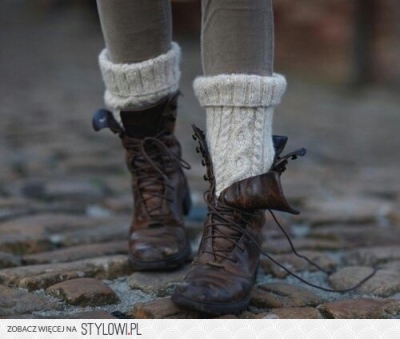
I taki podpis: Nie czapka, nie szalik, ale buty, jakie Ewa Maria założyła buty, jak nogi, jak stopy, myślałam.

Zachwyciło mnie to zdjęcie. Tak! Tak zawsze się chciałam ubierać, taka być! Nieporządna i przygotowana do maszerowania w momencie, gdy wstałam z łóżka i odgarnęłam z oczu potargane włosy. Trochę tylko szkoda, że teraz stylistka może tak wystylizować dziewczynę, która może wcale nie lubi być nieporządna i wcale nie jest, jak to określał mój były mąż, “lekka w nogach”.

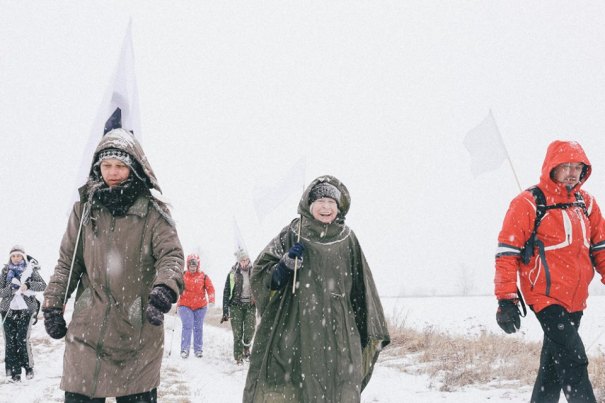
Niestety ja nie wyglądałam tak stylowo. No, ale padał śnieg i wiał wiatr. Nikt z nas nie wyglądał fajnie.

jawpelerynie

1 lutego 2017. Droga do Pohorelic na Morawach. Foto Janusz Ratecki

Na zdjęciu od lewej Anka, ja, Krzysztof, z tyłu, między Anką a mną, Darwina i Jacek. Nie jestem pewna, ale może być, że dziewczyna idąca samym skrajem zdjęcia po lewej to Magda  Benbenek.  Wspaniali ludzie, i akurat, przez przypadek (?), ci o których chcę coś napisać, będę pisać przez kilka tygodni i publikować tu w soboty – bo soboty będą teraz na blogu przez jakiś czas “marszowe”.

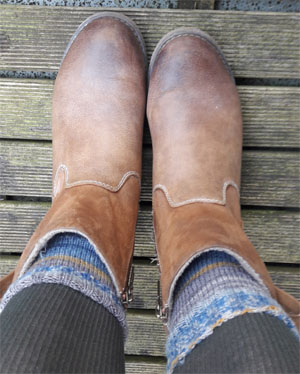
buty-ewyWróćmy więc do pytania Julity, buty, jakie buty i skarpety?

Buty firmy St. Oliver, skórzane, ciepłe, na futerku. Dobre buty, nogi w nich nie przemakają, no, chyba że się, jak ja ostatniego dnia, wejdzie w zaspę lekkiego puszystego śniegu, taką po kolana. Ten lekki śnieg lekko wpadnie za cholewki, przemoczy skarpety i rajstopy, i na to nie ma już żadnej rady, trzeba maszerować z mokrymi nogami. Buty zwykłe, dobre, firmowe, nowe, mocne, kupione kilka tygodni wcześniej z myślą o marszu.

Skarpetki natomiast są całkowitą odwrotnością, są stare, specjalne, oryginalne i robione właśnie dla mnie.  Kilka lat temu dostaliśmy z wnukiem takie skarpetki w partner look. Były tak zachwycające, że o nich wtedy napisałam na blogu.

…na zdjęciu stópki Antosia i moje (choć – czy dorośli mają “stópki”?) w skarpetkach z zakresu… historii sztuki. Zrobiła je dla nas znajoma pani, która korzystała przy tym z włóczki niemieckiej firmy Opal, produkującej wełnę na swetry i skarpetki już w kłębkach wielokolorową, a inspiracją doboru kolorów i ich kolejności są dzieła sztuki. To co my mamy na stopach, Antoś i ja, to… obraz Van Gogha “Gwiaździsta noc”…

Reszta też została opisana w mailu do Julity:

rajstopy thermo z pobliskiego sklepu z cebulą i chlebem (wiec to jasne, że jak poszłam po jajka, to kupiłam rajstopy)
spodnie stare z lumpeksu, ostatniego dnia się podarły, wyrzuciłam w hotelu w wiedniu – szare wełniane
sweter ogromny szary wełniany z lumpeksu, się na szczęście nie podarł
kurtka stara puchowa od koleżanki – koleżanka wyrzuciła kurtkę, a kurtka wyrzucała z siebie maleńkie piórka i przyczepiała je do swetra, przez co zapewniała masę kontaktów międzyludzkich, bo wszyscy mnie skubali
peleryna przeciwwiatrowa i przeciwdeszczowa – jeszcze z trasy do santiago de compostela, zapomniana w aucie ostatniego dnia  i na odległość przekazana innej osobie, dalej wędrującej w śniegu
no i najlepsze – sukienczyna, 5 lat temu była nowa, kupiłam ja za całe 10 euro, bawełniana długa czarna z długimi rękawami prosta, nosiłam w piątek świątek i niedzielę, jako małą czarną do opery, w potrzebie jako koszulę nocną, często jako okryjbidę na wędrówki, czasem jest ręcznikiem, czasem szalikiem, czasem poduszką, podarta w 17 miejscach, ale wciąż jej używam, najlepszy zakup na świecie

No a na to Julita odpowiedziała tak zaskakująco, że już dziś nie będzie więcej o marszu, zapraszam na następne soboty, dziś będzie jeszcze tylko o ubraniach i śniadaniach;

Dziękuję, Ewo Mario.

Przyjęłam list jak wielki dar, wspaniały prezent.

Aż się prosi, aby treść listu ująć we wpis, może i Twój niedzielny, może ważny codzienny. Bo ubranie, jak śniadanie, bywa literackie: /…/Dopiero po jakimś czasie zrozumiał, że Ania nie jest ubrana jak inne dziewczęta. Przypomniał sobie, że Maryla zawsze szyła dla Ani sukienki z ciemnych materiałów i według jednego fasonu. Widząc Anię w otoczeniu koleżanek, uznał, że dziewczynka powinna mieć choć jedną ładną sukienkę. Postanowił kupić jej ubranie w podarunku na Gwiazdkę. Obawiając się, że Maryla skrytykuje jego pomysł, poszedł po pomoc do pani Linde. Małgorzata zgodziła się uszyć sukienkę dla Ani według najświeższej mody. W wigilię pani Linde zjawiła się na Zielonym Wzgórzu, przynosząc prezent dla Ani. Maryla pobłażliwym tonem stwierdziła, że sukienka jest zbytkiem, który rozbudzi próżność Ani. Parę minut później z facjatki zbiegła Ania, radosnym głosikiem życząc wszystkim wesołych świąt. Mateusz niezręcznie rozwinął z papieru sukienkę i podał ją dziewczynce. Ania wpatrywała się z prezent w uroczystym milczeniu i nagle rozpłakała się.   

Płakałam i ja.

Nabokow, który studentom kazał opisywać zawartość torebki Anny Kareniny, co jego zdaniem było kluczowe dla zrozumienia postaci.

Stare porzekadło mówi “pokaż swoją torebkę, a pokażę ci, kim jesteś”. Ta sama maksyma mogłaby śmiało tyczyć się artystów baletu, którzy przez cały dzień prób nie rozstają się ze swoim przepastnym workiem bądź torbą. “Skarby”, które w nich ukrywają, mają czasem bardzo nieoczywiste zastosowanie. – Tancerze noszą w nich m.in. różnego rodzaju taśmy, małe piłeczki do rozmasowania mięśni, rolki do pracy nad stopą, ochraniacze, ogrzewacze na kostki, wodę, plastry, igłę z nitką, żeby móc zszyć coś przy baletkach czy pointach – wylicza Sokołowska-Boulton.

Na zakończenie dołączam jeszcze znaleziony u Łukasza Szopy (szefa KODu w Berlinie), poety, wiersz o zimie i śniadaniu oraz śniadaniowe zdjęcie z marszu. Ta z kubkiem to ja. Mam na sobie wszystkie opisane powyżej elementy stroju marszowego plus kolorową torbę płócienną, też zapomnianą w samochodzie do Wiednia.

sniadanienatrawie

Krzysztof Nowak, Śniadanie na trawie 🙂

William Carlos Williams

BREAKFAST

Twenty sparrows
on

a scattered
turd:

Share and share
alike.

Sara Teasdale

Andrzej Rejman

Kobieta i Poetka

84 lata temu, w niedzielę 29 stycznia 1933 roku zmarła w swoim apartamencie w Greenwich Village przy Piątej Alei w Nowym Jorku poetka Sara Teasdale. Jak się potem okazało przyczyną śmierci mogło być przedawkowanie środków nasennych.

sara-teasdale1Jak podaje dzień później The New York Times Sara Teasdale wróciła do Nowego Jorku z podróży do Anglii już chora na zapalenie płuc, a jej stan nerwowy pozostawiał wiele do życzenia. Od dawna cierpiała na chroniczną depresję, i, mimo iż w tym okresie była jedną z najbardziej znanych amerykańskich poetek, jak podają jej biografowie – nie czuła się szczęśliwa.
“Woman and Poet” – taki tytuł ma książka Williama Drake’a wydana przez Harper & Row Publishers w San Francisco w 1979 roku.
Jest to jedna z dwu ważnych biografii książkowych Sary Teasdale, uzupełniająca niejako wcześniej wydaną biografię Margaret Haley Carpenter (Sara Teasdale, A Biography, M.H.Carpenter, Pentelic Press, Norfolk, Virginia, 1960)
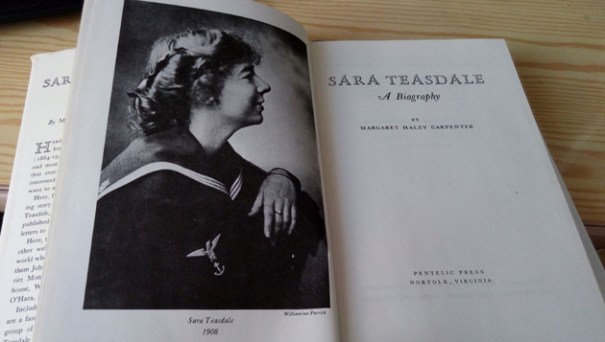
sara-teasdale2
Sara Teasdale miała w swojej epoce rzesze wiernych czytelników, a jej impresyjna poezja była i jest wciąż źródłem wielu inspiracji dla twórców muzyki.
Z poezją Sary Teasdale zetknąłem się w roku 2004, poszukując materiału do nowego projektu poetycko muzycznego. Zajrzałem wówczas głębiej do zasobów amerykańskiej poezji kobiecej z wczesnych lat XX wieku. Nie chciałem ograniczać się jedynie do pięknych ale i trudnych wierszy Emily Dickinson, które ze względu na esencjonalny ładunek filozoficznej treści powinny być pozostawione niejako “samymi sobie”.

W tym czasie współpracowałem z Jerzym Menelem*, tłumaczem, poetą, twórcą piosenek.
Był to poliglota, człowiek barwny, niezwykle pracowity i aktywny. Wieczorami, po powrocie z całodziennych tłumaczeń w warszawskich korporacjach, zajmował się do późna w nocy pracą twórczą, tłumacząc, śpiewając i grając, nieustannie porządkując archiwa i tworząc następne…

Dla Ewy Górskiej, utalentowanej słuchaczki jednego z warszawskich studiów piosenki przetłumaczył dwa wiersze Sary.

NASTROJE
Przekład/adaptacja: Jerzy Menel

Deszczową jestem kroplą,
Zmęczoną zniżam skroń,
Bądź dla mnie kwietną łąką,
Zieloną ziemią bądź!

Stęsknionym jestem ptakiem,
W błękitu płynę toń,
Obłokiem stań się dla mnie,
Świetlistym niebem bądź!

tak śpiewa tę piosenkę Ewa Górska (muz. Andrzej Rejman)

https://www.reverbnation.com/widget_code/html_widget/artist_1513797?widget_id=55&pwc%5Bsong_ids%5D=8628124&context_type=song

MOODS

I am the still rain falling,
Too tired for singing mirth–
Oh, be the green fields calling,
Oh, be for me the earth!

I am the brown bird pining
To leave the nest and fly–
Oh, be the fresh cloud shining,
Oh, be for me the sky!

LEPIEJ TO ZAPOMNIEĆ
Przekład/adaptacja: Jerzy Menel

Lepiej to zapomnieć, ogień zwolna też zagaśnie,
Jak odchodzi w dal więdnący kwiat,
Lepiej to zapomnieć na dobre, na zawsze,
Czas – przyjaciel nasz, z nim przybywa lat.

I gdy spyta ktoś, mów: przeszło, minęło,
Skrył to deszcz i grad –
Jak kwiat, jak ogień, nad ziemią mgła,
Odbity w śniegu ślad…

LET IT BE FORGOTTEN

Let it be forgotten, as a flower is forgotten,
Forgotten as a fire that once was singing gold,
Let it be forgotten for ever and ever,
Time is a kind friend, he will make us old.

If anyone asks, say it was forgotten
Long and long ago,
As a flower, as a fire, as a hushed footfall
In a long forgotten snow.

Sarę Teasdale tłumaczyły potem także Maria Hoffman oraz Anna Ciciszwili.

KRÓTKA CHWILA
tłum. Anna Ciciszwili

To krótka chwila i mnie już nie będzie,
Lecz w moich pieśniach przetrwa życie moje,
Jak krucha piana wzdyma się i przędzie
Z odejściem fali, która w morzu tonie.

Te dni i noce w pieśni płonąć będą,
Jasną kruchością piany napuszonej,
Żyjąc światłością zanim nie odejdą,
By wrócić w nicość, która jest ich domem.

A LITTLE WHILE

A little while when I am gone
My life will live in music after me,
As spun foam lifted and borne on
After the wave is lost in the full sea.

A while these nights and days will burn
In song with the bright frailty of foam,
Living in light before they turn
Back to the nothingness that is their home.

TAM NA KOŃCU ŚWIATA
tłum. Maria Hoffman

Opustoszałe wybrzeża świata, to nasze samotnie
Plaże bez owoców, jałowe bez kwiatów
Tam z trawami morskimi, znękanymi od wiatrów,
Tam też godzin życia odmierzanie taktów..

Nikt nie będzie nam więcej zazdrościł bogactwa
Tam na końcu świata, nie zadba o resztę
Ślady stóp ostatnie, zagubione w piaskach
Niespokojne morze, pochłonie i zetrze.

WORLD’S END

The shores of the world are ours, the solitary
Beaches that bear no fruit, nor any flowers,
Only the harsh sea-grass that the wind harries
Hours on unbroken hours.

No one will envy us these empty reaches
At the world’s end, and none will care that we
Leave our lost footprints where the sand forever
Takes the unchanging passion of the sea.


* Jerzy Menel
Studiował chemię, mechanikę, aeronautykę, potem arabistykę, iberystykę, a ponadto ekonomię, handel zagraniczny, dziennikarstwo… Przede wszystkim jednak był tłumaczem. Potrafił przekładać niezwykle skomplikowane teksty techniczne, jak i poetyckie. Mówił biegle po francusku, angielsku, hiszpańsku, niemiecku, arabsku. Tłumaczył oczywiście z tych i na te języki, ale także z portugalskiego i włoskiego. Przełożył na polski dzieła wszystkie Brassensa i niezliczone piosenki Jacques’a Brela, Edith Piaf, Serge’a Gainsbourga, Charles’ a Treneta, Borisa Viana. Ale również Boba Dylana, Leonarda Cohena, Paula Simona, Jamesa Taylora, Paolo Conte. Był też autorem przekładów wielu polskich piosenek na francuski. Odszedł 30 listopada 2006 roku w Brukseli, skąd miał właśnie wracać do Polski po Międzynarodowym Kongresie Wynalazców, na którym pracował jako tłumacz.


Merry Ewa and Silly Billy in Berlin

Ewa Maria Slaska

Again

Again, because it is so nice to write about Silly Billy in the time when everything is not very nice… Do not forget it is November, it is cold and it is raining in Berlin, and Lars Gustavsson says us already years ago, there is entrance to the Hades somewhere in Berlin on a rainy November night…

But one knows his own tristesse and proper remedy as well… I go to IKEA an buy a black umbrella for the black protest.

And make these photo.

a-to-billy2

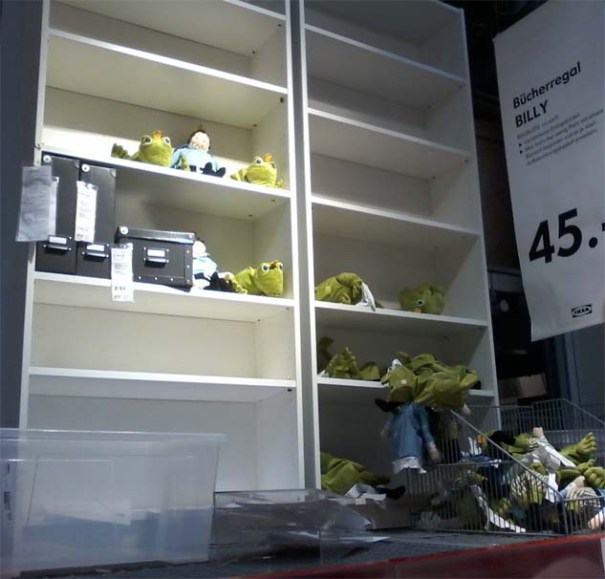
I did my shopping and stood in a long line in front of cash register as I saw the nice arranging of items, a glas, a Neapolitan flip coffee pot and a Bonsai. I liked it, so I asked a young Spanish looking man with a hair like Angelo Branduardi, whether I could make foto? You have something for drinking water or wine, I said, something to make coffee and on the top of it a plant. It looks like happy and marry life.
Yes, answered Branduardi, and in the box here I have book shelves, so the idea of happy life could be complete. O, I asked, which book shelves? Billy?

Sure, Billy…

So very nice and merry…

Then I go to visit Mo&Mi in their new flat.
O, Billy, I said.
O no, said Mo, it looks like but it is not, it is slimmer and higher than true Billy. We just bought it.

u-moniki-3billy-extra

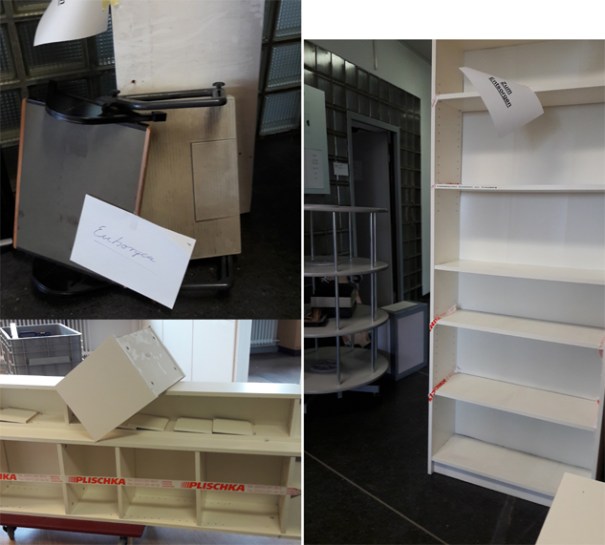
But as some are buying new Billy, the other one are throwing it away… I was in a district town hall last Friday. I saw men in overalls carrying a lot of Billys away.

Hi, I said, what happens to that good looking Billy?
Billy? asked one of workers…
Ah, I said. Never mind. What will you do with these bookshelves?
We will transport them to a public waste depony. Why you ask?
It’s pity… There are for sure people in Berlin who will like to have it. Refugees maybe…
So, do write an application to an administration office… We can’t do anything.
O yes, thank you…

billyrathausweg

I am just going back to the lift as that man stopped me again.
Listen, why did you think my name is Billy?
Me, no, oh, I see, yes, no, never mind, I just thought…

On my way home I look in the web if there are any Billys in Berlin. I got a huge gallery of mostly young men. Noblesse oblige, I will say. All those men are especially let say… billy. Sometimes even purposely done for looking like. If there is any woman in a gallery she is not silly at all. Well, do you know why? Me not…

a-to-billy

Going through “billy berlin” I found IKEA Billy on the 6th page. Small one and very modest.

How to be old?

Ewa Maria Slaska

I was invited to an event. It was in Neukölln which is since some years new hype of Berlin. Dark, wet, cold, late, Neukölln. Not a perfect combination, but OK, I was invited by one of persons making the event, and I promised to go, so I said to myself, go Ewa go. I went. I found the place looking like 25 years ago every evening location in Berlin. No colors, no pictures, everything grey or sepia, fancy trash&kitsch look. A lot of black dressed young people. The event will take place in a back room, which is quite empty. I am too early, as usual, so I find a perfect place, on a couch in the corner with a good view to speakers table. Two other women sitting at the both sides of the table, each looking at the display. Me too. A young man come to us, give some postcards first to one woman, than to the second one, explains something and goes away. I am bit surprised not understanding why he did not gave a postcard to me too? Hi you, I say, I would like… But he does not turn back to me. One of the woman explains something about him making an adv of an online journal polen-pl.eu or something like that looking for new authors… She gives me her postcard. But I do not want her postcard, I want to undestand, why I was a non existing person? No person at all.

But of course I know the explanation. I am old and therefore I do not exist. I do not know how he is able to judge it so quickly, it is dark and I have a fancy hut on, coming deep on my face, but it does not matter. I do not matter…

Five minutes after the time the room became suddenly full. My good place changes to an disaster. Many black dressed young people. Only young. I see nothing. Nobody sees me. Awkward. I feel uneasy, knowing I took a place of somebody who deserved it much more as me. They are pushing me from both sides to and fro. The event is in English, I do not mind, but I suppose it was not said on the invitation, the next sign this is only for insider.

A young woman says some nice greetings, OK it is an event for young generation but if there is somebody elder it means he or she is young. OK, nice, but no, I am not young… I would like to vanish or at least to go, but I am sitting squeezed between three or four other people in front of regular rows of chairs and all the paths out are blocked by stayers and sitters. So I sit… And listen to revelations revealing from and for a young generation…

In a break time I go… It was definitely the last time I went to such a place and to such an event. I am old and it is my time to be old. Never more I want to be confronted with such a pure exclusion.

I feel not good but it comes worse.

Then two days later I find in facebook a short text written by a young Polish woman about this event: Great evening with opposition journalists and politicians from Eastern Europe in Neukölln, Berlin. From Krytyka Polityczna/Political Critique X and Y from Hungary’s Kettös Mérce online newspaper – Z and V. And Berlin’s journalist U – always close to the pulse of the city! (sorry I took all the names away they have nothing to do with my feelings).

And that photo:

Why? Why such a photo? Underneath an explanation… There is an article in one Berlin daily about the event… The picture is chosen by the redaction, but not the comments:

babcianaprotescie

The first comment: (…) Aaa, it is a black protest.
The second: Why? You do not like when the old show solidarity to the young? They also have daughters, granddaughters (…)
The third: No, but usually the German press ilustrates the texts about East Block countries with photos of an old sad women dressed like in the communistic time…
The last one: Grandma – she only forgot to dress properly for a contest…

Yeah… It is me. Go home Grandma, go home. You do not have daughter or granddaughter, so you have nobody giving you right to speak for and nobody needs you speeking for your own.

To be continued

Parasolki Umbrellas Regenschirme

Wir protestieren heute wieder!

We do protest today again!

Protestujemy! Znowu!

23.10.2016 13:00-15:00 Warschauer Brücke Berlin

Bring your (black) umbrellas! Przynieście (czarne) parasolki! Bringt eure (schwarze) Regenschirme mit!

black-clip-umbrella
Schreibt euren Spruch drauf! Write your slogan! Napiszcie swoje hasło!
Zeichne eure Skizze! Namalujcie coś! Make your own picture!

PiS-Off

cupzgmaxyaartez

parasolkix

paniirenkaparasolkakl

parasolki6 parasolki1 parasolki2 parasolki3 parasolki4

klukos

black-clip-umbrellaKto się boi czarnej baby? piosenka /ein Protestsong (auf Polnisch) / Polish Protestsong

black-clip-umbrella

parasolki5