Różnica pomiędzy tym co może być, a tym co już jest

Ze wszystkich artystek płci wszelakiej, jakie znam, Aleksandra jest najbardziej kobietą. Dlatego to ją poprosiłam o wypowiedź na temat tego, co w sprawie aborcji dzieje się obecnie w Polsce.

rechtslage_abtreibung_welt

legenda mapa aborcjiAleksandra Hołownia

O aborcji

Fundamentaliści religijni konsekwentnie pozbawiają kobiety wszelkich praw. Watykan nie stanowi tu wyjątku. „W kościele katolickim pogarda dla kobiet zaczyna się od zakonnic będących na samym dole hierarchii. Niektórzy księża mówią, że zakonnice to współczesne niewolnice”…(1)

Jan Sarna w swym eseju Kościół i Kobiety pisze: „Kościół przez wieki miał duży wpływ na prawa stanowione w Europie, a więc i na wrogi stosunek do kobiet”. Erazm z Rotterdamu mówił, że „nauki tak nie pasują do kobiety, jak siodło do wołu…” Lekceważenie kobiet widoczne jest wyraźnie za czasów Augustyna, a Tomasz z Akwinu jeszcze to pogłębił, uważając że „Kobieta to zwierzęca niedoskonałość. Wartość kobiety polega na jej zdolnościach rozrodczych i możliwości wykorzystania do prac domowych”. Negatywny stosunek kościoła do kobiet nie uległ zmianie w naszych czasach. Jan Paweł II w liście pasterskim „Ordinatio sacerdotalis” twierdził, że jest niedopuszczalne i niezgodne z zamysłem Boga, aby kobieta mogła otrzymać święcenia kapłańskie. Pismo Święte wyraźnie mówi, że kobieta została przeznaczona na „pomoc człowiekowi”.(2)

alex (1)

Dlaczego politycy katolickich krajów europejskich, którzy znają przecież niehumanitarne i niesprawiedliwe stanowisko Kościoła, nadal kooperują z Watykanem, a nawet pozwalają rodzimym arcybiskupom i biskupom na współtworzenie praw? Episkopat pertraktujący obecnie z polskim rządem, dąży do wprowadzenia w życie ustawy, zniewalającej kobiety do przymusowego macierzyństwa. Kilka dni temu dostałam maila z prośbą o podpisanie petycji w sprawie ochrony życia każdego dziecka. Autorzy petycji pisali:

Batalia o ochronę życia dla każdego dziecka, zarówno przed urodzeniem jak i po urodzeniu ruszyła na nowo… Stwierdziłam, że w tym przewrotnym zdaniu chodzi o poparcie dla zakazu aborcji. Osobiście zabijanie dzieci po przyjściu na świat uznaję za morderstwo. Natomiast przerwanie niechcianej ciąży do 12 tygodnia ma dla mnie swoje uzasadnienie. Nie trzeba chyba wyjaśniać, ile nieszczęścia powoduje przypadkowe zajście w ciążę, wywołane choćby gwałtem, kazirodztwem lub po prostu bezmyślnością. Całkowite zakazanie aborcji zwiększa zagrożenie życia kobiet. Szukające pomocy, zdesperowane kobiety narażają zdrowie w celu pozbycia się płodu nawet za cenę więzienia. Przepisy karzące kobiety oraz lekarzy za usuwanie ciąży są bezpodstawne. Otóż Światowa Organizacja Zdrowia (World Health Organisation)(3) oraz Guttmacher Institut(4) udowodniły, że aborcja jest bezpieczna i mniej wyniszcza organizm niż poród. Wcale nie wpływa na powstanie raka piersi ani na bezpłodność. Odwrotnie – przeprowadzona pod opieką lekarską zmniejsza ryzyko komplikacji do 1%. Podczas gdy zabiegi przerywania ciąży odbyte w nielegalnych, mało higienicznych warunkach powodują rocznie śmierć 80 tysięcy kobiet i przyczyniają się do osierocenia 220 tysięcy dzieci. Embrion to nie gotowy człowiek tylko zarodek, zawierający potencjał ludzkiego życia. Istnieje przecież różnica pomiędzy tym co może być, a tym co już jest. Do 12 tygodnia ciąży ból i świadomość zarodka nie są rozwinięte. Przeciwnicy aborcji oraz kościoły katolickie często używają drastycznych zdjęć z usunięć ciąży, nie odając, że są to usunięcia późnych ciąż. Poza tym fałszywe wyniki badań współpracujących z kościołem instytutów demonizują syndrom post aborcyjny i patologizują kobiety, który znajdują się przecież w emocjonalnym konflikcie.

alex (4)

W 2016 roku w Polsce episkopat wydał absurdalne, agresywne oświadczenia dotyczące pełnej ochrony życia człowieka:

W kwestii ochrony życia nienarodzonych nie można poprzestać na obecnym kompromisie wyrażonym w ustawie z 7 stycznia 1993 roku, która w trzech przypadkach dopuszcza aborcję. Stąd w roku Jubileuszu 1050-lecia Chrztu Polski zwracamy się do wszystkich ludzi dobrej woli, do osób wierzących i niewierzących, aby podjęli działania mające na celu pełną prawną ochronę życia nienarodzonych. Prosimy parlamentarzystów i rządzących, aby podjęli inicjatywy ustawodawcze oraz uruchomili programy, które zapewniłyby konkretną pomoc dla rodziców dzieci chorych, niepełnosprawnych i poczętych w wyniku gwałtu. Wszystkich Polaków prosimy o modlitwę w intencji pełnej ochrony życia człowieka od poczęcia do naturalnej śmierci zarówno w naszej Ojczyźnie, jak i poza jej granicami…

Celowe wplątanie jubileuszu Chrztu Polski ma pobudzić patriotycznych katolików do działania popierających pełną ustawę antyaborcyjną. Plan przewiduje „wzbogacenie” kodeksu karnego o nowy artykuł, “zabójstwo prenatalne”, który miałby zostać obłożony karą od 3 miesięcy do 5 lat. Zabronione mają być również wszelkie środki antykoncepcyjne, zapobiegające niepożądanym ciążom, spirale, kondomy, tabletki a także wykrywające prawidłowy przebieg cięży badania ultrasonograficzne usg.

alexdoppel2

Moim zdaniem kler i wierni reprezentują wsteczny światopogląd. Dbając o naturalną prokreację zbytnio idealizują świat, pogrążając się w nierealności. A ich pojęcie “ochrony życia” dotyczy prób przywrócenia “starego porządku” świata, związanego z całkowitym panowaniem nad kobietami. Zatrzymajmy te rosnące wpływy polityczno społeczne tych reakcyjnych, zacofanych konserwatywnych sił.

Domagajmy się:

– Wprowadzenia edukacji seksualnej dla wszystkich
– Upowszechnienia śodków antykoncepcjnych
– Dostępu bez recepty do pigułki powodującej wczesne poronienie tkz “morning after pill”
– Nieograniczonego dostępu do legalnej aborcji
– Pełnego uznania wszystkich form współżycia
– Pomocy państwowej dla tych, którzy zdecydują się na dziecko
– Prawa do samodecydowania o własnej seksualnej tożsamości.

alex (5)Utopie religijne dążące do idealnego współgrania wszechświata i natury odbiegają od rzeczywistości. „Najpierw człowiek potem religia”, orzekli europejscy chrześcijanie w Hiszpani, Włoszech, Francji, Irlandii. Masowe protesty przeciw ustawom antyaborcyjnym odniosły sukces w Hiszpanii (5,6) we Włoszech (7) oraz Irlandii (8). W europejskich krajach katolickich pigułka „morning after pill” jest dostępna w aptekach bez recepty a aborcję zalegalizowano do 12 tygodnia ciąży. (9) Czy Polska będzie jedynym krajem w Europie bezkrytycznie respektującym wolę kościoła? Czy pogodzimy się z rozwojem techniki i manipulacji genetycznych? Dziś usunięcie ciąży nie musi już być zabiegiem chirurgicznym.

Wynaleziono tabletki bez komplikacji przerywające wczesne ciążę -”morning after pill”. Poza tym od lat trwają eksperymenty dotyczące wiecznego życia. Jednym z nich jest klonowanie. Rodzą się dzieci z probówki. A kobiety w ogóle nie muszą korzystać z usług partnera. Wpajany latami przez publikatory model: mamusia, tatuś, dziecko nie zawsze się sprawdza. I tak na przykład moja duńska znajoma kupiła sobie spermę w banku. Za pomocą sztucznego zapłodnienia została samotną szczęśliwą i dobrą matką z wyboru. W dobie dzisiejszej nie musimy też same rodzić własnego potomstwa. W tym celu możemy wynająć cudze łono. Tak właśnie uczyniła lubiana amerykanka, aktorka Sarah Jessica Parker („Seks w wielkim mieście”) (10).

Pójdźmy z duchem czasu a religia niech zostanie gdzieś na boku. Potraktujmy Watykan jak skansen minionych epok.

alexdoppel1

Przypisy:

  1. http://www.wysokieobcasy.pl/wysokie-obcasy/1,53662,19645426,dokad-ida-nieposluszne-zakonnice.html?disableRedirects=true
  2. http://www.humanizm.net.pl/kik.htm
  3. http://www.who.int/en/
  4. https://www.guttmacher.org/

5. https://www.angloinfo.com/spain/how-to/page/spain-healthcare-pregnancy-birth-termination-abortion

6. https://www.opendemocracy.net/5050/liz-cooper/abortion-rights-victory-for-women-in-spain

7. http://www.katholisches.info/2016/01/19/gender-ideologie-in-italien-wird-dagegen-mobil-gemacht-obwohl-der-papst-es-nicht-will/

8. http://derstandard.at/2000027911077/Es-regt-sich-Widerstand-gegen-das-irische-Abtreibungsverbot

9. https://www.loc.gov/law/help/abortion-legislation/europe.php

10. http://www.pbs.org/now/shows/538/
https://en.wikipedia.org/wiki/Emergency_contraceptive_availability_by_country#Poland

Die Badende von Ingres und die Steckdose


Maryna Over erinnerte uns an Die Badende von Ingres, ein Bild gemalt im Jahre 1808 von einem der wichtigsten Maler des Romantismus. Ich schaute mir das Bild genau an und – plötzlich! – dachte ich, dass ich an der Wand, zwischen dem Bett rechts und den grünen Vorhang links eine Steckdose sehe!

Was denn? Wäre es überhaupt möglich?

Ich suchte und wer sucht, der früher oder später findig ist. Ich fand, dass es glatt unmöglich war, dass Ingres eine Steckdose an der Wand im Jahre 1808 sah. Im Internet ist doch alles, also auch die Geschichte des Stroms.

Sie geht weit bis ins 18. Jahrhundert zurück. Bereits im Jahr 1774 hat James Watt die erste Dampfmaschine erfunden und wurde somit Pionier der Stromerzeugung. Einen maßgeblichen Beitrag leistete ebenfalls Allesandro Graf Volta, denn dieser stellte zunächst erfolgreiche Theorien über die Erzeugung von elektrischen Strom auf. 1826 wurde das Ohm’sche Gesetz aufgestellt.

In den Jahren 1840 bis 1879 wurde das erste Transatlantikkabel verlegt. Die Telegrafie war eines der ersten Neuerungen, die im Zuge dieses Vorhabens eingeführt wurde. 1866 stellte Werner von Siemens ersten elektrischen Generator her. Erst dann konnte allmählich Strom in die private und öffentliche Haushälte kommen. Zuerst aber sorgte Strom für Strassenbeleuchtung.

ingres-kontaktBewaffnet mit diesem Wissen, schnitt ich den entsprechenden Fragment des Ingresschen Bilde aus und stellte ihn im Photoshop scharf. Erst jetzt sah ich, dass es keine nah an der Wand anliegende Steckdose ist, sondern weit entfernte und daher so klein wirkender Wasserhahn in Form eines Löwenkopfes, und dies was ich für einen Stromkabel hielt, in der Wirklichkeit sprudelnder Wasserstrahl ist.
Die große kleine Welt

Monika Wrzosek-Müller

Holland: um Leiden herum

Holland ist schön, aber so gar nicht ihr Land. Flach, von großen, auch kleinen und winzigen Wasserkanälen durchzogen. Von den typischen Mühlen, denen auf dem Land, hatte sie nur wenige gesehen. Aus dem Zugfenster blickt man über weite Strecken auf so etwas wie ein Schachbrettmuster, Wasser und Gras; die Züge fahren schnell, schweben lautlos, man ist von Leiden in 15 Minuten in den Haag und in 17 Minuten in Delft und in 12 auf dem Flughafen Schiphol. Weit und breit Wasser, und Grüne Flächen; sie wusste nicht, dass Leiden auch am Rhein liegt, dass sie sogar extra eine „Burcht“ gebaut hatten, die im Falle einer Flut allen Bewohner von Leiden Zuflucht bieten sollte; die Hauptgracht – das ist der alte Rhein, und der Fluss ist wohl gelegentlich über die Ufer getreten, bis die komplizierten Systeme der Schleusen, Regulierungen und Dämme alles unter Kontrolle brachten.

Für sie war es zu viel Wasser, ganze Landstriche mit Gewächshäusern, sogar die kleinen Wäldchen liegen alle auf dem Wasser, man hat den Eindruck alles liegt auf dem Wasser, auf Moor, die Kanäle und das Gras, alles so flach, dass man schon von ganz weit weg die Skyline von den Haag sieht. Die ist auch wirklich sehenswert; eine Skyline mit holländischen Motiven, das muss man können, dazu noch so bunt und trotzdem sehr ästhetisch. Das schöne, sehr bescheidene Museum in Mauritshuis, Königliche Bildergalerie, zeigt wunderschöne Werke; man steigt nach unten und arbeitet sich nach oben durch, alle Säle voller Preziosen; kleinen, manchmal wirklich sehr kleinformatigen aber wunderschönen Gemälden. Für das Museum wirbt das Bild „Mädchen mit dem Perlohrring“ von Vermeer, das von Plakaten die Fußgänger anschaut und von Fotografen nachgestellt wird.

Sie staunte über den Geruch, den wunderbaren Duft, der sich im ganzen Museum verbreitete und sie magisch anzog und neugierig machte; dann sah sie auf den Zwischengeschossen riesige Vasen mit Blumenarrangements, die an die aus den Bildern erinnerten, es waren echte Blumen, echter Duft, mit weißen Lilien und Alstremerien, alten englischen Rosen und Glockenblumen, dazu Gräsern, Efeu, allerlei kleinen Blumen; sie dachte, wie oft muss so eine Vase wohl neu arrangiert werden, damit der Duft so betörend ist und die Blumen so frisch und lebendig aussehen. Das Museum war nicht allzu groß und die Werke waren allesamt bedeutend, man hatte für den Betrachter eine Auswahl getroffen. Überhaupt fand sie den Haag sehr lebendig, ja lebenswert, großstädtisch; mit der schönen Altstadt, mit Parks, in denen sie zum ersten Mal riesige Sträucher von blühenden Christrosen gesehen hatte, und der bunten Skyline, mit der Lage fast am Meer. Es war eine tolle Stadt.

Später, schon zu Hause, dachte sie über das Element Wasser nach, warum ihr das Element so fremd und zuwider war. Sie selbst tendierte zur Erde, weil Stier und Aszendent irgendwas…, und Erde vernichtet Wasser, sie saugt sie auf. Aber in Holland war Wasser überall, auch unterirdisch, das musste einen Einfluss auf die Menschen haben. Wasser symbolisiert den Fluss von Energien, von Materie, Wasser trägt und reinigt; es nimmt den Weg des geringen Widerstands, doch es ist beharrlich, es fließt immer. Auf die Fähigkeiten der Menschen übertragen bedeutet das Kommunikation, Diplomatie, gute Geschäfte, Handel, neue Ideen und deren Vermittlung und Ausdauer. Etwas zu viel Wasser führt dann zu Gefühlslosigkeit und Überheblichkeit, Kälte und herrischem Auftreten. Ja, das dachte sie, nachdem sie aus Holland zurückgekommen war, zugegeben sie war sehr erkältet und hat sich ein Virus zugezogen und konnte das ganze Wasser nicht aufnehmen und wieder ausspucken.

Die Städte Leiden und Delft sehr schön, von fast makelloser Schönheit, mit Grachten und schönen alten Häusern, herausgeputzt und nach außen sauber; dass es hinter den Fassaden anders aussah, wusste sie von ihrem Sohn, der in so einem alten Haus wohnte. Es war das Haus einer männlichen Studentenverbindung; in Holland wohnen Studentinnen und Studenten getrennt. Das war für sie auch so eine Schocknachricht; in dem nach Außen freizügigen Holland wohnten tatsächlich Mädchen und Jungen getrennt. Dass ihr Sohn der Verbindung nicht beitreten wollte, fand sie mehr als vernünftig. Denn immer wieder gab es alarmierende Berichte in den holländischen, aber auch deutschen Zeitungen, wie es bei den Aufnahmeritualen der Verbindungen mit Demütigungen und Überforderungen der Seele und des Körpers zuging.

Sie sah sich diese jahrhundertealten Städte an und dachte, wie eine Postkarte, man kann nichts hinzufügen, aber auch nicht dahinterkommen. Es lud sie nicht ein, wie in Italien, wo die Landschaft noch schöner oder anders war als auf der Postkarte, mit dem Duft, den Gesprächen. Nicht dass die Holländer still wären, nein sie redeten eher laut und lachten viel und schienen durchaus mit sich zufrieden zu sein. Aber sie stand vor einer Mauer, auch wenn die Fenster keine Gardinen und man Einsicht ins Wohnzimmer hatte, die Mauer der prachtvoll verzierten Fassaden konnte sie nicht durchdringen. Vielleicht wenn man viel, sehr viel darüber wusste und sich aufklären ließ; doch das war eben nicht ihr Weg.

Es gab auch die Kirchen, riesige Backsteinbauten, sowohl in Leiden als auch in Delft; sie waren fast immer geschlossen, obwohl Adventszeit war und sie mehrmals angeklopft haben. Doch in Delft erwartete sie eine Überraschung, für ein paar Euro konnte man sowohl die Oude wie auch Nieuwe Kerk besichtigen. Die alte Kirche mit ihrem schiefen Turm, malerisch an einer Gracht gelegen, drin mit der Grabplatte für Johannes Vermeer und Bleiglasfenstern aus verschiedenen Epochen, eine Kirche, die ständig umgebaut und erneuert wurde, hatte sie weniger berührt. Ein paar Schritte weiter gelangt man auf einen riesigen Marktplatz, an dessen einem Ende sich das Rathaus und am anderen die Neue Kirche mit dem höchsten Turm weit und breit steht. Man kann sich hier gut die Zeremonien aus der Vergangenheit, der Gegenwart und der Zukunft des Königshauses Oranje vorstellen; Hochzeiten, Begräbnisse, es gibt einen Grabkeller für die Beisetzung der Mitglieder der königlichen Familie. Die Kirche lebt immer noch ihre Größe, das kann man auf einem Video sehr gut verfolgen. Es ist eine sehr harmonisch angelegte und 1655 in der jetzigen Gestalt ausgeführte Kreuzbasilika, mit großen, farbigen Bleiglasfenster, die viel buntes Licht im Innenraum spielen lassen.

Sie wusste, dass ihre Schul- und Studienfreundin seit Jahren in Holland lebte, sie hatten den Kontakt verloren, dann wieder gefunden und dann gelockert. Aber sie hatte das im Hinterkopf und versuchte sich Anka in diesem Land vorzustellen und dachte, das ist verdammt schwer und mühsam, hier richtig anzukommen. Du musst ihre Geschichte, ihren Stolz annehmen und dich nicht unterkriegen lassen, für sich da sein und einen Weg finden. Die Freundin wohnte auch noch dazu in einer ganz kleinen Ortschaft, nicht einmal in einer Großstadt, wo sich alles mischt Menschen, Haut- und Haarfarben, Häuser, Autos; doch sie schien zufrieden und angekommen.

Sie fuhren auch nach Katwijk, wanderten in der Dünenlandschaft herum. Eine unheimliche Landschaft, mit silbergrauem und frisch grünem Moos, auch einigen Sträuchern, Ginster und Sanddorn, kleinen Grüppchen von höheren Gräsern, leicht hügelig, weit und breit; war man mittendrin, dann hatte man den Eindruck, die Landschaft würde unendlich so weitergehen. Es schimmerte und leuchtete in der Sonne nach dem Regen. Davor lag ausgebreitet der lange und breite Streifen des Sandstrandes, der sich wie ein riesiges gelbes Band bis ins Unendliche zog, dahinter die graue Nordsee.

Irgendwann kehrten sie in einem der Strandrestaurants ein, für einen Wochentag war es erstaunlich voll und lebendig. Sie saßen an einem schönen Tisch, nebenan gab es eine größere Gesellschaft, es war laut, gesellig und sehr warm. Jetzt hätte der Teil kommen sollen, wo sie auf einmal ihre Freundin in einer Ecke sitzen sah, doch so war es nicht. Die wohnt für holländische Verhältnisse weit weg, in der Umgebung von Groningen. Was sollte sie denn hier auch suchen. Wir hatten uns nicht verabredet, seit Längerem nicht einmal geschrieben. So ist nur die flüchtige Erinnerung an sie da, und das ist alles.

O!

Ewa Maria Slaska

Wygnanie z królestwa Lakonii

Wpis noworoczny dla wszystkich, specjalnie jednak dla Agnieszki, Doroty, Kingi, Tomka, Adama i wszystkich innych, którzy nie lubią moich małosłownych odpowiedzi na maile, choć nie zawsze dali temu wyraz. Musi być ich jednak mnoga rzesza, bo ostatnio bez przerwy ktoś zgryźliwie komentuje, że “się rozpisałam”… Podczas gdy ja odpowiadając w biegu na ich maile pisałam do nich O! albo Super! Albo Dziękuję, OK…

Ale te krótkie odpowiedzi, tak pomocne w biegu przez płotki i obowiązki, są jednak czymś więcej, są nawet dwoma “czymsiami”. Po pierwsze nie lubię pisania do znajomych, bo wolę, lubię i cenię przede wszystkim rozmowę z drugim człowiekiem. Dlatego też często jest tak, że jak ktoś wylał w mailu rwącą rzekę swych aktualnych problemów życiowych, moja jedyna odpowiedź będzie brzmiała, w czwartek na śniadanie? albo zadzwoń w niedzielę albo przyjedź do Berlina to pogadamy…

Jestem człowiekiem potwornie zajętym, ale zawsze znajdę dla Was czas, jak przyjdziecie czy przyjedziecie ze mną porozmawiać, a jak będziecie chorzy albo niedołężni, to ja przyjdę do Was porozmawiać. A nawet przyjadę. I na pewno możecie do mnie zatelefonować choćby w środku nocy, jeżeli musicie pogadać…

Ale proszę proszę proszę dajcie mi święty spokój z długim odpisywaniem na maile i czaty. Jeśli OK starcza za odpowiedź, to proszę niech Wam to moje OK starczy. Bardzo Was lubię i znajdę dla Was czas nawet w biegu i nawet w żmucie tysiąca obowiązków, który mnie oplątał. Znajdę czas, ale nie chce mi się szukać ręki, która napisze maile, ubierające OK w długie zdania.

To pierwszy powód. Ale jest jeszcze tak, że ja lubię lakoniczność.

Nauczyła mnie jej Mama. Dla tych, którzy ją znali brzmi to może dziwnie, bo zachowała się w pamięci wszystkich jako ktoś, kto dużo mówi, ale zapewniam, że jedno drugiemu nie przeczy. Bo lakoniczność to nie brak słów w ogóle, lecz usuwanie słów niepotrzebnych. Opór przed nadmiarem.

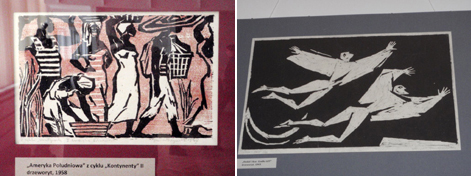
Była graficzką i to ten kunszt ją uczył oszczędności wyrazu.

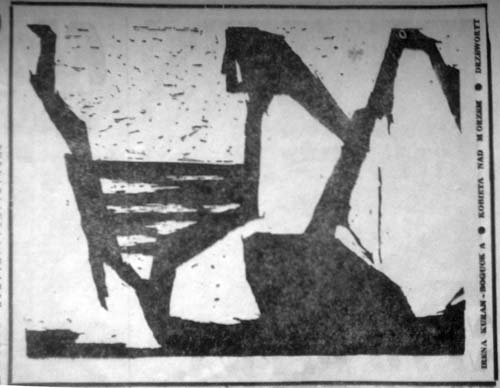
Irena Kuran-Bogucka, Ameryka Południowa, drzeworyt 1958 / Dedal i Ikar, drzeworyt 1963 / Poniżej – Kobiety nad morzem, drzeworyt 1962

kobiety-nad-morzem1

Z roku na rok jej grafiki stawały się coraz oszczędniejsze, coraz mniej linii było jej potrzeba do opisania sytuacji. Madonna Nomadów to już tylko kilka kresek, więcej pojawia się w tle niż ich Mama użyła do zarysowania kobiety i dziecka.

MadonnaNomadow-uBabacia

A metopy barbarzyńskie już w ogóle obywają się bez kreski.

kuran-metopy4

To oczywiście znany proces. Tak z realistycznego wizerunku rodziła się abstrakcja, bez której sztuka nowoczesna nigdy by się nie pojawiła jako nowa epoka i przełom w historii.

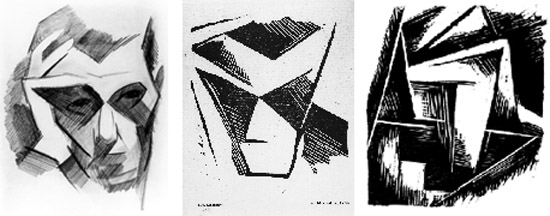
Nasza Lidia Głuchowska, niestrudzona badaczka awangardy w sztuce, pokazuje w jednej ze swych książek, jak Stanisław Kubicki, wychodząc od realizmu dochodzi do tego, co krytycy w latach dwudziestych, wciąż jeszcze nieobeznani z tym, co nowe, złośliwie nazywali trzy kuby Kubickiego.


Stanisław Kubicki, Trzy autoportrety, 1918 -1920

To samo oczywiście w nowoczesnym świecie odbywało się ze słowami. Już w barokowym wielosłowiu pojawiają się powściągliwe statementy. Haiku tylko uporządkowało ten trend.

Jan Andrzej Morsztyn, Niestatek

Oczy są ogień, czoło jest zwierciadłem,
Włos złotem, perłą ząb, płeć mlekiem zsiadłem,
Usta koralem, purpurą jagody,
Póki mi, panno, dotrzymujesz zgody.

Jak się zwadzimy — jagody są trądem,
Usta czeluścią, płeć blejwasem bladem,
Ząb szkapią kością, włosy pajęczyną,
Czoło maglownią, a oczy perzyną.

To w końcu XVII wiek w Polsce. A co dopiero Matsuo Basho, wiek ten sam, ale w Japonii.

Chimaki musubu katate ni hasamu hitaigami

Owijając ryżowe knedle liśćmi bambusa
Jedną ręką dotyka
Włosów nad czołem.

Tłumaczyła Teresa Kowalska.

Przez następne stulecia posuniemy się przecież w oszczędności znacznie dalej. Już dawno pojawia się taka “skrócona” angielska koperta zwana SASE (Self Addressed Stamped Envelope), wzór wszystkich maili, smsów, twittera, dla mfG, lol & fytk.

Zgodnie z tym obowiązującym trendem, ja –  mentalnie z całą pewnością członkini Tajnego Stowarzyszenia Jawnych Przeciwników Barokizowania Budowli Gotyckich – próbując sprostać obowiązkom grzeczności korespondencyjnej – słynne zapomniane thank you letters – przeciwstawiając się jednocześnie obezwładniającej polskiej normie nie odpowiadania na maile, w poczuciu zatem, że… no więc częstokroć, żeby dać… ach tam… I wtedy pojawia się to moje

O! lub Super!

I uwierzcie mi, ja naprawdę tak myślę. Myślę, że O! i myślę, że super!

O, jak super, że mnie zrozumieliście i już nie będziecie się na mnie złościć…

Nowy Rok, życzę Wam wszystkiego!

Bunt und Bunt and also the Revolt

Film Bunt – Re-Vision

Today we present the preview (teaser) of the film Bunt. Re-Vision. 100 Years of Bunt/ Revolt, which shows the entire tour of the donated art exhibition Bunt – Expressionism – Transborder avant garde. Works from the Berlin collection of prof. St. Karol Kubicki (2015) from Berlin via the Nationalmuseum Poznań, Regionalmuseum Leon Wyczółkowski in Bydgoszcz, Kraszewski Museum Dresden and the Lower Silesian Center of Photography “Roman House” [Dolnośląskie Centrum Fotografii „Domek Romański”] in Wrocław.

The exhibition finale will take place on Saturday 12 December 2015 at 16.00 in the Lower Silesian Center of Photography “Roman House” [Dolnośląskie Centrum Fotografii „Domek Romański”]. The event will be a combination of the premiere of the documentary-artistic film Bunt. Re-Vision and the presentation of a book concurrent to the exhibition written by the exhibition’s curator Dr. Lidia Głuchowska.

Dziś prezentujemy wglądówkę (teaser) filmu Bunt – Re-Wizja. 100 lat Buntu, ukazującego wszystkie stacje międzynarodowego tournée wystawy donacyjnej Bunt – Ekspresjonizm – Transgraniczna awangarda. Prace z berlińskiej kolekcji prof. St. Karola Kubickiego, która wyruszyła z Berlina do Muzeum Narodowego w Poznaniu, Muzeum Okręgowego im. Leona Wyczółkowskiego w Bydgoszczy i Dolnośląskiego Centrum Fotografii „Domek Romański” we Wrocławiu

Finisaż w sobotę, 12.12.2015 o godz. 16.00 w Dolnośląskim Centrum Fotografii „Domek Romański”, połączony będzie z premierą filmu dokumentacyjno-artystycznego Bunt – Re-Wizja,a także prezentacją towarzyszącej jej książki autorstwa kuratorki, dr Lidii Głuchowskiej.

Heute zeigen wir die Vorschau (Teaser) des Films Bunt – Re-Vision. 100 Jahre von Bunt / Revolte über alle Stationen der internationalen Ausstellungstour Bunt – Expressionismus – Grenzübergreifende Avantgarde. Werke aus der Berliner Sammlung von Prof. St. Karol Kubicki. Die Kunstwerke aus Berlin sind die Werke im Nattionalmuseum Poznań, Leon-Wyczółkowski-Bezirksmuseum in Bydgoszcz, Kraszewski-Museum in Dresden sowie Bezirksmuseum im Niederschlesischen Zentrum für Fotografie „Domek Romański” [Romanisches Haus] präsentiert worden.

Bei der Finissage am Samstag, den 12. Dezember 2015 um 16.00 im Niederschlesischen Zentrum für Fotografie „Domek Romański” [Romanisches Haus], wird die Erstpräsentation des dokumentarisch-künstlerischen Films Bunt – Re-Vision sowie eine Präsentation der Begleitpublikation, ein Buch der Kuratorin Dr. Lidia Głuchowska, stattfinden.

We invite you to the first presentation at the finissage
Zapraszamy na premierę na finisażu
Wir laden Sie herzlich zur Erstpräsentation auf der Finissage ein

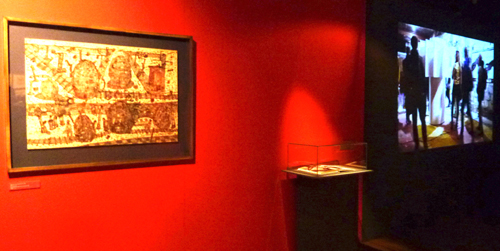
The initial shots of the film were presented in the Regional Museum Leon Wyczółkowski in Bydgoszcz in so called “Cinema”, one of the three parts of the arrangement of the exhibition, next to the “Street” and the “Café”, inspired by the atmosphere of the artistic centres of the 1920s.
Next to the “Cinema” is to be seen the presentation of the artistic book Refleks / Relfex (2014) and the drawing by Jacek Szewczyk Alley without work (1999), part of the presentation Ich 7 / The 7 of them (They 7)

Początkowe sceny filmu zaprezentowane zostały w Muzeum Okręgowym im. Leona Wyczółkowskiego w Bydgoszczy, w części ekspozycji zatytułowanej „Kino“, która – podobnie jak pozostałe części aranżacji, czyli „Ulica“ i „Kawiarnia“ – zainspirowane były atmosferą centrów artystycznych dwudziestolecia międzywojennego.
Obok „Kina” widoczna prezentacja książki artystycznej Refleks (2015) oraz rysunek Jacka Szewczyka Aleja bez pracy (1999), część prezentacji Ich 7.

Die Anfangsszenen des Filmes wurden präsentiert im Leon- Wyczółkowski-Bezirksmuseum in Bydgoszcz im so genanten „Kino“, einem der drei Teile des Ausstellungsarrangements, welcher, neben der „Straße“ und dem „Café“, an die Aura der künstlerischen Zentren der 1920er inspiriert wurden.
Neben dem Kino – die Präsentation des Kunstbuchs entstanden im Rahmen des Projekts Refleks / Reflex sowie die Zeichnung von Jacek Szewczyk Allee der Arbeitslosen (1999), Teil der Kunstpräsentation Ich 7 / Sie 7.

1 Bunt Bydg Szewczyk

BUNT – RE-Vision. 100 Years of Bunt / Revolt
artistic-documentary film

Concept: Lidia Głuchowska, An Kraśko
Technical production: An Kraśko
Text: Lidia Głuchowska

At the exhibition closing event in Wrocław the film’s final version will be screened including 8 episodes:

1/ Acceptance of the donation from prof. Kubicki in Berlin-Hufeisensiedlung and transport to the National Museum in Poznań, 16 March 2015.

2/ Exhibition opening in the National Museum in Poznań, 19 April 2015.

3/ The long Museum Night and curator-guided exhibition viewing in the National Museum in Poznań, 16 May 2015.

4/ Opening of the premiere showing of the project Flyer, squat Od-Zysk, 16 May 2015. Handing over a gift by Polish contemporary artists and a letter of intent – thanking for the donation by prof. Kubicki from Germany, to the hands of the curator dr. Lidia Głuchowska.

5/ Presentation of the gift by Polish contemporary artists to prof. Kubicki in Berlin-Hufeisensiedlung.

6/Exhibition opening and conference in the Leon Wyczółkowski District Museum in Bydgoszcz.

7/ Press conference, exhibition opening and the exhibition in Kraszewski-Museum Dresden; handing over of a miniature of the installation by Karolina Ludwiczak and Marcin Stachowiak and the order of the Leon Wyczółkowski District Museum in Bydgoszcz to prof. St. Karol Kubicki in Berlin by the artists and the Museum’s director prof. dr. hab. Ryszard F. Woźniak.

8/ Vernissage at the Gallery of the Culture and Art Centre OKiS, Lower Silesian Centre for Photography “Domek Romański” in Wrocław.

There were also two other films presented during the exhibition –Refleks [Reflex] and Ulotka [Flyer] by Marek Glinkowski (sound: Radosław Włodarski, 2015)

Authors of the works presented in the movie:

Krzysztof Balcerowiak, Andrzej Bobrowski, Magdalena Czerniawska, Zuzanna Dyrda, Stefan Ficner, Agata Gertchen, Marek Glinkowski, Mariusz Gorzelak, Paweł Frąckiewicz, Jarosław Janas, Aleksandra Janik, Dorota Jonkajtis, Anna Kodź, Wojciech Kołacz, Katarzyna Krawczyk, Marta Kubiak, Maciej Kurak, Maryna Mazur, Agnieszka Mori, Christopher Nowicki, Grzegorz Nowicki, Mirosław Pawłowski, Max Skorwider, Jacek Szewczyk, Piotr Szurek, Michał Tatarkiewicz, Anna Trojanowska, Przemysław Tyszkiewicz, Małgorzata ET BER Warlikowska, Radosław Włodarski.

2 BUNT Dresden-vernis2a

In Dresden Kraszewski Museum the movie was presented already during the press conference and the opening, in one of the exhibition rooms. It allowed the visitors to imagine the parallellity of the different moments of the exhibition tour – the signing of the donation contract in Berlin by Professor Kubicki, the vernissage of the first station of the exhibition in Nationalmuseum in Poznan and the vernissage of the Ulotka / Flyer project in squat Od-Zysk as well as the presentation at the second station of the exhibition in Bydgoszcz.

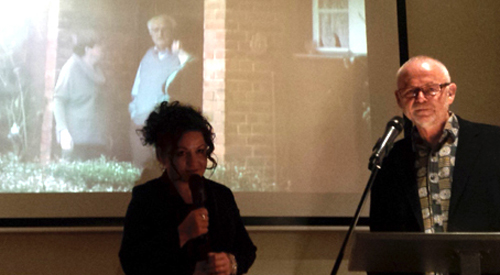
At the photo-exhibition curator, Lidia Głuchowska and exhibition coordinator, Bronislaw Kowalewski at the vernissage in Dresden.

In the background – the movie: Prof. St. Karol Kubicki, his wife – Petra, as well as the curator, Lidia Głuchowska, after the forwarding the artpieces from his Berlin collection to the Nationalmuseum in Poznań and the regional Museum Leon Wyczółkowski Museum in Bydgoszcz.

W Muzeum im Józefa Ignacego Kraszewskiego w Dreźnie film prezentowany był w jednej z sal wystawowych i to już w trakcie konferencji prasowej i wernisażu, co wśród zwiedzających budzić mogło wrażenie paralelności różnych momentów tournée wystawy donacyjnej – począwszy od podpisania umowy donacyjnej przez prof. Kubickiego w Berlinie, otwarcia pierwszej odsłony w Muzeum Narodowym w Poznaniu oraz premiery projektu Ulotka na sqacie Od-Zysk, a także pokazu podczas na drugiej stacji wystawy – w Bydgoszczy.

Na zdjęciu – kuratorka, dr Lidia Głuchowska i kordynator wystawy, Bronisław Kowalewski podczas wernisażu w Dreźnie. W tle- film: prof. St. Karol Kubicki, jego żona Petra oraz kuratorka, Lidia Głuchowska, po przekazaniu daru dla Muzeum Narodowego w Poznaniu i Muzeum Okręgowego im. Leona Wyczółkowskiego w Bydgoszczy.

Im Kraszewski Museum Dresden wurde der Film in einem der Ausstellungsräume bereits während der Pressekonferenz und der Ausstellungseröffnung gezeigt. Dies könnte bei den Besuchern den Eindruck von der Parallelität unterschiedlicher Momente der Ausstellungstour erweckten – der Unterzeichnung des Schenkungsvertrags durch Prof. Kubicki in Berlin, der Eröffnung der Erstausstellung im Nationalmuseum Poznan und der Vernissage des Projekts Ulotka / Flyer im Squat Od-Zysk sowie der Schau in der zweiten Ausstellungsstation in Bydgoszcz.

3 FILM Dresden3

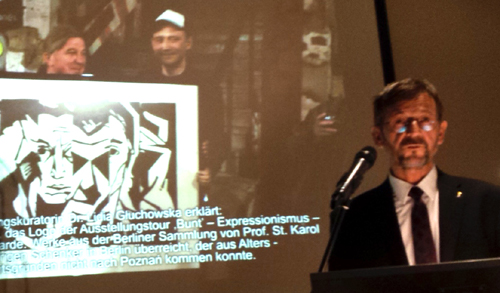
Director of the Regional Museum Leon Wyczółkowski in Bydgoszcz, prof. Michał Woźniak during the opening in Dresden. In the background – the movie: presentation of the Logo of the touring exhibityion by Andrzej Bobrowski and Radosław Włodarski at the vernissage of the Ulotka / Flyer project in squat Od- Zysk in Poznań.

Dyrektor Muzeum Okręgowego im. Leona Wyczółkowskiego w Bydgoszczy, prof. dr Michał Woźniak podczas wystąpienia na wernisażu w Dreźnie. W tle – film: Andrzej Bobrowski i Przemysław Włodarski prezentują logo wystawy donacyjnej na wernisażu projektu Ulotka na squacie Od-Zysk w Poznaniu.

Direktor des Leon-Wyczółkowski-Bezirksmuseums in Bydgoszcz, Prof. Ryszard F. Woźniak während der Eröffnungsrede in Dresden. Im Hinterngrund der Film: Andrzej Bobrowski und Przemysław Włodarski present ieren das Logo der Ausstellungstour auf der Vernissage des Projekts Ulotka / Flyer in the squat Od-Zysk in Poznań.

BUNT – RE-Wizja. 100 lat Buntu
Film dokumentacyjno-artystyczny

Koncepcja: Lidia Głuchowska, An Kraśko
Realizacja techniczna: An Kraśko
Tekst: Lidia Głuchowska

Premierowy pokaz całego filmu na finisażu odsłony wrocławskiej obejmuje 8 epizodów:

1/ Przejęcie donacji prof. Kubickiego w Berlinie-Hufeisensiedlung i transport do Muzeum Narodowego w Poznaniu, 16.03.2015.

2/ Wernisaż w Muzeum Narodowym w Poznaniu, 19.04.2015.

3/ Długa Noc Muzeów i oprowadzanie kuratorskie po Muzeum Narodowym w Poznaniu, 16.05.2015.

4/ Wernisaż premierowej odsłony projektu „Ulotka”, squat Od-Zysk, 16.05.2015.

Przekazanie daru polskich artystów współczesnych i listu intencyjnego – podziekowania za donację z Niemiec dla prof. Kubickiego na ręce kuratorki, dr Lidii Głuchowskiej.

5/ Wręczenie daru polskich artystów współczesnych prof. Kubickiemu w Berlinie-Hufeisensiedlung.

6/ Wernisaż i konferencja naukowa w Muzeum Okręgowym im. Leona Wyczółkowskiego w Bydgoszczy.

7/ Konferencja prasowa, wernisaż i wystawa w Muzeum Józefa Ignacego Kraszewskiego w Dreźnie oraz przekazanie miniatury instalacji Przenikanie Karoliny Ludwiczak i Marcina Stachowiaka oraz medalu Muzeum Okręgowego im. Leona Wyczółkowskiego prof. St. Karolowi Kubickiemu w Berlinie przez artystów i dyrektora muzeum, prof. dra. hab. Ryszarda F. Woźniaka

8/ Wernisaż we Wrocławiu.

Na wystawie prezentowane były jeszcze dwa filmy artystyczne autorstwa Marka Glinkowskiego (dźwięk: Radosław Włodarski, 2015) – Ulotka i Refleks

Prezentowano w nich prace graficzne nastepujących artystów:

Krzysztof Balcerowiak, Andrzej Bobrowski, Magdalena Czerniawska, Zuzanna Dyrda, Stefan Ficner, Agata Gertchen, Marek Glinkowski, Mariusz Gorzelak, Paweł Frąckiewicz, Jarosław Janas, Aleksandra Janik, Dorota Jonkajtis, Anna Kodź, Wojciech Kołacz, Katarzyna Krawczyk, Marta Kubiak, Maciej Kurak, Maryna Mazur, Agnieszka Mori, Christopher Nowicki, Grzegorz Nowicki, Mirosław Pawłowski, Max Skorwider, Jacek Szewczyk, Piotr Szurek, Michał Tatarkiewicz, Anna Trojanowska, Przemysław Tyszkiewicz, Małgorzata ET BER Warlikowska, Radosław Włodarski.

During the display in the Lower Silesian Photography Centre „Domek Romański“ the movie was to bee seen already from the street, through the windows. It invited the passengers to come in and to see the whole exhibition. In the movie is to be seen the moment of forwarding of the gratitude presents of the Poznań contemporary artists to Prof. St. Karol Kubicki in Berlin.

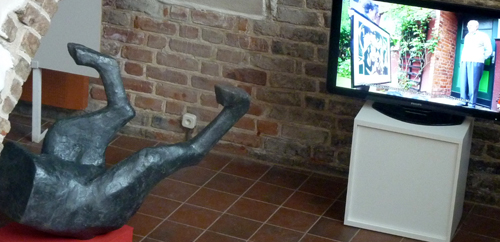
Next to the screen is to be seen the sculpture by Małgorzata Kopczyńska Cerberus (c. 2013), part of the artistic presentation Ich 7 / The 7 of Them.

Podczas wystawy w Dolnośląskim Centrum Fotografii Domek Romański film było widać już przez okna, z ulicy. Zapraszał on przechodniów do wejścia do środka i zapoznania się z całą ekspozycją.
W filmie udokumentowano m.in. moment przekazania daru współczesnych artystów z Poznania prof. St. Karolowi Kubickiemu w Berlinie.

Obok monitora – rzeźba Małgorzaty Kopczyńskiej Cerber (ok. 2013), część prezentacji artystycznej Ich 7.

Während der Ausstellung im Niederschlesischen Zentrum für Fotografie, „Domen Romański” der Film war zu sehen schon aus der Straße, durch die Fenster. Das lud die Passanten ein, damit sie reinkommen, um die gesamte Ausstellung anzusehen. In dem Film ist u.a. der Moment der Übergabe des Ausstellungslogos – des Dankbarkeitsausdrucks der Gegenwartskünstler aus Poznań to Prof. St. Karol Kubicki in Berlin.

Neben dem Bildschirm- Plastik von Małgorzata Kopczyńska Cerberus (ca. 2013), Teil der Kunstpräsentation Ich 7 / Sie 7.

4 FILM Berlin BUNT

BUNT– RE-Vision. 100 Jahre Bunt / Revolte
Künstlerisch-dokumentarischer Film

Konzeption: Lidia Głuchowska, An Kraśko
Technische Umsetzung: An Kraśko
Text: Lidia Głuchowska

Die Erstaufführung des gesamten Films während der Finissage der Schau in Wrocław umfasst 8 Episode:

1/ Übernahme der Schenkung von Prof. Kubicki in der Hufeisensiedlung/Berlin und Transport in das Nationalmuseum Poznań, 16.03.2015.

2/ Vernissage im Nationalmuseum Poznań, 19.04.2015.

3/ Lange Nacht der Museen und kuratorische Führung im Nationalmuseum Poznań, 16.05.2015.

4/ Vernissage der Erstpräsentation des Projekts Ulotka [Flyer], im Squat Od:Zysk, 16.05.2015.

Übergabe des Geschenks und Dankschreibens von den zeitgenössischen Künstlern aus Poznań für Herrn Prof. Kubicki an die Kuratorin Dr. Lidia Głuchowska.

5/ Aushändigung des Geschenks an Herrn Prof. Kubicki in Berlin.

6/ Vernissage und wissenschaftliche Konferenz im Leon-Wyczółkowski-Bezirksmuseum in Bydgoszcz.

7/ Vernissage und Ausstellung im Kraszewski-Museum Dresden. Anschließend Übergabe einer Miniatur der Installation Przenikanie [In-Einander-Greifen] von Karolina Ludwiczak und Marcin Stachowiak sowie der Medaille des Leon-Wyczółkowski-Bezirksmuseums in Bydgoszcz an Prof. St. Karol Kubicki in Berlin durch die Künstler und den Museumsdirektor Prof. Dr. Ryszard F. Woźniak.

8/ Vernissage in der Galerie des Kultur- und Kunstzentrums in Wrocław, dem Niederschlesischen Zentrum für Fotografie „Domek Romański“.

In der Ausstellung wurden ferner zwei weitere Filme: Refleks [Reflex] and Ulotka [Flyer] von Marek Glinkowski ((Klang: Radosław Włodarski, 2015) gezeigt, in denen Werke folgender Grafikkünstler präsentiert wurden: Krzysztof Balcerowiak, Andrzej Bobrowski, Magdalena Czerniawska, Zuzanna Dyrda, Stefan Ficner, Agata Gertchen, Marek Glinkowski, Mariusz Gorzelak, Paweł Frąckiewicz, Jarosław Janas, Aleksandra Janik, Dorota Jonkajtis, Anna Kodź, Wojciech Kołacz, Katarzyna Krawczyk, Marta Kubiak, Maciej Kurak, Maryna Mazur, Agnieszka Mori, Christopher Nowicki, Grzegorz Nowicki, Mirosław Pawłowski, Max Skorwider, Jacek Szewczyk, Piotr Szurek, Michał Tatarkiewicz, Anna Trojanowska, Przemysław Tyszkiewicz, Małgorzata ET BER Warlikowska, Radosław Włodarski.

5 Ana Krasko

Here is An Kraśko, responsible for the technical production and the artistic shape of the movie.
Oto An Kraśko odpowiedzialna za techniczną realizację i artystyczny kształt filmu.
Das ist An Kraśko, verantwortlich für die künstlerische Umsetzung und die künstlerische Gestalt dieses Films.
Foto: Mariola Nehrebecka

At the screen part of the glas instalation Interference-Re-Integration/ Przenikanie /In-Einander-Greifen by Karolina Ludwiczak & Marcin Stachowiak

SEE ALSO / SIEHE AUCH / ZOBACZ TAKŻE

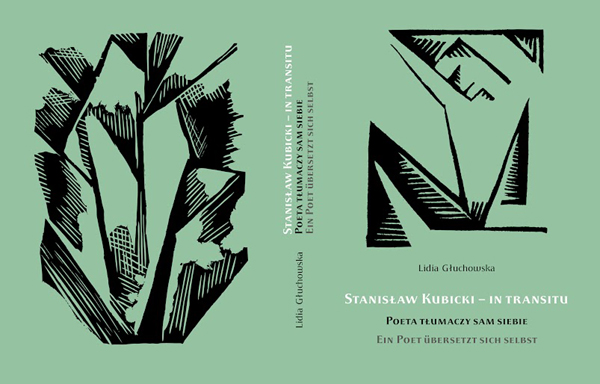
Stanisław Kubicki – In transitu

transitu3xThe international touring exhibition Bunt – Expressionism – Transborder Avant-Garde. Works from the Berlin Collection of Prof. Stanisław Karol Kubicki is coming in two days an end.
The exhibition finale will be a combination of the premiere of the documentary-artistic film Bunt. Re-Vision and the presentation of a book concurrent to the exhibition written by the exhibition’s curator Dr. Lidia Głuchowska.
The exhibition finale: Saturday, 12 December 2015 at 16.00 in the Lower Silesian Center of Photography “Roman House” in Wrocław.

***
Za dwa dni dobiega końca międzynarodowe tournée wystawy donacyjnej Bunt – Ekspresjonizm – Transgraniczna awangarda. Prace z berlińskiej kolekcji prof. St. Karola Kubickiego.
Finisaż połączony będzie z premierą filmu dokumentacyjno-artystycznego Bunt – Re-Wizja, a także prezentacją towarzyszącej jej książki autorstwa kuratorki, dr Lidii Głuchowskiej.
Finisaż: sobotę, 12.12.2015, godz. 16.00 w Dolnośląskim Centrum Fotografii „Domek Romański” we Wrocławiu

***
In zwei Tagen erreicht die internationale Ausstellungstour Bunt – Expressionismus – Grenzübergreifende Avantgarde. Werke aus der Berliner Sammlung von Prof. St. Karol Kubicki ihr Ende. Bei der Finissage wird die Erstpräsentation des dokumentarisch-künstlerischen Films Bunt – Re-Vision sowie eine Präsentation der Begleitpublikation, eines Buches der Kuratorin Dr. Lidia Głuchowska, stattfinden.
Finissage: Samstag, den 12. Dezember 2015 um 16.00 Uhr, Niederschlesisches Zentrum für Fotografie „Domek Romański” in Wrocław

POET il 1 Cover

WERSJA POLSKA  / DEUTSCHE FASSUNG

Stanisław Kubicki who had roots in Poland and Germany not only created poetry in two languages but also expressed himself in two artistic media – visual arts and literature. He was equally engaged in popularizing aesthetic innovation as he was in the socio-political changes of his time, proving his patriotism and fascination with the avant-garde utopia of the new community. In her search for the essence of this trans-border phenomenon, Lidia Głuchowska, in her book provides an insight into the crucial chapter of the history of Polish culture, German studies on Polish literature and art history, by referring to the achievements of such renowned researchers of expressionism as Paul Raabe, Eberhard Roters and Heinrich Kunstmann.

Prof. UAM dr hab. Brigitta Helbig-Mischewski, Polish-German Research Institute at Collegium Pollonicum in Słubice (Adam Mickiewicz University in Poznań, Europa-Universität Viadrina in Frankfurt on Oder)

By focusing on Kubicki’s romantic Polish patriotism and simultaneously on his avant-garde internationalism, Lidia Głuchowska, uses comparative – art historical and philological – methodology and provides an incisive approach and enlightening results. Her sensitivity to the pregnant relationship between the author’s own German and Polish versions of the same poems and their role in both transmedial artistic and political activities enables Głuchowska to analyze productively the differences and parallels between Kubicki’s German and Polish verses. By embracing this original method – from which the title of “in transitu” derives – she is able to penetrate the deepest meanings of the writer’s intentions. The result of the author’s heroic endeavor is to restore the fullness to Stanisław Kubicki’s life in art and to show that the dilemma of his national or supranational self-awareness was typical of many artists of the ‘new states’ in Central Eastern Europe after WW1.

Steven Mansbach, Professor of the History of Twentieth-century Art University of Maryland, USA

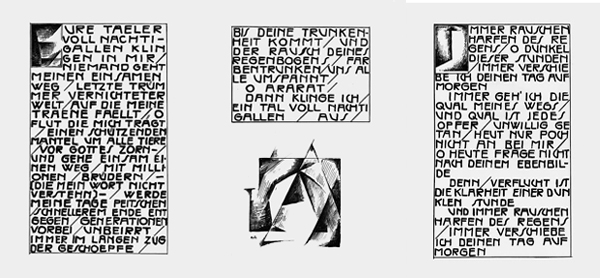
Stanisław Kubicki – the author of manifestos and posters of the Poznań group Bunt (1918 – 1922) – initiated the group’s contacts with the international avant-garde in Berlin. For a long time now he’s been valued as the author of expressionist and cubo-constructivist drawings and paintings which were created with extraordinary formal discipline. It turns out however that in the culminating phase of his achievements he also wrote interesting program poems and did so in Polish and German at the same time. Only a comparative analysis of the two areas of Kubicki’s creative activities facilitates a full unveiling of its originality. That is the subject of an insightful monograph by Lidia Głuchowska who thanks to her competency in literary studies and art history, critically researches many archival sources unknown up till now and also documents the artist’s active participation in the Polish resistance movement and the circumstances of his tragic death at the hands of Gestapo.

Prof. dr hab. Waldemar Okoń, The Institute of Art History, University of Wrocław

2abcrazem

Repro p. / s. / S. 3, 342-343

The book Stanisław Kubicki – In transitu – The poet translates himself is not only a solid publication in terms of content but a widely commented and beautiful edition containing program manifestos and expressionist poetry in two languages by the radical leader of the Bunt group Stanisław Kubicki. The works created between 1918 and 1921 reflect the dilemmas of many representatives of the classic avant-garde not only in Poland but also in the other “new countries” of Central Eastern Europe.
Part of them were printed in that stormy period as a kind of artistic intervention to the sudden socio-political changes of the end of the first world war and at the beginning of the new, post-war order. At that time they were simultaneously published in Poland and in Germany in Zdrój magazine, Die Aktion, Der Weg and Die Bücherkiste and in the almanac Faded Dawn of the Epoch. Fighting for the New Art 1917 – 1921 [Zagasły brzask epoki. W walce o nową sztukę 1917–1921], however the majority of them were found only recently and they were reconstructed as a bilingual collection by the author of that publication.
The poetic-program works of Kubicki in the book are a worldwide curiosity: the artist wrote them originally in two languages breaking the particularity of the literary message and thus created a peculiar manifesto of avant-garde internationalism.

3abcrazemRepro p. / s. / S. 9, 281, 165

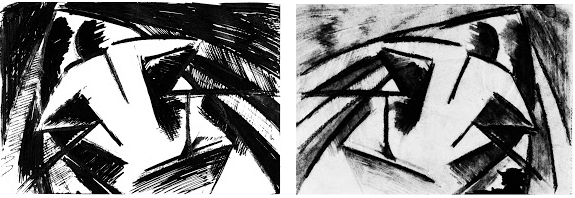
The versed expressionist manifestos by Kubicki correspond to his drawings that he created simultaneously and paintings similar in themes and universal in expression due to the international – by its nature – artistic language. Together they are a representative example of the explosive synergy of word and image, intensifying the program message in magazines and ethereal printed materials of the avant-garde.
The frame for the poems is a monographic commentary on the interdisciplinary oeuvre by Kubicki which is polemical in comparison with the traditional and stereotypical opinion of his achievements. The book’s introduction defines his poetry and artistic and political activity as an expression of ambivalent self-awareness – in transitu –that is a typical avant-garde multiple identity, stretched between the belief in a trans-national utopia of the new man, the new community and romantic patriotism.
That romantic patriotism was expressed in the unparalleled sacrifice of Kubicki. As the National Army’s courier to the embassies of neutral countries in Berlin he died at the hands of Gestapo.

4abcrazemRepro p. / s. / S. 106, 107, 223

The presentation of the artistic and literary oeuvre included in the five essays goes beyond the revision of Kubicki’s place in the national and universal history of literature and art. It is also an insightful, stylistic and subject-matter-oriented interpretation of the aesthetic artifacts because it unveils the little known behind-the-scenes activity of Kubicki and his colleagues from Bunt in international artistic circles.
The author provides a critical contextualization of the myth and reality of revolution in Kubicki’s works, there’s therefore an echo of his alleged participation in the Spartacus uprising in Germany which the author describes by referring to the theory of the grotesque. Moreover, by delving into the archival source materials the author documents Kubicki’s involvement in the Polish resistance during the second world war. The Preface by Peter Mantis enables understanding the relationships between the artistic (auto)creation of Kubicki and his tragic biography.
The publication concludes with an annex pertaining to the drawings by the Bunt group from the heritage left by the artist and his wife – poet, painter and graphic artist Margarete Kubicka – donated to the National Museum in Poznań and the Leon Wyczółkowski District Museum in Bydgoszcz as well as the exhibition to honor this generous gift.

5abcrazemRepro p. / s. / S. 379, 24, 25

The book Stanisław Kubicki – In transitu – The poet translates himself captivates with its elaborate artwork by the frequently awarded designer Monika Aleksandrowicz. Most of all, she managed to excellently elicit the innovativeness of Kubicki’s art works, their unique discipline and their internal rhythm. Many of the over seventy black and white reproductions are shown here for the first time

6abrazem

Repro p. / s. / S. 62, 63

Lidia Głuchowska, Stanisław Kubicki – In transitu – Poeta tłumaczy sam siebie / Ein Poet übersetzt sich selbst; Przedmowa / Vorwort [Foreword]: Peter Mantis, transl.: Dorota Cygan, Lidia Głuchowska, Arkadiusz Jurewicz, Michael Zgodzay; Style editors: Margit Jäkel, Elżbieta Łubowicz; Ośrodek Kultury i Sztuki we Wrocławiu, Wrocław 2015, pp. 1-480, ISBN: 978-83-62290-97-0.

POET il 6

Table of Contents PL/E/D

Introduction / Einleitung /  Wstęp

Appendix: Donation and Exhibition E /
Anhang: Schenkung und Ausstellung /Załącznik: Donacja i wystawa

Repro p. / s. / S. 262 (Fragment)


Bilder von Margarete Kubicka in der Hufeisensiedlung

1 KUBICKA Selbstbildnis1917

Margarete Kubicka, Selbstbildnis, 1917

Noch bis zum Sonntag, den 6. Dezember sind in der Berliner Hufeisensiedlung, entworfen vom bekannten Avantgardearchitekten, Bruno Taut, Bilder von Margarete Kubicka (1891-1984) zu sehen.


Die Hinterglasmalerei Weltenwanderer (1923) im expressionistisch-theosophischen Geist gehört dazu.

2 KUBICKA Weltenwanderer

Die Finissage
dieser sorgfältig vorbereiteten Schau
findet am 6. Dezember, um 15.00 Uhr
im Hufeisen-Café
Fritz-Reuter-Allee 44, 12-359 Berlin
statt

Lidia Głuchowska

Margarete Kubicka. Ihr Beitrag zur Herausbildung und Entwicklung der Gruppe Bunt (1917-1922), einer deutsch-polnischen Künstlervereinigung der Avantgarde

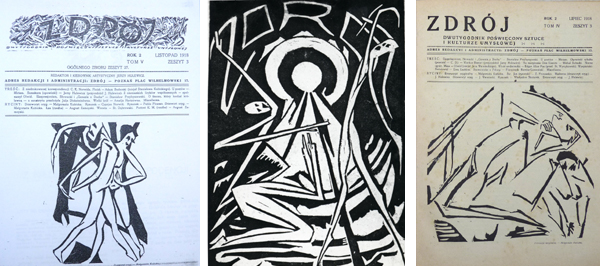
Sie war Ehefrau des polnischen Malers und Graphikers, Stanisław Kubick und die einzige Frau und die einzige Deutsche unter den Mitbegründern der Posener Gruppe „Bunt“ (Revolte), deren Hauptforum die Kunstzeitschrift Zdrój (Quelle) bildete.

Im März 1918 erschien in diesem Periodikum das Programmheft der Vereinigung, deren zweisprachige Name, sowohl auf Deutsch und Polnisch sinnbildhaft für ihr expressionistisches Programm steht.

Margarete Kubicka hat das einzige im Linolschnitt festgehaltene Dokument der Diskussionen im Zentrum des Posener Expressionismus, dem Gut von Jerzy Hulewicz in Koscianki bei Września/Wresen geschaffen, auf dem sie Mittels kubo-futuristischer Bildsprache den Gedankenaustausch von Stanisław Kubicki, Jerzy Hulewicz, seiner Ehefrau und sich selbst darstellte.

3 KUBICKA Bei Hulewicz

Margarete Kubicka, Bei Hulewicz, Linolschnitt , 1917, Zdrój Febr, 1918, II, Nr. 4

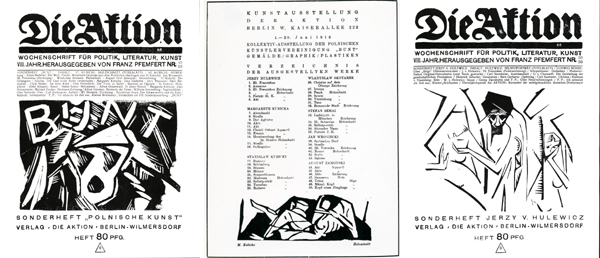
 Kubicka sorgte dafür, dass die Gruppe Kontakte zu internationalen Avantgardekreisen Berlins um die Zeitschrift Die Aktion knüpfte. Sie war auch hauptverantwortlich für die Organisation ihrer kollektiven Ausstellung in den Redaktionsräumen von Die Aktion im Juni 1918. Anlässlich davon erschien eine Sondernummer dieser Zeitschrift. Es folgten weitere Publikationen und Ausstellungen.

4 - 5- 6 Bunt

Ankündigung der Bunt-Ausstellung in den Redaktionsräumen von Die Aktion mit dem Linolschnitt von Margarete Kubicka Opfer

 Sie hat auch das internationale Profil der Zeitschrift Zdrój und ihre grafische Gestaltung in Anlehnung an die der Berliner Periodika Die Aktion und Der Sturm, geprägt, da sie Covers der Einzelhefte vom Juli und November 1918 und vom Gesamtband VI entworfen hat.

7-8-9 Kubicka

Stilistisch und kompositorisch souverän, beeinflusste ihr Werk das Schaffen ihrer Kollegen, Jerzy Hulewicz und Władysław Skotarek.

In der historischer Perspektive war es auch ihr Verdienst, dass sie die nach den vier „Bunt“-Ausstellungen in Berlin gebliebenen Werke ihrer Künstlerkollegen während des Zweiten Weltkriegs beschützte und für die Nachwelt rettete.

Diese bilden den Kern der Ausstellung Bunt –Expressionismus – Grenzübergreifende Avantgarde. Werkle aus der Berliner Sammlung von Prof. St. Karol Kubicki, deren letzte Schau in Wrocław (ehemals Breslau) parallel zur Ausstellung von Kubicka eröffnet wurde und noch bis zum 12. Dezember 2015 zu sehen ist.

SIEHE HIER

10 BUNT Expressionism Grenzuebergreifend 2 11 BUNT expressionismus Grenzuebergreifend BreslauMehr über das Leben und Werk der Künstlerin in:

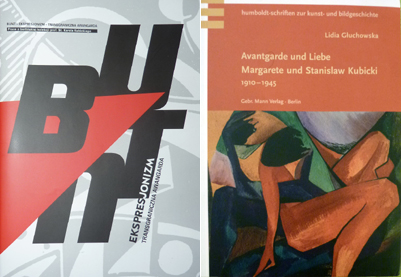
  • Lidia Głuchowska, Avantgarde und Liebe. Margarete und Stanislaw Kubicki 1910-1945, Berlin 2007
  • Lidia Głuchowska (Hg,): Bunt – Ekspresjonizm – Transgraniczna awangarda. Prace z berlińskiej kolekcji prof. St. Karola Kubickiego / Bunt – Expressionismus – Grenzübergreifende Avantgarde. Werke aus der Berliner Sammlung von Prof. St. Karol Kubicki, Poznań: Muzeum Narodowe, 2015

sowie
in den Begleitheften zur Ausstellung im Hufeinsen-Café,
herausgegeben von der Anwohnerinitiative „Hufeisern gegen Rechts“

13 KUBICKA Hufeisen Cafe

12-14 lidia

Auszüge aus dem Referat von der Autorin gehalten am 29. November 2015 im Café in der Hufeisensiedlung

Adventssonntag beginnt am Samstag

Hans-Jürgen Moder

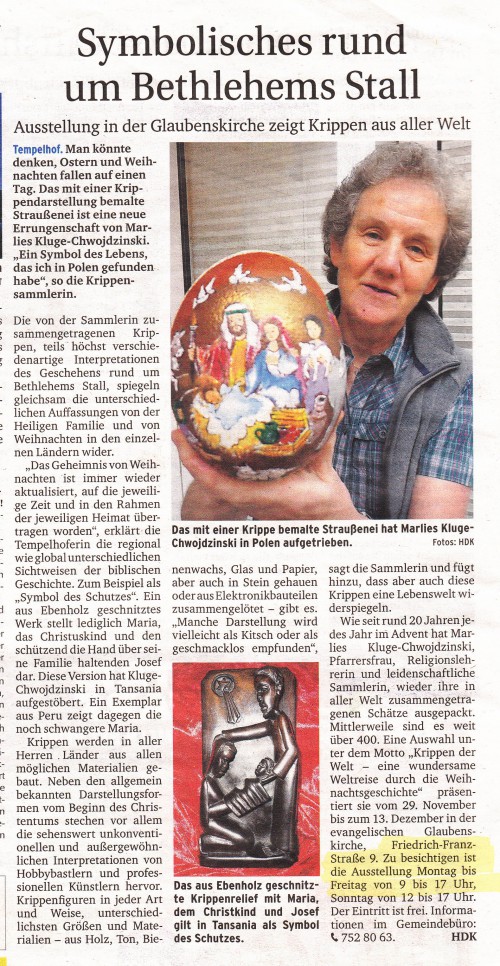
Weihnachtliche Holzschnitzkunst aus Polen in Magdeburg

Über 20 polnische Holzschnitzer zeigen derzeit ihre sinnenfrohen wie tiefsinnigen Kunstwerke, viele davon Unikate, in der Stadt am Elbestrom. Große Namen sind darunter, von Stanisław Apriasz, Adam und Eugeniusz Zegadło, Magdalena und Andrzej Wojtczak, über Józef Szypuła, Jan Mika, Stanisław Hołda bis zu Wojciech Oleksy und anderen. Das ist eine kleine Sensation.

Ohne den Magdeburger Sammler und Liebhaber naiver Kunst Hans Gieraths hätte ganz sicher keiner der Künstler und kaum eines der Stücke je den Weg nach Magdeburg gefunden.

Der Passion des pensionierten Theologen und seiner Ehefrau Edeltraud ist es zu danken, dass ihr beider jahrzehntelange Sammelleidenschaft aus Magdeburg ein Mekka polnischer naiver Schnitz- und Malkunst im Osten der Republik gemacht hat. Aus über Jahrzehnte gewachsenen Freundschaften sind inzwischen viele und vielbeachtete Ausstellungen entstanden.
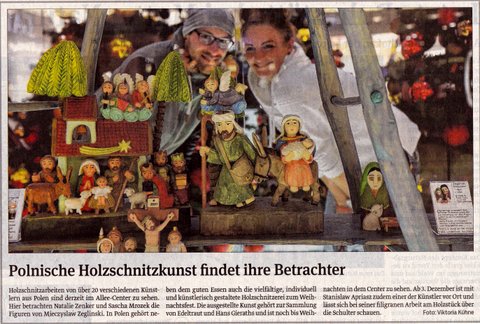
Schnitzen ist in Polen ein jahrhundertealtes und immer noch sehr lebendiges Kunsthandwerk. In vielen Dörfern zwischen den Beskiden und den Bieszczady trifft man auf Holzschnitzer. Weit über tausend Menschen sollen es noch sein. Die Berufskünstler sind vor allem im Verband der Volkskünstler organisiert. Die Laienkünstler aber leben überwiegend in abgelegenen Dörfern.

Was dort entsteht, ist selten ein Serienprodukt, sondern oft noch unverwechselbarer Individualstil. Naive Kunst eben, entstanden und verstanden als Kunst des Einzelnen und Ausdruck unkomplizierter, vereinfachter Darstellung. Der Künstler öffnet uns auf der Suche nach dem unverdorbenen Ursprünglichen sein Herz und seine Seele.

Wer darauf neugierig ist, wird im Allee-Center Magdeburg bis zum 24.12.2015 viele Entdeckungen machen können. Die dort gezeigten Kunstwerke sprechen mit uns. Ihre Botschaften lassen sich entschlüsseln: Mit dem Strom – gegen den Strom; Hoffnung und Zuversicht; Flucht und Zuflucht. Das, was uns nicht nur in der dunklen Jahreszeit, sondern über’s Jahr hinaus bewegen sollte.

schnitzkunst_alleecenter_besucher

Übrigens lässt sich ab 3.Dezember Stanisław Apriasz aus Grybów beim Schnitzen im Allee-Center über die Schulter schauen. Eine seiner Besonderheiten: Alle Skulpturen sind aus einem Stück Holz geschnitzt.

***

Das Magdeburger Allee-Center liegt an der Hauptverkehrsachse Ernst-Reuter-Allee/Breiter Weg. Das Allee-Center ist sowohl mit dem Auto als auch mit öffentlichen Verkehrsmitteln gut zu erreichen. Von Haupt- bzw. Busbahnhof sind es zu Fuß knapp 10 Minuten.

Zum Nachlesen

Naive Kunst in Magdeburg. Blogspot von Hans Gieraths, Kunstsammler

Privatmuseum der polnischen Volkskunst von Prof. Marian Pokropek. Er gilt als bester Kenner polnischer naiver Kunst

Museum Bielsko-Biała. Exzellente Volkskunstsammlungen

Museum Żywiec. Bedeutende ethnologische Abteilung und Sammlung naiver Kunst

Volkskunstmuseum Paszyn. Einzigartige sakrale und volkstümliche Schnitzkunst aus der Region Nowy Sącz |

Volkskünstler und Holzschnitzer Stanisław Apriasz

Allpolnischer Verband der Volkskünstler

Galerie der Volkskunst

Internetportal Volkskunst

Allee-Center Magdeburg

Fotos:

Alle von der Netzseite Herrn Gieraths, also sein Copyright.

***
Und dazu eine kleine Zugabe aus Berlin:

Betlehem

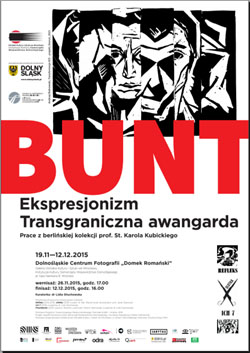
Exhibition “Bunt” – Expressionism – Transborder Avant-Garde in Wrocław

Bunt-Plakat-WroclawDr Lidia Głuchowska

Opening today:

November, 26th, 2015, 5 pm
Dolnośląskie Centrum Fotografii “Domek Romański”, Wrocław

Press PO POLSKU Gazeta Wyborcza Wrocław
Radio PO POLSKU POSLUCHAJ


2 Bunt Transborder Avant Garde

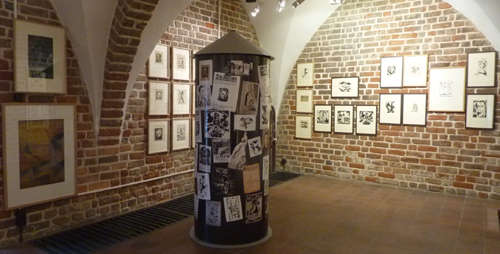
Arrangement with the posters of the first “Bunt” exhibition in Poznań in 1918 and the last one, in Berlin, 1922

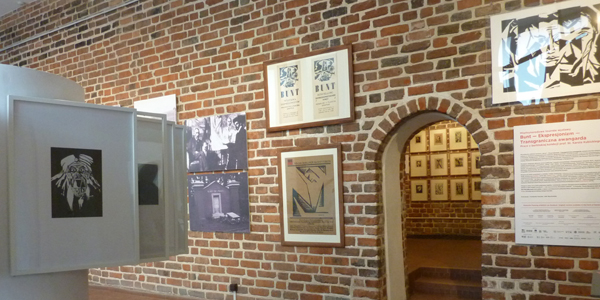
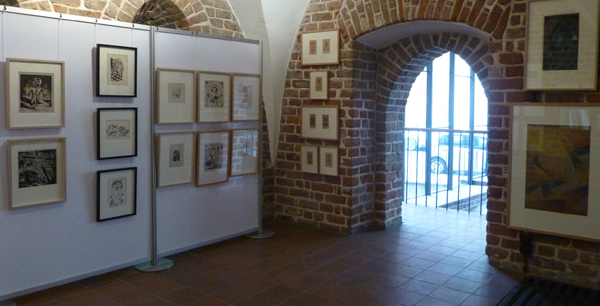
The Wrocław edition of the exhibition Bunt – Expressionism – Transborder Avant-Garde. Artpieces from the Berlin Collection of Prof. Stanisław Karol Kubicki is a closing event of the touring display of donated art which includes exhibitions in essential pre-war centers of expressionism and the development of graphic arts. So far it has been shown in Poznań, Bydgoszcz and Dresden. It was organized to honour the donation received by the Leon Wyczółkowski Regional Museum in Bydgoszcz and the National Museum in Poznań from Professor Stanisław Karol Kubicki, son of the Polish-German avant-garde artists Margarete and Stanisław Kubicki.

About these tourning exhibition we already have written here, here, here, here, here and at many other places – just look in the index or searching.

The exhibition finale on 12 December 2015 will be connected with the aid of four bilingual publications accompanying the exhibition, among them the book by the curator, Lidia Głuchowska, Stanisław Kubicki – in transitu. Poeta tłumaczy sam siebie / Ein Poet überestzt sich selbst, and the premiere screening of a documentary-artistic film Bunt – Re-visions showing the entire tournée.

3 Bunt printsExhibition ”Bunt” – Expressionism – Transborder Avant-garde: prints of the group “Bunt”

The core of the exhibition consists of prints, drawings and pastels created by members of the artistic association from Poznań known as Bunt (“Revolt”), focused around the Poznań magazine Zdrój (1917-1922).

Margarete and Stanisław Kubicki, the co-founders of the group, began its cooperation with Polish and foreign galleries as well as such magazines as Die Aktion and Der Sturm from Berlin. The exhibit also includes works by other members of the group: Jerzy Hulewicz, Władysław Skotarek, Stefan Szmaj, Jan Jerzy Wroniecki and Jan Panieński. Proceeding the donation, the prints and drawings had remained abroad since the “Bunt” exhibitions in Berlin (1918-1922).

4 Bunt Szmaj

Linocuts by Stefan Szmaj

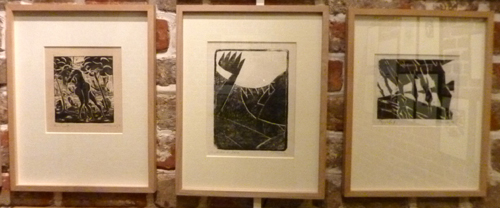
In Wroclaw it should be especially mentioned, that the first expressionist linocuts of the “Bunt” circle, among them The Tower of Babel from the poster of its first exhibition, were created by Stanisław Kubicki in Schömberg/ Chełmsko Śląskie, Silesia.

5 Kubicki Silesia linocuts

The Silesian linocuts by Stanisław Kubicki, among them The Tower of Babel

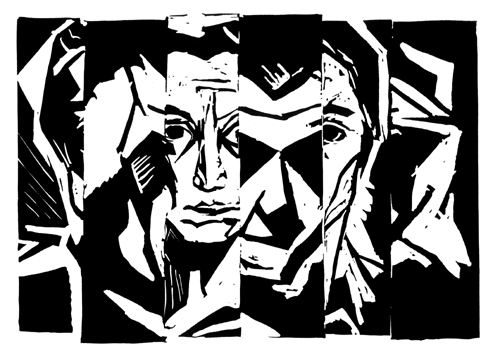
Logo of the exhibition is the linocut by Andrzej Bobrowski Transformation M/S. Just as the artists of the “Bunt” never create a group portrait, Margaret and Stanisław Kubicki never did a portrait of themselves as a couple.

2 BUNT Bobrowski A, Transformation M_S project, 2015a jpgThe linocut by Andrzej Bobrowski Transformation M/S [Transformation M(argarete)/ S(tanisław)] refers to the self-portrait of Margarete Kubicka from 1917 and the Self-portrait IV of her husband which was not preserved but is only known from the publications of Zdrój and Die Aktion magazines in 1918. This contemporary work of graphic art of a hybrid and panoramic composition in a form that refers to the banner is a reflection on the creative and personal relationship of the Kubickis. It is also a reflection on the passing of time and the details of artistic biographies receding in group memory, but also on group identity and the lack of integrity of an artifact in the epoch of its technical reproduction.
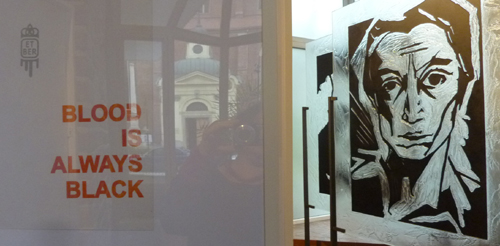
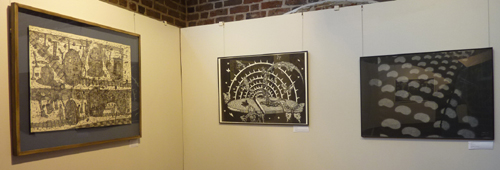
7 Bunt Flyer i PryenikaniePart of the presentation Flyer: print by Małgorzata EtBER Warlikowska and the installation Interference – Re-Integration by Karolina Ludwiczak and Marcin Stachowiak

The exhibition of these works created towards the end of World War I and shortly after is accompanied by the contemporary artistic projects: Refleks [Reflex, 2014-2015], Ulotka [Flyer] and Ich 7 [They 7, 2015], inspired by the art and ideology of “Bunt” and created by contemporary graphic artists from Poznań and Wrocław and a sculptor, Małgorzata Kopczyńska. The latter’s participation is a symbolic allusion to August Zamoyski, who was also a sculptor and a member of the Expressionist group from Poznań. In addition to works on paper, sculptures and documentary photography, the exhibition includes artistic films and a monumental glass installation Przenikanie [Interference – Re-Integration, 2015].

The contemporary artistic presentations demonstrate the stylistic and ideological influence of “Bunt” on the works of present-day artists, especially to its idea of critical art, and constitute a symbolic artistic response to the donation of works from Germany. Expressionist inspirations are particularly evident in the social involvement of the installations; the artworks unmask rigid conventions, instances of provincialism and xenophobia, combat the idealization of reality and the reinforcement of socio-political hypocrisy by the media as well as the limitations imposed on citizens by institutions.

The distribution of art through public media, a practice to which Reflex and Flyer also refer, was one of the typical modes of expression used by “Bunt” and other artists of the pre-war European avant-garde. The primary media used at that time were art books and political leaflets with informative and propaganda content. Distributed at rallies, they reinforced the message of artistic manifestos and supported the ideas of social and political emancipation.

The installation Przenikanie makes one understand the paradox related to the technique used to create it. The artifact made by Ludwiczak and Stachowiak is an example of a peculiar interdisciplinary game – the work they created is partly fine art and not a print on a flat screen. That way they also refer to the relief nature of linocut slabs out of which the Kubickis printed their images of themselves.

8 Bunt Ich 7

Presentation They 7: Prints by Jacek Szewczyk, Przemysław Tyszkiewicz and Agata Gertchen

The presentation They 7 concerns works of a larger format, programmatically and technologically inspired by “Bunt” traditions, executed by an informal group of seven artists. The works demonstrate the timelessness of avant-garde ideas and aesthetics as well as their potential for reinterpretation. The name of the project (containing the word ich, meaning “they” in Polish and “I” in German) echoes the bilingual name of “Bunt” (“Revolt”, “rebellion” in Polish, “colourful” in German), which reflected the supranational nature of Expressionist ideology.

9 Bunt Ich 7

Presentation They 7 corresponding with the architecture and life of Wroclaw. From left to the right: prints by Andrzej Bobrowski, Przemysław Tyszkiewicz and Agata Gertchen.

 The scale of the objects of the presentation They 7 similar to the installation Przenikanie. Significantly larger than the ones from the time of the classic avant-garde, is supposed to epitomise for the viewers a change of status and the recipient paradigm. In the times of “Bunt”, graphic art was reproduced in magazines which were the main media of international artistic exchange. Today the art, which is often exhibited in large formats, has gained autonomy and dominated the contemporary iconosphere.

10 Bunt ich 7

Presentation They 7 corresponding with the architecture and life of Wroclaw. From left to the right: prints by Piotr Szurek and Przemysław Tyszkiewicz

The artists of “Bunt” in their operations considered both the national and transnational perspective, constructing our network of artistic contacts from amongst all the Polish artistic groups of that time.

There are not many documents of the international cooperation between the members of the group and other artistic associations, even though the pages of Zdrój [Source] magazine, co-created by “Bunt” artists, are proof of their relationships with creative communities not only in Germany, which is widely known, but also in France, Belgium, Italy, Russia, the Czech Republic, Iceland and even India.

11 Bunt Fotos

The impressive impact of the inter-partition and international exhibitions and publishing initiatives of these artists were also documented in their personal correspondence and some photos.

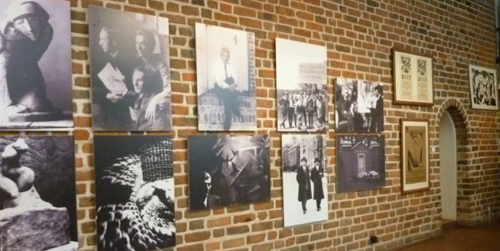
The photographic re-creation of one of the Expressionist linocuts printed in Zdrój (and Die Aktion), the Self-portrait of Stanisław Kubicki from 1918 shot by Berlin ex-Dadaist Raoul Hausmann, shows an expert use of light and shadow. Although Hausmann went on to inspire the camera masters of his time, none of them documented his meetings with Kazimierz Malewicz, the theoretician of Suprematism. The a bis z magazine is the only evidence of their discussions on the internal contradictions in proletarian art. A memento mori of the fascist period is formed from the photographs proving the existence of works condemned to erasure from official artistic life and the collective memory as part of the campaign to banish “degenerate art”. These include photographs documenting such avant-garde works as the sculptures Female torso by Otto Krischer or Mother and child by Pola Lindenfeld, destroyed by the SA and SS during searches conducted in the Berlin home of Margarete and Stanisław Kubicki.

9 Kubicki Pilsudski

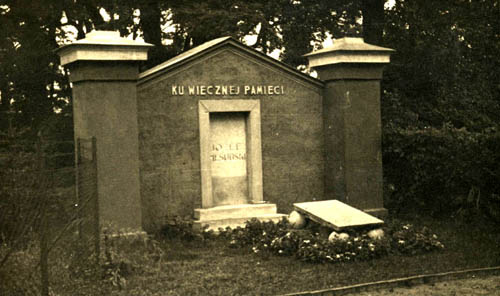
Stanisław Kubicki, “In memoriam” (1935–1939) statue of Józef Piłsudski and the legionaries from the “Kobylepole group” who died in 1919–1920. The monument was located in the park of the palace of Count Stanisław Mycielski in Kobylepole, destroyed in the 1940s., postcard from the 1930s

Other photographs call back from oblivion the forgotten Eternal Remembrance memorial to Józef Piłsudski and his legions, erected in the suburbs of Poznań. It was the only commissioned work of Stanisław Kubicki showing classicist influences and a testament to the widespread cult of Marshal Piłsudski in 1934 in the face of the growing power of Soviet and fascist totalitarianism, but also the fascination of the Zdrój artistic community with the idea of Polish unification in the spirit of the Jagiellonian union, a concept dating back to the days of World War I.

The photographs provide a commentary on the history of transborder contacts and the patriotic fascinations of “Bunt” members. Despite their lack of objectivity and poor state of preservation, they clearly demonstrate the artists’ ambivalent attitude, fluctuating between approval of the “new Polish state” and enthusiasm for the utopian avant-garde idea of a “new international community”.

13 Przenikanie i Ulotka

Installation Interference – Re-Integration by Karolina Ludwiczak and Marcin Stachowiak and the part of the presentation Flyer. To be seen are prints and drawings by Zuzanna Dyrda and Jacek Szewczyk

***
Initiator/curator of the tour
: Lidia Głuchowska
Financial support: Foundation for Polish-German Cooperation
XXXXXXXXXXXXXXISamorząd Województwa Dolnośląskiego

Patronage:                 International Print Triennial Society in XXXXXXXXXXXXXX Kraków
XXXXXXXXXXXXXXiWilly Brandt Center for German and XXXXXXXXXXXXXXiEuropean Studies at the University of xxxxxxxxxxxxxxxxxiWrocław

Showings of the exhibition:
National Museum in Poznań – 19.04-31.05.2015
Leon Wyczółkowski Regional Museum in Bydgoszcz – 25.06-23.08.2015
Kraszewski Museum (Museen der Stadt Dresden) in Dresden – 4.09-8.11.2015
“Roman House” Lower Silesian Photography Centre in Wrocław – 19.11-12.12.2015

Organizers:

Centre for Culture and Art in Wrocław, as part iof the Lower Silesian Art Festival

National Museum in Poznań

Leon Wyczółkowski Regional Museum in Bydgoszcz

Kraszewski Museum (Museen der Stadt Dresden) in Dresden

Reflex and Flyer curator: Maciej Kurak
Flyer coordinator in Wrocław: Jacek Szewczyk, Małgorzata ET BER Warlikowska

They 7 (graphic art and sculpture) curator: Lidia Głuchowska

Installation Interference – Re-Integration: Karolina Ludwiczak and Marcin Stachowiak

Artistic-documentary film: Lidia Głuchowska, Anna Kraśko

Tour logo:               Andrzej Bobrowski, Transformation M/S – project, linocut, 2015

Partners:

University of Arts in Poznań, Faculty of Graphic Arts and Visual Communications

Academy of Art and Design in Wrocław, Faculty of Graphic and Art of Media
University of Zielona Góra, Faculty of Arts, Institute of Visual Arts

Wroclaw Good Books Fair

“Roman House” Lower Silesian Photography Centre in Wroclaw

Rarytas Foundation, Poznań
”Zachęta“, Greater Poland Society for the Encouragement of the Fine Arts

 Photos by Lidia Głuchowska and Olga Nazarkiewicz