Governor of Barataria

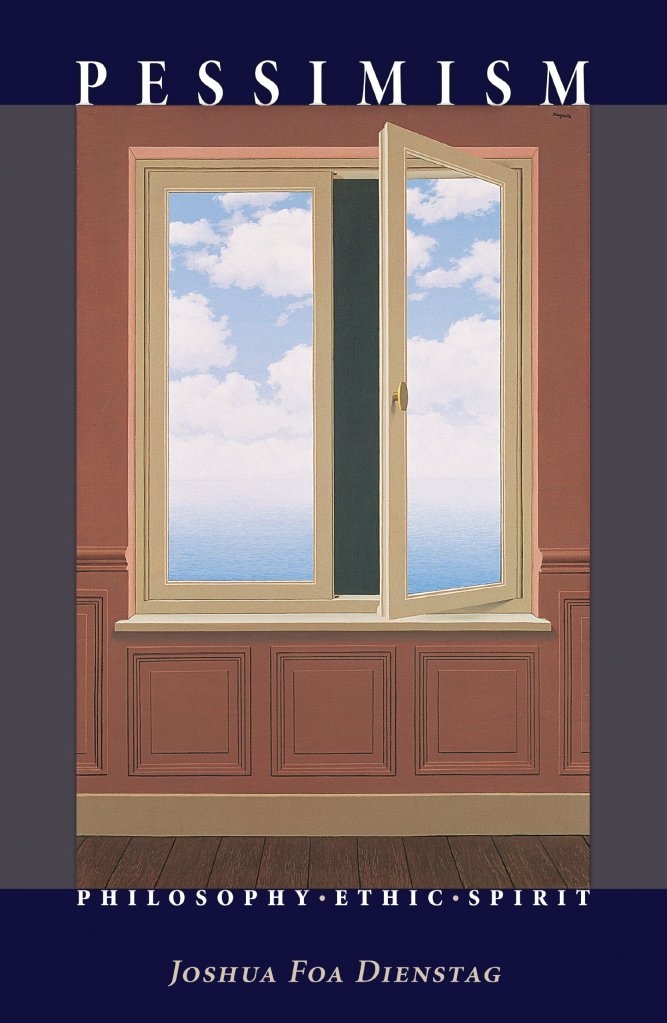
The Telescope is a 1963 oil on canvas painting by René Magritte.
The painting depicts a window through which a partly clouded blue sky can be seen. However, the right side of the window is partially open, revealing a black background where the viewer would expect to see a continuation of the clouds and sky – there could hardly be a better symbol of pessimism.

Ewa Maria Slaska

What I really like in Don Quixote, is, as all my attentive readers know, the story of how Sancho Panza, a simple, unlearned peasant, becomes governor and turns out to be a good and just ruler. Throughout all their journey together, the lord and his squire kept talking about how it would be when Sancho Panza’s faithful services were rewarded with the governorship of some island. The Duke’s mischievous joke makes the fiction come true. Sancho is appointed governor. For the next two chapters, Don Quixote instructs him on what to do to perform his duties well. Interestingly, the pessimistic Don Quixote, a fantast detached from reality, turns out to be a good, practical and pragmatic teacher. Sancho Panza’s reign ends with the lost war and his voluntary decision to resign as governor.

The author analysing this in his book on pessimism writes, that what we learn from it is not how to bring order and justice to the world in any permanent way, but that the attempt to do so is worthwhile. It is what should always count: our efforts are never in vain, they are always worthwhile.

(…) The episode of Sancho’s governorship suggests that he got from being with Don Quixote a surprisingly useful political education. When he takes up his post as governor of Barataria and is confronted with liars and tricksters, Sancho sees through them. When legal cases are brought before him, he is a shrewd judge of the motives and wiles of others. Several of these cases involve, essentially, two lowlifes who accuse one another of having cheated them. Sancho always finds a way to punish both while doing justice to both. The townspeople, who both present and observe these cases, have not been let in on the Duke’s joke and come to have great admiration for Sancho: “In a word, he made so many good rules that to this day they are preserved there, and are called “The ordinances of the great governor Sancho Panza”. Since, up to this point, the reader has been told repeatedly of Sancho’s intellectual shortcomings, this is a remarkable transformation. On Sancho’s part, while he first sought a governorship in order to get rich, he later has cause to boast that “without a cent I came into this government, and without a cent I go out of it”. Once his common sense has been unburdened of greed and ambitions, it is more than adequate to the task at hand. The justice that Quixote is repeatedly unable to effect by force, Sancho brings about through a sensible administration inspired by Quixote’s ideals and Sancho’s embrace of his own humble background. One of Sancho’s “advisers” (planted by the Duke to observe and report on what are expected to be hilarious blunders), is amazed at what he has seen and reports, “Every day we see something new in this world; jokes become realities, and the jokers find the tables turned on them”. But the lesson is not just that the Duke’s mildly sadistic plan has backfired. Quixote’s quest for justice, which everyone considers mad and impossible, has shown itself to bear fruit indirectly and in the most unlikely of places. In Don Quixote, quixotism is a joke; in Sancho, it becomes real.

Why is Sancho more successful than Quixote? Perhaps because he knows himself better than Quixote. Quixote claims to continue the personality of the Nine Worthies, but Sancho knows himself only as Sancho, Quixote’s squire. Without Quixote’s example, he would, perhaps, never have been able to see the value of this. While at the start, Sancho wanted nothing else than to be a governor, by the time he actually takes on the role, he has changed. The Duke suggests that he pick out a new wardrobe when assuming office, but he replies, “Let them dress me as they like. However I’m dressed I’ll be Sancho Panza”. Sancho reassures Quixote that the position will not distort him by saying, “I’d rather go to heaven as Sancho than to hell as a governor.” And this draws a rare compliment out of Quixote: “For those last words you uttered alone, I consider you deserve to be governor of a thousand islands”. In learning from Quixote, Sancho has not become another Quixote, but the first and only Sancho Panza. Following a knight with delusions of grandeur, Sancho has lost his own delusions and become who he is. What success he has in politics stems from this. Sancho’s policies are not, perhaps, what we might expect from a pessimist, but the entire episode may perhaps be taken to indicate that the best governor is one with a pessimistic education. Having dismantled his extravagant plans for the future, Sancho is better at seeing each case that comes before him for what it is. In knowing himself, he also knows what justice is. But the success that Sancho meets with is limited, in more ways than one. First of all, there is the inability of Sancho’s state to withstand a violent attack staged by the Duke who put him in power. More importantly, despite Sancho’s fitness to govern, he finds the process itself agonizing. An “advisor” concerned with his health refuses to let him eat anything and this symbolizes the lack of reward involved in governing: “I am dying of discouragement, because when I thought I was coming to this government to get hot food and cold drinks, and take my ease between holland sheets on feather beds, I find I have come to do penance as if I was a hermit”. Sancho has forsworn the acceptance of bribes or any such similar material rewards, so his post is no more rewarding financially than nutritionally. It might be expected, though, that his successful government might give him some feeling of satisfaction. It does not. Sancho, in coming to know himself, learns that the task of government is more than he can bear, nor does Cervantes suggest that another would find it any easier. Sancho leaves his governorship even more hastily than he accepted it. Finally, Cervantes warns us, in his usual comic fashion, not to become too enamored of Sancho’s new-found “wisdom.” When Quixote remarks on his improvement, Sancho replies, “It must be that some of your worship’s discretion sticks to me. Land that, of itself, is barren and dry, will yield good fruit if you fertilize it and till it. What I mean is that your worship’s conversation is the fertilizer that has fallen on the barren soil of my dry wit, and the time I have spent in your service and company has been the tillage”. This way of putting things sets them in proper perspective. Though Sancho has improved, he has not improved much. At best, he repeats garbled versions of old maxims whose meaning he only half-understands. In imitating Quixote, he has unlearned a few of his worst habits and acquired some better ones. If Sancho is successful at governing, it is as much because an honest half-wit is already a great improvement on the greedy, corrupt, and conniving men who ordinarily hold such posts. Quixote had suggested to Sancho that knowing who he is would be enough for him to govern, and, as Cervantes lets the events unfold, this turns out to be the case. At some level, the joke, which appeared to become real, remains a joke-what more, Cervantes seems to say, could one expect from a chaotic world such as this one? But this attitude too is perfectly consonant with a pessimistic perspective. What we learn from Sancho’s government is not how to bring order and justice to the world in any permanent way, but that the attempt to do so is worthwhile.

Pessimism of Don Quixote

Ewa Maria Slaska

Do not worry, only this part is in Polish, further follows English text

Thanks an Arkadiusz Łuba for sending me that picture 🙂

I. Wstęp z niemieckiej prasy codziennej

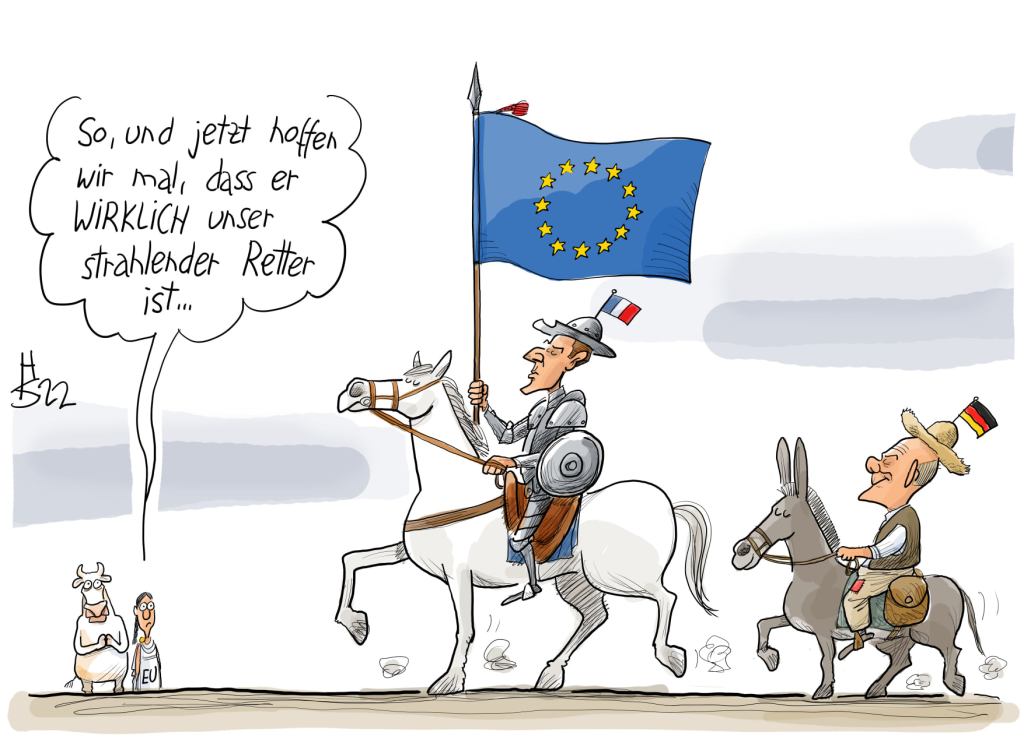
Ach, miejmy nadzieję, że on naprawdę okaże się naszym promiennym zbawcą

Trudno wyrokować. Na pewno po odejściu Angeli Merkel Emmanuel Macron wybija się na przywódcę Europy, podczas gdy niemieckiemu kanclerzowi przypada zaledwie rola giermka-brzuchacza. O dalszych analogiach między dzisiejszą sytuacją Europy a życiorysem Rycerza o Smętnym Obliczu pisze Arek Łuba na swoim blogu o komiksach: TU. Ciekawe wydaje się oczywiście, że jak po dwóch miesiącach wojny biedny zapatrzony we własny brzuch giermek wreszcie podniósł oczy, ujrzał mroczne obrazy wojny i postanowił sam chwycić za miecz, natychmiast zleciały się zewsząd niemieckie intelektualne dziewczątka i chłopięta, przerażone do głębin jestestwa myślą o tym, że będzie brzydko, be i prosząc Sanczę Brzuchacza by natychmiast zrezygnował ze wspierania walki i powrócił do roli przygłupa. List intelektualistów niemieckich TU (jest nawet, niestety moja ulubiona pisarka, Juli Zeh). Najstraszniejsze w tym liście (nazwijmy go) pierwszym była teza, że jeżeli naród ukraiński będzie nadal cierpiał, to będzie to jego własna wina, bo broni się przed agresorem! To zdanie jest hańbą europejskiej myśli pacyfistycznej, a ludzie którzy uznali, że ofiara jest winna tego, że cierpi, są po prostu ch… I niech już tam sobie idą.

Na szczęście, zanim przyszedł czas na opublikowanie tego posta, pojawił się drugi list otwarty, w którym paru naprawdę porządnych intelektualistów wsparło Sancho Pansę w jego decyzji, żeby jednak stanąć po stronie sprawiedliwości.

Uwaga, po kliknięciu na tego linka znajdzie się też link, gdzie się można podpisać pod tym “drugim listem”, razem Danielem Kehlmannem, Maximem Billerem, Herthą Müller, Olgą i Vladimirem Kaminerami, ze mną i innymi porządnymi ludźmi.

Koniec części polskiej

II. Optimistic intermezzo

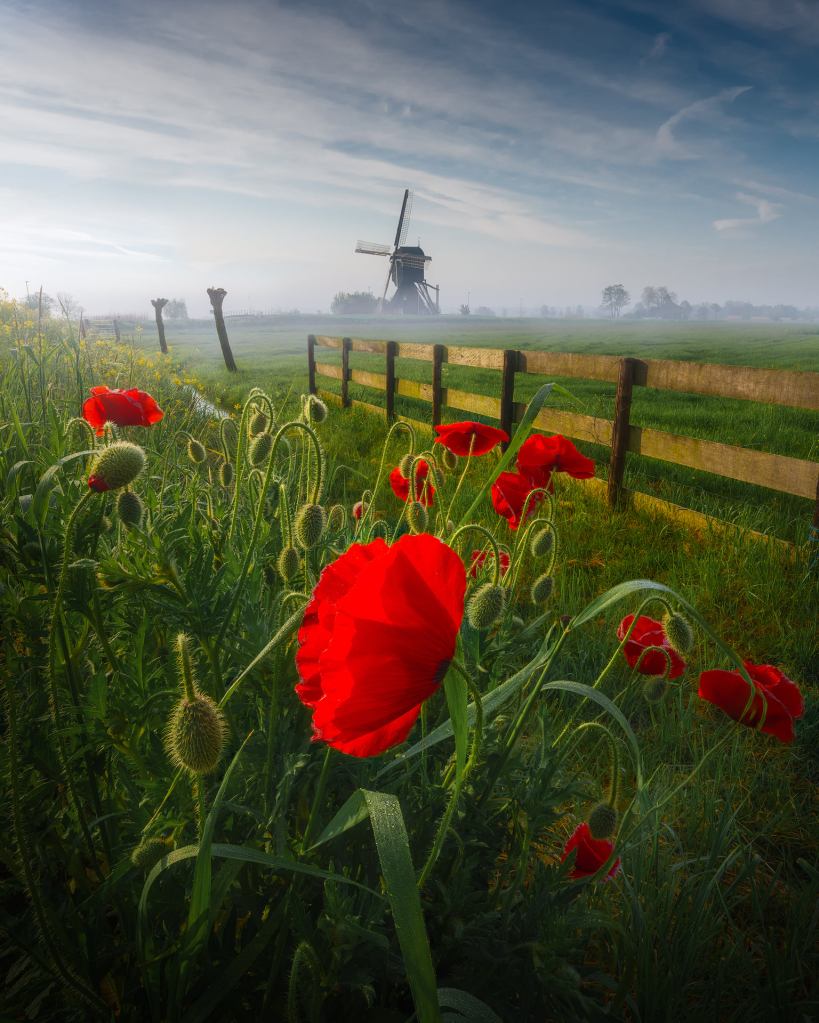
Albert Dros Photography

I have photographed many windmills over the years, but never one with poppies. Last week, after driving home I put my navigation ‘avoid motorways’. It’s a way for me to discover new places on the countryside, and this windmill was waiting for me. Just a few poppies were enough to make this photo.

René Magritte, The Telescope,1963, oil on canvas

III. About optimism of pessimists

Chapter Six
CERVANTES AS EDUCATOR
DON QUIXOTE AND THE PRACTICE
OF PESSIMISM

Don Quixote … is an allegory of the life of every man who,
unlike others, will not be careful merely for his own personal
welfare, but pursues an objective, ideal end that has taken
possession of his thinking and willing; and then, of course,
in this world he looks queer and odd.
-ARTHUR SCHOPENHAUER

Today we read Don Quixote with a bitter taste in our
mouths, almost with a feeling of torment, and would thus
seem very strange and incomprehensible to its author
and his contemporaries: they read it with the clearest
conscience in the world as the most cheerful of books,
they laughed themselves almost to death over it.
-FRIEDRICH NIETZSCHE

Prehistory

Different pessimists have read Don Quixote in different ways (…). But the uniform praise of this novel by the pessimists should cause us to wonder at the source of the commonplace understanding of its protagonist as an enemy of pessimism. Though the reader may reflexively think of Don Quixote as an inveterate optimist, charging at windmills and the like, I would suggest that this has more to do with the popularity of the musical Man of La Mancha than with Cervantes’s actual text. Whatever merits this lachrymose bit of theater may possess, fidelity to the spirit of Don Quixote is not actually one of them. If anything, Man of La Mancha resembles the heavy-handed, Wagnerian operatic romanticism that Nietzsche so feared being associated with.
Though I am not concerned here with cultural analysis, the reworking that Don Quixote receives in Man of La Mancha is an interesting example of the kind of imperialism of optimism that has succeeded in making pessimism invisible today. As Nietzsche reminds us, however, Cervantes’s book was received by its first readers as a bright comedy and was, indeed, internationally successful on that basis.

Practice of pessimism

If Quixote hopes, at first, to right wrongs with a wave of his noble sword, the sad truth about the world eventually destroys that expectation, both in him and in the reader. But if the narratives of chivalry that Cervantes mocks have been a dubious education for Quixote, that is not at all the case for Quixote’s own narrative of chivalry, which is an education for Sancho Panza and, through him, for the rest of us. And, as certain episodes in the novel suggest (particularly those in which Sancho is called upon to govern), it is even a useful political education. For Sancho, the unlettered peasant, to the surprise of everyone, governs wisely when given the opportunity. The justice that the insane Quixote is unable to effect with the sword, Sancho brings about through a sane and brave administration inspired by Quixote’s example. Sancho’s success is limited (indeed, ultimately it is destroyed), but it is (temporarily) genuine. For a time, Sancho organizes a small portion of the universe under something like a decent political regime. And all the characters in the novel, except Quixote, find this astounding.
Cervantes (…) characterizes the universe he created as a pessimistic vision and (…) his book aims at a goal that pessimists would recognize (and have recognized) – a mode of action that acknowledges the insuperable barriers that time-bound existence throws up against justice and happiness, but which does not respond to this situation with resignation. Don Quixote represents what I am terming a “practice of pessimism,” a mode of conduct and action founded on an absence of expectation and hope.

More tomorrow

Pomagajmy

Zostańmy patronami Serhija Żadana

Bardzo Państwa zachęcam do zostania patronem ukraińskiego poety i pisarza, Serhija Żadana. To najlepsze wsparcie jakiego możemy udzielić Charkowowi i jego mieszkańcom.

Serhij napisał (przekład Wiery Meniok):

Zazwyczaj bardzo ostrożnie proszę was o pomoc, ponieważ jestem pewien, że większość z tych, kto czyta tę stronę, w taki czy inny sposób dają środki na coś. I nawet nie większość – wszyscy. Albo prawie wszyscy).

Potrzeb jest naprawdę bardzo dużo, nie potrafię określić, jaka z nich jest ważna bardziej czy mniej. Co jest ważniejsze – kupić powerbank dla żołnierza na linii frontu czy butelkę mleka dla babci, którą ten żołnierz chroni? Sami ustalcie priorytety, ja tylko powiem, że pracuję z różnymi grupami wolontariuszy, a otrzymane od was koszty (bezpośrednio z rąk do rąk, przez patreon czy na konta wolontariatu), wydaję na bardzo różne rzeczy – wczoraj na przykład dałem 20 000 na samochód dla bojowników oraz 10 000 na żywność dla cywilów. Na jutro również mamy mnóstwo zamówień. Bardzo chcę, byście mnie usłyszeli – większość tych zamówień i potrzeb pojawia się nie dlatego, że „państwo nic nie robi” – tylko dlatego, że państwo nigdy wcześniej nie stanęło przed takimi wyzwaniami i dlatego potrzebuje naszej pomocy. Jeśli państwo będzie uratowane – wszystko odzyskamy))

Krótko mówiąc, sami widzicie, czym się zajmujemy z moimi przyjaciółmi, komu pomagamy, kogo wspieramy, piszę o wszystkim, o czym można pisać. Jeśli będzie możliwość i chęć pomóc – pomagajcie. Jeśli macie inne pomysły jak pomóc i wesprzeć – chwała Bogu. Szczegółowego sprawozdania z fakturami nie będzie) (wiele rzeczy jest kupowanych i znajdowanych, sprowadzanych i uzyskiwanych bez faktur)))) Ale potem napiszę dla was powieść o wolontariuszach)))

To jest moja ukraińska karta bankowa wolontariusza:

4149 6090 0342 8085

To jest mój patreon:

www.patreon.com/serhiyzhadan

To jest mój nowo otwarty PayPal, tutaj można przesłać środki spoza Ukrainy:

Сергій Жадан sirozhazhadan@gmail.com

Chciałbym jeszcze raz podkreślić: wszystkie środki otrzymane na tych kontach wykorzystuję na wolontariat – na wsparcie walczących o wolność Ukraińców.

Сергей Жадан:

Друзі, що хочу сказати. Зазвичай дуже обережно прошу вас про допомогу, оскільки певен, що більшість із тих, хто читає цю сторінку, так чи інакше сьогодні на щось перераховує кошти. Та навіть і не більшість – всі. Чи майже всі)

Потреб справді дуже багато, визначити яка з них більш важлива чи менш важлива мені особисто складно. Що важливіше – купити повербанк бійцю на передовій чи пляшку молока бабусі, яку цей боєць захищає? Ви самі собі визначайтеся з пріоритетами, я лише скажу, що співпрацюю з різними волонтерськими групами, і кошти, отримані від вас (безпосередньо з рук у руки, через патреон чи на волонтерські картки), витрачаю на дуже різні речі – вчора, скажімо, кинув 20 000 на авто для бійців і 10 000 на їжу для цивільних. На завтра теж маємо купу замовлень. Знову ж таки, дуже хочу, аби ви мене почули – більшість цих замовлень і потреб виникають не тому, що “держава нічого не робить” – вони виникають тому, що держава ніколи не стикалась із такими викликами й тому потребує нашої допомоги. Збережеться держава – ми все собі повернемо))

Одне слово, ви бачите, чим ми з друзями займаємося, кому допомагаємо, кого підтримуємо, я про все, про що можна писати, пишу. Буде можливість та бажання допомогти – допомагайте. Маєте інші варіанти допомогти та підтримати – слава Богу. Детальних звітів із чеками не буде) (багато чого купується й знаходиться, переганяється й дістається без чеків)))) Але потім я вам напишу роман про волонтерів)))

Ось моя українська волонтерська картка:

4149 6090 0342 8085

Ось мій патреон:

www.patreon.com/serhiyzhadan

Ось мій щойновідкритий PayPal, сюди можна переказувати кошти з-поза меж України:

Сергій Жадан sirozhazhadan@gmail.com

Ще раз наголошу: всі кошти, отримані на ці рахунки, я використовую на волонтерство – на підтримку українців, які воюють за свою свободу. Собі я з цього нічого не беру: працюю на австрійський генштаб, мені там нормально платять.

Дякую всім за підтримку та допомогу. Хай у всіх буде тихий вечір. Завтра прокинемось ще на один день ближче до нашої перемоги)

Сергій Жадан is creating writing/journalism and music | Patreon

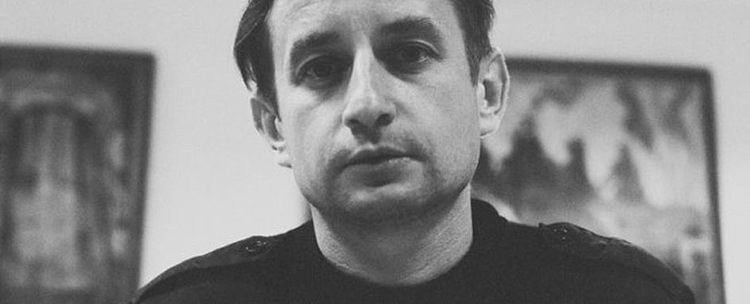
Serhij Żadan, Ukrainian writer, now in Kharkiv, where he collects funds to help the people of Ukraine.

“Usually, I ask for your help very carefully, because I am sure that most of those who read this page are giving money to something in one way or another.

The needs are really a lot, I cannot define which of them is more or less important. What is more important – buy a powerbank for a front-line soldier or a bottle of milk for grandma, which this soldier protects? Set your priorities yourself, I will just say that I work with various groups of volunteers, and the costs received from you (directly from hand to hand, via Patreon or to volunteer accounts), I spend on very different things – yesterday, for example, I gave 20,000 for a car for fighters and 10,000 for food for civilians. We also have a lot of orders for tomorrow. I really want you to hear me – most of these orders and needs arise not because “the state does nothing” – but because the state has never faced such challenges before and therefore needs our help. If the country is saved – we will recover everything))

In short, you can see what we do with my friends, who we help, whom we support, and I write about everything that can be written about. If there is an opportunity and willingness to help – help. If you have other ideas on how to help and support – thank God. There will be no detailed report with invoices) (many things are bought and found, brought and obtained without invoices)))) But then I will write a novel for you about volunteers)))

This is my Ukrainian volunteer bank card:

4149 6090 0342 8085

This is my Patreon:

www.patreon.com/serhiyzhadan

This is my newly opened PayPal, you can send funds from outside of Ukraine here:

Сергій Жадан sirozhazhadan@gmail.com

I would like to emphasize once again: I use all the funds received in these accounts for volunteering – to support the Ukrainians who fight for freedom.

Two texts about Finnland

Jarosław Suchoples

Ukraine is fighting. People prepare themselves for street-to-street fighting with the aggressor. The Ukrainians make Molotov cocktails.

What is this and why such a name? The prescription is really simple: take a glass bottle, fill it with petrol or, better, with gasoline (2/3) and old machine oil (1/3). Put a piece of a rag at the top. Throw it on a tank or any other military vehicle of the enemy. Oh, do not forget to put in flame the rag before you throw the bottle.

The first Molotov cocktails were produced in Finland during the Winter War in 1939. The Finns invented them because of the scarcity of their anti-tank weapons. The Soviet Foreign Minister Molotov claimed that Soviet airplanes were involved in humanitarian operations over Finland throwing baskets with bread to the poor population of Finland waiting for liberation by the Red Army. Therefore, the Finns immediately, with a specific dark sense of humor, invented the name for their new anti-tank weapon. It is primitive but can be deadly dangerous, especially during street-to-street fighting in cities. Tanks (even these most modern), unprotected by infantry, are very easy targets.

Molotov cocktail 1939-1940, Finland

Molotov cocktail (with some homemade grenades) 1944 Warsaw uprising, Poland

Molotov cocktails 2022, Ukraine

Appendix from the culture:

An ultra pathetic poem from Poland by Władysław Broniewski (trans. chrolka) and a pragmatic and humorous song from Finland (with Finnish, Ukrainian and English subtitles). Both refer to 1939. Try to replace geographic names (Poland with Ukraine and Helsinki with Kiev). It works quite well.

Shoot them dead
When they come to burn your home,
where you live – Poland,
when they throw their thunderbolt
when they fall in combat
and against your doors they thud
with wooden barrels stained with blood,
you, awaken late at night
quit your bed.

Stand and fight!
Shoot them dead!
Since this country’s bill of wrongs
foreign hand cannot repeal,
drain red blood from breasts and songs,
end your homeland’s long ordeal.

What if Poland’s prison bread
stings the tongue with bitter taste?
Put a bullet in their heads
for attacking what’s not theirs.
Blazemaster of word and heart,
Now a poem is a trench
erase the sadness from your art,
and shout, and order, and command:
“shoot them dead!”
Shoot them dead!
and even if it’s our last day,
remember what Cambronne* once said.
We will say these words again.

* Today, General Cambronne would probably say: Fuck you, Russian warship.

https://youtu.be/8Fy80vO0MV8 **

** Bobrikoff, the Russian General-Governor, promoter of the unsuccessful Russification in Finland in 1899-1905.He was assassinated by the Finnish patriot Eugen Schaumann in 1904

За вашу і за нашу свободу! / Za wolność naszą i waszą

Dziś / today / heute…

Für Eure und für unsere Freiheit!
Stimmen zum Krieg in der Ukraine – live
Sonntag, 6. März 2022
14.00 bis 17.00 Uhr
Bebelplatz, Berlin
Ukrainian, English, and Russian version below
Wir können nicht länger warten. Seit dem frühen Morgen des 24. Februar 2022 führt Putin Krieg gegen die unabhängige Ukraine und ihre Bevölkerung. Soldaten und Panzer dringen ins Land vor. Putin lässt Städte mit Raketen und Bomben beschießen. Die Etappen seiner Kriegsführung sind aus der Geschichte bekannt: Belagerung, Zerstörung, Vernichtung. Wir kennen sie von Grosny und Aleppo.
Putins Angriff auf die Ukraine ist der Angriff auf ein Land, das geschichtlich, sprachlich, kulturell ein Europa im Kleinen ist. Selbstverständlich zweisprachig und multikonfessionell. Kiew, Odesa, Lemberg, Charkiw sind europäische Metropolen, die alle Katastrophen des 20. Jahrhunderts, zuerst die des Stalinismus, dann die der deutschen Herrschaft überlebt haben. Nun sind der Krieg und der Terror in die Ukraine zurückgekehrt.
Die Wahrheit über diesen Krieg wird trotz Zensur und Propaganda auch in Russland ankommen. Die Bilder von den Bombeneinschlägen im Zentrum von Charkiw, von den Rauchwolken über den Wohnvierteln von Kiew, von den Toten und von den Millionen auf der Flucht.
Ob in Warschau, Paris, Sarajevo oder Berlin: Wir dürfen nicht schweigen. Wir müssen den Angegriffenen in Worten und Taten beistehen. Es ist Krieg, zwei Flugstunden von Berlin entfernt. Wir müssen die Urheber der Kriegsverbrechen benennen. Wir dürfen den vor Gewalt und Krieg Fliehenden nicht unsere Hilfe verweigern. Und wenn wir uns machtlos und sprachlos fühlen, müssen wir den Stimmen der anderen zuhören.Lasst uns unsere Sympathie und Solidarität mit dem Volk der Ukraine demonstrieren. Hören wir ihren Stimmen zu. Lassen Sie uns in Worte fassen, was wir im Augenblick der Not empfinden und über die Grenzen hinweg miteinander in Kontakt treten: analog und digital, mit Wort und Musik, im offenen Raum, im Zentrum Berlins.

Im Kampf für Eure und für unsere Freiheit!


Ablaufplan Kundgebung Bebelplatz, Berlin, 14.00 bis 17.00 Uhr

Begrüßung durch die Moderatoren Gesine Dornblüth & Thomas Roth

Life und Zuschaltungen:

I. Musik: Yuriy Gurzhy
1.1.. Karl Schlögel
1.2. Kateryna Mishchenko
1.3. Jurko Prochasko
1.4. Martin Pollack
1.5. Dany Cohn-Bendit
1.6. Marieluise Beck

II Volny Chor aus Belarus
2 1. Svetlana Aleksievič
2.2. Irina Bondas
2.3. Juri Andruchowytsch
2.4. NN zum Thema Krieg und Umwelt
2.5. Andrij Lubka

III Musik: Yuriy Gurzhy
3.1. Timothy Garten Ash
3.2. Video: Das Grauen des Krieges. Aus Černigov
3.3. Christian Tomuschat
3.4. Mario Vargas Llosa
3.5. Wolf Biermann
3.6. Rüdiger von Fritsch: Aufruf an die Diplomaten

IV: Musik: Yuriy Gurzhy
4.1. Katja Petrowskaja
4.2. Olga Tokarczuk
4.3. Ai Weiwei
4.4. Navid Kermani
4.5. Oleksandra Bienert
4.6. Gerd Koenen
4.7. Auszug Rede von Volodymyr Zelens’kyj
V Nationalhymne der Ukraine. Volny Chor

Verantwortlich i.S. des Pressegesetzes und Organisation: Peter-Weiss-Stiftung für Kunst und Politik e.V., Berlin

Live-Stream
За вашу і за нашу свободу!

До війни в Україні – live
Неділя, 6 березня 2022 р.
з 14:00 до 17:00
Бебельплац, Берлін

Ми більше не можемо чекати. З ранку 24 лютого 2022 року Путін воює з незалежною Україною та її народом. Солдати і танки просуваються в країну. Українські міста обстріляні  ракетами та бомбами. Етапи  війни Путіна відомі з історії: облога, руйнування, знищення. Ми знаємо це із ітосрї Грозного та Алеппо.
Напад Путіна на Україну – це напад на країну, яка історично, лінгвістично, культурно є мініатюрною Європою, звісно, двомовною та багатоконфесійною. Київ, Одеса, Львів, Харків – це європейські метрополії, які пережили всі катастрофи ХХ століття, спочатку сталінізм, а потім  німецьку окупацію. Тепер війна і терор повернулися в Україну.
Незважаючи на цензуру та пропаганду, правда про цю війну дійде і до Росії. Зображення вибухів у центрі Харкова, клубів диму над житловими кварталами Києва, загиблих і мільйонів людей, які тікають від насильства.
У Варшаві, Парижі, Сараєво чи Берліні: ми не повинні мовчати. Ми повинні підтримати словом і ділом тих, на кого нападають. Війна йде   лише за це дві години перельоту з Берліна. Ми повинні назвати винних у цих військових злочинах. Ми не повинні відмовляти в нашій допомозі тим, хто тікає від насильства та війни. Ми, люди з усіх верств суспільства, старі люди, які ще пам’ятають світову війну, і молоді люди, які можуть сподіватися, що вони уникнуть війни.
Давайте продемонструємо наше співчуття та солідарність з народом України. Прислухайтеся до їхніх голосів і передайте словами те, що ми відчуваємо у цей момент. Давайте спілкуватися один з одним через кордони: онлайн чи офлайн, за допомогою слів і музики, на відкритому просторі, в центрі Берліна. У боротьбі за вашу і за нашу свободу!Карл Шльогель, Герд Кьенен, Клаус Леггеві, Катаріна Раабе, Манфред Саппер, Ульріх Шрайбер, Вольфганг Клоц.

За вашу і за нашу свободу!
For your and for our freedom!

Voices on the War in Ukraine – live

Sunday, 6 March 2022
2:00 p.m. to 5:00 p.m.
Bebelplatz, Berlin

We cannot wait any longer. Since the early morning of 24 February 2022, Putin has been waging war against the independent country of Ukraine and its people. Soldiers and tanks are invading the country. Putin targets cities with missiles and bombs. The stages of his warfare are known from history: siege, destruction, annihilation. We know them from Grozny and Aleppo.
Putin’s attack on Ukraine is the attack on a country that is historically, linguistically, and culturally a Europe in miniature. Naturally, it is bilingual and multi-confessional. Kiev, Odessa, Lviv, and Kharkiv are European metropolises that have survived all the catastrophes of the 20th century, first that of Stalinism, then that of German rule. Now war and terror have returned to Ukraine. Despite censorship and propaganda, the truth about this war will also reach Russia. The images of the bombings in the center of Kharkiv, of the clouds of smoke over the residential districts of Kiev, of the dead and of the millions on the run.
Be it in Warsaw, Paris, Sarajevo or Berlin: we must not remain silent. We must stand by the attacked in words and deeds. It is a war, two hours’ flight from Berlin. We must name the perpetrators of war crimes. We must not refuse our help to those fleeing violence and war. And when we feel powerless and speechless, we must listen to the voices of others.

Let us demonstrate our sympathy and solidarity with the people of Ukraine. Let us listen to their voices. Let us put into words what we feel in the moment of need and connect with each other across borders: analog and digital, with words and music, in the open space, in the center of Berlin.

In the fight for your freedom and for ours!
За вашу и нашу свободу!
Голоса о войне в Украине — live

Воскресенье, 6 марта 2022 года
с 13:00 до 17:00
Бебельплац, Берлин

Мы не можем больше ждать. С раннего утра 24 февраля 2022 года Путин ведет войну против независимой Украины и ее народа. Солдаты и танки продвигаются вглубь страны. Путин обстреливает города ракетами и бомбами. Этапы его военных действий известны: oсада, разрушение, уничтожение. Мы знаем их по Грозному и Алеппо.
Нападение Путина на Украину – это нападение на страну, которая исторически, лингвистически, культурно представляет собой Европу в миниатюре. Само собой разумеется, – двуязычную и мультиконфессиональную. Киев, Одесса, Львов, Харьков – европейские метрополии, которые пережили все катастрофы 20-го века: сначала сталинизм, затем немецко-фашистское господство. Теперь война и террор вернулись в Украину.

Правда об этой войне дойдет и до России несмотря на цензуру и пропаганду. Кадры взрывов в центре Харькова, клубы дыма над жилыми кварталами Киева, погибшие и миллионы бегущих.Будь то Варшава, Париж, Сараево или Берлин: мы не должны молчать. Мы должны поддержать подвергшихся агрессии словами и делами. Это не война где-то далеко, а на расстоянии двух часов полета от Берлина. Мы должны назвать виновных в военных преступлениях. Мы не не имеем права отказывать в помощи тем, кто спасается от насилия и войны. И когда мы чувствуем себя бессильными и безмолвными, мы должны прислушаться к голосам других.

Давайте же продемонстрируем нашу симпатию и солидарность с народом Украины. Давайте прислушаемся к его голосу. Давайте выразим словами то, что мы чувствуем в трудную минуту, и соединимся друг с другом через границы: аналоговые и цифровые, с помощью слов и музыки, на открытом пространстве, в центре Берлина.

В борьбе за вашу и нашу свободу!
internationales literaturfestival berlin
Chausseestr. 5
10115 Berlin
Tel. +49 (0) 30 – 27 87 86 65
Fax +49 (0) 30 – 27 87 86 85
bauer.eli@web.de
22. internationales literaturfestival berlin | 7.–17. September 2022
#ilb22 #ilb
www.literaturfestival.com
www.litfestodessa.com
www.worldwide-reading.com

       
***
Und hier noch ein link zu einem Interview von Arkadiusz Łuba mit dem ukrainischen Schriftsteller Juri Andruchowytsch: Andruchowytsch: “Die EU wird von Putin sowieso angegriffen” – Deutsche Redaktion – polskieradio.pl

Errare humanum est…

Michał Talma-Sutt

…oder Stalins posthumes Kichern und der Kaiser ist nackt

English: https://www.linkedin.com/pulse/errare-humanum-est-michal-talma-sutt/

Polski: https://www.linkedin.com/pulse/errare-humanum-est-michal-talma-sutt-1f/

Und bald sogar blank. Die im Laufe der Jahre angehäuften Devisenreserven (etwa 640 Milliarden Dollar) könnten schneller verpuffen als gedacht, nachdem die Sanktionen des Westens auch auf die russische Zentralbank ausgedehnt wurden. Schneller sogar als der Morgennebel, von dem Putin in seiner ersten Ansprache an die Nation am 21.02.2022 so poetisch sprach, als er die führende Rolle der Kommunistischen Partei in der zusammenbrechenden UdSSR spurlos verschwinden sah.

Die beiden Reden Putins finden Sie hier. Die erste, nach der Russland die Unabhängigkeit der beiden sogenannten Volksrepubliken in Donbass anerkannte, und die zweite vom 24.02.2021, nach der die Welt, die wir bisher kannten, aufhörte zu existieren. Denn obwohl sie im Großen und Ganzen eine Ansammlung von Unsinn, Lügen und Manipulationen sind, haben sie doch eine historische Bedeutung bekommen. Das ist eine Sache, die Putin gelungen ist: Er schreibt Geschichte. Unrühmlich, aber immerhin.

Allerdings sind ihm viele Dinge nicht gelungen. Oder doch, aber im Gegenteil, je nachdem, von welcher Seite man es betrachtet. Nun, errare humanum est, et Putin erravisse, wie es scheint.

Erstens hat er scheinbar die Schriften von Sun Tzu (544 v. Chr. – 469 v. Chr.), dem legendären chinesischen General und Denker, über die Kunst des Krieges nicht sorgfältig gelesen. “Wenn es in einer Armee Unordnung gibt und kein Vertrauen zwischen Offizieren und Soldaten in ihren Reihen, werden die Führer der Nachbarländer erfolgreich sein.” “Wenn man weder mit der Stärke des Gegners rechnet noch seine eigene Stärke kennt, kann man sich der Niederlage sicher sein.” Für diejenigen, die die Berichte über die Kämpfe in der Ukraine verfolgt haben, mögen die beiden obigen Zitate irgendwie passend klingen, vielleicht sogar prophetisch, hoffentlich.

Seit einigen Tagen liest und hört man von einer mehrere Kilometer langen Kolonne von Kampf- und Transportfahrzeugen der russischen Armee in der Nähe von Kiew. Wie jemand zu Recht schrieb, entpuppt sie sich einfach als ein gigantischer Stau (und aus strategischer Sicht als ein nicht sehr mobiles Ziel). Sun Tzu sagte, es sei gefährlich, lange an einem Ort zu bleiben. Die letzten drei der fünf Umstände, die seiner Meinung nach für den Sieg wichtig sind, lauten:

“Derjenige wird gewinnen, dessen Soldaten durch den Willen zum Sieg geeint sind.”

“Derjenige wird gewinnen, der besonnen ist.”

“Derjenige, dessen Generäle vorbereitet sind, wird gewinnen.”

Heute, und während ich diese Zeilen schreibe, geht der siebte Tag des Krieges langsam vorüber, kann man sagen, dass diese Umstände für die Erben der Roten Armee nicht gerade günstig sind.

Man kann nur “Slava Ukraini” hinzufügen. Ohne jedoch einen Moment zu vergessen, dass dieser Krieg, der Putins Krieg ist, eine große Tragödie bleibt, für unzählige Menschen, für die Familien, die ihre Angehörigen, Eltern, Kinder, Geschwister verlieren.

“Ich will nicht, dass sie mich umbringen, ich will nur, dass es schnell vorbei ist” – das Bild eines weinenden Mädchens, 8 oder 9 Jahre alt, das in einem Keller sitzt, bleibt im Gedächtnis haften. Solche und andere Bilder, und leider wird es wahrscheinlich noch viel mehr geben, sollten wir versuchen, massenhaft in das kontrollierte Internet in Russland zu schmuggeln.

Appellieren wir an das russische Volk: Wollt ihr euch wirklich mit dieser Regierung identifizieren? Wenn Sie die Ukrainer als Ihre brüderliche Nation betrachten, und ich glaube, die meisten von Ihnen denken so, wie können Sie dann akzeptieren, was geschieht? Überwinden Sie Ihre Angst, gehen Sie auf die Straße, protestieren Sie gegen diesen Krieg!!!

Putin lügt Euch an, dies ist keine friedliche Militäroperation!

Es stimmt nicht, dass in der Ukraine eine Nazi-Junta herrscht. Er ist selbst ein nationalistischer Faschist. Putin ist derjenige, der Euch, liebe Russen, als Geiseln genommen hat. Er ist der Diktator, lasst ihn nicht machen, was er macht, es ist Zeit “Putin Niet!” zu sagen. Nur ihr allein könnt ihn aufhalten!

Hätte die Tragödie, die sich jetzt in der Ukraine abspielt, verhindert werden können? Wäre es möglich gewesen, Putin früher zu stoppen, sodass er es gar nicht erst wagen würde, ein anderes Land in Europa anzugreifen? Und das nicht zum ersten Mal, aber nie in diesem Ausmaß. Soweit ich weiß, gehört Georgien eher zu Europa als zu Asien, und die Krim ist offiziell immer noch ukrainisches Gebiet.

Natürlich war es möglich. Garri Kasparow, der Schachgroßmeister und übrigens Putins Gegenkandidat bei den Präsidentschaftswahlen 2008, warnte schon vor 7 Jahren in seinem Buch “Warum wir Putin stoppen müssen” vor dem, was heute passieren würde. Aber so wie Putin Sun Tzu nicht gelesen hat (oder er hat gelesen, nun wahrscheinlich nicht verstanden, wenn doch, dann verkehrt herum), haben die westlichen Politiker Kasparow offenbar gar nicht gelesen.

Aber heute möchte ich nicht über Fragen wie “was wäre, wenn?” diskutieren. Ob es möglich gewesen wäre, oder noch besser, wie es möglich gewesen wäre, hat kürzlich in einem hervorragenden und sehr bitteren Artikel Mykola Rjabtschuk, ukrainischer Politikwissenschaftler, Schriftsteller und Journalist, teilweise beantwortet.

Für solche was-wenn Gedanken ist es jedoch zu spät, denn wie ich bereits erwähnt habe, hat die Welt, wie wir sie kannten, am 24.02.2022 aufgehört zu existieren, auch wenn sich vielleicht nicht jeder dessen bewusst ist. Natürlich nicht im physischen Sinne, obwohl nahezu offene Drohungen und das Schwenken nuklearer Säbel (wie war das mit den Säbeln, Herr Schröder? Behaupten Sie immer noch, dass es die Ukrainer sind, die sie schwenken?) können solche Ängste hervorrufen, durchaus. Vor dem russischen Einmarsch in der Ukraine zeigte die Weltuntergangsuhr 100 Sekunden vor 12 Uhr, und ich fürchte, der Zeiger könnte jetzt noch näher an 12 heranrücken.

Aber keine Panik, das ist nicht meine Absicht, auch wenn Putin das sicher gerne hätte. Umso mehr sollten wir nicht darauf hereinfallen. Außerdem glaube ich nicht, dass die Prozeduren für einen nuklearen Angriff in Russland auf so etwas wie einen elektronischen Autoschlüssel hinauslaufen würden, den Putin für den Fall der Fälle immer in seiner Hosentasche hat. Aber lass uns diese Weltuntergangthematik beenden. Wenn wir nicht mehr sagen sollen, dass die Welt, wie wir sie kannten, aufgehört hat zu existieren, dann hat sie sich zumindest auf den Kopf gestellt, oder sagen wir, plötzlich um 180 Grad gedreht.

Das ist genau das Ding, das Putin gelungen bzw. nicht gelungen ist, je nachdem, wie man es sieht. Exakt, beim politischen Pokerspiel hat er sich schlicht selbst überboten. Aber machen wir uns keine Illusionen. Wäre dies eine Szene aus einem klassischen Western, wäre er der Typ, der erst alle Mitspieler und dann den Barkeeper erschießt, und dann die Bar verlässt. In der nächsten Einstellung sehen wir ein Fahndungsplakat mit seinem Gesicht. Angeblich wird in Den Haag bereits ein solches Plakat vorbereitet.

Mal abgesehen davon, dass Putin zu hören ungefähr so ist, als würde man Hitlers Reden mit einer Zeitmaschine live hören. In der Tat kann man, wenn man sucht, viele Ähnlichkeiten in der Rhetorik finden. Es ist schockierend und archaisch, was er da redet; in den Zwanziger des 21. Jahrhunderts, hundert Jahre nach dem Beginn der politischen Karriere des Nazi-Diktators.

Putins Geschwafel, sein Revisionismus, seine Verzerrung und Mythologisierung der Geschichte sind wirklich bizarr. Putin sieht das moderne Russland als Erbe der UdSSR und sogar des Zarenreichs. Das ist so, als würde Bundeskanzler Scholz heute verkünden, Deutschland eine Fortsetzung des Dritten Reiches sei und Österreich die Schaffung eines gemeinsamen Staates vorschlagen. Russland kann jedoch kaum mit einem Bearbock-Lawrow-Pakt rechnen. Aber wenn man dieser Logik folgt, was für eine Chance für Berlusconi, in die Politik zurückzukehren. Man muss nur erklären, dass Frankreich, Großbritannien, Griechenland, Ägypten und die Türkei zu Italien gehören, als dem historischen Erben des Römischen Reiches, natürlich mit ihm als Kaiser. Aber was ist mit den Griechen? Nun, sie können zumindest verlangen, dass alle Olympischen Spiele von nun an immer in Athen stattfinden müssen. Erdogan wird sich auf die bulgarischen und rumänischen Territorien stürzen. Johnson wird Indien eine Rückkehr zum Vereinigten Königreich Großbritannien anbieten. Außerdem ist es vielleicht eine echt gute Idee, den Chinesen Afrika abzujagen?

In Putins Stimme klingen übrigens die quasi philosophischen Träumereien von Alexander Dugin an, welcher etwas wie der Rasputin des Kremls ist. Er wünscht sich eine polyzentrische Welt, nicht eine monozentrische. Er meint, dies sei nach dem Zusammenbruch der Sowjetunion geschehen. In einem Interview für Xportal TV, einem polnischen Portal, das aus seinen neofaschistischen Sympathien keinen Hehl macht, kann man das hören. Herr Dugin, es war genau ein solches polyzentrisches System, das zum Ausbruch des Ersten Weltkriegs führte. Dieser wiederum führte zum Zweiter Weltkrieg, aus welchem ein bipolares System der Kräfte resultierte: kapitalistischer und demokratischer Westen – kommunistischer Osten. Natürlich mag der Zusammenbruch des kommunistischen Blocks den Eindruck erweckt haben, dass eine monozentrische Welt entstanden ist. Vorausgesetzt, man erkennt die EU als einen Vasallenstaat der USA an, was natürlich Unsinn ist. Und man vergisst China.

Was können wir in Putins Reden noch hören? Zunächst einmal fragen wir uns irgendwann: Über welches verdammte Land spricht er? Vor allem, wenn wir Tiraden über Korruption, das Fehlen unabhängiger Gerichte, die Verfolgung von Presse und politischen Gegnern oder über die Diskriminierung der eigenen Bevölkerung, über die Oligarchen, die den Staat bestehlen, hören. Zweifellos handelt es sich dabei um Geschichten über ein Land, das Putin in- und auswendig kennt. Nämlich sein eigenes.

Auch Stalin taucht auf. Putin beklagt nicht, wie viel Elend dieser Tyrann nicht nur über das ukrainische Volk, sondern vor allem über die Russen selbst gebracht hat. Nein, Putin hegt einen Groll gegen Stalin. Darüber, dass er es versäumt hat, seinen Regierungsstil zu formalisieren, die Verfassung nicht geändert und damit die völlig zentralistische Herrschaft der einheitlichen (und somit unteilbaren) UdSSR in ihrer damaligen Form sanktioniert hat. Putin sagte, dies sei ein riesiger Fehler, vielmehr ein gigantischer Fehler. Ein unverzeihlicher Fehler. Niemand habe in Russland an die Zukunft gedacht, beklagt Putin, wie immer, fügt er bitter hinzu. Das ist ihre Schuld. Hätten Stalin oder seine Nachfolger das offiziell in Gesetzen, in der Verfassung und in verschiedenen Paragrafen niedergeschrieben, hätten wir kein Problem gehabt. Keine Ukrainer, Weißrussen oder Georgier hätten unsere historischen Territorien verlassen. Sie hätten kein Recht, dies zu tun.

Natürlich können die baltischen Staaten sehr berechtigte Sorgen haben; auch sie waren Sowjetrepubliken.

Der Tag, an dem Sie diesen Artikel lesen, ist der 69. Todestag Stalins, der aus dem Grabe heraus kichert. Es ist auch der 10. Tag des Putin-Krieges. Natürlich müssen wir hoffen, dass Stalins Kichern am 70. Jahrestag nicht in ein lautes Lachen übergeht.

Aber eines ist sicher: Putin hat einen Fehler gemacht, und zwar einen sehr großen. Er hat sich völlig verrechnet.

So entpuppt sich Wolodymyr Zelenski als hervorragender Politiker und Putin als schlechter Schauspieler. Der heldenhafte Präsident der Ukraine erhält weltweite Unterstützung und wird zu einem echten Staatsmann, während niemand Putin glaubt. Niemand, außer natürlich die Russen, die von der Propaganda verdummt wurden und von denen wir hoffen, dass es in Zukunft immer weniger gibt.

Schließlich reicht es aus, sich ein Foto von Zelenski mit seiner Frau und seinen beiden Töchtern anzusehen. Lächelnd, glücklich, eine ganz normale Familie. Und jetzt rufen wir uns all die Bilder von Putin in Erinnerung: mit nacktem Oberkörper, auf einem Pferd, mit einer Schrotflinte, als Judo-Meister, als Eishockeyspieler, kurz gesagt, als starker Mann, als Macho ganz sicher. Wen mögen Sie mehr?

Und woanders? Die polnische Regierung liebt plötzlich die Flüchtlinge, obwohl es vor nicht allzu langer Zeit an der Grenze zu Belarus noch ganz anders aussah. Ja, aber das sind jetzt keine dreckigen Araber. Natürlich ist die Unterstützung für Frauen und Kinder (die Männer kehren zurück, um zu kämpfen) aus der Ukraine groß und aufrichtig. Die Polen verstehen sehr gut, wie sich die Ukrainer fühlen müssen.

In Deutschland sagte Bundeskanzler Scholz noch kürzlich, Nord Stream 2 sei ein rein privatwirtschaftliches Projekt. Es stellt sich heraus, dass dies nicht der Fall ist, und es kann gut sein, dass er bald sagen wird, dass Nord Stream 1 ebenfalls stillgelegt wird. Außerdem wird Deutschland doch 2 % für die Verteidigung ausgeben, sogar einen Sonderfonds von 100 Milliarden für die Armee geschaffen. Sie haben jetzt nicht nur die Granaten in die Helme für die Ukrainer gepackt, sondern auch noch moderne tragbare Stinger-Systeme dazu geschickt. Mit anderen Worten: ein völliger Bruch mit dem Prinzip, keine Waffen in die Kriegsgebiete zu schicken. Der deutsche Finanzminister und Vorsitzende der FDP, einer Partei, die immerhin neoliberalen Ideen huldigt, sagt, dies sei nicht die Zeit für business as usual. Der ehemalige Grünen-Chef, Minister und Vizekanzler Robert Habeck sagt, dass wir die Kohle länger nutzen müssen. Und Annalena Baerbock wird plötzlich von allen geliebt, obwohl ihr viele noch vor Kurzem jede Kompetenz als Außenministerin abgesprochen haben.

Ja, die Welt steht auf dem Kopf. Aber es gibt auch Hoffnung. Natürlich ist Putin nicht ein Teil von jener Kraft, die stets das Böse will und stets das Gute schafft. Er kann noch viel Böses schaffen. Aber seine Fehleinschätzung könnte sich letztlich für die Welt zum Guten wenden. Wäre die Welt ohne Putin nicht ein besserer und vor allem sicherer Ort? Diese Frage sollte jeder für sich selbst beantworten.

Genauso wie die Russen selbst Putin loswerden müssen, das kann niemand für sie tun. 141 der 181 Staaten in der UN-Vollversammlung haben für die Resolution zur Verurteilung der russischen Aggression gestimmt, während es nur 5 Gegenstimmen und 35 Stimmenthaltungen gab. Vielleicht wird ihnen dadurch klar, dass an Putins Aussage, das Recht und die Wahrheit seien auf der Seite Russlands, etwas nicht stimmt. Und wenn das der Fall sein sollte, warum werden dann russische Sportler von fast allen Wettbewerben ausgeschlossen?

Ikea hat jüngst die Schließung aller seiner Einkaufszentren in Russland angekündigt, und die Liste der Firmen, Banken und Unternehmen, die Russland verlassen, wird immer länger. Bald werden die Russen also keine Ikea-Möbel, Klamotten von HM, iPhones, MacBooks, westliche Autos und die Motorradgang der Nachtwölfe keine Harleys mehr kaufen können. Dann bleibt ihnen nur noch der Wodka zu trinken, den sie in Hülle und Fülle haben werden, weil der Westen nicht mehr davon importieren will. Aber das sollte natürlich nicht ihre Hauptmotivation sein, mit Putins verbrecherischem Regime zu brechen. Die Popularität des russischen Diktators wird dadurch jedoch sicherlich nicht steigen, besonders bei den jüngeren Generationen, und wer weiß, ob nicht auch bei den Nachtwölfen, denn für sie ist ein Mann ohne Harley wie ein Kerl ohne Eiern.

Putin selbst hat eine rote Linie überschritten, eine Linie, an der es kein Zurück mehr gibt, absolut kein. Er hat sich in die Reihe der unrühmlichen Figuren der Geschichte eingeordnet. Für Russland wird es keine Rückkehr zum System Putin geben. Das gilt auch für alle Akteure in diesem Regime, wie Lawrow und andere. Je eher die Russen das begreifen, desto besser für ihr Land. Sie haben aber einen Politiker, der Russland in ein modernes und angesehenes Land verwandeln könnte, das für die Welt wichtig ist, mit einer fantastischen Kultur, voller Farben. Sein Name ist Navalny, und er sitzt im Gefängnis. Aber wissen Sie was? Mandela saß auch im Gefängnis.

Berlin, 2-4.03.2022

Bo, czyli Bożenna

Widziałam się z nią pewnie 25 lat temu. Wyjechała, straciłam ją z oczu. Aż przysłała maila:

Dear All,
I am very happy to tell you that our film will have the North American premiere on February 25th.
Here is the article that appeared today in DEADLINE 🙂
Love,
Bo

A pod spodem mailowa wizytówka: Bo(zenna) Intrator
producer, writer

I’ll find you

Matt Grobar

Lech Mackiewicz, Małgorzata Kożuchowska, Connie Nielsen

Courtesy of Witold Baczyk

Gravitas Ventures has acquired North American rights to the WWII-era romantic drama I’ll Find You from director Martha Coolidge (Valley Girl, Real Genius). The Anthem Sports & Entertainment company plans to release the title starring Adelaide Clemens (To the Stars), Leo Suter (Sanditon, Beecham House), Stephen Dorff (Old Henry, Deputy), Connie Nielsen (Zack Snyder’s Justice League, Wonder Woman 1984) and Stellan Skarsgård (Dune, Chernobyl) in theaters and on demand on February 25.

Inspired by true stories of Polish musicians from the 1930s and 1940s, I’ll Find You centers on the tender, music-infused relationship between Robert (Suter) and Rachel (Clemens) that is forged when the pair meet as music school students – he, a promising singer and she, a violin prodigy. While Robert is torn away from Rachel following the German invasion of Poland, he vows to find her, no matter the cost.

David S. Ward (Flyboys, Sleepless in Seattle) and Bozenna Intrator (The Magic Stone, The Bait) penned the script for the film, which was shot on location in Poland and New York. Intrator also produced it alongside Lukasz Raczynski, Zbigniew John Raczynski and Fred Roos, with Alexander Roos exec producing.

“I’LL FIND YOU is a beautiful romance film set against the harsh background of World War II,” said Gravitas Ventures’ Manager of Acquisitions, Brett Rogalsky. “What director Martha Coolidge was able to do with these elements is truly impressive, and we’re excited to be able to bring this film to the public.”

“From the beginning I loved the theme in this film that music has an almost magical power to heal,” added Coolidge, “and that it can inspire and move all people even those at opposite ends of the ideological spectrum.”

Coolidge is an Emmy nominee and DGA Award winner who has previously directed films including Material Girls, The Prince and Me, Angie, Lost in Yonkers, Rambling Rose, Plain Clothes, Real Genius and Valley Girl, along with episodes of such series as Siren, Angie Tribeca, Madam Secretary, The Night Shift, Psych and Weeds.

Gravitas Ventures was founded in 2006 and sold to multi-platform media company Anthem Sports & Entertainment in November. Recent releases from the company include Michael Lembeck’s Queen Bees; Gabriela Cowperthwaite’s Our Friend, starring Casey Affleck, Dakota Johnson, and Jason Segel; Vanguard, directed by Stanley Tong and starring Jackie Chan; and Andy Tennant’s The Secret: Dare to Dream, starring Katie Holmes. Gravitas has also recently acquired titles including Adrian Martinez’s feature directorial debut iGilbert; the Kathy Bates drama Home, from writer-director Franka Potente; family adventure film The King’s Daughter, starring Pierce Brosnan; Jason Pollock’s doc Finding Kendrick Johnson; and The Accursed, a horror film marking the feature directorial debut of writer-directors Elizabeta Vidovic and Kathryn Michell.

Unusual architecture

Organic House

Project of Mexican architect Javier Senosiain

The design idea was taken from the image of a peanut shell: two spacious oval spaces with plenty of light, connected by a low, narrow, poorly lit passage. The idea was based on the elemental functions required by humans: a place to live and interact with others, which would include a living room, dining room and kitchen, as well as a sleeping area with dressing room and bathroom. The original concept is parted in two large spaces: day and night. The house is designed to feel, when you enter, as if you were going underground, without losing the integration of the interior with the green, natural landscape outside.

Urban forest

White church

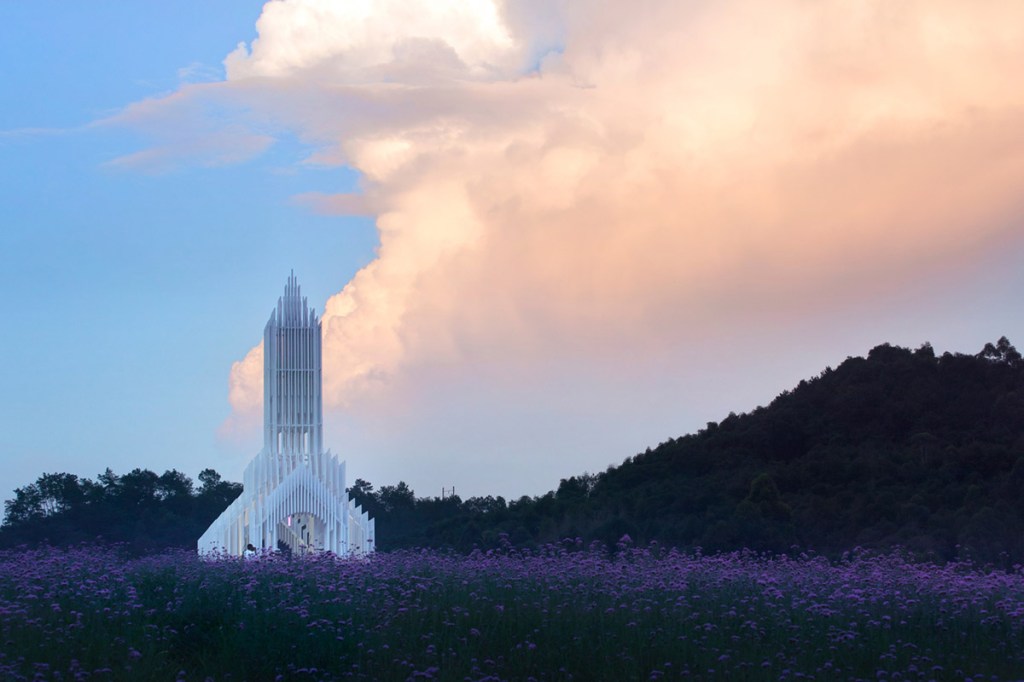
A church made of thousands of white thin beams looks like suspended in the air in lavender field.

This church is a re-embodiment of the usual pattern of Catholic churches built in a purple lavender field in China. 

The church, named Sino-french Science Park Church, has been designed by Shanghai Dachuan Architects to redefine the form of a traditional church with light materials and new construction techniques.

The church, covering only 65-square-metre area, is built on a lavender field, in the light of impressionism, and illuminates the history of art from here. 

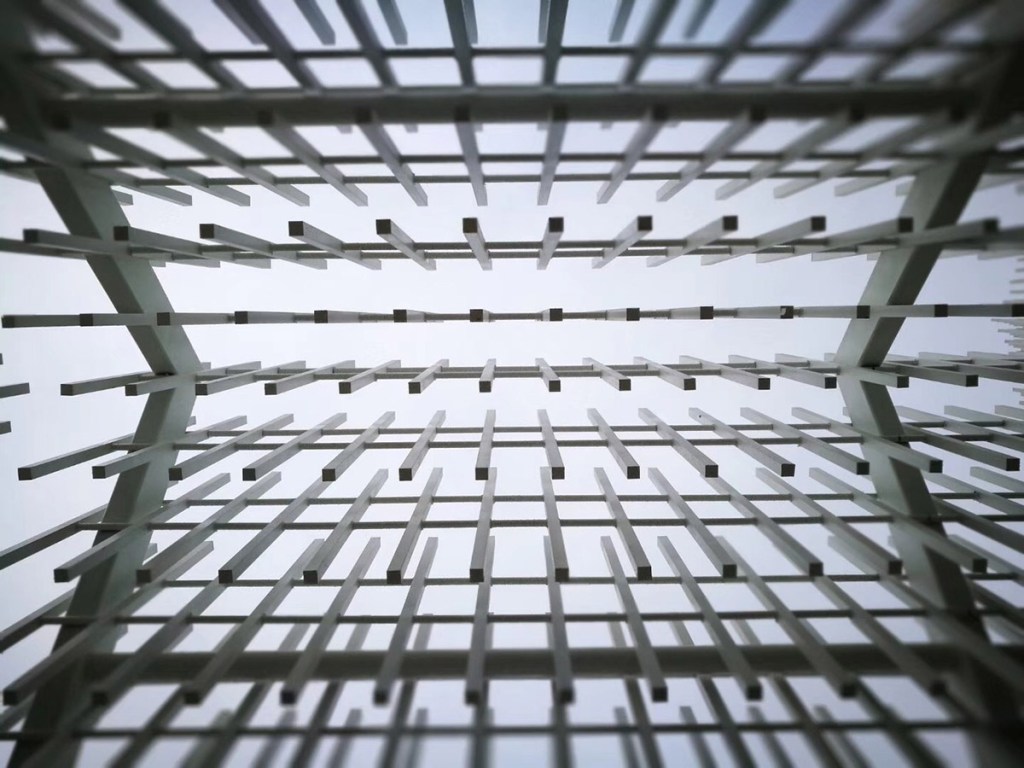
The church is made of thousands of white thin beams to give its pure form and to get its own light and shadow. There is no need to add en extra element to the church. It’s simple, white and looks like only light.

It does not stick to the traditional form to express the freedom, romance and diversity inherent spirit of this land. The church is a break. Break through traditional patterns, break through traditional materials, break through traditional structures, and break through traditional ways of construction, pure white and the free interlacing of light and shadow.

I drugi biały kościół w Chinach

Kamil Białas, 30 stycznia 2022 WhiteMAD, ARCHITEKTURA

Ten maleńki kościół zbudowano w miejscowośći Qingdao w Chinach. Jego projekt powstał w pracowni Büro Ziyu Zhuang. Kościół oddano do użytku w 2021 roku.

Budynek ma 771 m kw. powierzchni. Projektując go architekci chcieli stworzyć przestrzeń, która dla użytkowników będzie miejscem skupienia. Mogą tu przyjść, by w pozbawionym zbędnych ozdobników miejscu skierować swoje myśli ku przeszłości i przyszłości. Pomóc ma w tym nowoczesna i minimalistyczna architektura.

Aby stworzyć ikonę, musieliśmy zadbać o czystą formę, która wciąż przywołuje archetyp kościoła. Dlatego podczas projektowania zintegrowaliśmy różne obrazy fasad tradycyjnych kościołów. Elewacja wzorowana na tradycyjnych budynkach zyskała rzeźbiarską formę i oglądana z każdej strony wygląda inaczej.

Wnętrze niemal całe utrzymane jest w bieli. Powstały tam ramy, które niczym jaskinia mają dawać poczucie bezpieczeństwa. Wizualnie wnętrze ocieplają jedynie drewniane ławki.

The arranged mariage

Helen Faller

I first met P. in the apartment where he’d languished for several weeks after his mistress took gravely ill. He wasn’t what I’d hoped for, long white hair half in dreads and a wild look in his eye I might have found intriguing had I still been in my 20s. But I’d been searching for a match for ages. And I figured we would develop affection and eventually that affection would grow into mutual respect and enduring love.

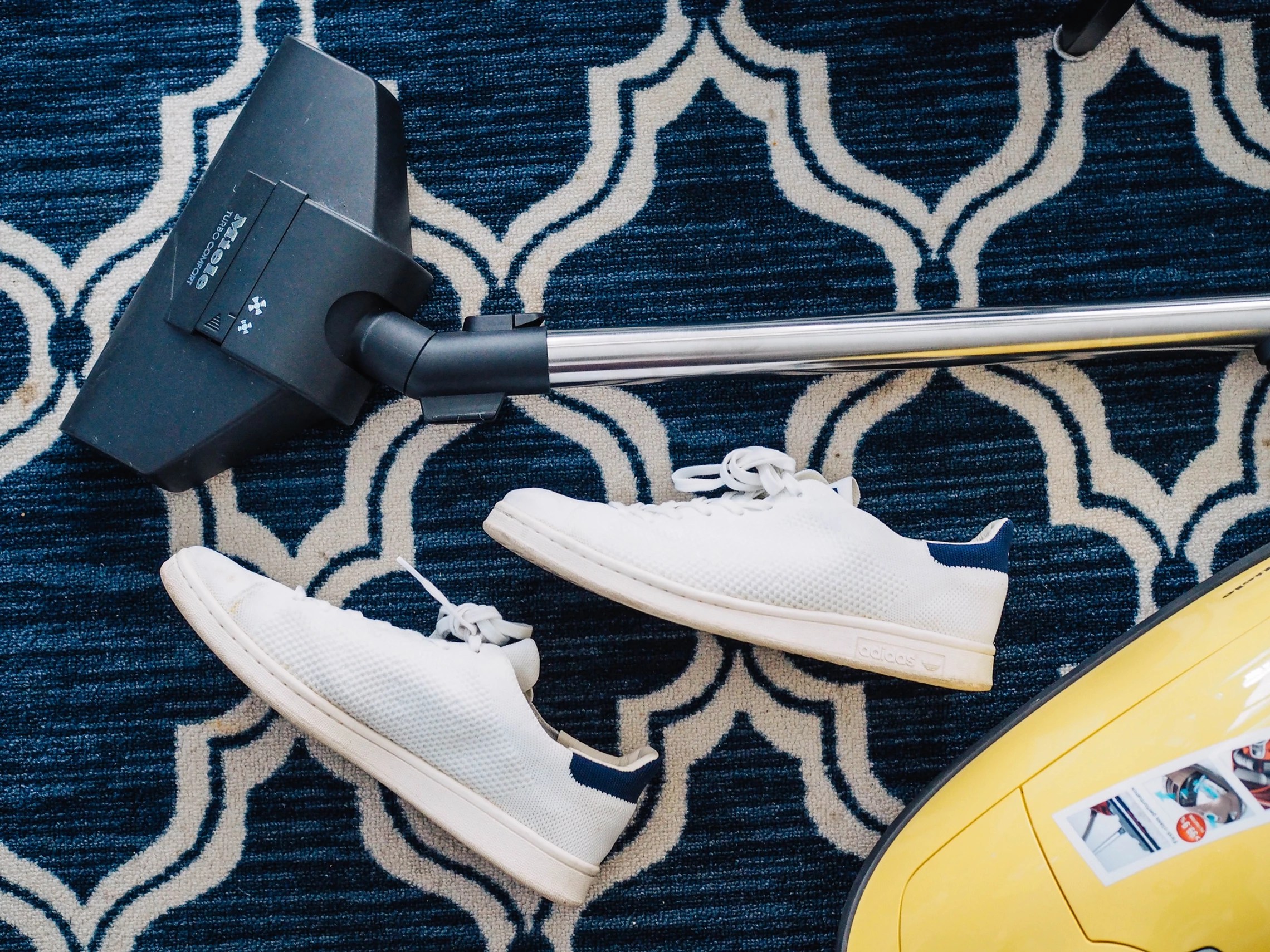
That didn’t happen. P. was worse than all my former beaus rolled into one. He left food crumbs and filthy nail clippings all over my apartment, lolling around like a prince and leaving me to clean up after him as if it were a privilege he bestowed upon me. I found myself vacuuming three times a day. I hate vacuuming. He kept me awake at night clawing at my legs. When he would at last desist, he splayed himself across the queen-sized bed and snored loudly. During the day, he prowled the apartment opening cabinet doors and yanking out the contents, seeking to gain my notice, vainly hoping to win my caresses. On the rare occasions I gave him affection, he inevitably lashed out. I still have scars from his love scratches and bites. When I would refuse his advances, he climbed the furniture, tore at the Persian rug, gnawed on the plants, and scratched the hardwood floors. A few times he even yanked my computer cable out of the wall.

P. ate voraciously, and shat hugely and foully. He tore bags of victuals open with his teeth, leaving meat jerky scraps strewn across the kitchen floor. Each morning I would wake to find my counters covered in urine-drenched sand fallen from his matted hair during his nocturnal perambulations.

After two weeks living with P., I was at my wit’s end. Whenever I heard a noise, I jumped, afraid to see what thing of mine he’d left in ruins. I had no love for him, and P. was starting to have suspicions. He dismantled two telephone chargers with his teeth and knocked the kettle to the floor during dinner.

I called the matchmaker and told him it wasn’t working out. When I described P.’s abuses, the matchmaker assured me that all those behaviors were normal for someone like P. He didn’t relent until I pointed out that it would do P. no good to live in a place where the woman of the house didn’t welcome his presence. He promised to look for another situation.

But the matchmaker was lazy. He figured he’d done his part. I gave him a few nudges, indicated places he might find new prospects. He sent me a text assuring me he was seeing to the matter. Thereafter all my calls went straight to voicemail.

So I was forced to take things into my own hands. Within a few minutes, I had some luck.

I would like a match, she wrote.

I have a match for you, I wrote back.

I have always lived with the likes of P, she wrote. Ever since I was a little girl in my mother’s home in Milano. My decision to commit to a match is one I have long considered.

We quickly switched to private chat and I discovered that, as much as she yearned to meet P. that very instant, she was indisposed and unable to do so. She had overgorged on chocolate and landed in the hospital. The doctors were holding her a few days for observation while she recovered from her overdose.

I looked at her avatar, expecting to see a face plump from scarfing down too many bonbons. Instead I perceived a young woman’s naked body in silhouette, the bony hips and shoulders forming sharp right angles.

Though my patience with endless vacuuming had long since bitten the dust, the chocolate girl’s interest seemed genuine and she certainly was aching for companionship. As was P. I eagerly anticipated her discharge and tried to maintain a semblance of decorum in my home.

Three days later the chocolate girl came to meet her betrothed. Rushing home from an engagement, I found her already standing inside my apartment. I was astounded to discover her even slighter of frame than I had suspected.

I introduced her and she crouched down to converse with P. face to face, speaking gentle diminutives of affection in Italian. He approached and placed his paws on her leg. I waited with baited breath to see if romance would blossom.

His weight on her thigh upset her equilibrium. She toppled over onto one haunch. After she righted herself, she gently touched his head and he bit her.

Not an auspicious beginning. I steadfastly ignored all the signs this match would not be made in heaven, but more likely in the other place.

She had no money to move P. and his trousseau to her home on the edge of town. I wondered how she would afford to keep him, but refused to inquire. Having previously considered myself the till-death-do-us-part type, I now understood spinsterhood was my serenity. I facilitated P.’s removal in every way I could, instructing her as to what to say to the matchmaker to induce him to convey her and P. to her apartment, making a gift of P.’s special nourishment, his toilet articles, and his playthings, and answering her countless questions.

He’d never jump out a window, I assured her. As long as you don’t leave it open, I whispered to myself.

He’ll eat anything, I confirmed. As long as it’s your favorite cake.

He’s full of affection, I persuaded. And if you’re not, good luck to you.

No takey backsies. I sang in glee after they finally took their leave.

I received just one more message from the chocolate girl.

Does P. usually kaka in the sink?

untitled image

Helen Faller (@helenmfaller) is a recovering anthropologist writing a memoir about running away from her divorce to the Silk Road to study dumplings. She lives in Berlin, Germany with her preteen daughter

Reblog for an archeologist

greekreporter.com

Greek Necropolis Outside Naples to Open to Visitors for First Time Ever

By Patricia Claus


Medusa Greek Necropolis
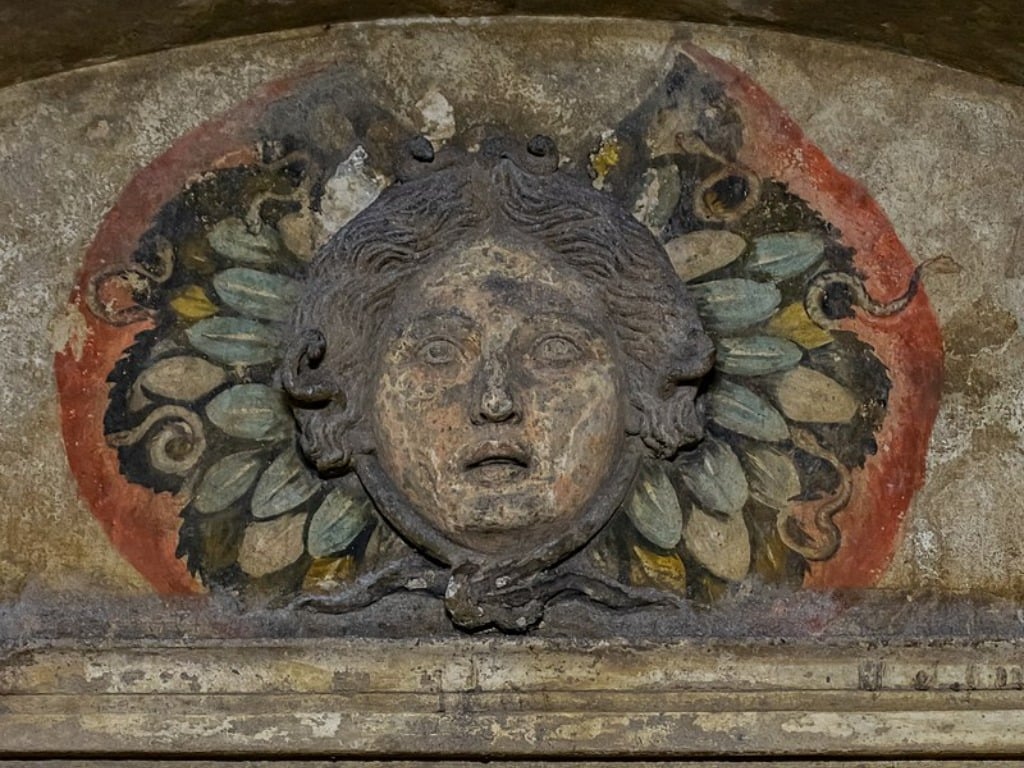
A Medusa stares out from the wall, scaring away all those who might mean harm to the spirits of the people buried in the Greek necropolis near Naples. The sculpture has only been seen by a handful of people in the centuries between its abandonment in Roman times until now. Credit: Alessandra Calise Martuscelli /CC BY-SA 4.0

A spectacular Greek necropolis complex at Sanita, just outside Naples, will open to the public later this year, when the world will finally be able to see the stunning tombs that were carved into the volcanic tufa rock by the ancient Greeks who colonized the area.

Just outside the walls of Naples — originally named Nea polis, or New City, by the Greeks — the tombs were first discovered by accident in the 1700s. Since that time they have variously been forgotten, partially uncovered and then opened to a very small number of people who were friends of the aristocratic family who owned the palace that was built atop them.

Now, however, they are being systematically excavated and restored, thanks to a woman who married into the family, who petitioned for the site to be overseen by Italy’s Central Institute for Conservation (ICR).

Necropolis
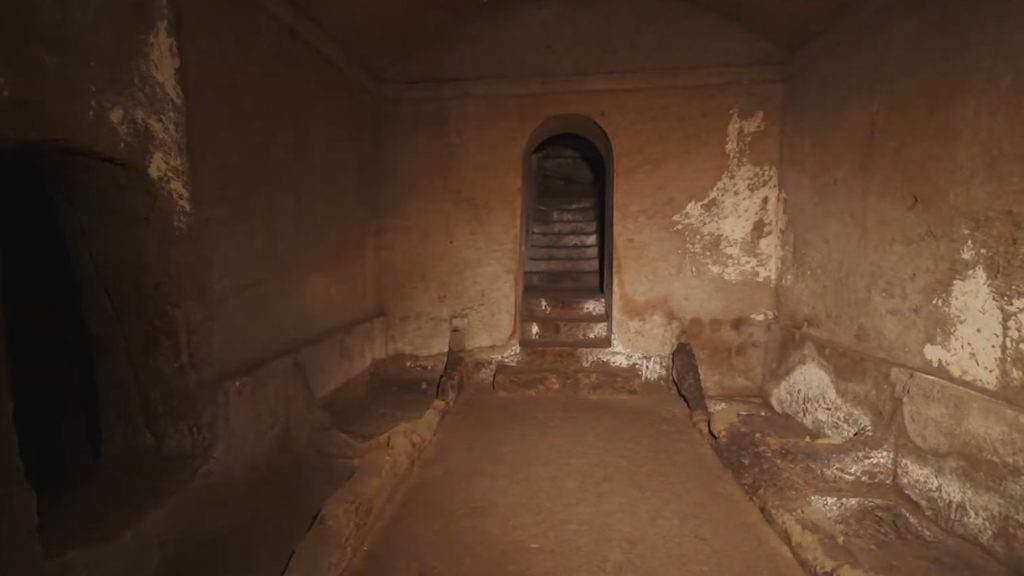
A bed carved out of solid rock is part of a necropolis outside Naples, Italy that will open to the public this Summer. Credit: Screenshot/Youtube video/Discovery Campania

According to a report in Smithsonian Magazine, workers most likely discovered the tombs way back in the 1700s, when a hole they made in the Palace’s garden above destroyed the dividing wall between two of the necropolis’ chambers.

Lying forgotten again for another century, they were rediscovered in 1889, when Baron Giovanni di Donato, the ancestor of the current owner of the Palace, excavated his property to try to tap into a water source for his garden.

The necropolis had been used by the Romans after the time of the Greeks, but the area was subject to flooding and it was eventually buried in feet of sediment. The sarcophagi the Baron found in the 1800s lie 40 feet below street level now.

The spectacular necropolis contains dozens of rooms that are cut as one piece into the volcanic tufa — the same stone which the Roman catacombs were carved out of.

Two years ago, Luigi La Rocca took the reins at the Soprintendenza, a government department which oversees Naples’ archaeological and cultural heritage. The Greek necropolis was one of the first places he visited. From that time onward, he has made it his mission to open up the spectacular Greek necropolis to the public.

“The tombs are almost perfectly conserved, and it’s a direct, living testament to activities in the Greek era,” La Rocca adeclares, adding “It was one of the most important and most interesting sites that I thought the Soprintendenza needed to let people know about.”

Just as they did elsewhere, the Romans revered Greek culture to the point that they allowed the Greeks whose ancestors had settled the area to continue their lives and practice their culture in every way.

These Greeks built stunningly ornate family tombs, placing multiple bodies in each tomb, presumably all the individuals belonging to one family.

Archaeologists at the Soprintendenza believe that the necropolis was in use from the late fourth century BC to the early first century AD. With its discovery and restoration, La Rocca says that it is now “one of the most important” archaeological sites in Naples.

Another Greek funerary complex, at the nearby Greek colony of Posidonia — later called Paestum by the Romans — also features spectacular artwork, including the only known representational fresco to survive from the time of Ancient Greece, showing the deceased as a young man diving into the sea.

Of course, the area is also not far from the sites of Pompeii and Herculaneum, which were covered by feet of ash in the eruption of Mt. Vesuvius in 79 AD.

Medusa
The Gorgon Medusa is the only free-standing sculpture in the Greek necropolis in Sanita, outside Naples – everything else was sculpted out of the bedrock. Credit: Alessandra Calise Martuscelli –CC BY-SA 4.0

The Via dei Cristallini, the Neapolitan street on which the aristocratic di Donato family’s 19th-century palace was built, gives its name to the necropolis, which is referred to as the “Ipogeo dei Cristallini.”

Each tomb has an upper chamber, where funerary urns were placed in niches above benches that were carved into the rock for mourners. The bodies of the dead were placed in the lower burial chamber. But both chambers were richly decorated, with statues — which archaeologists believe may have been of ancestors — as well as sculpted eggs and pomegranates, which are both symbols of new life and resurrection.

Astonishingly, the names of the dead themselves may also be preserved on the walls of the tombs, with the ancient Greek writing still clearly visible.

“The incredible thing about this site is that it was all ‘scavato’ — excavated,” says Melina Pagano, one of the restorers of the necropolis. “They didn’t take the (stone) beds and put them there — they carved (the room and its contents) from the hillside.”

Perhaps most incredibly of all, the beds that the bodies once lay on had integral carved stone pillows that look completely lifelike, as if they are made of down.

Unlike the Roman catacombs, which were carved out of the tufa by ordinary people in an effort to make a suitable burial place for the early Christians, the tombs of the necropolis at Ipogeo dei Cristallini were expertly carved by skilled professionals and boast a wealth of colorful frescoed garlands, and even trompe l’oeil paintings.

One jaw-dropping view greets visitors to the necropolis when they enter one room, which is presided over by the Gorgon Medusa, whose job it is to scare off all the evil spirits who might disturb the souls of the deceased.

The survival of the necropolis complex is for the most part due to the care of the di Donato family, whose scion first had the necropolis excavated in the 1800s — at which time many of the objects found were removed and taken to the Museum National Archaeological Museum of Naples (MANN) and the Soprintendenza.

Numbering approximately 700, they have been displayed at the Museum ever since that time. Some other objects from the necropolis are also in the collection of the family as well.

It was the Baron who had the staircase built that takes visitors down into the necropolis; at the time, he invited local historians to survey the site and record descriptions of the tombs’ frescoes, which have tragically deteriorated since they were discovered.

This was also when the skeletons of the dead were removed from the necropolis — although there are pieces of bones there even today in some areas; these will undergo study before the remains are respectfully interred elsewhere.

After the flurry of activity in the 1800s, the ancient Greek necropolis once more became lost to the world outside of the sphere of the di Donato family; for 120 years they lay untouched behind a locked door in the Palace’s courtyard. No one from the general public ever knew about or was allowed to enter the area.

But that all changed, courtesy of Alessandra Calise Martuscelli, who married into the family.

“Twenty years ago,” she tells interviewers from the Smithsonian, “we went to the MANN to see ‘our’ room (where the Cristallini finds are exhibited), and I was overcome with emotion. It was clear that it was important to open it.”

Calise, who is a hotelier, and her husband Giampiero Martuscelli, an engineer, successfully applied for regional governmental funding and oversight for the necropolis in 2018. Federica Giacomini who supervised the ICR’s investigation into the site, is effusive regarding the priceless frescoes in the necropolis, stating “Ancient Greek painting is almost completely lost — even in Greece, there’s almost nothing left.

“Today we have architecture and sculpture as testimony of Greek art, but we know from sources that painting was equally important. Even though this is decorative, not figurative painting, it’s very refined. So it’s a very unusual context, a rarity, and very precious.”

Paolo Giulierini, the director of the MANN, who is also responsible for the priceless treasures at Pompeii, is keenly appreciative of the immeasurably important Greek cultural heritage of Neapolis as a whole. Despite the historical riches of Pompeii and Herculaneum he believes that Neapolis was “much more important” than they ever were, as a center of Hellenic culture that “stayed Greek until the second century CE.”

Moreover, the museum director believes that the Ipogeo dei Cristallini tomb complex compares only to the painted tombs that were found in Macedonia, the home of Philip II and Alexander the Great; he states that he believes they were “directly commissioned, probably from Macedonian masters, for the Neapolitan elite.

“The hypogeum teaches us that Naples was a top-ranking cultural city in the (ancient) Mediterranean,” Giulierini adds.

Tomb C is the most spectacular of all the four chambers which will open to the public this year. With fluted columns flanking its entrance, the steps leading down to its entrance are still painted red. Six sarcophagi, carved out of the bedrock in the shape of beds, feature “pillows” that still have their painted stripes, in hues of yellow, violet and turquoise; incredibly, the painter even added red “stitches” in the “seams” of the pillows.

The pigments used in these elegant sarcophagi are remarkable in themselves, says restoration expert Melina Pagano, pointing out the Egyptian blue and ocher used on the pillows, as well as the red and white painted floors and legs of the sarcophagi.

Pagano and her team at the ROMA Consorzio used a laser to clean small sections of the stone pillows.

While the only object not carved out of solid rock in the chambers is the life-sized head of Medusa, made from a dark rock, possibly limestone, and hung on a wall opposite the door, it is perhaps the most stunning individual object of them all in the necropolis, looking out on us today with a fearsome gaze across the millennia.