Litwini zebrali środki błyskawicznie i firma produkująca Bayraktary postanowiła przekazać drona za darmo Ukrainie, a zebrane pieniądze przeznaczyć na pomoc ludności. Później to samo stało się z kolejną zbiórką na trzy Bayraktary! Czas na nas. Pamiętacie Buczę, Irpień, Mariupol? Weźmy udział w tej walce. Kupmy polskiego Bayraktara.
Suma jest wyjątkowo ambitna, ale zrzutka idzie doskonale! Jeśli zbierzemy mniej, przekażemy wszystko na fundusz Sił Zbrojnych Ukrainy w Narodowym Banku Ukrainy. To samo zrobimy z nadwyżką. Działamy!
Love, S
Jeśli chcesz wesprzeć akcję, możesz równocześnie wziąć udział w konkursach i licytacjach organizowanych na grupie na Facebooku Zrzutka.Licytacje pod #goBayraktar lub na Allegro. Listę aktualnych konkursów i licytacji znajdziesz w aktualnościach zrzutki. Możesz także wystawić własne aukcje w tych kanałach, aby dochód z nich zasilił zrzutkę! Dołącz do nas!
_________________________________
Придбаймо українцям Байрактар!
Придбаймо для українців Байрактар!
Литовці зібрали кошти миттєво, і фірма, що виготовляє Байрактари, вирішила віддати безпілотник Україні безкоштовно, а зібрані гроші перерахувати на допомогу населенню. Пізніше так само відбулося і з наступним збором коштів на три Байрактари! Тепер наша черга.
Пам’ятаєте Бучу, Ірпінь, Маріуполь? Візьмімо участь у цій боротьбі. Придбаймо польський Байрактар.
Потрібна велика сума, але збір коштів проходить чудово! Якщо ми зберемо менше, то все перерахуємо для ЗСУ через Національний банк України. Так само зробимо з різницею коштів, якщо зберемо більше. Діймо!
З любов’ю, С
_________________________________
Let’s buy Bayraktar for Ukrainians!
The Lithuanians immediately raised money. The Bayraktar-making company decided to give the drone for free to Ukraine. What about money? All the gathered funds were donated to help people.
Later the same thing happened with the next fundraising for three Bayraktars! Now is our turn. Do you remember Bucha, Irpin, Mariupol? Let’s take part in the battle. Let’s buy the Polish Bayraktar!
The amount of funds is tremendous, but fundraising is going perfectly. If we collect less, we will transfer everything to the account of the Armed Forces of Ukraine to the National Bank of Ukraine. We’ll do the same if we’ll raise more money. Let’s do it together!
GRATULIERE DALAI LAMA ZUM GEBURTSTAG!ZŁÓŻ ŻYCZENIA DALAJ LAMIE!WISHDALAI LAMAA HAPPY BIRTHDAY!
Am 6. Juli 2022 hat der Dalai Lama Geburtstag: Das geistliche Oberhaupt der Tibeter wird 87 – hier könnt Ihr Eure Grußbotschaft hinterlassen! Die Anzahl aller gesammelten Glückwünsche und einzelne, ausgewählte Wünsche werden dem Dalai Lama übermittelt.
Dalaj Lama obchodzi urodziny 6 lipca 2022: Duchowy przywódca Tybetańczyków kończy 87 lat – tutaj możesz zostawić wiadomość z życzeniami! Dalaj Lama otrzyma informację, ile osób złożyło mu życzania, otrzyma też kilka wybranych życzeń.
The Dalai Lama’s birthday is on 6 July 2022: The spiritual leader of the Tibetans turns 87 – you can leave your greeting message here! The number of all collected wishes and some individual ones are sent to him.
Aktion / Akcja / Action of International Campaign for Tibet Deutschland e. V.
Menschenrechtsorganisation, International Campaign for Tibet (ICT) wurde 1988 gegründet und hat ihre Büros in Washington, Amsterdam, Brüssel, Berlin und in Dharamsala, Indien. Internationaler Vorsitzender ist der Schauspieler Richard Gere.
Wir wollen, dass das tibetische Volk in Freiheit und Selbstbestimmung lebt und die Menschenrechte geachtet werden. Wir treten für
– ein demokratisches Selbstbestimmungsrecht
– die Sicherung der Menschenrechte
– den Schutz der landeseigenen Kultur und Umwelt in Tibet ein.
International Campaign for Tibet Deutschland e. V. Schönhauser Allee 163 10435 Berlin E-Mail: info@savetibet.de Tel.: 030 / 27 87 90 86
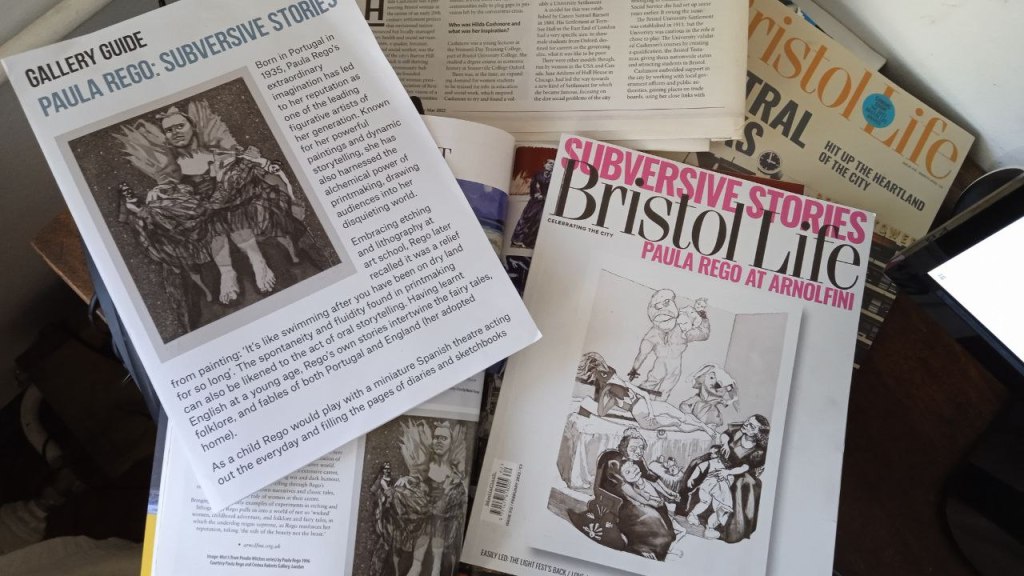
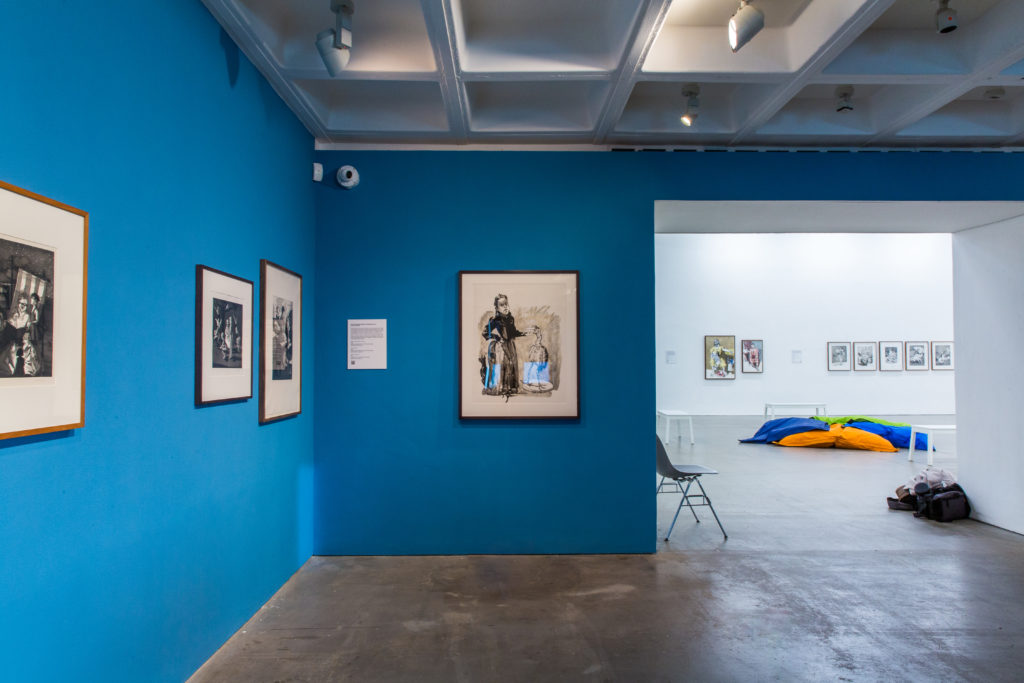
She died two weeks ago and everybody wrote some words about her. So I decided to do it also, but on different way. On March 2022 I saw her exhibition in Bristol in a big gallery Arnolfini. Now, knowing she died, I took rather that exhibition text to remember her as everything, that should be written about her now as a hommage. In that text she is still alive.
She
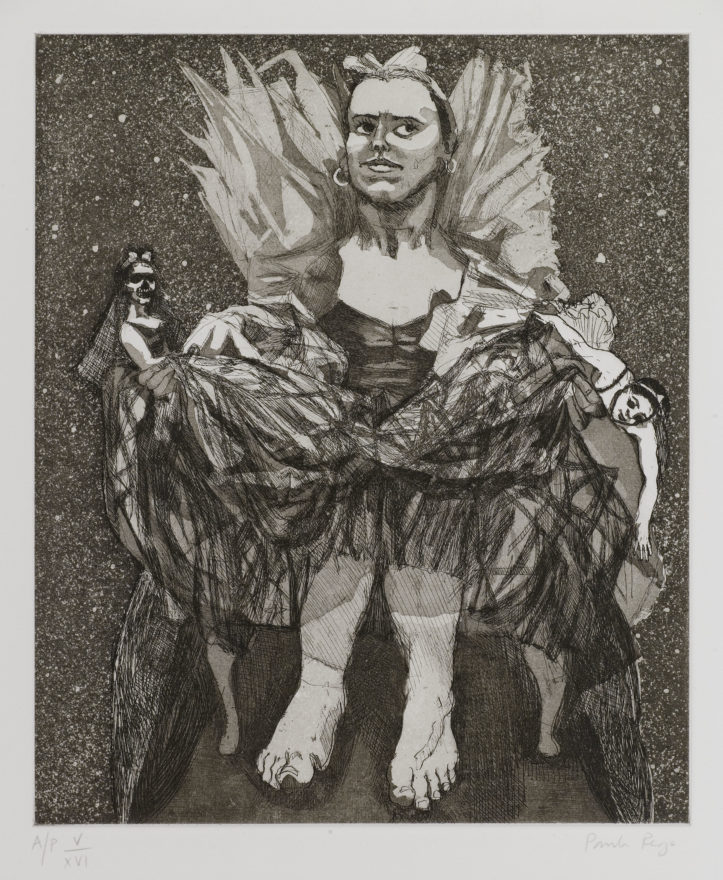
Paula Rego, (26 January 1935 – 8 June 2022) was a Portuguese-British visual artist known particularly for her paintings and prints based on storybooks. Rego’s style evolved from abstract towards representational, and she favoured pastels for much of her career. Her work often reflects feminism, coloured by folk-themes from her native Portugal.
Rego studied at the Slade School of Fine Art, University College London, and was an exhibiting member of the London Group, along with David Hockney and Frank Auerbach. She lived and worked in London.
In 1957 she returned to live in Portugal with her husband, the painter Victor Willing, and their three children, before finally settling in London in 1963.
In 2009 The Casa das Histórias, a museum dedicated to Rego, opened as a permanent home to the artist’s entire collection of over 200 prints alongside drawings, preparatory works and paintings loaned by the artist.
Major solo exhibitions and retrospectives have been key to Rego’s extensive career, with her work housed in major public and museum collections all over the world.
Rego explores themes of power, rebellion, sexuality and gender, grief and poverty, often through female protagonists. One of the most important figurative artists of her generation, her work ranges from painting, pastel, and prints to sculptural installations.
The Exhibition
Rego makes a welcome return to Bristol (almost 40 years after her first exhibition here in 1982-83), creating an opportunity for a new generation of visitors to explore the artist’s rich and imaginative world. Featuring over 80 prints from across Rego’s extensive career, the exhibition explores her interweaving wit and dark humour, delving into the art of storytelling through Rego’s reinterpretations of well-known narratives and classic tales, repositioning the role of women at their centre.
Subversive Stories also looks deeper at Rego’s mastery of the printed medium, exploring the process of printmaking as it informs Rego’s multi-layered interpretations, bringing shadowy readings to childish mischief, whilst casting a light on present-day politics, most notably those affecting women.
Bringing together early examples of experiments in etching and lithography, her much-loved series Nursery Rhymes, Peter Pan, Jane Eyre and the Pendle Witches, and less familiar stories, such as ThePrince Pig and The Curved Planks, Rego pulls us into a world of not so ‘wicked’ women, childhood adventure, and folklore and fairy tales, in which the underdog reigns supreme, as Rego reinforces her reputation, taking ‘the side of the beauty not the beast.’
Warning
Please note, this exhibition includes images that explore sexuality, abortion, and the practice of female genital mutilation.
Subversive Stories
Arnolfini welcome us to venture into the extraordinary imagination of Paula Rego, one of the leading figurative artists of our generation. Known for her powerful paintings and dynamic storytelling, she has also harnessed the alchemical power of printmaking, drawing audiences into her disquieting world.
Embracing etching and lithography at art school, Rego later recalled it was a relief from painting: ‘It’s like swimming after you have been on a dry land for so long.’ The spontaneity and fluidity found in printmaking can also be likened to the act of oral storytelling. Having learnt English at a young age, Rego’s own stories intertwine the fairy tales, folklore and fables of both, Portugal and England (her adopted home).
As a child Rego would play with a miniature Spanish theatre acting aut the everyday and filling the pages of diaries and sketchbooks with ilustrated word and images. Her subsequent work explores a multitude of themes including power, rebellion, sexuality, gender, religion, and the inherent brutality of life. Like her subject matter, the inspiration for her stories is vast, encompassing childhood, fairy tales, opera, politics, and her own interior world.
It is within these hybrid, interwoven stories, that Rego reinterprets and subverts narratives. Placing women and girls at their centre, her storytelling challenges established gender roles, fuels sexual ambiguity, undermines the innocence of children, and interchanges traditional notions of good and evil.
Rego utilises the implicit nature of storytelling as a subversive act, employing its shapeshifting qualities to explore an idea from multiple angles, often in series. In similar manner she draws on the metaphorical possibilities of printmaking, a medium reliant upon the contrast between light and shade. Childish mischief is embodied with darker meaning, whereas the harrowing practice of illegal abortion is brought out of shadows.
Within these ‘subversive stories’ Rego draws together the multilayered language of print with an age-old love of literature, reminding us taht: ‘it is through stories that we interpret the world around us’. A master of reinterpreting, reimagining, and reinspiring it is with glee that she shares (in recent documentary) that she is, still, ‘always looking out for a story’.
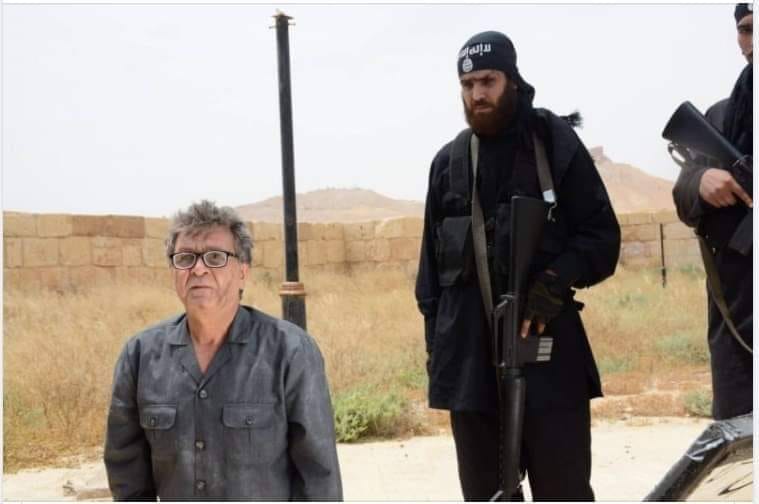
This is Syrian archaeologist Dr. Khaled al-Asaad, chief of the excavations of Palmir (Palmyra). Khaled al-Asaad refused to reveal the location of the treasures and antiques of Tadmur (now Palmyra) that he hid before the arrival of the Islamic State.
Al-Asaad was beheaded in the square in front of the museum where he worked for over 50 years.
His mutilated body was then hung at a traffic light.
Khaled al-Asaad was the top guardian of Palmyra antiques and, in July 2015, he was captured by Islamic State fighters. Despite many tortures, he did not reveal the location of the museum’s treasures and was executed in the central square of Palmyre. When it became clear that fighters were going to capture Palmyre, scientists led by Al Asaad went to all lengths to hide Palmyre’s unique and invaluable antiques. He played a central role in saving hundreds of artifacts, transporting them from Palmyre to a safe location.
Khaled al-Asaad spoke five languages in addition to six ancient idiomatic languages, some of which are now extinct. Several European countries offered him residence and citizenship, but he refused to leave Syria.
He fought to his death to save the heritage of humanity.
Kaveh AkbarPalmyra
after Khaled al-Asaad
bonepole bonepole since you died
there’s been dying everywhere
do you see it slivered where you are
between a crown and a tongue
the question still
more god or less
I am all tangled
in the smoke you left
the swampy herbs
the paper crows
horror leans in and brings
its own light
this life so often inadequately
lit your skin peels away your bones soften
your rich unbecoming a kind of apology
when you were alive your cheekbones
dropped shadows across your jaw
I saw a picture
I want to dive into that darkness
smell
the rosewater
the sand irreplaceable
jewel how much of the map did you leave
unfinished
lthere were so many spiders
your mouth a moonless system
of caves filling with dust
the dust thickened to tar
your mouth opened and tar spilled out
I am an archeologist, I cann’t stop thinking about Khaled – al Asaad. Requiescat in Pace, Brother.
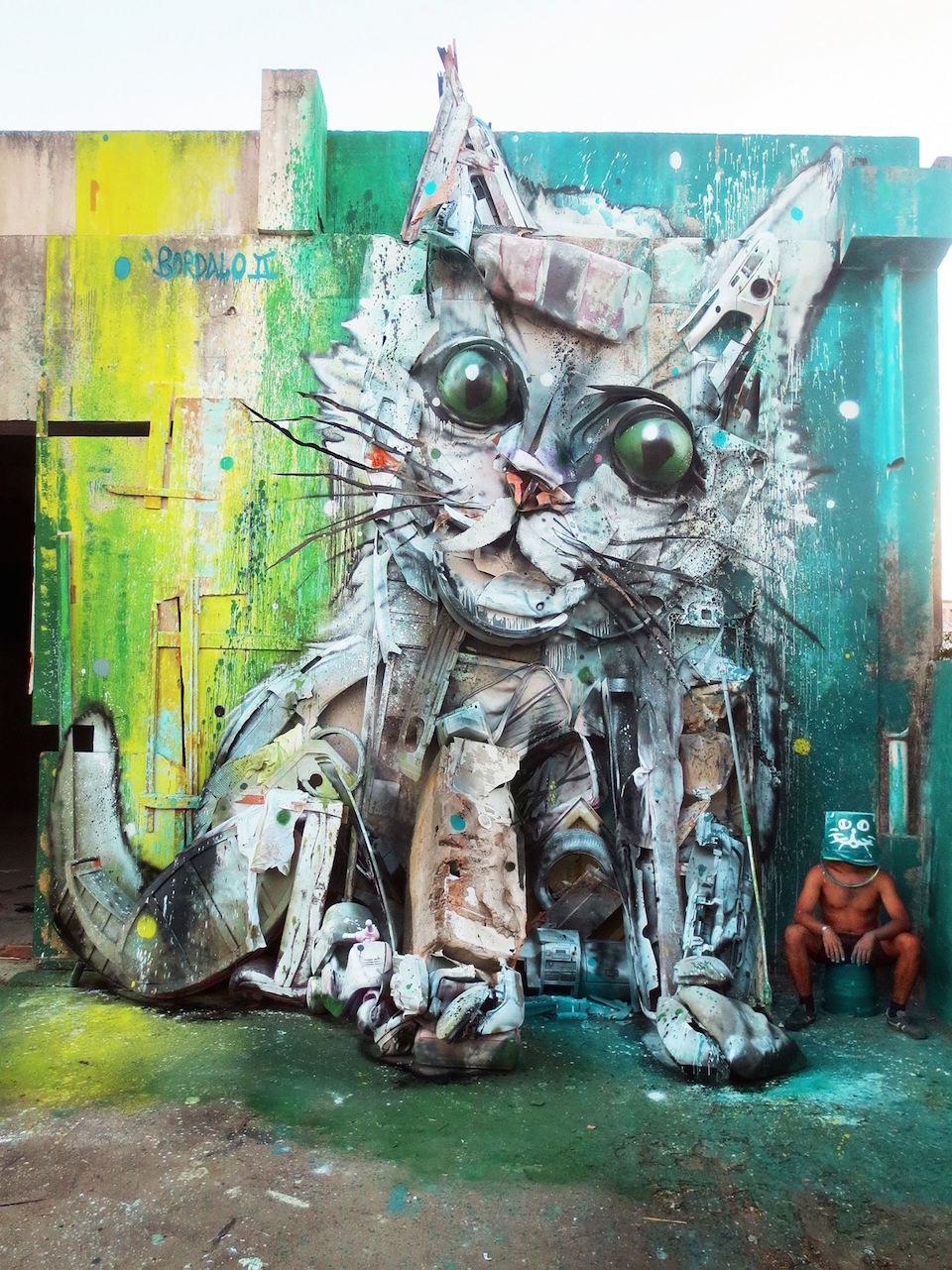
Bordalo II (Alonso Bordalo) was born in 1987 in Lisbon, Portugal. He is famous for using street garbage to create stunning animals sculptures so as to warn people about pollution and all types of endangered species. His works are considered as «trash art».
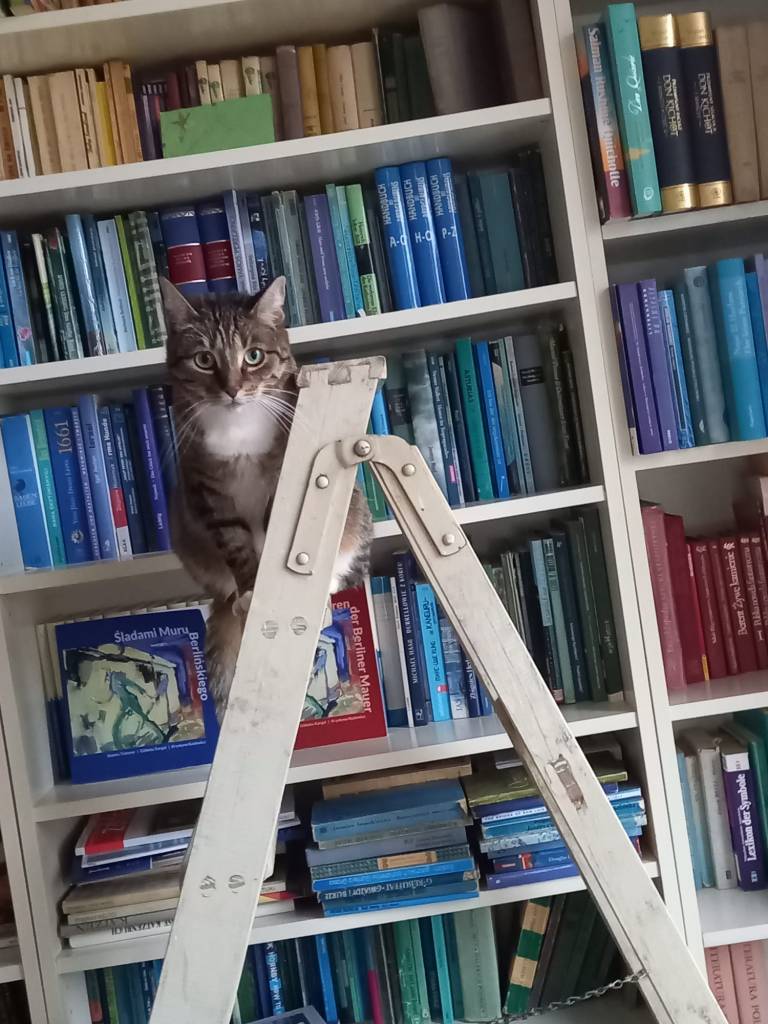
Foto Nel Talma-Sutt My cat having no fun with no laser and no computer
And another cats with no computer and no laser having fun in spite of it.
Bruno Andreas Liljefors (1860 – 1939), a Swedish artist known for his nature and animal pictures. He was the most important Swedish wildlife painter of the late nineteenth and early twentieth century. He also drew some sequential picture stories, making him one of the early comic creators.
Katt bland maskrosor (Cat among dandelions / blowballs)
Sleeping Jeppe
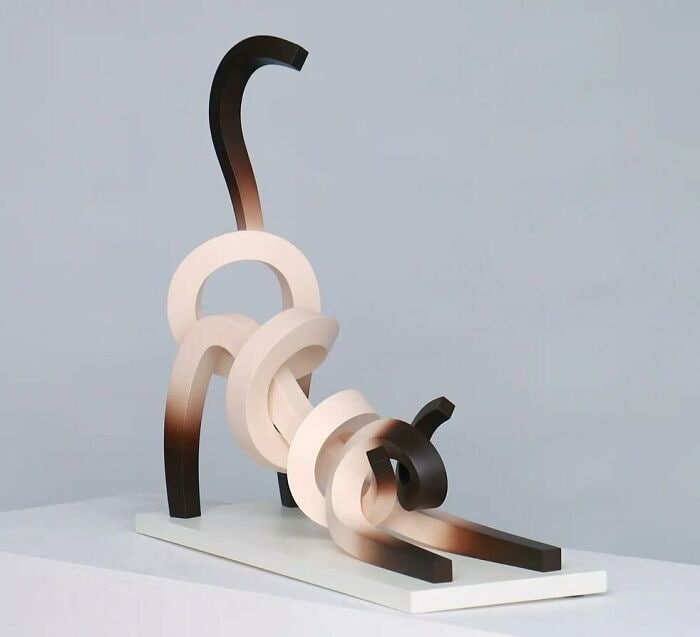
And if you think, you saw already all ways, how to show a cat, look hree:
The young Canadian poet understands better than most of her contemporaries how future generations will read.
BALJIT SINGH, COURTESY ANDREWS MCMEEL.
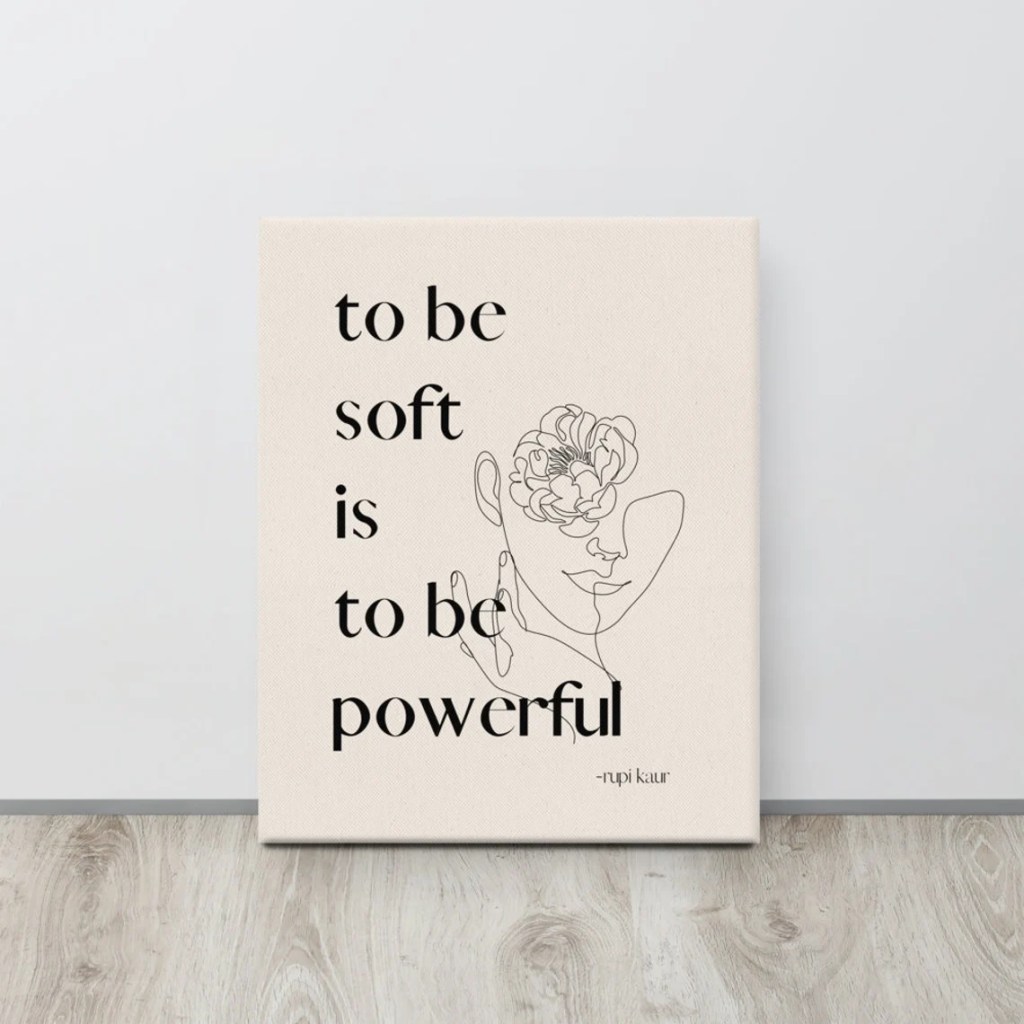
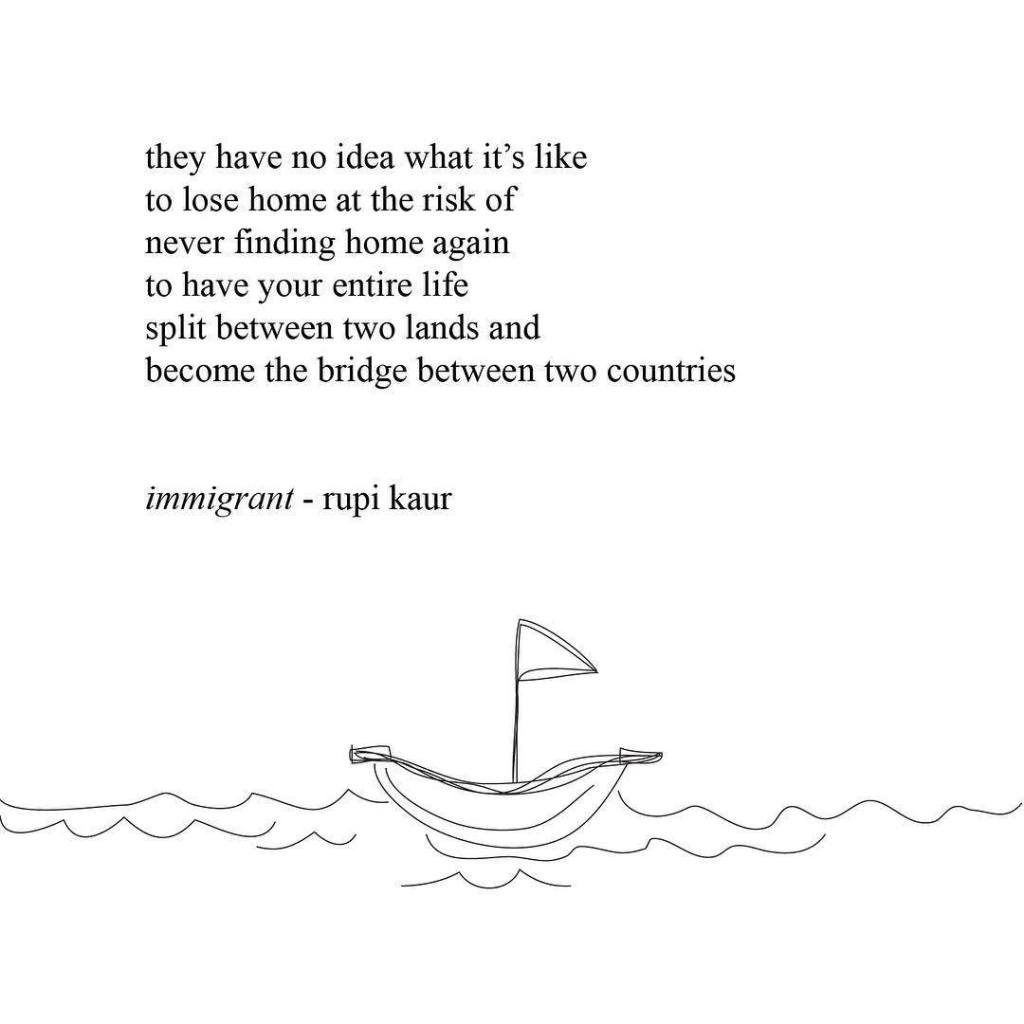
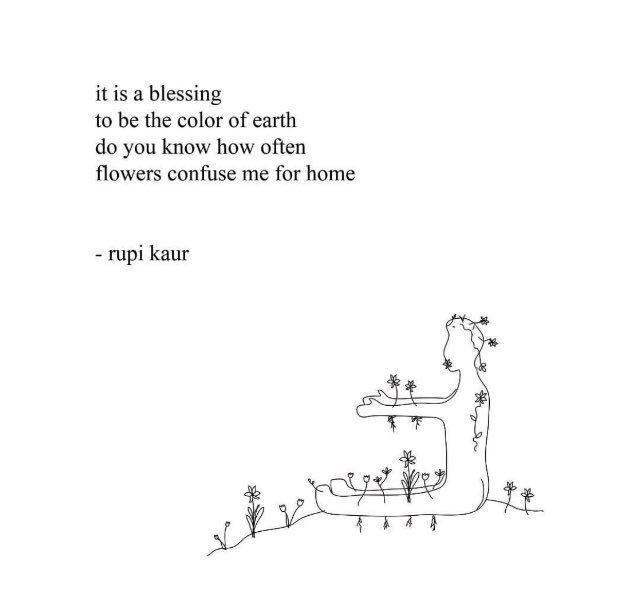
Rupi Kaur has published two books: 2015’s Milk and Honey, 2017’s The Sun and Her Flowers. Her epigrammatic verse is spare, the offspring of classical aphorism (if you’re feeling generous) and the language of self-help. The poems have a confessional, earnest manner; disarmingly full of feeling, they can be easy to dismiss. Nevertheless, Rupi Kaur, a Canadian poet who is not yet 30 years old, is the writer of the decade.
Kaur’s writing is not itself to my taste. She writes, in “the breaking”:
did you think i was a city big enough for a weekend getaway i am the town surrounding it the one you’ve never heard of but always pass through
Beyond the affectation of the lowercase letters, I find the metaphor impenetrable—the speaker is … a suburb? Further, I’m not an especial fan of the line drawings (they look like outsider art) that often accompany her poetry.
But Kaur’s achievement as an artist is the extent to which her work embodies, formally, the technology that defines contemporary life: smartphones and the internet. (Perhaps you could say the same of the novels now considered classics that were originally published serially in newspapers.) I’d argue that many of the writers currently being discussed as the most significant of the last decade write in direct opposition to the pervasive influence of the internet. Karl Ove Knausgaard, Rachel Cusk, and Ben Lerner (to name but three of our best) are interested in the single analog consciousness as a filter through which to see the world. If you think their experiment is the most important of the last 10 years, you’re probably (sorry) old.
The next generation of readers and writers views reality through a screen. Kaur, born in 1992, was 15 when the iPhone debuted. The majority of her readers have never known adulthood without that gizmo’s mitigating influence. On Instagram, Kaur doesn’t just share selfies and drawings; she publishes. Kaur’s books have sold more than 3.5 million copies, an incredible number for any poet but the more remarkable when you consider that surely some percentage of her readership has never owned one of those books.
Popularity does not generally correlate to artistic significance, but Kaur’s is an unusual case. That her work crumbles under traditional critical scrutiny is not really the point. There are readers who will forever think of Kaur as the first poet they loved. Even if they outgrow her—as is inevitable: I can no longer bear Salinger or Kerouac or Auster or many of the writers I adored as a younger reader—the lines in Milk and Honey will be a common text for the fortysomethings of 2035.
This is a different matter from a shared pop culture touchstone, such as Top 40 songs or sitcoms. The mantle of poet accords Kaur a kind of legitimacy, as it always has; you could write about her work for your college application essay. Readers who know about poetry might think Kaur’s work is dumb; those for whom Kaur is their first exposure to the medium think it profound. It doesn’t matter if you believe that title of poet belongs only to the likes of Wallace Stevens or Gwendolyn Brooks. Kaur has seized it for herself.
And she deserves it. Kaur cannily understands the contradiction that we want technology—in this case, a very powerful computer—to connect us to real people. She uses her verse, her drawings, her photographs, to give us persona, which is the next-best thing, and also an age-old poetic technique. It is easy for some readers (snobs like me) to dismiss Kaur’s self-representation as posture, or performance. I think this reflects a mostly generational divide. But can’t you imagine a younger Anne Sexton taking a selfie, or Elizabeth Bishop sharing a snapshot of the sea?
Kaur’s verse is compact in part because she’s thinking within the parameters of a smartphone screen, which is not that radical when you consider that many poetic forms are about artificial constraint. Think of hers as an Oulipian project. I also feel she’s onto something: The canonical poetry most likely to endure the next century is the one that can fit comfortably within the glowing window we spend so much of our time gazing into.
Internet
Technology has already trained us to read differently, which in turn has started to change the literature. The Crying Book, a recent nonfiction work by Heather Christle (also a poet), is organized into perfect swipe-size snippets of text. It doesn’t cohere as an argument so much as it overwhelms (maybe, alas, bores), like the internet’s infinite scroll. You can lament the death of the transitional sentence if you like; I’d say you should expect much more work like this.
A couple of decades ago, a handful of the avant-garde wanted a prose that assumed the shape—synaptic, irregular—of hypertext. That work remains mostly experimental (which is to say, a niche concern). Kaur’s poetry does something similar, but the experiment was a success. I was forced to read Robert Frost as a schoolboy and understood poetry to be metaphoric musing; Kaur’s young readers want to engage with her work, and will expect a poetry of brevity and brute feeling. They might enjoy Frost, but they’d also like an Instagram of those woods on a snowy evening. And Kaur (and her descendants) will deliver.
Kaur has used her own tools—her phone, her body and face (it doesn’t hurt that Kaur is strikingly beautiful), her sketches—to dismantle the master’s house: Many American readers consider a young woman of color our most prominent poet. Even if I think they’re wrong, it’s hard not to be thrilled by this fact.
A decade is an arbitrary thing, but the one now ending gave us remarkable writing. The artistry and sustained off-line attentions of Knausgaard, Cusk, and Lerner; the intimate multivolume epics of Elena Ferrante and the curiously under-discussed Jane Smiley; more singular and lovely novels than I could ever list here. Those are a matter of the past. I don’t know if we’ll be reading Rupi Kaur a decade or two hence, but I suspect we’ll be reading as she taught us to.
Rumaan Alam is a contributing editor at The New Republic. His latest novel is Leave the World Behind.
***
***
Comments (in Polish) KK
To dziwne. Dowiedziałem się o jej istnieniu dzisiaj, ale sławna zaczęła być już (albo dopiero) trzy lata temu. To może jakaś prekursorka pop-poezji? Z jednej strony aż nieprzyjemnie przegląda mi się jej Instagrama, gdzie umieszcza wiersze, z drugiej – jest muzyka pop, są blockbustery o superbohaterach, to czemu ma nie być pop-poezji? Ludzie w komentarzach piszą, że ją uwielbiają, że dotyka ich serce – miło to brzmi. Może do tych ludzi zwykła poezja by nie trafiła? Ktoś inny pisze że to w ogóle nie poezja tylko zwykłe, twitterowe przemyślenia poucinane na wersy Jeszcze ktoś inny, że ludzie tak ją lubią, bo jej przekaz każdy jest w stanie zrozumieć, a wiersze wciąż kojarzą się z wyrafinowaniem, więc teraz każdy może poczuć lepiej, myśląc że rozumiejąc jej poezję, rozumie coś wyrafinowanego. Widzę coś ładnego w jej wierszach. Mają często znany przekaz, i dość prostą formę, ale są zgrabnie ułożone. Ale jednak mi się nie podobają.
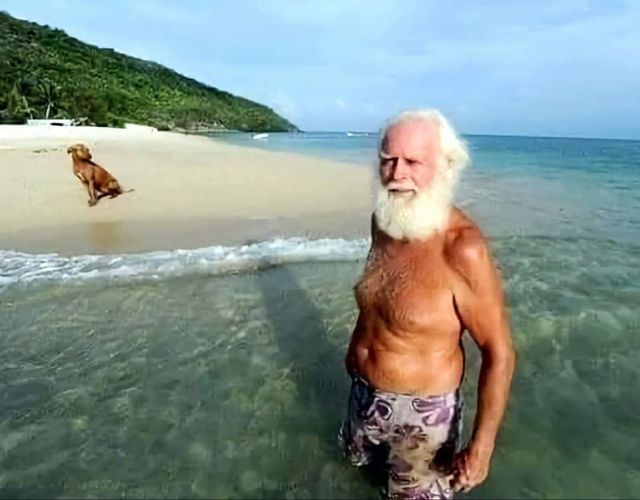
For $13,000, Englishman Brendon Grimshaw bought a small uninhabited island in Seychelles and settled there forever. When he was less than forty, he quit his editor-in-chief and started a new life. At that time, no human had set foot on the island for 50 years.
Brendon found a companion among the indigenous. His name was René Lafortin. With René, Brendon has started equipping his new home.
While René often didn’t come to the island, Brandon lived there for decades, never leaving her.
For 39 years, Grimshaw and Lafortin planted 16,000 trees with their own hands and built nearly five kilometers of trails. In 2007, René Lafortin passed away and Brandon was alone on the island.
He was 81 years old.
His island attracted 2,000 new bird species and introduced over a hundred giant turtles, which in the rest of the world (including Seychelles) were already on the verge of extinction.
Thanks to Grimshaw’s efforts, the once-a-desert island now houses two thirds of the Seychelles fauna. An abandoned land has turned into a true paradise.
A few years ago, the Prince of Saudi Arabia offered Brandon Grimshaw $50 million for the island, but Robinson refused. “I don’t want the island to become a rich’s favorite resort.” This better be a national park that everyone can enjoy.
And he managed to make the island actually declared a national park in 2008.
The Telescope is a 1963 oil on canvas painting by René Magritte. The painting depicts a window through which a partly clouded blue sky can be seen. However, the right side of the window is partially open, revealing a black background where the viewer would expect to see a continuation of the clouds and sky – there could hardly be a better symbol of pessimism.
Ewa Maria Slaska
What I really like in Don Quixote, is, as all my attentive readers know, the story of how Sancho Panza, a simple, unlearned peasant, becomes governor and turns out to be a good and just ruler.Throughout all their journey together, the lord and his squire kept talking about how it would be when Sancho Panza’s faithful services were rewarded with the governorship of some island. The Duke’s mischievous joke makes the fiction come true. Sancho is appointed governor. For the next two chapters, Don Quixote instructs him on what to do to perform his duties well. Interestingly, the pessimistic Don Quixote, a fantast detached from reality, turns out to be a good, practical and pragmatic teacher. Sancho Panza’s reign ends with the lost war and his voluntary decision to resign as governor.
The author analysing this in his book on pessimism writes, thatwhat we learn from it is not how to bring order and justice to the world in any permanent way, but that the attempt to do so is worthwhile. It is what should always count: our efforts are never in vain, they are always worthwhile.
(…) The episode of Sancho’s governorship suggests that he got from being with Don Quixote a surprisingly useful political education. When he takes up his post as governor of Barataria and is confronted with liars and tricksters, Sancho sees through them. When legal cases are brought before him, he is a shrewd judge of the motives and wiles of others. Several of these cases involve, essentially, two lowlifes who accuse one another of having cheated them. Sancho always finds a way to punish both while doing justice to both. The townspeople, who both present and observe these cases, have not been let in on the Duke’s joke and come to have great admiration for Sancho: “In a word, he made so many good rules that to this day they are preserved there, and are called “The ordinances of the great governor Sancho Panza”. Since, up to this point, the reader has been told repeatedly of Sancho’s intellectual shortcomings, this is a remarkable transformation. On Sancho’s part, while he first sought a governorship in order to get rich, he later has cause to boast that “without a cent I came into this government, and without a cent I go out of it”. Once his common sense has been unburdened of greed and ambitions, it is more than adequate to the task at hand. The justice that Quixote is repeatedly unable to effect by force, Sancho brings about through a sensible administration inspired by Quixote’s ideals and Sancho’s embrace of his own humble background. One of Sancho’s “advisers” (planted by the Duke to observe and report on what are expected to be hilarious blunders), is amazed at what he has seen and reports, “Every day we see something new in this world; jokes become realities, and the jokers find the tables turned on them”. But the lesson is not just that the Duke’s mildly sadistic plan has backfired. Quixote’s quest for justice, which everyone considers mad and impossible, has shown itself to bear fruit indirectly and in the most unlikely of places. In Don Quixote, quixotism is a joke; in Sancho, it becomes real.
Why is Sancho more successful than Quixote? Perhaps because he knows himself better than Quixote. Quixote claims to continue the personality of the Nine Worthies, but Sancho knows himself only as Sancho, Quixote’s squire. Without Quixote’s example, he would, perhaps, never have been able to see the value of this. While at the start, Sancho wanted nothing else than to be a governor, by the time he actually takes on the role, he has changed. The Duke suggests that he pick out a new wardrobe when assuming office, but he replies, “Let them dress me as they like. However I’m dressed I’ll be Sancho Panza”. Sancho reassures Quixote that the position will not distort him by saying, “I’d rather go to heaven as Sancho than to hell as a governor.” And this draws a rare compliment out of Quixote: “For those last words you uttered alone, I consider you deserve to be governor of a thousand islands”. In learning from Quixote, Sancho has not become another Quixote, but the first and only Sancho Panza. Following a knight with delusions of grandeur, Sancho has lost his own delusions and become who he is. What success he has in politics stems from this. Sancho’s policies are not, perhaps, what we might expect from a pessimist, but the entire episode may perhaps be taken to indicate that the best governor is one with a pessimistic education. Having dismantled his extravagant plans for the future, Sancho is better at seeing each case that comes before him for what it is. In knowing himself, he also knows what justice is. But the success that Sancho meets with is limited, in more ways than one. First of all, there is the inability of Sancho’s state to withstand a violent attack staged by the Duke who put him in power. More importantly, despite Sancho’s fitness to govern, he finds the process itself agonizing. An “advisor” concerned with his health refuses to let him eat anything and this symbolizes the lack of reward involved in governing: “I am dying of discouragement, because when I thought I was coming to this government to get hot food and cold drinks, and take my ease between holland sheets on feather beds, I find I have come to do penance as if I was a hermit”. Sancho has forsworn the acceptance of bribes or any such similar material rewards, so his post is no more rewarding financially than nutritionally. It might be expected, though, that his successful government might give him some feeling of satisfaction. It does not. Sancho, in coming to know himself, learns that the task of government is more than he can bear, nor does Cervantes suggest that another would find it any easier. Sancho leaves his governorship even more hastily than he accepted it. Finally, Cervantes warns us, in his usual comic fashion, not to become too enamored of Sancho’s new-found “wisdom.” When Quixote remarks on his improvement, Sancho replies, “It must be that some of your worship’s discretion sticks to me. Land that, of itself, is barren and dry, will yield good fruit if you fertilize it and till it. What I mean is that your worship’s conversation is the fertilizer that has fallen on the barren soil of my dry wit, and the time I have spent in your service and company has been the tillage”. This way of putting things sets them in proper perspective. Though Sancho has improved, he has not improved much. At best, he repeats garbled versions of old maxims whose meaning he only half-understands. In imitating Quixote, he has unlearned a few of his worst habits and acquired some better ones. If Sancho is successful at governing, it is as much because an honest half-wit is already a great improvement on the greedy, corrupt, and conniving men who ordinarily hold such posts. Quixote had suggested to Sancho that knowing who he is would be enough for him to govern, and, as Cervantes lets the events unfold, this turns out to be the case. At some level, the joke, which appeared to become real, remains a joke-what more, Cervantes seems to say, could one expect from a chaotic world such as this one? But this attitude too is perfectly consonant with a pessimistic perspective. What we learn from Sancho’s government is not how to bring order and justice to the world in any permanent way, but that the attempt to do so is worthwhile.
Do not worry, only this part is in Polish, further follows English text
Thanks an Arkadiusz Łuba for sending me that picture 🙂
I. Wstęp z niemieckiej prasy codziennej
Ach, miejmy nadzieję, że on naprawdę okaże się naszym promiennym zbawcą
Trudno wyrokować. Na pewno po odejściu Angeli Merkel Emmanuel Macron wybija się na przywódcę Europy, podczas gdy niemieckiemu kanclerzowi przypada zaledwie rola giermka-brzuchacza. O dalszych analogiach między dzisiejszą sytuacją Europy a życiorysem Rycerza o Smętnym Obliczu pisze Arek Łuba na swoim blogu o komiksach: TU. Ciekawe wydaje się oczywiście, że jak po dwóch miesiącach wojny biedny zapatrzony we własny brzuch giermek wreszcie podniósł oczy, ujrzał mroczne obrazy wojny i postanowił sam chwycić za miecz, natychmiast zleciały się zewsząd niemieckie intelektualne dziewczątka i chłopięta, przerażone do głębin jestestwa myślą o tym, że będzie brzydko, be i prosząc Sanczę Brzuchacza by natychmiast zrezygnował ze wspierania walki i powrócił do roli przygłupa. List intelektualistów niemieckich TU(jest nawet, niestety moja ulubiona pisarka, Juli Zeh). Najstraszniejsze w tym liście (nazwijmy go) pierwszym była teza, że jeżeli naród ukraiński będzie nadal cierpiał, to będzie to jego własna wina, bo broni się przed agresorem! To zdanie jest hańbą europejskiej myśli pacyfistycznej, a ludzie którzy uznali, że ofiara jest winna tego, że cierpi, są po prostu ch… I niech już tam sobie idą.
Na szczęście, zanim przyszedł czas na opublikowanie tego posta, pojawił się drugi list otwarty, w którym paru naprawdę porządnych intelektualistów wsparło Sancho Pansę w jego decyzji, żeby jednak stanąć po stronie sprawiedliwości.
Uwaga, po kliknięciu na tego linka znajdzie się też link, gdzie się można podpisać pod tym “drugim listem”, razem Danielem Kehlmannem, Maximem Billerem, Herthą Müller, Olgą i Vladimirem Kaminerami, ze mną i innymi porządnymi ludźmi.
I have photographed many windmills over the years, but never one with poppies. Last week, after driving home I put my navigation ‘avoid motorways’. It’s a way for me to discover new places on the countryside, and this windmill was waiting for me. Just a few poppies were enough to make this photo.
René Magritte, The Telescope,1963, oil on canvas
III. About optimism of pessimists
Chapter Six CERVANTES AS EDUCATOR DON QUIXOTE AND THE PRACTICE OF PESSIMISM
Don Quixote … is an allegory of the life of every man who, unlike others, will not be careful merely for his own personal welfare, but pursues an objective, ideal end that has taken possession of his thinking and willing; and then, of course, in this world he looks queer and odd. -ARTHUR SCHOPENHAUER
Today we read Don Quixote with a bitter taste in our mouths, almost with a feeling of torment, and would thus seem very strange and incomprehensible to its author and his contemporaries: they read it with the clearest conscience in the world as the most cheerful of books, they laughed themselves almost to death over it. -FRIEDRICH NIETZSCHE
Prehistory
Different pessimists have read Don Quixote in different ways (…). But the uniform praise of this novel by the pessimists should cause us to wonder at the source of the commonplace understanding of its protagonist as an enemy of pessimism. Though the reader may reflexively think of Don Quixote as an inveterate optimist, charging at windmills and the like, I would suggest that this has more to do with the popularity of the musical Man of La Mancha than with Cervantes’s actual text. Whatever merits this lachrymose bit of theater may possess, fidelity to the spirit of Don Quixote is not actually one of them. If anything, Man of La Mancha resembles the heavy-handed, Wagnerian operatic romanticism that Nietzsche so feared being associated with. Though I am not concerned here with cultural analysis, the reworking that Don Quixote receives in Man of La Mancha is an interesting example of the kind of imperialism of optimism that has succeeded in making pessimism invisible today. As Nietzsche reminds us, however, Cervantes’s book was received by its first readers as a bright comedy and was, indeed, internationally successful on that basis.
Practice of pessimism
If Quixote hopes, at first, to right wrongs with a wave of his noble sword, the sad truth about the world eventually destroys that expectation, both in him and in the reader. But if the narratives of chivalry that Cervantes mocks have been a dubious education for Quixote, that is not at all the case for Quixote’s own narrative of chivalry, which is an education for Sancho Panza and, through him, for the rest of us. And, as certain episodes in the novel suggest (particularly those in which Sancho is called upon to govern), it is even a useful political education. For Sancho, the unlettered peasant, to the surprise of everyone, governs wisely when given the opportunity. The justice that the insane Quixote is unable to effect with the sword, Sancho brings about through a sane and brave administration inspired by Quixote’s example. Sancho’s success is limited (indeed, ultimately it is destroyed), but it is (temporarily) genuine. For a time, Sancho organizes a small portion of the universe under something like a decent political regime. And all the characters in the novel, except Quixote, find this astounding. Cervantes (…) characterizes the universe he created as a pessimistic vision and (…) his book aims at a goal that pessimists would recognize (and have recognized) – a mode of action that acknowledges the insuperable barriers that time-bound existence throws up against justice and happiness, but which does not respond to this situation with resignation. Don Quixote represents what I am terming a “practice of pessimism,” a mode of conduct and action founded on an absence of expectation and hope.
Bardzo Państwa zachęcam do zostania patronem ukraińskiego poety i pisarza, Serhija Żadana. To najlepsze wsparcie jakiego możemy udzielić Charkowowi i jego mieszkańcom.
Serhij napisał (przekład Wiery Meniok):
Zazwyczaj bardzo ostrożnie proszę was o pomoc, ponieważ jestem pewien, że większość z tych, kto czyta tę stronę, w taki czy inny sposób dają środki na coś. I nawet nie większość – wszyscy. Albo prawie wszyscy).
Potrzeb jest naprawdę bardzo dużo, nie potrafię określić, jaka z nich jest ważna bardziej czy mniej. Co jest ważniejsze – kupić powerbank dla żołnierza na linii frontu czy butelkę mleka dla babci, którą ten żołnierz chroni? Sami ustalcie priorytety, ja tylko powiem, że pracuję z różnymi grupami wolontariuszy, a otrzymane od was koszty (bezpośrednio z rąk do rąk, przez patreon czy na konta wolontariatu), wydaję na bardzo różne rzeczy – wczoraj na przykład dałem 20 000 na samochód dla bojowników oraz 10 000 na żywność dla cywilów. Na jutro również mamy mnóstwo zamówień. Bardzo chcę, byście mnie usłyszeli – większość tych zamówień i potrzeb pojawia się nie dlatego, że „państwo nic nie robi” – tylko dlatego, że państwo nigdy wcześniej nie stanęło przed takimi wyzwaniami i dlatego potrzebuje naszej pomocy. Jeśli państwo będzie uratowane – wszystko odzyskamy))
Krótko mówiąc, sami widzicie, czym się zajmujemy z moimi przyjaciółmi, komu pomagamy, kogo wspieramy, piszę o wszystkim, o czym można pisać. Jeśli będzie możliwość i chęć pomóc – pomagajcie. Jeśli macie inne pomysły jak pomóc i wesprzeć – chwała Bogu. Szczegółowego sprawozdania z fakturami nie będzie) (wiele rzeczy jest kupowanych i znajdowanych, sprowadzanych i uzyskiwanych bez faktur)))) Ale potem napiszę dla was powieść o wolontariuszach)))
To jest moja ukraińska karta bankowa wolontariusza:
To jest mój nowo otwarty PayPal, tutaj można przesłać środki spoza Ukrainy:
Сергій Жадан sirozhazhadan@gmail.com
Chciałbym jeszcze raz podkreślić: wszystkie środki otrzymane na tych kontach wykorzystuję na wolontariat – na wsparcie walczących o wolność Ukraińców.
Сергей Жадан:
Друзі, що хочу сказати. Зазвичай дуже обережно прошу вас про допомогу, оскільки певен, що більшість із тих, хто читає цю сторінку, так чи інакше сьогодні на щось перераховує кошти. Та навіть і не більшість – всі. Чи майже всі)
Потреб справді дуже багато, визначити яка з них більш важлива чи менш важлива мені особисто складно. Що важливіше – купити повербанк бійцю на передовій чи пляшку молока бабусі, яку цей боєць захищає? Ви самі собі визначайтеся з пріоритетами, я лише скажу, що співпрацюю з різними волонтерськими групами, і кошти, отримані від вас (безпосередньо з рук у руки, через патреон чи на волонтерські картки), витрачаю на дуже різні речі – вчора, скажімо, кинув 20 000 на авто для бійців і 10 000 на їжу для цивільних. На завтра теж маємо купу замовлень. Знову ж таки, дуже хочу, аби ви мене почули – більшість цих замовлень і потреб виникають не тому, що “держава нічого не робить” – вони виникають тому, що держава ніколи не стикалась із такими викликами й тому потребує нашої допомоги. Збережеться держава – ми все собі повернемо))
Одне слово, ви бачите, чим ми з друзями займаємося, кому допомагаємо, кого підтримуємо, я про все, про що можна писати, пишу. Буде можливість та бажання допомогти – допомагайте. Маєте інші варіанти допомогти та підтримати – слава Богу. Детальних звітів із чеками не буде) (багато чого купується й знаходиться, переганяється й дістається без чеків)))) Але потім я вам напишу роман про волонтерів)))
Ось мій щойновідкритий PayPal, сюди можна переказувати кошти з-поза меж України:
Сергій Жадан sirozhazhadan@gmail.com
Ще раз наголошу: всі кошти, отримані на ці рахунки, я використовую на волонтерство – на підтримку українців, які воюють за свою свободу. Собі я з цього нічого не беру: працюю на австрійський генштаб, мені там нормально платять.
Дякую всім за підтримку та допомогу. Хай у всіх буде тихий вечір. Завтра прокинемось ще на один день ближче до нашої перемоги)
Сергій Жадан is creating writing/journalism and music | Patreon
Serhij Żadan, Ukrainian writer, now in Kharkiv, where he collects funds to help the people of Ukraine.
“Usually, I ask for your help very carefully, because I am sure that most of those who read this page are giving money to something in one way or another.
The needs are really a lot, I cannot define which of them is more or less important. What is more important – buy a powerbank for a front-line soldier or a bottle of milk for grandma, which this soldier protects? Set your priorities yourself, I will just say that I work with various groups of volunteers, and the costs received from you (directly from hand to hand, via Patreon or to volunteer accounts), I spend on very different things – yesterday, for example, I gave 20,000 for a car for fighters and 10,000 for food for civilians. We also have a lot of orders for tomorrow. I really want you to hear me – most of these orders and needs arise not because “the state does nothing” – but because the state has never faced such challenges before and therefore needs our help. If the country is saved – we will recover everything))
In short, you can see what we do with my friends, who we help, whom we support, and I write about everything that can be written about. If there is an opportunity and willingness to help – help. If you have other ideas on how to help and support – thank God. There will be no detailed report with invoices) (many things are bought and found, brought and obtained without invoices)))) But then I will write a novel for you about volunteers)))
This is my newly opened PayPal, you can send funds from outside of Ukraine here:
Сергій Жадан sirozhazhadan@gmail.com
I would like to emphasize once again: I use all the funds received in these accounts for volunteering – to support the Ukrainians who fight for freedom.