Zima

Dorota Cygan

7.00 – 7.30. Protokół myślowy z drogi do pracy

Jakiż piękny ten puch. Każdy płatek wdzięczy się i tańczy, a wszystkie razem kładą się do stóp, by mogły miękko stąpać, dając poczucie maksymalnego komfortu. Birkenstock by tego lepiej nie wymyślił. A ta biel dookoła, sakralna cisza i odświętność! Ależ to potrafi ukoić. Gdyby tak sobie  w domu powiesić  jakiś medytacyjny obraz w tym stylu, prawie całkiem biały, z kilkoma punktami nieśmiałej czerni i błękitu…

Bialy-kwadrat-1918_MOMA
Kazimierz Malewicz, Białe na białym, 1918, MOMA

No, nie od razu Caspar David Friedrich, można i skromniej, może by się coś kupiło, jak to zlecenie wypali, taki stonowany krajobraz w bieli, to jednak uspokaja, jak się robi tyle rzeczy i ma trochę spraw na głowie, zresztą coś trzeba robić dla wsparcia artystów, tak może bez przesady, niekoniecznie w randze Tarasewicza, ale w miarę możliwości, no i naprzeciw łóżka fajnie wygląda, takie śnieżne światy na białej ścianie, ciekawe, czy Malewicza zainspirował taki piękny śnieg, no bo jakoś na ten biały kwadrat wpadł.

tarasewicz-bruzdy
Leon Tarasewicz, Bruzdy 1985 http://galeria-arsenal.pl/wystawy/leon-tarasewicz-malarstwo.html

Ech, fajnie jest, przepiękne widoki, a nogi same niosą, ten chłód nawet daje niezłego kopa, aż się człowiek spręża na myśl o dzisiejszej to do list. Jak się potem tak wejdzie z zimnego w ciepłe, to się robota sama usuwa, energia człowieka rozpiera, właściwie to można by przygotować parę seminariów na zapas – na te leniwe i banalne tygodnie potem. Ależ wszystko ostro widać! Powietrze przejrzyste, że hej, może nawet wyjdzie słońce. A  na razie i bez tego puch się mieni tak srebrzyście, aż się człowiekowi zdaje, że chodzi po skarbach, ech,  chce się żyć.

ruiny_Eldena_1808_spalone_1931

Caspar David Friedrich, Mnich na śniegu (Ruiny klasztoru Eldena zimą) 1808; wystawiony w Szklanym Pałacu w Dreźnie, który spłonął w roku 1931 (obraz też).

xxx

Noo, teraz nawet trochę mocno zawiewa, trzeba się pochylić, hehe, nietzscheański heroizm w śniegu i pod wiatr, oto człowiek. Z tego heroizmu piszący trzy listy motywacyjne w weekend (np. najbliższy). To  w sumie nawet dobrze robi tak się rozpisać. Nooo, ale teraz to już nieźle zawiało, uff, trzeba było jednak wziąć czapkę, ależ te palce zgrabiałe, nawet kaptura nie przytrzymają…, ale nie marudźmy – trzymać to się trzeba struktur i obowiązków, nerwy trzymać na wodzy, od malkontentów trzymać się z daleka,  żebraków na dystans, rodzinę w garści, a z ludźmi wpływowymi trzymać sztamę. Tak trzymać i już. O, a tu co? Chyba wybiło wodę, zmarzlina podtopiona, poślizgać się można, bęc , no, to akurat nie był popisowy lot, płasko i blisko ziemi, łokieć boli, w zasadzie ktoś powinien odpowiadać za ten wyciek i masy śniegu, teraz to już nikt nie pracuje na serio. A ten gość, hola, jedzie, jakby oczu nie miał, prawie po chodniku, hej, patrz jak jedziesz, bryzgasz na boki, tak, tak, sam się postukaj w czoło, nie, mój drogi, do chodzenia po chodniku nie trzeba prawa jazdy, to się zdziwisz, jak cię zgłoszę na policję, po numerze rejestracyjnym cię znajdą, będziesz się tłumaczył za nieumyślne stwarzanie zagrożenia, tylko się tak dalej stawiaj, to zobaczysz. Ależ sypie, własnych nóg nie widać, a co dopiero rowerzystów, co za brak wyobraźni, czysta brawura, zaraz się wyłożycie mądrale jedne, cała ta wasza ekologiczna  wyższość moralna, z dzieckiem na siodełku, jeszcze chwila a będziesz leżał, ignorancie. Bęc, no właśnie, jeden nieostrożny krok i ból w kostce, proszę bardzo, sekunda nieuwagi, a łokieć też jakoś nie przestaje, rwie coraz bardziej. Że też żaden autobus tu nie jeździ, to jakaś paranoja, miasto wzięła w jasyr jedynie słuszna sekta ekologów a normalni ludzie… no cóż, ale trzeba się jakoś dowlec na miejsce, może się stawy powoli rozgrzeją, będzie ok. Ale to pisanie aplikacji to bez sensu, pracy nie ma i nie będzie, chyba że przy produkcji studiów wykonalności dla ścieżek rowerowych i wiatraków. I reklam tychże – także. A co będzie? Zima będzie. Jedna się skończy i nazajutrz zacznie druga. Będzie jeden kolor i już. Praktycznie. Najwyżej różne warianty brudnej bieli lub czystej szarości, jak kto woli. Mniej dylematów dla malarzy kolorystów. Czarno to widzę? Tak się wam zdaje, bo siedzicie przy komputerach, przebrzydli kreatywni. To ja wam coś powiem. Tak po prawdzie, to te płaty śniegu wyglądały na chodniku, jakby nad Oldenburgiem przeleciało sto tysięcy gołębi i wszystkie miały rozstrój żołądka, tyle wam powiem. A cała reszta zachwytu nad tym puchem to nic innego jak zakłamane  fantazje niespełnionych literatów upojonych faktem, że mogą posiedzieć w domu, gdy inni pracują. Oto cała filozofia drobnomieszczańskich estetycznych uniesień, ich podszewka i głębia. A malarze też nie lepsi. Tyle wam powiem. Bęc.

(Protokół sporządzono maszynowo lewa ręką. Ważny bez podpisu)

Hosstegori, Ard, Arrusi

Persische Gattin

Heiraten auf Persisch

Man kann in Iran auf viele Weisen heiraten. Es ist ein einzigartiges Erlebnis, aber nicht immer ein Einmaliges. Die Iraner dürfen ja mehrere Frauen haben. Man muss sich allerdings an die Regeln halten. Den Iraner fällt es nicht sonderlich schwer, denn sie lieben ihre Regeln. Falls allerdings jemand es wagt, aus der Reihe zu tanzen, muss er mit einer gnadenlosen Kritik und scharfen Zungen rechnen, und zwar Jahre, manchmal auch Jahrzehnte danach.

Das Heiraten fängt an mit:

Hosstegori – es ist ein kleines Fest, nur die engste Familie ist dabei. Der Bräutigam in spe, begleitet von seinen Eltern, kommt ins Haus seiner Auserwählten. Früher hat das Mädchen ihren Zukünftigen bei dieser Gelegenheit das erste Mal flüchtig gesehen. Er dürfte auch ein Blick auf sie erhaschen, in den paar Sekunden, in denen sie ihm den obligatorischen Tee (Tschai) serviert hat. Heutzutage kennt sich das junge Paar schon, zumindest in den meisten Fällen. Das wichtigste ist – die Eltern des Mädchens müssen einverstanden sein. Nicht ohne Bedeutung ist die Höhe der Mehrije. Mehrije ist eine Art Geldanlage für die Braut, für ihre Zukunft. Falls die jungen Leute heiraten, muss der Ehemann seiner Gattin zu jedem Zeitpunkt die Summe der Mehrije auszahlen können, falls sie diesen Wunsch äußert. Falls er es nicht tut, wandert er ins Gefängnis. Und es geht hier um keine symbolische Summen: 500 Seke (Goldstücke) ist oft der Standard. Für dieses Geld kann eine Frau bis Ende ihres Lebens, in Iran, fast sorglos leben. Am häufigsten wird die Zahlung der Mehrije in dem Fall einer Scheidung verlangt, aber manchmal will die Frau das Geld ohne Grund, einfach so!

TanzenVor allem die Mutter der Braut ist daran interessiert die höchst mögliche Summe für ihre Tochter auszuhandeln. Mich selbst hat man auch gefragt, welche Mehrije ich haben möchte. Überrumpelt habe ich geantwortet: ich will gar nichts! Geld von meinem Mann zu verlangen, nur weil er mich heiratet, fand ich irgendwie komisch. Das geht aber nicht – war die Antwort –  Mehrije muss sein, mindestens Nabot (Zukerkristalle) und Koran. Ich antwortete: ich möchte aber kein Zucker und mit dem Koran, da bin ich mir auch nicht so sicher…. Mein Mann meinte – sie mag Rosen. Ich habe zugestimmt und so wurden 500 rote Rosen zu meiner Mehrije. Ich kann sie jede Zeit von meinem Mann verlangen. Die versammelten Frauen waren mit meiner Entscheidung nicht besonders glücklich. – Du verdirbst unsere Preise! – hat mir eine von ihnen zugezischt.

Nach Hosstegori kommt Ard.

Ard ähnelt unserer europäischen, standesamtlichen Eheschließung. Die Ehe kann hier für immer oder auf Zeit geschlossen werden. Die Ehe auf Zeit heißt Sirkhe und kann ab einer Minute bis 200 Jahre dauern. Diese Art Ehe wurde eingeführt wegen der unehelichen Kindern. Falls die Eltern nicht geheiratet haben, und infolge ihres Verhältnisses ein Kind zur Welt gekommen ist, wird das Kind nicht automatisch zu einem iranischen Bürger erklärt, denn das Kind nimmt immer die Nationalität des Vaters an. Wenn man aber keine Sicherheit hat, wer der Vater ist…

In der Schah-Zeit war Sirkhe verboten, nach 1979 wurde sie wieder zugelassen. Im Islam sind bis zu 40 Zeitehen für jeden Mann möglich. Früher, als die Perser viele neue Länder und Territorien erobert haben, war die Zeitehe sehr praktisch. Bei den Schlachten, im Kampf wurden ja die männlichen Gegner ausgerottet, die Frauen blieben alleine zurück. Die Perser haben sie also geheiratet, damit sie einen sicheren Hungertot nicht sterben müssen und dank der Sirkhe in Einverständnis mit dem islamischen Glauben.

Das Fest aller Feste ist für die Iraner – die Arrusi,

also – die Hochzeit. Jedes Mädchen in Iran träumt von einer Hochzeit in Weiß, und da unterscheiden sich die iranischen Mädels von den europäischen ganz und gar nicht – und wenn Eine sagt, sie macht sich nichts daraus – lügt sie. Der einzige Unterschied ist, dass ein europäisches Mädchen sich überhaupt nicht vorstellen kann mit welchen Pracht und Prunk so eine persische Arrusi gefeiert wird, außer es hat´s  gesehen.

Heute heiraten Mehdije und Ahmed. Der wichtigste und schönste Tag im Leben des jungen Paars ist vor allem anstrengend. Bei Morgendämmerung rennt Mehdije zum Schönheitssalons. Diese spezialisieren sich in Hochzeits-Make-up und Hochzeits-Frisuren. Sobald die Kosmetikerinnen und Friseurinnen erfahren, dass es sich um eine Hochzeit handelt, steigen die Preise bis ins Unendliche. Ich habe gehört, manche Bräute sagen, dass sie Geburtstag feiern wollen, damit sie nicht so viel bezahlen müssen. Das Make-up ist stark, glitzernd, provokativ, nichts mit der unschuldigen, natürlichen Braut, so was ist kein Modetrend in Iran. Was interessant ist – die Männer werden auch geschminkt. Ahmed kriegt zwar nur etwas Puder, Lippenglos und seine Augenbrauen werden depiliert, aber ich habe schon einen iranischen Bräutigam gesehen, dessen Augen stark geschminkt, Lippen karminrot angemalt und die Haare auf den Tokyo-Hotel-Leader frisiert waren, ein echter ästhetischer Horror.

Fotografen und die Braut

Auch das Make-up von Mehdije, der heutigen Braut, hält sich in Rahmen, sie behält immerhin ihre natürliche Haarfarbe – schwarz, und ich kann nur drei verschiedene Lidschatten auf Ihren Augenlieder zählen, aber ich habe schon eine Braut gesehen, deren lange Locken platinblond, wie bei Pamela Anderson gefärbt wurden, die Augenbraue abrasiert und darauf gemalt, und die Lippen in Feuerwehr-rot geschminkt wurden.

Das Prinzessin-Kleid wartet schon auf Mehdije und es ist wirklich sehr schön, ähnlich wie in Polen oder Deutschland, schulterfrei, mit kleinen glitzernden Steinchen besetzt, mit Schleppe, auf dem Kopf ein Schleier. Sie sieht umwerfend aus, und ich beneide sie ein bisschen, da ich keine Arrusi in Weiß hatte.

hochzeit5

Den ganzen Vormittag und halben Nachmittag verbringt das junge Paar mit einem Fotografen und einem Kamera-Team. Die arbeitslosen Filmemacher in Iran haben ihre Nische gefunden. Der Film mit Mehdije und Ahmed wird am Ende über drei Stunden dauern, er wird mit der Musik von Modern-Talking, iranischem Pop, den ominösen Klängen von Enya und zahlreichen filmischen Effekten: Überblenden, Ausblenden, Zeitluppen, Zeitraffen, sowie Bilder in Sepia im Still der 30-er Jahre und dramatischen schwarz-weiß, untermalt. Die Dreharbeiten beginnen mit einer spektakulären Autofahrt durch Teheran. Die Hupe und die Lichthupe werden ununterbrochen von dem Fahrer betätigt, der Wagen ist, genau wie so oft in Europa, mit Blumen und weißen Schleifen geschmückt, und was vor allem wichtig ist: es ist ein Nissan, also ein ausländisches Auto, und kein produzierter in Iran und sehr populäre Pride, der allem Anschein nach, aus Plastik gebaut wurde und aussieht wie aus den 80-er Jahren.

Das Paar und Fotografen

Danach geht es zu einem Park und an der kitschigen Romantik wird es hier nicht gespart. Mehdije und Ahmed werden von den Fotografen und Kameraleuten dazu ermutigt:  hinter sich her durch die Grünanlage zu rennen, sich im Laub auf dem Parkrasen zu wälzen, die Blätter von den Kleider abzuschütteln und es noch mal zu wiederholen, sich auf den Treppen einer kleinen Pagode zu strecken, sich sentimental aus den halbgeschlossenen Augen anzustarren, die Lippen an die Lippen den anderen zu nähren, aber um Gottes Willen nicht küssen! Noch sind sie ja nicht verheiratet, und was nicht geht, geht es halt nicht! Casablanca kann man hier nicht nachmachen. Schade um die Kunst!

Hochzeit6

Dann geht es zu dem gemieteten Festsaal. Mehdije und Ahmed steigen aus dem Auto, und vor ihnen direkt auf der Straße wird ein braunes Lämmchen mit einem Messerschnitt durch die Kehle, also nach Halal-Vorschriften, geopfert (auf diesen Brauch könnte ich persönlich verzichten, so sehr tat mir das Lämmchen leid). Das Blut fließt über den Gehweg, die Braut hebt geschickt das weiße Kleid und springt drüber, der Bräutigam hinter ihr her. Im Eingang wartet schon die Familie (es ist eine kleine Hochzeit, nur 200 Leute), das Paar wird mit unzähligen Geldscheinen förmlich überschüttet. Sie gehen aber unbeirrt weiter und betreten den festlich geschmückten Saal. Mehdije und Ahmed zünden eine Kerze von dem Koran an. Sie setzen sich an zwei Thronen. Vor ihnen mehrere Tische – bedeckt mit Musselin, auf den Tischen stapeln sich Blumen und Früchte, Nüsse, Perlenketten, Hirtin-Figürchen, kleine Spiegel in goldenen Rahmen, idyllische Bildchen, Ketten aus raren Muscheln.  In der Mitte auf einem silbernem Tablett liegen Eheringe und steht ein Schälchen mit Honig, daneben Nabot –  damit das gemeinsame Leben süß wird. Über die Köpfe des Paares wird ein goldenes Tuch ausgebreitet, das von etwa zehn jungen Frauen gehalten wird. Eine Auserwählte darf zwei Zuckerköpfe über das Tuch reiben – damit das Leben des Paares wie Zucker schmeckt.

Ahmed nimmt den Koran und schlägt es auf. Ein Mulla liest eine Art Eheversprechens. Mehdije sagt als erste: Bale – Ja. Die Frauen jubeln. Nun ist Ahmed an der Reihe und auch er sagt  mit einer etwas zitterigen Stimme: Bale. Alle klatschen. Ahmed schließt den Koran und küsst Mehdije auf den Mund, das erste Mal – zumindest theoretisch. Das Paar unterschreibt den Ehevertrag, und es ist nicht eine Seite wie bei uns, sondern gleich ein ganzes Buch. Die Eheringe werden ausgetauscht. Im Hintergrund singt die Band schon: Man tora micham! – Ich will dich! Mehdije taucht den kleinen Finger in die Schale mit Honig und hält ihn Ahmed hin. Ahmed leckt den Honig ab, dann ist er an der Reihe und Mehdije muss ablecken. Ich weiß selber nicht, ob es auf mich leicht erotisch oder unhygienisch wirkt.

Dann kommen die Geschenke – es ist eine wahre Zeremonie, bei welcher alle zuschauen müssen. Ich werde wieder etwas neidisch, als ich sehe, was Mehdije alles kriegt, und muss auf meinen biederen Modeschmuck starren. Also sie bekommt: goldene Ohrringe mit echten Perlen, einen Armband dazu, eine Kette, eine Uhr, noch mal Kette, und noch mal Ohrringe – alles aus puren Gold. (Ahmed bekommt übrigens fast denselben Satz). Danach kommt Geld oder Goldstücke (Seke). Eine Tante verkündet über ein Mikro, wer und wie viel dem jungen Paar geschenkt hat. Danach erfahre ich – eine iranische Hochzeit ist ein “Null-Summe-Spiel”, meistens das ganze Geld, welches ausgegeben wurde (und es ist ein kleines Vermögen) wird durch die Geschenke wieder reingenommen.

Mit einem Blumenstiel

Das Ritual mit dem Geld wiederholt sich gleich wieder, denn das Paar erhebt sich und geht durch den Saal zu der Tanzfläche, dabei begrüßt sie jeden Familienmitglied persönlich. Der Geldregen fällt wieder auf sie.

Der erste Tanz beginnt: Mehdije und Ahmed schwingen die Hüften, die Mutter der Braut überschüttelt das Paar mit Geldscheinen. Da wurde wahrscheinlich der Tresor einer iranischen Sparkasse gänzlich leergefegt.

Nach dem ersten Tanz, wie auf Befehl, rennen alle auf die Tanzfläche und fangen an sinnlich, rhythmisch, einfach grandios zu tanzen, egal ob jung oder alt, die Iraner haben es einfach im Blut. Lichter pulsieren, ein künstlicher Nebel erfüllt den Saal, und ich habe den Eindruck, ich bin in einer Berliner Disco, wäre da  dieser orientalische Rhythmus nicht gewesen.

Etwas später erfahre ich, dass man eigentlich auf dieser Weise nicht feiern darf, dass es verboten ist und die Familie musste ordentlich schmieren, damit Frauen und Männer zusammen sind. Normalerweise erscheint der Bräutigam nur kurz bei den Frauen, danach geht er zu den Männer und die Festlichkeiten finden getrennt statt. Es ist etwas trist: Frauen tanzen mit Frauen, und Männer mit Männer in getrennten Räumlichkeiten.

Aber zurück zu der Hochzeit von Ahmed und Mehdije. Nach dem Tanzen begeben sich die Braut und der Bräutigam nach draußen und rauchen gemeinsam Schisha und so entspannen sie sich ein wenig.

Kurz darauf folgt die Torte! Zuerst eine junge Frau tanzt mit dem Kuchen (natürlich nicht mit der dreistöckigen Torte), sondern mit einem Mandelgebäck, in der Größe eines Tellers. Die Hüften der jungen Schönheit in einem geschmeidigen grünen Kleid bewegen sich sinnlich. Der Kuchen auf der Handfläche kreist rhythmisch mit den graziösen Bewegungen ihrer Arme. Sie ist eine gute Tänzerin und sie stiehlt der Braut die Show ein wenig, aber es ist zu einem guten Zweck, denn auch sie sammelt für das junge Paar die Scheine.

Die Mutter der Braut bringt ein Teller mit zwei kostbaren, weißen Blüten. Ahmed und Mehdije tauchen die Stiele der Blume in Henna und schreiben gegenseitig ein Zeichen auf die Handflächen. Dann schließen sie die Hände, und verschmieren alles. Ab jetzt sind sie unzertrennlich, auf jeden Fall sie sollen es werden.

Ein anderes junges Mädchen tanzt mit dem festlich geschmückten Torte-Messer. Und auch sie wird mit Scheinen überschüttet, dann übergibt sie das Messer dem Bruder des Bräutigams, er tanzt mit einer ernsten Miene, versucht, so gut wie möglich den Auftrag zu erfüllen und wieder fliegen die Scheine. Der Bruder ärgert den Bräutigam ein bisschen und verzögert die Übergabe des Messers.

Normalerweise gehört der Tanz mit dem Messer der Schwester des Bräutigams. Und falls die Schwester, die Zukunftige ihres Bruders nicht mag, kann der Tanz sehr lange, sogar bis zu einer Stunde dauern. Aber Ahmed hat nun keine Schwester. Endlich übergibt Ahmeds Bruder dem Paar das Messer, die Torte wird aufgeschnitten, aus der Torte schießen Wunderkerzen. Mehdije und Ahmed futtern sich gegenseitig mit der Torte, dann futtern sie ihre Eltern, ihre Geschwister, und alle aus der Familie, die zufällig in der Nähe stehen.

Das gemeinsame Tanzen geht von vorne an. In jeder persischen Familie gibt es eine alte Tante oder einen Onkel, der die Bude rockt. In diesem Fall ist es der Onkel Golem Reza, mit einer weißen Mähne, bringt er ans Licht solch unglaubliche Hüftbewegungen und Vitalität, dass ich staunen muss, dass er schon fast 80 ist.

Hochzeit7

Es wird noch lange getanzt, was das Zeug hält, erst danach kommt das Essen. Bis jetzt hat man nur Früchte, süße Plätzchen und die Torte serviert. Das Essen kommt zum Schluss, und es ist ein Zeichen, dass das Fest sich dem Ende neigt.

Aber nicht in den Familien von Ahmed und Mehdije, hier wird es weiter getanzt, gelacht, geredet, gefeiert und das alles ohne ein Tropfen Alkohol. In Polen kann nicht Mal eine Taufe ohne Prozentiges geben. Und bei einer Hochzeit sind sowieso alle vollgetankt. Eine persische Hochzeit ist vollkommen alkoholfrei. Und es ist das Schönste für mich an diesem Fest.

Na saksach

Mieszka na stałe w Gorzowie Wielkopolskim, ale wciąż jest gdzie indziej i o tym pisze. Wydała dotychczas kilka tomików wierszy i dwie powieści, obie o pracy na Zachodzie. “Na saksach” to trzecia jej powieść, o pracy opiekunki starej kobiety w Berlinie. Książka nie została jeszcze  opublikowana, ale jest już przetłumaczona na niemiecki przez Emilię Skowrońską z Łodzi i przygotowana do publikacji w wydawnictwie Knaur w Monachium.  Wiersz “Demencja II” jest poetycką refleksją na temat tej samej pracy.

Łucja Fice

Demencja II

Zmieniam kierunki obyczaje, kraje – nie wiem gdzie rosnę
W tej chwili w Berlinie nad rzeką Havelą
Obok mnie babcia stara jak sosna
Spoglądamy na turystyczne statki łodzie jachty
Nabieram wody która przelatuje przez korzenie palców
Oddaj mi moja rzekę – mówi babcia i pokazuje słoje na korze rąk
Aleją przejeżdżają młodzi, śmiejąc się głośno
– oddam im moje piersi – rosną w ogrodzie za moimi plecami
leżą pod ażurowymi liśćmi
– moje nogi połknęła sarna – o! biega po drugiej stronie
– oddaj mi moją rzekę – powtarza
Nabrałam więc w garści wody i przelałam
Do babcinych słoi
– zobacz! – powiedziała zdziwiona
została mi kropla

File:Havel-Deetz-26-IV-2007-349.jpg
Havel by Botaurus / Wikipedia

Z powieści “Na saksach”

Die Vorstellungskraft der Großmutter und die Wahrheit über den Krieg

– Die Russen sind schon in der Nähe von Berlin, es ist gefährlich – ich verstand sie sehr gut.
– Mein Mann ist hier in Berlin – erklärte sie ungefragt.
– Und was macht er? – fragte ich gespannt.
– Wieso denn: was macht er? Er kämpft.
– Erzähle mir, wie dein Mann aussieht – fragte ich weiter.
– Er kommt hier im Augenblick, er muss den Anzug anziehen, der für ihn vorbereitet wurde.
– Wo ist der Anzug? – fragte ich.
– Komm, ich zeige ihn dir – Elisabeth stand ungeschickt auf und führte mich zu ihrem Schlafzimmer.

Über die ganze Wandlänge stand ein Schrank. Die Alte öffnete majestätisch alle Türen nacheinander.

– Nein, nicht hier. Ach, schau mal! Mit einem dünnen Finger zeigte sie auf einen grauen Sack mit einem Gehalt an.
– Nimm ihn heraus und lege den Sack ab – bat sie mich. Sie war sehr ernst. Ich hatte keine blasse Ahnung davon, was sich darin befindet, weil ich Omas Geschichten für Spinnereien hielt.

Langsam legte ich den Sack ab.
Meinen Augen bot sich eine grafitgraue und wohlbehaltene Uniform eines SS-Offiziers. Mir fielen sofort der Totenkopf auf der Schirmmütze und das Hakenkreuz auf der Binde auf. Ich erstarrte. Ich bin ein Zeuge der Geschichte und ich halte in meiner Hand etwas, was ich sogar nicht anfassen soll.

– Siehst du? Siehst du? – Er kommt gleich, weil er sich umkleiden muss. Ich log nicht. Elisabeth stemmte die Arme in ihre Hüften und stand stolz und aufrecht. – Leg sie auf dem Bett, er kommt im Augenblick – dies war beinahe ein Befehl.
– Und wie alt ist dein Mann? – fragte ich, indem ich die Uniform auf das Bett legte.

Sie legte ihren langen Finger auf ihrem Kinn, rieb es und bewegte sich nicht. Die dachte.

– Ich glaube, er ist dreißig, so wie ich – ihre volle Antwort machte mich die Schrecklichkeit der Demenz klar, die mit atemberaubender Geschwindigkeit fortschreiten wird, und ich werde zum Zeugen des Todes vom Omas Geist.
Ich schaute auf diese deutsche Uniform und berührte mit meinen Fingern den ledernen Gürtel und die runde Metallschnalle – ich berührte die Geschichte. Ich dachte an die fernen Kriegszeiten, die ich nur aus den Erzählungen meiner Mutter kannte.

An einer Mauer sah ich eine Gruppe von Männern und unter ihnen befand sich eine Frau mit zwei Kindern. Es war Herbst und die leichtgekleideten Leute warteten auf Erschießung im Regen und Kot. Ein Exekutionskommando wartete auf einen Befehl einige Meter von ihnen. Es war in Bereitschaft. Die Frau zitterte wie Espenlaub. Plötzlich nähert sich ihr und den Kindern ein deutscher Offizier und stößt sie aus der Reihe heraus. Er brüllt:

– Raus, raus, zurück nach Hause.

Ich habe dieselbe Angst und leide dieselbe Qual wie die Frau damals. Sie war meine Mutter. Die Erinnerung, die – wie ich dachte – in Vergessenheit geriet und nicht imstande war, diese Ereignisse mit der Gegenwart zu verbinden, wurde wieder lebendig. Sie wurde von geheimnisvoller Bedeutung, so, als ich selbst mich in dieser geschlossenen – wie ich dachte – Welt befunden hätte, in der Welt, die wir nie mehr sehen. Und hier erweist es sich, dass sich in den Erinnerungen die geschlossene Zeit und Welt dicht vor mir befindet. Ein deutscher Offizier nähert sich mir und brüllt:

– Raus, raus, nach Hause.

Dieser Offizier rettete mir das Leben. Ich erinnere mich daran, wie ich ganz nass nach Hause zurückkam.
Ich dachte, ich werde hier wie Gott in Frankreich leben, es erweist sich aber, dass die Worte meiner Mutter ersticken und wie trockenes Brot stopfen. Diese Erinnerung vom riesigen Trauma erwachte in mir gemischte Gefühle – das Rachegelüst und Haß gegenüber den Deutschen, die den Krieg verloren haben, und trotzdem geht es ihnen besser als uns! Diese negativen Gefühle beherrschten meinen ganzen Verstand und ich war gegen die schönen orangen Sonnenstreifen am Boden gleichgültig. Ich machte diese Bemerkungen mit derselben Gleichgültigkeit, als würde ich auf gläserne Blätter schauen. Ich war nicht imstande, einen Spaß zu haben, wenn ich auf diese tanzenden, miteinander verbundenen Punkte schaute.  Das Kältegefühl, das ich in diesem Augenblick hatte, überzeugte mich von der Erlebniskraft.

Übersetzt von Emilia Skowrońska

http://www.tvgorzow.pl/bohater/2012/113001bohater.html
http://www.echogorzowa.pl/blog/1/miasto/2012-10-04/z-anglii-i-z-niemiec–do-gorzowskiej-literatury-152
html http://www.lucyfice.republika.pl

http://lubimyczytac.pl/ksiazka/143124/przeznaczenie


Kobieta i koń. Rewers

Jurija Gashaka, „Kobieta i koń” w synagodze w Drohobyczu

Deutsche Fassung unten // English version below

Film Jurija Gashaka „Kobieta i koń” zrealizowany został jesienią 2012 w Starej Synagodze w Drohobyczu przy okazji festiwalu Brunona Schulza. Inspiracją była fotografia Mariusza Kubielasa „Kobieta karcąca fortepian w obecności trzech świadków” wykonana w 2006 roku w Iłownicy i należąca do tworzonego przez niego od 2004 roku cyklu fotograficznego „U Schulza“. Na cykl ten składa się około 40 prac czarno-białych wykonywanych metodą określaną przez autora „fotografią czystą, bezpośrednią”, a więc wolną od jakichkolwiek modyfikacji komputerowych i fotomontażu, opartą wyłącznie na tradycyjnych procedurach manualnych. Niekiedy ostateczny efekt poprzedza kilkanaście zdjęć jednego ujęcia, niekiedy zaś nawet kilka filmów. Te jedyne w swoim rodzaju fotografie zawierają wizualną kwintesencję scenariuszy i wielotygodniowych „teatralizacji” wnętrz oraz studiów światła, pozwalających wykreować oniryczną aurę.

Film Gashaka, który w spektakularny sposób ilustruje ewokowana przez dzieła Kubielasa strategie zaproszenia do wejścia w obraz fotograficzny, istnieje w dwóch wersjach. Za zgodą autora filmu przekazaną nam przez autora inspirującej go fotografii prezentujemy tu „rewers”.

Podczas wernisażu wystawy planuje się prapremierę obu wersji –  „Awersu” i „Rewersu”:

“Bruno Schulz – Klisza Werk – Transgresiones”  w Galerii Dolnośląskiego Centrum Fotografii „Domek Romański” (18.04.-29.05.2013).

Druga odsłona wystawy przewidywana jest jesienią i zimą 2013/2014 (listopad-styczeń) we wrocławskiej Synagodze pod Białym Bocianem.

Kuratorka wystawy i redaktorka katalogu w języku polskim i angielskim: drXLidia Głuchowska.


Jurij Gashaks „Frau und Pferd” in der Synagoge zu Drohobycz

Film Jurij Gashaks „Frau und Pferd” wurde im Herbst 2012 in der alten Synagoge zu Drohobycz realisiert. Der Anlaß dazu war das dortige Bruno-Schulz-Festival. Der Film wiederum wurde von der Fotografie Mariusz Kubielas’ „Eine Frau ein Klavier in Anwesenheit dreier Zeugen tadelnd” inspiriert, welche 2006 in Iłownica/Polen entstanden ist und zu einer von Kubielas geschaffenen Fotoserie „Bei Schulz“ gehört. Dazu zählen ca. 40 Schwarz-Weiß-Fotos, die anhand einer Methode, durch ihren Gestalter „Dirketfotografie” genannt, ausgeführt wurden: Das heißt, dass dabei keine Computerverarbeitung oder -Korrektur sowie keine Fotomontage angewandt wird. Die Basis dafür bilden ausschließlich manuelle Prozeduren. Manchmal gehen dem Endeffekt einige Aufnahmen eines und desselben Shots, manchmal sogar einige Filmrollen. Diese einzigartige Fotografien enthalten eine visuelle Essenz der lange hergestellten Drehbücher und der mehrwöchigen „Theatralisierung” von Innenräumen sowie der Lichtstudien, die die Grundlage einer traumartigen Aura bilden.

Der Film Gashaks, welches in einer spektakuläre Weise die vom Werk Kubielas evozierte Strategie der Einladung zum „Hereingehen ins Bild”, besteht in zwei Fassungen.

Dank der Genehmigung des Filmmachers, die uns vom Fotografen weitergeleitet wurde, präsentieren wir hier dessen „Revers” (Kehrseite).

Die Uraufführung der beiden Versionen – sowohl des „Avers”, als auch des „Revers” – ist für die Vernissage der Fotoausstellung in Wrocław/Breslau geplant:

“Bruno Schulz – Klisza Werk – Transgresiones”

Galerie des Niederschlesischen Zentrums für Fotografie „Domek Romański”/“Romanisches Haus“ (18.04.-29.05.2013).

Als zweiter Ausstellungsort wird die Schau die Breslauer Synagoge zum Weißen Storch zeigen (November 2013 – Januar 2014).

Ausstellungskuratorin und Herausgeberin des dazu gehörigen Katalogs, welches in der polnischen wie englischer Sprache erscheinen wird, ist: Dr. Lidia Głuchowska.

***

Jurij Gashaks, „Woman and Horse” in the synagogue in Drohobycz

Film Jurij Gashaks „Woman and Horse” was produced in Fall 2012 in the Old Synagogue in Drohobycz. The inspiration for it was the photography by Mariusz Kubielas „Woman rebuking a piano at a presence of three witnesses” realised 2006 in Iłownica/Poland. It belongs to the photographical series “At the Schulz place” consisting of c. 40 black and white images created since 2004 according to the method described by its author as “direct photography”. That means, that he uses neither computer modifications or corrections nor photomontage.

The technical basis hier are only manual procedures. Sometimes the final effect follows several shots of the same scene, sometimes even several photo scrolls. These unique photographs are visual essence of the special scenarios and many weeks of the „theatrical stylisation” of interiors or light studies, which allow to create a dream-like atmosphere.

The Gashak’s film, which in a spectacular way illustrates a strategy of invitation the spectator to „come into the photographical image”, exists in two versions.

With permission of its authors, which was forwarded to us by the photographer, which  work inspired him, we present here its „Reverse”.

Presentation of its both versions, “Awers” & “Rewers”, is prepared for the opening of the exhibition:

“Bruno Schulz – Klisza Werk – Transgresiones” at the Gallery of the Lower Silesian Centre for Photography „Domek Romański”/”The Roman House”
(18.04.-29.05.2013).

Its second show is previewed for the Fall and Winter 2013/2014 (November-January) in the White Stork Synagogue in Wroclaw

Curator of the Exhibition and Editor of its Catalogue in Polish and English: dr Lidia Głuchowska

***

© Film: Jurij Gashak, „Kobieta i koń”/„Frau und Pferd” / „Woman and Horse“ in der Synagoge zu Drohobycz (2012)

© Foto: Mariusz Kubielas (2006)

http://www.okis.pl/site/home/605/n.html

http://www.dcik.pl/wydarzenie/0,0,8427,wystawa-bruno-schulz-klisza-werk-transgresiones/

Potrzebny mi jest towarzysz. Potrzebna mi jest bliskość pokrewnego człowieka. Pragnę jakiejś poręki świata wewnętrznego, którego istnienie postuluję. Wciąż tylko trzymać go na własnej wierze, dźwigać go wbrew wszystkiemu siłą swej przekory – jest trudem i udręką Atlasa. Czasem zdaje mi się, że tym wytężonym ges­tem dźwigania trzymam nic na swoich barkach. Chciałbym móc na chwilę złożyć ten ciężar na czyichś ramionach, rozprostować kark i spojrzeć na to, co dźwigałem
Bruno Schulz, list do Tadeusza Brezy

Halle poza sezonem

Dorota Cygan

Halle, Kaminer i my. Albo odwrotnie.

Halle to wyzwanie. Nie tylko dla inwestorów, którzy, jak pisał przed 10 laty Władimir Kaminer w zbiorku historyjek Moja niemiecka księga dżungli, odeszli jeden po drugim, zostawiając to niebywałe eldorado na pastwę kolejnych inwestorów, w efekcie czego miasto przez chwilę o mały włos nie zasłużyłoby na przemianowanie go na Spielhalle. To wyzwanie także dla turystów, którzy wszak przyjeżdżają, żeby coś podziwiać, a nie pokrytykować dla zabawy. Lepiej sobie nie używać na takim mieście jak Halle i nie bawić się na koszt tych niewielu mieszkańców, którzy jeszcze się opierają trendowi migracyjnemu w zachodnim kierunku i trzymają fason. A że trudno się tej (poniekąd tradycji) oprzeć, skoro już Haendel opuścił Halle w wieku 17 lat, trzeba przyjąć, że tak to już jest.

halle1

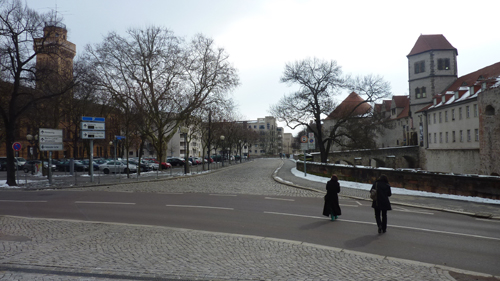
Jako że pisarze bynajmniej nie rozpieszczają Halle opisami literackich podróży (a do traumatyzującej prozy rozliczeniowej Edgara Hilsenratha po prostu bałybyśmy się sięgnąć, by sprawdzić, czy Halle tam się w ogóle pojawi),  poczułyśmy trochę z przekory chęć okazania temu miastu spoza znanych tras turystycznych choć na krótko trochę uwagi. Jak tu nie poczuć solidarności na widok wielkopłytowych pomników socjalizmu, o których Kaminer pisał, że przeniosły go w myślach w czasy jego moskiewskiej młodości? Wiedzione tym impulsem i  prawdę mówiąc  trochę po to, aby z bezpiecznego dystansu naszych berlińskich domostw poczuć za darmo lekki horrorek, pojechałyśmy szukać Neustadt, spodziewając się, że dzielnica robotnicza będzie miała coś z dawnej zwartości, dumy i siły wczesnego socjalizmu. Ale nie. Rozstrzelona w przestrzeni na wiele kilometrów, może być jedynie metaforą dysocjacji osobowości lub jej zapowiedzią – dla tych eksperymentatorów, którzy jednak chcieliby autentyzmu na dłużej niż nasza krótka i intensywna przejażdżka.

halle2

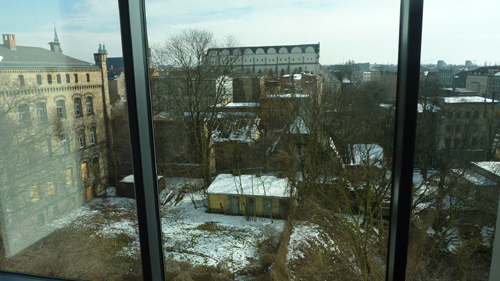
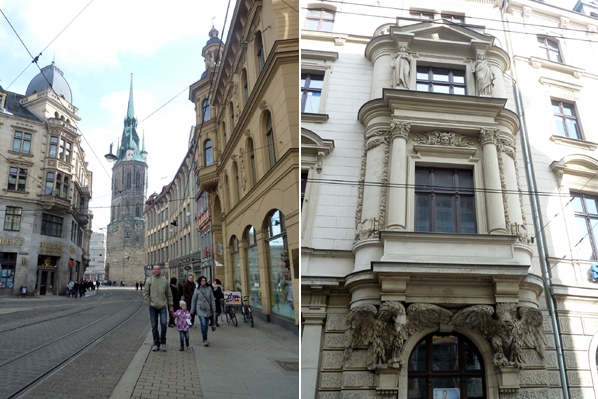
Dajemy jednak miastu szansę, inaczej niż nasz wspomniany berliński autor o rosyjskich korzeniach (i uprzedzeniach). I widzimy: bogate wille  z czasów grynderskich, na wielu ozdobne fasady z przełomu wieków, bardziej wyważone proporcje niż ich odpowiedniki w Berlinie, czyli takie trochę jak w Dreźnie, widzimy starania konserwatorskie całkiem nowej daty i (mniej lub bardziej udane) próby adaptacji starych murów zamkowych do potrzeb wystawienniczych, tereny spacerowe i – no niestety, nie da się  skłamać – zupełny, uderzający i bolesny… brak ludzi. Jest oczywiście jakieś prawdopodobieństwo, że w niedzielne popołudnie w swoich czterech ścianach popijają lokalnego (!) szampana marki Rotkäppchen lub Mumm, testując realną lub fikcyjną różnicę między nimi po fuzji obu firm, ale nie jest ono wielkie. Ale być może w tej degustacji (fakcie kulturowym!), którą zawdzięczam właśnie Kaminerowi i którą regularnie praktykuję  na lekcjach niemieckiego, prosząc uczniów o arbitralne rozstrzygnięcie wewnątrzniemieckiego sporu intrakulturowego o wyższości jednego trunku nad drugim, tkwi rozwiązanie? Nie wiem, co pijał Lyonel Feininger, kiedy jeszcze przed dojściem nazistów do władzy i wymuszoną emigracją mieszkał półtora roku w Halle i malował tutejsze kościoły i wieże, ale w tym, co zostawił naszym oczom, jest magiczne zaklęcie rzeczywistości tego miasta – zaklęcie tych uliczek i placów, wyniesienie ich ponad realizm w rejony magiczne. Bo po pierwsze trzeba umieć patrzeć, żeby widzieć. Ale po drugie można nałożyć filtr wyobraźni i dopiero ruszyć w miasto. Albo wrócić jeszcze kiedy indziej, o innej porze roku. Zobaczymy.

Lidia Głuchowska

„Martwy sezon” w Halle

– we wszystkich tego słowa znaczeniach – nie tak mało wcale ma do zaoferowania. Niemal nie zniszczone podczas wojny, w pewnych zakątkach przypomina nie tylko zamożny niegdyś Lipsk, rezydencjonale Drezno, lecz i kurortową Jelenią Górę.

Hallepodwojne1

Jeśli nieopatrznie rozpocząć wycieczkę przy tutejszej Leopoldinie (niemiecka Akademia Nauk, założona w roku 1652, mieszcząca się w dawnym budynku loży masońskiej z roku 1820; informacja dla wrocławiaków – ich Aula Leopoldina jest starsza, bo zbudowano ją w latach 1728-1741), przez zamkniętą bramę będzie można popatrzeć na dziedziniec pełen róż chronionych przez pałuby, posępnie emanujący pustką.

Leopoldina

Po chwili jednak, nawet przy pochmurnej pogodzie, dostrzec można i „spolia” z lepszych czasów, które budzą refleksje i prawdziwy zachwyt.

Pobliski Moritzburg pozostawia wrażenie jeszcze bardziej ambiwalentne. Z tą perłą późnogotycko-renesansowej architektury, z portalami przywodzącymi na myśl i Wawel, i Chocim, i Lwówek Śląski, nie nazbyt życzliwie bowiem obeszli się konserwatorzy.

2_Halle pieknebrzydkieTak jedno ze skrzydeł wewnętrznych dziedzińca, ogołocone z balkonów, jak i monumentalne, zewnętrzne mury od strony „fosy”, z pewnościa odstraszą jak obronny gród…

Wewnątrz – podobna konsternacja – przyjazna obcokrajowcom obsługa „na piękne oczy” uwzględnia zniżkę dla dziennikarzy i historyków sztuki, stoi w kontraście z kubistyczno-więzienną szatnią i prowizorium aranżacji znakomitej skądinad wystawy fotografii z arcydziełami podpisanymi: Sudek, Sander, Man Ray, Witkacy, Rodczenko, Cindy Shermann…

Za chwilę znów zaskoczenie – stała ekspozycja: Die Brücke – Nowa Rzeczowość, konstruktywizm – przyciąga i koi wyważonym rytmem barw poprzecznych ścian – z początku dyktowanym staccato tonów harmonizujących z obrazami Schmidta-Rottluffa – stopniowo wyciszanych monochromią prounów Lissitzky’ego, rzeźb Lemmbrücka i protorenesansowych okien z marionetkami tutejszego teatru, rodem z wczesnych lat trzydziestych.

4 halle ekspopodw

Za progiem uwagę przykuwają Meduzy-maszkarony, i te z dziedzinca zamku, i te z bram wyburzanych kamienic

5 halle MaszkaronypodwojneKolejna perła to kościół w rynku – i jego cztery wieże – dwie od frontu i dwie z tyłu. Piąta, ta na zewnątrz, góruje ponad placem, za wielkim jakby dziś wobec rangi miasta.

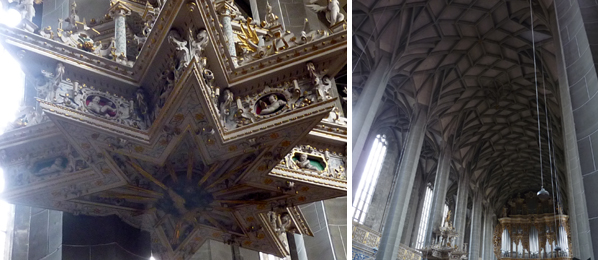
8 halle-kosciolWewnątrz – arcydzieło proporcji – zgrabne i maleńkie – regencyjno-rokokowe organy dźwigają atlanty. A naprzeciw – jak żart architekta – „organki” – cukierkowe jak z dziecinnego pokoju, no i strojne w herby – na tle malowanej protestanckiej przypowieści.

Ponad wszystkim – sieciowe sklepienie, wykreślone regularnie, rodem z wzornika. Jest tu i ambona – kryta rozgwiazdą, jak po jubilersku zdobiona wieńcem manierystycznych putt.

10 ambona-sklepienie

Znak czasu to wystawa: a jakże –  ruch oporu – rodzeństwo Scholl – przestroga – byliśmy tu – raz jeszcze.

Trzecią odsłonę sztuki określa inny duch – „Piękno niewidomych”. To wystawa mody projektowanej wyłącznie z myślą o nich – ze smakiem i społecznym zmysłem – niewątpliwie potrzebnym.

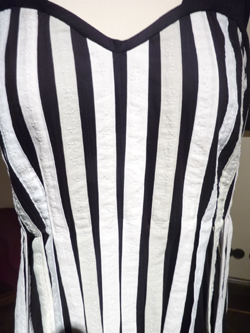
gorset
Designerskie ubrania w minimalistycznym zestawie barw – bieli i czerni – zdobi tekst w alfabecie Braille’a, często wiersze lub myśli niewidomych modeli, dla widzących tłumaczone w folderach.

To przesłanie imponuje – idea integracji – czy dostrzeże ją świat poza Halle? Media? Internet?

12 moda-podwoj

Ewa Maria Slaska

Halle monochromatyczne

To ja byłam praprzyczyną wyjazdu do tego zimnego i pustego miasta, ponieważ miałam swój (bardzo skromny) udział w przygotowaniu wystawy mody dla niewidomych – pięknej mody dla pięknych niewidomych. Obejrzałyśmy wystawę, owszem, ale spóźniłyśmy się na wernisaż. Ale nie żałujemy. Wchłonęło nas miasto, miasto poza sezonem, martwe miasto, miasto monochromatyczne. Halle. Monochromatyczne z plamami czerwieni w strojach dwóch kobiet na moście.

***
O wystawie były już na blogu dwa wpisy:
https://ewamaria2013texts.wordpress.com/2013/02/26/die-schonheit-der-blinden/

https://ewamaria2013texts.wordpress.com/2013/03/09/modenschau-fur-blinden/

I jeszcze tu (choć już nie u nas): http://www.kunstforum-halle.de/veranstaltungen/die-schoenheit-der-blinden.html

halle-koniec

Yiddishland

Lidia Głuchowska

Yiddishland and the utopie of Avant-Garde

adler-berlewi-chagall-lissitzky(…) …„Yiddishland“, the patria of the new, secular Yiddish culture of the Central East European Diaspora. To its inhabitants or rather residents belonged pro-Russian Litvaks, sympathising with socialism and rooted in the misnagda tradition; pro-Austrian Galitsianers influenced by Haskala and open to assimilation; and Hasidic pious Polakes, loyal to the pre-partioned Poland. This population was subject to migration and urbanisation processes, which additionally differentiated it. The cultural revival of the “Yiddishland” depicts in an especially evident way the problem of the deterriorisation of the international avant-garde.The interdisciplinary and transborder Yiddish avant-garde was active mainly in the former “Ansiedlungsrayon” of the Russian Empire, which means in Poland, Ukraine and Belarus, but also in other parts of Central Europe – like in Latvia, Romania or Germany – and in the United States. Its representatives emphasised ties with the Yiddish language and culture – common among the inhabitants of these areas, so called Yiddishism. This movement was considered to be a conception opposite to the Haskala renaissance, the revival of Hebrew and Zionism, aiming at founding an independent Jewish state and based on the restitution of Hebrew as an official literary language.

The following essay presents the structure of Yiddish avant-garde within the universal network of international avant-garde consisting of such components as art groups, magazines exhibitions, cafés, cabaret and theatre, and communicating with its own lingua franca. (…)

The avant-garde network has been often compared with the Diaspora. A paradigmatic avant-garde artist was cosmopolitan, multilingual and mobile – acting in the transborder cultural space and the distribution radius of the avant-garde manifestos extending from Scandinavia to the Balkans, and from Paris to Moscow. Against this background, Central Eastern Europe, which could be geographically identified with the area of the utopian “Yiddishland“, was more specifically “a region of constant migration, immigration and emigration, of people arriving, departing and moving around”. “Nomadic modernism” was another essential phenomenon of artistic internationalism in this period. (…)

katznelson-golfaden-borderzon… it has to be pointed out, that while, in general, in looking for the realisation of the utopia of a borderless “new world”, most of the émigrés were outsiders acting as insiders, the members of the Yiddish avant-garde were always outsiders, acting in foreign national or international contexts.

According to the political limitations, for example after a period of the flourishing of the avant-garde tendencies in the Soviet Union, several Jewish artists felt pushed to emigration. As a consequence of less or more convenient political or economical conditions the process of the deterriorisation considered not only actors of the cultural process themselves, but also their works. A number of art journals also appeared initially at one, then at another place, sometimes abroad (…) or been published in the German Metropolis parallel in Yiddish and Hebrew and was addressed to the different competing fractions of the Jewish national-artistic movement, divided between the Yiddishists and Zionists.  Lissitzky, Berlewi or Marc Chagall – who in opposition to his two colleagues did not explicitly support the idea of Yiddishism – were active in different countries and published their manifestoes in various languages.

The fact of a great relevance is that in a way, the Yiddish avant-garde was a Diaspora in a double sense. It participated in an avant-garde network on two levels. On an international level its members cooperated locally with Russian, Polish, Romanian or German groups in the singular national “household” countries and their representatives abroad. Simultaneously, on the national level they had several other local and cross-border contacts and were involved in the artistic life of their Yiddish-speaking communities. (…)

Some characteristics of the international avant-garde as a utopian borderless “new world” seem to fit to the Yiddish avant-garde in a particular way. The “Yiddishland” as a political utopia generated several images of the cultural transfer associated with its maps as a whole. (…) Such maps gave a glimpse of a major myth for a whole generation of artists, their collaborative project, a dream like imago mundi. Attempts in creating the artistic topography, sometimes in a comprehensive global way, sometimes on a smaller scale, were also the Panslavism, the zenitist aim of the Balkanisation of Europe or – much less researched idea of Yiddishism concerning the bigger part of Central-Eastern Europe. (…)

aronson-ravitch-markish-segalowiczThe echo of these historical maps or symbols of the cultural transfer are the schemes of the network, which correspond with the current historiographical concepts (…). While the first one seems to symbolize the stable construction of the right angled lines, the other one, through the usage of the diagonals, suggest the dynamic of the exchange-processes, a motion. (They are) not identical; this means on the one side that the Yiddish network has got partly other exchange centres, and, on the other side it also evaluated in the time. After the limitations of the artistic autonomy in the Soviet Union, the Yiddish avant-garde network became smaller and shifted to the West… (…)

In the past two decades, the avant-garde have been examined as an intellectual and spiritual alliance, as a model of a “new community” pursuing a “new world”, consisting of the interconnected locations of cosmopolitan artistic life in Central Europe such as Bucharest, Budapest, Łódź, Prague and Zagreb, with links to Amsterdam, Berlin, Dessau, Moscow, Paris, Vienna and many other cities in other parts of Europe and the world. In this way the newer narratives contribute to overcoming the previous dualistic approach to the European avant-garde, which divided the artistic map of the continent between Western “centres” and Eastern “peripheries”. The old canon has meanwhile been replaced by a more sophisticated approach, in which the geographical centre of the continent is no longer perceived as its periphery. In opposition to that the visualisations of the network of the Yiddish avant-garde, with its centres in Minsk, Kiev, Kharkov, Riga, Odessa, Saint-Petersburg, Odessa, Moscow, Vilna, Łódź and Warsaw, as well as in Berlin, Paris and New York, are of a much younger datum and the discussion on it in the more general, supranational context is still a desideratum of new cultural historiography.

Apart of the comparison of the imaginative maps of the avant-garde and Yiddish avant-garde universe, also a closer glance at another self-advertising strategy of the(se) movement(s), shows both interesting similarities and differences. One of their major media promoting the universal spirit of art were the little magazines, which all together contributed to a “worldwide network of periodicals”. (…)

Warsaw thereby acquired the status of a European centre for Yiddish literature, with Paris and Berlin serving as its satellites. (…) However, what has to be pointed out is that, even if Yiddish as a language was represented here, the magazine popularised not the idea of Yiddishism, but the opposite one – Zionism. (…)

Paradoxically, both in the case of the international avant-garde and the Yiddish one as its very specific case, their cartography, manifestos and the network of magazines presented a new sphere of the transborder artistic exchange, which can be seen as the anticipation of a future perfect, of modernisation projects characterised by new forms, frequently with an emphasis on ethics rather than aesthetics. In both cases they refer to a utopian community, neglecting the political reality of the period.

Almanac Yung-Yidish – Songs in word and image (…)

One of its innovative qualities was the breaking the rules of the Jewish tradition, such as the biblical ban on images. The typical avant-garde integration of word and image, (…) the domination of the forbidden image over the word was a kind of redefinition of a cultural code and its extension into the zone of taboo. (…) The three issues of Yung-Yidish were published on packing paper between February and December 1919 with a print-run of 350 to 500 copies. (…) Like most avant-garde periodicals, it was an ephemeral publication, even if it grew more interesting and bigger with each new issue. (…) Despite the advanced plans, the 4th issue, dedicated to the biblical Ruth, never came out because of financial reasons. (…)

The Yung-Yidish magazine, representing the main ideas of Yiddish avant-garde, set out its programme in two manifestos. The first, unsigned, in the periodical’s first issue, rebelled against the chaos and materialistic character of the present, and defended the eternal values of God, beauty, and truth. Yung-Yidish artists defined themselves as realists in a mystical faith, admiring art and both Jewish languages: the young one – Yiddish – and the ancient one – Hebrew – the language of the prophets. In the manifesto of the second issue, Broderzon stressed the ties of the Yiddish avant-garde with the millennium tradition of universal culture. Invoking the Bible, including the Psalms and “The Song of Songs”, and thus the tradition of Judaism, he once again pointed to the metaphysical concept of art. Adler too, in the same issue, evoked the Chasidic tradition in his “Prayer”. (…)

Historiography of the avant-garde, written by representatives themselves or by specialised scholars since World War II, often assumes that at the end of the first decade of the twentieth century an internationalist inclination superseded nationalist tendencies which had typified the nineteenth century, when art and architecture were instrumentalised as true manifestations of nationhood. In Central Eastern Europe the internationalist avant-garde conception of a “new world” had to compete with the predominance of conceptions of national modernisation and the idea of a national responsibility of the arts in the “new states”. (…) Internationalism, multiculturalism and multilingualism though not desired in the official life, belonged to the reality of art and present life. (…)

turkow-rotbaum-schwarz-weichertOne of the consequences of this process, intensified by the multilingualism and multiculturalism on a personal level, was the cultural syncretism both in the form and content of artistic production. Among others, this syncretism is apparent in a non-confessional religiousness which combined Christianity or Jewish religious conceptions, via theosophy, with Buddhism and other Eastern religions. (…) there was an explicit demand for a plurality of styles (…) and it was Futurism that played the key role in “new art”. (…)

The problem of the national awakening (…) concerns, however, not only the real existing “new” national states in Central Eastern Europe, but also (re)constructing the national consciousness and culture of the “Yiddishland” being in general the “underground structure” of the really existing political organisms in the interwar period, the same way as the literature of the Yiddish avant-garde was an exterritorial one, which but did not have any foundation in any specific national country.

Yiddish, which since the 1908 conference in Czernowitz was recognised as the language of Jewish culture on a par with Hebrew, was here the prime token of identity. In contrast to it, other languages like German, Russian and Polish, were the means of communication of assimilated Jews, whereas Hebrew, the language of religion, was unknown to the general Jewish population and was removed from its Central and Eastern European roots. The style of the poetry of the Yiddish avant-garde is characteristic of the entire literature of a community that survived the atrocities of World War I and a history of pogroms and revolutions. It expressed less the beauty than the horror. Its poetics bear the imprint of Yiddish Expressionism. (…)

In this context one has to maintain a paradoxical fact: not only as a literary but also as a communicative medium Yiddish often has to be constituted/restituted among the members of the Yiddishist movement. (…) And – which is not a well known fact – they mostly communicated in the languages of the “household” states (…). On the other hand, the Yiddish poets, like e.g. Peretz Markish, creatively used the polysemiotic senses of the Slavic languages, even in their programmatic manifestoes.

Yiddish as a language of the Diaspora which before World War II appealed to readers in most parts of Central Eastern Europe (…) …transgressed political borders, but at the same time had a national function. Because of that, with time however some of the representatives of the Yiddish avant-garde (…) looking for broader recognition decided to use mainly other languages and in a way lost this part of their identity, at least as a means of artistic expression. (…)

barcinski-kaminska-horowitz-nazoIn Central Eastern Europe the tensions between the universal and the particular, the international and national, were stronger than elsewhere on the continent. The modernisation impulse from the respective political centres in the single new states contributed to hybrid results privileging local materials, ornaments and themes. Artists tried (…) to transform foreign artistic patterns, creating local idioms of the international avant-garde code (…). Sometimes these permutations and hybridisations of Central European art are perceived as a consequence of the Jewish influence, with the affinity to richness and orientalism. Sometimes, however, both the whole (Central) Eastern European art and the new secular Jewish one being one of the main aims of the Yiddish avant-garde, has been associated with the hybrid components and the biomorphic metaphor of a world in statu nascendi (…)

In a special way, the avant-garde interest in new universal signs in the visual arts and design also resulted in a standardised typography. Innumerable examples which can be found in books, little magazines or posters, including collages or photomontages and especially exotic and impressive when printed in Cyrillic or Hebrew letters, established “a sort of international hieroglyph”. And often – only this one component of the Jewish identity, the language being, next to the culture and religion – Judaism a proof of “Jewishness”. In its written form it was used not only as and artistic medium, but also as a symbol of identity (…)

Efforts to create a universal style and an avant-garde corporate identity were crowned with an International Art Collection in Łódź in 1931, the first presentation of contemporary art to be permanently exhibited in a state museum in Europe. (…)

Jankel Adler in his article (1920) about expressionism which at that the time was still generally identified with the whole of progressive art stressed out its links with the sacral sphere: “We are the children of the 20th century. […] Stuffy air was our first breath. Our first walk are accompanied by the thousand fold by a choir of ringing trams, the staccato of horse-cabs, whimpering freight trains, speeding automobiles and a choir and noisy passages with criss-cross the streets with a thousand diagonals […] Art of the 20th century, the art of expressionism was born at that longing [after the God LG] and became the seventh day of the working week.”

Two years later his colleague Berlewi already after his return from Germany became a follower of the “new form” and meant: “I had to give up purely Yiddish problems completely and then I devoted myself to cubists and the constructivist’s experiments. Currently my task is to create something European”. (…)

lindenfeld-zarnower-aronson-altmanTo the general components of the avant-garde paradigm belongs the performative character of its manifests and manifestations. Regarding the Yiddish avant-garde, the most authentic and most long lasting emanations of its identity was, next to the programmatic texts and new secular visual art, the theatre, reflecting the every day life experience of the Yiddish population. In its carnival-like art (…) it appeared as especially attractive to a wide audience in Central Europe. In this sense, being even a mirror and mimicry of life and the part of life itself, it can be considered as the most and thus effective, performative manifesto of the Yiddish avant-garde.

Due to the hostility of orthodox religious communities it was formed relatively late, in 1876 in Jassy (Romania). The name of its founder, Graham Goldfaden, inspired the description of the whole genre, inspired by such folk songs and the traditions like the Purim-spiel of Biblical motifs. Between 1878 and 1905 the Tsar had forbidden the staging of performances in Yiddish, but Goldfaden’s theatre still used this “Jargon”. It was partly disregarded also among Jewish intellectuals, opting for the revival of Hebrew or the assimilation, concerning it as shund (garbage). (…) As an alternative to it several other theatre groups were grounded (…) (also) small artistic theatres and cabarets…(…), performances (…).

If internationalism is generally considered a conditio sine qua non of the avant-garde, the national question can be perceived as the contrasting intertext, as a negative point of reference for an international avant-garde ideology, or at least as a set of ideas which had to be addressed. The artists of the Yiddish avant-garde gathered e.g. around such magazines as Yung-Yidish or Yung-Vilne (…) deserve special attention. They were major platforms of Yiddishism, (…) unlike the rest of the Jewish artists who were often assimilated (…). They represented a second generation of new Jewish culture. Whereas the first one tried to create a European opening for Yiddish culture, the second, on the contrary, strove to introduce “the Jewish world” into European culture. As such, the Yiddish avant-garde operated “in-between”, addressing the issue of “the other” in a more poignant way than the rest of the avant-garde, provoking a deconstruction of the official conception of the “new state” as an ethnic and cultural monad, which they considered to be merely a political construct. As “universal others”, they were predestined to become spokespeople for an ‘inter-national’ avant-garde. The motivation for their stylistic choices was, however, not underpinned by a universal aesthetic based in an “escape from history”, but rather by a symbolic discourse of the marginalised in relation to the relevant national cultural context and historiography.(…)

shor-shifrin-ryback-ingerTheir common work and the three issues of Yung-Yidish over the previous two decades are treasured by a handful of libraries in the world as an imposing body of work by the Yiddish avant-garde, arriving at its dire epilogue in the Nazi Entartete Kunst (Degenerate Art) exhibition of 1937 and the Holocaust. (…)

Because of its national aims and structures, but possibly also a missing recognition from the outside, it can be, on the one hand perceived as a hermetic or maybe separate/isolated network, parallel to a universal one and not its subdivision. On the other hand, its exterritorial character and numerous transborder links predestined it to be even a model of the international network as its pars pro toto.

In opposition to the predominant meanings it was not isolated from the local context of the “household” countries. In contrary, following the own national aims, it also looked for the universal perspectives and acceptance in Central Eastern European “new states”, which in opposition to the “Yiddishland” became real political organisms. (…)

For the Yiddish avant-garde attempts of the transmission of their own heritage and ideological proposals were a difficult compromise. Often the transfer from the different “householders’” cultures appeared as dominant and the transmission turned out into cultural transgression. (…)

In fact, in a great scale, after the revolution in the Soviet Union the Yiddish avant-garde network became smaller and its idea of an independent national modern culture failed. It was misused by the propaganda and became “an art for the masses”. According to the Lissitzky’s conception it was the third stage of the transgression. The fourth one was represented by the stylistic turn of the Yiddish avant-garde, e.g. by his own pangeometry. (…)

Not only the idea of Jewish art, but also – in particular, the message transferred in the name of the prominent group of the Yiddish avant-garde – Jung Vilne – were perceived as oxymorons. The last one, created in the old centre of Jewish culture – the Jerusalem of the North ceased to exist much later than the other groups of the Yiddish avant-garde movement – in the Nazi time (…)

Arie Ben-Menachem created an album of photomontages Ghetto. Terra Incognita (…) Its title seems to define the status of the “Yiddishland” and its new secular art, as well as its little reception in the international avant-garde studies.

All the mentioned examples of the contradictory attitude towards the perspectives of the proper milieu for the development of their own identity stand on the one side for the tendency to transgress and as a consequence a compromise of partly assimilation and acculturation in the foreign context, and on the other side – for a strong opposition against it. In this sense the history of the Yiddish avant-garde is a document of both – plurality of Judaism on the one side and of the – (pre)modern liquid identity of Jewish artists in general – on the other one.
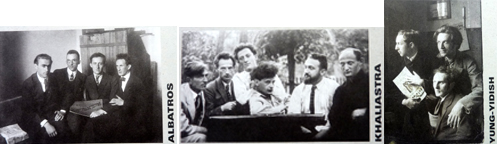
albatros-khalistra-jung-jidysz

Yiddishland Image captions:
Pola Lindenfeld with her sister Eugenia, Photo, courtesy S. Karol Kubicki, Berlin
Teresa Żarnower, c. 1920, Photo from: Andrzej Turowski, Budowniczowie swiata, Cracow 2000.
Other photos:
Nathalie Hazan-Brunet and Ada Ackerman (eds.): Futur antérieur: L’avant-garde et le livre yiddish (1914–1939), Paris 2009.
& Wikipedia Commons, http://www.ecoledeparis.org, http://www.infocenter.co, http://www.e-teatr.pl, http://www.rp.pl, US Holocaust Memorial Museum, http://www.museumoffamilyhistory.com, http://www.jewishgen.org

Full text version with footnotes published in: Lidia Głuchowska, From Transfer to Transgression. Yiddish Avant-Garde – a Network within the Universal Network of the International Movement or a Complementary One? In: Harri Veivo (ed.): Transferts, appriopriations et fonctions de l’avant-garde dans l’Europe intermédiataire et du Nord [Cahiers de la nouvelle Europe, hors serie], Paris 2012, pp. 143-168.
http://www.fabula.org/actualites/harri-veivo-sous-la-dir-de-transferts-appropriations-et-fonctions-de-l-avant-garde-dans-l_52704.php

Also to read: about “Jidyszland” in Polish press

Jego nowa twarz

Sigil of Scream

Jego nowa twarz

Chciał przymknąć okno, gdy nagły powiew wiatru poinformował go o przylocie matki. Zrezygnował więc ze swego zamiaru i usiadł z powrotem na kanapie, patrząc jak Maria przefruwa przez parapet. Kilka zgubionych ptasich piór oderwało się z jej magicznej szaty i sfrunęło na podłogę, gdzie zastygły w ostatnich promieniach pomarańczowego słońca.
– Znów nic nie robisz? – Maria spojrzała badawczo na syna, obserwującego ją z wyrazem apatii, charakterystycznym dla młodych bezrobotnych i arystokratów. – Wyglądasz jak z krzyża zdjęty.
– Bardzo zabawne – mruknął Jezus sarkastycznie i wyszedł do kuchni. Przechodząc przez korytarz słyszał jak Maria rozpina czarodziejską szatę. Widok jej nagiego ciała byłby czymś więcej, niż mógłby teraz znieść. Nigdy nie nosiła bielizny. Podszedł do zlewu i odkręcił wodę, napełniając nią nieduży puchar.
– Jest Magda? – krzyknęła Maria z drugiego pokoju.
– Nie ma – odkrzyknął ochryple. Ruchem ręki zamienił wodę w pucharze w czerwone półwytrawne. Odczekał jeszcze chwilę stojąc przy odkręconym zlewie i dając czas matce na założenie sari. Ostatnio w domu pojawiało się coraz więcej tych indyjskich bzdur. Rano budził go często zapach szafranu i olibaum. Jezus zastanawiał się jak się to skończy. Przepłukał gardło łykiem wina i wrócił do pokoju. Maria stała przed lustrem zakładając dziwne, brzęczące bransolety.
– Gdzie poszła? – zapytała nie przerywając czynności.
– Wyszła – stwierdził po prostu i wrócił na miejsce na kanapie, za stolikiem. Leżała tam duża, ciężka serweta, tkana w róże i pobrudzona woskiem. W tle na niej widniał krzyż.
– Skąd mam wiedzieć gdzie ją nosi? – „Dziwka” dodał w myślach z ponurą mściwością, ale i lekkim posmakiem przyjemności.
Maria odwróciła się od lustra i wbiła wzrok w wyblakłe oczy syna.
– Nieładnie o niej myślisz. Nie zapominaj, że jesteśmy jednością – uśmiechnęła się.
Jezus wzruszył ramionami.
– Możliwe, niemniej mogłaś mi zostawić jakąś lepszą część siebie. Wiesz, wolałbym nieco troski i uwagi, niż wieczną nimfomanię.
– Troska i opieka jest dla ludzi – odparła Maria z irytującą pewnością Wielkiej Matki. – A propos ludzi. Dzwonił ktoś do ciebie dziś rano, ale spałeś, więc cię nie budziłam.
– Kto? Przecież mamy zastrzeżony numer.
– Jakiś mistyk. Nie wiem skąd wziął nasz telefon. Wiesz jacy oni są, ci mistycy, zawsze pchają nos nie tam gdzie trzeba.
– Pewnie Franciszkanin – skwitował Jezus kwaśno. Franciszkanie irytowali go, za dużo duchowości. Zdecydowanie wolał Jezuitów – oni przynajmniej nigdy nie próbowali się z nim skontaktować.
– Będziemy musieli zmienić numer – dodał po chwili. – Jeśli jeden człowiek go zna, zaraz będziemy mieć na karku całą ich bandę. Wiesz jacy są ludzie. Wydaje im się chyba że prowadzę jakąś akcję charytatywną.
Zapobiegawczo pominął przekleństwa nawet w myślach. Wyjął z kieszeni na piersi cygaro i odgryzł końcówkę. Zapalił.
Maria usiadła na krześle naprzeciwko niego i złożyła ręce na kolanach. Gdy podniósł wzrok napotkał jej spojrzenie poza błękitnawymi oparami dymu. W pokoju robiło się powoli coraz bardziej modro. Zmierzch kładł się na sprzętach grubym kocem szarości. Aureole matki i syna świeciły coraz jaśniej w mroku, rozpraszając cienie.
– Wypalasz się – stwierdziła w końcu matka, po chwili milczenia. – Zrobiłeś się sarkastyczny i zblazowany. Kiedyś tak nie było.
– Świat jest sarkastyczny i zblazowany. Jestem mesjaszem na jego miarę. Poza tym ludzie lubią takich, to teraz modne. Może nawet zajmę się filozofią?  – odparł drwiąco, zaciągając się dymem.
– I zacząłeś palić…
– Część mojego image. W końcu jestem naczelnym magiem tego świata. Palenie zawsze było czynnością magiczną… Wiesz, władza nad ogniem i takie tam…
– Nie wiem, gdzie to cię zaprowadzi. Mógłbyś być bardziej taki… No wiesz…
– Jak Budda? – przerwał jej Jezus z ironią w głosie.
– Chociażby…
– A gdzie ten Budda, co? Facet którego nie było, nie będzie i nie ma. Pieprzone „wszędzie i nigdzie”. Sam się chyba znaleźć nie może. Wygoda dla deistów i ateistów. Mam dość tego wschodniego chrzanienia, oświecenia na haszyszowym haju…
– Jak chcesz. Nie namawiałam cię do powrotu do Indii – wzruszyła ramionami Maria – Po prostu mógłbyś mieć czasem bardziej pozytywne nastawienie. To ty sam sobie robisz gorzej…
Chciał coś odpowiedzieć ale w tym momencie oboje usłyszeli zgrzyt klucza w zamku i dźwięk drzwi uderzających o ścianę. Na klatce rozległ się śmiech, który jednak szybko zgasł. Chwila szeptów, szelest ocierających się o siebie ubrań. Odgłos oddalających się kroków i zamykanych drzwi zlały się w jedno.
– Magda wróciła – stwierdziła Maria po prostu i wyszła do przedpokoju. Za drzwiami zabłysło światło, kładąc się na dywanie w pokoju. Jezus pociągnął kolejny łyk wina, kobiece głosy w korytarzu szeleściły przez chwilę. Nie wsłuchiwał się w to. Zamknął oczy. Dobiegły go tylko urwane słowa: „znowu”, „wujek”, „porozmawiaj”, „wieczór”, „pije”… Cmoknięcie i oddalające się kroki Marii w głąb domu. Zawsze umiał poznać jej chód, nawet po dźwięku, nieśpieszny i w pewien sposób pełen klasy. Drgnął nagle gdy ktoś wyjął mu z ręki kielich. Otworzył oczy. Stała obok niego, w purpurowej, prowokująco krótkiej sukni i uśmiechała się z mieszanką troski i przekory. Choć tej drugiej było zdecydowanie więcej. Jej włosy lśniły lekko odbijając dyskretnie blask aureoli.
– Nie powinieneś pić z Graala – powiedziała miękko – Znów gnostycy i wizjonerzy będą chodzili przez miesiąc do tyłu.
Nie odpowiedział, zaskoczony jej bolesną namacalnością. Czuł teraz zapach jej perfum, zmieszany z wonią alkoholu, papierosów i dymem cygara. Mrugnęła i przysunęła sobie krzesło, siadając obok stołu, przed Jezusem. Prowokacyjnie odwróciła je oparciem w jego kierunku, tak iż widział koronkowe zakończenia jej pończoch, opinające ciasno pełne uda. Wiedział, że ma tę świadomość. Magdalena uwielbiała takie drobne zabawy, czerpała z nich przyjemność, nieodmiennie czy znajdowała się akurat w domu, w knajpie czy na wystawnym przyjęciu. Obserwowała go z rozbawieniem, bawiąc się resztką wina w kielichu. Przełknął ślinę.
– Gdzie byłaś? – zapytał wreszcie.
– Przecież wiesz. Chodziliśmy z Szatanem, tu i tam. Chciałam go zaprosić teraz, ale mówił, że ma sporo pracy.
– Nie lubię, jak się z nim zadajesz.
– Oj, daj spokój, wujek nie jest taki zły – uśmiechnęła się, mrugając z udawaną niewinnością. Była ubawiona jego reakcją. – Poza tym dobrze wiesz, że on płaci za większość naszych potrzeb. Chyba że chcesz opłacać mieszkanie ze swoich sztuczek magicznych…
Nie zripostował, nie miał na to sił. Wiedział, że miała rację. W sumie ich akcje na Ziemi szły coraz gorzej. Nie tragicznie jeszcze, niemniej kierunek był ewidentnie spadkowy. Kiedyś miał do tego więcej serca. Kiedyś go to bawiło nawet, wykorzystywanie magii do leczenia, spełniania życzeń czy zadziwiania śmiertelnych. Napędzał całą tę zabawę. Ostatecznie jednak pewne rzeczy znudziły mu się, a cuda wyszły z mody. Westchnął.
– Wypalasz się – zauważyła z troską.
– Już mi ktoś dziś to mówił.
Nie odpowiedziała, wiedziała kto. Chwilę trwała cisza, przerywana tylko tykaniem zegara, który dostał kiedyś od Ojca. W sumie nie przypominał sobie, by otrzymał więcej prezentów od niego.
– Powinniśmy wyjechać – powiedziała nagle Magdalena. – Wiesz, zmienić klimat, zmienić styl. Może coś bardziej pod Erę Wodnika? Teraz ludzie lubią takie rzeczy. Wiesz, moglibyśmy się wyluzować. Jak kiedyś. Za długo już jesteś czarownikiem dla ubogich, co to za klasa? Szkoda gadać. Pamiętasz jak byłeś Krishną? Coś takiego mam na myśli, wiesz – nowa twarz, nowe symbole, nowe imię… Coś na czasie, coś anty… O rany, zróbmy coś szalonego!
Ciemność gęstniała w pokoju. Dym zdawał się wirować i tworzyć jakieś dziwne symbole. „Może rzeczywiście,” pomyślał Jezus mętnie, czując jak głowa staje się coraz cięższa. „Może ona ma rację. Szkoda trzymać się przegranych spraw. Faktycznie ostatnio straciłem na rozmachu. Trzeba z tego wybrnąć… Tylko co wybrać? Francję? Magdalenę tam lubią. Może Stany, tam mają wielu bogów udających śmiertelników… I śmiertelników udających bogów… Będą musieli to przemyśleć… Może rano, jak się wyśpię… Nowa twarz… Nowe imię… Coś nowego? Anty…? Antyteza…? Antychryst…? Antychryst! Tak, to może być to…”
Magdalena dopiła wina z kielicha patrząc spod przymrużonych powiek na zasypiającego mesjasza.

***

Strona internetowa autora

Das Leben von Kobra Hanum

Persische Gattin

Aus den Erzählungen meiner Schwiegermutter (85 Jahre alt)

Das Leben von Kobra Hanum

Besmella el Rahmone Rachim – Im Namen des allmächtigen Gottes.

Kobra war ein kleines Kind, sie war sehr klein, 2 Jahre alt, da starb ihre Mutter, und sechs Monate danach ist ihr Vater gestorben. Sie waren vier Geschwister:  Laro, Kobra –  die Zweitälteste, Odrat und Atollah. Der Onkel von Kobra war Arzt und er hat sie zu sich genommen.  Dann wurde der Onkel alt und ist gestorben, seine Frau auch. Aber Kobra hat geschafft in dieser Zeit groß zu werden, 18 Jahre alt wurde sie. Sie kam nach Teheran zu ihrem Bruder. Aber das war nicht gut, weil sie sich mit der Frau des Bruders verstritten hat.  Und sie hat Kobra rausgeschmissen. Aber es war nicht so schlimm, da Kobra robust war. Und die iranischen Männer, du weißt selber wie sie sind, haben sie belästigt. Dann hat sie  um Erlaubnis in der Familie gebeten und einen davon geheiratet. Sie hat einen Christen geheiratet. Wir haben spekuliert, dass er Armenier ist, aber niemand wusste es mit Sicherheit. Was soll man tun, sie haben sich verliebt. Da ist es egal ob man Bahai, Zoroaster oder sonst was ist. Ein Junge und ein Mädchen verlieben sich halt, das ist kein Problem. Der Mann hieß Amir, aber er wollte dass man ihn Ghossem nennt. Ich bin Ghossem –  hat er erzählt und  hat seine Geburtsurkunde geändert. Aber Kobra hat von vorne herein kapiert, dass er Christ ist. Mein Mann, Agha Jun, meinte auch zu ihr – Mädel, der ist kein Moslem, weil er Hatne (Beschneidung) nicht gemacht hat. Sie meinte – was soll ich denn machen, er liebt mich, wir werden zusammen leben. 5 Jahre haben sie zusammen gelebt. Und es war sehr gut, da er Mechaniker war und hat gut verdient, aber dann hat sich herausgestellt, dass er eine andere Frau hat! Und drei Kinder. Kobra hat es herausgefunden, da er  ständig nach Kangavar ging. Aber sie haben trotzdem weiter zusammen gelebt.  Und Kobra wurde schwanger.

Amir faehrt wegAmir fährt weg

Als sie in fünften Monat war, ist er wieder verschwunden und Kobra ist außer sich durch den Schnee, es war so kalt, die Erde war gefroren, in unsere Straße gekommen und hat geklagt- mein Amir, wieso kommt er nicht? Dann sagte sie zu mir: ich werde das Kind nicht behalten, ich treibe es ab. Und so war es. Etwas später kam Amir zurück und wieder lebten sie zusammen, aber er ging oft zu der anderen Frau, er ging hin und zurück, hin und zurück. Und Amir hat gesagt:  ich will kein Kind mehr –  weil er ja schon drei Kinder hatte, mit der anderen Frau. Und er hat sein Röhrchen zugebunden, bei einem Arzt – das hat Kobra herausgefunden, und dadurch konnte sie nicht schwanger werden. Ein Mann muss in diesen Sachen schon sein Erlaubnis geben, eine Frau kann alleine nichts tun. Kobra hat kein Kind mehr bekommen, und war sehr traurig. Sie lebten noch etwas zusammen und dann ist Amir weggegangen. Und als er gegangen ist, kam er lange Zeit nicht wieder.

Er ging hin und zurueckEr ging hin und zurück, hin und zurück…

Kobra kam eines Tages  zu mir, wir haben im Hof eine Arbeit zusammen verrichtet und sie sagte zu mir: er ist gegangen und ist nicht zurückgekommen, ich weiß nicht mal, ob er schon tot ist, oder noch lebt, ich weiß gar nichts. Also ging Kobra zu den Behörden und hat die Ehe annulliert,  hat sich bescheinigen lassen, dass sie eine unverheiratete Frau ist, und hat den alten Namen wieder angenommen.

Kobra schaut ihm nachKobra schaut ihm nach…

Und bis jetzt hat Kobra keine Kinder. Auf weitere Kinder hat sie jetzt keine Lust. Sie hatte zwar zwei Freier, solche ohne Bedeutung. Daraus ist nichts geworden. Mit der Zeit  ist sie älter geworden und die Männer wollen eine junge Frau haben und nicht eine Alte, und vor allem nicht solche, die schon mit einem anderem Mann gelebt hat. Man muss ja Jungfrau sein. So wollen sie es haben und nicht anders. Wenn die Frau sagt-  ich bin nicht mehr ganz, und habe schon ein Loch, dann sagen sie: hau ab, geh weg von mir! Du bist jetzt verdorben, andere Männer haben dich angefasst. So ist es.

In einer Woche erzähle ich von Ehe und Hochzeit in Iran. Es wird auch demnächst wieder eine Erzählung von meiner Schwiegermutter Monavar geben!

Seeds

Waldemar Okoń
SEEDS – NASIONA

dendelion

Kolejna wystawa malarstwa Natalii Okoń-Rudnickiej dedykowana jest rzeczom ulotnym i ludziom wrażliwym, którzy nadal wierzą, że sztuka ma sens, a jej uprawianie i oglądanie nie jest jedynie w miarę wygodną i zanikającą formą spędzania czasu. Jak wiemy malarstwo potrafi zatrzymać na wieczność jedną chwilę, ale umie ją również zintensyfikować, jest trwałe  i nieustannie przypomina o nietrwałości tego świata poprzez swa kruchość oraz istnienie jedynie w świetle, które tak łatwo jest zniszczyć lub unicestwić. Malarstwo wskazuje na naturę, którą powinniśmy naśladować i spod praw tej natury stara się wyzwolić, łącząc na obrazach to, co w rzeczywistości nigdy połączeniu nie podlega, stwarzając światy groteskowe i poprzez to prawdziwe, surrealne i dzięki temu sięgające w głąb wewnętrznej, a nie jedynie zewnętrznej kondycji świata.
OutSideTheRiver

Wystarczy również popatrzeć na obrazy Natalii, aby zrozumieć, że najwyższa ze sztuk – poezja może objawiać się w tym co wizualne, nie tracąc przy tym walorów jak najbardziej sensualnych i dekoracyjnych.
Nasiona

Piszę o tym, ponieważ w malarstwie tej młodej artystki dostrzegamy niemal barokowy przepych kolorów w połączeniu z bardzo precyzyjną formą rysunkową, odniesienia do tego co najtrwalsze i najważniejsze w naszym życiu: naszego wizerunku – twarzy, naszych bliskich, naszej sztuki, która niekiedy prowadzi nas w stronę odwiecznych symboli – polecam „Głowę na talerzu”, „Motyle”  i „Bliźnięta”, jednocześnie nie zapominając o tym, że malarstwo jest próbą odpowiedzi na wyzwanie rzucane nam przez sensualność świata i właśnie w tej zmysłowej i cokolwiek aintelektualnej sferze powinno się najpełniej spełniać i realizować.
Warhol2013

Stąd zaistniałe na naszej wystawie piękne „Trzy zmysłowe kury”, ale też „Posiłek kaczki” i rozliczne „Zabawy”, których głównym bohaterem jest dziecko zanurzone w cokolwiek metafizycznej przestrzeni tego co dzieje się tu i teraz będące również projekcją całej, miejmy nadzieję, szczęśliwej i dobrej przyszłości.
W_ogrodzie

Malarstwo Natalii Okoń-Rudnickiej zawiera bowiem w sobie opowieść o życiu, które winno być dobre i szlachetne, o zabawach, które wprawdzie przemijają, ale pozostawiają w nas na długo delikatną pamięć szczęścia, o przeciwnościach, które można pokonać, a wszystko podane w urokliwej, lekko ironicznej poetyce charakteryzującej sztukę, z którą dobrze się mieszka i która może być dla nas źródłem nieustannie odkrywanych malarskich i poetyckich radości. Taką radość w dzieciństwie przynosiły nam dmuchawce, które potrafiliśmy zamienić w deszcz unoszących się ku słońcu nasion, ulotny i jednocześnie bardzo konkretny, służący zabawie i powstawaniu nowego życia. Pamiętajmy, że sztuka to według słynnej definicji Szekspira „powietrzne nic” i być może dlatego warto ją uprawiać i o niej myśleć.

zabawy

I zupełnie na koniec – w dzisiejszym konsumpcyjnie nastawionym świecie artyści niekiedy wybierają właśnie konsumpcjonizm jako temat i swoistą strategię swojej sztuki. Obrazy Natalii też starają się ukazać niebezpieczeństwa (liczne) i zalety (nieliczne) takiego stylu życia. Można je kupić, można też zamówić u Artystki „odręczne” wykonanie szeregu projektów pokazanych w formie „maszynowych” wydruków na płótnie. Nowe technologie nie zmieniają jednak podstaw sztuki malarskiej, w której liczą się przebłysk  wyobraźni utrwalony w trwalszym niż ona sama medium oraz, tak od początku istnienia ludzkości, oko i ręka malarza.

***
Inne prace można zobaczyć na stronie Natalii Okoń