Etnologia jest dyscypliną

Irena Kabat
Organizatorka zjazdu napisała do nas w mailu:

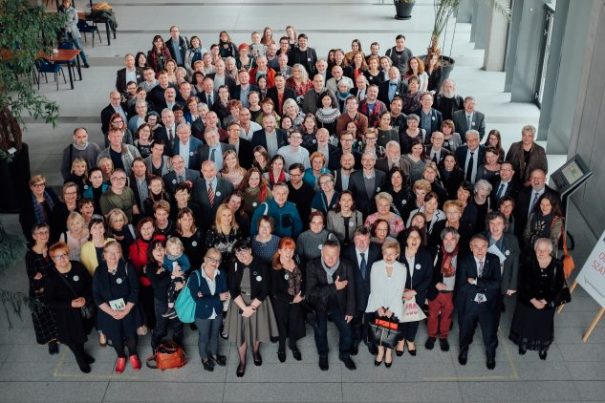
100 lat etnologii na uniwersytecie w Poznaniu celebrowaliśmy w dniach 8-14 kwietnia 2019 roku. Program obejmował ogólnopolską konferencję naukową, wystawę fotograficzną w przestrzeni miasta, zajęcia dla licealistów, debatę wokół transformacji roku 1989, wieczór projekcji filmów z naszego archiwum oraz Zjazd Absolwentek i Absolwentów Studiów Etnologicznych. Na tę okazję powstały jubileuszowe gadżety, specjalne wydawnictwo, a także wystawy “Nasi w mediach” oraz “Pozdrowienia z terenu”. Świąteczny tydzień wypełniała muzyka: od Szamotulan i ich wieloosobowego wesela, poprzez muzykę dudziarską,  jazzowe standardy po specjalny, multimedialny koncert Kapeli ze Wsi Warszawa. Staraliśmy się bardzo, by było godnie, różnorodnie, radośnie i głośno. Mamy szczerą nadzieję, że udało nam się pogodzić powagę z zabawą, a wszystkim uczestnikom wydarzeń zapewnić wspaniałe przeżycia. Dziękujemy, że byliście z nami!

Zdjęcia: absolwentka Etnologii UAM , Zosia Kędziora https://drive.google.com/drive/folders/1WkZwb2Qh8xrU58M27eUL3_NWZ37hh8qR?usp=sharing

Film: http://etnologia.amu.edu.pl/studenci/czym-jest-dla-ciebie-etnologia-film-przygotowany-z-okazji-100-lecia-etnologii-uam/


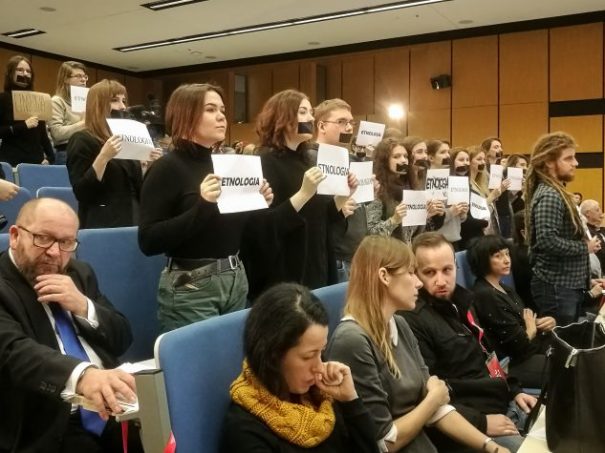
Było miło i wesoło, ale było też poważnie, bo etnologia jako dyscyplina znika właśnie z krajobrazu nauki polskiej wskutek decyzji ustawodawcy. Ustawa 0.2, produkt biura ministra Gowina (PiS), zakłada wpakowanie wszystkich nierentownych a obdarzonych potencjałem buntu nauk humanistycznych, jak religioznawstwo czy etnologia, do wspólnego worka, nazwanego “nauka o kulturze”.  Spowoduje to zlikwidowanie, a co najmniej, jak się słyszało w wystąpieniach, zamazanie profilu tej nauki. I to akurat w czasach, gdy rola antropologii kulturowej i socjologii etnologicznej wzrosła tak niepomiernie, iż uważa się ją za kluczową dyscyplinę w procesie integracji społecznej i międzykulturowej.

Przedstawiam Czytelnikom aktualnie się rozgrywający i w opinii publicznej niemal nie zauważany protest etnologów, który, zgodnie z zasadami political corectness, jest napisany tak, żeby nie szarpać i nie złościć ponad miarę. Zapewniam jednak, że to co słychać było z trybuny i w kuluarach Piątego Zjazdu Etnologów Uniwersytetu im. Adama Mickiewicza w Poznaniu (13-14 kwietnia 2019) było ostre, bezpardonowe i budziło szacunek. Gdy się zobaczy ten protest w proeuropejskim kontekście politycznym, okazuje się, że tytułowe hasło to takie współczesne Ah! Ça ira.

To my – na stulecie.

Marcin Skupiński
Instytut Etnologii i Antropologii Kulturowej na Uniwersytecie Warszawskim
Zdjęcie pod tekstem:
Tomasz Białecki
II rok studiów, Instytut Etnologii i Antropologii Kulturowej na Uniwersytecie im. Adama Mickiewicza w Poznaniu

Kilka słów o proteście…/A few words about the protest…

Etnologia, albo Antropologia Społeczno-Kulturowa (dawniej zwana w Polsce również Etnografią), to naukowe, empiryczne studia ludzkiego zróżnicowania społecznego i kulturowego. Jako odrębna dyscyplina naukowa wykształciła się pod koniec wieku XIX i na początku XX, przy znacznym udziale polskich naukowców takich jak Maria Antonina Czaplicka czy Bronisław Malinowski. Niestety w czasach PRL-u antropologia została uznana za „burżuazyjną naukę”. Pozostawiono jedynie etnologię, zmarginalizowaną jednak jako naukę pomocniczą historii. Nawet w tym trudnym czasie polskie etnografki kontynuowały studia społeczności ludzkich, tworząc interesujące teorie w oparciu o francuski strukturalizm czy rosyjską semiotykę. Transformacja ustrojowa oznaczała dla polskiej etnologii nowe wyzwania: jak powrócić do globalnej sieci wymiany naukowej? Jak zacząć dialog z badaczami z „Zachodu” na równych zasadach? A przy tym wszystkim nie stracić z pola widzenia zachodzących na bieżąco ogromnych zmian społecznych i kulturowych? Ostatnie trzy pokolenia polskich etnografek i etnografów włożyły ogromny wysiłek w podniesienie poziomu tej dyscypliny w kraju i za granicą. Odnieśli sukces. Dziś polska Etnologia jest rozpoznawalna na całym świecie a w centralnej Europie stanowi jeden z głównych ośrodków nauk etnologicznych i antropologicznych. Najlepszym dowodem niech będzie tegoroczny Kongres International Union of Anthropological and Ethnological Sciences, który odbędzie się w Poznaniu.

Niestety cała ta praca polskich etnolożek i etnologów może pójść na marne za sprawą jednego rozporządzenia ministra*. Etnologia nie jest już rozpoznawalna w Polsce jako oddzielna dyscyplina naukowa. Zostanie włączona do dość rozmytej kategorii „nauk o kulturze i religii” – kategorii, która nie funkcjonuje w żadnym kraju poza Polską. Wraz z tym ruchem, z trudem odzyskana autonomia etnologii/antropologii kulturowej w polskim systemie akademickim zostanie dalej ograniczona a sama dyscyplina – wraz z kulturoznawstwem – zepchnięta do najniższej kategorii uniwersyteckiej „kosztochłonności”. Proces ten zagraża kontynuowaniu w przyszłości przez polskich badaczy długotrwałych badań terenowych – stanowiących od ponad stulecia o specyfice dyscypliny.

Idąc w ślad listów protestacyjnych jakie z całego świata napłynęły do Ministerstwa Nauki i Szkolnictwa Wyższego, oraz studentów/ek i wykładowców/czyń z Poznańskiego Instytutu Etnologii i Antropologii Kulturowej, którzy swoją symboliczną akcją zaczęli protest, sprzeciwiamy się stanowczo wymazaniu etnologii i antropologii z polskiej nauki. Jesteśmy studentami/tkami, wykładowcami/czyniami i absolwentkami/ami. Studiujemy, pracujemy i wykładamy w różnych miastach: Poznaniu, Warszawie, Krakowie, Łodzi, Cieszynie, Wrocławiu, Toruniu czy Gdańsku. Protestujemy jednak teraz solidarnie, by powiedzieć NIE wykreślaniu i marginalizacji studiów nad człowiekiem w polskiej nauce!

Zachęcamy wszystkie adeptki i adeptów etnologii i antropologii kulturowej, oraz wszystkie osoby którym na sercu leży dobro polskiego dorobku naukowego do poparcia naszej walki o utrzymanie dyscypliny. Szczegółowe informacje odnośnie akcji protestacyjnych w konkretnych miastach będą pojawiały się na tej stronie – https://www.facebook.com/Og%C3%B3lnopolski-Protest-Etnologii-2290095344591377/

Zapraszamy do jej uważnego śledzenia!


* Chodzi o tzw. ustawę 2.0 o nauce i szkolnictwie wyższym Jarosława Gowina z lipca 2018 roku.

Hat Jesus die Kreuzigung überlebt? Czy Jezus przeżył ukrzyżowanie?

Reblog                                                                                                            Tekst po polsku poniżej

Rudolf Neumaier

Hat Jesus die Kreuzigung überlebt?

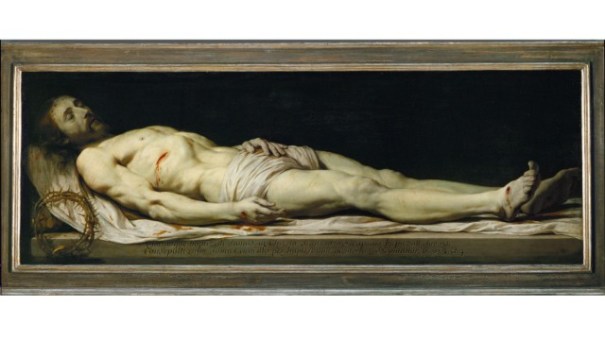
Ja, behauptet Johannes Fried in seinem Buch “Kein Tod auf Golgatha”. Mehr noch: Jesus ist entkommen. Wahrscheinlich als Gärtner.Schlummern in einer Essig-Narkose? “Der tote Christus”, gemalt von Philippe de Champaigne im Jahr 1674. (Foto: Erich Lessing/akg-images)

Wenn man die Bibel mit den Augen eines Unfallchirurgen betrachtet, liest sie sich gleich anders. Der Patient hängt an einem Kreuz, er hat gebrochene Rippen und innere Verletzungen. Ein Gemisch aus Blut und Wundwasser sammelt sich im Brustkorb. Die Lunge bekommt die verbrauchte Luft mit eigener Kraft kaum noch aus dem Körper. Der Erstickungstod droht. Doch vorher fällt der Patient in Ohnmacht. Heute würde man ihm einen Intubationsschlauch in die Luftröhre rammen, in jener Zeit ist die Medizintechnik noch nicht so weit. Doch der Mann am Kreuz hat Glück. Ein römischer Soldat sticht ihm den Speer zwischen die Rippen, ein Gemisch aus Blut und Wasser entweicht der Brust. Der Patient überlebt. Er heißt Jesus von Nazareth.

Sucht man nach Büchern mit dem Titel “Jesus lebt”, bekommt man allein bei der Suchmaschine der Bayerischen Staatsbibliothek 31 Treffer. Johannes Fried hat sich für einen etwas sperrigeren Titel entschieden: “Kein Tod auf Golgatha” (Verlag C.H. Beck, 189 Seiten, 19,95 Euro), das klingt nach brisanter Enthüllung. Fried, 76, ist, so der Untertitel, “Auf der Suche nach dem überlebenden Jesus” – als Wissenschaftler, nicht als Glaubenspilger. Über Jahrzehnte hinweg hat dieser Mittelalterhistoriker die europäische Geschichtswissenschaft geprägt. Dass er nun seine angestammte Disziplin stehen lässt und sich auf eine Exkursion in die Bibelexegese, die antike Philologie und sogar in die Medizin begibt, ist kühn. Wer sich mit Jesu Tod beschäftigt, nähert sich unweigerlich dem Feld von Verschwörungstheoretikern und Ufo-Experten. Vor ein paar hundert Jahren wäre man für solche Traktate verbannt, verbrannt oder zumindest exkommuniziert worden. “Die Suche nach Wahrheit”, raunt Fried im Vorwort, “ist immer gefährlich.” Ob ein renommierter Verlag wie C.H. Beck für dieses Buchprojekt den gleichen Mut aufgebracht hätte, wenn dieser Autor ein Nobody wäre?

Der Lanzenstich des römischen Soldaten könnte wie eine Pleurapunktion gewirkt haben

Johannes Fried geht von einer Studie aus, die ihm eher zufällig in die Hände fiel und sich mit dem Gekreuzigten auseinandersetzte: “Die Auferstehung Christi aus medizinischer Sicht”, erschienen vor fünf Jahren im Fachorgan Biologie in unserer Zeit mit einem Umfang von kaum fünf Seiten. In der Zusammenfassung des Beitrages heißt es: “Der Lanzenstich des römischen Soldaten wirkte möglicherweise wie eine erfolgreiche Pleurapunktion und rettete Jesus das Leben.” Sogleich machte sich Fried bei einem Pathophysiologen und einem Molekularbiologen kundig. Neutestamentler aus der theologischen Fakultät fragte er offenbar nicht.

Aus der katholischen Wissenschaft ist nun schon erster Widerspruch zu Frieds Jesus-Buch eingelegt worden. Thomas Söding, Ordinarius für Neues Testament in Bochum, meldete erhebliche Zweifel an Frieds Kompetenz an und bezeichnete seine Ausführungen in einem Gespräch mit der Katholischen Nachrichtenagentur als “Nonsens” sowie als “luftige Konstruktion, die keiner wissenschaftlichen Prüfung standhält”.

Mit solchen Reaktionen muss Fried gerechnet haben. Er räumt selber ein, dass er sich auf Glatteis begebe. Seine Geschichte ist schnell zusammengefasst: Jesus, der den zelotischen Untergrundkämpfern gegen die römischen Besatzer nahesteht, überlebt die Kreuzigung durch den lebensrettenden Stich des römischen Kriegsknechtes. Dass die Soldaten ihn für tot gehalten haben, liegt für ihn auf der Hand. Schließlich hatten sie ihm der Bibel zufolge Essig verabreicht, als er dürstete. Essig wiederum könne eine flache Atmung in Gang halten und die Hyperkapnie zähmen – beim Fachausdruck für den Kohlendioxid-Anstieg in der Lunge könnte der Pathophysiologe konsultiert worden sein. Freunde betten ihn ins Grab. In der folgenden Nacht wacht Jesus aus der Essig-Narkose auf. Männer in weißen Gewändern, wahrscheinlich Essener, holen ihn ab und päppeln ihn auf. Diese Männer gehen dann als Engel in die Bibel ein. Am Morgen danach ist das Grab leer. Jesus sieht zu, dass er nicht erkannt wird. “Wie alle Mitwisser seines Überlebens”, schreibt Fried,muss er sich vor der römischen Besatzungsmacht und den jüdischen Gegnern schützen. Er entkommt. Wahrscheinlich als Gärtner.

Das Joch der römischen Besatzer ist hart. Das Befreierwesen hat Konjunktur, hier ein Messias, dort ein Messias – und alle verkünden Rettung. Da kommen Jesu Anhänger auf eine Idee: Mit einer Geschichte, wie er sie zu bieten hat, kann kein anderer Messias aufwarten: mit dem Überleben des Todes – mit der Auferstehung aus dem Grab. Diese übernatürliche Deutung, die Jahre später bei den ersten Christenverfolgungen zum Tragen kommt, macht aus der Bewegung eine Religion. “Dieser Glaube gewann zuletzt die Oberhand über die Realität.”

Johannes Fried unterfüttert seine Indizien für Jesu Überleben mit Lakonie: “Auch Rippenbrüche heilen”, stellt er fest, und “atmen kann man mit einem Lungenflügel”. Am Ende starb Jesus “irgendwann und irgendwo in der Fremde”. Bisweilen streut Fried ein, bei seinen Überlegungen handle es sich um ein rein hypothetisches “Indizienensemble”. Damit die Geschichte in Fahrt kommt, verwendet er aber doch lieber das Indikativ. An dem im Johannes-Evangelium geschilderten Pleuraerguss “führt kein Weg vorbei”. Johannes hält er für den zuverlässigsten der vier Evangelisten, deswegen stützt er sich auf ihn. Ein wackliges Fundament. Für die Theologen gelten gerade die anderen drei Evangelien als die besseren historischen Quellen. Für Thomas Söding etwa ist es “völlig unvorstellbar”, wie Jesus Folter und Kreuzigung überlebt haben könnte.

Was man jetzt glauben soll? Alles. Oder nichts. Denn alles bleibt offen und nichts ist sicher. Das war schon immer so mit dem Glauben.


Artykuł po niemiecku został napisany przez dziennikarza poważnej gazety i jest napisany składnie – w oparciu o badania naukowca cytowanego z imienia i nazwiska autor opisuje powrót do życia osoby skazanej na karę śmierci przez ukrzyżowanie.  Polski artykuł jak znalazłam na ten temat jest znacznie gorszy, miesza tezy, zaczyna myśli i ich nie kończy, opiera się na niepotwierdzonych przypuszczeniach, których, jak się okazuje na końcu tekstu, wcale nie zamierzał potwierdzać.

Hipoteza, że Jezus nie umarł na krzyżu
ze strony archiwum tajemnic

Jezus z Nazaretu zwany Synem Bożym według przekazu biblijnego zbawił ludzkość za cenę własnego życia. Na całym świecie Chrystus znany jest jako założyciel i główna postać chrześcijaństwa. W ostatnim czasie pojawiły się teorie badaczy, którzy uważają, że Jezus nie umarł na krzyżu.

O tym, że Jezus istniał naprawdę, wiemy z wielu źródeł pisemnych, dzieł sztuki czy legend. Historycy w większości zgadzają się, że Jezus naprawdę istniał. Spory odnośnie życia Jezusa pojawiają się jeśli chodzi o jego działalność. Według Biblii Chrystus czynił cuda z woli Bożej. Dzięki swojej nadzwyczajnej mocy potrafił uzdrawiać chorych, rozmnażać jedzenie czy wskrzeszać zmarłych.

Wszystkie ewangelie są zgodne co do tego, że Jezus został zabity na krzyżu w Jerozolimie w Święto Paschy. Do egzekucji doszło na podstawie rozkazu rzymskiego namiestnika Poncjusza Piłata. Według przekazu zawartego w Piśmie Świętym taką decyzje wymusili na nim Żydzi, którzy wyśmiewali się z Jezusa i z tego, że jest on zapowiedzianym Mesjaszem.

W książce Jezus nie umarł na krzyżu czeski pisarz Piotr Vokacz pisze: W gruncie rzeczy ukrzyżowanie nie miało na celu zamordowanie Jezusa, ale torturowanie przed śmiercią. Rozpostarte ramiona ukrzyżowanego przybite były do belki, a nogi opierały się o mniejszy kawałek belki. Waga wiszącego ciała utrudniała oddychanie. Ukrzyżowany musiał cały czas unosić ciało do góry, aby zmniejszyć napięcie w klatce piersiowej.
W końcu nadszedł moment wyczerpania i to był początek końca. Umarł w wyniku uduszenia. Męczarnie te mogły trwać nawet kilka dni.
Jednak Chrystus nie cierpiał tak długo, jakby się można tego spodziewać. Od przybicia Jezusa do krzyża do momentu jego śmierci upływa od 3 do 6 godzin – tak sugeruje przekaz biblijny. Naukowcy uważają, że śmierć w wyniku ukrzyżowania nie może mieć miejsca w tak krótkim czasie. Normalny człowiek potrzebowałby co najmniej 24 godzin, by skonać na krzyżu. W przeszłości zdarzało się, że w podobny sposób ludzie umierali na krzyżu nawet 10 dni, tak twierdzi Amerykańska Organizacja Mayo Clinic.

Hipoteza badaczy, że Jezus mógł przeżyć swoje ukrzyżowanie, wzbudza wielkie oburzenie. Jak tłumaczą naukowcy przemawia za tym kilka faktów. Ostatecznym potwierdzeniem śmierci Jezusa ma być przebicie jego boku włócznią przez setnika rzymskiego Longina. Czyn ten zakończył życie Chrystusa. Z rany po przebiciu wypłynęła z boku krew i woda. Według lekarzy woda mogła być wydzieliną z jamy brzusznej. Znaczyło by to, że rana zadana przez Longina była jedynie powierzchowna i mogła tym samym być bezpośrednią przyczyną śmierci Jezusa. Według nich Jezus mógł w tym czasie jeszcze żyć, i tylko wydawał się martwy.

Spekuluje się, że całe ukrzyżowanie mogło być wyreżyserowaną inscenizacją przeprowadzoną przez spiskowców z otoczenia Jezusa. Wszystko dokonane było w tajnej współpracy z jego zwolennikami, którzy uczestniczyli w szeregach wroga. Na korzyść tej hipotezy przemawia kilka różnic w stosunku do innych przypadków ukrzyżowań. Na przykład nie połamano Jezusowi nóg na krzyżu. Była to zazwyczaj rutynowa procedura podczas ukrzyżowań. Złamanie nóg miało na celu uniemożliwienie skazańcowi podnoszenia się w celu zebrania powietrza, co powodowało zator płucny i w konsekwencji uduszenie.

Kolejna teoria jest związana z postacią Józefa z Arymatei, który był członkiem Sanhendrynu instytucji sądowniczej, która skazała Jezusa na śmierć. Dennis Price autor książki Zagubione lata Jezusa pisze, że Józef był ukrytym uczniem Jezusa. Autor pisze: Józef z Arymatei, który był uczniem Jezusa, ale ukrywał się z tym przed Żydami, prosił Piłata o jego ciało. Piłat kazał mu wydać ciało Jezusa. Oczywiste było to, że oficjalnym uczniom Jezusa nie wydano by jego ciała. Podejrzewano by, że snują plany, jak wyreżyserować zmartwychwstanie. Józef z Arymatei nie był w gronie podejrzanych. Następnie ciało Jezusa przetransportowano do zupełnie nowego grobowca, który wybudował Józef z Arymatei. Badaczom udało się stwierdzić, że Józef nie miał żadnej rodziny. Zastanawiające jest to dlaczego inwestował w grób. Według innego pisarza Vladimira Liszki: Grób, do którego złożono ciało Jezusa, był wybudowany celowo. Była to skrytka, gdzie miał się dokonać największy cud w historii – zmartwychwstanie. Prawo żydowskie zakazywało wierzącym kontaktu z ciałem zmarłego w przeddzień Paschy, jednak niektórzy nie zważali na ten zakaz. Jest to bardzo zastanawiające i według Liszki sugeruje to, że Jezus wcale nie był martwy.

W Koranie czytamy: Uwierzyliśmy, że zabito Jezusa Mesjasza, Syna Marii, posłańca Bożego. Jednak oni go nie zabili, ani nie ukrzyżowali, tylko im się wydawało. 

Ciężko uwierzyć w te wszystkie hipotezy, które mają na celu zasianie ziarna wątpliwości. Przed narodzeniem Jezusa było wielu samozwańców, którzy uważali siebie za przepowiedzianego Mesjasza. Ich imiona jednak zostały zapomniane. Na świecie nawraca się miliony osób, które głoszą swoje świadectwa, że ukazał im się Jezus Chrystus. Podczas śmierci klinicznych wiele osób uważa, że “po drugiej stronie” spotkały Chrystusa. Warto dodać, że Chrystus nie jest zwykłą postacią historyczną, od jego narodzin liczy się nową erę. Okres taki może zapoczątkować jedynie przez przełomowe wydarzenie w dziejach. Czy zwykły człowiek mógłby zwieść niemal cały świat? Wiadomo, że książki odnośnie tajemnego życia Jezusa zawsze wzbudzają zainteresowanie. Niestety przekaz zawarty w owych książkach nie ukazuje żadnej prawdy, a ich autorom zależy jedynie na wzbudzeniu jak największej taniej sensacji i dużym zarobku.


Barataria 112 Don Quijote der Polen, Deutschen und Rumänen

Im Februar ging ich zur Berliner Buchpremiere des neuen Romans von Matthias Nawrat, Der traurige Gast (Rowohlt 2019).  Das ist er, der Erzähler, der zwar nicht mit dem Autor identisch ist, aber ihm so nah steht, wie der neurastenische Marcel in Auf der Suche nach verlorener Zeit dem Marcel Proust selbst steht. Ein in Polen geborener Schriftsteller, der mit den Eltern und dem Bruder irgendwann in der Kindheit nach Deutschland ausgewandert (West Deutschland wohl bemerkt) und dann, schon alleine, aus dem Westen nach Berlin gezogen ist… Er ist dieser trauriger Gast, der nur kommt, hört, und geht, beobachtet und aufschreibt, den so oft Unmut oder gar Ärger befallen, wenn er weg geht, oder dass er weg geht, gehen muss, gehen will und ein oder zwei mal gar gegangen wird.

Ab der Seite 158 kommt eine Episode, in der er den Don Quichotte trifft.

Er war gerade bei einer gewissen Tecla Martin zu einer privaten Lesung. Und gerade ist sehr zeitnah, irgendwann im Jahre 2018…

Als sich die Wohnung nach der Lesung leerte, blieb eine Gruppe von Leuten in der Sofaecke im Arbeitszimmer sitzend und schien sich gerade als ich den Raum betrat, heftig zu streiten.

Ich setzte mich in einem Sessel. Der Streit war abgeklungen, und der Mann direkt neben mir, der um die fünfzig sein musste, fragte mich, mit wie viel Jahren ich Deutsch gelernt hätte.

Siehst du!, rief er einem anderen zu, nachdem ich geantwortet hatte. Wir haben hier schon seit Jahren die Diskussion, ob man eine Sprache so gut wie eine Muttersprache erlernen kann. Dieser Idiot behauptet, dass das nicht geht, nur weil er selbst, obwohl er in Rumänien aufgewachsen ist und es seine Schulsprache war, Rumänisch spricht wie ein Mann mit gebrochenen Beinen.

Wie spricht denn ein Mann mit gebrochenen Beinen Rumänisch? fragte der andere. Er war schlank und wirkte nobel und irgendwie bescheiden.

Wie ein Idiot eben, sagte der andere, der kräftig war und sich breitbeinig zurücklehnte.

Ich habe ohnehin nur mit geschriebener Sprache zu tun, sagte der Schlanke. Er erhob sich und beugte sich über den Tisch und gab mir eine weiche, schmale Hand. Ich heiße Hermann, sagte er. Ich bin, sagte er, Übersetzer von, leider, nur Handbücher und Reiseführern. Früher habe ich Gedichte übersetzt. Kennen Sie Mircea Kammerer? Den zu übersetzen habe ich zum beispiel die große Ehre gehabt. Er hat Rumänisch geschrieben. Aber er sprach auch Deutsch. Er stammte aus demselben Dorf im Banat wie ich und hat mit mir in Bukarest studiert.

Die beiden streiten immer, du musst nichts drauf geben, sagte eine Frau, die sich als Karoline vorstellte.

Wir streiten nicht, wir diskutieren, sagte der Kräftige. Auch er gab mir die Hand und stellte sich als Eli vor.

Ich sage immer, dass man seine Vergangenheit nicht verschweigen soll, sagte er. Ich habe mein halber Leben darunter gelitten, dass ich Deutsch sprach. Die zweite Hälfte über habe ich unter meinem rumänischen Akzent gelitten. Aber heute ist mir alles egal. Ich erzähle heute auch jedem, dass mein Vater Nazi war und gejubelt hat, als Wehrmacht nach Kronstadt kam. ich habe sogar ein Hörspiel darüber gemacht. Ich bin Schauspieler, ich habe schon an jedem Theater in Europa gespielt. Ich weiß, wo es welche Tabus gibt, aber es ist mir egal. Du bist, was du bist, weil du kommst, woher du kommst. Und irgendwann musses dir egal sein, du musst irgendwann lernen, darauf zu scheißen. ich bin fünfzig, ich rauche täglich dreißig Zigaretten, ich gehe spät schlafen, ich suche mir Regisseure, mit denen ich arbeiten will, aus, und wenn ich jemand verlogen finde, dann kann er mich mal. Und wenn ich einen Akzent habe, dann habe ich einen Akzent.
Dein Akzent ist herrlich, Eli, sagte Karoline.
Du bist halt ein Sachse aus dem 12. Jahrhundert, sagte Tecla.
Dann bin ich eben das, na und?, sagte Eli. Wenigstens bin ich kein Banater wie unser Akademiker hier, der weder Rumänisch noch Deutsch noch Ungarisch kann, weil er nur zu Hause herumsitzt.
Ich bin doch hier, sagte Hermann.
Wir sind alle hier, sagte Eli. Erklär lieber noch mal, was der Unterschied zwischen dem Banater Deutsch und dem Siebenbürgener Deutsch  ist, wenn sie angeblich so unterschiedlich sind.
Sie sind vollkommen unterschiedlich.
Und trotzdem sitzen wir hier und unterhalten uns, oder? Ich mache demnächst ein Ein-Mann-Stück über dich. Mit dem Titel Der Übersetzer. Es wird darin um einen einsamen Don Quichotte gehen, der die Sprachen retten will und deshalb täglich zu hause sitzt, damit sein Dialekt ihm nicht verloren geht.
Ich übersetze Reiseführer.
Ja eben.

Und so weiter…

Neues von den Juden

Matthias Nawrat, Der traurige Gast
Rowohlt 2019

Ein Fragment aus dem Kapitel Der Friedhof; es ist ein Aufsatz über polnischen Dichter Arnold Słucki, der in Berlin letzte Jahre seines Lebens verbrachte, hier starb und auf dem Friedhof Ruhleben begraben liegt.

Er ist ein Jude gewesen, hieß Aron Kreiner und ist in Tyszowce (heute Ukraina) geboren. Der Erzähler (der Ich-Erzähler) spricht mit einer Frau, deren Familie auch dort, in sog. Kresy (polnische Ostgebiete) geboren war und nach dem Krieg, wie der Autor selbst, in Opole (Oppeln) lebte.

Słuckis Grab auf dem Friedhof Ruhleben. Zwei Worte unter den Namen – poeta polski – bedeuten: Polnischer Dichter.

Seite 107

Es ist unaushaltbar, sagte sie, dass wir Europäer diese Welt ausgelöscht haben. Es ist unaushaltbar und nie wieder gut zu machen.
Aber das stimmt doch nicht, sagte ich. Nicht die Europäer haben diese Welt ausgelöscht. Die meisten wollten doch die Juden retten.
Das wollen wir gerne glauben, sagte sie. Aber das aufgeklärte Europa konnte diese Welt nicht dulden. Weil sie an etwas erinnere, das Vernunft nicht erklären kann.
An was denn?, sagte ich.
An das Nicht und das Etwas, sagte sie. An die Verlorenheit der menschen in einem leeren All.
Es gibt doch Beispiele für Leute, die ihr Leben riskiert haben, sagte ich.
Sie lachte auf.
(…)
Es ist unvorstellbar, dass meine Mutter, die aus derselben Landschaft und Kultur stammte und ihre Kindheit wie Aron Kreiner, wie Arnold Słucki, dort verbracht und diese Welt noch in sich aufgesogen hatte, mit einer Arche na Opole kam, in der nur die Polen gerettet wurden, um, von einem fünftausend Jahre umfassenden Gedąchtnis abgeschnitten, eine neue Zivilisation aufzubauen. Es ist das Wesen unserer Zeit, dass wir nicht wissen wollen, nicht daran erinnert worden wollen, woher der mensch kommt. Durch den Massenmord, der uns alle in Wahrheit recht kam, ist dieses vorgebliche Unwissen ein fżr alle Mal ausgerąumt. Aron Kreiner alias Arnold Słucki war der letzte seiner Art. Meine Mutter war die letzte ihrer Art. Die Mutter meiner Mutter hat sich bis zu ihrem Tod geweigert, die aus Stanisławów mitgebrachten Einrichtungsgegenstände aus den Holzkisten auszupacken. Sie war davon überzeugt, dass man bald werde zurückkehren können. Aber man konnte nicht zurück. Die Erzählung von der Arche Jalta ist eine Erzählung des Fortschritts. Aus der Arche steigt, nach dem Absinken der Flut, der heutige Westen, In den Konferenzem von Jalta und Potsdam hat die Vernunft gesiegt. Das europäische Wertesystem. Kants große Idee von Weltbürgertum. Es ist ein Wunder, dass Aron Kreiner, inzwischen Arnold Słucki, bis ins jahr 1972 im selben Europa weitergelebt hat. Dass er sich angepasst hat und dem polnischen Staat erst im Jahr 1968 wieder aufgefallen ist. Dass er bis zuletzt als eine Schuld empfand, überlebt zu haben, folgt im Grunde der Logik dieses neuen Westeuropas.
Sie sank in sich zusammen. Sie war ausser Atem. Ich fühlte, wie mir das herz bis in den Hals schlug. Ich war wütend. ich wollte etwas sagen, aber ich wusste nicht, was, weil alles, was sie gesagt hatte, an sich falsch war, nicht aber in sich.
(…)
Ich muss langsam gehen, hörte ich mich sagen.
Wir müssen nicht streiten, sagte sie.
Wir streiten nicht, sagte ich.
Ich stand auf und ging in den Flur. Ich zog mich an. Sie stand daneben und schaute mir zu. Wie sie mir so zuschaute, sah auch ich mich von außen, wie ich mich anzog.Ich gab ihr die Hand, trat aus der Wohnung und ins Treppenhaus. Ich stieg die Treppe hinab und trat auf die Straße. Nur langsam verebbte der Ärger in mir, während ich and den Gärtchen vor den Wohnhäuser entlangging. Ich dachte, dass sie maßlos übertrieb. Ich dachte, dass auch ich maßlos übertrieb. Dass mich etwas wütend machen musste. Ich musste mich nicht wehren. Es waren doch nur Gespräche, die wir führten.

Als der Erzähler vier Wochen später sie wieder besuchen wollte, lebte sie nicht mehr. Sie hat sich umgebracht.

Reblog: Stutthof. Apel cieni.

Jak odnaleźć życie w krainie śmierci? Na płycie “Stutthof. Apel cieni” Budzyński śpiewa poezję z obozu. Jeden z tych wierszy – Stutthof – został napisany przez naszego Dziadka, Wiktora Ostrowskiego.

Jarek Szubrycht (Gazeta Wyborcza)

Tomasz Budzyński, wokalista punkowej Armii, i specjalizujący się w elektronicznych eksperymentach Jacaszek oprawili muzyką i wyśpiewali poetyckie zapiski więźniów obozu koncentracyjnego. “Stutthof. Apel cieni” to płyta trudna i nieprzyjemna, ale ważna.

Tomasz Budzyński to człowiek, który wprowadził mistykę do polskiego punk rocka i okolic. (…) pisał i wykonywał rzeczy znacznie bardziej uduchowione niż średnia punkowa. (…) Twórczość Budzyńskiego jest programowo chrześcijańska, a więc nawet w apokaliptycznych wizjach optymistyczna. Autor jest święcie przekonany, że to wszystko ma sens.

(…) Ta płyta jest próbą odnalezienia życia w krainie śmierci, sensu w świecie, który był unicestwieniem wszelkich sensów. (…)

„Stutthof. Apel cieni”, czyli jak oddać grozę obozu

Od razu powiem: sukces jest połowiczny. Ale lepiej być nie mogło – nie da się bowiem
znaleźć odpowiedniego słowa, nie da się utrafić z dźwiękiem wystarczająco niepokojącym, by w pełni oddać taką grozę. Nie udało się to już zresztą na poziomie tekstów: wiersze więźniów KL Stutthof są przejmujące siłą nie tyle samej poezji (na pewno nie wszystkie w równym stopniu), ile okoliczności, w których powstały.


Czy jednak wypada je oceniać tak samo, jak ocenia się wiersze zakochanego młodzieńca albo dojrzałej damy z dystansem opisującej przemykający za oknem świat? Czy idącym na śmierć z pieśnią na ustach można zwracać uwagę na fałszywie zaśpiewane nuty?

Różne są to wiersze: niektóre oszczędne w słowach i bezpośrednie, inne uciekające od dosłowności, jeszcze inne rozmodlone.
Różne były losy ich autorów: Halina „Lilka” Banasiak doczekała wyzwolenia, ale niedługo potem zmarła na tyfus, Wiktor Ostrowski przetrwał i dożył słusznego wieku, a Zdzisław Karr-Jaworski, który organizował potajemne wieczorki z poezją i śpiewem w obozie, zmarł za drutami. Są też utwory anonimowe i można tylko zgadywać, jaki los spotkał tych poetów.

Nadejdzie dzień wolności

Muzycy – Tomasz Budzyński (głos, gitara, bębny), Dariusz Budkiewicz (bas, gitara, klawisze), Michał Jacaszek (elektronika) i Rafał Nowak (perkusja) – podeszli do zadania z wyczuciem. Muzyka, choć czasem bardzo intensywna, nie pcha się tu na pierwszy plan. Podporządkowuje się tekstom, nie odwraca od nich uwagi. Dominują prymitywne, jednostajne rytmy, na które Jacaszek nadziewa kłębki elektronicznego mroku, a gitarzyści riffy, brudne i zduszone, nie atakujące z pełną mocą.
Wokaliście nie zawsze udaje się trafić z nastrojem – Budzyński ze swoim gromkim
pohukiwaniem idealnie sprawdza się, gdy trzeba dodać otuchy albo opisać piekło. Gorzej, kiedy przychodzi cichy, liryczny moment rezygnacji spisywany słabnącą ręką.

Niemal wszystkie te wiersze łączy jedno – nadzieja. Wiara w to, że cierpienie kiedyś się skończy, że zły los musi się odwrócić.  (…) największe wrażenie robi „Sen więźnia” Karr-Jaworskiego: malowniczy obrazek, na którym autor zmieścił i wioskę szykującą się do żniw, i starą matkę w rodzinnym domu, i śniegi Tatr, i fale Bałtyku. Budzyński przytacza te opisy na tle pulsującej monotonnie mrocznej elektroniki. Nagle muzyka cichnie i wokalista dopowiada puentę a capella: „Szkoda, że snem tylko było/ Szkoda, że snem tylko było…”

Kyrgyz Republic. The Tulip Revolution of March 2005 – its causes and consequences

Tomorrow, 14 years ago

Franz Eichinger

The Tulip Revolution of March 25, 2005 was the turning point of my two-year stint in the Kyrgyz Republic. I have, therefore, made it the point of reference for my assessment of the events and developments in that period.

* Deceptive Calm

A Good Start

After receiving a proper introduction in Germany, I came with a very positive attitude to Kyrgyzstan. Right from independence, German interest in Kyrgyzstan had been raised by the substantial German minority in the country. This, combined with a very promising democratic and economic take-off after independence, soon made Kyrgyzstan a high-priority country for German development assistance. Kyrgyzstan was regarded as a basically stable country with certain dangers looming: Islamic terrorism, organized crime, drug-trafficking and minority problems. The foreign policy record was exemplary: balanced between the great powers of the region: Europe acted as an important partner and model for regional integration, and eventual WTO member status.

My first impressions of the country were encouraging. The cultural atmosphere was liberal and the press seemed to be remarkably lively. I found receptive interlocutors in the Government and the opposition, and I liked the often ironic or even critical way officials talked to me about the situation. My first meeting with President Akayev was during the ceremony of handing over of my credentials, an impressive experience. He took his time, was very friendly and humble and knew every detail about cooperation with Germany.

Disenchantment

After a while I could not avoid a certain disenchantment. I learnt about the all-pervasive and, partly, well-organised corruption, including the Presidents family, the flaws in the democratic façade and – for outsiders most difficult to understand – clan, tribal and regional rivalries. Particularly annoying for many people was the discrepancy between talk and reality. Akayev‘s rhetoric on democracy and free market economy was immaculate but his rule had become more and more autocratic. The economy was in the grips of his family and a small minority around them. Mechanisms of repression were mostly geared to avoid open violation of human rights but nonetheless effective, e.g. taking unwanted opponents or journalists to court for offenses which they either had not committed or which were only punishable for people who had no Government protection.

Economy and Development

The economic situation was characterized by widespread poverty, great regional disparities and few prospects for tangible improvement. There was a strong “official” commitment to a good investment climate and support for foreign investors. In reality, investors were frightened away by red tape, corruption and the absence of the rule of law. It was especially discouraging to see the frustration of young, capable businesspeople who were deprived of opportunities by the system.
Development aid was highly appreciated and there were many very capable counterparts but they soon became part of the corrupted system when expatriate control was relieved.
I had the impression that the country – as a result of its long-time status as an assistance recipient – had developed a kind of recipient mentality with sophisticated ways to court donors and to raise aid money, sometimes at the expense of their own efforts. Even during Soviet times some 80% of the Kyrgyz budget was covered by Moscow.
From my contacts with the Opposition, I generally got the impression that they were strong in criticism of the Akayev regime but weak on ideas and vision of their own. Apart from some NGOs, I could not find much of it convincing democratic concept. This was, in fact, confirmed at a dinner with Bakiyev which friends of mine had arranged for me when he grew to be probably the most important opposition figure.

Minorities

When I came to Kyrgyzstan, the German minority had already been decimated by emigration to Germany and was not playing any significant role in the country’s economy and politics. But dealing with them drew my attention to the minority question. I raised it in every conversation with important politicians. Throughout, they expressed either pretended or genuine nonchalance. On the other hand, mirtorities were well aware of the general exclusion from core politics and big business. I came to the conclusion that the actual minority policy was at least an impediment to the country’s economic development if not a stability risk.

Conflict Potential

lt took me some time before I realized that the situation was potentially explosive. Most of the people appeared to be fed up with the regime. Some opposition members sounded quite militant and many people explained to me that based on nomadic tradition, Kyrgyz people were unruly and rebellious.
In the complex tribal, clan and regional structure, the North-South divide started to dominate the other rifts. It was epitomized by Akayev himself and his rival Kulov (by that time still in prison) who both were Northeners. Bakiyev, Beknazarov, Madumarov and Tekebayev were soon as the main representatives of the South. I felt that, with the Southerners becoming more important, a Kyrgyz nationalistic touch had been added to political life.
It soon became clear that with the forthcoming elections – municipal elections in October 2004, district, provincial and national parliamentary elections in February-March 2005, and presidential elections in the middle of 2005 – the country was moving towards a critical phase as no one thought that the regime could win elections without fraud. The unrest in the South after the arrest of popular opposition MP Beknazarov in the Aksy district during 2002 when five demonstrators were shot dead was still very much on the minds of everyone. The situation was exacerbated by the establishment of Alga Kyrgyzstan, a new party which in emulation of Putin’s United Russia, was meant to secure a two-thirds majority in Parliament for the Akayev regime. The strong person behind the party was Bermet Akayeva, the elder daughter of Akayev. It was telling of the popularity of Akayev and the elite around him that the party did not take off. In the end, a number of candidates from Alga Kyrgyzstan chose to run on a personal ticket instead of an Alga ticket. There were a number of other parties but their importance was limited because parties could only nominate 18% of the candidates. The rest was determined by direct vote, when often local issues were in the foreground.
The political discussion was dominated by Akayev’s succession. He had on several occasions declared that he would not seek re-election at the upcoming presidential elections, but people did not trust him. They thought that he might either tamper with the Constitution to secure continuing influence or renege on his commitment because “people had urged him to continue.”
Foreign influence on the political process was an important issue in the discussions. Against the background of OSCE‘s wide membership – US, Canada, Western Europe and CIS countries – OSCE representatives in Bishkek were working toward a dialogue between the regime and the opposition. It managed to maintain a high standing with both sides up until the last minute. The US Ambassador publicly urged Akayev to unequivocally renounce another term of presidency. I did not support him because I did not want to give a reason for denouncing the opposition as foreign-supported and did not want to interfere with a matter which was entirely up to the Kyrgyz people to deal with. I preferred to urge the Government to ensure fair elections.
The first results of the election campaign observation did not augur well for the elections. The media coverage was unfair for the opposition candidates. In many constituencies, wealthy businessmen were encouraged to stand against opposition candidates because they were in a better position to buy votes. As the technical conditions for correct elections had improved through donor help, the regime tried to make sure that unwanted opposition candidates were not registered or deregistered on flimsy grounds before the elections. Others were harassed or impeded in their election campaign while their opponents loyal to the regime got massive administrative support. As a result, before the elections even began people went into the streets in some constituencies.

Days of uncertainty and fear

It got worse after the first round of elections on February 27. Especially in the South, there were a number of places where mainly peaceful demonstrations against election results took place. They reached a first climax when a brother of Bakiyev, with his people, occupied the administrative building in the provincial capital of Jalal-Abad and the Government was unable to stop him. After the second election round on March 13, the situation escalated. Special Government forces only intermittently managed to win back the administration buildings in Jalal-Abad and Osh from the demonstrators.
In Bishkek, the situation had been relatively calm with small opposition rallies. But rumor had it that there would be a showdown between Government and opposition on March 25, though no one expected a decisive outcome. Everybody was shocked when the White House fell so quickly. Apart from various security forces which disappeared, after at while the Government had put up “sportsmen” to fight insurgents. I stayed in the Embassy longer that day, and when I drove home I saw the looters carrying goods away from the shops. In the middle of the night, the OSCE Ambassador called me and told me that there was systematic looting on Sovietskaya and that it seemed to be well organized. The next morning at nine, Rosa Otunbayeva called some ambassadors to a meeting in the Hyatt to brief them on the latest developments. I do not remember the details, but I was struck by remarks with Kyrgyz nationalistic overtone.
The question whether the events of March 25 were a revolution or just a coup d‘état is controversial. What happened in Bishkek was a mobilization of supporters by different opposition politicians. But the developments which led to it had traits of a popular uprising, especially in the South. So it is with this in mind when I talk about Revolution.
The days after the Revolution were tough in terms of work and my own personal situation. Nobody knew where the looting mob would move. Nobody knew what the security forces – who had virtually disappeared from the scene with their arms – would do. Thinking of the terrible things marauding soldiers had done in other places of the world, I was impressed by the relative discipline which ruled in that situation in Kyrgyzstan. At work, there was a great need for sound information, in particular, in regard to the decision whether to evacuate German citizens. The pressure to evacuate mounted when the UN, Turkey and OSCE started to fly out people or bring them to Almaty. In close connection with friendly missions, American and French in particular, we decided not to evacuate. Luckily, the situation became more relaxed ater Kulov, a rival of Akayev who had been arrested and sent to prison in connection with the presidential election in 2000, was freed from prison and managed to stop the looting and restore some fragile order after several days.

On the private side, the situation became complicated because our three grown-up children had come to Bishkek for the Easter holidays which started the day after the riots. My youngest son who was the last to arrive via Istanbul, met Turkish citizens there who were happy to have escaped the riots in Kyrgyzstan. Ater two boring (and costly) days in the Hyatt hotel, which was regarded the only safe place to go to, my family got fed up and set of to Issyk-kul, at their own risk. The Embassy had strongly discouraged German citizens from leaving Bishkek at this time of turmoil. After some calm had returned, attention was directed more to the political issues again. Most of the observers were puzzled
– that the regime had fallen so quickly and easily
– that Akayev had immediately let the country and did not or could not muster more resistance
– and that it could not be cleared up who organized the support of the looters in Bishkek. All that indicated how tenuous the state was in general.

*Restoring fragile stability

Political Developments

It seems that the decision by the opposition, now in power, not to dissolve the new Parliament and to have it confirm Bakiyev as Prime Minister and Acting President was a wise one. New parliamentary elections could have led to further turmoil and the quick formation of a government sent an important signal to the worried population and possible troublemakers. By all accounts, Bakiyev was the strongest opposition leader. But it was also clear that his new office would give him an additional headstart in the impending presidential elections.
The new Government appointed by Bakiyev did not indicate much change. The opposition members of it, including Bakiyev himself, represented the old guard who had already made an important part of their career either under the Communist regime or under Akayev. According to a familiar pattern, the new Ministers appointed old, trusted allies and relatives to key positions. One could argue that the situation called for experienced, reliable people but it was the first damper on the high hopes many people associated with the Revolution. The people remained unruly and did not hesitate to go out into the streets or to erect road blocks when their demands were not fulfilled. At district and municipal levels many new leaders appointed themselves or were appointed by the people without following legal procedures.
Right from the beginning the situation was overshadowed by the forthcoming presidential elections. The discussion continued to focus on the North-South divide. This favored Bakiyev as a heavyweight from the South. His only serious competitor at the time was Kulov, a former security chief, who had reaffirmed his reputation as a hands-on law and order man in the days after the Revolution. His main drawbacks were that he originated from the North, that he did not seem to be well rooted in clan and tribal structures, and – as an important formal point – that he had problems to meet the constitutional requirement for presidential candidates to speak Kyrgyz. So when Bakiyev and Kulov announced that they had agreed to run in tandem in the presidential elections scheduled for July 10, 2005 most of the people were happy that a North-South confrontation had been avoided. There was little doubt that Bakiyev would come out as President from the elections. The agreement provided that Bakiyev would then choose Kulov as his Prime Minister.
Under these circumstances the presidential elections were unspectacular. It did not, however, bode well for the future that in spite of Bakiyev’s strength and virtually certain victory, the elections were heavily rigged in his favor. After the elections a tug of war between Bakiyev and Kulov started in which Bakijev more and more seemed to get an upper hand, not least due to the strong position of the President in the Constitution.
In parallel to the events on the ground, a lively discussion of constitutional amendments with a view to reduce the powers of the President had started. There seemed to be general agreement that the constitutional changes initiated under Akayev had vested the President with excessive powers. However, it became clear right from the beginning that Bakiyev who was close to winning the Presidency was trying to prevent such a change, though he could not stop the dscussion.
Frustration with Bakiyev’s rule, in particular, the involvement of his family in politics and business and the perceived overweight of Southeners in positions of power, soon led to the formation of a new opposition to the Government which managed to stage important demonstrations in Bishkek in the second quarter of 2006 and forced Bakiyev to exchange some of the stalwarts of his regime.

Property and Land

The redistribution of illegally acquired property by the Akayev family and its cronies was a priority of the new Government. But there was no independent investigation, and it soon became clear that the new holders of power were not interested in a just solution but in manipulating the redistribution in their favor. Property issues became a pronounced source of instability as local leaders and criminal groups tried to solve disputes by force and violence.
Since independence, land had been a touchy issue in Kyrgyzstan, and it was no surprise that this issue flared up after the Revolution. The situation became especially critical around Bishkek where thousands of squatters from the South who had supported the Revolution were pitched against the landowners and local authorities. The fact that land speculators and criminal elements tried to benefit from the situation made a solution even more difficult. The Government temporarily managed to diffuse the conflict but it kept simmering on.

Economy

More important for the development of the Country and business, donor, and popular support for the new Government were economic reforms. There was no serious new effort to tackle the endemic deficiencies of the Kyrgyz economy: corruption, lack of rule of law, bureaucracy, lack of a consistent economic development policy and the ensuing bad investment climate. Sporadic crackdowns on corruption and the introduction of new bureaucratic control mechanisms as well as the announcement of big industrial projects evoked memories more of Soviet thinking than of a new market economy approach. Lip service to donor’s requirements continued but was less eloquent than before.

Security

A few days after the Revolution, having seen superficial calm restored, Kulov resigned from his job as coordinator of the security forces. There were, however, clear indications that the Government was not in control of the situation. The Revolution had left security forces feeling very insecure. Apart from loyalty conflicts that any change of regime raises, the police and other security forces had been exposed to a moral dilemma when asked to act against protesters. At the local level, the security forces were subject to the same pressures and actions by self-appointed leaders as other parts of the administration. At the some time, illegal arms were flooding the country and organized crime that under Akayev had mainly acted underground, raised its head and came out into the open. The police were doomed to stand aside when competing criminal groupings struggled for regional influence, new rackets were organized, and close connections between important politicians and organized crime became obvious. The situation reached a height when a leading criminal authority organized public meetings against PM Kulov in Bishkek’s central square and the police could do nothing but look on.

Human Rights

On the positive side, there was a new feeling of freedom in the media scene and less pressure on critical NGOs after the Revolution. However, it was not yet clear whether this reflected a new policy or whether the Government had just not yet managed to assert itself. The facts were difficult to establish because the new Government, like the old Govemment, preferred informal means of influence over formal ones. It took some time before it became apparent that the regime was tightening the screws again. Bakiyev’s rhetoric on democracy and human rights betrayed more old thinking than Akayev’s. His handling of the presidential elections and constitutional reforms also raised concerns, and there were no efforts to guarantee new freedoms by law.

Ethnic Minorities

Illegal actions in the aftermath of the Revolution, like looting, illegal property acquisition and land occupation, often had ethnic connotations. Members of minority groups were harder hit than others. As a consequence, many of those who were able to, left the country, especially Russians. For Kyrgyzstan this meant a loss of brains and expertise. At the same time, the Government did not pursue a reassuring minority policy. It had abolished the Akayev concept of the Common House of Kyrgyzstan with a place for all nationalities. The Assembly of Nations of Kyrgyzstan became invisible. When I asked members of the Government about this I was told that it was just a change in rhetoric but not in substance. Even if this was right it sent out negative signals. Minorities always told me that they felt the climate had changed for the worse for them.

Foreign Policy

The more or less autocratic neighbors of the Kyrgyz Republic had a skeptical attitude towards the Kyrgyz Revolution. The complicated relationship with Uzbekistan soured even more after the uprising in Andijan in Uzbekistan on June 4, 2005 where many people were killed and about 400 fled to Kyrgyzstan. Uzbekistan demanded the refugees to be sent back and Western countries and the UN High Commissioner for Refugees put pressure on the Government not to send them back in accordance with international law. The local Kyrgyz population was hostile to the refugees. In the end the Kyrgyz authorities sent back four refugees while the rest were able to travel to Romania.
The Bakiyev Government seemed to follow the same balanced policy towards the great powers in the region as its predecessor. The US was allowed to maintain its airbase at Bishkek Manas Airport which had become even more important for the operations in Afghanistan after the US was forced to leave its base in Uzbekistan. Soon after the Revolution, however, the Government demanded a renegotiation of the contract. The base had become an important factor in the Kyrgyz economy in terms of money and jobs. It is another point altogether, though, whether this “easy money“ meaningfully contributed to the development of the country.
In terms of mentality, Bakiyev seemed to be closer to his Russian partners. The Russians had very early on declared their willingness to cooperate with the new Government. They promised to strengthen the airbase in Kant and offered large investments in power stations. There were always rumors that Bakiyev was getting advice from Russian experts on “polit-technology“ for the consolidation of his power.

Conclusion

When we left Kyrgyzstan in June 2006, it was still difficult to assess the long-term effects of the Tulip Revolution which had created new dynamics in the evolution of the country. In the short run, the results were disappointing but not surprising. In a country without a democratic tradition, where power was more or less taken over by members of the old elite, it would have been overoptimistic to expect a significant change towards a more efficient democratic system. Most of the people were fed up with the Akayev regime because of their difficult living conditions, the perceived economic stagnation in the country, and a feeling of being unterprivileged as a result of corruption as well as tribal and clan politics. Above all, they blamed the people in charge, but not so much the system, for their misery. The opposition seemed to advocate democracy, rule of law and human rights only as long as it supported their claim to power. When they castigated corruption, it was mainly the corruption of others they were admonishing. I am sure there were exceptions to this rule and I would like to apologize to this minority for lumping them with the mainstream.
We can only hope that the Tulip Revolution was an irnportant step towards the realization of lasting stability and progress. They can only be achieved with new people and a more democratic and transparent system, with media that are free and capable of reporting on the deficiencies in the Government and in the country. Donors can help in this process with support to those parts of the civil society who credibly promote the above mentioned ideals in their work. Careful targeting and conditioning of aid money is more important than the amount.
As always in such a situation, my wife and I left Kyrgyzstan with mixed feelings. We were pessimistic about the chance of a rapid, thorough change to the better, but we had met many people whose professional ethics, creativity and dedication to high ideals made us optimistic about the long-term prospective of the country.

***

Published in: „20 years of Indenpendence seen from inside and outside“, The Times of Central Asia, Bishkek 2011

Franz Eichinger was German Ambassador to the Kyrgyz Republic in 2004-2006

From Wikipedia:

Kyrgyzstan, officially the Kyrgyz Republic and also known as Kirghizia, is a country in Central Asia. Kyrgyzstan is a landlocked country with mountainous terrain. It is bordered by Kazakhstan to the north, Uzbekistan to the west and southwest, Tajikistan to the southwest and China to the east. Its capital and largest city is Bishkek.

Kyrgyzstan’s recorded history spans over 2,000 years, encompassing a variety of cultures and empires. Although geographically isolated by its highly mountainous terrain, which has helped preserve its ancient culture, Kyrgyzstan has been at the crossroads of several great civilizations as part of the Silk Road. Though long inhabited by a succession of independent tribes and clans, Kyrgyzstan has periodically fallen under foreign domination and attained sovereignty as a nation-state only after the breakup of the Soviet Union in August 1991.

In October 1991, Askar Akayev ran unopposed and was elected president of the new independent Republic by direct ballot, receiving 95 percent of the votes cast. Together with the representatives of seven other Republics that same month, he signed the Treaty of the New Economic Community. Finally, on 21 December 1991, Kyrgyzstan joined with the other four Central Asian Republics to formally enter the new Commonwealth of Independent States. Kyrgyzstan gained full independence a few days later on 25 December 1991. The following day, on 26 December 1991, the Soviet Union ceased to exist. In 1992, Kyrgyzstan joined the United Nations and the Organization for Security and Co-operation in Europe (OSCE). On 5 May 1993, the official name changed from the Republic of Kyrgyzstan to the Kyrgyz Republic.

In 2005, a popular uprising known as the “Tulip Revolution”, took place after the parliamentary elections in March 2005, forced President Askar Akayev’s resignation on 4 April 2005. The revolutionaries alleged corruption and authoritarianism by Akayev, his family and supporters. Opposition leaders formed a coalition, and a new government was formed under President Kurmanbek Bakiyev and Prime Minister Feliks Kulov. The nation’s capital was looted during the protests. Askar Akayev fled to Kazakhstan and then to Russia. On April 4, 2005, at the Kyrgyz embassy in Moscow, Akayev signed his resignation statement in the presence of a Kyrgyz parliamentary delegation. The resignation was ratified by the Kyrgyz interim parliament on April 11, 2005 and it was the end of the “Tulip Revolution”.

Reblog: Jabłko i kosz na śmieci

Magda, polska blogerka z Nowego Jorku (to ona), autorka bloga Little Town Shoes, zaprowadzi nas do nowo otwartej części miasta. Gdy byłam tam, na zaproszenie, Iwonki (Iwona Schweizer), w październiku ubiegłego roku, widziałyśmy te gmachy w budowie. Tydzień temu część nowej dzielnicy została oddana do użytku, a Iwonka przysłała mi linka. Dziękuję!

Kilka dni temu miało miejsce oficjalne otwarcie jednego z najbardziej oczekiwanych a zarazem najbardziej kontrowersyjnych nowojorskich projektów – Hudson Yards. To największa inwestycja w historii Stanów Zjednoczonych, miasto w mieście, las szklanych wieżowców, który pewnego dnia będzie gościć ponad 50 000 nowojorczyków.

Manhattan to niewielka wyspa, więc w mieście, gdzie marzenia i ambicje są nieograniczone, grunt pod budowę (o ironio) jest dużym ograniczeniem. Hudson Yards ma być swego rodzaju odpowiedzią na rosnący popyt na mieszkania.

Inwestycja ma być też atrakcją turystyczną – będzie tu najwyżej położony taras widokowy w Stanach, nowa sala koncertowa, restauracje i hotele.

Dlaczego jest tyle hałasu wokół tego projektu?

Hudson Yards to największa prywatna inwestycja w historii USA. Ostatnim takim wydarzeniem była budowa Rockefeller Center w Nowym Jorku (ponad 80 lat temu). Po zakończeniu budowy Hudson Yards ma przyczynić się do wzrostu PKB miasta o 19 miliardów dolarów.

Sam projekt Hudson Yards jest też postrzegany jako najnowocześniejszy model miast przyszłości tak zwanych inteligentnych miast, tj. takich, które wykorzystują dane do monitorowania i zarządzania obszarami miejskimi.

Cała budowa ma być zakończona dopiero w 2025 roku, ale w tym roku wiele atrakcji turystycznych będzie już otwartych.

Ile to kosztowało?

Koszty budowy oszacowano na ponad 20 miliardów dolarów. Według the New York Times inwestycja otrzymała ulgi podatkowe w wysokości 6 miliardów dolarów.

Kto jest inwestorem w Hudson Yards?

Wśród licznych inwestorów projektu jest Time Warner Center, Equinox oraz Oxford Properties Group.

Co jest już otwarte?

Chociaż 15 marca 2019 roku uznano za wielkie otwarcie inwestycji, to faktycznie teraz otwarte są tylko wybrane galerie handlowe i restauracje (w tym prowadzone przez znanych szefów kuchni, takich jak David Chang i Thomas Keller).

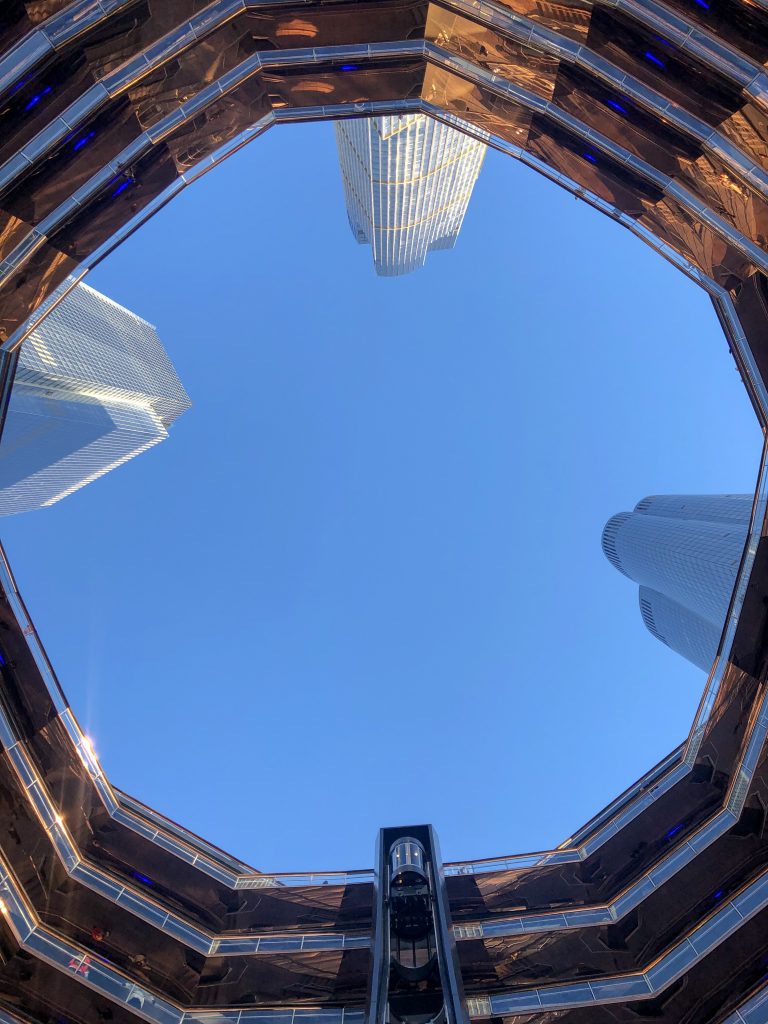
W marcu otwarto też dość niezwykły punkt widokowy – “The Vessel” (ang. pojazd, naczynie) –  to konstrukcja składająca się z 154 tarasów o wysokości 46 metrów.

Punkt widokowy roboczo nazwano “The Vessel” ma być nowojorską Wieżą Eiffla. Sami nowojorczycy bardzo sceptycznie podchodzą do tego porównania, the New York Times stwierdził że konstrukcja bardziej przypomina wielki kosz na śmieci.

Budowla gwarantuje niesamowity widok na nową dzielnicę. Wstęp wolny, choć trzeba wcześniej zarezerwować bilet.

Od kwietnia będzie też otwarta nowa sala koncertowa Shed.

A pod koniec tego roku zostanie otwarty też The Edge — trzeci najwyższy budynek w Wielkim Jabłku. Na setnym piętrze tego gmachu znajdzie się wysunięty taras widokowy ze szklaną podłogą. Będzie to piąty najwyżej położony taras widokowy na świecie.

Jak zarezerwować bilet na Vessel? 

Bilety można rezerwować z 2 tygodniowym wyprzedzeniem i na dzień wizyty na tej stronie (mamy dwie opcje rezerwacji – na dzień dokładnie za 14 dni i na ten sam dzień). Rezerwacja jest otwierana codziennie o 8 rano. Można rezerwować bilety na dowolną godzinę.

Nowy punkt widokowy w Hudson Yards
Hudson Yards – 154 tarasy widokowe

Jak dojechać do Hudson Yards? 

Hudson Yards zajmuje powierzchnię 28-hektarów w zachodniej części Manhattanu pomiędzy 34 i 30 ulicą oraz Dziesiątej Aleją na wschodzie i autostradą West Side na zachodzie.

Możne zaplanować zwiedzanie kompleksu i połączyć ze spacerem po High Line (tu przeczytasz więcej o tym najmodniejszym nowojorskim parku). Do osiedla można też dojechać metrem 7 i wysiąść na ostatnim przystanku na Manhattanie (34th str).

W przyszłości będzie tam też lądowisko dla helikopterów. 😉

Jakie są pierwsze wrażenia? 

Vessel robi wrażenie. Wprawdzie nie nazwałabym tego punktem widokowym ponieważ nie ma jakiegoś ładnego widoku ani na miasto ani na rzekę Hudson. Natomiast sama konstrukcja jest bardzo ciekawa, bardzo instagramowa i pewnie będzie się cieszyła dużą popularnością.

Byłam zobaczyć też galerię handlową i jestem trochę rozczarowana. Taka zwykła galeria, naprawdę Arkadia czy galeria Mokotów w Warszawie są równie nowoczesne. Nie do końca potwierdza zapowiedzi inwestorów o “najnowocześniejszym mieście”.

Hudson Yards według mnie nie pasuje do Nowego Jorku. Takie osiedle mogłaby się znaleźć w Dubaju albo każdym innym miejscu na świecie.

Zobaczymy, co będzie dalej, ale zdecydowanie ta część miasta wygląda inaczej.

Vessel w Hudson Yards

Zapomniane lektury. Przedwiośnie (ale nie TO)

I wcale nie Żeromski. Szkoda, że już tego nie czytamy. Taka piękna wartka proza, gdzie polszczyzna oryginalna ale nieskażona, każde zdanie, każde słowo prawidłowo użyte…

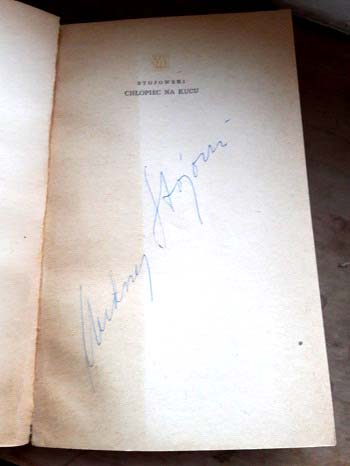
A to zaledwie kilkadziesiąt lat temu. Książka z 1971 roku, znaleziona na półce, opatrzona w poprzek pierwszej strony wielkim, ukośnym podpisem autora.

Andrzej Stojowski

Chłopiec na kucu

Rozdział V

Czy chłopiec wiedział, że w krajobrazie szuka się siebie, własnego odbicia w tej przestrzeni, która cię stworzyła i którą wspłtworzysz, na ziemi, z której powstałeś, na której żyjesz, aby powrócić do niej kiedyś, z nią się złączyć, rozpoczynając nowy cykl, nową formę życia?

Znał cztery pory roku:
zima przychodziła od pól, a kończyła się w górach: topniały śniegi podmywane od spodu do lodowego szkliwa, spływały tysiącznymi strużkami siąpiącymi, ciurkającymi aż po rozlewiska kałuż, rozmiękłych glin, tłustych iłów, skąd woda rowami, drenami odciągana do Baduni płynęła rwącym nurtem ku rzece, ku Wiśle. Wilgotny wiatr od przestrzeni błotnych, od stawów nawisał chmurami, pod którymi marzło się dopiero teraz, nie od mrozu, a od tej wody, co była wszędy, w krajobrazie nasiąkłym, gdzie koła, kopyta, stopy zagłębiają się w mazistą ziemię zasysającą z ćkaniem stąpania – i obroty. Cały człowieczy daremny trud, zwierzęca mordęga podpierania, naciągania, wleczenia, wpierania się w szleje i chomąta, chwytania za podwózki, rwania postronków w daremnej walce z tą rozległą przedwiosenną grzęzią, nad którą tylko drzewa wznoszą konary skręcone, stargane ku tej bezkresnej szarości mżystej, niezmierzonej, niezgłębionej nawet przez ptaki skulone teraz na gałęzi pod nastroszonymi skrzydłami, nad ziemią jeszcze nieprzychylną, nieuległą, nieprzebytą i nieprzebraną aż po pierwsze rozbłyski słońca.

I w słońcu bladym, chłodnym ten wiatr marszczący powierzchnię wód stojących w zagłębieniach. Te ostatnie zwały, potem już tylko spłachcie brudnego śniegu w cienistych rozpadlinach, w dolinkach nad strugami, potem już pierwsza ruń na roli i zeszłoroczna darń zszarzała i odmokła, a w niej pierwsze zielenienie. I koniuszki jaskrawej zieleni łapek świerkowych na drzewach prawie czarnych i błękitnienie mgieł, i ziemia coraz inna – od czarnych topieli błotnych aż po brązowienie się pól uprawnych, i pierwsi ludzie na polach, baczni, spozierający, już myślący, już czuwający nad ziemią, już czekający pory, by wziąć ją we władanie, napocząć skibami wczesnej podorywki.

I ptaki już na niebie.

A gdy nadeszła wiosna, ciepła i pogodna, ziemia, szarobura, obsypana mąką kurzu, pyłu białego, była jak placek żytni prosto z pieca i trwało to chwilę, skórka twardniała, ale ziemia uginała się jeszcze pod stopą i naraz pękała: na pylnej powierzchni biegły te pęknięcia jak linie na dłoni, ciemniejsze od gleby, a dłoń była biała i trzymała człowieka we władaniu swoim, nadchodziły upały i tonęło się w miałkim pyle – aż deszcz i znowu grzęzawisko.

Owsiak w Berlinie

Brawo Bogusław Fleck i cała ekipa UTP czyli Uniwersytetu Trzech Pokoleń!

www.UTP.berlin

Szanowni Państwo, drodzy Przyjaciele,

zapraszamy na kolejny wykład UTP, 15 marca 2019, godz. 18.00, w sali 2094, Uniwersytet Humboldtów, Unter den Linden 6.
Wykład wygłosi Jerzy Owsiak, obserwator rzeczy ulotnych i dziwnych. Witrażysta, dziennikarz radiowy i telewizyjny, podróżnik.
Założyciel i prezes Fundacji Wielkiej Orkiestry Świątecznej Pomocy, pomysłodawca
i organizator corocznego Finału WOŚP oraz Przystanku Woodstock
– od zeszłego roku pod nazwą Pol’and’Rock.
Temat wystąpienia: Jerzy Owsiak powie na przykładzie Orkiestry jak łączyć, a nie dzielić. Jak być razem, jak tworzyć wspólnie piękne rzeczy z wielkim efektem w postaci zbiórki,
która na przestrzeni ostatnich 27 lat zasiliła polską medycynę kwotą ponad miliarda złotych!
To zasługa wielu osób, także Polaków mieszkających za granicą, zwanych przez Jurka podróżnikami i ambasadorami Polski.

Moderacja:  prof. UAM dr hab. Brygida Helbig-Mischewski

Z uwagi na dużą ilość zainteresowanych prosimy zgłaszać swoje przybycie na adres: utp@utp.berlin
W pierwszej kolejności będą wchodziły osoby z listy.

Prosimy o dużo wcześniejsze przybycie!
Po wykładzie ok. godz. 19.30
w ramch Galerii UTP swoje prace fotograficzne przedstawi Camilla Lobo

Wprowadzenie: dr Piotr Olszówka
Po wykładzie będzie okazja do rozmów przy lampce wina i preclach.

Życzymy dużo przyjemności.
Rada Programowa UTP

I dodatkowe informacje, jakie otrzymałam 5 marca:

Szanowni Państwo, z uwagi na szczególną sytuację, ogromne zainteresowanie spotkaniem z Panem Jerzym Owsiakiem przesyłam następujące informacje osobom zainteresowanym:

– spotkanie odbędzie się w większej sali 3035, 2 piętro. Droga będzie oznaczona.
– wszyscy, którzy zgłosili swoją obecność i nie dostali ode mnie żadnej wiadomości są wpisani na listę, czyli bez problemu wejdą na salę
– te osoby, którym odpisałem, że nie ma miejsc wpisałem na listę rezerwową. Są to zgłoszenia wysłane do 2 marca (proszę sprawdzić datę wysłania maila). Mimo, że mamy do dyspozycji dużo większą salę wiem, że wszyscy się nie zmieszczą. Największą szanse mają ci, którzy przyjdą wcześniej.
– Wernisaż i spotkanie powykładowe odbędzie się tam gdzie zawsze, obok sali 2094

Wszystkich bardzo proszę o dużo wcześniejsze przybycie.
Dziękujemy za wyrozumiałość.

Serdecznie pozdrawiam
Bogusław Flec

I po imprezie. Ela Kargol:

Jurek Owsiak,
Mały wielki człowiek,
Człowiek w biało-czerwonych okularach,
Człowiek z motylem i dużym sercem,
Człowiek, który przegadał pana Olszówkę,
Człowiek, który założył Towarzystwo Przyjaciół Chińskich Ręczników,
Człowiek, który zna piosenki Demisa Roussosa po niemiecku,
Człowiek od rzeczy ulotnych i dziwnych,
Człowiek, z którym każdy chciał mieć dzisiaj zdjęcie,
Człowiek, z którym każdy ma dzisiaj zdjęcie,
Człowiek, który podpisał moją torbę,
Człowiek w Berlinie, na Uniwersytetcie Humboldtów,
Czlowiek, który chce i może,
Czlowiek, który, gdy upadnie zaraz się podnosi,
Człowiek, dla którego nie ma rzeczy niemożliwych,
Człowiek, który gra do końca świata i o jeden dzień dłużej,
Człowiek orkiestra,
Dziękuję.

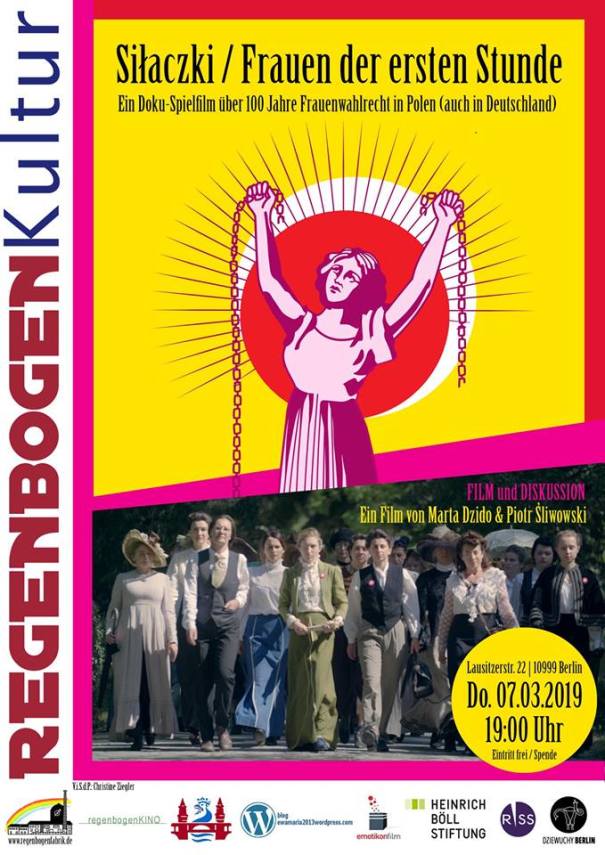
Siłaczki / Starke Frauen / Die Frauen der ersten Stunde

Ein Film über Frauenemanzipation in Polen vor 100 Jahren. Im Programm Treffen mit den Autoren des Films: Marta Dzido und Piotr Śliwowski. Bitte, komm’ verkleidet.
Film auf Polnisch mit deutschen Untertiteln.

Film o emancypacji Polek przed stu laty. W programie spotkanie z autorami filmu – Martą Dzido i Piotrem Śliwowskim. Przebierzcie się za emancypantki!