Fiszbach / Rathaus / Kreuzberg / Görlitzer Park

Kommet heute / Przybywajcie / Just come today

Wiesław Stefan Fiszbach

Die Menschen von Görlitzer Park

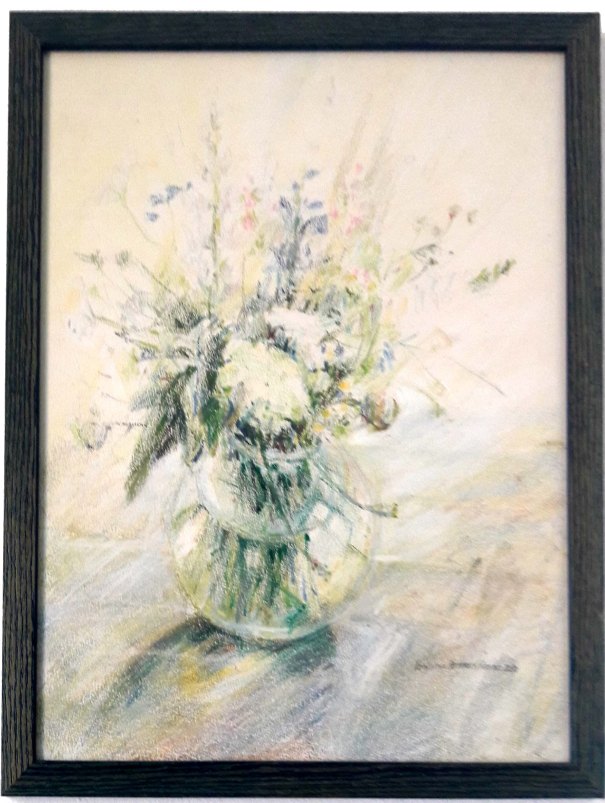
Malerei, Fotografie, Zeichnung

Eine Veranstaltung vom Städtepartner Stettin e.V.

Freitag, 14. Dezember 2018 von 18:00 bis 20:00

Rathaus Kreuzberg, Yorkstr 4-11, 10965 Berlin, II Etage

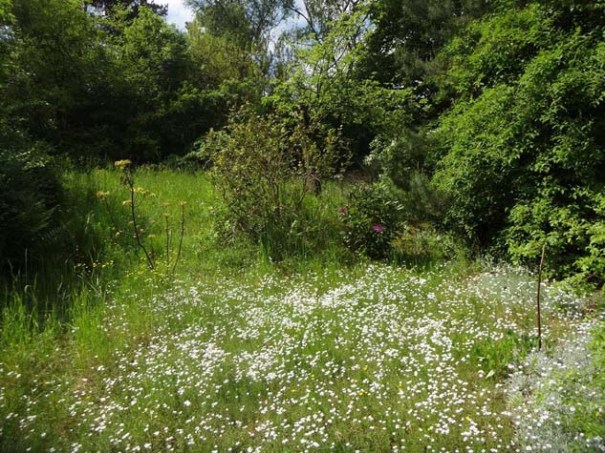
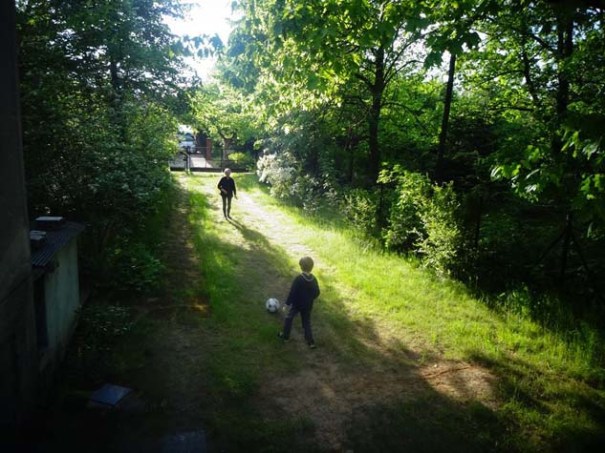
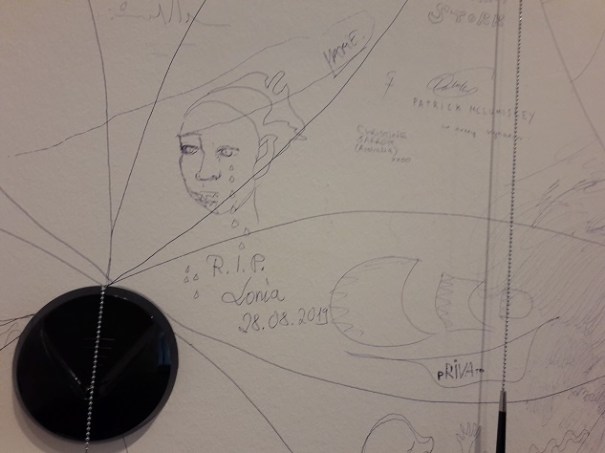
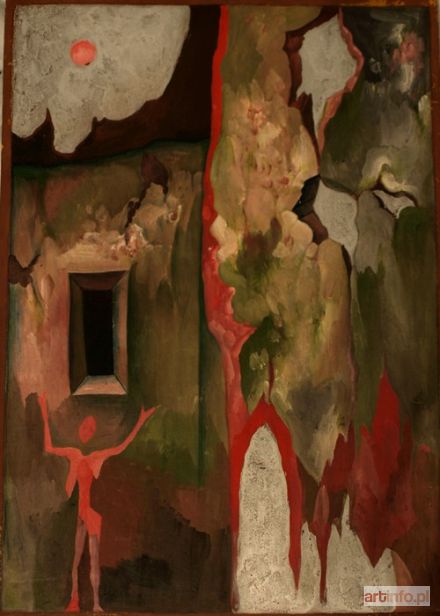
Wiesław Stefan Fiszbach ist ein polnischer Maler, der seit der 80. in Berlin lebt. Vor ein paar Jahren begann er, die Menschen zu porträtieren, die man im Görlitzer Park trifft – Spaziergänger, Dealer, Junkies, Obdachlosen. Der Blick des Künstlers sieht sie an, sie werden nicht beurteilt und nicht bemitleidet. Sie sind, wer sie sind. Das sind wir, die Zuschauer, die uns darüber Gedanken machen sollen.
Die Ausstellung ist vom Mo 10. Dez bis Fr 4. Januar an den Werktagen von 7:00 bis 19:00 im Rathaus Kreuzberg zu sehen.

Ein kleiner Umtrunk mit dem Künstler haben wir für Freitag
14. Dezember ab 18 Uhr vorgesehen.

Bringt das Geld mit, man kann die Kunstwerke auch kaufen!
Und Weihnachten steht vor der Tür!

Reblog: Vermeer van Delft

Kilka dni temu Danusia Starzyńska-Rosiecka z Warszawy przysłała mi takiego oto linka:

Vermeer 

Patrzę, patrzę i napatrzyć się nie mogę. Danusia wie, że ja też, tak jak ona, kocham Vermeera (przepraszam za patos, tak wyszło). Przez lata jeździłam po całym świecie, żeby oglądać jego obrazy w oryginale. Zobaczyłam niemal wszystkie. Aż pewnego dnia okazało się, że w Hadze pokażą naprawdę wszystkie dzieła delftyjczyka, również te niedostępne na co dzień – ze zbiorów królowej angielskiej. Pojechałam, zobaczyłam. Przed widokiem Delft (patrz niżej), tym samym, o którym pisał Proust, postałam godzinę, aż mnie wypchnął “ze stania” jakiś rosły Holender. Dobrze było obejrzeć wszystkie dzieła na raz, ale pomyślałam sobie, że dobrze też było żyć w czasach (i mieć pieniądze), żeby sobie tak jeździć od muzeum do muzeum na dwóch kontynentach.

A wszystko pewnie dlatego że Mama, czyli Irena Kuran-Bogucka, uważała go za mistrza niedoścignionego. Przez całe dzieciństwo oglądałam reprodukcje obrazów Vermeera i słyszałam głos Mamy, że żadna reprodukcja niczego nie odda, bo artysta malował genialnie, a na reprodukcji jego obrazy i dzieła pożal się Boże jakiegoś pacykarza wydają się równej klasy.
Czasy się zmieniły – to, co widzimy w podanym przez Danusię linku, pozwala nam obejrzeć te dzieła lepiej i dokładniej, smakując każdy detal.

Oglądam obrazy na ekranie. Podobają mi się, ale nie wiem, może się mylę, nie zaspokajają miłości. Albo może jej nie budzą. Przypomina mi się wpis Danusi na (słynnym?) naszym wspólnym blogu, zwanym w skrócie “Kura” (Jak udusić kurę, czyli co każda panna po trzydziestce powinna wiedzieć, a dziwnym trafem nie wie).  Już wiem, że koniecznie muszę go zreblogować. Wpisy Danusi “na Kurze” były zielone. Większość naszych wpisów zawierała przepis kulinarny i zagadkę – zostawiam wszystko tak, jak było.

Danuta Starzyńska-Rosiecka

Cztery obrazy

Ostatnio mam mnóstwo pracy. Wracam do domu bardzo zmęczona. Mało piszę dla przyjemności. W ogóle mało robię rzeczy dla czystej przyjemności robienia ich. Niedawno kupiłam piękną grafitową włóczkę na piękny ciepły męski szal, ale nie mam czasu nawet wyjąć jej z torby. Stąd mój dzisiejszy tekst będzie się składał w zasadzie z prawie samych fragmentów tekstów napisanych przez innych, ale za to z jakich tekstów…

Zacznijmy od jednego z najsłynniejszych fragmentów „W poszukiwaniu straconego czasu” Marcela Prousta:

Umarł w następujących okolicznościach. Dość lekki atak uremii sprawił, że zalecono mu spokój. Ale ponieważ jakiś krytyk napisał, iż w ‘Widoku Delft’ Ver Meera (wypożyczonym przez muzeum haskie na wystawę Holendrów) – obrazie, który Bergotte uwielbiał sądząc, że go zna bardzo dobrze – kawałek żółtej ściany, której Bergotte sobie nie przypominał, wymalowany jest tak wspaniale, że kiedy się patrzy wyłącznie na ten fragment, wydaje się niby szacowne dzieło sztuki chińskiej, samowystarczalne w swej piękności, Bergotte zjadł parę kartofli, wyszedł z domu i udał się na wystawę. Przechodząc koło kilku obrazów odniósł wrażenie oschłości i zbyteczności sztuki tak sztucznej, mniej wartej od przewiewu i słońca w jakimś pałacu w Wenecji lub w zwykłym domku nad morzem.

(…) W końcu znalazł się przed obrazem Ver Meera, który pozostał mu w pamięci bardziej olśniewający, bardziej różny od wszystkiego, co znał, ale w którym, dzięki artykułowi krytyka, pierwszy raz zauważył drobne postacie ludzkie namalowane niebiesko i to, że piasek był różowy, i wreszcie szacowną materię kawałka żółtej ściany. Zawrót był coraz silniejszy; Bergotte wlepił wzrok w bezcenną ścianę, jak dziecko wpatrujące się w żółtego motyla, którego pragnie pochwycić. ‘Tak powinienem był pisać – powiedział sobie. Moje ostatnie książki są za suche; trzeba je pociągnąć kilka razy farbą, uczynić każde zdanie cennym samo w sobie, jak ten fragment żółtej ściany’. Równocześnie nie tracił poczucia swego groźnego stanu. Na niebiańskiej wadze jawiło się jego własne życie obciążające jedną z szal, gdy druga zawierała kawałek ściany tak pięknie namalowanej żółto. Bergotte czuł, że niebacznie oddał pierwsze za drugie. ‘Nie mam przecież ochoty – powiadał sobie – figurować na tej wystawie w wieczornej rubryce wypadków’.

Powtarzał sobie: ‘Kawałek żółtej ściany z daszkiem, kawałek żółtej ściany’. Zwalił się na okrągłą kanapę; równie szybko przestał myśleć, że życie jego jest w grze, i odzyskując optymizm powiedział sobie: ‘Zwykła niestrawność, nie dogotowane kartofle, to nic.’ Nowy cios powalił go: Bergotte stoczył się na ziemię, zbiegła się publiczność wraz z woźnymi. Był martwy.

Vermeer van Delft Widok Delft

Vermer van Delft, Widok Delft, Muzeum Królewskie Mauritius Haus w Hadze

„Im dłużej ogląda się ‘Widok Delft’, tym bardziej obraz staje się skomplikowany, tym lepiej widać, jak ściśle obmyślany jest jego rysunek, z tym większą precyzją łączą się w nim elementy składowe” – tak zaś pisał Gustaw Herling-Grudziński.

A teraz spotkanie z innym obrazem. Oto poeta, eseista i prozaik Adam Zagajewski, wspominający jak podczas pobytu w Nowym Jorku nie mogąc sobie poradzić „z nadmiarem tego miasta”, znalazł ukojenie w muzeum:

Trafiłem wtedy do muzeum, Frick Collection, i tam, przed obrazem Vermeera, ‘Lekcja muzyki’, poczułem, jak rzeczywistość, nagle, w jednym momencie, zatrzymała się, zastygła w harmonijnym bezruchu. Przede mną dziewczynka bierze lekcję muzyki, spowita w niebieskie światło, miękkie światło, jak we wnętrzu niebieskiego oceanu. Nagle zapanował spokój, we mnie i w Nowym Jorku. Byłem szczęśliwy, tak jakbym miał wprowadzić się do Vermeerowskiego obrazu i zamieszkać w nim na zawsze, i nie odczuwać już nigdy ani lęku, ani ciężaru pytań bez odpowiedzi, nie przeżywać sztormu sprzeczności i niepewności. Pejzaż otwierał się przede mną, gładka ścieżka pośród oswojonych, ciepłych sprzętów. Miałem przed sobą inny świat: meble leżały na kamiennej posadzce spokojnie i ufnie jak kot, obdarzone były słodką, dobroduszną inteligencją. Nawet światło rozumiało. To nie było zwykłe, zewnętrzne światło, które zatrzymuje się na granicy przedmiotów, odbija się od nich i wraca, zgodnie z prawami fizyki, nie to światło zdawało się płynąć zewsząd, nie dzieląc, nie izolując rzeczy, przeciwnie, było braterskie i rozumne. Jak bardzo chciałbym zostać w tym obrazie. Zatrzymać się w kształcie.

Vermeer van Delft, Przerwana lekcja muzyki, Frick Collection, Nowy Jork

I znów inny obraz i inny tekst. Tym razem poeta i krytyk literacki Jarosław Klejnocki:

Ach jakże zazdroszczą twoje przyjaciółki
sam pan Vermeer maluje cię w jasnej pracowni
pełnej dziwnych sprzętów więc znosisz niewygody:
tyle godzin w tej samej pozie pod ogromną mapą
siedemnastu prowincji w milczeniu z fanfarą ciężką
książką i uwierającym wieńcem na skroni. Żałujesz
tylko ze nie pozwolą ci zatrzymać tej pięknej
szaty z błękitu ale nie martw się jest już
twoja do końca świata.

I już miliony oczu będą patrzeć na ciebie
w zachwycie obojętnie z roztargnieniem w
zniecierpliwieniu z tęsknotą miłości. Jeszcze
o tym nie wiesz lecz przecież przeczuwasz
przymknąwszy nieśmiało oczy zdziwiona dziewczynko.

Cóż za spokój cóż za niewinność choć tyle
nadejdzie słyszę huczące maszyny łoskot
wybuchów widzę otwarte od krzyku usta eksplodują
wzgórza kosmos oddala się coraz bardziej rozpadają
się kraje płonie mapa ginie gdzieś pamięć czernieją
płótna.

A ciebie nie dotyka zimno jesteś wolna więc jaka
zazdrość jakie zachwycenie. Vermeer maluje; chrzęści
piasek w trybach zegarów.

Vermeer van Delft Alegoria malarstwa

Vermeer van Delft, Alegoria malarstwa, Kunsthistorisches Museum, Wiedeń, Austria

Wiersz Klejnockiego prowadzi nas dalej do jeszcze innego tekstu:

– Co robisz? – spytał.
Zdziwiło mnie to pytanie, ale wiedziałem, że lepiej tego nie okazywać
– Kroję warzywa, panie. Na zupę.
Zawsze układam warzywa w kole tak, że każde ma w nim odpowiednie miejsce, niczym kawałki tortu. Tym razem było ich pięć: czerwona kapusta, cebula, pory, marchewka i rzepa, przy czym okrągły środek wypełniała marchewka. Żeby ją tak uformować, użyłam tępej części ostrza.
Mężczyzna postukał palcem w stół.
– Czy w tej kolejności wkładasz je do zupy? – zapytał, oglądając koło.- Nie, panie… – zawahałam się. Nie potrafiłam wyjaśnić, skąd taki układ warzyw. Po prostu czułam, że tak właśnie powinny leżeć, ale bałam się to powiedzieć.- Widzę, że oddzieliłaś odcienie bieli – rzekł, wskazując kawałki rzepy i cebuli. – A dlaczego pomarańczowy i fioletowy nie są obok siebie?
Wziął do ręki kawałek kapusty i marchewki i potrząsnął nimi, jakby to były kości do gry.
Zerknęłam na matkę, która skinęła lekko głową.
– Bo te kolory się kłócą, kiedy są obok siebie, panie.
Uniósł brwi, jakby nie spodziewał się takiej odpowiedzi.

***

Ja z pokrojonych warzyw proponuję wam dziś jednak nie zupę, tylko sałatkę jarzynową. I tak: piękne obrazy, piękna proza, piękna poezja… a na koniec prostota kuchenna w najczystszej postaci, wręcz prostacka; choć bardzo przyziemna, to bardzo smaczna.

Potrzebne są:

– 3 średnie ugotowane ziemniaki,
– 2 średnie ugotowane marchewki,
– szklanka ugotowanego zielonego groszku lub zawartość jednej puszki groszku (odcedzona),
– szklanka ugotowanej fasoli lub zawartość jednej puszki (jw.),
– 2 jajka ugotowane na twardo,
– 2 ogórki kiszone,
– 1 duża cebula cukrowa (cukrowa, bo nie jest ostra),
– 1 jabłko,
– sól,
– pieprz,
– majonez,
– musztarda (ja używam sarepskiej)

Ugotowane warzywa kroimy (jedni lubią drobniutkie kawałki, ja wolę większe). Dodajemy posiekane jajka, ogórki, cebulę i jabłko oraz groszek i fasolę. Mieszamy, przyprawiamy. Dodajemy majonez i odrobinę musztardy.


Dzisiejsza zagadka odnosi się do ostatniego z cytowanych przez mnie tekstów. To początek powieści-opowieści o powstaniu pewnego obrazu, czyli czwartego obrazu. Powieść ta została pięknie sfilmowana. Co to za powieść? Kto jest jej autorem? O jaki obraz chodzi? Jak nazywają się dziewczyna i pan? Kto zagrał ich w filmie?

Odpowiedzi w nadzwyczajnym tempie udzieliła dziewczyna z perłą, to znaczy – zona_oburzona, a chodzi o obraz, książkę i film “Dziewczyna z perłą” – kto namalował – jasne. Autorka powieści – Tracy Chevalier. Reżyser filmu Peter Webber. W rolach głównych Colin Firth jako Jan Vermeer i Scarlett Johansson jako Griet.

W nagrodę rondelek, a dla nas wszystkich jeszcze “Dziewczyna z perłą”:

Barataria 94 Różowe wyspy na niebieskim morzu

Ewa Maria Slaska

Surrounded Islands / Otoczone wyspy / Umgebene Inseln

Wykonali je w latach 1980-1983 Christo i Jeanne-Claude. Ich projekt artystyczny obejmował usypanie w zatoce Biskańskiej, w okolicy najsłynniejszego miasta na Florydzie – Miami, 11 sztucznych wysp, które zostały otoczone matami uplecionymi z różowych sznurów polypropylenu.


Gdy Christo i Jeanne Claude budowali te swoje wyspy, mieszkałam jeszcze w Polsce, zajmowałam się wychowywaniem dziecka, staniem w kolejkach, zaprawianiem na zimę wszystkiego, co człowiekowi w ręce wpadło, i walczeniem o odzyskanie niepodległości i suwerenności państwa polskiego. Między rokiem 1980 a 1983 przeżyliśmy strajki sierpniowe, podpisanie porozumień pomiędzy strajkującymi i władzą, półtora roku Solidarności, wprowadzenie stanu wojennego i jego trwanie, które zaczęło się od grozy, a zakończyło potworną beznadzieją…

I w dobrych i w podłych czasach podtrzymywało nas jednak na duchu, że “świat o nas wie”, “pamięta” i “nie pozwoli”.

Dopiero po latach zorientowałam się, że nawet dla ludzi w Polsce te cztery tak dla mnie znaczące lata mogły mieć inną konotację. W roku 1980 rozpoczęła się kariera Kory i Maanam, w roku 1981 powstał Lombard, którego utwory w roku 1982 weszły na listę przebojów, a latem ukazały się na płycie Śmierć dyskotece!, która osiągnęła status złotej płyty. W Polsce lata 80. to boom muzyki rockowej, ale dociera też łagodne Italo Disco, które tak spodobało się Polakom, że już w następnej dekadzie na jego bazie wytworzyliśmy nasz rodzimy gatunek – Disco Polo. Grają Republika, Kryzys, Brygada Kryzys, ERSATZ, Aya RL, Tilt, Madame, Siekiera, 1984, Klaus Mitffoch, Lech Janerka, Variété, Kult, Maanam, Rezerwat, Bikini, Made in Poland, Obywatel G.C., Novelty Poland, Brak, Kontrola W., wczesny Lady Pank. Rok 1983 i płyta Kryzysowa narzeczona to szczyt ich popularności. Mniej niż zero – polityczna piosenka Lady Pank z roku 1983 znajduje się na liście 100 przebojów PRL. Oczywiście jakiś znaleziony przeze mnie w sieci znawca muzyki z tamtych czasów nie wymienia Kaczmarskiego, Kelusa ani Grechuty, czyli tej muzyki z lat 80., której my wciąż jeszcze słuchamy.

Moja niewiedza na temat tego, co się w latach 80 działo w Polsce poza sferą polityczną sięgnęła szczytu podczas jakiejś dyskusji już w Berlinie w latach zerowych. Pewien młodszy ode mnie o pokolenie pan kłócił się ze mną o słowo alternatywa. On myślał o polskiej muzyce lat 80, która się potem, jeśli dobrze pamiętam tamtą dyskusję, skomercjalizowała i podupadła, ja myślałam o subkulturze alternatywnej na Kreuzbergu w latach 80.

Mało się nie zabiliśmy.

A więc tak, my nic nie wiemy o nich, oni nic nie wiedzą o nas, a “świat” się nami tak czy owak nie interesuje. Jest rok 1980 – Christo i Jeanne Claude prezentują władzom Miami pierwszą wersję projektu różowych wysp. Od roku 1981 prawnicy i fachowcy zabiegają w imieniu artystów o uzyskanie pozwoleń na realizację projektu. Muszą uzyskać zgodę 11 ważnych instytucji, w tym Armii USA. Jak zawsze, artyści pracują za darmo, nie przyjmują dotacji ani grantów, korzystają z pomocy wolontariuszy, a niezbędne pieniądze uzyskują ze sprzedaży rysunków i fragmentów różowej folii.

7 maja 1983 roku instalacja jest gotowa. 11 sztucznych wysp zostaje ujętych w różowe kołnierze o szerokości 61 metrów – do ich realizacji zużyto 604 metry sześcienne folii. Instalacja zajmuje powierzchnię 11 kilometrów kwadratowych. Przez najbliższe dwa tygodnie można ją oglądać z samolotów, ulic nadbrzeżnych, łodzi i mostów pontonowych.
I jest to ogromny sukces!
Sukces artystyczny, ale przede wszystkim społeczny. Ludzie są razem, spotkali się bez żadnego innego celu, tylko chcą obejrzeć dzieło szalonych artystów. Nie ma kawiarni ani restauracji, jest tylko sztuka i oni. W mieście, które borykało się z ciężkimi niepokojami społecznymi na tle majątkowym i rasowym, nagle można było być razem. W ciszy i spokoju. Bez wrzasku, bójek i transparentów. Otoczone folią wyspy pomogły mieszkańcom Miami znaleźć jakiś modus wspólnego życia.

Nie wiedziałabym, o czym do dziś z nostalgią piszą dziennikarze, gdyby nie fakt, że przeżyliśmy to samo w Berlinie. Jeanne Claude i Christo po raz pierwszy postanowili zapakować Reichstag w roku 1972, ale projekt udało się zrealizować dopiero w czerwcu 1995 roku. Berlin się zjednoczył, bo – oczywiście – Niemcy się zjednoczyły. Zapadła decyzja, przeniesienia stolicy i siedziby rządu z przytulnego Bonn do tego okropnego, zimnego i ponurego Berlina. Nikt tego tak naprawdę nie chce, ale racja stanu wymaga podjęcia niesympatycznej decyzji. Reichstag, dawna siedziba władzy niemieckiej, ogromny budynek (wzniesiony na miejscu, gdzie przedtem stał pałac hr. Atanazego Raczyńskiego), stoi od roku 1933 nie używany. Hitlerowska prowokacja, jaką było podpalenie Reichstagu, wyłączyła budynek z użytku. Okres władzy Hitlera, wojna, czas powojenny, budowa Muru Berlińskiego – żadne z tych zdarzeń nie odcisnęło piętna na wielkiej budowli. Reichstag nie jest ruiną, ale świeci pustkami. Jeśli nowy rząd zjednoczonych Niemiec ma tu zacząć pracę, gmach musi zostać odbudowany. Zanim to jednak nastąpi, Jeanne Claude i Christo opakują Reichstag.

Berlińczycy, którym z reguły nic się nie podoba, są niezadowoleni z projektu, ale artyści w towarzystwie wolontariuszy zabierają się do pracy. I potem, nagle, z dnia na dzień – wszystko się zmienia. Nagle cały Berlin jest zachwycony. Pojawiają się głosy, że dobrze by było zostawić na zawsze tę wspaniałą instalację, bo to jedyny sposób, by nie musieć oglądać tego paskudnego budynku. Jest lato, jest ciepło, kwitną lipy, wszyscy idą pospacerować wokół opakowanego Reichstagu. Jeśli byliśmy wczoraj, nie szkodzi, dziś też pójdziemy. Wszyscy są mili, wszyscy się lubią, nikt nie wrzeszczy, nie ma żadnych haseł, ani za, ani przeciw… Opakowany Reichstag sprawił, że pogodziliśmy się ze sobą, z historią, teraźniejszością i przyszłością.

Można było zacząć żyć w nowym świecie. I wcale nie było to (i nie jest) złe życie.

Napisałam ten tekst przed kilkoma tygodniami, 12 listopada, po tej strasznej demonstracji neonazistów w Warszawie, na której czele szli panowie P – premier i prezydent, a za nimi ćwierć miliona ludzi. Część z nich wrzeszczała, że Polska dla Polaków i Europa dla Europejczyków.

Zastanawiam się, czy Christo mógłby opakować Pałac Kultury? Albo stadion? Nie, chyba jednak Pałac Kultury. Christo jest już starszym panem, ma 83 lata, ale może mógłby się jeszcze raz podjąć wielkiego dzieła? W tym roku zorganizował projekt Mastaby w Londynie, może mógłby przenieść się na chwilę do Warszawy.

Barataria 93 Sgt. Pepper’s Lonely Hearts Club Band

Dziekuję Jackowi za inspirację

W Wikipedii czytamy: Sgt. Pepper’s Lonely Hearts Club Band (krótko nazywany Sgt. Pepper) to ósmy album studyjny grupy The Beatles, opublikowany 26 maja 1967 roku. 50 lat temu, ale o tym już pisałam. Zresztą wszyscy pisali.

Właśnie zdawałam maturę. Nie wiem, czy w ogóle dotarło do mnie, że Beatlesi wydali coś nowego. Dla mnie świat Beatlesów kończył się na filmie Help. Ale świat nie stoi w miejscu, nawet jeśli my siedzimy i kujemy do matury. Przypomnę nas tu, bo myślę, że nikt nigdy nie zrobił nam wspólnego zdjęcia.

Magda Dankiewicz, Mariusz Barański, Antek Szczepkowski i ja: Ewa Bogucka. Z Magdą spotkałyśmy się w zeszłym roku. Z okazji 50-lecia matury! Z Antkiem (mieszka w Teksasie) rozmawiałam przez telefon. “Nie zdałbym matury, gdyby nie ty”, powiedział Antek. “Nie paliłabym papierosów, gdyby nie ty”, odpowiedziałam. No ale już nie palę. Za słuchanie piosenek odpowiadała Baśka Owsiana (też się z nią spotkałam). Może ona będzie wiedziała, czy słuchałyśmy Sierżanta Pieprza tego lata 1967 roku. Pytam. Baśka twierdzi, że tak i że od tego nam skrzydła rosły.

Sierżant Pieprz był częścią Summer of Love, kiedy to ruch hippisów w USA osiągnął swój złoty szczyt. Zapowiadał przyszły rok i Festiwal Woodstock, ale na razie był maj 1967 i matura, a potem powtórne kucie, ale już osobno, do egzaminu wstępnego na studia. Nie chciałam studiować, chciałam zostać hippiską. Nie wiedziałam, co mogłabym zrobić. Miałam długie potargane włosy, nosiłam długie spódnice, opaski przez czoło i naszyjniki z łańcuchów kupionych w sklepie żelaznym (koło Mody Polskiej). Kosztowały 2 złote za metr. Moje ówczesne marzenia stały w jawnej sprzeczności z tym, jak nasze matki  i nasi ojcowie przygotowali nas do wejścia w dorosłość. Kilka dni temu, dzięki Facebookowej zabawie “w książki”, wymieniłam od ręki kilka pozycji, którymi mama-tata sterowali naszymi ambicjami. Lucy Maud Montgomery “Błękitny zamek”, “Jajko i ja” Betty MacDonald, “Serca Dalili”, co się po polsku zwało “Imitacja życia”, Fanny Hurst i “Tajemniczy opiekun” Jean Webster. Same amerykańskie powieści. Stara panna, panna na wydaniu, wdowa i sierota. Kobiety opisane przez kobiety. To dzięki tym książkom i ich autorkom, zdając maturę, byłyśmy obywatelkami świata, młodymi nowoczesnymi istotami płci żeńskiej, które wzięły życie w swoje ręce. I tak nam to zostało.

Nie pamiętam, żebyśmy ucząc się do matury złapali kiedykolwiek w radio Luxemburg Sierżanta Pieprza. Ale San Francisco (Be Sure to Wear Flowers in Your Hair), hymn tego lata, w wykonaniu Scotta McKenzie, puszczała Trójka, a może nawet przedziwny produkt Komuny – Muzyka i Aktualności. Aktualności były straszne, muzyka – świetna.

If you’re going to San Francisco,
be sure to wear some flowers in your hair.
If you come to San Francisco,
Summertime will be a love-in there.

Ale oczywiście Scott McKenzie to typowy dla naszej młodości wyciskacz nastrojów, tymczasem Sierżant Pieprz Beatlesów oznaczał rewolucję. Jak to ktoś napisał – piosenka i płyta przekroczyły możliwości ówczesnej techniki grania i nagrywania w studio. U szczytu powodzenia kultury hippisów narodził się psychodelic.

It was twenty years ago today,
Sgt. Pepper taught the band to play
They’ve been going in and out of style
But they’re guaranteed to raise a smile
So may I introduce to you
The act you’ve known for all these years
Sgt. Pepper’s Lonely Hearts Club Band
We’re Sgt. Pepper’s Lonely Hearts Club Band
We hope you will enjoy the show
Sgt. Pepper’s Lonely Hearts Club Band
Sit back and let the evening go
Sgt. Pepper’s lonely, Sgt. Pepper’s lonely
Sgt. Pepper’s Lonely Hearts Club Band
It’s wonderful to be here
It’s certainly a thrill
You’re such a lovely audience
We’d like to take you home with us
We’d love to take you home
I don’t really want to stop the show
But I thought that you might like to know
That the singer’s going to sing a song
And he wants you all to sing along
So let me introduce to you
The one and only Billy Shears
And Sgt. Pepper’s Lonely Hearts Club Band

Wszystko pięknie, ale to wciąż nie jest Barataria. Bo Barataria zacznie się zaraz za rogiem czyli w filmie Żółta łódź podwodna, który powstał w roku 1968. No i tam właśnie rozgrywa się typowa baśniowo-utopijna sytuacja.

Jacek Slaski, TIP Berlin

Yellow Submarine als Comic

Bissige Türken, Clowns und der furchtbare fliegende Handschuh, die Blaumiesen schrecken vor nichts zurück. Sie wollen Schrecken verbreiten und das freundliche Pepperland mit ihrer finsteren Blauheit überziehen. Ein mutiger Kapitän will das verhindern, er besteigt sein gelbes Unterseeboot und macht sich auf zu einer fantastischen Reise. Unterwegs trifft er die Fab Four und kehrt mit ihnen, über einige Umwege, zurück ins unterjochte Land. Mit der Kraft der Musik vertreiben sie die blauen Aggressoren und Pepperland wird wieder zum psychedelischen Paradies, das es einst war.

Czyli klasyczna sytuacja.  Jakiś kraj, tu Pepperland (chętnie kraj na wyspie) zostaje zaatakowany przez Złych (tym razem Sine Smutasy, który moim zdaniem mogłybby się nazywać Siniaki – Blue Meanies, Paskudni Turcy, Niebieska żarłoczna Rękawica). Bohaterski super hero (Kapitan) sprowadza pomoc (Beatlesi) – wspólnymi siłami udaje się pokonać zło. Wszyscy tańczą i śpiewają.

Szczęśliwy kraj (Pepperland)

Wrogowie

Narzędzie walki

Super Heros

Yellow Submarine
The Beatles

In the town where I was born
Lived a man who sailed to sea
And he told us of his life
In the land of submarines

So we sailed up to the sun
Till we found a sea of green
And we lived beneath the waves
In our yellow submarine

We all live in a yellow submarine
Yellow submarine, yellow submarine
We all live in a yellow submarine
Yellow submarine, yellow submarine

And our friends are all aboard
Many more of them live next door
And the band begins to play

We all live in a yellow submarine
Yellow submarine, yellow submarine
We all live in a yellow submarine
Yellow submarine, yellow submarine

(Full speed ahead Mr. Boatswain, full speed ahead
Full speed ahead it is, Sergeant.
Cut the cable, drop the cable
Aye, Sir, aye
Captain, captain)


Zakończenie. Wszyscy tańczą. All Together Now

Film był gotowy 17 lipca 1968. O godzinie 20 w Londynie w Pawilonie na Piccadilly Circus odbyła się prapremiera z udziałem Beatlesów. Byliśmy już po pierwszym roku studiów.
W marcu studenci Uniwersytetu Warszawskiego rozpoczęli rozruchy (zwane potem wydarzeniami marcowymi) w obronie Dziadów Mickiewicza, co dało asumpt do rozgrywek partyjnych, przekształciło się w propagandę skierowaną przeciwko intelektualistom i nagonkę antysemicką, a w końcu doprowadziło do masowej emigracji Żydów z Polski.
W Pradze od 5 stycznia 1968 roku trwała praska wiosna. Mogliśmy żywić nadzieje, że wreszcie coś się ruszy.
Ruszyło się (w miesiąc po prapremierze filmu) w nocy z 20 na 21 sierpnia tego roku, ale nie tak, jak myśleliśmy. Państwa członkowskie Układu Warszawskiego (ZSRR, Polska, Węgry, NRD i Bułgaria) dokonały inwazji, topiąc we krwi praskie nadzieje.

Na festiwalu w Sopocie w roku 1968 I miejsce zdobyła wykonana przez Urszulę Sipińską piosenka Po ten kwiat czerwony. Jej refren brzmiał:

Żołnierz dziewczynie nie skłamie,
Chociaż nie wszystko jej powie.
Żołnierz zarzuci broń na ramię,
Wróci, to resztę dopowie.

Taki to był rok. Beatlesi nie przybyli do Warszawy ani do Pragi, by wyrwać nas spod władzy Siniaków, polscy żołnierze poszli do Pragi i to o tym się w Polsce śpiewało. A w końcu Praga to też było jakieś nasze marzenie o Baratarii.

Reblog o dwóch wojnach z komentarzem

Jacek Wesołowski

dzien-nik_fb.obrazy/teksty, 19 listopada 2018

D w i e   W o j n y

Wielkie wzburzenie w Niemczech wzbudziły onegdaj słowa p. Gaulanda, nestora-aktywisty Alternative für Deutschland (partia prawicowo-populistyczna jak PiS w Polsce), o uszanowaniu dla żołnierskiego trudu niemieckiego Wehrmachtu. Dlaczego? Ponieważ w niemieckiej pamięci historycznej pierwsza i druga wojny światowe inną mają pozycję. Poległych swoich w pierwszej wojnie Niemcy uczcili po niej niezliczoną liczbą rozmaitych denkmali i mahnmali (Denkmal – pomnik, Mahnmal – budowla ku pamięci). Były one rozsiane po całych Niemczech, od wielkich miast do najmniejszych wsi. (Mahnmal ku uczczeniu swych poległych w wojnie postawili i mieszkańcy mojej wsi Billendorf, dzisiejsze Białowice: stoi do dziś, tyle że Polacy zdjęli z cokołu orła Cesarza i postawili krzyż, zaś nazwiska poległych jego żołnierzy usunęli, umieszczając w zamian napis ku chwale bożej). Żołnierzy Reichswehry zatem czczono, a żołnierzy Wehrmachtu nie – takich pomników w Republice Federalnej nie znajdziesz. Dlaczego, odpowiedź jest prosta. Pierwsza wojna była rozprawą między państwami europejskimi, w której Niemcy uczestniczyły w składzie jednej ze stron obok Austro-Węgier i początkowo Włoch przeciw Francji, Anglii i Rosji. Do wojny przystąpiły w ramach prawa międzynarodowego, zgodnie z literą układu militarnego z k.u.k Oesterreich-Ungarn, które to państwo było pierwszej wojny inicjatorem. Inaczej w drugiej wojnie. Druga wojna nie wybuchła jak pierwsza jako rozprawa między państwami, które zdecydowały się na krok militarny, gdy nie potrafiły już rozwiązać swoich problemów politycznych i gospodarczych. Jeśli mówić o odpowiedzialności za pierwszą wojnę, to rozkłada się ona mniej lub bardziej równo na wszystkich jej uczestników. Drugą wojnę rozpoczęły Niemcy – by zapanować nad światem. Uciekły się do napaści (akcja militarna bez wypowiedzenia wojny) – najpierw na Polskę, następnie inne państwa w Europie. Różnicę między pozycją Niemiec w pierwszej a drugiej wojnie światowej stwarza również fakt, że w drugiej państwo niemieckie (III Rzesza) dopuściło się niesłychanego terroru wobec ludności cywilnej. Specjalne w nim miejsce zajmuje zagłada Zydów. W zbrodniach III Rzeszy Niemieckiej uczestniczył Wehrmacht – stąd w Republice Federalnej nie ma miejsca na honorowanie „trudu i znoju niemieckiego żołnierza” drugiej wojny. Można zadumać się nad tragicznym losem wielu zwykłych ludzi, wplątanych w pęta Historii, to tyle. Ich kości leżą w glebach Europy. Co powiedzieć na zakończenie refleksji o dwóch wojnach? Zacytuję z pamięci słowa pieśni Bułata Okudżawy:

Pierwsza wojna, mówisz: ech, to już tyle lat…
Druga wojna, jeszcze dziś winnych szuka świat.
A tej trzeciej, co chce przerwać nasze dni,
Winien będziesz ty, winien będziesz ty…


/Obraz: Pom-Niki, wybór ze zbioru 1988-2011. Strona katalogu wystawy„Jacek Wesolowski, Denk-Mal/Pom-Nik”, Zielona Góra-Dresden 2011. Moje Pom-Niki widz powinien sobie wyobrazić jako budowle, stojące w przestrzeni publicznej: na placach, ulicach, w parkach. Na wystawie pokazałem 44 obiekty wys. 20-50 cm plus aneks fotograficzny 44 zdjęć (10 x 15 cm) realnych pomników, fotografowanych przeze mnie w Polsce, w Niemczech i we Włoszech 2010-11./

Komentarz:

Krzysztof Bronowski Nie do końca mogę się z tym wywodem Pana Jacka zgodzić. Wina nie rozkłada się po równo. Niemiecki cesarz parł do wojny, bardzo chciał wojny, dawał gwarancje Austro-Węgrom i obiecywał, że obroni je przed Rosją. W pierwszej wojnie zwanej Wielką Wojną – Niemcy już dopuścili się kilku aktów barbarzyństwa (Kalisz, Belgia), już wtedy zaczęli tworzyć wzorem Brytyjczyków z wojny burskiej obozy. O jednym z takich obozów pisze Stefan Zweig w powieści Intronizacja. Dość dziwnym faktem jest też to, że Rosja i Austro-Węgry wypowiedziały sobie wojnę ostatnie, jak inni już wzięli się za łby. Rosja wtedy występowała jako obrońca prawosławnej Serbii (następcę tronu z żoną zastrzelił Serb), którą Habsburg upokorzył, a ona te warunki przyjęła, Habsburg uznał, że własne ultimatum to za mało. Rosja jako kraj prawosławny się za Serbią wstawiała, Francja była sojusznikiem Rosji, Wielka Brytania Francji, teoretycznie Rosji, ale jej nie kochała. A w tle mamy jeszcze sprzyjające Rzeszy Imperium Osmańskie…

Jacek Wesołowski jest polskim artystą, mieszka w Berlinie i na poniemieckiej wsi w Polsce (jest o niej mowa w tekście).

Katarzyna Kozyra. Again in Berlin

today heute dziś

Lindenstr. 35, 10969 Berlin
open Tue to Sat, from 11am to 6pm

Katarzyna Kozyra, A Dream of Linnaeus’ Daughter, 2018

We are happy to invite you for the opening of our new exhibition:

Katarzyna Kozyra | A Dream of Linnaeus’ Daughter

Friday, 23 November 2018, from 6 to 9 pm (the artist will be present)
The exhibition will run between 24 November, 2018 and 16 February, 2019.

“Biology and evolutionary theory over the past two centuries have simultaneously produced modern organisms as objects of knowledge and reduced the line between humans and animals…”
The quote from the now classic A Cyborg Manifesto (1985) by biologist and feminist Donna Haraway can easily become the motto of Katarzyna Kozyra’s upcoming exhibition at ŻAK | BRANICKA Gallery.

The show features two photographic series presented alongside the artist’s latest video work, from which the exhibition title originates. A Dream of Linnaeus’ Daughter was shot in Uppsala, in the gardens of Carl Linnaeus, famous Swedish botanist living in the 18th century who invented the classification system of organisms and the theory of sexual reproduction of plants, whose nomenclature derived from human sexual anatomy sparked universal outrage at the time. In her work, Kozyra acts as Elisabeth Christina von Linné, one of Linnaeus’ five daughters, an exceptionally talented figure forgotten by history, who could never take up studies, but still followed the steps of her father and became a botanist. In Kozyra’s interpretation, Elisabeth conducts a choir singing Ludwig van Beethoven’s famous Ode to Joy but… with the voices of such animals as a dog, donkey, cow, horse, goat and monkey. The creatures moo and squeal the anthem of the European Union while standing on typical pallets that symbolise Noah’s Ark. What an irony of fate: in Kozyra’s piece the daughter of the founder of an organism classification system based on difference builds a new world order that levels all differences, deeming all creatures equal.

The problematic of Kozyra’s work sits in the philosophical tradition of Donna Haraway, mentioned at the beginning, who describes a new society of the future that sees the blurring of borders between the sexes, species (humans and animals), biology and technology (organism and machine), between the physical and the non-physical. In a similar vein, from the beginning of her career Kozyra’s works have explored the boundaries between being a man and a woman, life and death, youth and old age, between the possible and the impossible. The latest projects that liken humans to animals – and vice versa: animals to humans – result therefore from the artist’s prior investigations. In a video and a photographic series created at the Schwarzenberg Palace in Vienna, Kozyra plays the role of Lou Salomé – an intellectual and a femme fatal, friend of Friedrich Nietzsche, Sigmund Freud and Reiner Maria Rilke. In Kozyra’s interpretation, Nietzsche and Rilke are subjected to training as two dogs led on a leash by Salomé, again played by Kozyra, who walks them through the palace halls and takes them out to the gardens. The series Lou Salomé was created in 2005, but has never been displayed publicly in its entirety.

Kozyra follows Haraway’s path in proposing a new symbiosis between humans and animals. She approaches this topic from the perspective of radical feminism, as did Haraway, whose last manifesto The Companion Species Manifesto: Dogs, People, and Significant Otherness, devoted to human-canine relations, openly states that writing about dogs is for her a form of feminist theory. Also for Kozyra the notions of Culture and Nature are not necessarily a binary opposition. In photographs from the series Homo Quadrupeds (2018) naked men are led on a leash by burqa-clad women who tame their instincts. This is a reference to the legend of unicorn, in which only a virgin could tame the wild animal. While the women meet during the walk, the dogs sniff each other and seek to dominate. It is no longer only a matter of freeing women from male domination, as in the performance Aus der Mappe der Hündigkeit (From the Portfolio of Doggishness, 1968) by VALIE EXPORT and Peter Weibel, in which Weibel obediently waddled at the artist’s side. Kozyra expands the feminist approach with a political aspect: the dogs in her work, played by Arabs and Americans, are aggressive and ready to jump down each other’s throats any minute. Kozyra might therefore have more in common with Oleg Kulik, who attacks the establishment in his performances as a dog (literally!), but also dreams of a non-anthropocentric, ecological society and fights for democracy.

Kozyra expanded the borders of humanity to include other species already in her earliest works, such as the Polaroid series Karaski in Beef (1992) comprising images of a beautiful young nude male lying amid a halved carcass of beef. For a fuller picture, let us also evoke her diploma piece Pyramid of Animals (1993), inspired by the fairytale Town Musicians of Bremen by the Brothers Grimm, which consisted of stuffed animals: horse, dog, cat and rooster, accompanied by a horse slaughter film footage. At the time of its making, the piece stirred up an unprecedented scandal in the media, which turned it into the most famous artwork of the last quarter of the century and a symbol of critical art. Notably, Kozyra was creating that piece by herself, balancing on the border between life and death while struggling with cancer.

Insofar as her early works called for human morality with regard to animals, Kozyra now shows that the human being is an animal species, or in other words, a sociological chimera – doomed to co-exist with other creatures – which Haraway may have had on her mind while writing her Cyborg Manifesto. In order to survive, like every other species, they must therefore adapt to external condition: create a new society.


PS po polsku i po części żartobliwie:
O Linneuszu było już TU, a przez chwilę również TU (cierpliwości) i TU.

Yddishland. Reblog from my own blog

because it is really worth of reblogging. Just so!

Dr Lidia Głuchowska

Yiddishland and the utopie of Avant-Garde

adler-berlewi-chagall-lissitzky(…) …„Yiddishland“, the patria of the new, secular Yiddish culture of the Central East European Diaspora. To its inhabitants or rather residents belonged pro-Russian Litvaks, sympathising with socialism and rooted in the misnagda tradition; pro-Austrian Galitsianers influenced by Haskala and open to assimilation; and Hasidic pious Polakes, loyal to the pre-partioned Poland. This population was subject to migration and urbanisation processes, which additionally differentiated it. The cultural revival of the “Yiddishland” depicts in an especially evident way the problem of the deterriorisation of the international avant-garde.The interdisciplinary and transborder Yiddish avant-garde was active mainly in the former “Ansiedlungsrayon” of the Russian Empire, which means in Poland, Ukraine and Belarus, but also in other parts of Central Europe – like in Latvia, Romania or Germany – and in the United States. Its representatives emphasised ties with the Yiddish language and culture – common among the inhabitants of these areas, so called Yiddishism. This movement was considered to be a conception opposite to the Haskala renaissance, the revival of Hebrew and Zionism, aiming at founding an independent Jewish state and based on the restitution of Hebrew as an official literary language.

The following essay presents the structure of Yiddish avant-garde within the universal network of international avant-garde consisting of such components as art groups, magazines exhibitions, cafés, cabaret and theatre, and communicating with its own lingua franca. (…)

The avant-garde network has been often compared with the Diaspora. A paradigmatic avant-garde artist was cosmopolitan, multilingual and mobile – acting in the transborder cultural space and the distribution radius of the avant-garde manifestos extending from Scandinavia to the Balkans, and from Paris to Moscow. Against this background, Central Eastern Europe, which could be geographically identified with the area of the utopian “Yiddishland“, was more specifically “a region of constant migration, immigration and emigration, of people arriving, departing and moving around”. “Nomadic modernism” was another essential phenomenon of artistic internationalism in this period. (…)

katznelson-golfaden-borderzon… it has to be pointed out, that while, in general, in looking for the realisation of the utopia of a borderless “new world”, most of the émigrés were outsiders acting as insiders, the members of the Yiddish avant-garde were always outsiders, acting in foreign national or international contexts.

According to the political limitations, for example after a period of the flourishing of the avant-garde tendencies in the Soviet Union, several Jewish artists felt pushed to emigration. As a consequence of less or more convenient political or economical conditions the process of the deterriorisation considered not only actors of the cultural process themselves, but also their works. A number of art journals also appeared initially at one, then at another place, sometimes abroad (…) or been published in the German Metropolis parallel in Yiddish and Hebrew and was addressed to the different competing fractions of the Jewish national-artistic movement, divided between the Yiddishists and Zionists. Lissitzky, Berlewi or Marc Chagall – who in opposition to his two colleagues did not explicitly support the idea of Yiddishism – were active in different countries and published their manifestoes in various languages.

The fact of a great relevance is that in a way, the Yiddish avant-garde was a Diaspora in a double sense. It participated in an avant-garde network on two levels. On an international level its members cooperated locally with Russian, Polish, Romanian or German groups in the singular national “household” countries and their representatives abroad. Simultaneously, on the national level they had several other local and cross-border contacts and were involved in the artistic life of their Yiddish-speaking communities. (…)

Some characteristics of the international avant-garde as a utopian borderless “new world” seem to fit to the Yiddish avant-garde in a particular way. The “Yiddishland” as a political utopia generated several images of the cultural transfer associated with its maps as a whole. (…) Such maps gave a glimpse of a major myth for a whole generation of artists, their collaborative project, a dream like imago mundi. Attempts in creating the artistic topography, sometimes in a comprehensive global way, sometimes on a smaller scale, were also the Panslavism, the zenitist aim of the Balkanisation of Europe or – much less researched idea of Yiddishism concerning the bigger part of Central-Eastern Europe. (…)

aronson-ravitch-markish-segalowiczThe echo of these historical maps or symbols of the cultural transfer are the schemes of the network, which correspond with the current historiographical concepts (…). While the first one seems to symbolize the stable construction of the right angled lines, the other one, through the usage of the diagonals, suggest the dynamic of the exchange-processes, a motion. (They are) not identical; this means on the one side that the Yiddish network has got partly other exchange centres, and, on the other side it also evaluated in the time. After the limitations of the artistic autonomy in the Soviet Union, the Yiddish avant-garde network became smaller and shifted to the West… (…)

In the past two decades, the avant-garde have been examined as an intellectual and spiritual alliance, as a model of a “new community” pursuing a “new world”, consisting of the interconnected locations of cosmopolitan artistic life in Central Europe such as Bucharest, Budapest, Łódź, Prague and Zagreb, with links to Amsterdam, Berlin, Dessau, Moscow, Paris, Vienna and many other cities in other parts of Europe and the world. In this way the newer narratives contribute to overcoming the previous dualistic approach to the European avant-garde, which divided the artistic map of the continent between Western “centres” and Eastern “peripheries”. The old canon has meanwhile been replaced by a more sophisticated approach, in which the geographical centre of the continent is no longer perceived as its periphery. In opposition to that the visualisations of the network of the Yiddish avant-garde, with its centres in Minsk, Kiev, Kharkov, Riga, Odessa, Saint-Petersburg, Odessa, Moscow, Vilna, Łódź and Warsaw, as well as in Berlin, Paris and New York, are of a much younger datum and the discussion on it in the more general, supranational context is still a desideratum of new cultural historiography.

Apart of the comparison of the imaginative maps of the avant-garde and Yiddish avant-garde universe, also a closer glance at another self-advertising strategy of the(se) movement(s), shows both interesting similarities and differences. One of their major media promoting the universal spirit of art were the little magazines, which all together contributed to a “worldwide network of periodicals”. (…)

Warsaw thereby acquired the status of a European centre for Yiddish literature, with Paris and Berlin serving as its satellites. (…) However, what has to be pointed out is that, even if Yiddish as a language was represented here, the magazine popularised not the idea of Yiddishism, but the opposite one – Zionism. (…)

Paradoxically, both in the case of the international avant-garde and the Yiddish one as its very specific case, their cartography, manifestos and the network of magazines presented a new sphere of the transborder artistic exchange, which can be seen as the anticipation of a future perfect, of modernisation projects characterised by new forms, frequently with an emphasis on ethics rather than aesthetics. In both cases they refer to a utopian community, neglecting the political reality of the period.

Almanac Yung-Yidish – Songs in word and image (…)

One of its innovative qualities was the breaking the rules of the Jewish tradition, such as the biblical ban on images. The typical avant-garde integration of word and image, (…) the domination of the forbidden image over the word was a kind of redefinition of a cultural code and its extension into the zone of taboo. (…) The three issues of Yung-Yidish were published on packing paper between February and December 1919 with a print-run of 350 to 500 copies. (…) Like most avant-garde periodicals, it was an ephemeral publication, even if it grew more interesting and bigger with each new issue. (…) Despite the advanced plans, the 4th issue, dedicated to the biblical Ruth, never came out because of financial reasons. (…)

The Yung-Yidish magazine, representing the main ideas of Yiddish avant-garde, set out its programme in two manifestos. The first, unsigned, in the periodical’s first issue, rebelled against the chaos and materialistic character of the present, and defended the eternal values of God, beauty, and truth. Yung-Yidish artists defined themselves as realists in a mystical faith, admiring art and both Jewish languages: the young one – Yiddish – and the ancient one – Hebrew – the language of the prophets. In the manifesto of the second issue, Broderzon stressed the ties of the Yiddish avant-garde with the millennium tradition of universal culture. Invoking the Bible, including the Psalms and “The Song of Songs”, and thus the tradition of Judaism, he once again pointed to the metaphysical concept of art. Adler too, in the same issue, evoked the Chasidic tradition in his “Prayer”. (…)

Historiography of the avant-garde, written by representatives themselves or by specialised scholars since World War II, often assumes that at the end of the first decade of the twentieth century an internationalist inclination superseded nationalist tendencies which had typified the nineteenth century, when art and architecture were instrumentalised as true manifestations of nationhood. In Central Eastern Europe the internationalist avant-garde conception of a “new world” had to compete with the predominance of conceptions of national modernisation and the idea of a national responsibility of the arts in the “new states”. (…) Internationalism, multiculturalism and multilingualism though not desired in the official life, belonged to the reality of art and present life. (…)

turkow-rotbaum-schwarz-weichertOne of the consequences of this process, intensified by the multilingualism and multiculturalism on a personal level, was the cultural syncretism both in the form and content of artistic production. Among others, this syncretism is apparent in a non-confessional religiousness which combined Christianity or Jewish religious conceptions, via theosophy, with Buddhism and other Eastern religions. (…) there was an explicit demand for a plurality of styles (…) and it was Futurism that played the key role in “new art”. (…)

The problem of the national awakening (…) concerns, however, not only the real existing “new” national states in Central Eastern Europe, but also (re)constructing the national consciousness and culture of the “Yiddishland” being in general the “underground structure” of the really existing political organisms in the interwar period, the same way as the literature of the Yiddish avant-garde was an exterritorial one, which but did not have any foundation in any specific national country.

Yiddish, which since the 1908 conference in Czernowitz was recognised as the language of Jewish culture on a par with Hebrew, was here the prime token of identity. In contrast to it, other languages like German, Russian and Polish, were the means of communication of assimilated Jews, whereas Hebrew, the language of religion, was unknown to the general Jewish population and was removed from its Central and Eastern European roots. The style of the poetry of the Yiddish avant-garde is characteristic of the entire literature of a community that survived the atrocities of World War I and a history of pogroms and revolutions. It expressed less the beauty than the horror. Its poetics bear the imprint of Yiddish Expressionism. (…)

In this context one has to maintain a paradoxical fact: not only as a literary but also as a communicative medium Yiddish often has to be constituted/restituted among the members of the Yiddishist movement. (…) And – which is not a well known fact – they mostly communicated in the languages of the “household” states (…). On the other hand, the Yiddish poets, like e.g. Peretz Markish, creatively used the polysemiotic senses of the Slavic languages, even in their programmatic manifestoes.

Yiddish as a language of the Diaspora which before World War II appealed to readers in most parts of Central Eastern Europe (…) …transgressed political borders, but at the same time had a national function. Because of that, with time however some of the representatives of the Yiddish avant-garde (…) looking for broader recognition decided to use mainly other languages and in a way lost this part of their identity, at least as a means of artistic expression. (…)

barcinski-kaminska-horowitz-nazoIn Central Eastern Europe the tensions between the universal and the particular, the international and national, were stronger than elsewhere on the continent. The modernisation impulse from the respective political centres in the single new states contributed to hybrid results privileging local materials, ornaments and themes. Artists tried (…) to transform foreign artistic patterns, creating local idioms of the international avant-garde code (…). Sometimes these permutations and hybridisations of Central European art are perceived as a consequence of the Jewish influence, with the affinity to richness and orientalism. Sometimes, however, both the whole (Central) Eastern European art and the new secular Jewish one being one of the main aims of the Yiddish avant-garde, has been associated with the hybrid components and the biomorphic metaphor of a world in statu nascendi (…)

In a special way, the avant-garde interest in new universal signs in the visual arts and design also resulted in a standardised typography. Innumerable examples which can be found in books, little magazines or posters, including collages or photomontages and especially exotic and impressive when printed in Cyrillic or Hebrew letters, established “a sort of international hieroglyph”. And often – only this one component of the Jewish identity, the language being, next to the culture and religion – Judaism a proof of “Jewishness”. In its written form it was used not only as and artistic medium, but also as a symbol of identity (…)

Efforts to create a universal style and an avant-garde corporate identity were crowned with an International Art Collection in Łódź in 1931, the first presentation of contemporary art to be permanently exhibited in a state museum in Europe. (…)

Jankel Adler in his article (1920) about expressionism which at that the time was still generally identified with the whole of progressive art stressed out its links with the sacral sphere: “We are the children of the 20th century. […] Stuffy air was our first breath. Our first walk are accompanied by the thousand fold by a choir of ringing trams, the staccato of horse-cabs, whimpering freight trains, speeding automobiles and a choir and noisy passages with criss-cross the streets with a thousand diagonals […] Art of the 20th century, the art of expressionism was born at that longing [after the God LG] and became the seventh day of the working week.”

Two years later his colleague Berlewi already after his return from Germany became a follower of the “new form” and meant: “I had to give up purely Yiddish problems completely and then I devoted myself to cubists and the constructivist’s experiments. Currently my task is to create something European”. (…)

lindenfeld-zarnower-aronson-altmanTo the general components of the avant-garde paradigm belongs the performative character of its manifests and manifestations. Regarding the Yiddish avant-garde, the most authentic and most long lasting emanations of its identity was, next to the programmatic texts and new secular visual art, the theatre, reflecting the every day life experience of the Yiddish population. In its carnival-like art (…) it appeared as especially attractive to a wide audience in Central Europe. In this sense, being even a mirror and mimicry of life and the part of life itself, it can be considered as the most and thus effective, performative manifesto of the Yiddish avant-garde.

Due to the hostility of orthodox religious communities it was formed relatively late, in 1876 in Jassy (Romania). The name of its founder, Graham Goldfaden, inspired the description of the whole genre, inspired by such folk songs and the traditions like the Purim-spiel of Biblical motifs. Between 1878 and 1905 the Tsar had forbidden the staging of performances in Yiddish, but Goldfaden’s theatre still used this “Jargon”. It was partly disregarded also among Jewish intellectuals, opting for the revival of Hebrew or the assimilation, concerning it as shund (garbage). (…) As an alternative to it several other theatre groups were grounded (…) (also) small artistic theatres and cabarets…(…), performances (…).

If internationalism is generally considered a conditio sine qua non of the avant-garde, the national question can be perceived as the contrasting intertext, as a negative point of reference for an international avant-garde ideology, or at least as a set of ideas which had to be addressed. The artists of the Yiddish avant-garde gathered e.g. around such magazines as Yung-Yidish or Yung-Vilne (…) deserve special attention. They were major platforms of Yiddishism, (…) unlike the rest of the Jewish artists who were often assimilated (…). They represented a second generation of new Jewish culture. Whereas the first one tried to create a European opening for Yiddish culture, the second, on the contrary, strove to introduce “the Jewish world” into European culture. As such, the Yiddish avant-garde operated “in-between”, addressing the issue of “the other” in a more poignant way than the rest of the avant-garde, provoking a deconstruction of the official conception of the “new state” as an ethnic and cultural monad, which they considered to be merely a political construct. As “universal others”, they were predestined to become spokespeople for an ‘inter-national’ avant-garde. The motivation for their stylistic choices was, however, not underpinned by a universal aesthetic based in an “escape from history”, but rather by a symbolic discourse of the marginalised in relation to the relevant national cultural context and historiography.(…)

shor-shifrin-ryback-ingerTheir common work and the three issues of Yung-Yidish over the previous two decades are treasured by a handful of libraries in the world as an imposing body of work by the Yiddish avant-garde, arriving at its dire epilogue in the Nazi Entartete Kunst (Degenerate Art) exhibition of 1937 and the Holocaust. (…)

Because of its national aims and structures, but possibly also a missing recognition from the outside, it can be, on the one hand perceived as a hermetic or maybe separate/isolated network, parallel to a universal one and not its subdivision. On the other hand, its exterritorial character and numerous transborder links predestined it to be even a model of the international network as its pars pro toto.

In opposition to the predominant meanings it was not isolated from the local context of the “household” countries. In contrary, following the own national aims, it also looked for the universal perspectives and acceptance in Central Eastern European “new states”, which in opposition to the “Yiddishland” became real political organisms. (…)

For the Yiddish avant-garde attempts of the transmission of their own heritage and ideological proposals were a difficult compromise. Often the transfer from the different “householders’” cultures appeared as dominant and the transmission turned out into cultural transgression. (…)

In fact, in a great scale, after the revolution in the Soviet Union the Yiddish avant-garde network became smaller and its idea of an independent national modern culture failed. It was misused by the propaganda and became “an art for the masses”. According to the Lissitzky’s conception it was the third stage of the transgression. The fourth one was represented by the stylistic turn of the Yiddish avant-garde, e.g. by his own pangeometry. (…)

Not only the idea of Jewish art, but also – in particular, the message transferred in the name of the prominent group of the Yiddish avant-garde – Jung Vilne – were perceived as oxymorons. The last one, created in the old centre of Jewish culture – the Jerusalem of the North ceased to exist much later than the other groups of the Yiddish avant-garde movement – in the Nazi time (…)

Arie Ben-Menachem created an album of photomontages Ghetto. Terra Incognita (…) Its title seems to define the status of the “Yiddishland” and its new secular art, as well as its little reception in the international avant-garde studies.

All the mentioned examples of the contradictory attitude towards the perspectives of the proper milieu for the development of their own identity stand on the one side for the tendency to transgress and as a consequence a compromise of partly assimilation and acculturation in the foreign context, and on the other side – for a strong opposition against it. In this sense the history of the Yiddish avant-garde is a document of both – plurality of Judaism on the one side and of the – (pre)modern liquid identity of Jewish artists in general – on the other one.

albatros-khalistra-jung-jidysz

Yiddishland Image captions:
Pola Lindenfeld with her sister Eugenia, Photo, courtesy S. Karol Kubicki, Berlin
Teresa Żarnower, c. 1920, Photo from: Andrzej Turowski, Budowniczowie swiata, Cracow 2000.
Other photos:
Nathalie Hazan-Brunet and Ada Ackerman (eds.): Futur antérieur: L’avant-garde et le livre yiddish (1914–1939), Paris 2009.
& Wikipedia Commons, http://www.ecoledeparis.org, http://www.infocenter.co, http://www.e-teatr.pl, http://www.rp.pl, US Holocaust Memorial Museum, http://www.museumoffamilyhistory.com, http://www.jewishgen.org

Full text version with footnotes published in: Lidia Głuchowska, From Transfer to Transgression. Yiddish Avant-Garde – a Network within the Universal Network of the International Movement or a Complementary One? In: Harri Veivo (ed.): Transferts, appriopriations et fonctions de l’avant-garde dans l’Europe intermédiataire et du Nord [Cahiers de la nouvelle Europe, hors serie], Paris 2012, pp. 143-168.
http://www.fabula.org/actualites/harri-veivo-sous-la-dir-de-transferts-appropriations-et-fonctions-de-l-avant-garde-dans-l_52704.php

Also to read: about „Jidyszland” in Polish press

Otto Müller Ausstellung & Buch / Wystawa & książka

Tekst po polsku na dole


MALER. MENTOR. MAGIER.

Otto Mueller
und sein Netzwerk
in Breslau

Der Expressionist Otto Mueller (1874–1930) ist als Mitglied der Künstlergruppe Brücke international bekannt. Kaum jemand weiß jedoch um seine über zehn Jahre andauernde
Lehrtätigkeit an der Staatlichen Akademie für Kunst und Kunstgewerbe in Breslau.
Vor allem in den 20er-Jahren beflügelte diese – aufgrund ihrer liberalen und weltoffenen
Atmosphäre – innovative Ideen in der Malerei. Besonders Otto Mueller genoss
enormen Einfluss in einem weitgespannten Netzwerk aus befreundeten Kunst- und
Kulturschaffenden. Zu seinem Kreis zählten Künstler und Künstlerinnen, Architekten,
Kunstkritiker, Schriftstellerinnen und Schriftsteller, Sammlerinnen und Sammler
sowie seine Studierenden.
Das Buch macht es sich zur Aufgabe, Muellers dreifache Rolle als Maler, Mentor und Magier aus unterschiedlichen Perspektiven zu beleuchten. Es ist das Ergebnis eines
deutsch-polnischen Ausstellungs- und Forschungsprojektes.


Otto Mueller, Selbstbildnis mit Pentagramm, um 1924 (Detail) © Von der Heydt-Museum Wuppertal / Foto: Antje Zeis-Loi, Medienzentrum Wuppertal

MALER. MENTOR. MAGIER.
Otto Mueller und sein Netzwerk in Breslau

12.10.2018 bis 03.03.2019
Hamburger Bahnhof – Museum für Gegenwart – Berlin

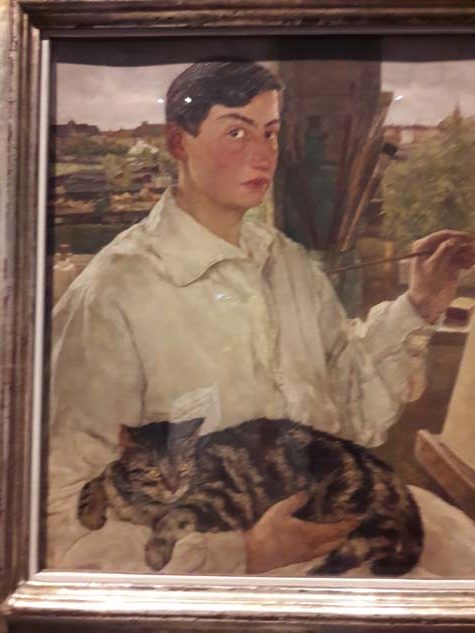
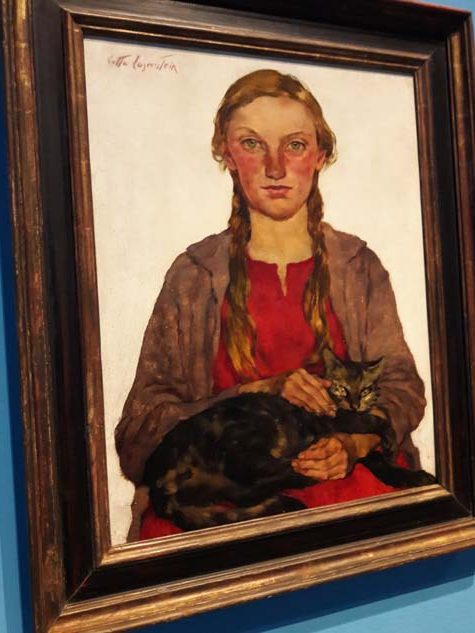
Die Ausstellung „MALER. MENTOR. MAGIER.“ stellt erstmalig den enormen Einfluss des ehemaligen Brücke-Künstlers und Expressionisten Otto Mueller (1874–1930) in den Mittelpunkt: Der Maler lehrte länger als zehn Jahre an der Staatlichen Akademie für Kunst und Kunstgewerbe in Breslau, die seinerzeit zu den fortschrittlichsten Kunstschulen in Europa zählte. Vor allem seit den 1920er Jahren – durch die zahlreichen Neuberufungen des damaligen Direktors Oskar Moll – genoss die Breslauer Akademie den Ruf von Weltoffenheit und Liberalität. Hier standen gleichberechtigt die vielfältigen Strömungen der modernen Malerei nebeneinander: der Expressionismus mit Otto Mueller, die französische Peinture der Académie Matisse mit Oskar Moll, die Neue Sachlichkeit mit Alexander Kanoldt und Carlo Mense sowie das Bauhaus mit Oskar Schlemmer, Georg Muche oder Johannes Molzahn.

Das Hauptaugenmerk der Ausstellung gilt der Malerei der Moderne: Otto Mueller und sein Netzwerk erlebten in Breslau eine schöpferische Phase, die sie angeregt durch Austausch und gegenseitige Einflussnahme als höchst produktiv beschrieben. Ersichtlich wird diese Beeinflussung der Maler-Kollegen untereinander durch thematische Übereinstimmungen und andere Querverweise: in Gemälden, Arbeiten auf Papier, schriftlichen Äußerungen oder Fotografien. Vor allem der charismatische, von Sehnsucht und Freiheitsdrang getriebene Otto Mueller hatte maßgeblichen Einfluss auf die Breslauer Kunstszene. Ein „Romantiker“ und sogar ein „Magier“ soll Otto Mueller nach Aussagen seines unmittelbaren Umfeldes, darunter auch Kunstkritiker und Schriftsteller, gewesen sein. Carl Hauptmann setzte ihm bereits in der Künstlerbiografie „Einhart der Lächler“ (1907) ein Denkmal – damit leistete der Dichter seinen entscheidenden Beitrag für die Grundsteinlegung eines „Künstler-Mythos“.

Muellers auffällige Erscheinung und sein unbürgerlicher Lebenswandel übten eine enorme Faszination auf seine Schüler und Schülerinnen an der Akademie aus. Sie schätzten dessen vollkommene Hingabe an die Kunst, dessen unkonventionelle Lehrmethode und Humor. Einige seiner Schüler – wie Alexander Camaro oder Horst Strempel – gingen von Breslau aus nach Berlin und erlebten hier den Höhepunkt ihrer Maler-Karrieren.

Eine Besonderheit des kuratorischen Konzeptes von „MALER. MENTOR. MAGIER.“ ist das Prinzip des „Gastes“: gemeint sind hiermit ausgewählte Bilder, durch die spotlightartig, epochenübergreifend und interkulturell, insbesondere im deutsch-polnischen Kontext, auf Gemeinsamkeiten und Unterschiede verwiesen werden kann. Das Einbeziehen „Polnischer Expressionisten“ ermöglicht einmalige Sehvergleiche und neue Zusammenhänge, zugleich verschränken sie die deutsch-polnische Ausrichtung dieser Ausstellung.

Die immense Wertschätzung von Otto Muellers Wirken – aus der Perspektive seines Künstlernetzwerks – reicht bis in die Nachkriegsmoderne: Ein wichtiges Kapitel deutsch-polnischer Kunstgeschichte wird unter besonderer Berücksichtigung der Wechselbeziehung zwischen den Städten Berlin und Breslau/Wrocław neu erzählt.

Denn auch die Beziehungen zwischen der Nationalgalerie in Berlin und dem ehemaligen Schlesischen Museum der bildenden Künste in Breslau (heute Muzeum Narodowe in Wrocław) waren durch intensiven Austausch und Zusammenarbeit charakterisiert. Paradigmatisch ist die Otto-Mueller-Gedächtnisausstellung, die 1931 – kurz nach dem Tod des bedeutenden Expressionisten – durch Direktor Erich Wiese in Breslau initiiert und noch im gleichen Jahr von Ludwig Justi, Direktor der Nationalgalerie, als Gedenk-Ausstellung nach Berlin übernommen wurde.

Die aktuelle Schau „MALER. MENTOR. MAGIER.“ nimmt den umgekehrten Weg. Erarbeitet in Berlin, wird sie danach in modifizierter Form in Breslau/Wrocław zu sehen sein. In Berlin setzt die Ausstellung die Folge von Präsentationen zur Klassischen Moderne fort, die während der Sanierung der Neuen Nationalgalerie im Hamburger Bahnhof – Museum für Gegenwart – Berlin gezeigt wurden: „Die schwarzen Jahre. Geschichten einer Sammlung. 1933–1945“, „Ernst Ludwig Kirchner. Hieroglyphen“ und „Rudolf Belling. Skulpturen und Architekturen“.

Künstler*innenliste: Jankel Adler, Alexander Archipenko, Isidor Aschheim, Henryk Berlewi, Alexander Camaro, Johnny Friedlaender, Grete Jahr-Queißer, Alexander Kanoldt, Ernst Ludwig Kirchner, Ludwig Peter Kowalski, Margarete Kubicka, Stanisław Kubicki, Wilhelm Lehmbruck, Carlo Mense, Oskar Moll, Marg Moll, Johannes Molzahn, Georg Muche, Otto Mueller, Żdzisław Nitka, Oskar Schlemmer, Willy Schmidt, Horst Strempel, Heinrich Tischler, Witkacy, u.a.

Zur Ausstellung erscheint ein gleichnamiger, umfangreicher Katalog im Kehrer Verlag, der von deutschen und polnischen Wissenschaftler*innen erarbeitet wurde. Herausgegeben von Dagmar Schmengler, Agnes Kern und Lidia Głuchowska. Zwei separate Sprachausgaben (deutsch und polnisch) sind ab Oktober 2018 erhältlich. Der Katalog wird realisiert durch: ZEIT-Stiftung, Ernst von Siemens-Kunststiftung

1. Station
12.10.2018-3.3.2019, Hamburger Bahnhof – Museum für Gegenwart – Berlin
2. Station
8.4.2019-30.6.2019, Nationalmuseum Wrocław, Breslau

Eine Ausstellung der Nationalgalerie, Staatliche Museen zu Berlin, in Zusammenarbeit mit der Alexander und Renata Camaro Stiftung und dem Muzeum Narodowe we Wrocławiu.

Die Ausstellung wird gefördert durch: Freunde der Nationalgalerie, Hauptstadtkulturfonds, Kulturstiftung der Länder, Ernst von Siemens-Kunststiftung, Stiftung für deutsch-polnische Zusammenarbeit, Stiftung Preußische Seehandlung

Im Rahmen von 100 Jahre Bauhaus.
Neue Galerie

Die Neue Galerie im Hamburger Bahnhof fungiert als Dependance für die Neue Nationalgalerie während der Dauer ihrer Sanierung. In wechselnden Präsentationen werden hier Ausschnitte aus der Sammlung zur Kunst des frühen 20. Jahrhunderts vorgestellt. Ganz bewusst und vor dem Hintergrund der Planungen für einen Neubau am Kulturforum dient die Neue Galerie dabei der Erprobung neuartiger Sichtweisen auf die „klassisch” gewordene Moderne.

Inhalt-Otto-Mueller

Otto Mueller, Zwei Mädchen, um 1925, Leimfarbe auf Rupfen (Detail) © bpk / Staatliche Museen zu Berlin, Nationalgalerie / Jörg P. Anders

MALARZ. MENTOR. MAG.
Otto Mueller a środowisko artystyczne Wrocławia

Od 12 października 2018 do 13 marca 2019
Wystawa w Hamburger Bahnhof w Berlinie

Jest to pierwsza wystawa, która skupia się na ogromnej sile oddziaływania Ottona Muellera (1874–1930), ekspresjonisty i artysty grupy Die Brücke. Przez ponad dziesięć lat był on wykładowcą w Państwowej Akademii Sztuki i Rzemiosła Artystycznego we Wrocławiu, która za jego czasów należała do najbardziej postępowych uczelni artystycznych w Europie. Od lat 20 ubiegłego wieku ówczesny dyrektor szkoły, Oskar Moll, sprowadzał tu licznych wykładowców, co sprawiło, że Wrocławska Akademia Sztuki cieszyła się opinią uczelni liberalnej i otwartej na świat. Na równi stały tam ze sobą różnorodne prądy współczesnego malarstwa: ekspresjonizm, reprezentowany przez Ottona Muellera, francuskie malarstwo Académie Matisse – przez Oskara Molla, Nowa Rzeczowość – przez Alexandra Kanoldta i Carlo Mensego oraz Bauhaus – przez Oskara Schlemmera, Georga Muchego i Johannesa Molzahna.

Wystawa poświęcona jest przede wszystkim malarstwu modernistycznemu. Otto Mueller przeszedł we Wrocławiu wraz ze swoim środowiskiem przez etap twórczości opisywany przez nich jako niezwykle produktywny, zainspirowany wymianą i wzajemnym oddziaływaniem. To, jak pracujący ze sobą malarze wpływali na siebie nawzajem pod względem artystycznym, ujawnia się w obrazach, pracach na papierze, w wypowiedziach pisemnych i na fotografiach. To właśnie charyzmatyczna, przepełniona tęsknotą i pragnieniem wolności postać Ottona Muellera miała największy wpływ na wrocławską scenę artystyczną. Był on „romantykiem” a nawet „magiem”, jak wynika z przekazów jego najbliższego otoczenia, do którego należeli również krytycy sztuki i pisarze. Carl Hauptmann już w 1907 r. upamiętnił malarza w biografii artystycznej „Einhart der Lächler” – przyczyniając się w znacznym stopniu do powstania „mitu artysty”.

Niezwykła powierzchowność Muellera i jego wolny od konwenansów styl życia budziły ogromną fascynację w jego uczniach i uczennicach na Akademii. Cenili oni jego całkowite oddanie sztuce, niekonwencjonalne metody nauczania i poczucie humoru. Niektórzy spośród jego uczniów – tacy jak Alexander Camaro czy Horst Strempel – z Wrocławia udali się do Berlina, gdzie ich kariera malarska sięgnęła szczytu.

Cechą szczególną kuratorskiej koncepcji wystawy MALARZ. MENTOR. MAG. jest wybranie obrazów wiodących, pozwalających dostrzec istotne podobieństwa i różnice, a także kontekst ponadepokowy i międzykulturowy, w tym polsko-niemiecki. Włączenie „polskich ekspresjonistów” daje wyjątkową szansę dokonania porównań i odkrywania nowych związków, a jednocześnie pozwala połączyć ze sobą polskie i niemieckie motywy przewodnie wystawy.

Ogromne uznanie dla twórczości Ottona Muellera – z perspektywy jego środowiska artystycznego – sięga aż do modernizmu powojennego, gdy ten ważny rozdział w polsko-niemieckiej historii sztuki napisano na nowo z uwzględnieniem wzajemnych powiązań między Berlinem a Wrocławiem, niegdyś Breslau.

Stosunki między Nationalgalerie w Berlinie a dawnym Śląskim Muzeum Sztuk Pięknych w Breslau [obecnie Muzeum Narodowe we Wrocławiu] charakteryzowały się bowiem również intensywną wymianą i współpracą. Najlepszym przykładem jest retrospektywa Ottona Muellera, zorganizowana przez dyrektora Muzeum we Wrocławiu, Ericha Wiese, w 1931 r., tuż po śmierci wybitnego ekspresjonisty, która jeszcze w tym samym roku została przeniesiona przez Ludwiga Justiego, dyrektora Nationalgalerie do Berlina.

Obecna wystawa MALARZ. MENTOR. MAG. podąża w odwrotnym kierunku. Opracowana w Berlinie, zostanie następnie pokazana w zmodyfikowanej formie we Wrocławiu.
W Berlinie wystawa stanowi kontynuację serii prezentacji na temat klasycznego modernizmu, które podczas renowacji Neue Nationalgalerie zostały pokazane w Hamburger Bahnhof – Museum für Gegenwart: „Die schwarzen Jahre. Geschichten einer Sammlung. 1933–1945” [Mroczne lata. Opowieści z kolekcji. 1933–1945], „Ernst Ludwig Kirchner. Hieroglyphen” [Ernst Ludwig Kirchner. Hieroglify] i „Rudolf Belling. Skulpturen und Architekturen” [Rudolf Belling. Rzeźby i architektury].

Lista artystów: Jankel Adler, Alexander Archipenko, Isidor Aschheim, Henryk Berlewi, Alexander Camaro, Johnny Friedlaender, Grete Jahr-Queißer, Alexander Kanoldt, Ernst Ludwig Kirchner, Ludwig Peter Kowalski, Margarete Kubicka, Stanisław Kubicki, Wilhelm Lehmbruck, Carlo Mense, Oskar Moll, Marg Moll, Johannes Molzahn, Georg Muche, Otto Mueller, Zdzisław Nitka, Oskar Schlemmer, Willy Schmidt, Horst Strempel, Heinrich Tischler, Witkacy i inni.

Wystawie towarzyszy obszerny katalog pod tym samym tytułem, opracowany przez polskich i niemieckich naukowców, wydany przez wydawnictwo Kehrer Verlag pod redakcją Dagmar Schmengler, Agnes Kern i Lidii Głuchowskiej. Katalog zrealizowany dzięki wsparciu: ZEIT-Stiftung, Ernst von Siemens-Kunststiftung

Wystawa Nationalgalerie, Staatliche Museen zu Berlin we współpracy z Alexander und Renata Camaro Stiftung i Muzeum Narodowym we Wrocławiu.

Sponsorzy wystawy: Freunde der Nationalgalerie, Hauptstadtkulturfonds, Kulturstiftung der Länder, Ernst von Siemens-Kunststiftung, Fundacja Współpracy Polsko-Niemieckiej, Stiftung Preußische Seehandlung

Hygge w Szczecinie…

Vom 6. Oktober bis 17. März 2019 / od 6 października do 17 marca 2019 roku

Sztuka szczęśliwych ludzi. Malarstwo na Bornholmie w XIX i XX wieku

Muzeum Narodowe w Szczecinie, ul. Wały Chrobrego 3

godziny otwarcia:
wtorek, środa, czwartek, sobota: 10.00–18.00, piątek, niedziela: 10.00–16.00

Dania od lat 70 XX wieku znajduje się w czołówce Światowego Raportu Szczęścia, często zajmując w nim pierwsze miejsce. Duńczycy słyną z umiejętności osiągania tego stanu, podobnie jak z designu. Pamiętając o tym, na wystawie – po pierwsze – zaprezentowano, w jaki sposób Duńczycy rozumieją szczęście na tle społeczno-kulturowym (począwszy od przełomu XVIII i XIX wieku, skończywszy na latach 70 ub. wieku), które wpłynęło na ukształtowanie samoświadomości duńskiej. Po drugie zaś podjęto refleksję na tym, jaką rolę w tym kontekście odgrywa sztuka duńska XIX i XX wieku.

Pieniądze, sukcesy, sława rzadko są podstawowymi celami Duńczyków. Jeśli można wskazać coś, co jest dla nich naprawdę ważne, byłaby to umiejętność znajdowania równowagi między pracą a czasem wolnym. Jednym słowem: hygge – czyli bycie razem z bliskimi w przyjemnej atmosferze, w poczuciu wspólnoty, wzajemnego zaufania, w przytulnym otoczeniu.

Hygge to zjawisko, które u podstaw ma następujące czynniki: klimat Danii, niewielkie rozmiary państwa, tradycja życia domowego, koncepcja równości społecznej oraz państwa opiekuńczego.

W drugiej połowie XIX wieku zaczęły rozkwitać kolonie artystyczne. Określenie to odnosi się do grup twórców, którzy spotykali się w wybranym miejscu i pracowali we wspólnym celu, kierując się podobnym rozumieniem sztuki. Nie oznacza to jednocześnie, że łączył ich wspólny manifest artystyczny. Wśród dzieł spotykamy różne rozwiązania stylistyczne. Kolonie artystów powstające w Danii – podobnie jak w innych krajach Europy – rozkwitły w związku z popularnością bezpośredniego studiowania natury w 2. połowie XIX wieku. Malarze uciekali ze zwyczajowych centrów kultury w dużych metropoliach i tworzyli grupy w nowych miejscach, które sprzyjały malowaniu na wolnym powietrzu oraz kusiły nietuzinkowymi motywami i intrygującą naturą.

Właśnie na tym tle należy rozpatrywać kolonię na Bornholmie. Wyspa bez wątpienia przyciągała artystów zarówno przez bogactwo przyrody, jak i jej „dzikość”. W konsekwencji w twórczości odnajdujemy podobne motywy i tematy – są to często przedstawienia natury (w różnych warunkach pogodowych), lokalnej architektury, tamtejszej społeczności…

Na wystawie można zobaczyć prawie 100 prac duńskich artystów ze zbiorów Bornholms Kunstmuseum – wśród nich dzieła takich twórców jak: Kristian Zahrtmann (1843–1917); Richard Mortensen (1910–1993; zwany czasem duńskim Wassilym Kandinskym); Edvard Weie (1879–1943); Olaf Rude (1886–1957); Oluf Høst (1884–1966) czy Niels Lergaard (1893–1982).

Wystawie towarzyszy bogato ilustrowany katalog polsko-duńsko-angielski Sztuka szczęśliwych ludzi. Malarstwo na Bornholmie w XIX i XX wieku z esejami kuratorów i opisami wszystkich obiektów z ekspozycji.

www.muzeum.szczecin.pl

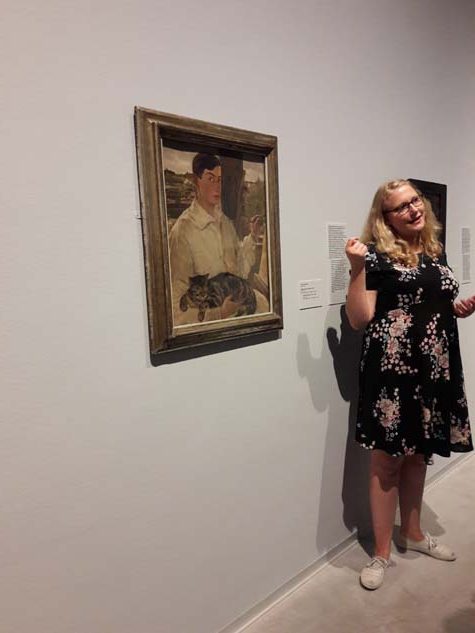
PS. Byłam na otwarciu wystawy. Wice-Dyrektor Muzeum i nasz autor, Darek Kacprzak, witając gości, zapytał, kto z nas jest szczęśliwy. Na zdjęciu tego nie widać, bo siedziałam z boku i takie zdjęcie mi przysłano, ale cała sala podniosła ręce do góry.

06.10.2018 Szczecin Muzeum Narodowe w Szczecinie. “Sztuka szczęśliwych ludzi”! Fot. Robert Stachnik


Otto Müller Einladung / Zaproszenie

Ab 12. Oktober im Hamburger Bahnhof / am 11. Oktober Vernissage

Tekst po polsku: otto-mueller-wstep-pl

Otto Mueller Exhibition – Flyer

Zum Buch, das die Ausstellung begleitet

MALER. MENTOR. MAGIER.

Otto Mueller und sein Netzwerk in Breslau

Beides ist zugleich das Resultat eines deutsch-polnischen Forschungsprojektes. Erstmalig findet der enorme Einfluss des ehemaligen Brücke-Künstlers und Expressionisten Otto Mueller während seiner Lehrtätigkeit in Breslau tiefergehende Berücksichtigung: Dort lehrte der Maler von 1919 bis zu seinem frühen Tod 1930 an der Staatlichen Akademie für Kunst und Kunstgewerbe, die damals zu den fortschrittlichsten Kunstschulen in Europa zählte. Der Schwerpunkt liegt auf der modernen Malerei. Vor allem der charismatische, von Sehnsucht und Freiheitsdrang getriebene Otto Mueller hatte maßgeblichen Einfluss auf die Breslauer Kunstentwicklung. So entstand die Idee, ihn zur zentralen Figur werden zu lassen: An seiner Person und an seinem Werk entlang entfaltet sich das Konzept von Ausstellung und Katalogbuch.

Vor allem seit 1925 – begünstigt durch die zahlreichen Neuberufungen von Professoren durch den amtierenden Direktor Oskar Moll – genoss die Breslauer Akademie den Ruf von Weltoffenheit und Liberalität. Die vielfältigen Strömungen der Moderne standen hier gleichberechtigt nebeneinander: der Expressionismus mit Otto Mueller, die französische Peinture der Académie Matisse mit Oskar Moll, die Neue Sachlichkeit mit Alexander Kanoldt und Carlo Mense sowie das Bauhaus und dessen Umfeld mit Oskar Schlemmer, Georg Muche und Johannes Molzahn.
Otto Mueller und sein Netzwerk: hierzu gehören vor allem seine unmittelbaren Malerkollegen sowie seine Schüler und Schülerinnen – die alle durchweg in Breslau eine schöpferische, höchst produktive Phase erlebten, angeregt durch wechselseitige Inspiration und Austausch. Die Freundschaften zu eigenständigen und kunstsinnigen Frauen spielten im Leben des Breslauer Akademieprofessors eine nicht zu unterschätzende Rolle: An erster Stelle standen Muellers Partnerinnen, allen voran seine erste Ehefrau Maschka Mueller. In sein Netzwerk gehörten aber auch Künstlerinnen und Intellektuelle wie die Bildhauerin und Grafikerin Marg Moll oder die Schriftstellerin Ilse Molzahn. Ersichtlich wird der Austausch und die gegenseitige Beeinflussung der Breslauer Malerprofessoren untereinander durch thematische und motivische Anleihen oder technische Übereinstimmungen der Malmittel: z. B. in der Farbgebung als Medium zur Ausdruckssteigerung, in den sich entwickelnden Tendenzen der Abstraktion oder in der Angleichung der Bildträger. Gemälde, Arbeiten auf Papier, schriftliche Äußerungen oder Fotografien dienen als Querverweise, die in deutsch-polnischer Zusammenarbeit zusammengetragen und ausgewertet wurden – geleitet von folgenden Aspekten:

*
das engmaschige Netz aus Kunst- und Kulturschaffenden im Zeitraum von 1919 bis 1932 mit besonderem Fokus auf der Malerei der Moderne zu durchleuchten, in dem die Wechselbeziehung zwischen den Städten Berlin und Breslau – Breslau und Berlin sichtbar ist

*
den Schaffensdrang und die kreativen Impulse im Umfeld der Breslauer Akademie und ihre spezifische Atmosphäre im Hinblick auf die Malerei der Moderne zu untersuchen und

*
schließlich den Einfluss des Malers und der Lehrpersönlichkeit Otto Mueller herauszustellen.

Unter diesem Blickwinkel entstand ein Ausstellungsparcours entlang der Leitfigur Otto Mueller, der eine persönliche Geschichte in einem lebendigen Breslau der 1920er-Jahre – parallel zur Darstellung der sich dort entfaltenden Kunst – erzählt. Dadurch ist es möglich, für die Besucherinnen und Besucher unterschiedliche Identifikationsmöglichkeiten zu schaffen, für besondere Tendenzen der dortigen künstlerischen Entwicklung zu sensibilisieren und letztlich auch Trends der musealen Sammlungspolitik und Forschung zu berücksichtigen: Neben großen Namen aus dem Netzwerk der klassischen Moderne werden auch weniger bekannte Künstler und Künstlerinnen der Folgegeneration vorgestellt.

Nachhaltigen Eindruck hinterließ der liberale Lehrer Otto Mueller gerade auch bei seinen nicht wenigen Schülerinnen: seine Aktzeichenkurse waren die ersten überhaupt, die auch Studentinnen wie Grete Jahr-Queißer oder Margarete Schultz offen standen. Einige seiner ehemaligen Schüler wie Alexander Camaro oder Horst Strempel gingen später von Breslau aus nach Berlin und erlebten in der unmittelbaren Nachkriegszeit den Höhepunkt ihrer Malerkarrieren.

1932 wurde die Breslauer Akademie geschlossen, ein Jahr später erfolgte die nationalsozialistische Machtergreifung. Diesen Umständen ist es geschuldet, dass diese Maler und Malerinnen die sog. „verschollene Generation“ vertreten: Ihre Karrieren begannen zunächst vielversprechend. Zu Beginn des Faschismus standen sie noch am Anfang ihrer künstlerischen Laufbahn, viele wurden zur Flucht und zu einem Leben im Exil gezwungen, andere überlebten die Verfolgungen und den Holocaust nicht.

Ihnen gemeinsam aber sind ihre künstlerischen Anfänge an der Breslauer Akademie im Allgemeinen und bei Otto Mueller im Besonderen. Vertiefte Recherchen ermöglichten es, Arbeiten und Dokumente zusammenzutragen, die zumindest einen Eindruck des künstlerischen Erbes von Otto Mueller am Beispiel von Breslauer Studierenden demonstrieren – selbstverständlich ohne Anspruch auf Vollständigkeit.

Für die Charakterisierung des Kunst- und Kulturlebens in der niederschlesischen Hauptstadt der 1920er-Jahre spielte die engagierte jüdische Bevölkerung eine tragende Rolle: Breslau besaß zu dieser Zeit neben Berlin und Frankfurt am Main die drittgrößte jüdische Gemeinde im Deutschen Reich.

In Bezug auf Otto Mueller macht ein neuer Ansatz der Forschung deutlich, wie anziehend dieser Maler auf die jüngere Generationjüdischer Künstler und Künstlerinnen in Breslau wirkte: u. a. seine ihm nachgesagte Beschäftigung mit Magie und Mystik verband sich hervorragend mit deren künstlerischen Positionen und zentralen Fragestellungen nach der eigenen Identität.

Eine Besonderheit im kuratorischen Konzept ist das Prinzip des „Gastes“: gemeint sind hiermit ausgewählte Werke, durch die spotlightartig, epochenübergreifend und interkulturell auf Gemeinsamkeiten und Unterschiede verwiesen werden kann. In Deutschland kaum bekannt ist, dass viele Künstler und Künstlerinnen der polnischen Avantgarde beide Sprachen beherrschten: Deutsch und Polnisch, so Stanisław Kubicki, Margarete Kubicka, Jerzy Hulewicz oder Henryk Berlewi. Vor allem das Einbeziehen des polnischen Expressionismus und Neo-Expressionismus ermöglicht einmalige Sehvergleiche und neue Zusammenhänge, zugleich verschränken diese Erscheinungsformen die deutsch-polnische

Ausrichtung des Projekts. Diesen Ansatz begünstigte die intensive Zusammenarbeit zwischen deutschen und polnischen Wissenschaftlerinnen und Wissenschaftlern, die auch grenzübergreifende Perspektiven zuließ.

Unser besonderer Dank gilt Teresa Laudert, Stipendiatin der Camaro Stiftung, für ihre tatkräftige Unterstützung. Wir danken sehr unseren Autorinnen und Autoren. Weiterer Dank gebührt der Übersetzungsleistung durch Simon von Kleist und seinem Team sowie allen, die unser Projekt durch ihr Interesse und mit Anerkennung und Zuversicht begleitet haben.

Wir bedanken uns besonders bei dem Direktor der Nationalgalerie, Staatliche Museen zu Berlin, Udo Kittelmann für die Aufnahme dieser Ausstellung in das Programm des Hamburger Bahnhofs – Museum für Gegenwart – Berlin. Großer Dank gilt dem Direktor des Muzeum Narodowe in Wrocław, Piotr Oszczanowski, der bereit ist, Teile dieser Ausstellung nach Polen zu übernehmen. Herzlich danken wir dem Vorstand der Camaro Stiftung, besonders dem Vorstandsvorsitzenden Theodor Gentner, für das große Vertrauen in unsere Arbeit und die Bereitschaft, unsere Initiative in diesem umfänglichen Projekt zu unterstützen.

Zur praktischen Handhabe dieses Buches sei schließlich noch angemerkt:

Wir bemühen uns um geschlechtergerechte Sprache. Frauen sind in der Kunst- und Kulturgeschichte nach wie vor unterrepräsentiert. Selbstverständlich spielten in den 1920er-Jahren im Breslauer Kunstgeschehen talentierte und einflussreiche Künstlerinnen, Sammlerinnen, weibliche Intellektuelle und Kulturschaffende eine Rolle.

Auf sie hinzuweisen, sie sichtbar zu machen, ist uns ein Anliegen. Der Katalog erscheint in einer deutschen und polnischen Sprachausgabe. Zu betonen ist an dieser Stelle, dass dieses Grundlagenwerk keinen Anspruch auf Geschlossenheit verfolgt, sondern beabsichtigt, Anregungen zu liefern für weitere Forschung. Für die deutsche Sprachausgabe haben wir uns bewusst auf die Verwendung des deutschen Namens Breslau bis 1945 geeinigt. Dafür sind die historischen Fakten geltend zu machen:

Breslau war der wichtigste Wirtschafts- und Kulturmittelpunkt des deutschen Ostens. Erinnert werden soll daran, dass Breslau Hauptstadt der damals deutschen Provinz Niederschlesien war. Mit dieser Tatsache verbunden ist auch die Kontinuität der kulturellen Wechselbeziehung der Städte Berlin – Breslau. 1945 wurden Breslau und Schlesien Polen angeschlossen. Deshalb gebrauchen wir explizit den Städtenamen Wrocław für die Zeit nach dem Zweiten Weltkrieg und verwenden die aktuellen polnischen Namen von Ortschaften, Museen und Institutionen.

Die Herausgeberinnen

Dagmar Schmengler, Agnes Kern und Lidia Głuchowska