
Lidia Głuchowska
Latinum, English, Polski, Deutsch
Fabula de Kranaë. Evae dedicata
Mense Iunio anni MMXXVI in domo auctionaria Bassenge Berolini pictura eximia empta est pro una ex praeclarissimis collectionibus privatis Varsoviensibus: Fabula de Kranaë (Die Sage von Kranäe / Auch ein KRANÄE) Margaretae Kubicka (MDCCCXCI–MCMLXXXIV). Haec pictrix, graphica et poeta egregia—spiritus movens gregis expressionistarum Polono-Germanici Posnaniensis Bunt appellati, fautrix exhibitionum eius Posnaniis Berolinique atque socia ephemeridum artium Die Aktion et Zdrój—partes singulares egit in retibus necessitudinum formandis et patrimonio avant-garde internationalis servando. Ut uxor poetae et pictoris Stanislai Kubicki (a Gestapo anno MCMXLII interfecti) et particeps obsistentiae antifascisticae, opus reliquit vehementi vi motus animi et politici imbutum. Cuius haereditatem fere per triginta annos investigo.
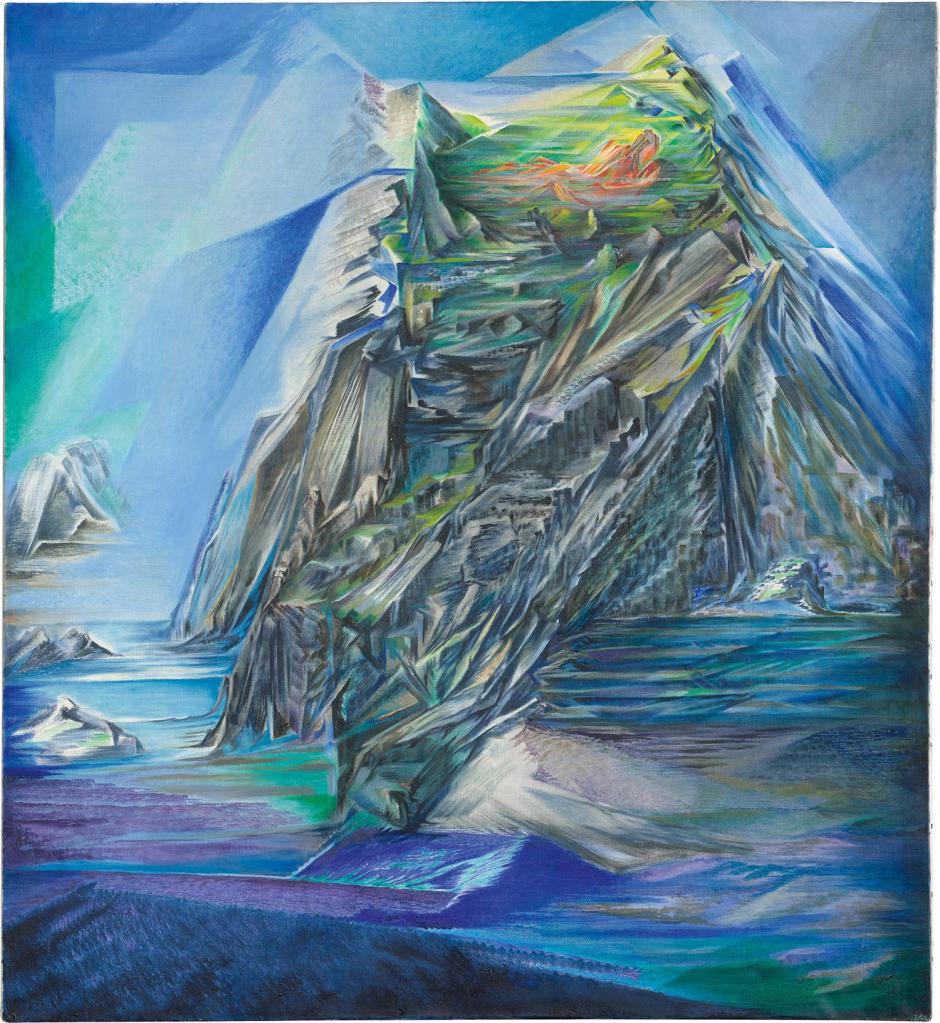
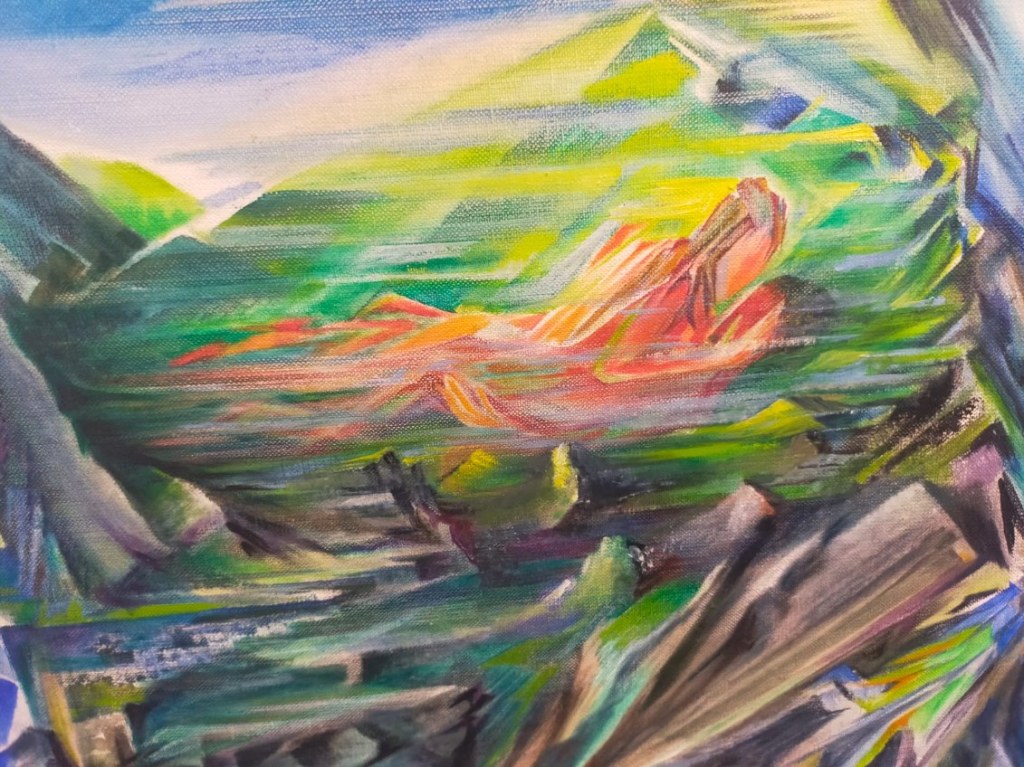
Fabula de Kranaë synthesim maturam formarum expressionisticarum et crystallino-cubisticarum praebet. Titulus ad mythum Graecum de insula Kranaë spectat—quae fuit primum perfugium Paridis et Helenae Bello Troiano instante. In compositione praevalet ingens et in formas geometricas redacta rupes, quam fluctuans aequor aquae circumdat. Spatium aversum frigidum, caeruleis, violaceis et cinereis coloribus depictum, discrepans respondet amantibus in summo monte effictis, qui calidis aurantiis et amaranthis tonis nitent. Crystallini lucis radii caeli rupiumque planitiem perfringunt, toti operi dynamicam, monumentalem et mysticam dignitatem impartientes.
Haec pictura multiplex nuntium fert, quem autem non nisi in commentatione scientifica ei dicata patefaciam. Iam tres menses in ea laboro, continua eius mysteria retegens… Opus est admiratione dignum—de bellicis conflictibus globalibus atque de perfugio amoris alicubi in eorum umbra tractans. In sua splendida colorum varietate haec tabula exemplum singulare inter opera artificis post bellum confecta praebet.
Comparatio huius tabulae Berolini facta patrimonium Margaretae Kubicka in collectionibus Polonicis magnopere ditat. Opus eius post bellum creatum multa milia laborum technica et stilo variorum comprehendit, qui tamen in foro antiquario rari inveniuntur.
The Legend of Kranae. Dedicated to Ewa
In June 2026, an extraordinary painting was acquired at the Bassenge Auction House in Berlin for one of Warsaw’s most renowned private collections: The Legend of Kranae (Die Sage von Kranäe / Auch ein KRANÄE) by Margarete Kubicka (1891–1984). This outstanding painter, graphic artist, and poet—the spiritus movens of the Poznań Polish-German expressionist group Bunt, co-organizer of its exhibitions in Poznań and Berlin, and contributor to the avant-garde art magazines Die Aktion and Zdrój—played a unique role in shaping networks and preserving the heritage of the international avant-garde. As the wife of the poet and painter Stanisław Kubicki (murdered by the Gestapo in 1942) and a participant in the anti-fascist resistance, she left behind a body of work with a poignant emotional and political resonance. I have been researching her artistic legacy for nearly 30 years.
The Legend of Kranae represents a mature synthesis of expressionist and crystalline-cubist forms. The title refers to the Greek myth of the island of Kranae—the first refuge of Paris and Helen on the eve of the Trojan War. The composition is dominated by a massive, geometrized rock formation surrounded by a turbulent sheet of water. The cool background, dominated by shades of blue, violet, and gray, contrasts with the portrayal of the lovers at the mountain’s peak in warm orange and amaranth tones. Crystalline rays of light shatter the plane of the sky and rocks, bestowing upon the work a dynamic, monumental, and mystical dimension.
This painting carries a multilayered message, which I will reveal only when I publish my research paper on it. I have been working on it for three months now, constantly discovering further mysteries… It is a fascinating work—concerning global military conflicts and a sanctuary of passion somewhere in their shadow. In its luminous color scale, this painting is an exception in the artist’s post-war output.
The acquisition of this canvas in Berlin constitutes an exceptionally valuable enrichment of Margarete Kubicka’s legacy within Polish collections. Her post-war oeuvre comprises several thousand technologically and stylistically diverse works, which remain a rarity on the art market.
Legenda o Kranae. Dedykowana Ewie
W czerwcu 2026 roku na aukcji w berlińskim Auktionshaus Bassenge do jednej z najbardziej renomowanych warszawskich kolekcji prywatnych zakupiony został wyjątkowy obraz – Legenda o Kranae (Die Sage von Kranäe / Auch ein KRANÄE) Margarete Kubickiej (1891–1984). Ta wybitna malarka, graficzka i poetka, spiritus movens poznańskiej polsko-niemieckiej grupy ekspresjonistów Bunt, współorganizatorka jej wystaw w Poznaniu i Berlinie oraz współpracowniczka czasopism artystycznych „Die Aktion” i „Zdrój”, odegrała wyjątkową rolę w kształtowaniu sieci kontaktów i ratowaniu dorobku międzynarodowej awangardy. Jako żona poety i malarza Stanisława Kubickiego (zamordowanego przez Gestapo w 1942 roku) oraz uczestniczka antyfaszystowskiego ruchu oporu, pozostawiła po sobie dorobek o przejmującym ładunku emocjonalnym i politycznym. Jej spuściznę badam od niemal 30 lat.
Legenda o Kranae stanowi dojrzałą syntezę form ekspresjonistycznych i krystaliczno-kubistycznych. Tytuł nawiązuje do greckiego mitu o wyspie Kranae – pierwszym schronieniu Parysa i Heleny w obliczu wojny trojańskiej. W kompozycji dominuje potężna, zgeometryzowana formacja skalna otoczona wzburzoną taflą wody. Chłodne tło, zdominowane przez odcienie błękitu, fioletu i szarości, kontrastuje z wyobrażonym na szczycie góry przedstawieniem kochanków w gorących tonacjach oranżu i amarantu. Krystaliczne promienie światła rozbijają płaszczyznę nieba i skał, nadając całości dynamiczny, monumentalny i mistyczny wymiar.
Obraz ten niesie ze sobą wielowarstwowe przesłanie, które jednak zdradzę dopiero, gdy poświęcę mu artykuł badawczy. Pracuję nad nim już od trzech miesięcy, ciągle odkrywając dalsze tajemnice tego dzieła… Jest fascynujące – dotyczy bowiem zarówno globalnych konfliktów militarnych, jak i azylu namiętności gdzieś w ich cieniu. W swej świetlistej skali barwnej obraz ten stanowi wyjątek w powojennym dorobku artystki.
Pozyskanie tego płótna w Berlinie stanowi niezwykle cenne wzbogacenie spuścizny Margarete Kubickiej w zbiorach polskich. Jej powojenny dorobek obejmuje kilka tysięcy zróżnicowanych technologicznie i stylistycznie prac, które należą jednak do rzadkości na rynku antykwarycznym.
***
Die Sage von Kranäe. Ewa gewidmet
Im Juni 2026 wurde im Berliner Auktionshaus Bassenge ein außergewöhnliches Gemälde für eine der renommiertesten Warschauer Privatsammlungen erworben: Die Sage von Kranäe (Auch ein KRANÄE) von Margarete Kubicka (1891–1984). Diese herausragende Malerin, Graphikerin und Dichterin war der Spiritus Movens der Posener polnisch-deutschen Expressionistengruppe Bunt, Mitorganisatorin ihrer Ausstellungen in Posen und Berlin sowie Mitarbeiterin der Kunstzeitschriften Die Aktion und Zdrój. Sie spielte eine einzigartige Rolle bei der Gestaltung von Netzwerken und der Rettung des Erbes der internationalen Avantgarde. Als Ehefrau des Dichters und Malers Stanisław Kubicki (der 1942 von der Gestapo ermordet wurde) und als Teilnehmerin des antifaschistischen Widerstands hinterließ sie ein Werk von ergreifender emotionaler und politischer Sprengkraft. Ihr künstlerisches Erbe erforsche ich seit fast 30 Jahren.
Die Sage von Kranäe stellt eine reife Synthese expressionistischer und kristallin-kubistischer Formen dar. Der Titel bezieht sich auf den griechischen Mythos der Insel Kranäe – die erste Zuflucht von Paris und Helena angesichts des Trojanischen Krieges. Die Komposition wird von einer mächtigen, geometrisierten Felsformation beherrscht, die von einer aufgewühlten Wasserfläche umgeben ist. Der kühle Hintergrund, in dem Blau-, Violett- und Grautöne dominieren, kontrastiert mit der Darstellung der Liebenden auf dem Gipfel des Berges in warmen Orange- und Amaranttönen. Kristalline Lichtstrahlen durchbrechen die Ebene des Himmels und der Felsen und verleihen dem Gesamtkunstwerk eine dynamische, monumentale und mystische Dimension.
Dieses Gemälde trägt eine vielschichtige Botschaft in sich, die ich jedoch erst preisgeben werde, wenn ich ihm einen wissenschaftlichen Artikel widme. Ich arbeite bereits seit drei Monaten daran und entdecke kontinuierlich weitere Geheimnisse dieses Werkes… Es ist faszinierend – es thematisiert sowohl globale militärische Konflikte als auch ein Asyl der Leidenschaft irgendwo in deren Schatten. In seiner leuchtenden Farbskala bildet dieses Gemälde eine Ausnahme im Nachkriegswerk der Künstlerin.
Der Erwerb dieser Leinwand in Berlin stellt eine äußerst wertvolle Bereicherung des Erbes von Margarete Kubicka in polnischen Sammlungen dar. Ihr Nachkriegswerk umfasst mehrere Tausende technologisch und stilistisch vielfältige Arbeiten, die auf dem Kunstmarkt jedoch selten zu finden sind.


One thought on “Kranae”