Aleksandra Hołownia
Documenta Kassel & MoMa Berlin

Post in English
Aleksandra Hołownia
Documenta Kassel & MoMa Berlin
Von der Redaktion über Aleksandra Hołownia
Heute gibt es Alexandras Veranstaltung in der Regenbogenfabrik. Man braucht sie hier, auf diesem Blog nicht vorzustellen- sie ist bei uns so wie in Berlin und in der ganz großen Welt sehr bekannt. Sehet nur HIER, und HIER, und HIER, und HIER, und HIER. Unsere Autorin, Johanna Rubinroth, machte für Kowalski und Schmidt einen Film über sie – Provokation in pink.
Kommt alle, es wird kleine Filme geben, Gespräche, künstlerische Interaktionen, eine Mini-Ausstellung, Kostümanprobe, Verkauf…
Wo: Kino in der Regenbogenfabrik / Lausitzer Str. 22 (im Hof) / Berlin 10999
Und als Kostprobe – ein paar Fotos von der Alexandras Wohnung in Prenzlauer Berg. Verrückt!


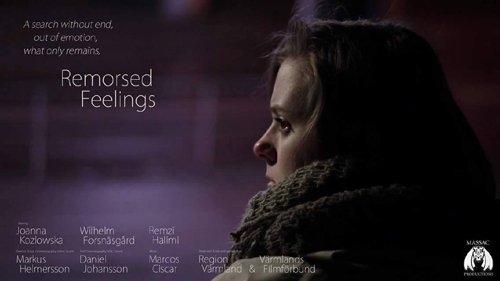
Director: Markus Helmersson
Writer: Markus Helmersson
Composer: Marcos Ciscar
Casting:
Joanna Kozlowska
Wilhelm Forsnäsgård
Remzi Halimi
Aby obejrzeć film, proszę kliknąć na obrazek – link odeśle widza do strony konkursowej “Short of the month” / Um den Film zu sehen, bitte aufs Bild klicken – der Link leitet uns weiter zur Homepage of Wettbewerb “Short of the month” / If you want to see the film, please “klick” on the picture – link leading to the Homepage of the Competition “Short of the month”
As a senior in college, I took a class on Jane Austen—a great class with, it must be said, a weird vibe. Almost all of the students were women (out of around a hundred people, only five or ten were men), and it was a hothouse of Jane Austen obsession. In the first lecture, the professor identified herself as a Janeite—a member of “the curious American cult of Jane Austen,” according to the BBC—and, when she asked if we were Janeites, too, scores of people raised their hands. The class, she reassured us, wouldn’t be wasted on Austen fanatics. Even if you’d read “Pride and Prejudice” a dozen times (starting, presumably, at the age of ten), there still was room to grow, if not in devotion then in discernment. Knowledge could complement ardor, sense enrich sensibility. Even “Clueless” might reveal layers of sophistication.
At the time, I found this off-putting. But—as Austen could tell you—first impressions are often simplistic. Soon enough, I learned that all sorts of people are obsessed with Austen. (The philosopher Gilbert Ryle, asked if he read novels, replied, “Yes—all six, every year.”) I also discovered that almost every truly famous writer has his or her own cult of personality. Austen’s cult has been rivalled by the cults of Dickens, Tolstoy, Eliot, Joyce, Hemingway, Lawrence, and Fitzgerald, among others. Today, readers worship Karl Ove Knausgaard or Elena Ferrante. Janeites may be the Trekkies of the literary world, but their passion is really just a more intensified version of ordinary bookishness.
If anything, the fervor of the Janeites puts into relief a fact almost too obvious to notice: the world of books is a romantic world. Romance structures literary life, and to be a reader is, often, to follow its choreography, from susceptibility and discovery (“I just saw it there in the bookstore!”) to infatuation, intimacy, identification, and obsession. We connect with books in an intellectual way, but the most valuable relationships we have with them are emotional; to say that you merely admire or respect a book is, on some level, to insult it. Feelings are so fundamental to literary life that it can be hard to imagine a way of relating to literature that doesn’t involve loving it. Without all those emotions, what would reading be?
In “Loving Literature: A Cultural History,” Deidre Shauna Lynch, a professor of English at Harvard, shows us that it wasn’t always this way. For a long time, people didn’t love literature. They read with their heads, not their hearts (or at least they thought they did), and they were unnerved by the idea of readers becoming emotionally attached to books and writers. It was only over time, Lynch writes—over the century roughly between 1750 and 1850—that reading became a “private and passional” activity, as opposed to a “rational, civic-minded” one.
To grasp this “rational” approach to reading, Lynch asks you to transport yourself back to a time when, in place of today’s literary culture, what scholars call “rhetorical” culture reigned. In the mid-seventeen-hundreds, a typical anthology of poetry—for example, “The British Muse,” published in 1738—was more like Bartlett’s “Familiar Quotations” than the Norton Anthology. The poems were organized by topic (“Absence,” “Adversity,” “Adultery”); the point wasn’t to appreciate and cherish them but to harness their eloquence in order to impress people. Today, when you browse BrainyQuote.com, you don’t conceive of yourself as wandering a hallowed storehouse of treasured literary wisdom—you’re just rummaging around, looking for something that sounds good and expresses the right idea. In a rhetorical culture, Lynch writes, “poetry offers itself to readers not as a love object, but rather as a source of instruction in how to speak fair . . . and thus in how to woo love objects and advance in the world.” Basically, it’s all BrainyQuote.
The invention that disrupted this rhetorical world was the canon. “Canon formation,” as literary historians call it, started in the mid-eighteenth century for all kinds of reasons, among them a rising interest in taste and connoisseurship, and, in Britain, a rethinking of copyright law. (In 1774, in Donaldson v. Beckett, British judges rejected the system of perpetual copyright in favor of the “public domain”; one consequence was a new notion that the great, enduring books belonged to all Britons.) The growth of the canon changed how people related to literature. It shifted the temporal focus of literary life from the present to the past; it made reading intrinsically nostalgic.
Some readers read because they want to know about the here and now. But, when a young person’s favorite book is “The Great Gatsby” or “Jane Eyre,” something else is going on. That sort of reader is, as Lynch puts it, “striving to bridge the distance between self and other and now and then.” And, from that sense of striving, a whole set of values flows. In rhetorical culture, the most important writing was au courant, and the “best” readers made use of it to enhance their own eloquence. But in an appreciative, literary age, the most important books are the ones that have outlasted their eras, and the “best” readers are people who are especially susceptible to emanations from other times and places. Being a reader becomes an identity unto itself. A reader is unsatisfied with the present and yearns for something more. She finds it by cultivating intimate relationships with kindred spirits from another time.
How to understand this new culture of readerly yearning—this intrusion of feeling into a cerebral realm? In the late eighteenth and early nineteenth centuries, the metaphors of enchantment, seduction, and love were ready to hand. Quickly, the vocabularies of romance and reading began to merge. In 1750, Samuel Johnson wrote that a good biography can “enchain the heart by an irresistible interest.” (We still talk this way about books: “There’s a bewitching urgency to the narration that’s impossible to resist,” Publishers Weekly wrote, last year, of “The Goldfinch.”) Books began to acquire a devotional aura; they were associated with privacy, feeling, tenderness. They entered into the home’s most private spaces—a child’s room, an adult’s bedside table. At a time when marriage itself was becoming more romantic, a long-term commitment to a novel and its author began to feel like a kind of virtuous loyalty. (“All six, every year.”)
Readers and critics pushed back against this new conception of literature. Because it was organized around personalities, they argued, it was less sensitive to quality. (Besotted readers, Johnson wrote, fail to judge books on their merits; they “like only when they like the author.”) And it wasn’t all sweetness and light. Literary love is intrinsically doomed; the canon, as Lynch puts it, is “a cultural space of posthumousness.” Victorian readers took to visiting the “homes and haunts” of the dead writers they loved. Feeling, Lynch writes, that “literature is never more lovable than when at death’s door,” they proclaimed—as we do—the death of literary reading.
We, of course, are the inheritors of this bittersweet legacy. Reading “Loving Literature,” I couldn’t help but see the romance that Lynch describes everywhere—from my local bookstore, where one can buy a tote bag with the likeness of Virginia Woolf or George Orwell, to the inevitable instances in which dead writers betray their present-day devotees. (“You shouldn’t be too much in love with what you are reading, or you will be disappointed, like always,” the philosopher Peter Trawny said recently of Martin Heidegger.) Last week, I recognized Lynch’s literary love in the care with which I put my books on my new office bookshelf. One might imagine that e-books and the Web could deromanticize reading. But, far from being on the wane, it’s possible that our romantic relationship with literature is bleeding over into other parts of cultural life. The rise of TV and movie fandom, for example—with its generous affection turning, when it’s betrayed, into lavish scorn—seems to be an extension of our love affair with books. It’s a way of loving a canon in the present tense.
Then there’s the case of the English professor. Judging by Lynch’s history, professors are doubly trapped. Their deep love of books isn’t just unrequited; it’s inexpressible. Even when they talk about the writers they love, professors have to keep it professional—which, of course, only reinforces the idea that there’s a divide between loving literature and thinking about it. Lynch’s book shows that loving literature is a performance, the acting-out of a centuries-old metaphor. If that’s true, then its opposite—cool, detached, academic cerebrality—is also a performance. It’s a tough spot. Unable to embrace the cheese and camp of being a book lover, professors find themselves in a camp all their own.

EMS: It is my grandson 13 years ago as we the first time went to library.
 Sylwia Kościuszko
W niedzielę 1 lutego oglądałam razem z koleżankami i kolegami ze Stowarzyszenia Drugie Pokolenie wystawę „Ocalałe” („Salvaged”) w Żydowskim Instytucie Historycznym w Warszawie. Było to niezwykłe przeżycie, móc oglądać obrazy artystów żydowskich, powstałe w latach 1890-1939 oraz w okresie wojennym, w towarzystwie kuratorki wystawy i zarazem Kierowniczki Działu Sztuki w Żydowskim Instytucie Historycznym, Teresy Śmiechowskiej. Teresa, która, jak sama powiedziała, czuje się jedną z nas, w niezwykle interesujący sposób opowiadała o poszczególnych twórcach i ich dziełach, przez co pozwoliła nam umieścić oglądane obrazy w konkretnym kontekście oraz głębiej przeżyć i zrozumieć to, co widzieliśmy. Nie ukrywała swoich emocji – czuliśmy, że ma osobisty stosunek do tej wystawy, dzieliła się z nami tym, co na niej zrobiło największe wrażenie, zwracała uwagę na szczegóły, które mimo woli mogły nam umknąć.
 Pierwsza część wystawy poświęcona jest obrazom i rysunkom z lat 1939-1945. Ich siła wyrazu, niezależnie od wartości artystycznej, była porażająca. Jak choćby prace Geli Seksztajn umieszczone obok jej swoistego testamentu, w którym pisała „nie proszę o pochwały, lecz tylko o zachowanie pamięci o mnie i o mojej córeczce”, „ muszę zginąć, ale swoje zrobiłam. Chciałabym, aby przetrwała pamięć o moich obrazach”. To się udało – jej obrazy ocalały ukryte w zbiorach Podziemnego Archiwum Getta Warszawskiego. Ze wzruszeniem ściskającym gardło oglądałam portrety dzieci, w tym także jej córeczki Margolit, rysowane ołówkiem, kredką, węglem.
Gela Seksztajn
Wszystkie prace w tej części wystawy miały przejmujące historie, przedstawiały w sposób niezwykle oszczędny w formie i mocny w ekspresji tragizm tamtych czasów – głód, cierpienie, samotność, śmierć. Powstawały w gettach – łódzkim, białostockim, warszawskim jak np. prace Rozenfelda (artysty o nieznanym imieniu i biografii), który do swoich rysunków dołączył komentarze opisujące rzeczywistość getta warszawskiego. Duże wrażenie zrobiły na nas rysunki Henryka Becka, lekarza i malarza, składające się na cykl „Bunkier 1944 roku”, dokumentujący miesiące, gdzie ukrywał się w opuszczonej po upadku powstania Warszawie.
 Henryk Beck, „Bunkier 1944 roku”
Oglądaliśmy prace Witolda Lewinsona, Józefa Kownera, Stanisławy Cetnerszewerowej, Icchaka Braunera, Izraela Lejzerowicza, Maksymiliana Eljowicza, Romana Kramsztyka – żadne nie pozwalają przejść obok obojętnie.
***

Druga część wystawy obejmowała prace powstałe w latach 1890-1939, autorstwa pierwszego pokolenia artystów pochodzenia żydowskiego, którzy tworzyli niesakralną sztukę żydowską. Większość z nich nie przeżyła Holokaustu.
 Zgromadzone na wystawie obrazy – portrety, pejzaże, martwe natury, widoki małych miast, w tym liczne Kazimierza Dolnego, malarstwo rodzajowe, akt, pokazywały znakomity kunszt ich twórców oraz przynależność do różnych stylów lub co najmniej otwartość na nie – od XIX-wiecznego realizmu, przez ekspresjonizm, kubizm aż po konstruktywizm. Teresa także o tych artystach i ich dziełach opowiadała ciekawie i z przejęciem, pozwalając nam miękko przejść od ciemności, smutku i cierpienia poprzedniej sali w świat kolorów i nowoczesnego patrzenia na przestrzeń i formę. Zapytani przez Teresę o dzieło, które zrobiło na nas największe wrażenie wymienialiśmy różne prace
Samuel Hirszenberg, Uliczka w Kazimierzu
 – „Portret kobiety” Abrahama Gutermana >>
czy „Ekstazę” Norberta Strassberga, „Kabalarkę” Jana Gotarda (którą, po wnikliwym przyjrzeniu się obrazowi, twórcy wystawy przemianowali na „Zielarkę”), któryś z pejzaży Kazimierza Dolnego. Wybór nie był łatwy spośród obrazów takich artystów jak Maurycy Trębacz, Samuel Hirszenberg, Abraham Berman, Samuel Finkelstein, Zygmunt Menkes, Józef Badower, Sasza Blonder, Bruno Schultz, Roman Kramsztyk i Maksymiliana Eljowicz. Mogliśmy także podziwiać rzeźbę Henryka Glicensteina „Mesjasz”.

A co ja bym wybrała?
Coś mnie fascynuje w obrazie Maksymiliana Eljowicza “Rabin”, który łączy obie galerie.
Wisi w holu do sali z pracami 1939-45, bo był na zdjęciu/w kadrze z niemieckiego filmu propagandowego o Judenracie w getcie warszawskim, wisiał w gabinecie Czerniakowa, ale jest w stylu bardzo nowoczesnym.
Jest dla mnie łącznikiem miedzy obiema galeriami.
 Z czym wyszłam z wystawy? Z dumą, że wśród polskich artystów XX wieku tylu było wspaniałych twórców żydowskiego pochodzenia. Z głębokim smutkiem, że życie większości z nich zostało w tak okrutny sposób przerwane. Z nadzieją, że kolejne pokolenia będą to, co po sobie pozostawili, odkrywały, przeżywały i podziwiały, tak jak to tej niedzieli stało się to moim udziałem. Z wdzięcznością, podziwem i szacunkiem wobec tych wszystkich, którzy ocalili tę sztukę i udostępniają ją publiczności. Z radością, że swoimi wrażeniami mam się z kim podzielić…
Józef Badower, „Nosiwoda” / Jan Gotard, „Kabalarka”
 X
X
X
X
X
X
X
X
***
Wystawa w Żydowskim Instytucie Historycznym
poniedziałek – piątek w godz. 8.00–18.00
i w niedzielę w godz. 10.00–18.00
ul. Tłomackie 3/5
00–090 Warszawa
tel.: (22) 827 92 21
fax: (22) 827 83 72
Wystawę można oglądać do końca marca.
Judaism has a history dating back 1,000 years in Poland but most see the country as a site of Jewish death and suffering
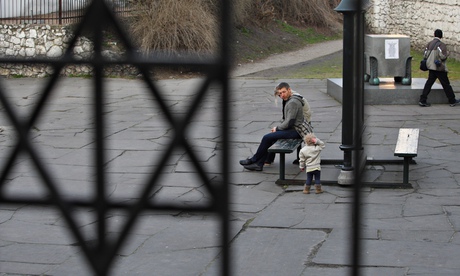 A family in Szeroka Street at the heart of the Jewish quarter in Krakow. Photograph: Eastway Pictures
First Agnieszka Markowska found a suspicious baptism certificate, then a trail of false names and invented hometowns. Hidden behind them was a Jewish family history her grandmother had sworn she would take to the grave.
“When I showed her what I had discovered, she still denied she knew anything,” said Markowska. So she made her way to Krakow’s Jewish Community Centre, the heart of resurgent Jewish life in a city that has long been more associated with Jewish tragedy.
“If my great-grandparents were Jewish, I wanted to know what they believed, what festivals they celebrated, how they lived. I exist because of them, and want to preserve their memory,” said Markowska, who now marks Jewish holidays herself.
The 45-year-old is part of a growing number of “third-generation” Polish Jews – they count back to the first generation of Holocaust survivors – who are rediscovering roots assiduously buried by parents and grandparents trying to escape death camps and then antisemitism, and helping to rebuild Jewish life in Poland.
Judaism has a history going back more than 1,000 years in the country, but because the Nazis carried out most of the murderous work of the Holocaust in occupied Poland, and reduced a population of more than three million to just a few thousand, many outside the country see it only as a site of Jewish death and suffering. Krakow was particularly notorious, with an infamous ghetto, and just an hour’s drive from Auschwitz.
“Many people in Israel have a very dark view of Poland,” said Kfir Katz, an Israeli with Polish roots who has settled in Krakow after months of research into family roots that allowed him to claim Polish citizenship.
His mother warned him the country her parents had fled was just a “vast cemetery”, but instead he found a community several hundred strong, four active synagogues, and a Jewish cultural festival that draws thousands of visitors each summer.
If some of the Jewish-quarter restaurants with Hebrew names sell pork dishes, there is also a better supply of kosher food than there has been for decades, and shabbat dinners are celebrated by open windows.
It was a slow journey, though, for the handful of Holocaust survivors who decided to stay on in the ruins of a city that was once home to more than 60,000 Jews.
“I was never in hiding, but I was never saying ‘Hi, I’m Henryk Meller, I’m Jewish,’ either,” said one community leader, who was born in 1931 and lost both parents and his only sister during the war. “My friends know, some of them are antisemitic. But that’s the thing in Poland, each antisemite has his own Jew who is his best friend.”
Poles are the single largest group on the Yad Vashem Holocaust memorial’s list of “righteous among the nations” in Israel, those who risked their own lives to save Jewish friends, neighbours, colleagues or acquaintances.
But prejudice also has deep roots. Many Polish Jews survived the Holocaust only because they had fled pogroms before the Nazis arrived. And within months of the liberation of Auschwitz, dozens more had died in new pogroms and fights over confiscated property.
In 1968, one faction within the communist government launched a cynical antisemitic campaign, as part of an internal power struggle, which cost hundreds of people their jobs and prompted thousands more to leave for Israel.
For decades there was not even a rabbi based in the city, said Meller, whose own son has immigrated to Israel. Meller never wanted to leave, and was key to the founding in 2008 of the Jewish Community Centre (JCC) in Krakow, a welcoming building which hosts everything from shabbat dinners and Torah study to make-up lessons and belly dancing.
Funded by UK charity World Jewish Relief, with support from Prince Charles, who opened it, it provides a meeting place for the existing community, but also somewhere for Poles who uncover a secret family history to explore Jewish culture, religion and history.
Olga Danek grew up in a house full of Jewish books and artefacts, and was taken several times as a child to Auschwitz and the spooky, deserted former Jewish quarter of Krakow. Still, she celebrated Christmas and Easter, and was stunned to be told, aged 12, “your grandmother was Jewish”.
“My first feeling when my mother told me I was Jewish was ‘OK, but maybe the community don’t want me’,” said Danek, now 28 and head of the student group at the JCC.
“You don’t have the papers, you don’t have the Jewish knowledge, what are you going to do? I think I was afraid, that I was not Jewish enough for them.”
In her group of 16 young Poles, only one grew up knowing she was Jewish. The rest share dramatic stories of deathbed confessions, fearfully guarded secrets or reluctant admissions drawn out after months of research in dusty archives. In many of their families Jewish identity in effect skipped a generation. Some Holocaust survivors lied to their children to protect them. Others, such as Danek’s mother, knew the family secret but felt it was too dangerous to acknowledge.
“She was born in 1961, and after 1968 we didn’t have an official Jewish life. You were told, ‘If you are Jewish you must go to Israel, you are not Polish’ – it was very difficult. I think she is afraid to be Jewish,” Danek says.
Pope John Paul II did much to tackle antisemitic attitudes, condemning them outright, visiting Auschwitz to pray in 1979, on his first visit to the country since becoming leader of the world’s Catholics, and forging high-profile relationships with Jews and Jewish communities.
The spectre still haunts Krakow, though. On a road near the JCC, a large piece of football graffiti reads Cracovia JG – or Krakow Jewish Gang, with a star of David. When Markowska told one friend that she was Jewish, the woman replied “Don’t worry, I will still like you”, and Danek’s mother frets about her wearing a star of David in public.
For Danek that lingering prejudice, and the long shadow cast by the horrors of the Holocaust, is just one more reason to celebrate Jewish life in Krakow.
“Many people think the Jewish community doesn’t exist here, and so it’s important to me to show that we do,” Danek said. “I want to show that we are not prisoners of the Holocaust. We are living here in Poland.”
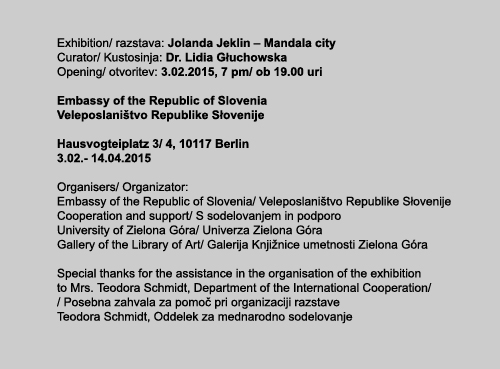
Lidia Głuchowska
Mandala City Jolandy Jeklin – iskanje dusevnega centra
 Na Veleposlanistvu Republiki Slovenije v Berlinu, trenutno poteka razstava slikarskih in graficnih del Jolande Jeklin, ki je umetniško povezana tako s Slovenijo kot tudi, že 15 let, s Poljsko, pojasnjuje tako:
Slike, katere so predstavljene na tej razstavi, me je navdihnilo vprašanje „Kje je moje mesto, moj dom…?“
V postkomunistični resničnosti smo ponovno postali državljani sveta, združene Evrope. Čas in razdalja sta postali relativni. Meje izginjajo. Pogosto se selim, zato nisem več vezana na nobeno mesto, ne vem niti to, kje je pravzaprav mesto, ki mi je namenjeno. Moj stalno spreminjajoč se dom je postal miselni svet čustev in meditacije, ki mi nudi oporo in svobodo. Mesta, ki jih prikazujem na mojih slikah, so mi blizu. V njih iščem odgovore na vprašanja o svojem smislu in prihodnosti. Verjamem, da imajo v sebi nekaj „posebnega“, nekaj kar si prizadevam izkusiti. Morda se bo izkazalo, da gre pri tem za moje ime, moj cilj in s tem izpolnitev.
Jeklin Jolanda je vsestranska umetnica. Ustvarja slikarska platna v razlicnih tehnikah, kot tudi grafike v tehniki linorezu, pastelne portrete, mozaike in instalacije.
Njene slike zapeljujejo z lahkotnostjo in čutom za okrasja, zato globina ostaja gledalcu sprva prikrita. Predstavljena mesta, skoraj enake podobe svetlečih in oddaljenih, pa vendarle v zgolj nekaj urah dostopnih mest, brez jasno določnih lastnosti, izhodiščnih točk ali meja, dihajo v nemirnem ritmu drsne, tekoče, nomadske modernosti. V podobah, kjer je zajeto vodoravno gibanje morskih valov upodablja kontrapunkt poindustrijskim mestnim okoljem – degradirano, vendar še vedno mogočne in neskončne narave urbanih svetov. Nemirni torzi androgenih oblik predstavljajo metaforo brezimnosti in simbolizirajo pomanjkanje opredelitev trdnega jaza, medtem ko kobaltno modro in turkizno lesketajoče se mandale prikličejo čarobnost orientalnih kopeli ali eskapistične miselne igre in nezemeljska sanjarjenja. Utripajoč navznoter, izpričujejo vztrajno iskanje miru, duševnega središča.
Na videz se med seboj mocno razlikujejo tako, po temi, kot stilu in tehniki obsežna serija del, kot so Mandala in Mesta, so pomemben element te razstave, mentalna vizualizacija procesa na ravni makro in mikro skali. Tako, kot mandala, ima vsako mesto svoj center, svoj vir energije v tem divjem ritmu zivljenja. V poskusu, da bi nasla svoje mesto v zunanji realnem svetu, se hkrati tudi sprasuje o smislu človeškega obstoja, narave naše duhovnosti, poslanstvo v tem postoru in casu.
Jolanda Jeklin mandale steje, kot neke vrste posrednika med nami in vibracijami katere oddajajo in prodirajo v svet okrog nas. Prav tako je lahko medij pri procesu meditacije in koncentracije, iskanje, samo-analiza, biti bližje sebi, svoji notranjosti, iskanje in prepoznavanje ciljev, prave poti, in pri tem spoznavanje kaj nas na nasi poti podpira in kaj nas ovira.
Recept za autorealizacijo s svetom vidi v usklajevanju lastnega mentalnega prostora in sveta okoli nas – na osi “Sinhronizacija … – Motivacija … – Sreca”.
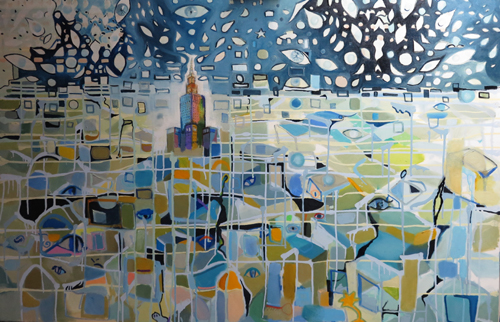 Warszawa, 2014, oil on canvas, 100 x 150 cm
Mandala City Jolandy Jeklin – in search of a mental center
 Jolanda Jeklin, artistically bound with Slovenia and – for 15 years now – with Poland as well, explains the genesis of her works which are currently being presented at the Slovenian Embassy in Berlin:
„The inspiration for the paintings presented here was the question: „Where is my place, my home?” In post-communist reality we have once more become citizens of the world, of a united Europe. Time and distance have become relative. The borders are vanishing. Having moved often, I am not bound by any of the places where I stay temporarily, I also don’t know my destination. My mobile home then, has become the mental world of feelings and meditations, which gives me stability and freedom. I’m fond of the cities which I preserve in my paintings; in them, I search for prompts to answer questions about my future, my calling. I trust that maybe they have that „something” that I’m pursuing, and that I have not yet experienced. Something that will turn out to be my aim, my fulfillment…”
Jolanda Jeklin is a versatile artist. She creates both city and marine landscapes in oil, as well as graphic works in linocut or monochromatic blind printing techniques, pastel portraits and even mosaics and installations.
On the semblance enchanting only with lightness and decorative charm, the oeuvre of Jolanda Jeklin also has a something under the surface. The twin-like similar, lambent panoramas of metropolises, which are only a few hours away but nevertheless distant, breath with the rhythm of nomadic, continuous contemporariness – without prominent attributes, points of reference or borders. The horizontal rhythm of the sea waves stopped in time – monotonous, repetitive, perpetual – it reflects in her visual world a counterpoint of post-industrial urbanism – the degraded, but still limitless and powerful nature.
Just as the disturbing torsos of androgenic figures are a metaphor of anonymity and lack a stable definition of the “I”, the feerical, cobalt-turquoise mandalas bring to mind the charm of oriental baths and escapist memories or perhaps dreams. Pulsating with a centripetal rhythm, they also document a persistent search for relief – a mental center.
Her ample cycles of works seemingly so different from one another in terms of topics, styles and techniques, such as ‘Mandala’ or ‘Cities’ which solidify the character of the current exhibition are a visualization of an analogical mental process on the macro and micro scale. ‘Mandala’ and each of the metropolises she presents, they all have their center, a source of energy of the hectic pace of life. In an attempt to picture the process of locating herself in an outside reality, the artist simultaneously asks what the sense of human existence is, the nature of our spirituality and our existence in this ephemeral and changing space-time.
Jolanda Jeklin regards the ‘Mandala’ as a sort of medium between the human and the world which vibrates around him, penetrating him. That is, at the same time, a reference to the process of meditation and focusing, allowing for auto-analysis and a coming closer to one’s own interior or recognizing one’s individual aims, but also to that which helps us fulfill those aims and what hinders us in fulfilling them and at the same time what draws us apart from one another.
As a solution for self-fulfillment in harmony with the world that the artist sees in the coordination of her own mental space and that, which surrounds us “Synchrony… – Motivation… – Happiness”.
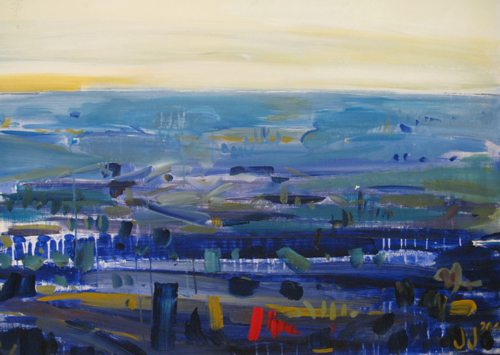 Dynamizm, 2010, akryl na płótnie 100 x 70 cm
Jolanda Jelkins Mandala City oder auf der Suche nach dem mentalen Zentrum
 Jolanda Jeklin, künstlerisch mit Ihrem Heimaltland Slowenien und seit 15 Jahren mit Polen verbunden, erläutert zur Genese ihrer Arbeiten, die derzeit in der Botschaft Sloweniens in Berlin präsentiert werden, Folgendes.
„Die Inspiration für die hier präsentierten Gemälde war für mich die Frage: „Wo bin ich zu Hause, wo ist meine Heimat…?“ In der postkommunistischen Wirklichkeit wurden wir wieder Bürger der Welt, des vereinten Europa. Zeit und Distanz sind überschaubar geworden. Die Grenzen verschwanden. Nun bin ich ständig in Bewegung, an keinen Ort gebunden, ich weiß nicht einmal, wo ich hingehöre und wo der Ort sein soll, der für mich bestimmt ist. Mein Zuhause wurde schließlich die geistige Welt der Gefühle und der Meditation. Sie bietet mir Stabilität und Freiheit. Ich habe eine starke Affinität zu allen hier präsentierten Städten. Sie begleiten mich auf der Suche nach Antworten auf die Frage nach Sinn und Zukunft. Ich glaube, in all den Orten ist etwas verborgen, was mich anzieht und für mich eine Erfüllung sein wird. Etwas, was ich noch nicht erfahren habe…”
Jolanda Jeklins urbanes und maritimes Sujet machen sie zu einer vielseitigen Künstlerin. In ihrem Schaffen finden sich sowohl Ölbilder als auch grafische Arbeiten (Linolschnitt, monochromer Reliefdruck), Pastellporträts sowie Mosaiken und Installationen.
Ihre Malkunst verführt vordergründig nur durch Leichtigkeit und dekorativen Charme. Ihr doppelter Boden bleibt einem zunächst verborgen. Doch ihre zum Verwechseln ähnlichen, schimmernden Bilder von fernen und dennoch binnen weniger Stunden zugänglichen Metropolen, ohne ausgeprägte Attribute, Bezugspunkte oder Grenzen atmen den unruhigen Rhythmus einer gleitenden, nomadenhaften Moderne. Die im Bild festgehaltene horizontale Bewegung der Meereswellen spiegelt im Visuellen den Kontrapunkt der postindustriellen Stadtbilder – die degradierte, aber dennoch mächtige und unendliche Natur.
Während die beunruhigenden Torsos androgyner Gestalten als Metapher für Anonymität stehen und die fehlende Definition eines stabilen Ich symbolisieren, evozieren die kobaltblau-türkis schillernden Mandalas den Zauber orientalischer Bäder oder eskapistischer Gedankenspiele und weltferner Träumereien. Nach innen pulsierend dokumentieren sie die beharrliche Suche nach Beruhigung, nach einem mentalen Zentrum.
Ihre thematisch, stilistisch und technisch scheinbar unterschiedlichen Zyklen wie Mandalas und Städte, die den Charakter der aktuellen Ausstellung prägen, sind Visualisierungen eines analogen mentalen Prozesses in der Mikro- und Makroskala. Jede der dargestellten Metropolen hat – analog zu Mandalas – ihr Zentrum: Es ist die Quelle ihrer Energie und Quelle des hektischen Lebenstempos. Bei ihrem Versuch, sich selbst in der äußeren Welt zu verorten, stellt die Künstlerin gleichzeitig die Frage nach dem Sinn des menschlichen Lebens, nach der Natur unserer Geistigkeit und generell nach dem Sinn der Existenz in der unbeständigen, flüchtigen Raumzeit.
Das Mandala erscheint Jolanda Jeklin als ein Medium zwischen den Menschen und der vibrierenden und sie durchdringenden Welt. Es hat gleichzeitig einen Bezug zu inneren Prozessen der Meditation und Konzentration, die eine Selbstanalyse und die Annäherung an das eigene Innere, das Erkennen der individuellen Ziele ermöglichen sowie einen Bezug zu dem, was bei der Realisierung dieser Ziele hilft, sie gleichzeitig aber erschwert, indem es die Individuen voneinander entfernt.
Ein Rezept für die Selbstverwirklichung im Einklang mit der Welt sieht die Künstlerin in der Koordination des eigenen mentalen Raums mit dem, was uns umgibt – in der Achse „Synchronisierung… – Motivation… – Glück”.
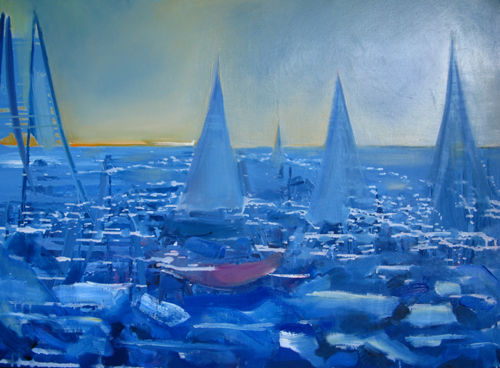 Horyzont 2013, olej na płótnie, 70 x 100 cm
Mandala City Jolandy Jeklin czyli w poszukiwaniu mentalnego centrum
 Genezę swoich prac prezentowanych obecnie w Ambasadzie Słowenii w Berlinie Jolanda Jeklin, artystycznie związana zarówno ze swoją ojczyzną, jak i – od ponad 15 lat – także z Polską, wyjaśnia następująco: „Inspiracją do powstania prezentowanych tu obrazów było pytanie: „Gdzie jest moje miejsce, mój dom?…”
W postkomunistycznej rzeczywistości staliśmy się ponownie obywatelami świata, zjednoczonej Europy. Czas i odległość stały się względne. Granice znikają. Często się przeprowadzając, nie wiążę się na stałe z żadnym z czasowo zamieszkiwanych miejsc, nie znam też swego przeznaczenia. Moim mobilnym domem stał się więc mentalny świat uczuć i medytacji, dających mi stabilność i wolność. Miasta, które utrwalam w obrazach budzą moją sympatię, szukam w nich podpowiedzi na pytanie o moją przyszłość i powołanie (il. 1-2/3). Ufam, że być może mają w sobie „to coś”, do czego dążę, czego jeszcze nie doznałam, co okaże się moim celem, spełnieniem…”
Jolanda Jeklin jest artystką wszechstronną. Tworzy zarówno olejne pejzaże miejskie czy marynistyczne, jak i prace graficzne w technice linorytu czy monochromatycznego druku ślepego, pastelowe portrety, a nawet mozaiki i instalacje.
Jej z pozoru urzekające lekkością i dekoracyjnym wdziękiem malarstwo ma i ukryte, drugie dno. Bliźniaczo do siebie podobne, migotliwe widoki dostępnych w kilka godzin, choć odległych metropolii, tchną rytmem nomadycznej, płynnej nowoczesności – bez wyrazistych artybutów, punktów odniesienia i granic. Horyzontalny rytm zatrzymanych w czasie morskich fal z refleksem gwiazd czy słonecznego nieba – monotonny, powtarzalny, nieustanny – odzwierciedla zaś w jej wizualnym świecie kontrapunkt postindustrialnej urbanistyki – degradowaną, lecz ciągle bezkresną i władczą naturę.
Jak niepokojące torsa androgynicznych postaci są tu metaforą anonimowości i braku stabilnej definicji „ja”, tak feeryczne, kobaltowo-turkusowe mandale przywołują na myśl czar orientalnych łaźni i eskapistycznych wspomnień czy marzeń. Pulsując dośrodkowym rytmem, dokumentują one także uporczywe poszukiwanie ukojenia – mentalnego centrum.
Jej z pozoru tak odmienne pod względem tematycznym, stylistycznym i technolo-gicznym obszerne cykle prac jak Mandala i Miasta, wyznaczające charakter aktualnej wystawy, są wizualizacja analogicznego procesu mentalnego w skali makro i mikro. Tak jak mandala, tak i każda z przedstawianych przez nią metropolii ma swe centrum, źródło energii, hektycznego tempa życia. Probując zobrazować proces lokalizowania siebie w zewnętrznej rzeczywistości, artystka pyta jednocześnie o sens ludzkiej egzystencji, naturę naszej duchowości oraz istnienia w ulotnej i zmiennej czasoprzestrzeni.
Mandalę Jolanda Jeklin uważa za rodzaj medium pomiędzy człowiekiem a wibrującym i przenikającym wokół niego światem. Jest to zarazem odniesienie do procesu medytacji i koncentracji, pozwalajacej na autoanalizę i zbliżenie się do własnego wnętrza czy rozpoznanie indywidualnych celów, a także tego, co pomaga w ich realizacji, i co ją utrudnia, oddalając nas jednocześnie od siebie.
Receptę na autorealizację w zgodzie ze światem artystka widzi w koordynacji własnej przestrzeni mentalnej i tego, co wokół nas – na osi „Synchronizacja… – Motywacja… – Szczęście”.
***
http://www.wa.uz.zgora.pl/
http://www.infoserwis.uz.zgora.pl/index.php?mandala-city-berliska-wystawa-prac-jolanty-jeklin-studentki-uz
www.jolandajeklin.com
Lidia Głuchowska
Foto oder Grafik? »Kabinett der historischen Fototechniken« von Mariusz Kubielas bei dem Europäischen Monat der Fotografie in Berlin 2014
Der Fotozyklus „Bruno Schulz – Mariusz Kubielas – In Transitu“ ist das Ergebnis eines 2004 initiierten Kunstexperiments, das vom literarischen und bildkünstlerischen Werk des polnisch-jüdischen Künstlers Bruno Schulz aus Drohobytsch (früher Österreich-Ungarn und Polen, heute Westukraine) inspiriert wurde. Sein Effekt bilden inszenierte und auf dem Negativ festgehaltene Szenen aus dem Grenzbereich zwischen Performance und Pantomime, die an eingefrorene Bildausschnitte aus einem Stummfilm erinnern.
 Dieses transmediale Projekt, das auch durch Auszüge aus Schulz’s Prosa und die metaphorischen Titel der Arbeiten bereichert wird, dient der Aktivierung des internationalen und generationsübergreifenden Diskurs über das multinationale und multikonfessionelle Kulturerbes Mittelosteuropas.
 Die größte Attraktion dieser Fotoschau ist jedoch das »Kabinett der historischen Fototechniken«, welches ca. 20 einmaliger Aufnahmen umfasst, welche Zeichen des persönlichen Stils des Künstlers tragen. Wie kaum einem zeitgenössischen Fotografen ist es Kubielas (geb. 1953) gelungen, einige um die Wende des 19. und 20. Jahrhunderts verwendete manuelle Techniken der Fotografie und deren Varianten zu rekonstruieren. Damit erreichte er Effekte von genauester Wiedergabe der Wirklichkeit sowie schärfster Licht-Schatten-Kontraste oder bis zur „impressionistischen“ Körnigkeit und edlen Matts der Bildoberfläche.
Der Realisierung des Kabinetts gingen Kubielas Studien zur Rekonstruktion archivalischer Technologien zur Schaffung von Lichtbildern voraus, die er 2004 an der Hochschule für Fotografie in Jelenia Góra/Hirschberg begann und bis heute in Zusammenarbeit mit führenden polnischen Experten, wie Cezary Chrzanowski, Roman Michalik, Janusz Sochacki und Rafał Warzecha weiterführt. Der Initiator dieser Arbeiten war Andrzej Pytliński, Patron des informellen Freundeskreises der historischen Fototechniken.
Das „Kabinett der historischen Techniken” von Mariusz Kubielas ist ein offenes Projekt: auch nach Ablauf des Europäischen Monats der Fotografie wird es fortgeführt und um weitere Varianten derselben Motive in weiteren Techniken ergänzt. In näherer Perspektive ist die Präsentation des Zyklus in Belgrad, Helsinki, Brüssel, Bratislava und Prag geplant – vorbereitet von dem Künstler in Zusammenarbeit mit der Kuratorin Dr. Lidia Głuchowska.
Ausstellung Bruno Schulz – Mariusz Kubielas – In Transitu
Kuratorin: Dr. Lidia Głuchowska
Vernissage: Donnerstag, 2. Oktober 2014, 19.00 Uhr
Ausstellungsdauer: 4. Oktober bis 14. November 2014
Begleitpublikation:
Lidia Głuchowska (Hg.): Bruno Schulz – Klisza Werk – Transgresiones, Wrocław: Ośrodek Kultury i Sztuki we Wrocławiu, 2013.
Über das Projekt wurde schon auf diesem Blog berichtet
https://ewamaria2013texts.wordpress.com/2013/04/18/bruno-schulz-reloaded/
https://ewamaria2013texts.wordpress.com/2013/03/22/kobieta-i-kon-rewers/
Ein Projekt im Rahmen des Europäischen Monats der Fotografie Berlin
http://www.mdf-berlin.de
und des Berliner Kunst- und Kulturfestivals Kunstkreuz: 10. bis 12. Oktober 2014
http://www.kulturring.org/kunstkreuz/
Vorbereitet vom Kultur- und Kunstzentrum OKiS in Wrocław
Mitfinanziert aus den Mitteln der Woiewodschaft Niederschlesien
http://www.okis.pl/site/zapowiedzii/n/1/n/1/951/n.html
Fotogalerie Friedrichshain, Helsingforser Platz 1, 10243 Berlin
Öffnungszeiten: Di, Mi, Fr, Sa 14 bis 18 Uhr, Do 10 bis 18 Uhr
Tel. (030) 296 16 84, Fax (030) 29 04 98 02
fotogalerie@kulturring.org • www.kulturring.org
S- und U-Bahnhof Warschauer Straße, Tram M10 und M13
Abbildungen
1. Mariusz Kubielas, Das große Glas oder Damals war die Mutter noch nicht da, jedoch…, 2010/14, 42 x 54,5 cm, 3 Paralell-Aufnahmen aus dem „Kabinett der historischen Techniken”
2. Mariusz Kubielas, Gebadet, Gummi-4-chromatschicht, „Kabinett der historischen Techniken”, 2011/14 (Im Rahmen).
2a. Mariusz Kubielas, Gebadet, Gummi-4-chromatschicht, „Kabinett der historischen Techniken”, 2011/14 (ohne Rahmen)
***
Photo or Graphics? “Cabinet of Historic Techniques” by Mariusz Kubielas during the European Month of Photography in Berlin 2014
 The photography cycle „Bruno Schulz – Mariusz Kubielas – In Transitu“ is a result of an artistic experiment inspired by the literary and fine arts oeuvre of the Polish-Jewish artist of Drohobycz (previously Austria-Hungary and Poland, today located in Western Ukraine). Its result are scenes from the edge of performance and pantomime, recorded on the negative, which resemble the stopped frames of a silent movie.
That trans-media project also comprises fragments of Schultz’s poetry and metaphorical titles of the works. It aims at activating an international and beyond-generational discourse about a collective future, and the future of the multicultural and multi-confessional cultural heritage of Central-Eastern Europe.
The very special attraction of the show is the “Cabinet of Historic Techniques”, to which belong c. 20 versions of the unique photographs, which carry the hallmarks of inimitability as well as the artist’s style. Unlike many contemporary artists, Kubielas (1953) has managed to reconstruct numerous photographic methods from the turn of the 19th and 20th centuries, as well as their abbreviations. Using traditional manual techniques, he achieved not only a precise reflection of details of the reality or the sharp light-shadow effects but also the sophisticated mat of the picture’s surface up to its “impressionist” graininess.
The development of “Cabinet” was preceded by Kubielas’ study on the reconstruction of archival methods of creating photographs which he had started in 2004 at the Photography Professional School in Jelenia Góra and has continued up to today in cooperation with leading Polish experts, such as Cezary Chrzanowski, Roman Michalik, Janusz Sochacki and Rafał Warzecha. The initiator of these works was Andrzej Pytliński, patron of the informal Society of Historic Photographic Techniques.
“Cabinet of Historic Techniques” by Mariusz Kubielas is an open project: also continued after the end of the European Month of Photography it will be enriched by further variants of the same motifs in other techniques. In the nearest future it will be shown in Belgrade, Helsinki, Bratislava and Prague prepared by the artist in cooperation with the curator Dr. Lidia Głuchowska.
Curator: Dr. Lidia Głuchowska
Vernissage: Thursday, Oktober, 2nd, 2014, 7 pm.
4th of October until 14th of November 2014
Related publikation:
Lidia Głuchowska (ed.): Bruno Schulz – Klisza Werk – Transgresiones, Wrocław: Ośrodek Kultury i Sztuki we Wrocławiu, 2013.
Projekt in the framework of the European Month of Photography Berlin
http://www.mdf-berlin.de
and the Berlin Art- and Culture Festival „Kunstkreuz“: 10- 12. Oct. 2014
http://www.kulturring.org/kunstkreuz/
Prepared by the Culture and Art Office OKiS in Wrocław
Supported by the of the Województwo Lower Silesia
http://www.okis.pl/site/zapowiedzii/n/1/n/1/951/n.html
Fotogalerie Friedrichshain, Helsingforser Platz 1, 10243 Berlin
Opening times: Tuesday, Wednesday, Friday, Saturday 2-6pm, Thursday 10am-6pm
Tel. (030) 296 16 84, Fax (030) 29 04 98 02
fotogalerie@kulturring.org • www.kulturring.org
S- and U-Station Warschauer Straße, Tram M10 and M13
Images
1. Mariusz Kubielas, The Great Glazing – The Mother Was Still not Present Then, Though 2010/14, 42 x 54,5 cm, 3 Paralell-Photographs from the “Cabinet of Historic Techniques”
2. Mariusz Kubielas, Bathed, gum 4-chromate technique, “Cabinet of Historic Techniques”, 2009/14 (in the frame)
2a. Mariusz Kubielas, Bathed, gum 4-chromate technique, “Cabinet of Historic Techniques”, 2011/14 (without the frame)
Kasia visited a chair shop in Berlin
Kasia Krenz, Ulrich Fries
“THONET”
10.08.2014 02:11 Kasia Krenz wrote:
Dear Mr Fries,
I missed you on Saturday morning when I came to your shop to deliver the poem that I have promised to write for you. So I left it on your desk and do sincerely hope that you enjoy it.
It was so very nice meeting you, thank you.
With best regards,
K.K.
The Chair
by Kasia Krenz
For Ulrich Fries, 7th of August, 2014
Traditionally made of wood that was once a tree, a chair is a living object.
Hence a chair has a life of its own, a genealogy and roots,
and a role to play here on Earth. In the beginning it was an elm,
a chestnut, or perhaps an oak or an ash, and sometimes, rarely,
it might have been even a rose tree — a challenge in its own right.
On our demand a tree becomes an object apparently
inanimate and lifeless, or even dull and insensate.
Something to be set on fire, a shelter for our birth and death.
A witness to our love and betrayal. A place to sit and cry.
Neither its inventor Herr Thonet, nor the model’s number should you forget.
Better known as Konsumstuhl Nr. 14, a bistro chair, or simply: the Thonet,
this chair of chairs was made of bentwood with a unique steam-bending
technology that required years to perfect. With its affordable price and simple design,
it has become one of the best-selling chairs ever made. Some 50 million No. 14’s
were sold only between 1859 and 1930, did you know that?
Ever since it entered our social life, on 4 legs, in the year 1859, it has remained essential. Ave!
The tree was not prepared to serve our purpose — as a witness
to our wars and stories, a companion to our morning coffee-and-journal,
or to a letter written in solitude on a bleak Winter night.
It has experienced and learned so much, and thus became such an educated tree.
The chair: an actor on the stage of my life.
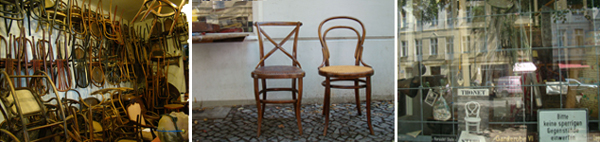 In front of the shop – Fotos Kasia Krenz
Re: The poem / Ulrich Fries / Aug 10 at 4:02 PM / To: Kasia Krenz
Dear Kasia,
…i was gone to a family meeting near Bremen. It is ok with the pics and the publication and i added a little material for it. First, there is a rebound of your poem:
To be
A chair
As heir
Of a tree
Needs me
To make
A fake
Of a she…
And second, here is the pic of the “She”:
You can see the No 14 chair upside down in the center of “She”. 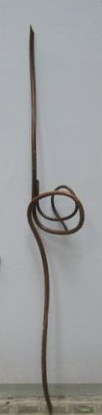 (By the way She is 2.6 meter high). A friend from the Scottish border, a devoted bird watcher, found the name “She” since she saw a “pregnant lady”- as she expressed it – in the sculpture.
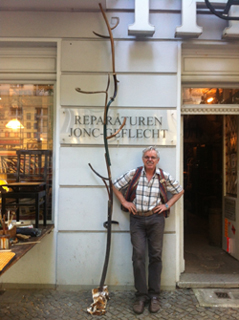 I did not yet go to the shop, but i´ll read your poem tomorrow… …i just came back from Bremen and will have a nap now. When you have your poem published, you might suggest your sister to tell the whole story, that i´m doing sculptures from bentwood chairs… Third, here is me in front of the shop with another sculpture, “Jack And The Beanstalk”.
Have a nice time and enjoy the summer
XXXXXXXXXXXXUlrich
XXXXXXXXXXXXIn front of the shop – Fotos Ulrich Fries
xxxxxxxxxxxxBleibtreustraße 53, Berlin-Charlottenburg, Tel.: 313 46 05
xxxxxxvvvvvvMo. – Fr. 12-18.30, Strd. 11-14
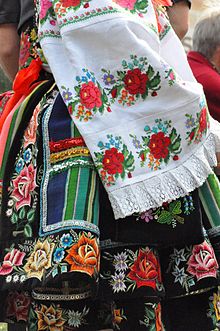 Alles worüber ich hier schreibe, findet man in Wikipedia. Ausser… Weißt jemand, weshalb Polen nichts zum Immaterielles Kulturerbe zugefügt hat?
Everything I write here about, you find in Net, but… Could somebody explain me, why there is nothing from Poland in that list?
To, o czym tu piszę, każdy może znaleźć w Wikipedii. Ale nigdzie nie ma wyjaśnienia, dlaczego Polska nie dodała nic do tej listy?
Puppentheater, Poetry Slam, Prozessionen, Heilwissen und Geigenbaukunst – all das spiegelt die Bandbreite des gelebten Kulturerbes wider. Die Formen immateriellen Kulturerbes sind entscheidend von menschlichem Wissen und Können getragen. Sie  sind Ausdruck von Kreativität und Erfindergeist, vermitteln Identität und Kontinuität. Sie werden von Generation zu Generation weitergegeben und fortwährend neu gestaltet. Zu den Ausdrucksformen gehören etwa Tanz, Theater, Musik und mündliche Überlieferungen wie auch Bräuche, Feste und Handwerkskünste.
Damit das weltweit vorhandene traditionelle Wissen und Können erhalten bleibt, hat die UNESCO 2003 das Übereinkommen zur Erhaltung des immateriellen Kulturerbes verabschiedet. Mehr als 150 Staaten 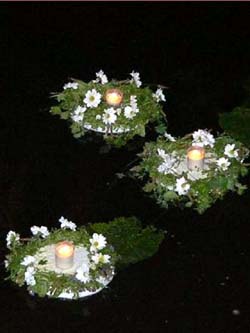 sind inzwischen der völkerrechtlich verbindlichen Konvention, die 2006 in Kraft trat, beigetreten. Die drei Listen des immateriellen Kulturerbes veranschaulichen die Vielfalt lebendiger kultureller Ausdrucksformen aus allen Weltregionen.
In Deutschland ist das UNESCO-Übereinkommen 2013 in Kraft getreten. Schrittweise wird ein Verzeichnis des hierzulande gepflegten immateriellen Kulturerbes erstellt. Das bundesweite Verzeichnis soll von Jahr zu Jahr wachsen und langfristig die Vielfalt kultureller Ausdrucksformen in und aus Deutschland sichtbar machen.
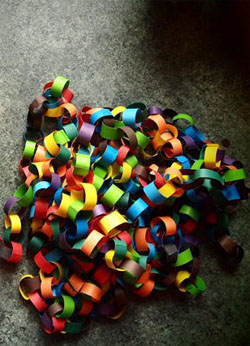 Czym jest niematerialne dziedzictwo kulturowe?
Bardzo ważną częścią dziedzictwa oprócz zabytków, dzieł sztuki i kolekcji cennych eksponatów jest także tradycja, żywe niematerialne przejawy kultury odziedziczone po przodkach i przekazywane kolejnym pokoleniom.
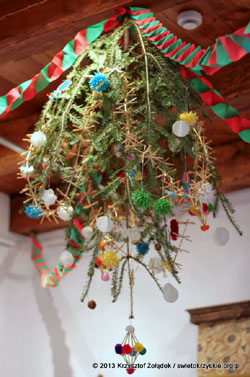
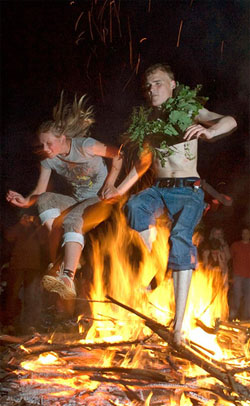 UNESCO Intangible Cultural Heritage Lists
are established by UNESCO aiming to ensure the better protection of important intangible cultural heritages worldwide and the awareness of their significance. Through a compendium of the different oral and intangible treasures of humankind worldwide, the program aims to draw attention to the importance of safeguarding intangible heritage, which has been identified by UNESCO as an essential component and a repository of cultural diversity and creative expression.
The programme currently compiles two lists. The longer Representative List of the Intangible Cultural Heritage of Humanity comprises cultural “practices and expressions [that] help demonstrate the diversity of this heritage and raise awareness about its importance.” The shorter List of Intangible Cultural Heritage in Need of Urgent Safeguarding is composed of those cultural elements that concerned communities and countries consider require urgent measures to keep them alive.
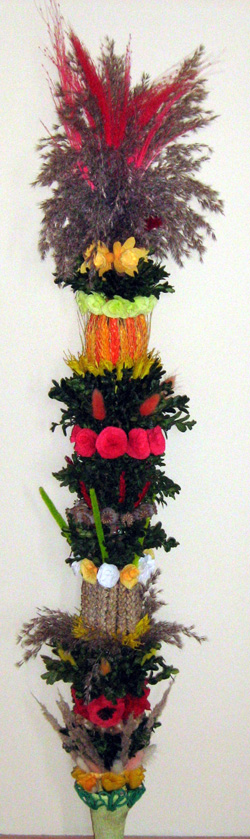 The programme was established in 2008, when the Convention for the Safeguarding of Intangible Cultural Heritage took effect. Prior to this, a project known as the Masterpieces of the Oral and Intangible Heritage of Humanity has already been active in recognizing the value of intangibles such as tradition, custom and cultural spaces and the local actors who sustain these forms of cultural expressions through a Proclamation. Identification of the Masterpieces also entails the commitment of states to promote and safeguard these treasures, while UNESCO finances plans for their conservation. Started in 2001 and held biennially until 2005, a total of three Proclamations occurred, encompassing 90 forms of intangible heritage around the world.
The 90 previously proclaimed Masterpieces have been incorporated into the Representative List of the Intangible Cultural Heritage of Humanity as its first entries, to be known as elements.Subsequent elements will be added following the assessment of nominations submitted by national governments acceding to the UNESCO Convention, termed as member states, who are each allowed to submit a single candidature file, in addition to multi-national candidatures. A panel of experts in intangible heritage and an appointed body, known as the Intergovernmental Committee for the Safeguarding of Intangible Cultural Heritage, then examine each of the nominations before officially inscribing the candidates as elements on the List.
76 more elements were added on 30 September 2009, during the fourth session of the Committee, and a further 47 in 2010.


