zapraszamy na inaugurację nowego semestru tym razem w sali wykładowej Uniwersytetu Humboldtów przy Unter der Linden 6.
Pierwszy po pandemii wykład odbędzie się
16 września 2022 roku o godz. 18.00 w sali 2094.
Z tłumaczeniem symultanicznym na niemiecki
Tematem wiodącym w tym semestrze będzie “Nowa humanistyka”
Prof. Przemysław Czapliński poświęci swój wykład tematowi:
„Nowa humanistyka: sojusze i konflikty”
Przemysław Czapliński – profesor zwyczajny; historyk literatury polskiej i europejskiej XX i XXI wieku, eseista, tłumacz, krytyk literacki; współtwórca Zakładu Antropologii Literatury (UAM, Poznań), dyrektor Centrum Humanistyki Otwartej przy UAM, członek-korespondent Polskiej Akademii Nauk. Ostatnie publikacje: Polska do wymiany (2009), Resztki nowoczesności (2011), Poruszona mapa (2016), Literatura i jej natury (2017; współautorzy: Joanna B. Bednarek, Dawid Gostyński). Redaktor tomów zbiorowych – m. in.: O jeden las za daleko. Demokracja, kapitalizm i nieposłuszeństwo ekologiczne w Polsce (współredaktorzy: J.B. Bednarek, D. Gostyński; 2019), Tożsamość po pogromie. Świadectwa i interpretacje Marca ’68 (współredaktor: Alina Molisak, Warszawa 2019). Visting professor Uniwersytetu w Heidelbergu (2017) i Moguncji (2020). Laureat nagród: im. Ludwika Frydego (1997), Fundacji im. Kościelskich (1998), im. Kazimierza Wyki (2004), im. Jana Długosza (2017), Marszałka Województwa Wielkopolskiego (2019). Przedmiot badań: literatura i problemy późnej nowoczesności. Wkrótce ukaże się książka To wróci, Przeszłość i przyszłość pandemii (red.: P. Czapliński, J.B. Bednarek).
Tytuł wykładu: „Nowa humanistyka: sojusze i konflikty”.
Wykład zostanie poświęcony dwóm przeciwstawnym zjawiskom, które charakteryzują współczesną humanistykę. Jedno z nich polega na stopniowym rozpuszczaniu granic między dziedzinami naukowymi, drugie – na krystalizowaniu się postawy oporu. Sojusze między humanistyką, prawem, socjologią, informatyką, ekonomią i wieloma innymi dziedzinami nadają humanistyce charakter uniwersalnego koalicjanta, zacierają wyrazistość dotychczasowej profesji i utrudniają odpowiedź na pytanie, czym humanista się zajmuje. Zatarte oblicze nabiera jednak wyrazistości, kiedy weźmiemy pod uwagę rosnące zaangażowanie humanistyki w rozpoznawanie i diagnozowanie współczesnych konfliktów – społecznych, ekonomicznych, ekologicznych czy prawnych. Pytanie zasadnicze brzmi: w jaki sposób rozmyty profesjonalizm sprzyja zwiększonej odpowiedzialności? Na jakiej podstawie humanista, który może zajmować się niemal wszystkim, określa, czego powinien bronić?
Moderacja: dr habil. Brygida Helbig
Życzymy dużo przyjemności. Rada Programowa UTP
Meine Damen und Herren, liebe Freunde,
wir laden Sie ein zur Eröffnung des neuen Semesters, diesmal in den Hörsaal der Humboldt-Universität Unter der Linden 6. Der erste Vortrag nach der Pandemie findet 16. September 2022 um 18.00 Uhr im Raum 2094 statt.
Mit Simultanübersetzung ins Deutsche
Leitthema: Der Neue Humanismus
Przemysław Czapliński – ordentlicher Professor; Literaturhistoriker mit dem Forschungsschwerpunkt polnische und europäische Literatur des 20. Und 21. Jahrhunderts, Essayist, Übersetzer, Literaturkritiker; Mitbegründer der Forschungsstelle für Literaturanthropologie der Universität Poznań (UAM), Direktor des Zentrums für freie Geisteswissenschaften an der UAM, korrespondierendes Mitglied der Polnischen Akademie der Wissenschaften. Zuletzt publiziert: Polska do wymiany [Polen zum Auswechseln] (2009), Resztki nowoczesności [Überbleibsel der Modernität] (2011), Poruszona mapa [Verrutschte Landkarte] (2016), Literatura i jej natury [Literatur und ihre Naturen] (2017; Mitverfasser: Joanna B. Bednarek, Dawid Gostyński). Herausgeber von Sammelbänden – u.a.: O jeden las za daleko. Demokracja, kapitalizm i nieposłuszeństwo ekologiczne w Polsce [Einen Wald zu weit. Demokratie, Kapitalismus und ökologischer Ungehorsam in Polen] (Mitherausgeber: J.B. Bednarek, D. Gostyński; 2019), Tożsamość po pogromie. Świadectwa i interpretacje Marca ’68 [Identität nach dem Pogrom. Zeugnisse und Interpretationen] (Mitherausgeberin: Alina Molisak, Warszawa 2019). Gastprofessor an der Ruprecht-Karls-Universität Heidelberg (2017) und der Johannes-Gutenberg-Universität Mainz (2020). Preisträger folgender Auszeichnungen: Ludwik Fryde-Preis (1997), Preis der Kościelski-Stiftung (1998), Kazimierz-Wyka-Preis (2004), Jan-Długosz-Preis (2017), Preis des Marschalls der Woiwodschaft Wielkopolskie (2019). Forschungsschwerpunkte: Literatur und Probleme der späten Moderne. Demnächst erscheint die Buchpublikation To wróci, Przeszłość i przyszłość pandemii [Das kommt wieder. Zur Vergangenheit und Zukunft der Pandemie] (Hgg.: P. Czapliński, J.B. Bednarek).
Titel des Vortrags: „Neue Geisteswissenschaften: Bündnisse und Konflikte“. Der Vortrag wird zwei entgegengesetzten Phänomenen gewidmet, welche die zeitgenössischen Geisteswissenschaften prägen: Das eine beruht auf der stufenweisen Verwischung der Grenzen zwischen den Wissenschaftsgebieten, und das andere zeigt, wie sich Widerstandshaltungen herauskristallisieren. Die Bündnisse zwischen Geisteswissenschaft, Jura, Soziologie, Informatik, Ökonomie und vielen anderen Gebieten haben den Charakter einer universellen Bündnispartnerschaft, sie verwischen die Konturen der bisherigen Berufsfelder und erschweren die Beantwortung der Frage, womit sich der Geisteswissenschaftler befasst. Das verschwommene Antlitz des Faches gewinnt allerdings an Deutlichkeit, wenn wir das Engagement der Geisteswissenschaftler in die Erkennung und Diagnostizierung der zeitgenössischen – sozialen, ökonomischen und ökologischen oder rechtlichen – Konflikte berücksichtigen. Die grundsätzliche Frage lautet: Auf welche Weise begünstigt die konturschwache Professionalität eine verstärkte Bereitschaft zur Verantwortung? Was nimmt ein Geisteswissenschaftler – der sich ja mit beinahe jeder Problematik beschäftigen kann – zur Grundlage, wenn er bestimmt, was er verteidigen sollte? Moderation: Dr. habil. Brygida Helbig
Die Veranstaltungsreihe „Fehlende Hälfte der Geschichte“ ist ein Versuch, die polnisch-deutsche Geschichte zu vervollständigen, indem es an Frauen erinnert – vergessene Heldinnen, die aus den Seiten der Geschichte gelöscht wurden, polnische Frauen, die vor 100 Jahre gemeinsam mit Frauen in Deutschland um ihre Rechte gekämpft haben, die später die Opfer des Krieges waren, aber auch für die Freiheit gekämpft haben. Wir erinnern an die Polinnen in Berlin, die von dem Verbrecher-Regime verfolgt, gefoltert, umgebracht und danach noch in die Vergessenheit gebannt wurden. Vor dem Hintergrund des Krieges in der Ukraine hat die Geschichte eine völlig neue Dimension, die sehr relevant und aktuell ist.
Brakująca część historii. Irena Bobowska, zapomniana bohaterka.
DYSKUSJE / PERFORMANCE / WYSTAWA / KONCERTY
4 Miejsca / 4 Terminy / 4 Tematy / 8 Wierszy
Projekt “Brakująca część historii” jest próbą uzupełnienia polsko-niemieckiej historii poprzez przypomnienie kobiet – zapomnianych bohaterek wymazanych z kart historii, Polek, które 100 lat temu walczyły o swoje prawa razem z kobietami w Niemczech, które później stały się ofiarami wojny, ale również walczyły o wolność. Przypominamy o polskich kobietach w Berlinie, które były prześladowane, torturowane i zabijane przez zbrodniczy reżim, a następnie wymazane z kart historii. W kontekście wojny na Ukrainie temat ten zyskuje zupełnie nowy i aktualny wymiar.
Unterdrückung
Räume der Gewalt, Räume der Unterdrückung und Räume der Freiheit: Bei der Unterdrückung geht es nicht nur um Gefängnisse, Mauern und Gitter. Die Unterdrückung findet in vielen Bereichen statt – kulturell, sozial, politisch, religiös. Was unterdrückt uns, Frauen, heute? Und wie gehen wir damit um?
15. September 2022 (Donnerstag), 18.00 Uhr | Kulturkirche Nikodemus, Nansenstraße 12, 12047 Berlin (Neukölln)
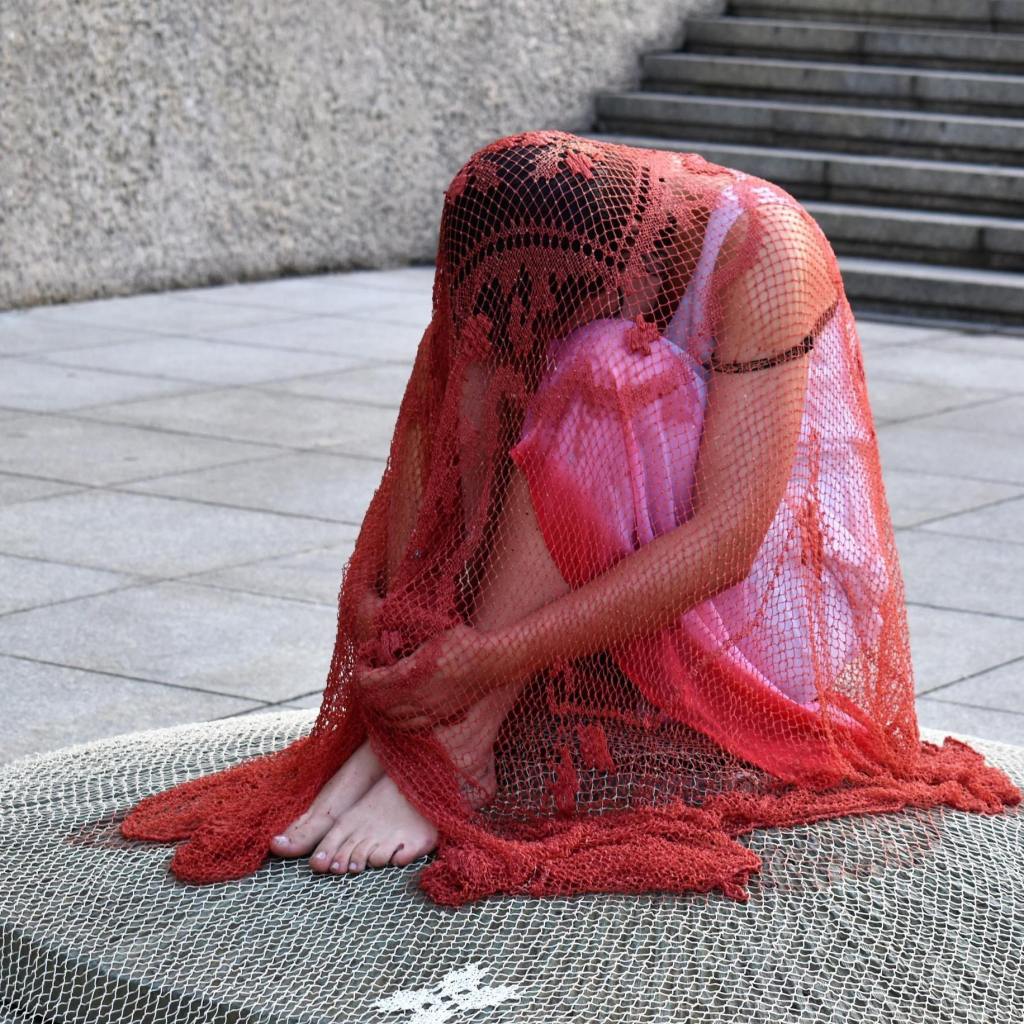
Karen Kandzia: Performance Alles wird gut / Denkmal des polnische Soldaten und deutschen Antifaschisten, Volkspark Friedriechshain, 13.09.2022. Foto: Ela Kargol
Diskussion mit: Marta Ansilewska-Lehnstaedt / Historikerin, Gedenkstätte Deutscher Widerstand www.gdw-berlin.de Zofia Nierodzińska /Kuratorin, Künstlerin, Autorin, Aktivistin. Stellvertretende Direktorin der Galerie Arsenal in Poznań znierodzinska.com Marina Wesner /Architektin, Architekturhistorikerin, Autorin www.marinawesner.de
Konzert: Helmut Mittermaier |www.guruclub.de/mittermaier/ Musiker und Komponist. Studierte an der UdK Berlin Experimentelle Klanggestaltung. Kompositionen für Konzert, Theater, Radio und Film. Radioautor Hörspiel und Feature (SWR, Deutschlandfunk Kultur).
Konzeption und Durchführung: Anna Krenz (Dziewuchy Berlin); Ewa Maria Slaska (ewamaria.blog) Team: Miłosława Ryżczak, Karen Kandzia, Elżbieta Kargol, Jemek Jemowit Texte: Anna Krenz, Ewa Maria Slaska Grafik: Anna Krenz Übersetzungen: Ewa Maria Slaska, Elżbieta Jagiełło, Dorota Cygan Fotos: Maciej Soja (Soja Photography / facebook.com/SojaPhotography) Video: Jasha Seibel
UWAGA UWAGA ACHTUNG ACHTUNG!!! DIE VERANSTALTUNG WURDE VERSCHOBEN / WYDARZENIE W NOWYM TERMINIE!!!
DIENSTAG / WTOREK 13.09.2022 – 18:00
Fehlende Hälfte der Geschichte. Irena Bobowska, die vergessene Heldin. Die Veranstaltungsreihe „Fehlende Hälfte der Geschichte“ ist ein Versuch, die polnisch-deutsche Geschichte zu vervollständigen, indem es an Frauen erinnert – vergessene Heldinnen, die aus den Seiten der Geschichte gelöscht wurden, polnische Frauen, die vor 100 Jahre gemeinsam mit Frauen in Deutschland um ihre Rechte gekämpft haben, die später die Opfer des Krieges waren, aber auch für die Freiheit gekämpft haben. Viele von ihnen haben in Berlin gehandelt oder sind dort ermordet. Vor dem Hintergrund des Krieges in der Ukraine hat die Geschichte eine völlig neue Dimension, die sehr relevant und aktuell ist.
Projekt graficzny: Anna Krenz
Wie viel können wir aus der Geschichte lernen und wie können wir darüber sprechen? Wer waren die Frauen, die polnischen Frauen, die für die Freiheit gekämpft haben? Wie können wir die Erinnerung an die vergessenen Heldinnen wachhalten? Wie können gemeinsame historische Debatten und Kunst zu einem tieferen Verständnis beitragen und eine Wiederholung der Geschichte vermeiden?
In den letzten Jahren gab es in Berlin eine Debatte über Gedenkstätten und den möglichen Standort eines Denkmals für polnische Opfer des Nationalsozialismus. Die Debatte war lang, sie fand unter Männern in verschiedenen Positionen statt, unter Politikern, im Bundestag. Frauen, insbesondere junge Frauen, nahmen daran nicht teil. Das Projekt ist eine Form des gesellschaftlichen Bürger:innendialogs über Gedenkstätten in Berlin im Kontext von Frauen und aus der Sicht von Frauen.
Unsere Protagonistin ist Irena Bobowska, eine Posener Dichterin, die im Alter von 22 Jahren von den Nazis in Berlin ermordet wurde. Sie steht für uns symbolisch für all diejenigen jungen begabten Frauen, die im Kriege ermordet, vernichtet, verbannt und später von der Nachwelt ins Vergessen gebannt worden sind.
Bobowskas Gedichte werden performativ von der jungen polnisch-deutschen Schauspielerin Karen Kandzia vorgetragen, die ein Spiegelbild von Bobowska, einer weiteren Protagonistin, sein wird und der Geschichte eine zeitgenössische Dimension verleiht. Die Reihe besteht aus 4 Veranstaltungen mit Performative Lesungen von Bobowskas Gedichte, mit Diskussionen mit eingeladenen Expertinnen und eine Ausstellung mit Informationen und ein Porträt sowie Werke von Irena Bobowska und den historischen und Kontext.
Einladung zum:
KRIEG / WOJNA 13. September 2022 (Dienstag), 18.00 Uhr | „Denkmal für den Kampf für unsere und Ihre Freiheit“, Virchowstraße, 10249 Berlin (Volkspark Friedrichshain)
Performance: Karen Kandzia Es reden: Aleksandra Puciłowska / polnische Feministin, Aktivistin und Autorin in Berlin Oleksandra Bienert / Ukrainische Forscherin und Menschenrechtsaktivistin Cori Obst / Deutsche Aktivistin Frauen & Aids Konrad Kozaczek / polnischer Philosophie Student (feat. Dorota Cygan) Agnieszka Fetzka / polnische Aktivistin der Behinderten Bewegung (feat. Ewa Maria Slaska)
UNTERDRÜCKUNG / ZNIEWOLENIE 15. September 2022 (Donnerstag), 18.00 Uhr | Kulturkirche Nikodemus, Nansenstraße 12, 12047 Berlin (Neukölln) Performance: Karen Kandzia Diskussion mit: Marta Ansilewska-Lehnstaedt / Historikerin, Gedenkstätte Deutscher Widerstand www.gdw-berlin.de Zofia Nierodzińska /Kuratorin, Künstlerin, Autorin, Aktivistin. Stellvertretende Direktorin der Galerie Arsenal in Poznań znierodzinska.com Marina Wesner /Architektin, Architekturhistorikerin, Autorin www.marinawesner.de Ausstellung: “Frauengefängnis Barnimstraße” von Marina Wesner Konzert: Helmut Mittermaier | www.guruclub.de/mittermaier/
ERINNERUNG / PAMIĘĆ 22. September 2022 (Donnerstag), 18.00 Uhr | Städtischer Friedhof Altglienicke, Schönefelder Ch. 100, 12524 Berlin (Treptow – Köpenick) Schirmherrschaft Herr Oliver Igel, Bezirksbürgermeister von Berlin Treptow-Köpenick Performance: Karen Kandzia Diskussion mit: Franziska Bruder / Lagergemeinschaft Ravensbrück Freundeskreis e.V. lg-ravensbrueck.vvn-bda.de dr Iwona Dadej / Instytut Historii PAN cbh.pan.pl Klaudyna Droske / Leiterin der Geschäftsstelle der Polonia polonia-biuro.de Nora Hogrefe / Leiterin der Koordinierungsstelle Historische Stadtmarkierungen im Verein Aktives Museum Faschismus und Widerstand in Berlin. www.aktives-museum.de Anja Witzel / Referentin der Berliner Landeszentrale für politische Bildung Konzert: Warnfried Altmann | www.warnfried-altmann.de ***************** Liebe Besucher*innen, laut Informationspflicht nach Art. 14 DSGVO weisen wir darauf hin, dass während dieser Veranstaltung Foto- und Videoaufnahmen angefertigt werden. Diese verwerten wir für Zwecke der Berichterstattung und der Öffentlichkeitsarbeit. Dazu werden die Aufnahmen in diversen lokalen und sozialen Medien, wie z.B. Internetauftritt (www.dziewuchyberlin) und unseren Facebook-Seiten veröffentlicht. Rechtsgrundlage für die Verarbeitung der Foto- und Videodaten von Ihnen ist Art. 6 Abs. 1 (f) DS-GVO, da ein berechtigtes Interesse daran besteht, die Öffentlichkeit über die Aktivitäten des Dziewuchy Berlin zu informieren und unsere Gruppenaktivitäten zu dokumentieren. Empfänger dieser Daten sind somit intern die mit Öffentlichkeitsarbeit betrauten Mitglieder*innen unserer Gruppe und extern die regionale Presse sowie Redaktionen und Redaktionssysteme von Printmedien, Onlinemedien und international operierende Social Media-Anbieter. Datenschutzrechtlich Verantwortlicher ist die Gruppe Dziewuchy Berlin. ****** PL ******** Brakująca część historii. Irena Bobowska, zapomniana bohaterka. Projekt “Brakująca część historii” jest próbą uzupełnienia polsko-niemieckiej historii poprzez przypomnienie kobiet – zapomnianych bohaterek wymazanych z kart historii, Polek, które 100 lat temu walczyły o swoje prawa razem z kobietami w Niemczech, które później stały się ofiarami wojny, ale również walczyły o wolność. Wiele z nich działało w Berlinie lub zostało tu zamordowanych. W kontekście wojny na Ukrainie temat ten zyskuje zupełnie nowy i aktualny wymiar. Projekt ma być kolejnym przyczynkiem do debaty o historii w odniesieniu do teraźniejszości, szczególnie w obliczu kolejnej wojny w Europie. Kim były te kobiety, Polki, które walczyły o wolność? Jak wiele możemy się nauczyć z historii i jak o niej rozmawiać? Jak możemy zachować pamięć o zapomnianych bohaterkach? W jaki sposób wspólne debaty historyczne i sztuka mogą przyczynić się do głębszego zrozumienia i uniknąć powtórzenia historii? W ostatnich latach w Berlinie toczy się dyskusja na temat miejsc pamięci i ewentualnej lokalizacji pomnika polskich ofiar narodowego socjalizmu. Debata była długa, odbywała się wśród ludzi na różnych wysokich szczeblach i naukowych stanowiskach, wśród polityków, w Bundestagu. Kobiety, zwłaszcza młode, reprezentantki społeczeństwa obywatelskiego, czy nie należące do zamkniętych kręgów naukowych i osoby zainteresowane, nie brały w tym udziału. Bohaterką projektu jest Irena Bobowska, poznańska poetka, która w wieku 22 lat została zamordowana przez hitlerowców w Berlinie. Dla nas jest ona symbolem tych wszystkich młodych, utalentowanych kobiet, które zostały zamordowane, zniszczone, torturowane w czasie wojny, a potem wygnane w niepamięć przez potomnych. Wiersze Bobowskiej recytowane będą performatywnie przez młodą polsko-niemiecką aktorkę, Karen Kandzia, która będzie odbiciem Ireny Bobowskiej, drugą protagonistką, nadającą historii współczesny wymiar. Cykl składa się z 4 wydarzeń, podczas których odbędą się performatywne czytania wierszy Bobowskiej, dyskusje z zaproszonymi ekspertkami oraz wystawa zawierająca informacje o Irenie Bobowskiej, jej portrety oraz kontekst historyczny. ************ Ein Projekt von: Dziewuchy Berlin www.dziewuchyberlin.org; Polkopedia www.polkopedia.org; Ambasada Polek e.V.i.G. In Kooperation mit: Regenbogenfabrik; Polonijna Rada Kobiet+ ************** Gefördert durch:
Ab dem 10. September präsentiert das Berliner ZAK /Zentrum für Aktuelle Kunst / in der Zitadelle Spandau die Gruppenausstellung „Ausnahmezustand. Polnische Fotokunst heute“, die bisher größte Schau polnischer Fotografie in Deutschland.
Ausnahmezustand. Polnische Fotokunst heute mit Werken von Filip Berendt, Kuba Dąbrowski, Karolina Gembara, Weronika Gęsicka, Aneta Grzeszykowska, Magda Hueckel, Pawel Jaszczuk, Irena Kalicka, Anna Kieblesz, Zuza Krajewska, Adam Lach & Dyba Lach, Diana Lelonek, Michał Łuczak, Rafał Milach, Igor Omulecki, Anna Orłowska, Witek Orski, Zosia Promińska, Agnieszka Rayss, Łukasz Rusznica, Michał Siarek, Michał Szlaga, Dominik Tarabanski, Łukasz Wierzbowski, Karolina Wojtas und Piotr Zbierski Eröffnung: Freitag, 9. September 2022, 19Uhr Laufzeit: 10. September 2022 – 1. Januar 2023 Ort: ZAK – Zentrum für Aktuelle Kunst, in der Zitadelle Spandau Am Juliusturm 64, 13599 Berlin | Fr. – Mi., 10 – 17Uhr, Do., 13 – 20Uhr
Pressetext:
Die Gruppenausstellung „Ausnahmezustand. Polnische Fotokunst heute“ und gewährt einen faszinierenden Einblick in die zeitgenössische Fotografie Polens. Vorgestellt werden 26 Stellvertreterinnen der jüngeren und der mittleren Generation polnischer Fotografinnen und Fotokünstlerinnen, von denen viele bisher kaum oder gar nicht in Deutschland bekannt sind. Zu Unrecht, wie die Besucherinnen feststellen werden. Neben vielen Formen einer ästhetisch und formal frischen Dokumentarfotografie reicht das Spektrum des Gezeigten von der Porträt- und Selbstporträtfotografie über Stillleben und Landschaftsfotografie bis hin zu freien künstlerischen Ansätzen in der Abstraktion. Präsentiert werden die Werke als klassische Tafelbilder, in Projektionen sowie in objekthaften Installationen.
Unter anderem werden Rafal Milachs Fotografien von den Protesten gegen die Ende 2020 verabschiedete Abtreibungsgesetzgebung zu sehen sein, die es Polinnen praktisch unmöglich macht, einen Schwangerschaftsabbruch im eigenen Land vornehmen zu lassen (Strajk), sowie Aneta Grzeszykowskas Annäherung an ihren eigenen Körper, indem sie Teile von ihm aus Schweinehaut nachbildet (Selfie). Von der interdisziplinär arbeitenden Diana Lelonek wird es Bilder aus ihrem jüngst erschienenen Buch Wasteplants Atlas geben, in der sie pflanzliche Lebensformen auf illegal entsorgtem Wohlstandsmüll untersucht und kategorisiert. Und Pawel Jaszczuk widmet sich in seiner Serie ¥€$U$ der Kommerzialisierung der Muttergottes und Jesus in seinem katholischen Heimatland.
Ein Leseraum mit zahlreichen Fotobüchern und Katalogen von Ausstellungsteilnehmern und -teilnehmerinnen als auch zahlreicher nicht direkt an der Ausstellung Beteiligter wird geneigten Besucherinnen die Möglichkeit geben, noch tiefer in die polnische Fotoszene einzutauchen, die sich anschickt, auch international stärker Fuß zu fassen. Wie wichtig dieses nach Außen gerichtete Engagement für polnische Fotografinnen ist, wird in den parallel zur Ausstellung angebotenen Vorträgen und Podiumsgesprächen deutlich werden, in denen es u.a. um die schlechter werdenden Arbeits- und Ausstellungsbedingungen für Kreative in Polen geht. Die unter der aktuellen nationalkonservativen Regierung, oftmals im Zusammenspiel mit Teilen des katholischen Klerus, eingeleiteten Maßnahmen zur Schwächung rechtsstaatlicher Strukturen sowie geschürte Ressentiments gegen Minderheiten wie nichteuropäische Flüchtlinge und LGBT+-Mitbürgerinnen, ebenso wie der wachsende Nationalismus sind Themen, die viele Fotografinnen natürlich in ihren Arbeiten aufnehmen. Dies jedoch birgt inzwischen tatsächlich das Risiko, von Stipendien und anderen staatlichen Unterstützungen sowie von Ausstellungsmöglichkeiten in einer Vielzahl von staatlich subventionierten Museen und Institutionen ausgeschlossen zu werden.
Die nun geplante Ausstellung, die die bisher größte Schau polnischer Fotografie in Deutschland sein wird, soll einen Beitrag zur Vertiefung der deutsch-polnischen Nachbarschaftsverhältnisse darstellen. Ein Interesse an dem östlichen Nachbarn Deutschlands und seiner Kultur ist hierzulande in den vergangenen Jahren größer geworden. Hier möchte die Ausstellung einen verbindenden Beitrag leisten.
W roku 1978 Niemen zaśpiewał pieśń wojów Bolesława Krzywoustego.
Naszym przodkom wystarczały ryby słone i cuchnące, My po świeże przychodzimy, w oceanie pluskające! Ojcom naszym wystarczało, jeśli grodów dobywali, A nas burza nie odstrasza ni szum groźny morskiej fali. Nasi ojce na jelenie urządzali polowanie, A my skarby i potwory łowim, skryte w oceanie!
Basia do dziś jest pewna, że Niemen, śpiewając tę pieśń, wjechał na białym koniu do Bałtyku, ale nikt nic o tym nie wie, nie ma tej informacji w internecie, a Stefan, z którym Basia wiele lat potem rozmawiała o tym wydarzeniu, pokiwał tylko głową i powiedział, że Basia najwyraźniej połączyła w pamięci Niemena z Bianką Jagger, i że to nie Niemen wjechał na białym koniu do Bałtyku, ale żona Jaggera ubrana w długą czerwoną suknię wjechała do londyńskiego klubu Studio 54. A do Bałtyku wjechał konno generał Haller 10 lutego 1920 roku, czcząc odzyskanie przez Polskę niepodległości. Jako stara kobieta Bianka Jagger wyparła się zresztą wszystkiego i twierdziła, że zdjęcie było upozowane, a ona nigdy nie wjechała naprawdę na tym koniu do tego klubu. Pokolenie, które dorosło w latach 60, chce jednak wierzyć, że tak było, bo była to część naszej legendy pokoleniowej. A budowaliśmy ją w radosnym trudzie, zmieniając wszystko, co tylko dało się zmienić.
To my zaczęliśmy walczyć o prawa kobiet, mówią ludzie z tego pokolenia, dziś staruszki i staruszkowie, siwowłosi i przygarbieni. To my przestaliśmy jeść mięso. To my zaczęliśmy uprawiać medytację i jeździliśmy do Indii. To za naszych czasów wymyślono pigułkę antykoncepcyjną, a my potrafiliśmy z niej zrobić właściwy użytek. To my nie chcieliśmy kościoła ani kapitalizmu. To my byliśmy hippisami, paliliśmy trawkę i wymyśliliśmy pacyfizm. To my uznaliśmy, że lesbijki to w ogóle nie jest żadna sprawa, a geje są ok, to my byliśmy luzaccy i nie chcieliśmy spędzić życia w pogoni za mamoną. Znacznie bardziej nas interesowała pogoń za mrzonkami. To naszym hasłem było make love no war i to my pokochaliśmy Beatlesów.
Basi wywód Stefana nie przekonał, ale nie miała żadnych dowodów na to, że Niemen wjechał na koniu do Bałtyku i nikt z jej przyjaciół tego nie pamiętał, dała więc w końcu spokój. Wielokrotnie w przypływach nostalgii Basia przeczesywała internet, szukając opowieści o tym, jak Niemen we wspaniałej zielonej szacie, z długimi czarnymi włosami i brodą, wjechał na plaży w Sopocie do Bałtyku. Nigdy nic na ten temat nie znalazła.
Jednak nikt do końca nie wie, jakimi drogami chodzą ludzkie myśli i asocjacje. Niewykluczone więc, że Basia właśnie przez Biankę Jagger po przyjeździe do Ameryki zmieniła imię ze staroświeckiej Barbary na nowoczesną Biankę.
Wolne związki (1978)
Byli więc pokoleniem, które pierwsze wywalczyło sobie różne wolności, jak na przykład wolność od garnituru dla mężczyzn i kostiumiku lub garsonki dla kobiet, prawo do długich włosów i prawo do tego, żeby były potargane. Kobiety nie musiały nosić szpilek, mężczyźni skórzanych wyglansowanych butów. Do wywalczonych przez nich wolności należała również wolna miłość. Dlatego, gdy Andrzej Gwiazda zaprosił go na zebranie założycielskie wolnych związków, Stefan przez krótką chwilę przyglądał się starszemu koledze z nieukrywanym niedowierzaniem. Andrzej był w końcu legendą opozycji, a on i jego żona Joanna byli uważani za zawsze sobie wierną parę bocianów.
Okazało się przecież, że to nie wolna miłość, lecz wolne związki zawodowe. Wolne Związki Zawodowe Wybrzeża podkreślił Andrzej.
Komitet Założycielski zebrał się 29 kwietnia 1978 roku. Wzorem dla gdańszczan była podobna organizacja powołana na Śląsku przez Kazimierza Świtonia. Wolne Związki miały niezależnie od państwa stawać w obronie praw robotniczych i obywatelskich. W Gdańsku działacze związków wydawali biuletyn Robotnik Wybrzeża. Pierwszy numer ukazał się 1 sierpnia 1978. Napisali tam i bardzo w to wierzyli:
W PRL istnieją potężne związki zawodowe zrzeszające miliony pracowników, dysponujące własną prasą, funduszami, lokalami. Mimo to co kilka lat robotnicy wychodzą na ulice i w gwałtowny sposób dopominają się o swoje prawa, narażając się na ataki MO i późniejsze represje. Nawet duże grupy pracowników w przypadku konfliktu z administracją są bezsilne i osamotnione. Sytuacja pojedynczego pracownika skrzywdzonego czy oszukanego jest jeszcze trudniejsza. […]
Nie stawiamy sobie celów politycznych, nie narzucamy naszym członkom, współpracownikom i sympatykom określonych poglądów politycznych i światopoglądowych, nie dążymy do objęcia władzy.
Nasza działalność jest legalna i zgodna z prawem. Każdy człowiek ma naturalne prawo do obrony, do sprawiedliwości i do godnego życia – gwarantuje nam to Konstytucja PRL.
W związkach działali wszyscy, którzy dwa lata później spotkali się na strajku w Stoczni, Bogdan Borusewicz, Joanna Duda-Gwiazda, Andrzej Kołodziej, Maryla Płońska, Alina Pienkowska, Anna Walentynowicz, Lech Wałęsa, Lech Kaczyński, Bogdan Lis. Współpracowali z nimi znani działacze opozycji przedsierpniowej, Leszek Moczulski.
– Nie dążymy do władzy, powiedział Stefan, gdy Basia zapytała, po jaką cholerę zamierza się znowu narażać? – A jak nie dążymy do władzy, to nie ma nas za co karać.
Ale oczywiście oboje dobrze wiedzieli, że władza karze za znacznie mniejsze przewinienia niż niedążenie do władzy.
Basia właśnie wystąpiła w zakładzie pracy o przyznanie działki pracowniczej. W rok później dostali jedną działkę na dwie rodziny, czyli im i Jackom przypadło wspólnie dwieście metrów kwadratowych na terenie nasypów dawnej kolejki z Gdańska do Brętowa. Kolejka dawno nie jeździła, szyny zaraz po wojnie zostały usunięte. Ludzie twierdzili, że zabrano je do Warszawy w ramach akcji “Cały naród buduje swoją stolicę”, a zresztą może, bo i takie krążyły pogłoski, wywieziono je w głąb Rosji Sowieckiej. Wymieniliśmy szyny na Gwiazdę, zażartował kiedyś Stefan i “coś w tym było”, Andrzej bowiem powrócił z Kazachstanu w roku 1946.
Pisząc w roku 2021 tę powieść znalazłam takie informacje: W roku 1909 Prusy postanowiły wybudować linię kolejową z Gdańska Wrzeszcza (Langfuhr) do Starej Piły przez Gdańsk i Brętowo. Linia miała mieć długość 19,5 kilometra i była fragmentem magistrali stanowiącej najkrótsze połączenie Gdańska z Berlinem, o długości około 500 km. Uroczysty przejazd, inaugurujący rozpoczęcie ruchu kolejowego, miał miejsce 1 maja 1914 roku. W okresie międzywojennym linię obsługiwały najpierw cztery a potem trzy pary pociągów. Linię przecinała granica polsko-niemiecka, a w Kiełpinie podróżni przechodzili odprawę paszportową i celną. Podczas II wojny wzdłuż nasypu kolejki wykopano rowy przeciwpancerne. W roku 1945 Niemcy, wycofując się z Gdańska przed nadciągającą Armią Czerwoną, wysadzili wiadukty na trasie kolejki. W roku 1946 szyny usunięto, Wikipedia pisze, że trafiły na odbudowywaną trasę Lębork – Maszewo Lęborskie. A tu były potrzebne, bo szyny tej linii rzeczywiście wywieziono do ZSRR. Lud zatem “wiedział swoje”. Ale może to nieprawda, bo może jednak ułożono te gdańskie szyny na trasie między Malborkiem a Kwidzynem. Czy to zresztą ważne? Tak czy owak, pozostały tylko nasypy i resztki wiaduktów. Na nasypy fajnie było chodzić wiosną. Rosły tam niewysokie wierzby, które miały świetne grube bazie. Nad rowami kwitły kaczeńce. W latach 70 przy nasypie pojawiły się ogródki działkowe, wyposażane w różne płotki, murki, szopki i studnie, budowane z elementów znalezionych przy rozebranej trasie kolejowej.
Działka pracownicza to była tradycyjnie wręcz domena zakładowych związków zawodowych. Ponadto zajmowały się one organizacją Dnia Kobiet i uroczystości gwiazdkowych dla dzieci pracowników, załatwiały przydziały węgla i dostawę zapasów ziemniaków na zimę, ewentualnie organizowały wyjazd na grzybobranie. Bardzo rzadko związki interesowały się tym, czym naprawdę powinny się były zajmować, czyli organizacją pracy w zakładzie, przestrzeganiem przepisów BHP oraz zachowywaniem prawidłowych relacji pomiędzy ilością i jakością pracy a wynagrodzeniem.
Tym właśnie postanowiły się zająć Wolne Związki Zawodowe Wybrzeża, które w roku 1980 przygotowały listę postulatów, zawierającą kilkanaście żądań skierowanych do władz zakładowych, lokalnych i państwowych. Były one uszeregowane od najprostszych – takich, jak odzież ochronna, a kończyły się żądaniem prawa do utworzenia Związków Zawodowych niezależnych od partii. Wielkim osiągnięciem wolnych związków był fakt, że władze wojewódzkie oficjalnych związków zawodowych w 1980 roku przyjęły cztery z tych postulatów i postanowiły przedłożyć je na zbliżającym się właśnie zjeździe ogólnopolskim! Cztery! Gdy Stefan opowiadał o tym Basi, widać było, jaki jest dumny, że tyle udało się osiągnąć. Tak było w sierpniu z małej litery.
W Sierpniu z dużej litery wolne związki stworzyły NSZZ „Solidarność”, która zażądała realizacji wszystkich postulatów i dodała jeszcze kilka od siebie. Nota bene warto czasem przypomnieć sobie, jaka to była lista, czego żądali wówczas stoczniowcy, a z nimi miasto i kraj. Postulaty zostały zapisane na drewnianych tablicach i wywieszone na bramie nr 2 Stoczni Gdańskiej 18 sierpnia 1980 roku. I wydawały się niemożliwie wręcz odważne.
Basia stała pod bramą wraz z innymi kobietami, których mężowie byli na Stoczni, czytała te postulaty i nie wierzyła własnym oczom. Dopiero po latach uświadomiła sobie, jak skromne to były żądania. Tak naprawdę tylko pięć z nich miało charakter umiarkowanie polityczny, reszta dotyczyła życia, zaopatrzenia w żywność, poprawienia sytuacji mieszkaniowej, wprowadzenia sobót wolnych od pracy. Ale oczywiście w czasach komuny wszystko to było niesłychanie odważne. Np. postulat 10: Realizować pełne zaopatrzenie rynku wewnętrznego w artykuły żywnościowe, a eksportować tylko nadwyżki.
Może trzeba tu dodać, że mięso eksportowano do Związku Radzieckiego. A w każdym razie, my, czyli lud, byliśmy o tym przekonani.
Informacje, przetworzone oczywiście “po mojemu”, zawdzięczam dawnej znajomości z dwoma ważnymi działaczami z Trójmiasta: Karolowi Krementowskiemu i Andrzejowi Gwieździe; tym niemniej to chyba oczywiste, że jeśli są tu niejasności albo przekłamania, to odpowiadam za nie ja, a nie oni. Za istotne poprawki dziękuję również Tiborowi Jagielskiemu.
»Worldwide Reading« on September 29, 2022: Novels and Essays by Salman Rushdie
Sehr geehrte Damen und Herren, liebe Freundinnen und Freunde,der Mordanschlag auf Salman Rushdie sitzt uns noch tief in den Knochen. Wir rufen hiermit zu einer »Weltweiten Lesung« des Werkes von Salman Rushdie auf, siehe unten. Viele Autor:innen aus allen Kontinenten unterstützen den Aufruf, so Adonis, Jennifer Clement, Andrei Kurkov, Wole Soyinka, Janne Teller, Bernard-Henri Levy, Peter Schneider, Amir Hassan Cheheltan, Robert Hass und Sergei Lebjedev. Die Autorin Madame Nielsen schlägt vor, dass wir bis zum 29. September überall im öffentlichen Raum »Die Satanischen Verse« mit uns tragen sollten, dass wir das Buch überall aufschlagen und lesen, in Cafés, Parks und der U-Bahn. Elfriede Jelinek regt Autor:innen an, Auszüge davon auf den eigenen Websites zu platzieren, falls die Rechte hierfür jeweils erworben werden können. Herzlich Ulrich Schreiber Festivaldirektor und Programmleiter internationales literaturfestival berlin
Ladies and gentlemen, dear friends,The assassination attempt on Salman Rushdie still has us in shock. We are hereby calling for a »Worldwide Reading« of Salman Rushdie’s works. Please see below. Many authors from all continents support the call, including Adonis, Jennifer Clement, Andrei Kurkov, Wole Soyinka, Janne Teller, Bernard-Henri Levy, Peter Schneider, Amir Hassan Cheheltan, Robert Hass and Sergei Lebjedev. The author Madame Nielsen also suggested that we carry »The Satanic Verses« with us everywhere in public spaces until September 29, and that we open and read the book everywhere, in cafes, parks, subways. Elfriede Jelinek encourages authors to place excerpts on their own websites if the rights can be acquired. Sincerely, Ulrich Schreiber Festival Director and Head of Program international literature festival berlin
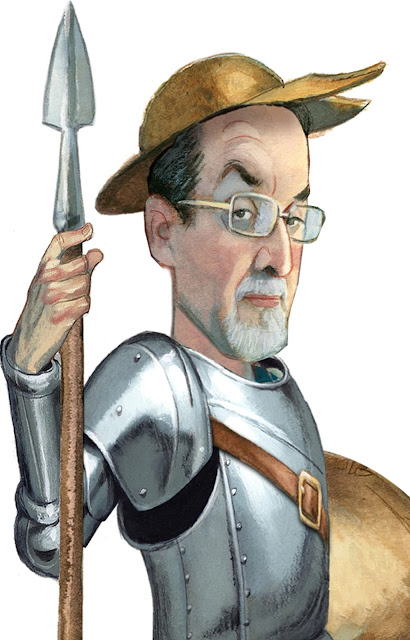
Fernando Vicente
Das internationale literaturfestival berlin [ilb] lädt Einzelpersonen, Schulen, Universitäten, Kulturinstitutionen und Medien ein, am 29. September 2022 an einer »Weltweiten Lesung« aus Salman Rushdies Werken teilzunehmen – von »Mitternachtskinder«, »Die satanischen Verse«, »Joseph Anton« bis zu seinen neuesten Büchern »Sprachen der Wahrheit« und »Victory City«. Mit der Lesung soll ein Zeichen für die Freiheit der Literatur und des öffentlichen Wortes sowie für die Solidarität mit dem Autor gesetzt werden, der Opfer eines grausamen Attentats wurde.
Zu den Erst-Unterzeichner:innen zählen: Adonis [Syrien/ Frankreich], Breyten Breytenbach [Südafrika], Amir Hassan Cheheltan [Iran], Robert Hass [USA], Elfriede Jelinek [Österreich], Sergei Lebjedev [Russland/ Deutschland], Bernard-Henri Levy [Frankreich], Yang Lian [China/ Großbritannien], Alberto Ruy Sánchez [Mexiko], Peter Schneider [Deutschland], Wole Soyinka [Nigeria] und Janne Teller [Dänemark].Auch wenn die konkreten Hintergründe des Attentats und das Motiv des Täters noch nicht geklärt sind, scheint klar, worauf sie vermutlich zurückgehen: auf die Fatwa, die der iranische »Revolutionsführer« Ayatollah Khomeini 1989 gegen Rushdie erlassen hat. Sie forderte die Tötung des in Indien geborenen, britischen Schriftstellers, weil er mit den »Satanischen Versen« angeblich den Islam, den Koran und den Propheten Mohammed beleidigt habe. Bis heute hat das iranische Regime den Aufruf zur Ermordung des Autors nicht zurückgenommen, ebenso wenig wie das Kopfgeld, das es damals auf ihn ausgesetzt hatte. Die wichtigen Medien im Iran applaudieren derzeit dem Attentäter.
Salman Rushdie musste deshalb jahrelang unter intensivem Polizeischutz leben. Mehr als 20 Jahre lang ging man davon aus, dass keine Gefahr mehr für sein Leben bestehe. Doch diese Annahme hat sich durch das blutige Attentat in New York auf schockierende Weise als trügerisch erwiesen. Es macht deutlich, dass die Bedrohung der elementaren Menschenrechte und Freiheiten virulent ist. Der Anschlag auf Rushdie fällt in eine Zeit, in der die demokratische Welt von immer aggressiveren autoritären Mächten unterschiedlichster Prägung in die Defensive gedrängt, wenn nicht – wie in der Ukraine – durch offenen Krieg und ein unglaubliches Ausmaß an Gewalt mit Tod und Zerstörung überzogen wird.Es ist daher dringend geboten, entschlossen aufzustehen und Recht und Menschenwürde zu verteidigen. Mit der Lektüre seiner Romane und Essays können freiheitsliebende Menschen in aller Welt ein Zeichen setzen, dass sie sich von Gewaltandrohungen nicht einschüchtern lassen und sich keinem Versuch beugen, Gedanken in Wort, Schrift und Bild zu unterdrücken oder auszulöschen.
Die Lesungen können überall stattfinden, auch privat im kleinen Kreis, in einer Schule, in einer Kultureinrichtung oder im Radio. Personen und Institutionen, die sich mit einer Lesung am 29. September beteiligen möchten, werden gebeten, uns folgende Informationen zukommen zu lassen: Organisatoren, Ort, Zeit, teilnehmende Akteure, Veranstaltungssprache, ggf. Link zu Ihrer Website. Die E-Mail-Adresse lautet: worldwidereading@literaturfestival.com. Wir bitten die Veranstalter, die Rechte für Lesungen selbst zu klären.
The international literature festival berlin [ilb] invites individuals, schools, universities, cultural institutions and media to participate in a »Worldwide Reading« of Salman Rushdie’s works – from »Midnight’s Children«, »The Satanic Verses«, »Joseph Anton« to his latest books »Languages of Truth« and »Victory City« – on September 29, 2022. The reading is intended to send a signal for the freedom of literature and public speech as well as the solidarity with the author, who was the victim of a horrific assassination attempt.
Among the first signatories of the call are: Adonis [Syria/ France], Breyten Breytenbach [South Africa], Amir Hassan Cheheltan [Iran], Robert Hass [USA], Elfriede Jelinek [Austria], Sergei Lebjedev [Russia/ Germany], Bernard-Henri Levy [France], Yang Lian [China/ UK], Alberto Ruy Sánchez [Mexico], Peter Schneider [Germany], Wole Soyinka [Nigeria] und Janne Teller [Denmark]. Even if the concrete background of the assassination attempt and the motive of the perpetrator have not yet been clarified, it is likely who seems responsible: It goes back to the fatwa that the Iranian »revolutionary leader« Ayatollah Khomeini issued against Rushdie in 1989. It called for the killing of the Indian-born, British writer because he had supposedly insulted the Islam, the Qur’an and the Prophet Muhammad with »The Satanic Verses«. To this day, the Iranian regime has not withdrawn the call to kill the author, just as it has not withdrawn the bounty it placed on his head at the time. The important media in Iran are currently applauding the attacker.
For years, Salman Rushdie therefore had to live under intensive police protection. For more than 20 years, it was assumed that there was no longer any danger to his life. But this assumption has been shockingly proven wrong by the bloody attack in New York. It makes it clear that the threat to elementary human rights and freedoms remains unbroken. Moreover, the attack on Rushdie comes at a time when the democratic world is being forced into the defensive by increasingly aggressive authoritarian powers of various kinds, if not – as in Ukraine – it is overrun with death and destruction through open war and an incredible range of violence.
It is therefore absolutely urgent to stand up firmly and defend law and human dignity. By reading Salman Rushdie’s novels and essays, freedom-loving people all over the world can send a signal that they will not be intimidated by threats of violence and will not bow to any attempt to suppress or annihilate thoughts expressed in speech, writing and images.
Readings can take place anywhere, even privately in a small circle, in a school, in a cultural institution or on the radio. People and institutions who would like to participate with a reading on September 29, 2022 are asked to send us the following information: Organizers, location, time, participating actors, event language, link to your website if applicable. The e-mail address is: worldwidereading@literaturfestival.com. We kindly ask organizers to clear the rights for readings on their own.
Angelika Murawska przedruk artykułu opublikowanego na stronie internetowej Akademia
„Pierre Menard, autor Don Kichota”. Technika zamierzonego anachronizmu i błędnych atrybucji.
Dzięki zabiegowi intertekstualności w utworze Borges’a przestaje obowiązywać naturalny porządek rzeczy i pojawia się miejsce dla innych dopuszczalnych interpretacji. Utwór wykracza nie tylko granice różnorodnego odbioru dzieła, ale także oczekiwania czytelników co do zastosowanych technik. „Przestrzeń hipertekstu jest (…) przestrzenią, w której przestają obowiązywać i tak arbitralne prawa, których dotkliwy wpływ na nasze życie obserwujemy na każdym kroku.” (Pisarski, Ja tu a ty tam 2004) Jednak eksperyment autora idzie dalej. Użycie techniki zamierzonego anachronizmu i błędnych atrybucji sprawia, że czytelnik przestaje patrzeć na dzieło dosłownie, jest zmuszony do głębszych przemyśleń w różnych kontekstach: literatury, historii czy tradycji. Główny bohater kreuje dzieło widzialne przez odtworzenie dzieła Cervantesa. Powstają fragmenty, które są pozornie identyczne z hypotekstem. Jest początek wieku XX. Menard postanawia nie tyle przełożyć dzieło Hiszpana, co napisać je „od nowa”. Stawia sobie jednak warunek, że posiądzie najpierw całą wiedzę autora książki z XVII wieku. Osiąga on swój zamierzony cel, jego własne dzieło jest identyczne z tekstem pierwotnym. Utwory są zgodne co do przecinka i kropki nad „i”. Całe zdarzenie jest relacjonowane przez narratora, który ma wgląd do tych dzieł i na swój własny sposób dokonuje ich interpretacji. Czytelnik ma z początku wrażenie, że powstaje nowy utwór. Kluczowa jest jednak analiza narratora, który w pewien sposób naprowadza odbiorcę na właściwy trop przez porównanie stylów i przytoczone fragmenty. Relacja narratora jest wyrazem użycia techniki błędnych atrybucji. To dzięki niemu i jego trafnym komentarzom na temat obydwu tekstów autorowi przypisane jest to, że napisał dzieło bardziej wartościowe od Cervantesa, gdyż jest to dzieło bardziej świadome. Co więcej, wychwala on czyn Menarda, który „postanowił wyprzedzić bezużyteczność” i urozmaicił sztukę lektury, zezwalając na przenoszenie się w czasie rzeczywistym. W opowiadaniu wszystko dzieje się na przekór namacalnemu porządkowi. Język utworu niegdyś współczesny staje się archaiczny, powstaje nowe dzieło, nowe doświadczenia mają miejsce, nowe interpretacje pojawiają się: powtórzona przez Menarda wypowiedź Don Kichota „przeciwko literaturze na korzyść broni” zyskała nowe znaczenie i była rozpatrywana przez baronową da Bacourt w kontekście filozofii Nietzschego. Wprowadzenie techniki zamierzonego anachronizmu jest interesującym literackim chwytem Borges’a. Dzięki niej czytelnik może spojrzeć na „Don Kichota” poprzez doświadczenia Menarda. Pojawia się ona już na poziomie języka kiedy cytowane jest dzieło Cervantesa, ale także dotyczy samego faktu, że ten utwór pojawia się w XX w. Absurdalny zamiar nabrał sensu ze względu na przepaść czasową dzielącą obydwóch twórców. Najpierw Menard chciał się nauczyć siedemnastowiecznej hiszpańszczyzny i zapomnieć historię Europy od 1602 do 1918 roku. Jednak doszedł do wniosku, że uwłacza to jemu jak pisarzowi i obniża jego wartość. Chciał stać się Cervantesem, ale to było zbyt wymagające, posiadał zbyt małą wiedzę. Wolał pozostać Menardem i z całym swym intelektualnym dorobkiem „dojść” do „Don Kichota”. Trafna jest uwaga narratora, który mógłby być traktowany jako recenzent pracy Menarda. Otóż, zaznacza on dosyć często w swych wywodach, że jego tekst wydaje się bogatszy od oryginału, ponieważ każde jego zdanie zawiera aluzję do przyszłych wydarzeń, o których Cervantes nie miał pojęcia cztery stulecia wcześniej. Myślę, że obłęd i ucieczka przed światem i odpowiedzialnością często przypisywana Cervantesowi, przeistacza się dzięki Menardowi w świadomy wybór. Jest odzwierciedleniem „zajęcia umysłowego” i czytelnik jak Menard jest w stanie rozważać historię. „Don Kichot” w wykonaniu Menarda jest dziełem bardziej świadomym. Tak jak wspomniałam już na początku intertekstualność w utworze Borges’a tworzy nowy porządek rzeczy i pojawia się miejsce dla innych dopuszczalnych interpretacji. „Don Kichot uosabiał rozdźwięk pomiędzy szlachetnością intencji, a niestosownością ich realizacji oraz pomiędzy subiektywnym poczuciem znaczenia a społeczną bezużytecznością, wynikającą z oderwania od swoich czasów i anachronizmu” /Wikipedia/. Czy tak samo można traktować „Don Kichota” z XX wieku? Czy kontekst historyczny wpływa na jego interpretację? Wg Cervantesa historia jest nauką badającą rzeczywistość, natomiast dla Menarda jest to już „źródło rzeczywistości”, będące swoistym punktem odniesienia. Wszystko ulega relatywizacji włącznie z przygodami Don Kichota. Dzięki inteligentnemu eksperymentowi Borges chciałby przybliżyć czytelnikowi jego moc nad interpretacją tekstu oraz wpływ różnych kontekstów na odbiór dzieła, czy to historycznych, kulturalnych czy tradycyjnych. Użycie wyżej wspomnianych i pokrótce tu omówionych technik „zaludnia przygodami najspokojniejsze utwory”. Dzieła mogą być dla jednych „widzialne” w pewien sposób, a dla innych odbiorców „widzialne” inaczej. Pierre Menard stworzył dzieło widzialne na miarę swoich możliwości intelektualnych, gotowości do interpretacji i otwartości umysłu, na które wpłynęły jego doświadczenia życiowe. Każdy z nas ciągle to robi, biorąc do ręki jakąkolwiek książkę i mniemam, że według Borges’a ten proces jest nieunikniony. Z drugiej strony, można to rozpatrywać oczami autora, który stoi przed możliwością powtarzania pewnych archetypów, wzorów czy języka w swych nowo powstających dziełach i jest to proces, który dzieje się bardzo często, ponieważ: „(…) zbieranie dawnych i cudzych myśli, wspominanie z niedowierzaniem tego, co pomyślał doctor universalis, to wyznawanie naszej bezsilności czy naszego barbarzyństwa.”
Sam tekst Borgesa przedrukowałam już dawno temu TU.
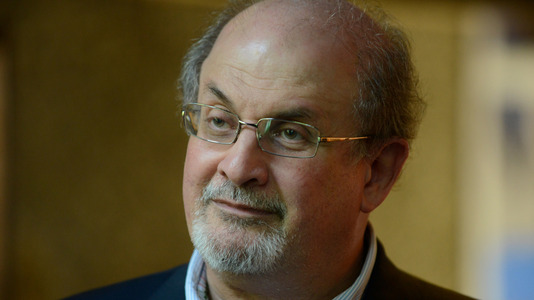
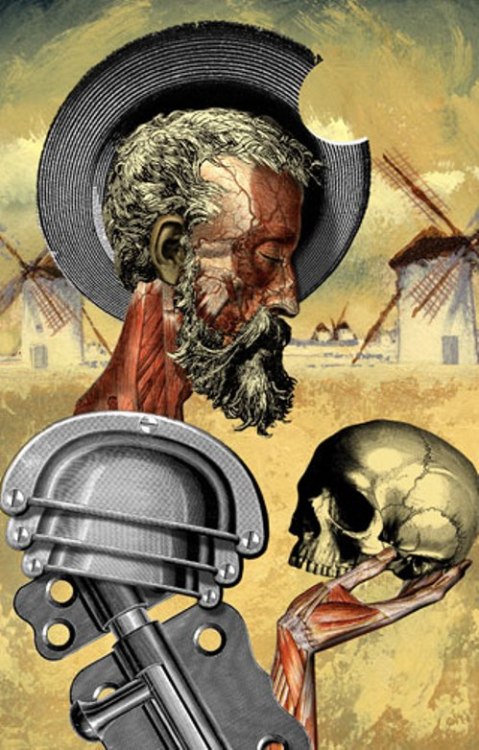
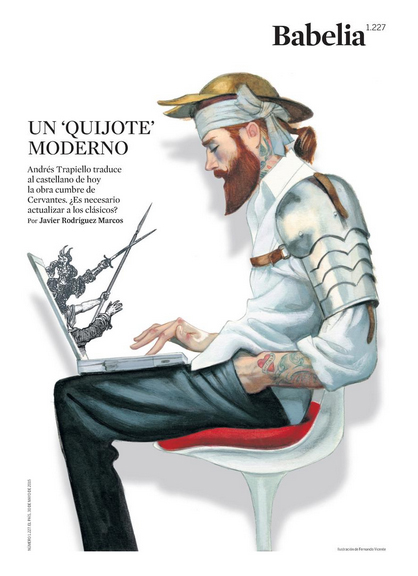
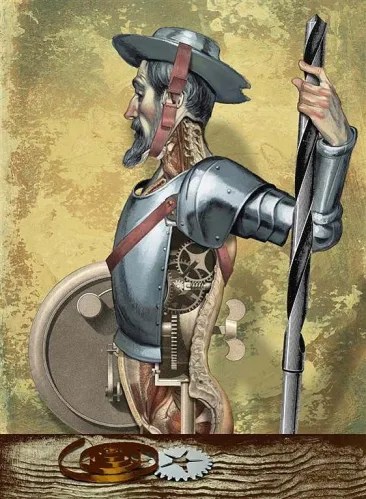
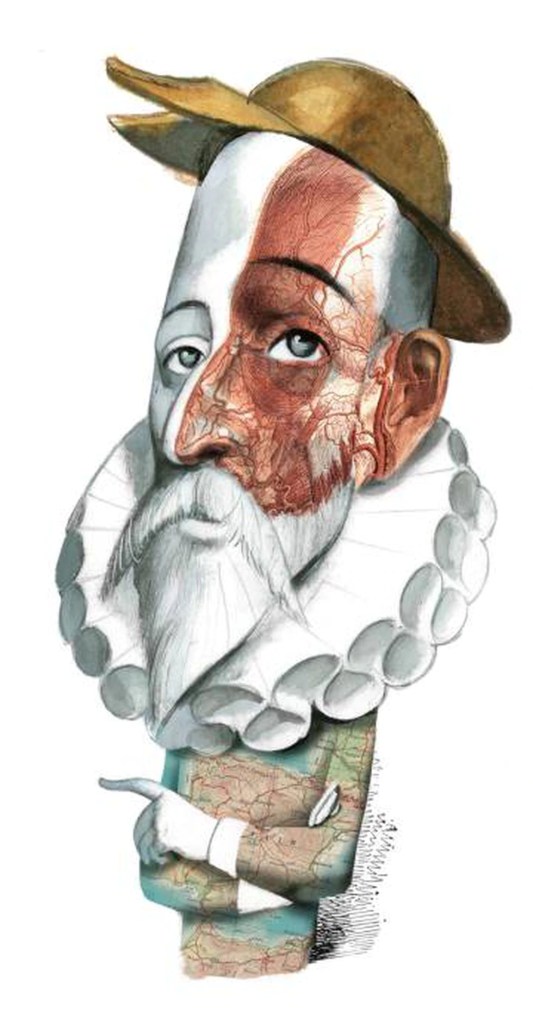
Niedawno wiadomo kto (Arkadiusz Łuba) podesłał mi świetny portret Salmana Rushdie jako Don Kichota. Gdy zajrzałam do internetu, stwierdziłam, że autor, Fernando Vicente, zresztą artysta niezwykle płodny, wielokrotnie w swej twórczości portretował Rycerza Smętnego Oblicza. Tu kilka przykładów znalezionych w sieci:
Heimat verloren, gefunden, gesucht. Was ist die Heimat und vermissen wir sie? Wie sind die deutsch-polnischen Beziehungen im Kontext der Geschichte, der Vorgeschichte und der Gegenwart? Ist eine nationale Identität notwendig? Ist die Liebe zu Polen verrückt? Was bedeutet Liebe für die Ukraine? Sind wir bereit, die Heimat abzugeben? Oder wollen wir sie verteidigen?
1. September 2022 (Donnerstag), 18.00 Uhr | Regenbogenfabrik, Lausitzer Str. 22, 10999 Berlin (Kreuzberg)
Performance: Karen Kandzia Diskussion mit: Dr. Anna Burek / Soziolinguistin, Autorin Masha Pryven / Fotografin instagram.com/masha.pryven/ Dr. Kamila Schöll-Mazurek / Leiterin Welcome-Willkommen-Witamy Interkulturelle Anlauf- und Beratungsstelle für Migranten, Polnischer Sozialrat e.V. / polskarada.de
Konzert: Don Philippe | Facebook Seit den 1980er Jahren als Musiker und ab 2016 als Solokünstler (Don Philippe) tätig. Spielte in Bands NoSé, Freundeskreis (Mitgründer), Kolchose, Laura Lopez Castro y Don Philippe.
Weitere Veranstaltungen:
Krieg
Krieg – wie schädlich ist er? Wer profitiert vom Führen von Kriegen, wer verliert am meisten? Wer sind die Krieger, wer sind die Opfer des Krieges?Ist es tatsächlich Krieg Hitlers gegen Europa gewesen / ist es jetzt tatsächlich der Krieg Putins gegen Ukraine? Oder ist es immer der Krieg der Alpha-Männer gegen den Rest der Welt gewesen?
8. September 2022 (Donnerstag), 18.00 Uhr | „Denkmal für unsere und eure Freiheit kämpfende Menschen“, Virchowstraße, 10249 Berlin (Volkspark Friedrichshain)
Performance: Karen Kandzia Diskussion mit: Oleksandra Bienert / Ukrainische Forscherin und Menschenrechtsaktivistin Aleksandra Puciłowska / Autorin (Instagram)
Statement: Konrad Kozaczek / Student, 22 J.a. (es liest Dorota Cygan)
CALL FOR STATEMENTS! Wir laden alle ein, sich mit einer Erklärung, einem Manifest oder Gedanken zum Krieg – sei es der Zweite Weltkrieg, der aktuelle Krieg in der Ukraine oder ganz allgemein – zu Wort zu melden. Unsere Worte sollen Macht haben! Besonders in diesen schwierigen Zeiten. Konzert: Jemek Jemowit | www.jemek.net
Unterdrückung
Räume der Gewalt, Räume der Unterdrückung und Räume der Freiheit: Bei der Unterdrückung geht es nicht nur um Gefängnisse, Mauern und Gitter. Die Unterdrückung findet in vielen Bereichen statt – kulturell, sozial, politisch, religiös. Was unterdrückt uns, Frauen, heute? Und wie gehen wir damit um?
Performance: Karen Kandzia Diskussion mit: Marta Ansilewska-Lehnstaedt / Historikerin, Gedenkstätte Deutscher Widerstand www.gdw-berlin.de Zofia Nierodzińska /Kuratorin, Künstlerin, Autorin, Aktivistin. Stellvertretende Direktorin der Galerie Arsenal in Poznań znierodzinska.com Marina Wesner /Architektin, Architekturhistorikerin, Autorin www.marinawesner.de
Ausstellung: “Frauengefängnis Barnimstraße” von Marina Wesner
Konzert: Helmut Mittermaier |www.guruclub.de/mittermaier/ Musiker und Komponist. Studierte an der UdK Berlin Experimentelle Klanggestaltung. Kompositionen für Konzert, Theater, Radio und Film. Radioautor Hörspiel und Feature (SWR, Deutschlandfunk Kultur).
Erinnerung
Erinnerungskultur, Erinnerungspolitik, Denkmäler, Frauen. Unsere Mütter, Großmütter, Tanten, Urgroßmütter. Kriegerinnen, Opfer. Wissenschaftlerinnen, Arbeiterinnen, Künstlerinnen, Hausfrauen. Anonyme Heldinnen. Was kann getan werden, um ihnen eine Stimme zu geben, um ihre Erinnerung in der kollektiven Kultur wiederherzustellen, insbesondere im Kontext der deutsch-polnischen Beziehungen?
22. September 2022 (Donnerstag), 18.00 Uhr | Städtischer Friedhof Altglienicke, Schönefelder Ch. 100, 12524 Berlin (Treptow – Köpenick) Schirmherrschaft Herr Oliver Igel, Bezirksbürgermeister von Berlin Treptow-Köpenick
Performance: Karen Kandzia Diskussion mit: Franziska Bruder / Lagergemeinschaft Ravensbrück Freundeskreis e.V. lg-ravensbrueck.vvn-bda.de dr Iwona Dadej / Instytut Historii PAN cbh.pan.pl Klaudyna Droske / Leiterin der Geschäftsstelle der Polonia polonia-biuro.de Nora Hogrefe / Leiterin der Koordinierungsstelle Historische Stadtmarkierungen im Verein Aktives Museum Faschismus und Widerstand in Berlin. www.aktives-museum.de Anja Witzel / Referentin der Berliner Landeszentrale für politische Bildung
Arbeitete in Big Bands und verschiedener Jazzformationen; Schwerpunkt: Improvisation und Zusammenarbeit mit anderen Kultursparten; Komponist.
Liebe Besucher*innen, laut Informationspflicht nach Art. 14 DSGVO weisen wir darauf hin, dass während dieser Veranstaltung Foto- und Videoaufnahmen angefertigt werden. Diese verwerten wir für Zwecke der Berichterstattung und der Öffentlichkeitsarbeit. Dazu werden die Aufnahmen in diversen lokalen und sozialen Medien, wie z.B. Internetauftritt (www.dziewuchyberlin) und unseren Facebook-Seiten veröffentlicht. Rechtsgrundlage für die Verarbeitung der Foto- und Videodaten von Ihnen ist Art. 6 Abs. 1 (f) DS-GVO, da ein berechtigtes Interesse daran besteht, die Öffentlichkeit über die Aktivitäten des Dziewuchy Berlin zu informieren und unsere Gruppenaktivitäten zu dokumentieren. Empfänger dieser Daten sind somit intern die mit Öffentlichkeitsarbeit betrauten Mitglieder*innen unserer Gruppe und extern die regionale Presse sowie Redaktionen und Redaktionssysteme von Printmedien, Onlinemedien und international operierende Social Media-Anbieter. Datenschutzrechtlich Verantwortlicher ist die Gruppe Dziewuchy Berlin.
Zapraszamy na spacer po Zehlendorfie / Wir laden zu einem Spaziergang in Zehlendorf ein
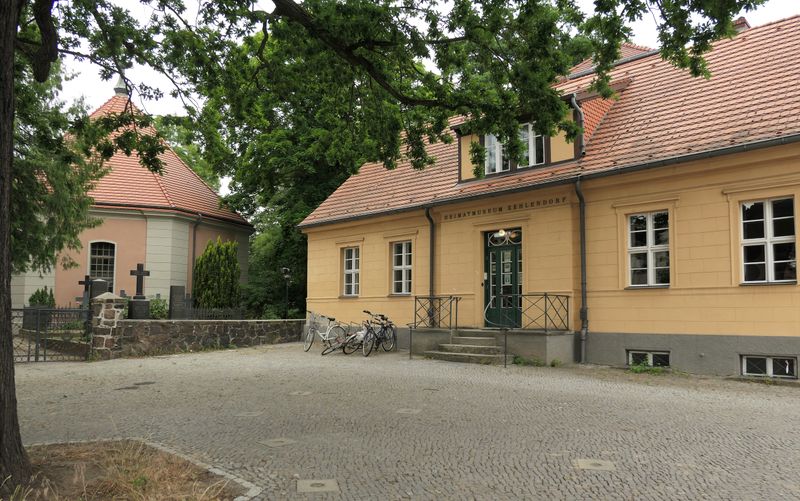
Eine Blog-Veranstaltung in Zusammenarbeit mit Sprachcafé Polnisch / Spacer w ramach projektu My organizowanego przez ewamaria.blog i Polską Kafejkę Językową
Treffpunkt / Miejsce spotkania: Heimatmuseum Zehlendorf um /o godzinie 11:00 Uhr Eintritt frei / Wejście za darmo
Clayallee 355 Historischer Winkel 14169 Berlin
S-Bahn S1 >>> Zehlendorf
Besuch im Historischen Winkel von Zehlendorf.
Alter Friedhof, alte Schule und alte Eiche. Die Hochzeitsvilla und ihre ehemalige Bewohnerin.
Zapraszamy na spacer do Historycznego Zakątka w Zehlendorfie. Odwiedzimy stary cmentarz i starą szkołę, w której obecnie mieści się lokalne muzeum (Heimatmuseum Zehlendorf). Dalej przejdziemy do willi znanej mieszkanki Zehlendorfu, zaangażowanej w życie społeczne dawnej wsi.
Ich sitze hier in Zehlendorf und warte auf den Bus
Ich will hier weg, das ist der Grund, warum ich warten muss
Der Bus kommt nich, wie könnt' es anders sein
Stattdessen kommt ein Schrank und haut mir eine rein

Ich sag: Du bist doch Proletarier, vereinig dich mit mir!
Doch er schnappt mich am Kragen und schleift mich zurück zu ihr
Vorbei am eig'nen Wasserfall, zum beheizten Swimmingpool
Dort sitzt sie und heult in 'nem antiken Schaukelstuhl

Ich sag: Zehlendorf-Mädchen, aus uns wird nie was werden
Ich träum nachts von Anarchie und du von deinen Pferden
Oh, Zehlendorf-Mädchen, wir hatten nur ne Nacht
Und, Ann-Kathrin, ich glaub, wir ha'm das Beste draus gemacht

***

Siedzę sobie w Zehlendorf, czekam na autobus
Chcę stąd zniknąć i dlatego czekać muszę ja tu
Autobus nie jedzie, wszak nie mogło być inaczej
Lecz przyszedł gostek, buch mnie w dziób i dlatego płaczę

Mówię mu, Proletariuszu, łączmy się w ucieczce!
On mnie za wszarz łaps, ciągnie k'niej, choć ja wcale nie chcę!
Nie chcę prywatnych wodospadów i słimmingpulu.
Gdzie ona płacze, siedząc w swoim antycznym fot'lu.

Dziewczyno z Zehlendorfu, zapomnij, nic nie będzie
Ja marzę o anarchii, ty konie swoje czeszesz.
Panno z Zehlendorf, tylko ta noc była nam dana
I wiesz, Anno-Kasiu, wierzę, nie była zmarnowana!

                                                            Przetłumaczyła (na chybcika) Ewa Maria Slaska
Lots of Big Bang Theory discussions since Webb’s Deep Field was released. Here’s an article about the history and meaning of the Big Bang Theory from Big Think:
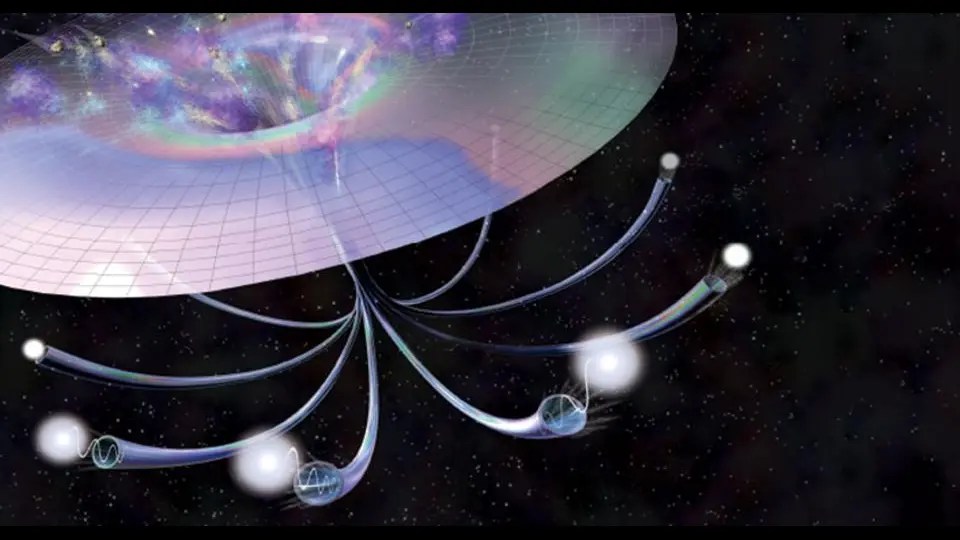
From a pre-existing state, inflation predicts that a series of universes will be spawned as inflation continues, with each one being completely disconnected from every other one, separated by more inflating space. One of these “bubbles,” where inflation ended, gave birth to our Universe some 13.8 billion years ago, where our entire visible Universe is just a tiny portion of that bubble’s volume. Each individual bubble is disconnected from all of the others, and each place where inflation ends gives rise to its own hot Big Bang. (Credit: Nicolle Rager Fuller)
As we gain new knowledge, our scientific picture of how the Universe works must evolve. This is a feature of the Big Bang, not a bug.
If there’s one hallmark inherent to science, it’s that our understanding of how the Universe works is always open to revision in the face of new evidence. Whenever our prevailing picture of reality — including the rules it plays by, the physical contents of a system, and how it evolved from its initial conditions to the present time — gets challenged by new experimental or observational data, we must open our minds to changing our conceptual picture of the cosmos. This has happened many times since the dawn of the 20th century, and the words we use to describe our Universe have shifted in meaning as our understanding has evolved.
Yet, there are always those who cling to the old definitions, much like linguistic prescriptivists, who refuse to acknowledge that these changes have occurred. But unlike the evolution of colloquial language, which is largely arbitrary, the evolution of scientific terms must reflect our current understanding of reality. Whenever we talk about the origin of our Universe, the term “the Big Bang” comes to mind, but our understanding of our cosmic origins have evolved tremendously since the idea that our Universe even had an origin, scientifically, was first put forth. Here’s how to resolve the confusion and bring you up to speed on what the Big Bang originally meant versus what it means today.
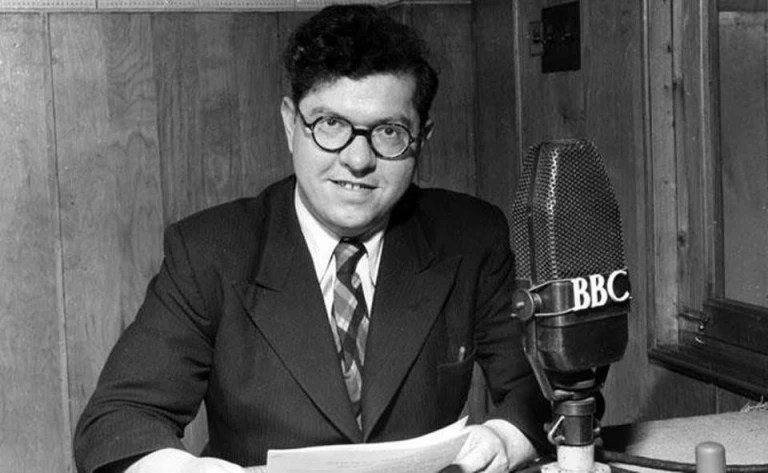
Fred Hoyle was a regular on BBC radio programsin the 1940s and 1950s, and one of the mostinfluential figures in the field of stellarnucleosynthesis. His role as the Big Bang’s most vocaldetractor, even after the critical evidence supportingit had been discovered, is one of his longest-enduringlegacies. (Credit: British Broadcasting Company)
The first time the phrase “the Big Bang” was uttered was over 20 years after the idea was first described. In fact, the term itself comes from one of the theory’s greatest detractors: Fred Hoyle, who was a staunch advocate of the rival idea of a Steady-State cosmology. In 1949, he appeared on BBC radio and advocated for what he called the perfect cosmological principle: the notion that the Universe was homogeneous in both space and time, meaning that any observer not only anywhere but anywhen would perceive the Universe to be in the same cosmic state. He went on to deride the opposing notion as a “hypothesis that all matter of the universe was created in one Big Bang at a particular time in the remote past,” which he then called “irrational” and claimed to be “outside science.”
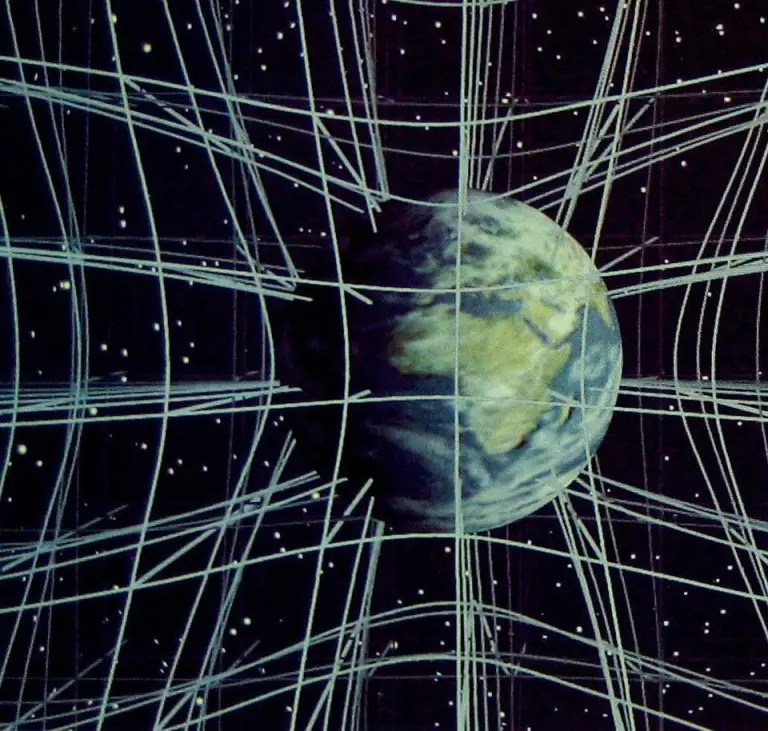
Instead of an empty, blank, three-dimensional grid, putting a mass down causes what would have been ‘straight’ lines to instead become curved by a specific amount. In General Relativity, we treat space and time as continuous, but all forms of energy, including but not limited to mass, contribute to spacetime curvature. The deeper you are in a gravitational field, the more severely all three dimensions of your space is curved, and the more severe the phenomena of time dilation and gravitational redshift become. (Credit: Christopher Vitale of Networkologies and the Pratt Institute)
But the idea, in its original form, wasn’t simply that all of the Universe’s matter was created in one moment in the finite past. That notion, derided by Hoyle, had already evolved from its original meaning. Originally, the idea was that the Universe itself, not just the matter within it, had emerged from a state of non-being in the finite past. And that idea, as wild as it sounds, was an inevitable but difficult-to-accept consequence of the new theory of gravity put forth by Einstein back in 1915: General Relativity.
When Einstein first cooked up the general theory of relativity, our conception of gravity forever shifted from the prevailing notion of Newtonian gravity. Under Newton’s laws, the way that gravitation worked was that any and all masses in the Universe exerted a force on one another, instantaneously across space, in direct proportion to the product of their masses and inversely proportional to the square of the distance between them. But in the aftermath of his discovery of special relativity, Einstein and many others quickly recognized that there was no such thing as a universally applicable definition of what “distance” was or even what “instantaneously” meant with respect to two different locations.
With the introduction of Einsteinian relativity — the notion that observers in different frames of reference would all have their own unique, equally valid perspectives on what distances between objects were and how the passage of time worked — it was only almost immediate that the previously absolute concepts of “space” and “time” were woven together into a single fabric: spacetime. All objects in the Universe moved through this fabric, and the task for a novel theory of gravity would be to explain how not just masses, but all forms of energy, shaped this fabric that underpinned the Universe itself.
If you begin with a bound, stationary configuration of mass, and there are no non-gravitational forces or effects present (or they’re all negligible compared to gravity), that mass will always inevitably collapse down to a black hole. It’s one of the main reasons why a static, non-expanding Universe is inconsistent with Einstein’s General Relativity. (Credit: E. Siegel/Beyond the Galaxy)
Although the laws that governed how gravitation worked in our Universe were put forth in 1915, the critical information about how our Universe was structured had not yet come in. While some astronomers favored the notion that many objects in the sky were actually “island Universes” that were located well outside the Milky Way galaxy, most astronomers at the time thought that the Milky Way galaxy represented the full extent of the Universe. Einstein sided with this latter view, and — thinking the Universe was static and eternal — added a special type of fudge factor into his equations: a cosmological constant.
Although it was mathematically permissible to make this addition, the reason Einstein did so was because without one, the laws of General Relativity would ensure that a Universe that was evenly, uniformly distributed with matter (which ours seemed to be) would be unstable against gravitational collapse. In fact, it was very easy to demonstrate that any initially uniform distribution of motionless matter, regardless of shape or size, would inevitably collapse into a singular state under its own gravitational pull. By introducing this extra term of a cosmological constant, Einstein could tune it so that it would balance out the inward pull of gravity by proverbially pushing the Universe out with an equal and opposing action.
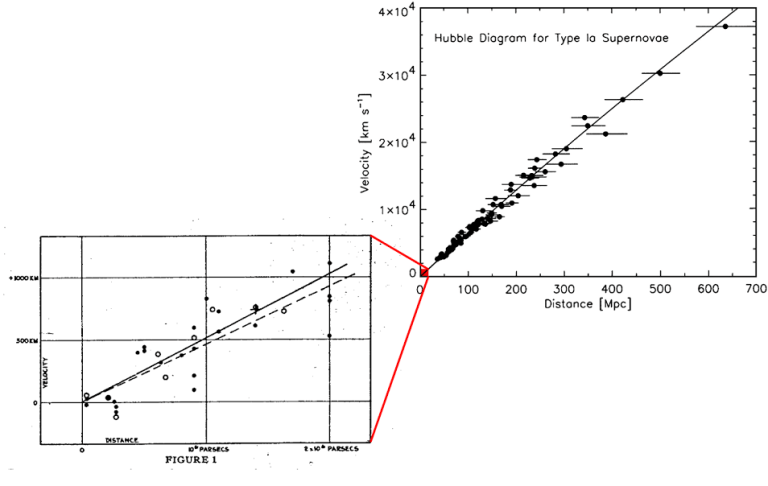
Edwin Hubble’s original plot of galaxy distances versus redshift (left), establishing the expanding Universe, versus a more modern counterpart from approximately 70 years later (right). In agreement with both observation and theory, the Universe is expanding, and the slope of the line relating distance to recession speed is a constant.
Two developments — one theoretical and one observational — would quickly change this early story that Einstein and others had told themselves.
In 1922, Alexander Friedmann worked out, fully, the equations that governed a Universe that was isotropically (the same in all directions) and homogeneously (the same in all locations) filled with any type of matter, radiation, or other form of energy. He found that such a Universe would never remain static, not even in the presence of a cosmological constant, and that it must either expand or contract, dependent on the specifics of its initial conditions.
In 1923, Edwin Hubble became the first to determine that the spiral nebulae in our skies were not contained within the Milky Way, but rather were located many times farther away than any of the objects that comprised our home galaxy. The spirals and ellipticals found throughout the Universe were, in fact, their own “island Universes,” now known as galaxies, and that moreover — as had previously been observed by Vesto Slipher — the vast majority of them appeared to be moving away from us at remarkably rapid speeds.
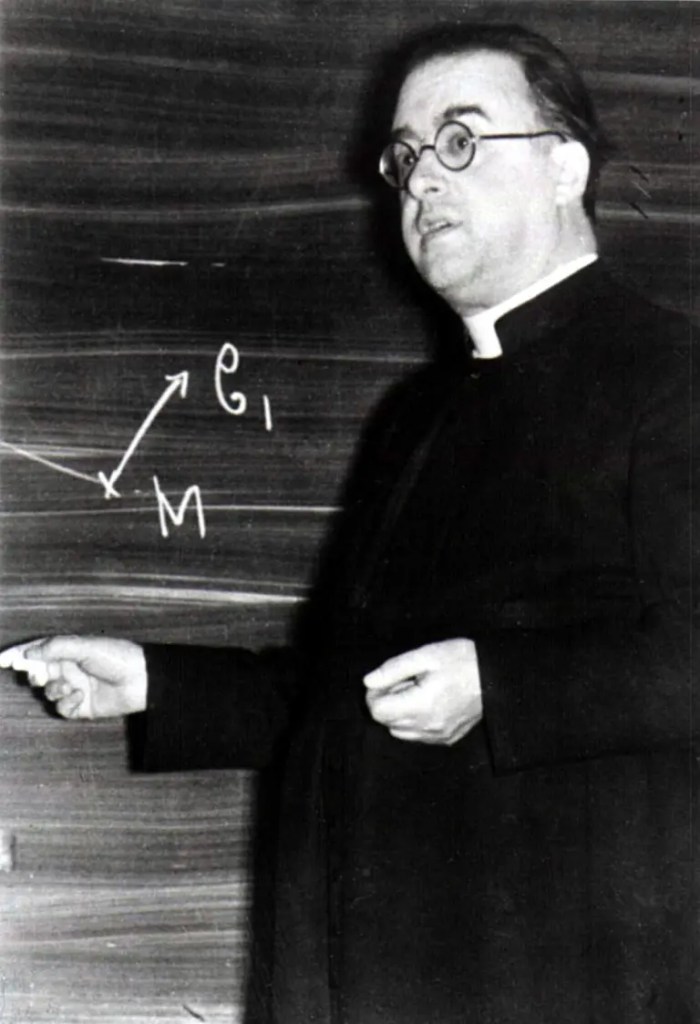
In 1927, Georges Lemaître became the very first person to put these pieces of information together, recognizing that the Universe today is expanding, and that if things are getting farther apart and less dense today, then they must have been closer together and denser in the past. Extrapolating this back all the way to its logical conclusion, he deduced that the Universe must have expanded to its present state from a single point-of-origin, which he called either the “cosmic egg” or the “primeval atom.”
This image shows Catholic priest and theoretical cosmologist Georges Lemaître at the Catholic University of Leuven, ca. 1933. Lemaître was among the first to conceptualize the Big Bang as the origin of our Universe within the framework of General Relativity, even though he didn’t use that name himself. (Credit: public domain)
This was the original notion of what would grow into the modern theory of the Big Bang: the idea that the Universe had a beginning, or a “day without yesterday.” It was not, however, generally accepted for some time. Lemaître originally sent his ideas to Einstein, who infamously dismissed Lemaître’s work by responding, “Your calculations are correct, but your physics is abominable.”
Despite the resistance to his ideas, however, Lemaître would be vindicated by further observations of the Universe. Many more galaxies would have their distances and redshifts measured, leading to the overwhelming conclusion the Universe was and still is expanding, equally and uniformly in all directions on large cosmic scales. In the 1930s, Einstein conceded, referring to his introduction of the cosmological constant in an attempt to keep the Universe static as his “greatest blunder.”
However, the next great development in formulating what we know of as the Big Bang wouldn’t come until the 1940s, when George Gamow — perhaps not so coincidentally, an advisee of Alexander Friedmann — came along. In a remarkable leap forward, he recognized that the Universe was not only full of matter, but also radiation, and that radiation evolved somewhat differently from matter in an expanding Universe. This would be of little consequence today, but in the early stages of the Universe, it mattered tremendously.
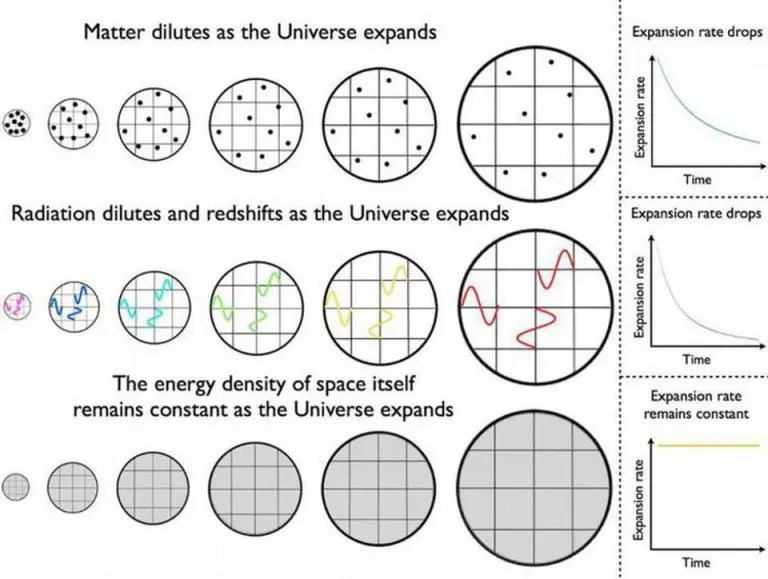
Matter, Gamow realized, was made up of particles, and as the Universe expanded and the volume that these particles occupied increased, the number density of matter particles would drop in direct proportion to how the volume grew.
But radiation, while also made up of a fixed number particles in the form of photons, had an additional property: the energy inherent to each photon is determined by the photon’s wavelength. As the Universe expands, the wavelength of each photon gets lengthened by the expansion, meaning that the amount of energy present in the form of radiation decreases faster than the amount of energy present in the form of matter in the expanding Universe.
But in the past, when the Universe was smaller, the opposite would have been true. If we were to extrapolate backward in time, the Universe would have been in a hotter, denser, more radiation-dominated state. Gamow leveraged this fact to make three great, generic predictions about the young Universe.
At some point, the Universe’s radiation was hot enough so that every neutral atom would have been ionized by a quantum of radiation, and that this leftover bath of radiation should still persist today at only a few degrees above absolute zero.
At some even earlier point, it would have been too hot to even form stable atomic nuclei, and so an early stage of nuclear fusion should have occurred, where an initial mix of protons-and-neutrons should have fused together to create an initial set of atomic nuclei: an abundance of elements that predates the formation of atoms.
And finally, this means that there would be some point in the Universe’s history, after atoms had formed, where gravitation pulled this matter together into clumps, leading to the formation of stars and galaxies for the first time.
Schematic diagram of the Universe’s history, highlighting reionization. Before stars or galaxies formed, the Universe was full of light-blocking, neutral atoms that formed back when the Universe was ~380,000 years old. Most of the Universe doesn’t become reionized until 550 million years afterwards, with some regions achieving full reionization earlier and others later. The first major waves of reionization begin happening at around ~200 million years of age, while a few fortunate stars may form just 50-to-100 million years after the Big Bang. With the right tools, like the JWST, we hope to reveal the earliest galaxies of all. (Credit: S. G. Djorgovski et al., Caltech; Caltech Digital Media Center)
These three major points, along with the already-observed expansion of the Universe, form what we know today as the four cornerstones of the Big Bang. Although one was still free to extrapolate the Universe back to an arbitrarily small, dense state — even to a singularity, if you’re daring enough to do so — that was no longer the part of the Big Bang theory that had any predictive power to it. Instead, it was the emergence of the Universe from a hot, dense state that led to our concrete predictions about the Universe.
Over the 1960s and 1970s, as well as ever since, a combination of observational and theoretical advances unequivocally demonstrated the success of the Big Bang in describing our Universe and predicting its properties.
The discovery of the cosmic microwave background and the subsequent measurement of its temperature and the blackbody nature of its spectrum eliminated alternative theories like the Steady State model.
The measured abundances of the light elements throughout the Universe verified the predictions of Big Bang nucleosynthesis, while also demonstrating the need for fusion in stars to provide the heavy elements in our cosmos.
And the farther away we look in space, the less grown-up and evolved galaxies and stellar populations appear to be, while the largest-scale structures like galaxy groups and clusters are less rich and abundant the farther back we look.
The Big Bang, as verified by our observations, accurately and precisely describes the emergence of our Universe, as we see it, from a hot, dense, almost-perfectly uniform early stage.
But what about the “beginning of time?” What about the original idea of a singularity, and an arbitrarily hot, dense state from which space and time themselves could have first emerged?
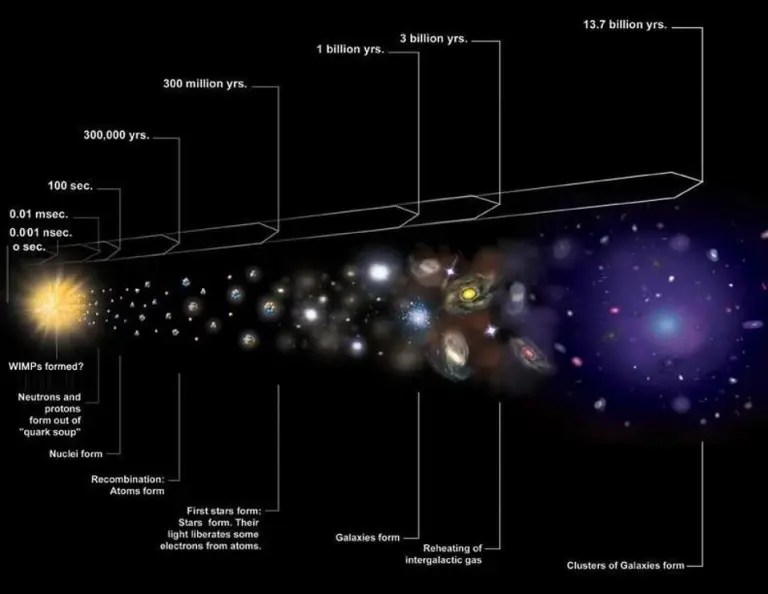
A visual history of the expanding Universe includes the hot, dense state known as the Big Bang and the growth and formation of structure subsequently. The full suite of data, including the observations of the light elements and the cosmic microwave background, leaves only the Big Bang as a valid explanation for all we see. As the Universe expands, it also cools, enabling ions, neutral atoms, and eventually molecules, gas clouds, stars, and finally galaxies to form. However, the Big Bang was not an explosion, and cosmic expansion is very different from that idea.
That’s a different conversation, today, than it was back in the 1970s and earlier. Back then, we knew that we could extrapolate the hot Big Bang back in time: back to the first fraction-of-a-second of the observable Universe’s history. Between what we could learn from particle colliders and what we could observe in the deepest depths of space, we had lots of evidence that this picture accurately described our Universe.
But at the absolute earliest times, this picture breaks down. There was a new idea — proposed and developed in the 1980s — known as cosmological inflation, that made a slew of predictions that contrasted with those that arose from the idea of a singularity at the start of the hot Big Bang. In particular, inflation predicted:
A curvature for the Universe that was indistinguishable from flat, to the level of between 99.99% and 99.9999%; comparably, a singularly hot Universe made no prediction at all.
Equal temperatures and properties for the Universe even in causally disconnected regions; a Universe with a singular beginning made no such prediction.
A Universe devoid of exotic high-energy relics like magnetic monopoles; an arbitrarily hot Universe would possess them.
A Universe seeded with small-magnitude fluctuations that were almost, but not perfectly, scale invariant; a non-inflationary Universe produces large-magnitude fluctuations that conflict with observations.
A Universe where 100% of the fluctuations are adiabatic and 0% are isocurvature; a non-inflationary Universe has no preference.
A Universe with fluctuations on scales larger than the cosmic horizon; a Universe originating solely from a hot Big Bang cannot have them.
And a Universe that reached a finite maximum temperature that’s well below the Planck scale; as opposed to one whose maximum temperature reached all the way up to that energy scale.
The first three were post-dictions of inflation; the latter four were predictions that had not yet been observed when they were made. On all of these accounts, the inflationary picture has succeeded in ways that the hot Big Bang, without inflation, has not.
The quantum fluctuations that occur during inflation get stretched across the Universe, and when inflation ends, they become density fluctuations. This leads, over time, to the large-scale structure in the Universe today, as well as the fluctuations in temperature observed in the CMB. New predictions like these are essential for demonstrating the validity of a proposed fine-tuning mechanism, and to test (and potentially rule out) alternatives. (Credit: E. Siegel; ESA/Planck and the DOE/NASA/NSF Interagency Task Force on CMB research)
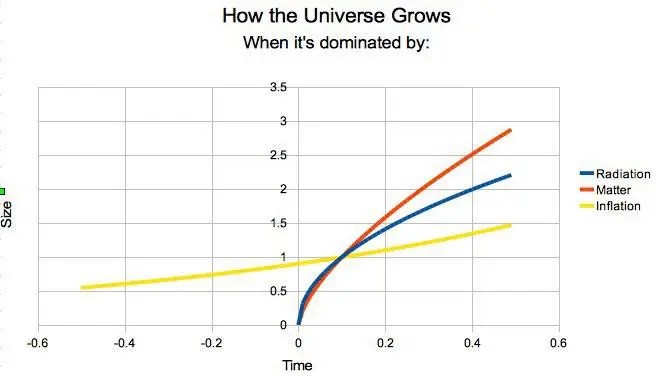
During inflation, the Universe must have been devoid of matter-and-radiation and instead contained some sort of energy — whether inherent to space or as part of a field — that didn’t dilute as the Universe expanded. This means that inflationary expansion, unlike matter-and-radiation, didn’t follow a power law that leads back to a singularity but rather is exponential in character. One of the fascinating aspects about this is that something that increases exponentially, even if you extrapolate it back to arbitrarily early times, even to a time where t → -∞, it never reaches a singular beginning.
Now, there are many reasons to believe that the inflationary state wasn’t one that was eternal to the past, that there might have been a pre-inflationary state that gave rise to inflation, and that, whatever that pre-inflationary state was, perhaps it did have a beginning. There are theorems that have been proven and loopholes discovered to those theorems, some of which have been closed and some of which remain open, and this remains an active and exciting area of research.
Blue and red lines represent a “traditional” Big Bang scenario, where everything starts at time t=0, including spacetime itself. But in an inflationary scenario (yellow), we never reach a singularity, where space goes to a singular state; instead, it can only get arbitrarily small in the past, while time continues to go backward forever. Only the last minuscule fraction of a second, from the end of inflation, imprints itself on our observable Universe today. (Credit: E. Siegel)
But one thing is for certain.
Whether there was a singular, ultimate beginning to all of existence or not, it no longer has anything to do with the hot Big Bang that describes our Universe from the moment that:
inflation ended,
the hot Big Bang occurred,
the Universe became filled with matter and radiation and more,
and it began expanding, cooling, and gravitating,
eventually leading to the present day. There are still a minority of astronomers, astrophysicists and cosmologists who use “the Big Bang” to refer to this theorized beginning and emergence of time-and-space, but not only is that not a foregone conclusion anymore, but it doesn’t have anything to do with the hot Big Bang that gave rise to our Universe. The original definition of the Big Bang has now changed, just as our understanding of the Universe has changed. If you’re still behind, that’s ok; the best time to catch up is always right now.
















 Ewa Maria and Friends