Lato 2019. 22 lipca (wiersze 33)

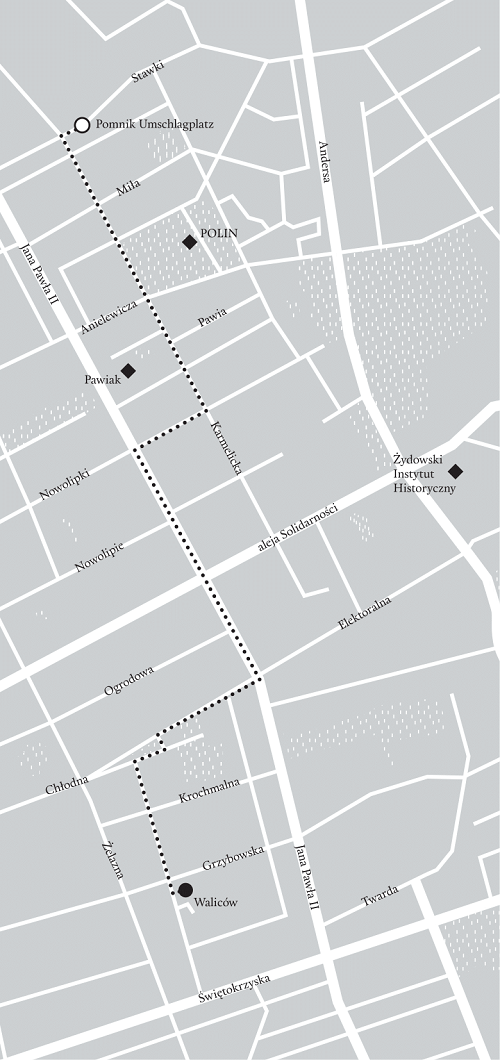
W poniedziałek 22 lipca, w 77 rocznicę rozpoczęcia akcji likwidacji warszawskiego getta, ulicami Warszawy, po raz ósmy, przejdzie Marsz Pamięci. Tegoroczny Marsz, poza upamiętnieniem tej tragicznej daty, będzie poświęcony w szczególności pamięci Władysława Szlengla, genialnego poety warszawskiego getta, który w swojej twórczości przedstawił tragizm życia i śmierci ludzi uwięzionych w zamkniętej dzielnicy.
Organizatorem Marszu jest, jak co roku, Żydowski Instytut Historyczny im. Emanuela Ringelbluma.

Marsz rozpocznie się o godzinie 18:00 przed pomnikiem Umschlagplatz przy ulicy Stawki w Warszawie. Tegoroczna trasa Marszu zakończy się pod kamienicą przy ulicy Waliców, gdzie przed wojną mieszkał Władysław Szlengel.

Władysław Szlengel (ur. 1912 lub w 1914 w Warszawie, zm. 8 maja 1943 tamże) – polski poeta pochodzenia żydowskiego, autor tekstów kabaretowych i piosenek, dziennikarz, aktor estradowy. W latach 1940–1943 przebywał w getcie warszawskim, gdzie kontynuował działalność pisarską i artystyczną. Za sprawą wierszy pisanych w owym czasie zwany jest poetą getta.

Władysław Szlengel

Obrachunek z Bogiem, (Getto Warszawskie, 1943)

Może to był sen – (chociaż nie)
A może zamroczył mnie trunek
Siedzieliśmy razem Bóg i ja
I robiliśmy rachunek…
Bóg był starszym panem
O spojrzeniu pełnym łaski
Miał siwą długą brodę
I chodził bez opaski…
Kenkarty wprawdzie nie miał
Bo przybył prosto z raju
Lecz miał obywatelstwo
Podobno… – Urugwaju
Wyjąłem dużą księgę
A Pan Bóg Watermana
Otwarłem konto – wiara
I rzekłem… proszę pana
Mam lat trzydzieści dwa
Lat sytych albo biedy
Dotychczas Panie Boże
Otwarty miałem kredyt
Mówiono: módl się
Ja się modliłem
Mówiono: pość –
– pościłem…
Przez ciężkie postu dni
Bez kropli wody w ustach
Dla wielkiej chwały Twej
i urojonych ustaw
W męczących smugach świec
W tumulcie izb bóźniczych
Modliłem się byś mógł
uczynki moje zliczyć
Mówiono  mi „nie kradnij”
nie kradłem
Mówiono: nie jedz świniny…
(lubię) – nie jadłem
Mówiono: Bóg tak chce…
Mówiono: Boża Droga
Mówiono: nie cudzołóż…
Wstrzymałem się… dla Boga
Mówiono nie zabijaj!
nie zabijałem
Nie miej Boga nademną
– nie miałem…
Są różne miłe święta
Są różne trudne święta
Po dziesięć razy na rok
Kazano mi pamiętać
Kazano siedzieć w kuczce
Pić gorzkie jadać macę…
Pokuty różne czynić
i zaniedbywać pracę
Rzemieniem ściskałem ręce
Księgi zżerałem nocą
i umartwiałem ciało
Przepraszam, pytam – po co ?
Mówiłem: Bóg pomoże
Mówiłem: Bóg ocali
Wierzyłem: Pan Bóg ze mną
Mówiłem: i tak dalej…
Spójrz no, popatrz w księgę
Rzecz jasna, oczywista
Patrz! karta Twoich zasług
w stosunku do mnie – czysta…
Biją mnie w twarz
– Nie uciekam
Jak zwierz tropiony z nory w norę
Czekam… a Ty nic…
Głodno mi chłodno i tęskno
Droga wciąż dziksza, daleka
Pusto – wokoło, martwo
Nie płaczę… – czekam…
Na wiatr więc wyrzucone
Błagania posty lament
i sto tysięcy modlitw
i pół miliona „Amen”…
Co Ty mi dajesz dziś
Za wszystkie me uczynki
Ten blok…
Tę blaszkę… plac –
Te bony – czy Treblinki?
Czy jeszcze czekasz bym
Pojutrze jak testament
Pod pruski idąc gaz
Powiedział jeszcze „Amen”?
No mów coś, proszę mów –
Rachunek wyjm z ukrycia
Otwarte ksiegi – patrz! –
Wspólniku mego życia…
Ten miły starszy pan,
z którym przy stole piłem
Ołówek wziął do ręki i rzekł…
i tu się przebudziłem
Czy to był zwykły sen? –
Czy też mnie zmorzył trunek? –
Lecz do dziś nie wiem jak
się skończył obrachunek.

Wiersze na lato 2019 (26). Jahnz.

Zapraszamy do Szczecina w Berlinie  (Wir laden ein, aber zuerst noch ein Gedicht. Zur Einladung bitte nach unten scrollen).

Najpierw wiersz, a zaproszenie poniżej.

Okazuje się, że Książnica Pomorska wpadła na ten sam pomysł co ja i publikuje jeden wiersz różnych szczecińskich poetów. Na szczęście ja już w międzyczasie przestałam liczyć na jeden wiersz i publikuję tyle, ile mi się przyśle, uważając, że nie ma to jak poezja latem.

A skoro jesteśmy w Szczecinie, to zapraszam(y) dziś na berlińską ulicę szczecińską…

Rund um den Stettiner Bahnhof: Geschichte der Verkehrswege Berlin-Stettin

Wann: 13. Juli 2019 um 16 Uhr
Ort: Gemeindesaal der Berliner Stadtmission
Stettiner Straße 45, 13357 Berlin

Die Stettiner Straße verdankt ihren Namen der Nähe zur Berlin-Stettiner Eisenbahn. Vor ungefähr 180 Jahren verliefen entlang der Straße die Eisenbahnschienen Richtung Stettin. Der Stettiner Bahnhof war einer der großen Berliner Kopfbahnhöfe und Ausgangspunkt der Bahnstrecke nach Stettin. Jetzt erinnern nur die alten, neu gestalteten Bahngleise mit den Namen der Zielorte daran. Bis heute ist lediglich der Stettiner Vorortsbahnhof, umgangssprachlich „Kleiner Stettiner“ genannt, erhalten geblieben.

Das und viel mehr erfahren Sie am 13. Juli 2019 um 16 Uhr in dem Gemeindesaal der Berliner Stadtmission, Stettiner Straße 45, 13357 Berlin. Der Vortrag „Rund um den Stettiner Bahnhof: Geschichte der Verkehrswege Berlin-Stettin” wird von Dr. Andreas Jüttemann, Autor und Stadthistoriker, gehalten.

Begleitend zu dem Thema wird noch ein Spaziergang zu der Infotafel “Grünzug auf dem Gelände der ehemaligen Stettiner Eisenbahn” angeboten.

Lotte Laserstein und die Katzen

Ewa Maria Slaska

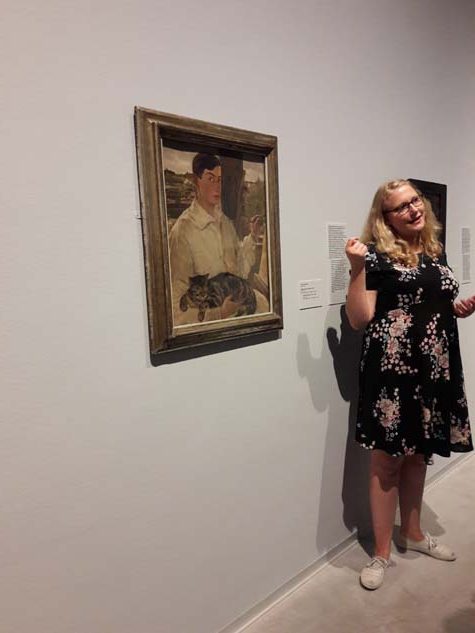
In der Berlinischen Galerie gibt es bis 12. August 2019 eine Ausstellung von Lotte Laserstein, eine von vielen vergessenen Künstlerinnen, die sich vor dem Kriege eine interessante Karriere aufgebaut haben, der die Hitlers Herrschaft, Krieg, Vernichtung und die dem Krieg folgende Teilung der Welt in Ost und West ein jähes Ende setzten.

Lotte Laserstein ist eine von denen, glücklicher als die anderen, als Julia Wolfthorn zum Beispiel, weil sie überlebt hat, aber, zugleich eine, die, wie viele Andere, wie Dodo, wie Jeanne Mammen oder Margarete Kubicki, oder gar Hannah Höch, in Unwichtigkeit oder gar Vergessenheit geraten waren. Welche Mühe, sie alle jetzt dem kunstinteressierten Publikum wieder zu präsentieren.

Lotte Laserstein (*1898 in Preußisch Holland im ostpreußischen Oberland; †1993 in Kalmar, Schweden) war eine deutsch-schwedische Malerin. Sie gilt als bedeutende Vertreterin der gegenständlichen Malerei der Weimarer Republik. 1937 emigrierte sie  nach Schweden. In Schweden war sie bis zu ihrem Tod als Porträtistin und Landschaftsmalerin tätig. Die in den 1920er und 1930er Jahren in Deutschland entstandenen Bilder stehen der Neuen Sachlichkeit nahe und gelten als der Höhepunkt ihres umfangreichen Schaffens. In Schweden war Lotte zwar immer noch als Malerin tätig, ihren Ruhm, den sie eine kurze Zeit in Berlin genossen hat, erlangte sie nie wieder.

Sie wird zwar der Neuen Sachlichkeit zugerechnet und tatsächlich war sie, was die Themen betrifft, eine moderne, emanzipierte Frau, aber in ihrem Schaffen war sie eine Traditionalistin. Sie war unglaublich stolz auf ihre künstlerische Bildung. Darauf, dass sie schon als junges Mädchen eine Kunstschülerin war. Sie und ihre Familie lebten in Danzig, wo Lottes Tante, Else Birenbaum eine Kunstschule leitete und selber dort lehrte. Lotte war als sehr junges Mädchen in der Ausbildung bei ihrer Tante und deshalb, wie uns unsere Kunstführerin erzähle, seit eh wusste, dass in der Kunst eine Frau einem Mann gleichberechtigt ist und sie die Kunst sowohl lehren als auch lernen kann. Als sie nach Berlin kam, war sie eine der ersten Studentinnen, die in der Königlichen Hochschule der Künste lernen dürfte. Mehr noch – sie dürfte gar die Aktmalerei studieren, darunter auch die Männerakte malen!

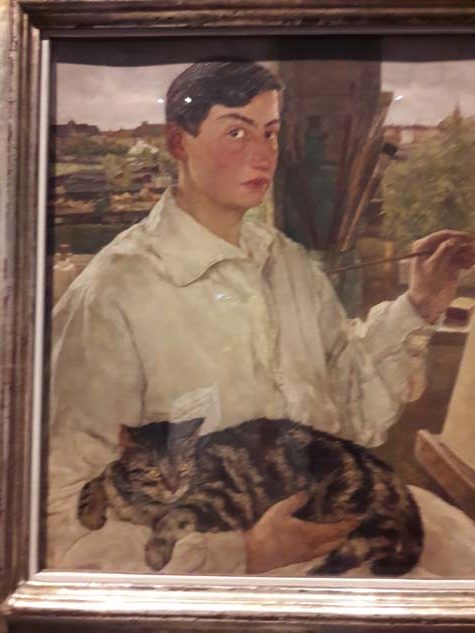
Lotte widmete sich der Staffelmalerei, dem Porträt und der Landschaft, und hielt nicht von der Moderne. In bester rembrandtschen Maniere malte sie verschiedene Stoffe so, dass man in einem Leinenkittel jede Falte sieht und in einem Katzenfell jedes Haar. So wie hier, in ihr Selbstbildnis mit einer Katze.

Das Bild ist exemplarisch für das Œuvre von Lotte Laserstein. Sie malte gern Porträts und darunter auch mehrere Selbstporträts. Sie schilderte sich oft als Künstlerin, als eine Malerin, die ihr Können gern zur Schau stellt, mit Attributen ihrer Zunft, was vor Kurzem nur den Männern erlaubt war. Sie liebte die Porträts mit dem Fensterblick im Hintergrund, wo man die Stadthäuser sehr genau wahrnahm. Und sogar die Katze war ein Beweis, dass sie alles kann, was sie sich vornimmt, weil die Katze musste doch sehr lange unbeweglich sitzen, wie jedes Modell auch (man munkelt, dass die Katze jeweils vor der Sitzung von einem guten Schluck Brandy betäubt wurde, aber ob es stimmt?)

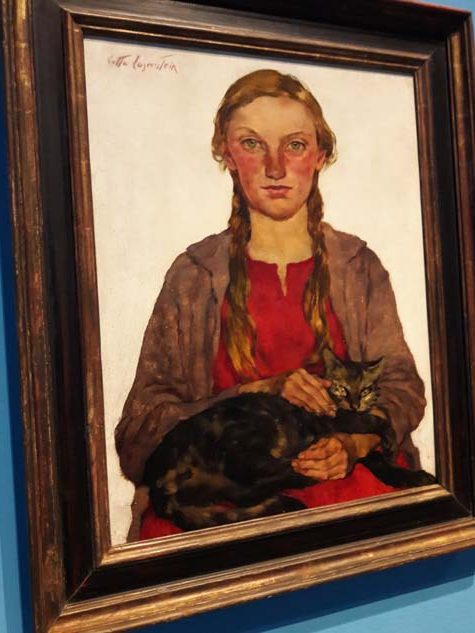
Lotte wusste sehr geschickt, wie sie sich positionieren soll, wie sie ihre Kunst selber fördern kann. Sie engagierte sich im Frauenbund, sie schickte ihre Bilder zu Wettbewerben und Ausstellungen. Sie gründete auch eine Malschule für Studenten der Akademie der Künste, die an ihrem Abschluss-Portofolio gearbeitet haben. Mit ihrer StudentInnen fuhr sie unter anderen nach Worpswede, wo eine der berühmten deutschen Künstlerkolonie entstanden ist. Dort ist ihre Bilderreihe Dorfkinder entstanden. Ob diese Katze wohl auch betäubt werden müsste, darüber schweigt man.


Berlinische Galerie

Landesmuseum für Moderne
Kunst, Fotografie und Architektur
Stiftung Öffentlichen Rechts

Alte Jakobstraße 124–128
10969 Berlin

bg@berlinischegalerie.de

Lato 2019. Codziennie jeden wiersz (11). Helbig

Brygida Helbig

byłam w ciąży i poszłam na musical
dudniło tak strasznie, że moje dziecko
przewracało się w brzuchu przerażone
a ja nie wyszłam z sali

odtad moje dziecko ma wrażliwe uszy
nie mówiąc już o duszy

a ja dalej nie wychodzę z takich sal
wytrzymuję
wyrzyguję
jestem dzielna
a przede wszystkim
bardzo dobrze wychowana


PS od Adminki, bo a nuż ktoś z Was jest dziś w Nowym Jorku. Tu porada, co dziś robić w stolicy świata, nadesłana przez Iwonkę Szweizer: https://www.littletownshoes.com/2013/06/23/witamy-na-najbardziej-rozebranej-paradzie-ameryki/

Lato 2019. Codziennie jeden wiersz (10). Maj

Marek Maj

Nauki naiwne

Z odległości od woli do rąk
Cała ludzka się bierze bezradność –
Już nie jeden alfabet łez wsiąkł
W ziemię lichą, choć z wierzchu dość ładną.
Z grawitacji obłoków – jest deszcz,
W deszczu krzewi się łan parasoli,
Wtedy ziemia nieziemski ma wierzch,
I spadanie tak bardzo nie boli.
Przez dualizm korpuskuł i dusz
Łatwo znaleźć się gdzieś poza sobą,
Dusza wtedy zamienia się w susz
I umyka pojęciom i globom.

Z prawd ruchomych i ciętych przez pół
Przecząc sobie, mrą tomy w a-tomy,
Z wynalazku zębatek i kół
Czas tutejszy jest ciągle rzekomy.
Z teleskopów, judaszy i sond
Do wyboru pomówień na mieście,
Z rzeczy prostych, jak prosta i kąt,
Zbudowane są miasta i szczęście.

W geografii nadziei i szczęść
Nieodkryte przylądki i wyspy –
Suchą stopą, gdy uda się przejść –
Kiedy ześni się sen realisty.


PS od Adminki: A tymczasem w Berlinie dziś, jak co roku, Fete de la Musique. Wszędzie w Berlinie muzyka – za darmo i pod gołym niebem. https://www.fetedelamusique.de/programm/

Lato 2019. Codziennie jeden wiersz (09). Rudolf

Teresa Rudolf

My prawie martwi…

A z nami co się dzieje?
Kim jesteśmy wyrzucając
nasze serca i dusze
na śmietniki podłości?

Znęcamy się nad wszystkim
co słabe, zwierzęta płaczą
przyroda dość się napłakała,
i będzie się teraz już mścić…

Niszczymy naszą przeszłość
konfliktami, rozliczeniami,
przyszłość bezwględnością,
chciwością, straszną bulimią,

żrąc życie ze wszystkim,
zwracając, by znów żreć
i zwracać na nowo, bez końca…
A co z tą teraźniejszością?

Właśnie to wszystko
TU i TERAZ się dzieje
myślimy że to życie,
pytając wciąż gdzie ono…

Kochać wciąż nie umiemy,
chcąc jednak być kochanymi,
a dla tej “nieczutej” miłości,
warto jest się mścić i zabijać…

Sięgamy po prawa do wojny,
do miłości, do zazdrości,
do nienawiści, do tego bez
końca brania, brania i brania…

Żyjemy więc jako kto?
Bo ludźmi już dawno
nie jesteśmy, ale kim,
ale kim, akurat właśnie ?

Jako ta grupa człowiecza
martwi jesteśmy już dawno
ale każdy jeszcze może,
po prostu człowiekiem zostać….

Zanim skończy się już,
ten nasz króciutki występ
na tej planecie…


PS od Adminki: A tymczasem w Berlinie dziś i jutro, jak co roku, Fete de la Musique. Wszędzie w Berlinie muzyka – za darmo i pod gołym niebem. https://www.fetedelamusique.de/programm/

Barataria 119. O bzach i poezji

Ewa Maria Slaska

Takie zdjęcie przysłane na messengera. A w nim warstwy znaczeń, aluzji, przypomnień.  Ale nie wszystkie widać od razu. Pierwsza, najprostsza – zasuszone wielopłatkowe kwiatki bzu, a w tekście – powracający motyw bzu

Dla A

When Lilacs Last in the Dooryard Bloom’d
By Walt Whitman

1
When lilacs last in the dooryard bloom’d,
And the great star early droop’d in the western sky in the night,
I mourn’d, and yet shall mourn with ever-returning spring.

Ever-returning spring, trinity sure to me you bring,
Lilac blooming perennial and drooping star in the west,
And thought of him I love.

2
O powerful western fallen star!
O shades of night—O moody, tearful night!
O great star disappear’d—O the black murk that hides the star!
O cruel hands that hold me powerless—O helpless soul of me!
O harsh surrounding cloud that will not free my soul.

3
In the dooryard fronting an old farm-house near the white-wash’d palings,
Stands the lilac-bush tall-growing with heart-shaped leaves of rich green,
With many a pointed blossom rising delicate, with the perfume strong I love,
With every leaf a miracle—and from this bush in the dooryard,
With delicate-color’d blossoms and heart-shaped leaves of rich green,
A sprig with its flower I break.

4
In the swamp in secluded recesses,
A shy and hidden bird is warbling a song.

Solitary the thrush,
The hermit withdrawn to himself, avoiding the settlements,
Sings by himself a song.

Song of the bleeding throat,
Death’s outlet song of life, (for well dear brother I know,
If thou wast not granted to sing thou would’st surely die.)

5
Over the breast of the spring, the land, amid cities,
Amid lanes and through old woods, where lately the violets peep’d from the ground, spotting the gray debris,
Amid the grass in the fields each side of the lanes, passing the endless grass,
Passing the yellow-spear’d wheat, every grain from its shroud in the dark-brown fields uprisen,
Passing the apple-tree blows of white and pink in the orchards,
Carrying a corpse to where it shall rest in the grave,
Night and day journeys a coffin.

6
Coffin that passes through lanes and streets,
Through day and night with the great cloud darkening the land,
With the pomp of the inloop’d flags with the cities draped in black,
With the show of the States themselves as of crape-veil’d women standing,
With processions long and winding and the flambeaus of the night,
With the countless torches lit, with the silent sea of faces and the unbared heads,
With the waiting depot, the arriving coffin, and the sombre faces,
With dirges through the night, with the thousand voices rising strong and solemn,
With all the mournful voices of the dirges pour’d around the coffin,
The dim-lit churches and the shuddering organs—where amid these you journey,
With the tolling tolling bells’ perpetual clang,
Here, coffin that slowly passes,
I give you my sprig of lilac.

7
(Nor for you, for one alone,
Blossoms and branches green to coffins all I bring,
For fresh as the morning, thus would I chant a song for you O sane and sacred death.

All over bouquets of roses,
O death, I cover you over with roses and early lilies,
But mostly and now the lilac that blooms the first,
Copious I break, I break the sprigs from the bushes,
With loaded arms I come, pouring for you,
For you and the coffins all of you O death.)

8
O western orb sailing the heaven,
Now I know what you must have meant as a month since I walk’d,
As I walk’d in silence the transparent shadowy night,
As I saw you had something to tell as you bent to me night after night,
As you droop’d from the sky low down as if to my side, (while the other stars all look’d on,)
As we wander’d together the solemn night, (for something I know not what kept me from sleep,)
As the night advanced, and I saw on the rim of the west how full you were of woe,
As I stood on the rising ground in the breeze in the cool transparent night,
As I watch’d where you pass’d and was lost in the netherward black of the night,
As my soul in its trouble dissatisfied sank, as where you sad orb,
Concluded, dropt in the night, and was gone.

9
Sing on there in the swamp,
O singer bashful and tender, I hear your notes, I hear your call,
I hear, I come presently, I understand you,
But a moment I linger, for the lustrous star has detain’d me,
The star my departing comrade holds and detains me.

10
O how shall I warble myself for the dead one there I loved?
And how shall I deck my song for the large sweet soul that has gone?
And what shall my perfume be for the grave of him I love?

Sea-winds blown from east and west,
Blown from the Eastern sea and blown from the Western sea, till there on the prairies meeting,
These and with these and the breath of my chant,
I’ll perfume the grave of him I love.

11
O what shall I hang on the chamber walls?
And what shall the pictures be that I hang on the walls,
To adorn the burial-house of him I love?

Pictures of growing spring and farms and homes,
With the Fourth-month eve at sundown, and the gray smoke lucid and bright,
With floods of the yellow gold of the gorgeous, indolent, sinking sun, burning, expanding the air,
With the fresh sweet herbage under foot, and the pale green leaves of the trees prolific,
In the distance the flowing glaze, the breast of the river, with a wind-dapple here and there,
With ranging hills on the banks, with many a line against the sky, and shadows,
And the city at hand with dwellings so dense, and stacks of chimneys,
And all the scenes of life and the workshops, and the workmen homeward returning.

12
Lo, body and soul—this land,
My own Manhattan with spires, and the sparkling and hurrying tides, and the ships,
The varied and ample land, the South and the North in the light, Ohio’s shores and flashing Missouri,
And ever the far-spreading prairies cover’d with grass and corn.

Lo, the most excellent sun so calm and haughty,
The violet and purple morn with just-felt breezes,
The gentle soft-born measureless light,
The miracle spreading bathing all, the fulfill’d noon,
The coming eve delicious, the welcome night and the stars,
Over my cities shining all, enveloping man and land.

13
Sing on, sing on you gray-brown bird,
Sing from the swamps, the recesses, pour your chant from the bushes,
Limitless out of the dusk, out of the cedars and pines.

Sing on dearest brother, warble your reedy song,
Loud human song, with voice of uttermost woe.

O liquid and free and tender!
O wild and loose to my soul—O wondrous singer!
You only I hear—yet the star holds me, (but will soon depart,)
Yet the lilac with mastering odor holds me.

14
Now while I sat in the day and look’d forth,
In the close of the day with its light and the fields of spring, and the farmers preparing their crops,
In the large unconscious scenery of my land with its lakes and forests,
In the heavenly aerial beauty, (after the perturb’d winds and the storms,)
Under the arching heavens of the afternoon swift passing, and the voices of children and women,
The many-moving sea-tides, and I saw the ships how they sail’d,
And the summer approaching with richness, and the fields all busy with labor,
And the infinite separate houses, how they all went on, each with its meals and minutia of daily usages,
And the streets how their throbbings throbb’d, and the cities pent—lo, then and there,
Falling upon them all and among them all, enveloping me with the rest,
Appear’d the cloud, appear’d the long black trail,
And I knew death, its thought, and the sacred knowledge of death.

Then with the knowledge of death as walking one side of me,
And the thought of death close-walking the other side of me,
And I in the middle as with companions, and as holding the hands of companions,
I fled forth to the hiding receiving night that talks not,
Down to the shores of the water, the path by the swamp in the dimness,
To the solemn shadowy cedars and ghostly pines so still.

And the singer so shy to the rest receiv’d me,
The gray-brown bird I know receiv’d us comrades three,
And he sang the carol of death, and a verse for him I love.

From deep secluded recesses,
From the fragrant cedars and the ghostly pines so still,
Came the carol of the bird.

And the charm of the carol rapt me,
As I held as if by their hands my comrades in the night,
And the voice of my spirit tallied the song of the bird.

Come lovely and soothing death,
Undulate round the world, serenely arriving, arriving,
In the day, in the night, to all, to each,
Sooner or later delicate death.

Prais’d be the fathomless universe,
For life and joy, and for objects and knowledge curious,
And for love, sweet love—but praise! praise! praise!
For the sure-enwinding arms of cool-enfolding death.

Dark mother always gliding near with soft feet,
Have none chanted for thee a chant of fullest welcome?
Then I chant it for thee, I glorify thee above all,
I bring thee a song that when thou must indeed come, come unfalteringly.

Approach strong deliveress,
When it is so, when thou hast taken them I joyously sing the dead,
Lost in the loving floating ocean of thee,
Laved in the flood of thy bliss O death.

From me to thee glad serenades,
Dances for thee I propose saluting thee, adornments and feastings for thee,
And the sights of the open landscape and the high-spread sky are fitting,
And life and the fields, and the huge and thoughtful night.

The night in silence under many a star,
The ocean shore and the husky whispering wave whose voice I know,
And the soul turning to thee O vast and well-veil’d death,
And the body gratefully nestling close to thee.

Over the tree-tops I float thee a song,
Over the rising and sinking waves, over the myriad fields and the prairies wide,
Over the dense-pack’d cities all and the teeming wharves and ways,
I float this carol with joy, with joy to thee O death.

15
To the tally of my soul,
Loud and strong kept up the gray-brown bird,
With pure deliberate notes spreading filling the night.

Loud in the pines and cedars dim,
Clear in the freshness moist and the swamp-perfume,
And I with my comrades there in the night.

While my sight that was bound in my eyes unclosed,
As to long panoramas of visions.

And I saw askant the armies,
I saw as in noiseless dreams hundreds of battle-flags,
Borne through the smoke of the battles and pierc’d with missiles I saw them,
And carried hither and yon through the smoke, and torn and bloody,
And at last but a few shreds left on the staffs, (and all in silence,)
And the staffs all splinter’d and broken.

I saw battle-corpses, myriads of them,
And the white skeletons of young men, I saw them,
I saw the debris and debris of all the slain soldiers of the war,
But I saw they were not as was thought,
They themselves were fully at rest, they suffer’d not,
The living remain’d and suffer’d, the mother suffer’d,
And the wife and the child and the musing comrade suffer’d,
And the armies that remain’d suffer’d.

16
Passing the visions, passing the night,
Passing, unloosing the hold of my comrades’ hands,
Passing the song of the hermit bird and the tallying song of my soul,
Victorious song, death’s outlet song, yet varying ever-altering song,
As low and wailing, yet clear the notes, rising and falling, flooding the night,
Sadly sinking and fainting, as warning and warning, and yet again bursting with joy,
Covering the earth and filling the spread of the heaven,
As that powerful psalm in the night I heard from recesses,
Passing, I leave thee lilac with heart-shaped leaves,
I leave thee there in the door-yard, blooming, returning with spring.

I cease from my song for thee,
From my gaze on thee in the west, fronting the west, communing with thee,
O comrade lustrous with silver face in the night.

Yet each to keep and all, retrievements out of the night,
The song, the wondrous chant of the gray-brown bird,
And the tallying chant, the echo arous’d in my soul,
With the lustrous and drooping star with the countenance full of woe,
With the holders holding my hand nearing the call of the bird,
Comrades mine and I in the midst, and their memory ever to keep, for the dead I loved so well,
For the sweetest, wisest soul of all my days and lands—and this for his dear sake,
Lilac and star and bird twined with the chant of my soul,
There in the fragrant pines and the cedars dusk and dim.


Autora wiersza rozpoznaję jednak wcale nie po bzie, lecz po… słowie “kapitan”, które pojawi się w tytule następnego wiersza na tej samej stronie.

O Captain! My Captain

O Captain! my Captain! our fearful trip is done;
The ship has weather’d every rack, the prize we sought is won;
The port is near, the bells I hear, the people all exulting,
While follow eyes the steady keel, the vessel grim and daring:
But O heart! heart! heart!
O the bleeding drops of red,
Where on the deck my Captain lies,
Fallen cold and dead.

O Captain! my Captain! rise up and hear the bells;
Rise up—for you the flag is flung—for you the bugle trills;
For you bouquets and ribbon’d wreaths—for you the shores a-crowding;
For you they call, the swaying mass, their eager faces turning;
Here Captain! dear father!
This arm beneath your head;
It is some dream that on the deck,
You’ve fallen cold and dead.

My Captain does not answer, his lips are pale and still;
My father does not feel my arm, he has no pulse nor will;
The ship is anchor’d safe and sound, its voyage closed and done;
From fearful trip, the victor ship, comes in with object won;
Exult, O shores, and ring, O bells!
But I, with mournful tread,
Walk the deck my Captain lies,
Fallen cold and dead.

Oba wiersze są lamentem na cześć Abrahama Lincolna, zamordowanego 14 kwietnia 1865 roku, w porze kiedy kwitną bzy. Piszę do A, że podoba mi się słowo “kapitan”, ale nie piszę, że jest dla mnie ważne. Nawet nie wiem, czy on wie, dlaczego jest ważne – że to mój Ojciec, i że tak jak o Mamie wszyscy mówili Artist lub Artysta, tak o Ojcu – Kapitan lub Captain. O Captain! My Captain! A właśnie o nim pisałam…

W odpowiedzi dowiaduję się, że owszem, jestem uważną czytelniczką, a jakbym zauważyła coś jeszcze, to żebym dała znać. Nie zawracam sobie tym głowy. Takie sobie komplementy. Wszyscy, my, którzy zajmujemy się książkami, jesteśmy uważnymi ich czytelnikami. Zresztą, o czym tu pisać? Oczywiście zauważyłam zasuszone kwiatki bzu, oczywiście je pamiętam, bo miesiąc temu A pokazał mi je świeżo zerwane, być może w jednym z ogrodów na mojej wiecznie kwitnącej ulicy. Mamy tu kwiaty, które kwitną jeszcze w grudniu i takie, które już w grudniu zakwitają.

Dopiero po kilku godzinach pojawią się następne skojarzenia. Walt Whitman! Wiersze po angielsku! Oczywiście!

15 kwietnia. Wczoraj A, który zebrał i zasuszył fioletowe kwiatki i włożył je do zielonej książki, tam, gdzie Whitman pisze o bzie, miał urodziny. Nie było mnie jednak.
15 kwietnia zostanę więc zaproszona na ciasto urodzinowe, upieczone przez solenizanta. Prezent dałam mu już przed wyjazdem – wiersze Lorki w tłumaczeniu Mamy, zakupione przez moją siostrę i sprowadzone w skomplikowany sposób z Gdańska do Berlina. Ale jednak jak się idzie na urodziny, to nie można iść z pustymi rękoma. Rozglądam się po mieszkaniu
i widzę zieloną książkę. Nie powinno jej tu być, ale jest. Nie została odłożona na półkę przez kolegę, który wczoraj dokonał dorocznego i dogłębnego odkurzania książek. Whitman nie wrócił tam, skąd się pojawił – na półkę, gdzie stoją książki po angielsku ze zbiorów Mamy. I już nie wróci, bo zabieram go zamiast prezentu. Lorca Mamy, Whitman Mamy, kwiatki bzu. Nawet śmierć obecna w obu wierszach Whitmana towarzyszyła nam, żywym, tego dnia, bo po herbacie i cieście z lodami poszliśmy na cmentarz, na grób zmarłego przed miesiącem kolegi dziennikarza.


A gdy już to wszystko napiszę, to nagle dojrzę misterną, baratarystyczną sieć pułapek, jaką na mnie zarzucił A. Bo tego dnia rano (jest 21 maja), przy dzbanku herbaty na balkonie, rozmawiamy o Don Kichocie. Już jakiś czas temu A zapytał mnie, dlaczego właściwie tak mnie interesuje Don Kichot? Odpowiedziałam wtedy, że nie wiem, że tak się zdarzyło i że jest to zapewne zasłużona kara za to, iż przez wiele lat nie lubiłam tej książki i nie chciało mi się jej czytać. Teraz wracam do tego pytania i mówię, że lubię rozmyślać o wędrówkach motywów w kulturze – w końcu jestem archeolożką i etnolożką, a to zawody, które tym się zajmują. A poza tym lubię, jak rzeczywistość przeplata się z kulturą – lubię usłyszeć w autobusie, od przypadkowo siedzącego obok mnie pasażera, odpowiedź na pytanie, które zadał sobie i mnie bohater czytanej wczoraj powieści.

Tym razem, rzecz się jeszcze komplikuje, bo tę powieść, po raz kolejny oczywiście, czytał A. I wieczorem przysłał mi nie tylko wiersz Whitmana, ale i tę karteczkę. Właśnie skończył lekturę.
– Po cóż iść za tropem tego, co się już skończyło?
– Bo tak, odpowiedział mi dziś żebrak w metrze.

Berlin, 22 maja 2019

PS 1. znaleziony tego dnia na FB u Danusi:

Ponieważ “To był maj / pachniała Saska Kępa / szalonym, zielonym bzem”… ponieważ 175 lat temu, 22 maja, urodziła się Mary Cassatt, amerykańska malarka i graficzka tworząca we Francji, impresjonistka, autorka wielu obrazów inspirowanych prozą Henry’ego Jamesa… “Lilacs in a Window” (Bez w oknie), 1879 r., Metropolitan Museum of Art (The Met), Nowy Jork:

PS 2. Pisałam ten wpis przez kilka tygodni. W międzyczasie, 31 maja, minęła dwusetna rocznica urodzin poety. Z tej okazji różne instytucje przypominają jego wiersze. Np berliński festiwal poezji, który 19 czerwca zaprasza do Kulturbrauerei na rozmowy o whitmanowskich źdźbłach trawy. Wszystko się łączy ze wszystkim.

Und es ist gut so!

Zjednoczone stany miłości

Jutro Morgen Jutro

Polnisches Institut BerlinPolnisches Institut Berlin

Film im Thalia Kino Potsdam-Babelsberg
03. 06. | 18. 00

ZJEDNOCZONE STANY MIŁOŚCI / UNITED STATES OF LOVE

Drama, R: Tomasz Wasilewski, PL 2016, 104 min, OdmU

mit Julia Kijowska, Magdalena Cielecka, Dorota Kolak u. a.

In diesem Drama stehen vier Frauen im Mittelpunkt, die jeweils auf ihre Weise im Frühjahr des Jahres 1990 versuchen, ihre Sehnsucht nach Liebe zu stillen. Agata erstickt in einer Ehe, die nur noch auf dem Papier existiert. Das Möchtegern-Model Marzena muss auf ihren Mann verzichten, der im Westen arbeitet. Ihre Nachbarin Renata – eine Lehrerin im fortgeschrittenen Alter – hat wiederum ein Auge auf sie geworfen. Deren Chefin Iza wiederum sucht ihr Liebesglück in einer Affäre. Das sind Ausgangspunkte für große Romanzen, aber das Glück gönnt Wasilewski seinen Heldinnen nicht. Es regiert klimatische und soziale Kälte, fotografiert ohne schnelle Schnitte, Musik, Schwenks, Fahrten oder Zooms. Doch die äußerliche Reizarmut kontrastiert lediglich die unterschwellig brodelnden emotionalen Vulkane.

Vor ein paar Jahren hatte Tomasz Wasilewski mit der Coming-Out-Story „Tiefe Wasser“ schon einen Film in die deutschen Kinos gebracht. Für den Nachfolger „United States of Love“ gewann er 2016 einen Silbernen Berlinale-Bären für das beste Drehbuch.

Tomasz Wasilewski ist Regisseur, Drehbuchautor und Produzent sowohl von Spiel- als auch Dokumentarfilmen. Er absolvierte die Filmhochschule in Łódź und die Film- und Fernsehakademie in Warschau. Seine Karriere begann mit dem preisgekrönten Spielfilm „W sypialni / In a Bedroom“. Wasilewski wirkte u. a. bei Lars von Triers „Antichrist“ mit und war Regieassistent für Małgorzata Szumowskas „33 Szenen aus dem Leben“.

Veranstalter: Polnisches Institut Berlin in Kooperation mit dem Polnischen Filmclub der Uni Potsdam und dem Programmkino Thalia

Veranstaltung auf Facebook

Ort: Thalia Filmtheater, Rudolf-Breitscheid-Str. 50, 14482 Potsdam-Babelsberg
http://www.thalia-potsdam.deTytuł zdjęcia

Aus der Pressemappe:

1990 in der polnischen Provinz. Nach Jahrzehnten des Sozialismus weht ein neuer politischer Wind durch das Land. Freie Wahlen, Neoliberalismus und westliche Gepflogenheiten halten Einzug ins still gestandene Polen. Mittendrin vier Frauen, deren Sehnsüchte und Gefühle vom Umbruch übergangen und verraten werden.

Gast: Ewa Maria Slaska (Schriftstellerin und Journalistin in Berlin)


©Foto: film I Väst, TVP, PIST, Manana

ZUR ERINNERUNG – DER FILM IST NUR FÜR VOLLJÄHRIGE GÄSTE GEEIGNET! (FSK 18)

Awangarda jidisz. Łódź i Wrocław / wystawa, konferencja, projekt badawczy

Ekspresje wolności

Latem 2019 roku odnotować trzeba kilka ważnych wydarzeń kulturalno-naukowych nt. historii awangardy jidisz w Polsce.

Od 1 do 7 czerwca 2019 roku w Synagodze pod Białym Bocianem we Wrocławiu odbywa się
21. Festiwal Kultury Żydowskiej SIMCHA
połączony z koncertami i prezentacjami książek
Więcej… i więcej…

W ramach festiwalu 6.06.2019 będzie miało miejsce spotkanie uczestników
projektu badawczego, wspieranego przez Narodowy Fundusz Rozwoju Humanistyki, „Łódzka awangarda jidisz”
pod kierunkiem prof. Krystyny Radziszewskiej.
Oprócz jidyszystów i literaturoznawców w spotkaniu udział biorą dwie historyczki sztuki – dr Irmina Gadowska i dr Lidia Głuchowska.

Wystawa

W dniach 12-13.06.2019 w Muzeum Miejskim w Łodzi odbędzie się wernisaż wystawy
Ekspresje wolności. Bunt i Jung Idisz. Wystawa, której nie było…
z prezentująca prace działających w okresie międzywojennym w Poznaniu, Łodzi i Berlinie grup “Bunt” i “Jung Idisz”. Na wystawie pokazane zostaną m.in. dzieła artystów “Buntu” pochodzące z donacji profesora St. Karola Kubickiego, o której tu na blogu obszernie pisaliśmy.
Wystawie towarzyszy międzynarodowa konferencja naukowa. Z tej okazji ukażą się tłumaczenia czasopisma Jung Idisz na język polski i angielski oraz
publikacja towarzysząca.
Wystawa potrwa do października.

Podczas wystawy zaprezentowane też zostaną prace współczesnych twórców z Poznania, Łodzi i Izrael, stanowiące hommage dla artystów klasycznej awangardy.

Dr Lidia Głuchowska pisze:

Na wystawie prezentowane będą m.in. prace artystów z poznańskiej grupy Bunt i łódzkiej Jung Idysz (Yung Yiddish), pochodzące z byłej kolekcji Margarete i Stanisława Kubickich.
Oba ugrupowania współpracowały ze sobą nie tylko w Polsce, planując w 1919 r. wystawę,
która nie dosyła do skutku (skąd tytuł obecnej ekspozycji), lecz także na terenie Niemiec – w Berlinie i Nadrenii.
Jankiel Adler, Pola Lindenfeldówna i prawdopodobnie Artur Nacht-Samborski mieszkali
nawet przejściowo w atelier Kubickich w Berlinie. W domu polsko-niemieckich artystów czasy wojny przetrwały m.in. prezentowane prace
Głowa kobiety, autorstwa Lindenfeldówny (ok. 1922)


i grupa prac Adlera

z których jedna dedykowana jest Kubickim, a także wykonany przez niego portret Kubickiej.

Kubiccy, Adler, Lindenfeldówna, Marek Szwarc i Henryk Berlewi spotkali się w 1922 roku na Kongresie Międzynarodowej Unii Artystów Postępowych w Düsseldorfie.
Kolejnym wspólnym przedsięwzięciem artystów z tej grupy była Międzynarodowa Wystawa Artystów Rewolucyjnych w Berlinie. Zaproszenie na tę wystawę zdobił linoryt Kubickiego Samotnik.


Wspólnie ich prace prezentowane były m.in. w sali Awangarda na wystawie My, berlińczycy. Historia polsko-niemieckiego sąsiedztwa (Berlin, 2009, kuratorka: Lidia Głuchowska)

Więcej na ten temat w moim wystąpieniu na konferencji towarzyszącej otwarciu wystawy
oraz w planowanej publikacji.

Prezentowane prace pochodzą z dawnej kolekcji Margarete i Stanisława Kubickich.
Fot. 3 – Anna Kraśko / Fot. 1, 2, 4, 5 – Lidia Głuchowska

Konferencja

Grupa Jung Idysz i żydowska awangarda artystyczna w dwudziestoleciu międzywojennym. Idee – postawy – relacje.
Konferencja organizowana przez Muzeum Miasta Łodzi, Polski Instytut Studiów nad Sztuką Świata, Instytut Historii Sztuki Uniwersytetu Łódzkiego oraz Zakład Niemcoznawstwa w Instytucie Filologii Germańskiej Uniwersytetu Łódzkiego
Łódź, 12-13 czerwca 2019 roku.

Muzeum Miasta Łodzi, ul. Ogrodowa 15

PROGRAM
ŚRODA 12.06
Otwarcie konferencji
10.00-10.15 – Barbara Kurowska, Adam Klimczak – oficjalne otwarcie konferencji
10.15-10.45 – prof. Jerzy Malinowski, dr Małgorzata Geron,
Badania żydowskiej awangardy artystycznej w Polsce. Historia – perspektywy – najnowsze publikacje
10.45-11.15 – dr hab. Eleonora Jedlińska, Uniwersytet Łódzki,
Grupa Jung Idysz i tradycja ekspresjonizmu – malarstwo amerykańskiej sztuki figuratywnej w XX wieku
11.15-11.45 – dr hab. Artur Kamczycki, Uniwersytet im. Adama Mickiewicza w Poznaniu,
Kilka refleksji nad sztuką Jankiela Adlera
11.45-12.20 – dyskusja i przerwa
Panel I
12.20-12.40 – dr Renata Piątkowska, Muzeum Historii Żydów Polskich POLIN /
Polski Instytut Studiów nad Sztuką Świata,
Sztuka narodowa czy sztuka narodu?
Wystawy artystów z kręgu awangardy w Żydowskim Towarzystwie Krzewienia Sztuk Pięknych w Warszawie
12.40-13.00 – dr Tamara Sztyma, Muzeum Historii Żydów Polskich POLIN /
Uniwersytet Warszawski,
„Nowa sztuka żydowska” jako wyraz nowych postaw ideologicznych i przemian tożsamości polskich Żydów w pierwszych dekadach XX wieku
13.00-13.20 – Teresa Śmiechowska, Żydowski Instytut Historyczny,
Jidyszland – fotografia jako środek tworzenia mitu narodu
13.20-13.40 – dr Karol Jóźwiak, Uniwersytet Łódzki,
Problem tożsamości w twórczości Stefana Themersona
13.40-14.00 dyskusja
14.00-15.00 obiad
Panel II
15.00-15.20 – dr Małgorzata Stolarska-Fronia, Centrum Badań Historycznych
Polskiej Akademii Nauk w Berlinie,
Kolektywy młodych gniewnych? Portret grupowy Jung Idysz na tle awangardowych grup z Niemiec
15.20-15.40 – dr Lidia Głuchowska, Uniwersytet Zielonogórski,
Bunt i Jung Idisz. Między Poznaniem, Łodzią a Berlinem. Kontakty, koncepcje i wydarzenia artystyczne
15.40-16.00 – Agnieszka Salamon-Radecka, Muzeum Narodowe w Poznaniu,
Kontakty Giny i Marka Szwarców ze środowiskiem poznańskiego „Buntu” w
okresie dwudziestolecia międzywojennego w świetle zachowanych materiałów
źródłowych
16.00-16.20 dyskusja i przerwa
Panel III
16.20-16.40 – David Mazower, Yiddish Book Center, Fun’m opgrunt /
Out of the Abyss: The Women Artists of Farlag Achrid – A Forgotten Chapter of Yung Yidish
16.40-17.00 – dr Ewa Rybałt, Uniwersytet Marii Curie-Skłodowskiej w Lublinie,
Margit Sielska-Reich w poszukiwaniu środka ciężkości
17.00-17.20 – dr Magdalena Maciudzińska-Kamczycka, Uniwersytet Mikołaja
Kopernika w Toruniu,
Żydowska, kobieca, feministyczna? Artystki Jung Idysz i ich sztuka
17.20-17.30 – Anna Małaczyńska, Muzeum Miasta Łodzi,
Felicja Pacanowska (1907-2002) – przyczynek do biografii
(komunikat)
17.30-17.50 – dyskusja
18.00 – wernisaż wystawy „Ekspresje Wolności. Bunt i Jung Idysz – wystawa,
której nie było…”

CZWARTEK 13.06
10.00-11.00 – Oprowadzanie kuratorskie po wystawie „Ekspresje Wolności. Bunt i
Jung Idysz – wystawa, której nie było…”
Panel IV
11.00-11.20 – dr Monika Polit, Uniwersytet Warszawski,
Ludowy inteligent na obrzeżach Awangardy
11.20-11.40 – Izabella Powalska, Polski Instytut Studiów nad Sztuką Świata,
„Wiersze słowem i grafiką”. Ilustrowane wydawnictwa z kręgu Jung Idysz
11.40-12.00 – Dariusz Dekiert, Uniwersytet Łódzki,
Między Jidyszlandem a Palestyną. Twórczość jidyszowa i hebrajska Icchoka Kacenelsona
12.00-12.20 – dr Krzysztof Cichoń, Uniwersytet Łódzki,
Nieuchronność etnosu. Letryzm i mesjanizm po „la rafle du Vel’ d’Hiv”
12.20-12.50 – dyskusja i przerwa
Panel V
12.50-13.10 – prof. Małgorzata Leyko, Uniwersytet Łódzki,
Mojżesz Broderson i żydowska awangarda teatralna
13.10-13.30 – dr hab. Agata Chałupnik, Uniwersytet Warszawski,
Tango judío i asymilacja przez muzykę
13.30-13.50 – dr Joanna Podolska, Uniwersytet Łódzki,
Niedaleko Jung Idysz. Bracia Bajgelmanowie i ich muzyka
13.50-14.10 – dr Adam Sitarek, Uniwersytet Łódzki,
Żydowscy artyści i Zagłada. Przypadek getta łódzkiego
14.10-14.30 – podsumowanie konferencji

Wycieczka do Tübkego / Zum Tübke

Zdjęcia: Ania, Netz i komórka Adminki
Wstęp: Adminka
Teksty: Sieć
Uczestniczki: Dorotek, Ania, Ewa (Adminka), Ela
Tübke (duchem)
Golf Touran (piękny)
Maj (piękny)
Kwiaty, trawa, drzewa (piękne)
Język: słubfurcki / Beitrag verfasst in der Slubfurter Sprache (Erklärung siehe TU)

Wstęp
Przed wielu wielu laty Dorotek obiecała, że na urodziny zabierze Adminkę (dalej: Ewę) na wycieczkę dokądś (Ewa nie zapamiętała dokąd, ale wiedziała, że gdzieś na południe od Berlina), aby jej pokazać panoramę namalowaną przez Tübkego. Dorotek zakładała, że Ewa wie, dokąd i co tam będzie, bo istnieje pewne (nie do końca uzasadnione, ale też nie całkiem nieuzasadnione) przekonanie, że Ewa wie (wszystko). Kilka razy w ciągu minionych lat Dorotek i Ewa uzgadniały nawet pewne terminy (w środę za tydzień od tego słupka), ale z przyczyn najróżniejszych, znanych ogólnie jako Vis Maior, wycieczka nie dochodziła do skutku, zmieniając się powoli w mityczną opowieść o krainie, w której jest piękna pogoda, piękna sztuka i piękna panorama Tübkego i do której “się” kiedyś dotrze.

Sprawa była mityczna już kilka lat temu, w październiku 2015 roku, gdy Dorotek i Ewa były wspólnie w Lipsku. Dorotek prowadziła tam lekcje niemieckiego, a ponieważ Ewa zna już niemiecki, mogła robić, co chciała. Poszła więc zwiedzić Bibliotekę Narodową, a potem odwiedziła Pomnik Bitwy Narodów, o czym napisała TU. Ponieważ, mimo tak ambitnych planów i ich realizacji, Ewa wciąż miała dużo czasu do końca lekcji, to z przyzwyczajenia poszła na cmentarz, który był tuż obok (Südfriedhof), gdzie przeczytała na tablicy (zawsze czyta), że jedną z osób, które są tam pochowane jest Tübke. Znalazła grób, sfotografowała i po lekcjach oznajmiła, że już wszystko w porządku, temat Tübke został odhaczony i już nie trzeba w ogóle jechać do Bad Frankenhausen.

Aż tu nagle, w maju 2019 roku temat powrócił. Dorotek kupiła nowe auto (piękne) i obiecała Ani, że zabierze ją tym autem na przejażdżkę. Na wyprawę została jeszcze zaproszona Ela, której Dorotek obiecała nie wiadomo co, ale na pewno coś.

I tak to w pewną majową sobotę pojechałyśmy we cztery “do Tübkego”.


Werner Tübke gehört zu den bedeutenden und gleichzeitig umstrittensten Maler des 20.Jahrhunderts und zur sogenannten Leipziger Schule.

Tübke wurde vor allem durch das Bauernkriegspanorama in Bad Frankenhausen populär. Das gigantische Rundgemälde von 14 Metern Höhe und 120 Metern Umfang mit mehr als 3000 Figuren war ein Auftragswerke des DDR-Kulturministeriums. 1976 begonnen, dauerte die Vollendung 11 Jahre.
1997 schuf er einen Flügelaltar für die St. Salvatoris-Kirche in Clausthal-Zellerfeld.
Zwischen 1970 und 1973 gestaltete er das Wandbild „Arbeiterklasse und Intelligenz“, es befand sich im Hauptgebäude der Karl-Marx-Universität Leipzig und lagert derzeit im Depot des Museums der Bildenden Künste Leipzig.
1972 wurde er zum Professor ernannt, von 1973 bis 1976 war er Rektor der Hochschule für Grafik und Buchkunst in Leipzig. Er hinterließ neben tausenden von Zeichnungen mehr als 500 Aquarelle und 353 Gemälde.
Sein Lebenswerk stiftete Tübke testamentarisch dem Germanischen Nationalmuseum, ausgestellt wird es in einer Dauerausstellung in seinem ehemaligen Haus mit Atelier, der Villa Tübke in der Leipziger Springerstraße 5.


Pewnego (pięknego) majowego dnia wyjechałyśmy więc z Berlina, przejechałyśmy 300 kilometrów, dojechałyśmy na parking, wysiadłyśmy z auta (pięknego) i poszłyśmy (piękną) drogą wśród (pięknych) tzw. okoliczności natury…

I tak sobie szłyśmy, aż doszłyśmy.

W muzeum (bilety po 8 euro, ulgowe po 7!). Kolejne zdziwienie, bo nie wszystkim z nas udało się w kawiarni dostać zamówioną kawę (no ale cóż, nie wszyscy uczciwym życiem zasłużyli sobie na kawę z widokiem, a widok był niezwykły; na szczęście oglądało się go również bez kawy i zasług).

W muzeum nie wolno fotografować słynnej panoramy. Also wenn ihr sehen wollt, wie es dort drinne ist, schaut HIER. Oder – fährt HIN.

PS. Potem jeszcze pojechałyśmy do Erfurtu. I też było przyjemnie, a kelnerki przyniosły kawę i/lub herbatę 🙂