Louise Glück (czyli Szczęście)

Literacka nagroda Nobla 2020

Nagroda dla Louise Glück, amerykańskiej poetki i eseistki. Wybór Akademii Szwedzkiej oceniają z Wrocławia prof. Inga Iwasiów, Justyna Sobolewska, Michał Nogaś i Michał Rusinek.


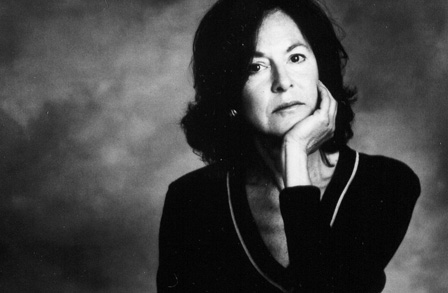
Louise Glück was born in New York City in 1943 and grew up on Long Island. She attended Sarah Lawrence College and Columbia University. Considered by many to be one of America’s most talented contemporary poets, Glück is known for her poetry’s technical precision, sensitivity, and insight into loneliness, family relationships, divorce, and death. The poet Robert Hass has called her “one of the purest and most accomplished lyric poets now writing.” In 2020 she was awarded the Nobel Prize in Literature “for her unmistakable poetic voice that with austere beauty makes individual existence universal.”

Glück is the author of 12 books of poetry, including the recent collections Faithful and Virtuous Night (2014), winner of the National Book Award, and Poems 1962-2012 (2012), which won the Los Angeles Times Book Prize, as well as the essay collection American Originality (2017). Glück’s early books feature personae grappling with the aftermaths of failed love affairs, disastrous family encounters, and existential despair, and her later work continues to explore the agony of the self. Her first book of poetry, Firstborn (1968), was recognized for its technical control as well as its collection of disaffected, isolated narratives. Helen Vendler commented on Glück’s use of story in her New Republic review of The House on Marshland (1975). “Glück’s cryptic narratives invite our participation: we must, according to the case, fill out the story, substitute ourselves for the fictive personages, invent a scenario from which the speaker can utter her lines, decode the import, ‘solve’ the allegory,” Vendler maintained. But she added that “later, I think … we read the poem, instead, as a truth complete within its own terms, reflecting some one of the innumerable configurations into which experience falls.” According to poet-critic Rosanna Warren, Glück’s “power [is] to distance the lyric ‘I’ as subject and object of attention” and to “impose a discipline of detachment upon urgently subjective material.”

Glück’s poems in books such as Firstborn, The House on Marshland, The Garden (1976), Descending Figure (1980), The Triumph of Achilles (1985), Ararat (1990), and the Pulitzer Prize-winning The Wild Iris (1992) take readers on an inner journey by exploring their deepest, most intimate feelings. Glück’s ability to create poetry that many people can understand, relate to, and experience intensely and completely stems from her deceptively straightforward language and poetic voice. In a review of Glück’s The Triumph of Achilles, Wendy Lesser noted in the Washington Post Book World that “‘direct’ is the operative word here: Glück’s language is staunchly straightforward, remarkably close to the diction of ordinary speech. Yet her careful selection for rhythm and repetition, and the specificity of even her idiomatically vague phrases, give her poems a weight that is far from colloquial.” Lesser went on to remark that “the strength of that voice derives in large part from its self-centeredness—literally, for the words in Glück’s poems seem to come directly from the center of herself.”

Because Glück writes so effectively about disappointment, rejection, loss, and isolation, reviewers frequently refer to her poetry as “bleak” or “dark.” The Nation’s Don Bogen felt that Glück’s “basic concerns” were “betrayal, mortality, love and the sense of loss that accompanies it… She is at heart the poet of a fallen world.” Stephen Burt, reviewing her collection Averno (2006), noted that “few poets save [Sylvia] Plath have sounded so alienated, so depressed, so often, and rendered that alienation aesthetically interesting.” Readers and reviewers have also marveled at Glück’s gift for creating poetry with a dreamlike quality that at the same time deals with the realities of passionate and emotional subjects. Holly Prado declared in a Los Angeles Times Book Review piece on The Triumph of Achilles (1985) that Glück’s poetry works “because she has an unmistakable voice that resonates and brings into our contemporary world the old notion that poetry and the visionary are intertwined.” Glück’s Pulitzer prize-winning collection, The Wild Iris (1992), clearly demonstrates her visionary poetics. The book, written in three segments, is set in a garden and imagines three voices: flowers speaking to the gardener-poet, the gardener-poet, and an omniscient god figure. In the New Republic, Helen Vendler described how “Glück’s language revived the possibilities of high assertion, assertion as from the Delphic tripod. The words of the assertions, though, were often humble, plain, usual; it was their hierarchic and unearthly tone that distinguished them. It was not a voice of social prophecy but of spiritual prophecy—a tone that not many women had the courage to claim.

Meadowlands (1996), Glück’s first new work after The Wild Iris, takes its impetus from Greek and Roman mythology. The book uses the voices of Odysseus and Penelope to create “a kind of high-low rhetorical experiment in marriage studies,” according to Deborah Garrison in the New York Times Book Review. Garrison added that, through the “suburban banter” between the ancient wanderer and his wife, Meadowlands “captures the way that a marriage itself has a tone, a set of shared vocal grooves inseparable from the particular personalities involved and the partial truces they’ve made along the way.”

Vita Nova (1999) earned Glück the prestigious Bollingen Prize from Yale University. In an interview with Brian Phillips of the Harvard Advocate, Glück stated: “This book was written very, very rapidly… Once it started, I thought, this is a roll, and if it means you’re not going to sleep, okay, you’re not going to sleep.” Although the ostensible subject matter of the collection is the examination of the aftermath of a broken marriage, Vita Nova is suffused with symbols drawn from both personal dreams and classic mythological archetypes. Glück’s next collection, The Seven Ages (2001) similarly takes up both myth and the personal in forty-four poems whose subject matter ranges throughout the author’s life, from her earliest memories to the contemplation of death. Glück’s next book, Averno (2006) takes the myth of Persephone as its touchstone. The book’s poems circle around the bonds between mothers and daughters, the poet’s own fears of ageing, and a narrative concerning a modern-day Persephone. In the New York Times, Nicholas Christopher noted Glück’s unique interest in “tapping the wellsprings of myth, collective and personal, to fuel [her] imagination and, with hard-earned clarity and subtle music, to struggle with some of our oldest, most intractable fears—isolation and oblivion, the dissolution of love, the failure of memory, the breakdown of the body and destruction of the spirit.”

William Logan called Glück’s A Village Life (2009), “a subversive departure for a poet used to meaning more than she can say.” The book is a marked formal departure for Glück, relying on long lines to achieve novelistic or short-story effects. Logan saw A Village Life as a latter-day Spoon River Anthology in its use of “the village as a convenient lens to examine the lives within, which counterpoint the memories of her [Glück’s] life without.” Dana Goodyear, reviewing the book for the Los Angeles Times found A Village Life “electrifying,” even as it presumed to tell its “polite” story of a “dying agriculture community, probably in Italy, probably some time between the 1950s and today.” Goodyear added: “Ordinariness is part of the risk of these poems; in them, Glück hazards, and dodges, sentimentality. The near miss makes us shiver.” Glück’s selected Poems 1962-2012 (2012) was published to great acclaim. While highlighting her work’s fierceness and “raking moral intensity,” in the words of New York Times reviewer Dwight Garner, the collection also allowed readers to see the arc of Glück’s formal and thematic development. According to Adam Plunkett, reviewing the collected poems in the New Republic, “Very few writers share her talent for turning water into blood. But what emerges from this new, comprehensive collection—spanning the entirety of her career—is a portrait of a poet who has issued forth a good deal of venom but is now writing, excellently, in a softer vein.”

In 2003 Glück was named the 12th US Poet Laureate. That same year, she was named the judge for the Yale Series of Younger Poets, a position she held until 2010. Her book of essays Proofs and Theories (1994) was awarded the PEN/Martha Albrand Award for Nonfiction. In addition to the Pulitzer and Bollingen Prizes, she has received many awards and honors for her work, including the Lannan Literary Award for Poetry, a Sara Teasdale Memorial Prize, the MIT Anniversary Medal, the Wallace Stevens Award, a National Humanities Medal, and a Gold Medal for Poetry from the American Academy of Arts and Letters. She has received fellowships from the Guggenheim and Rockefeller Foundations, and from the National Endowment for the Arts. In 2020 she was awarded the Nobel Prize in Literature.

Glück is currently writer-in-residence at Yale University and lives in Cambridge, Massachusetts.

October (section I)
 
Is it winter again, is it cold again,
didn’t Frank just slip on the ice,
didn’t he heal, weren’t the spring seeds planted

didn’t the night end,
didn’t the melting ice
flood the narrow gutters

wasn’t my body
rescued, wasn’t it safe

didn’t the scar form, invisible
above the injury

terror and cold,
didn’t they just end, wasn’t the back garden
harrowed and planted—

I remember how the earth felt, red and dense,
in stiff rows, weren’t the seeds planted,
didn’t vines climb the south wall

I can’t hear your voice
for the wind’s cries, whistling over the bare ground

I no longer care
what sound it makes

when was I silenced, when did it first seem
pointless to describe that sound

what it sounds like can’t change what it is—

didn’t the night end, wasn’t the earth
safe when it was planted

didn’t we plant the seeds,
weren’t we necessary to the earth,

the vines, were they harvested?

Safe Abortion Day: Soliaktion in Berlin, 28.09.2020

28.9.2020 | #SafeAbortionDay | 19.00 Brandenburger Tor
Together with Berlin-Ireland Pro Choice Solidarity
Ni una menos Berlin
Bündnis für sexuelle Selbstbestimmung
and many other organisations and individuals,
we stand in solidarity for choice, for rights, for dignity and safe and legal abortion.

Fotos: Gabriella Falana
Tanz: Magdo Magdo
Art: Anna Krenz
Performance: Anna Krenz, Magdo Magdo, Urszula Bertin, Agnieschka Glapa, Ania, Elisabeth

Scenariusz do performance “VOICES” by #DziewuchyBerlin @ #BotschaftDerPolinnen
28.9.2020 | #SafeAbortionDay | 19.00 Brandenburger Tor – Screenplay/Drawings: Anna Krenz
Directed by Dziewuchy, music/ light: Kuba Pierzchalski, dance: Magdo Magdo, storyteller: Anna Krenz, Sisters: Urszula Bertin, Agnieschka Glapa, Ania, Elisabeth; Scenography: Anna Krenz


Trees & drzewa

Anna Nacher wrote on FB:

Plants never cease to amaze me. This juniper was rescued from the place, where someone threatened to burn it down or otherwise destroy. So upon hearing this, Marek Styczyński decided to uproot the already fully grown bush, then asked Marcin Sarota to transport it to Biotop Lechnica.
It was already too big to fit in the car, Marcin had at the disposal, so they were driving with this bush that took up all the inside space, sticking a bit through the window – luckily they didn’t meet the police (I’m sure the officers would’ve been sure the bush is driving a car). We immediately fell for each other when I saw it for the first time and sensed its marvellous, rich and strong smell. So we placed it in the soil again, with no guarantee it would survive. The first three years were difficult. It apparently was struggling, a lot. It was changing its shape, lost most of his leaves, then grew another set (of a completely different kind), then lost some more. I was afraid we’re losing it. But deep inside I knew it was still transforming and not giving up. And there He is, five years later, His Majesty Almighty Juniperus, with all his glorious smell again, giving shelter to so many other beings, uplifting my mood and coaching me on coping with transformation.

***
Adam Węglowski
napisał (albo został zacytowany) w kalendarzu Przekroju w sobotę 29 sierpnia 2020 roku, w Dzień Sprzeciwu wobec Prób Jądrowych

Drzewa, które pamiętają historię: Ocalone z blasku tysiąca słońc.

Hibakujumoku to po japońsku „drzewa, które przeżyły” wybuchy bomb atomowych w Hiroszimie i Nagasaki. Według naukowców fala uderzeniowa natychmiast unicestwiła co najmniej połowę drzewostanu w promieniu 2 km od epicentrum wybuchu. Większość pozostałych drzew zniszczyło promieniowanie. Przetrwało od kilkudziesięciu do stu kilkudziesięciu sztuk, np. wierzba i eukaliptus przy ruinach zamku w Hiroszimie czy kilkusetletnie cynamonowce w świątyni Sanno Shinto w Nagasaki.

***
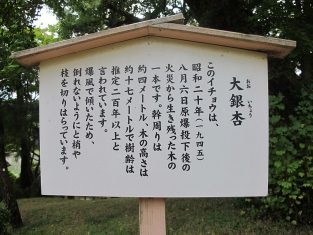
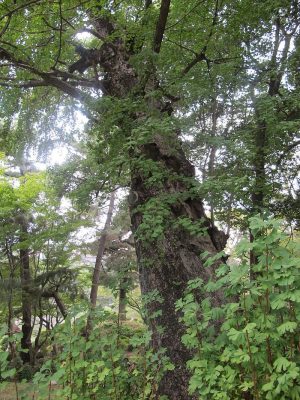
To mi przypomniało, że pierwszym drzewem, które odrosło w Hiroszimie był miłorząb japoński. Drzewo rośnie w ogrodzie Shukkei-en w centrum miasta, założonym w roku 1620. Ogród został całkowicie zniszczony w ataku nuklearnym, po miłorzębie pozostał pień, z którego już następnej wiosny odrosły nowe gałęzie.

Napis na tablicy głosi (Wikipedia):

Ten miłorząb jako jedyne drzewo w tym ogrodzie przetrwał burzę ogniową po bombardowaniu atomowym w dniu 6 sierpnia 1945 roku. Obwód pnia: około 4 m, wysokość: około 17 m, wiek drzewa: szacowany na ponad 200 lat. Jest przechylony przez podmuch, przycinanie gałęzi zapobiega jego upadkowi

***

Ale magia miłorzębu to nie tylko Hiroszima. To jedyne drzewo liściaste, które jest jednocześnie drzewem iglastym. Jego igły zrosły się w liście.

Czasami używana nazwa miłorząb japoński jest myląca, gdyż gatunek ten nie występuje naturalnie w Japonii, a jedynie z tego kraju drzewo to po raz pierwszy trafiło do Europy. Gatunek endemiczny i reliktowy, występujący na stanowiskach naturalnych wyłącznie w południowo-wschodniej części Chin, w prowincji Anhui, gdzie rośnie 167 drzew. Przez długi czas utrzymywało się przekonanie, że ani w Chinach ani w Japonii miłorząb nie występuje już w stanie dzikim, a jego osobniki rosnące m.in. przy wielu świątyniach i klasztorach zawdzięczają swe istnienie jedynie opiece kapłanów i mnichów. Miłorzęby mogą żyć nawet 4000 lat i osiągać wysokość 40 m.

Moria reblogged

komentarz po polsku – na dole; autorką komentarza jest Ania Alboth, inicjatorka Marszu dla Aleppo, od wielu lat polska rzeczniczka praw uciekinierów

Fire Destroyed Most of Europe’s Largest Refugee Camp, on Greek Island of Lesbos

By Patrick Kingsley, Sept 9th

Campaigners have long warned that the overcrowded conditions at the impoverished camp might lead to catastrophe.Video player loading

Vast stretches of the camp and an adjacent site were destroyed in the fire.

Europe’s largest refugee camp, on the Greek island of Lesbos, has long been a desperate makeshift home for thousands of refugees and migrants who have risked everything to flee war and economic hardship for a better life. They lived in cramped tents with limited access to toilets, showers and health care. For years, rights groups warned that these squalid conditions would sooner or later prompt a humanitarian disaster.

On Tuesday night, that disaster came. A fast-moving fire destroyed much of the camp, leaving most of its 12,000 residents homeless. By Wednesday, a process of soul-searching had begun among many Europeans, for whom the Moria camp, and the neglect of its residents, has long been synonymous with the continent’s increasingly unsympathetic approach to refugees.

No deaths were initially reported. But vast stretches of the camp and an adjacent spillover site were destroyed in the fire, leaving only a medical facility and small clusters of tents untouched.

Since 2015, Moria has filled with an influx of migrants — now mostly Afghan refugees — seeking to reach northern Europe. It is a bleak tent camp designed for 3,000 people that at times has swollen to more than 20,000 after Europe started blocking their paths in 2016.

Ursula von der Leyen, president of the European Union’s executive arm, the European Commission, said she felt “deep sorrow” about the fire, while the governor of a region in western Germany, Armin Laschet, said he was willing to admit up to 1,000 refugees from the camp as part of a wider European resettlement program that has yet to be developed.

Some residents of the camp managed to escape to the island’s main town of Mytilene, while others were able to remain in their tents in small areas of the camp that were unaffected by the blaze. But many were being held nearby on Wednesday morning while the Greek authorities decided where to house them.

Aid workers said that the fire at Moria, which is named after a nearby village, began shortly after 10 p.m. on Tuesday following protests by residents over recent coronavirus restrictions, and that it spread quickly because of high winds and the explosion of gas canisters.

Video player loading

A fast-moving fire destroyed much of the camp, leaving most of its 12,000 residents homeless.

Aid workers, activists and officials said a series of fires were started intentionally by a group of camp residents who were furious at being forced to quarantine after at least 35 people tested positive for coronavirus at the camp.

A new, smaller fire broke out on Wednesday evening in one of the few areas that had survived the first blaze, displacing roughly 1,000 more people, aid workers said.

Notis Mitarachi, the Greek migration minister, said during a Wednesday evening news conference that those responsible for the fires would not go unpunished.

The fire quickly destroyed much of the camp’s formal enclosure, including a facility for 400 unaccompanied children and much of its water infrastructure, before spreading to a spillover site in olive groves close to the camp’s fence. Prime Minister Kyriakos Mitsotakis said a state of emergency had been declared for all of Lesbos and noted that all unaccompanied minors would be transferred off the island.

Videos provided to The New York Times by aid workers at the camp showed residents hurrying from Moria in droves in the early hours of Wednesday morning. They carried their belongings in bags slung over their shoulders, some of them pushing infants in strollers, and others draped in blankets.

“It was absolute chaos,” said Jonathan Turner, an aid worker who been building water infrastructure in the camp on behalf of Watershed Foundation and Choose Love. “There were just so many people trying to move, trying to escape.”

By sunrise, footage showed that much of the camp’s formal infrastructure had collapsed, with many of the tents burned. Several metal portable cabins were blackened with soot, their walls having buckled in the heat. Trees on the nearby slopes had been charred.

Video player loading

Fire at a migrant camp on the Greek island of Lesbos.

Thousands of displaced residents were left with nowhere to go, with many simply sitting down a few hundred meters from the camp.

“There are thousands of people just sitting on the main road,” said Nick Powell, an Australian aid worker who witnessed the fire and its aftermath, and who was helping to provide food to the survivors on Wednesday.

It is still unclear where they will be taken. George Koumoutsakos, Greece’s deputy migration minister, said during a Wednesday news conference that efforts were being made to rehouse around 3,000 people in new tents.

The priority was to rehouse the most vulnerable, with some 400 unaccompanied minors being moved to “safe zones” and hotels, he said.

Moria was started in 2015, when more than 850,000 war refugees and migrants made their way by boat from Turkey to nearby Greek islands like Lesbos, hoping to travel farther north. A further 300,000 have arrived in the years since.

At first, when Europe was more tolerant of migrants, people tended to pass through the camp quickly. But in 2016, Europe changed tack, blocking the onward movement of migrants to countries like Germany and leaving thousands stranded in squalid Greek camps like Moria, which soon became overcrowded.

Since then, Moria has been considered an emblem of Europe’s hardening approach to migrants in the aftermath of the 2015 crisis.

Through the European Union, other European countries provided Greece with money to care for its refugee population. But European leaders refused to allow many of them to leave Greek camps for sanctuary elsewhere in Europe.

Stuck in Moria, migrants lined up for hours for food that was often moldy. And they became enmeshed in what for many of them seemed an interminably complex asylum application process, leading to what some doctors deemed a mental health crisis at the camp.

Refugees and migrants sleeping next to a road following the fire.

The situation has been no better in other camps on nearby Greek islands. Across the Greek islands before the fire, more than 23,000 people were crammed into camps built for just 6,000, according to recent statistics compiled by aid groups.

The dynamic has created deep hostility between migrants and Greek islanders who, once welcoming to their new neighbors, have grown increasingly resentful. It has also led the Greek government to immediately expel many new arrivals this year, abandoning more than 1,000 immigrants in rafts at sea.

Given these conditions, campaigners had long predicted a catastrophe at the camp.

“This fire was expected,” said Eva Cossé, who leads research in Greece for Human Rights Watch, an independent New York-based rights organization. “It’s not surprising. It’s a testament to the European Union’s negligence and Greece’s negligence.”

Human Rights Watch has been calling for the camp to be closed or its number of residents to be significantly reduced for years.

“E.U. member states need to have a serious discussion about reducing numbers on the island, and alleviate the pressure on Greece, because Greece cannot deal with this alone,” Ms. Cossé said.

While Mr. Mitsotakis, the prime minister, condemned those who started the fire, he said the disaster could “become an opportunity to deliver better conditions and a new reality in Lesbos.”

Offers of support began on Wednesday, with the European Commission saying it would immediately help relocate the 400 unaccompanied minors to mainland Greece and onward to new homes in E.U. member states. These children are the last of 1,200 that the bloc has been helping place in other countries.

Ylva Johansson, the European commissioner for migration, said that the commission was also paying for a boat that was on its way to Lesbos on Wednesday afternoon and would serve as a makeshift hotel for the most vulnerable.

She also said that, despite recent efforts to improve the overwhelmed camp, conditions had remained very poor. Thousands of people were transferred off the island as the pandemic began, reducing numbers from more than 20,000 to 12,000, though it remained vastly overstretched.

“There are still too many people there,” she said, calling the conditions in Moria “unacceptable.”

Reporting was contributed by Niki Kitsantonis and Iliana Magra from Athens, Matina Stevis-Gridneff from Brussels, and Melissa Eddy from Berlin.


Bardzo nie lubię mówienia o ludziach w numerkach.
Bo numerki oddalają.

Dlatego 13 000 ofiar pożaru obozu Moria na Lesbos czy 11 000 ofiar wysiedleń z obozów i mieszkań w kontynentalnej Grecji albo bezdomne tłumy na placu Victoria, chciałabym w Waszych oczach zamienić w konkret.

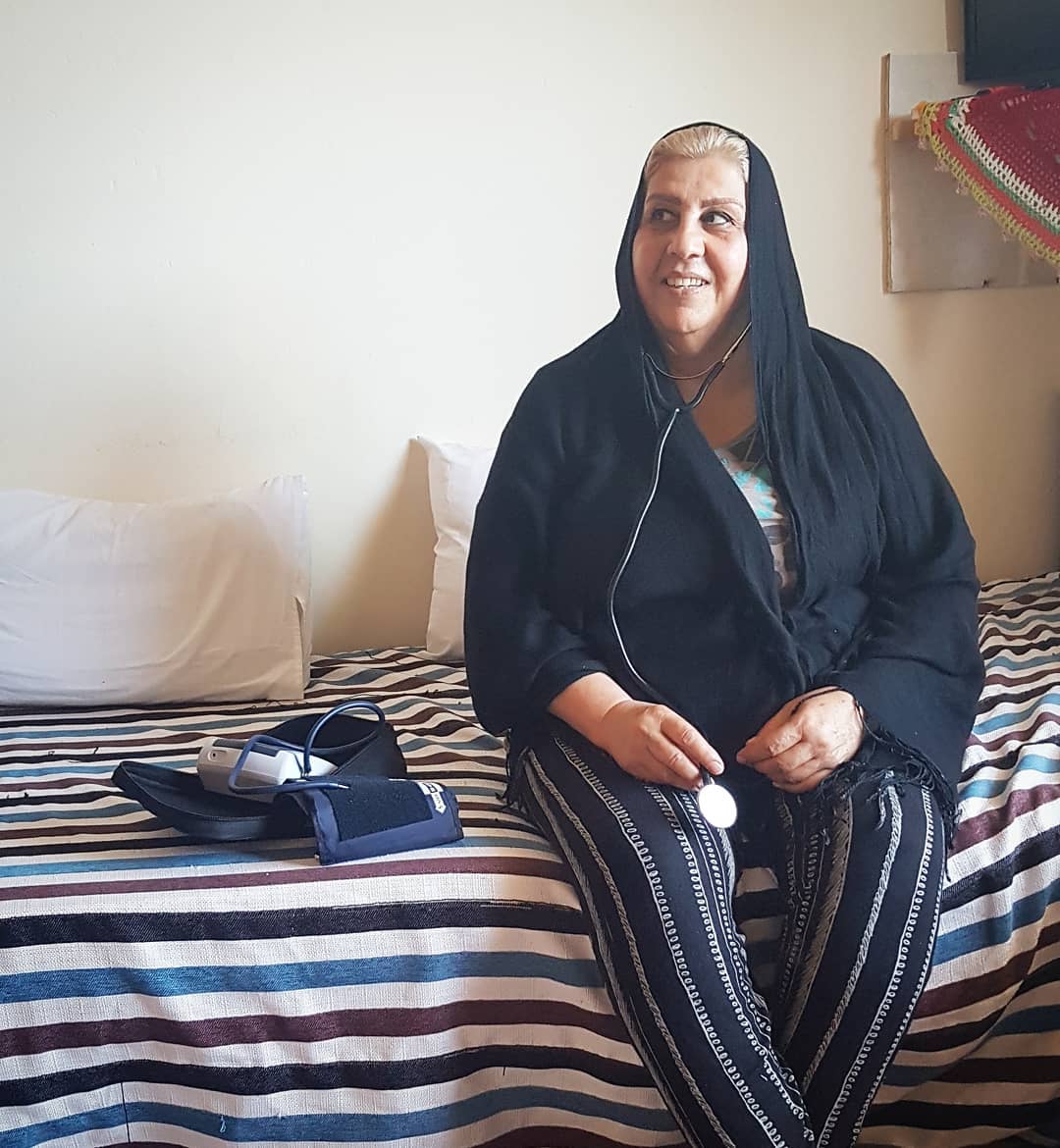
Poznajcie Sajrę: Kardiochirurżka z Afganistanu. Kobieta, szanowany lekarz, matka dwóch bliźniaczek i Aliego. Jeździła po świecie, operowała, zna języki.

Talibom nie podobało się, że Ali się do nich nie przyłączy. Najpierw został zabity mąż Sajry. Potem przyszli po syna. Wieczorem, nie pukali.
Sajra zasłoniła syna własną piersią. Pamięta tylko gwałt, wbicie noża, potem straciła przytomność. Aliemu udało się uciec, ale gdy Sajra doszła do siebie, okazało się, że… jej bliźniaczki zniknęły. 8-letnie. Blond, po mamie.

To było 3 lata temu. Nikt nie wie, czy żyją. Gdzie. Z kim. Jak.

Sajra mieszka w maleńkim pokoju w Grecji, z Alim, w tymczasowym ośrodku UNHCR . Obok jej łóżka leży stetoskop. Nie ma nadziei, nie ma siły, ma jedną spódnicę i ten stetoskop.

Za numerkami stoją takie właśnie dramaty

Call for a Worldwide Reading

Call for a Worldwide Reading for the democracy movement in Hong Kong on 9 September 2020

German version see below/ deutschsprachige Version unten

The international literature festival berlin [ilb] is calling on individuals, schools, universities, cultural institutions and the media for a worldwide reading for freedom of expression and assembly on 9 September 2020. These readings are intended to draw attention to the situation of freedom of expression, freedom of assembly and human rights in Hong Kong, which were adopted by the United Nations in Paris on 10 December 1948. Hong Kong’s parliamentary elections are also scheduled for September 2020.

The recent arrests of 15 representatives of civil society, the democratic camp and the media are part of a long tradition of sometimes subtle, sometimes offensive efforts by the People’s Republic of China to influence the Hong Kong Special Administrative Region (SAR), which has been semi-autonomous since 1997, and its government formation. New York Times May 22nd: “On Hong Kong, the leadership struck a hard line at the annual meeting of China’s legislature, unveiling a plan to impose sweeping new security laws that would place the territory more firmly under Beijing’s thumb and crack down on antigovernment protests.” The headline of the Frankfurter Allgemeine Zeitung in Germany today: “China wants to put an end to the protest movement in Hong Kong”.

In 2014, the Chinese government stipulated that all candidates for the election of the head of government had to be approved beforehand in Beijing. Known as the “Umbrella Movement”, the population of Hong Kong responded with a series of large-scale demonstrations: Thousands of students and pupils, university teachers and intellectuals, artists, workers and employees demanded, among other things, the withdrawal of the resolution and the introduction of political reforms towards further democratization. There were numerous violent clashes between demonstrators and the police, who used pepper spray and tear gas against the largely peaceful demonstrators and arrested various.

At the end of 2015, five Hong Kong booksellers and publishers were abducted to mainland China where they were interned, interrogated and forced to confess. On February 24, 2020, one of the booksellers, Gui Minhai, was sentenced to 10 years in prison for “illegally passing secret information abroad”. While the Internet, newspapers, television and radio are officially uncensored in Hong Kong, most media are now owned by Chinese investors. Television and radio largely outdo each other in self-censorship.

Since March 2019, there have been renewed large-scale demonstrations against the pro-Beijing Hong Kong government over a draft bill that would also allow the extradition of wanted persons to China. Among other things, the demonstrators were demanding the withdrawal of the extradition bill, universal suffrage and the release of political prisoners. While the draft of the extradition bill was officially withdrawn by the government in September 2019, the responses to the other demands are being sat out. The result: over 1,000 protests and 8,000 arrests since then.

Due to COVID-19, the movement has largely shifted to the Internet in the form of memes and images. At the same time, a focus has been placed on the formation of trade unions in order to make the structures more sustainable. The recent arrests in April 2020 underline China’s ongoing efforts to stop critical voices and freedom of expression in Hong Kong. The leadership in Beijing is using the global crisis to quickly create facts and undermine the “one country, two systems” principle. It is challenging the constitutional requirement of non-interference in Hong Kong affairs and wants to introduce a new security law that can criminalize unpleasant political activities as terrorism. This course highlights the urgent need for international attention and solidarity at this time.

Read the 30 articles of human rights, which you can find in over 500 (!) languages on the website of the United Nations and read by Vivienne Westwood, Nina Hoss, Can Dündar, Patti Smith, Simon Rattle, Ai Weiwei, Elfriede Jelinek, and David Grossman subtitled in the languages Arabic, Chinese, German, English, French, Hindi, Russian, Spanish, and Turkish via our website.

Institutions and persons who would like to participate with a reading on 9 September 2020 are asked to inform us and send information like: name of the organizer, place and date of the event, participants, language of the event and, if you have, website link. Our e-mail address is: worldwidereading@literaturfestival.com. The ilb will announce the events on the website www.literaturfestival.com and in social media.

Aufruf zu einer Weltweiten Lesung für die Demokratiebewegung in Hongkong am 9. September 2020
Das internationale literaturfestival berlin [ilb] ruft Individuen, Schulen, Universitäten, kulturelle Institutionen und Medien zu einer Weltweiten Lesung für Meinungs- und Versammlungsfreiheit am 9. September 2020 auf. Mit diesen Lesungen soll auf die Lage der Meinungs- und Versammlungsfreiheit und der Menschenrechte in Hongkong aufmerksam gemacht werden, die am 10. Dezember 1948 von den Vereinten Nationen in Paris verabschiedet wurden. Im September 2020 ist auch die Parlamentswahl in Hongkong vorgesehen.

Die jüngsten Festnahmen von 15 VertreterInnen der Zivilgesellschaft, des demokratischen Lagers und der Medien reihen sich ein in eine lange Tradition der teils subtilen, teils offensiven Bemühungen der Volksrepublik Chinas, Einfluss auf die seit 1997 teil-autonome Sonderverwaltungszone Hongkong sowie deren Regierungsbildung auszuüben. Die New York Times schrieb am 22. Mai: „Was Hongkong betrifft, so schlug die Führung (Chinas) auf der Jahrestagung der chinesischen Legislative eine harte Linie ein und publizierte einen Plan zur Verabschiedung umfassender neuer Sicherheitsgesetze, die das Gebiet stärker unter die Regie Pekings stellen und gegen regierungsfeindliche Proteste vorgehen würden.“

2014 legte die Regierung Chinas fest, dass alle Kandidierenden für die Wahl des Regierungschefs oder der Regierungschefin zuvor in Peking genehmigt werden müssten. Bekannt unter der Bezeichnung „Regenschirm-Bewegung“ reagierte die Hongkonger Bevölkerung mit einer Reihe von Großdemonstrationen: Zu Hunderttausenden forderten SchülerInnen, Studierende, HochschullehrerInnen, Intellektuelle, KünstlerInnen, ArbeiterInnen und Angestellte die Rücknahme des Beschlusses und die Einleitung von politischen Reformen. Es kam zu zahlreichen Zusammenstößen zwischen Demonstrierenden und der Polizei, die mit Pfefferspray, Tränengas und Festnahmen gegen die weitgehend friedlichen Demonstrationen vorgingen.

Ende 2015 wurden fünf Hongkonger Buchhändler und VerlegerInnen nach Festlandchina entführt und dort interniert, verhört und zu Geständnissen gezwungen. Am 24. Februar 2020 wurde einer der Buchändler, Gui Minhai, für die „illegale Weitergabe von Geheiminformationen ans Ausland“ zu 10 Jahren Haft verurteilt. Während zwar Internet, Zeitungen, Fernsehen und Radio in Hongkong offiziell unzensiert sind, sind die meisten Medien inzwischen im Besitz von chinesischen Investoren. Fernsehen und Radio überbieten sich weitgehend in Selbstzensur.

Seit März 2019 kommt es erneut zu Großdemonstrationen gegen die Peking-nahe Regierung Hongkongs anlässlich eines Gesetzentwurfs, der auch die Auslieferung von gesuchten Personen an China ermöglichen sollte. Gefordert wurden von den Demonstrierenden unter anderem die Rücknahme des Auslieferungsgesetzes, das allgemeine Wahlrecht und die Freilassung von Demonstrierenden. Während der Entwurf des Auslieferungsgesetzes im September 2019 offiziell von Regierungsseite zurückgenommen wurde, werden die Antworten auf die weiteren Forderungen ausgesessen. Die Folge: über 1.000 Proteste und 8.000 Festnahmen seither.

Aufgrund von COVID-19 hat sich die Bewegung größtenteils in Form von Memes und Bildern ins Internet verlagert. Gleichzeitig wird ein Fokus auf das Bilden von Gewerkschaften gelegt, um den Strukturen mehr Nachhaltigkeit zu verleihen. Die jüngsten Festnahmen vom April 2020 unterstreichen die andauernden Bemühungen Chinas, kritische Stimmen und Meinungsfreiheit in Hongkong zu unterbinden. Die Führung in Peking nutzt die globale Krise, um rasch Fakten zu schaffen und das „Ein Land, zwei Systeme“ Prinzip zu untergraben. So stellt sie das in der Verfassung festgelege Gebot der Nichteinmischung in Hongkonger Angelegenheiten in Frage und will ein neues Sicherheitsgesetz einführen, das nicht genehme politische Aktivitäten als Terrorismus kriminalisieren kann. Dieser Kurs verdeutlicht, wie dringlich internationale Aufmerksamkeit und Solidarität gerade jetzt sind.

Gelesen werden sollen die 30 Artikel der Menschenrechte, die Sie in über 500 (!) Sprachen auf der Webseite der Vereinten Nationen finden sowie gelesen von Vivienne Westwood, Nina Hoss, Can Dündar, Patti Smith, Simon Rattle, Ai Weiwei, Elfriede Jelinek und David Grossman, untertitelt in den Sprachen Arabisch, Chinesisch, Deutsch, Englisch, Französisch, Hindi, Russisch, Spanisch und Türkisch über die Website des internationalen literaturfestival.

Institutionen und Personen, die sich mit einer Lesung am 9. September 2020 beteiligen möchten, werden gebeten, uns folgende Informationen zukommen zu lassen: Organisator*innen, Veranstaltungsort, Uhrzeit, teilnehmende Akteure, Veranstaltungssprache, ggf. Link zu Ihrer Webseite. Die E-Mail-Adresse lautet: worldwidereading@literaturfestival.com. Das ilb wird die Veranstaltungen auf der Webseite www.literaturfestival.com und in sozialen Medien ankündigen.

internationales literaturfestival berlin
Chausseestr. 5
10115 Berlin
Fon +49 (0) 30 – 27 87 86 65
Fax +49 (0) 30 – 27 87 86 85
presse@literaturfestival.com

Berlin liest | 6. September 2020 | 9.–19. September 202010. Graphic Novel Day | 13. September 20206. internationales literaturfestival odessa | 23.–27. September 2020

#ilb20 #ilb

http://www.litfestodessa.com
http://www.worldwide-reading.com
http://www.comics-berlin.de
http://www.wordalliance.org

In Pursuit of Happiness

Uwaga polscy Czytelnicy Sąsiadów. Tak, dziś, podobnie jak tydzień temu, sąsiedzi mają kwarantannę, ale wrócą :-). Też zresztą szukają szczęścia.

Marta J. Łysik
University of Wroclaw

or: Escape, Change, and Return in Contemporary Academic Novels, Or Why I Read Campus Novels, But Possibly Shouldn’t

Long ago I decided to make a life in higher education. I imagined that it would provide a good and ethical way of living, a consistently interesting work life, and a modicum of happiness. I enjoyed teaching and have been doing it for twenty years now, since I was sixteen. One of my top five strengths according to the Gallup Strengths Center is that I am a learner and have to teach myself new things all the time. I enjoy the life of the mind and the mentoring aspect of being a teacher since it capitalizes on another strength of mine, namely connectedness. To me the profession has all the responsibility and status I want in life. I can still be safely introverted in between teaching, conferences, and meetings. The extroverted moments help me appreciate the introverted ones. I need the two alternatives to keep me on my toes all the time, since humdrum dulls my wits. None of the lucrative or 9-to-5 jobs appeals to me.

Most of my life, I have read academic novels to reinforce my decision to make an academic life for myself, but what did I discover? All sorts of things that qualified and dampened what I realize now were my own naïve expectations. Since I am an introvert, a learner, and a reader, I resort to books to find out about reality, but my findings are often disturbing, sometimes disillusioning, sometimes in jarring conflict with real life. Perhaps I have read too many academic novels. How come in the institution that promotes the life of the mind, petty concerns are in the foreground? As I progressed in my academic life (I have worked in German, American, and Polish academe), I encountered many disillusioning facts. And reading academic fiction confirmed my discovery: that the academic life is more like other lives than I expected—and hoped—it was going to be. That it consists of people, their issues, and insecurities, just like everywhere else I worked. That people can be gratuitously cruel. That there is no justice in human outcomes here, either. That the work is hard, sometimes repetitive, and occasionally not very interesting (the administrative tasks I am required to do suck out all of my creative juices). That academics are under stress a lot of the time, that they face frustration, that, in short, the outcome of taking a Ph.D. is not a guaranteed “happy ending.”

I learned to find some satisfactions outside of academia. Yes, there are occasional moments of grace coming from interaction with colleagues and students, and thrills stemming from teaching and research, but I feel that to base one’s sense of happiness on those fickle moments is not particularly wise. Reading helps, but perhaps one should limit the number of academic novels since—unfortunately—so few of them help me affirm the value of an academic career or promise me the happiness for which I chose it.

What is the valid reason for becoming an academic, I wonder? Certain talents and interests? And is there a space for happiness in that line of work? A job description could briefly state: teaching, research, and administration. How paper-pushing could ever be a source of joy is a mystery to me, but the remaining two could potentially provide a healthy mixture of sociability and solitude. What answer does literature have to offer to this question, i.e. does academic life make people happy? Or perhaps you already have to be happy when you enter academe? Of all the campus and academic novels I have read, not many were of an optimistic disposition, or depicted a happy academic life. What is wrong? Is it because life in general is tough regardless of one’s career, or is it the university setting and its protagonists that guarantee misery until retirement? I do not think that the academic setting is to blame.

A glance at textbooks and articles concerning academic and campus novels proves that the word “happiness” does not appear. Even the humor in many novels, often under the guise of irony, satire, and sarcasm, can be rather crude. Merritt Moseley notes that

Discussions of the academic novel are, by and large, too humorless. Most academic novels are comic. This does not, or need not, make them satiric; and the non-satiric comic novel is not necessarily less worthy than the satiric novel or the so-called “serious” novel. (18)

Maybe happiness is too subjective a category to explain, or share; possibly laughter seems unacademic. Is humor a taboo when it comes to academia? No—there is academic humor—but I find that there is not enough of it in academic novels. Besides, humor is a subjective characteristic, defined and perceived differently by different people. Surely academic novels could be funnier, or as Moseley puts it:

While obviously there are some topics which do not lend themselves to comedy, there is no reason why higher education should be among them. Analysis of humor is of course nearly impossible and trying to persuade one person to laugh at what another finds funny is vain; but I take it as evident that humor adds to the pleasure of readers. I am convinced that the high incidence of comedy, ranging from the most delicate verbal touches to broad farce, in academic fiction is one of its most valuable and welcome traits. (19)

What if the humor in these novels was positive, not tinged with satirical edge, with hints of the negative? Would they be more satisfactory to me, in my own academic (mis)adventures? Would they serve me as a reminder of what is fine, amusing, and affirmative about the profession? Would I as an academic take myself less seriously, be less self-conscious, and therefore happier? Possibly.

The last resort, i.e. leaving the academy, can be liberating and can be the “happy ending” for some of the protagonists, in fiction and real life. Janice Rossen observes that several novels involve the most drastic measure: “many of the best university novels are about someone leaving academe at the end of the book” (188). I believe that individual happiness is contingent upon changing the status quo: changing oneself and/or the situation one is in, and sometimes it does entail leaving the academy. I have chosen three novels prioritizing happiness: Tolstoy Lied by Rachel Kadish, The Rosie Project by Graeme Simsion, and Save Your Own by Elisabeth Brink. Reading these academic novels has done me a world of good. The protagonists fixate on research first but realize it is not the path to happiness: one leaves, one stays but gets a life, and another one leaves, lives her life, and comes back to the academy. What, then is the recipe for happiness, according to academic novels?

The eighth sentence of Tolstoy Lied: A Love Story by Rachel Kadish is a famous quote from Tolstoy, “Happy families are all alike; every unhappy family is unhappy in its own way,” followed by a disillusioned comment by Tracy Farber, a 33-year-old Americanist and literary scholar:

Literary types swoon over that line, which opens Anna Karenina. But have they considered the philosophy they’re embracing? If Tolstoy is to be taken at his word, a person must be unhappy in order to be interesting. If this is true, then certain other things follow. Happy people have no stories you might possibly want to hear. (Kadish 3)

Professors of creative writing are famous for telling their students: “happiness writes white.” Why is unhappiness a magnet when it comes to writers? Tracy bemoans “how hard it is to find a good nontragic American novel on academia’s approved-reading list” (Kadish 4). This is another way of claiming that happiness cannot be interesting. To be happy is to be dull, almost mediocre:

In order to be happy, you must whitewash your personality; steamroll your curiosities, your irritations, your honesty and indignation. You must shed idiosyncratic dreams and march in lockstep with the hordes of the content. Happiness, according to this witticism of Tolstoy’s, is not a plant with spikes and gnarled roots; it is a daisy in a field of a thousand daisies. It is for lovers of kitsch and those with subpar intelligence. (Kadish 3)

I think that, contrary to what is believed, it is more of a challenge to be happy despite everything. There is always plenty to complain about but it actually requires an effort to focus on good things.

Why is the discussion about happiness taken for granted? In Kadish’s exploration of this question, Tracy is thinking of writing a book about happiness: “I’m saving this, of course, for my post-tenure book. I’m not naïve. Talking about happiness is career suicide. I’ll be accused of championing pap – of responding to a book not as a critic, whose role is to dissect, but from my kishkas” (Kadish 5). Why do academic novels not show us as shiny happy people? Why is it suspect to be happy in academe? Perhaps it is because “serious” academics believe happiness interferes with objectivity. Perhaps because emotions are not encouraged in a research environment. But where does the stigma come from? I love laughing while teaching and I derive profound pleasure whenever I can make my students smile and laugh. Yes, we tackle serious matters but there is room for jokes.

Teaching and research are Tracy’s reason for living. I identify with her, it is a very strong drive in my life as well, verging on workaholism. Life is work, work is life. Until she meets George, she is safely ensconced in the ivory tower. When asked by George about her life, she talks about her work first and foremost:

I love books . . . I love the escape. Academics aren’t supposed to say that, but it’s true. I love to dive into somebody else’s vision, nightmare, utopia, whatever. I love how books put a dent in our egos – turns out we’re not the first sentient generation on the planet after all. Other people have been just as perceptive, just as worked up, about the same damn human problems we face. (Kadish 42)

Suddenly her neatly organized world of scholarship and occasional friendships turns upside down: she becomes engaged, breaks off the engagement, has draining problems with a sick, and therefore cantankerous, colleague, and with a graduate student she advises. She is skeptical about marrying George, and initially scholarship is a more reliable source of happiness than people. However, she will soon learn first-hand that academia is not the last bastion where if you do your job, and do it well, you will be shielded from all manner of human-inflicted calamities.

Knowledge of her planned research leaks within the department and since her tenure review is coming up, this is another stress-inducing factor. She realizes this could be her demise, because

I think there’s a deep, long-running bias against literature about happiness. A cultural mistrust of anything but tragedy . . . It’s as if our whole literary tradition, which has been unsparing on the subjects of death, war, poverty, et cetera, has agreed to keep the gloves on where happiness is concerned . . . Anybody who tries to take happiness seriously is belittled . . . There’s this cultural fear of thinking seriously about happiness. (Kadish 159-160)

Looking around, I see more unhappy literary academics than happy ones. Some people, it seems, would rather wallow in unhappiness than take things in stride and start acting with agency, like a homo faber.

Even though in love, the idyllic state does not last forever for Tracy. When it rains, it pours: she parts with George, the colleague harasses her in many new ways, she is denied tenure, and the student attempts suicide. Tracy tries to fight for George, but because of his silent and stubborn resistance, she finally gives up. She helps the student, although it is not her responsibility. In her most desperate moments, she wants to escape into books:

I think of reading Tolstoy at two o’clock in the morning, my mind hopping so it’s nearly intolerable to sit at my computer. Of burying my own confusion in Hurston’s tongue-in-cheek prose. The lure, the warming light, of books. How delicious it might feel to follow that beacon, farther and farther from shore, until there remained no hope or desire to return. (Kadish 233)

But escaping will not solve her problems. Change is inevitable and she realizes she will have to edit her life and priorities. When she leaves the building after a very painful and unjust tenure denial, she sees George waiting for her. So there is a happy ending to her story and she relaxes into her life, thinking “Let me go through life the way we are, after all is said and done, meant to: shocked” (Kadish 325). It is a shocking realization that people in academia, her colleagues, nearly break her wonderful spirit. What saves her ultimately is friends and love. Her happiness is contingent on change, which is not an easy feat; it entails difficult emotions and decisions of letting go. There is nothing banal about her story, even if she chooses personal happiness instead of academe. Yes, Tracy achieves happiness, but the suggestion that one must choose between happiness and success in academia is not the sort of affirmation I sought, an affirmation that academic life will assure my happiness.

The Rosie Project by Graeme Simsion proves that even if one defines oneself mainly in terms of one’s occupation as a science professor, one will not be happy. Humans and emotions are the only keys to happiness. Professor Don Tillman is a geneticist in his prime looking for a wife, but he has a version of Asperger’s that does not lead to second dates. His family ties are strained as well: “My father and I have an effective but not emotional relationship. This is satisfactory to both of us. My mother is very caring but I find her stifling. My brother does not like me . . . I do not see my family very often. My mother calls me on Sundays” (Simsion 207).

He plans to find a wife by using the only methods he is familiar and comfortable with, namely scientific ones: “I may have found a solution to the Wife Problem” (Simsion 1), he says matter-of-factly. He devises a questionnaire and begins dating. But the candidates are never perfect. His days are planned to the minute, his research impeccable, and his life devoid of emotions and surprises. He does not make friends easily and so far it seems he only had four of them: his sister who passed away due to medical incompetence, Daphne, an elderly neighbor he spent time with until she developed Alzheimer’s and had to be placed in a home, and currently Gene and Claudia, Tillman’s ties to the real world. Enter Rosie, a disorganized Ph.D. student in psychology, working as a bartender, who would like to learn who her biological father is. Don becomes passionate about the project and in a series of comic events they collect and test the DNA of forty plus possible candidates who might have impregnated her mother years ago at the graduation party.

It takes longer for Don than it would for most people (including the readers), to realize he loves Rosie. Before he wins the girl (she is in love with him, too, but apprehensive of his emotional shortcomings), he teaches himself the art of bartending and dancing. The blossoming emotions he experiences are a surprise to him and he realizes he will have to make an effort and change his lifestyle in order to accommodate love. He will have to compromise in order to keep academia and Rosie in his life.

Rosie teaches him spontaneity, something he usually sees as a threat to his ordered academe-oriented existence (and perhaps a suspect quality for many in academic life) and especially the field he is steeped in, genetics. The two of them share spontaneous joys such as enjoying a meal on the balcony inconsistent with his scheduled menu, an unplanned trip to a movie theatre, a visit to New York with everything it has to offer. She appreciates his efforts to help identify her father and they find they enjoy each other’s company. He is a nerd but he is also attractive to Rosie, who sees in him a modern version of that old-school ideal man: Atticus Finch from To Kill a Mockingbird.

With the help of his friends and their expertise on relationships, he is able to work things out with Rosie, a work-life balance is won and preserved. The novel is funny and positive, due to Don’s idiosyncratic use of the English language and comic situations arising from his inability to empathize but also due to its happy ending. The Rosie Project suggests that happiness derives from two people making an effort to work, live together, and share responsibilities, rather than from career or setting. The happiness is in them, not outside. The novel made me feel good about life in general and academic life in particular. It corroborated my feeling that happiness is a state of mind, not a state of things. Living consists of being happy and feeling down. Happiness is a thing apart from academia, coming from other sources, human interactions mainly. Academic life can only be an accessory to happiness, not its sole source.

Save Your Own by Elisabeth Brink is one of the most inspiring academic novels I have read so far. It narrates the story of Gillian Cormier-Brandenburg, a graduate student in her fourth year at Harvard Divinity School, also a twenty-five-year-old virgin, and a highly self-reflective individual with numerous insecurities. She is hard at work trying to discover a secular religion which “would render wars, slaughter, and tribal prejudices completely unnecessary. It would save us before we killed each other off” (Brink 6). Even though he has to tell her that her funding has been cut, the Dean is impressed with Gillian’s enthusiasm: “That’s one heck of a leap. But I have to give you credit. In all my years of teaching, you’re the first graduate student I’ve had who thought a dissertation could change the world, much less save it. You’re not afraid of big ideas. I like that in a scholar” (Brink 6). Yes, Gillian is one of those who thinks her work can fix the world’s problems. I, too, had similar moments when I hoped that I could enact change as a scholar.

When her fellowship is revoked, Gillian, a bookish girl with poor social skills, plagued with self-doubt and self-hatred, accepts the challenge of working in a halfway house, supervising and counseling its residents. She finds human interaction anxiety-provoking at first, essential later. She makes friends, possibly for the first time in her life, and falls in love, also a first for her, since it is reciprocated. Many new situations and confrontations at the halfway house make her want to quit, induce narcolepsy, lead her to chant encouraging words and sentences, make her faint, but she brings to the job honesty, hard work, and organizational skills. Of course these are strengths that should also produce success in the academy—though in Gillian’s case they did not. In this house she is mocked but also accepted. The women there have more sympathy and tolerance than she has been used to encounter in the ruthless world outside, especially the Ivy League graduate school. In a moment of honesty shared with a resident of the halfway house, Gillian intimates what it is like to be in graduate school:

I began by describing the horrible boiling cauldron that is Harvard Divinity School. The immense pressure, the cutthroat competition, the rigorous performance standards, the knifelike bias against short ugly people with squeaky voices. I touched upon the poverty, the isolation, the months and years of tedium. (Brink 133)

Once she stops fixating on her graduate career, leaves the ivory tower, and starts interacting with non-academics, Gillian starts having needs other than research and for example paints her room in order to feel better. Her mother asks “Do you really have time for a project like that?” Her father sermonizes “Writing a dissertation requires unwavering focus, Gillian, the handful of graduate students who go on to achieve renown are the ones who can push distractions aside” (Brink 144).

There are very high expectations to be met when studying at Harvard but Gillian realizes it is not an auspicious environment for her individually. Yet it takes courage to leave without feeling that one has failed. Reading this novel and corresponding with its author in one of my bleakest moments while at graduate school, has helped me persevere when, according to logic, I should have quit. Paradoxically, Gillian’s courage to quit strengthened my determination to continue. I am deeply grateful for that experience which could have broken me, but made me instead.

Gillian’s parents, both academics and scientists, are inconsolable when they learn she has gone astray from the academic path. She continues working at the house and possibly making her first independent decision, she cuts the cord, realizing she has her own life to live. Gillian learns to appreciate the company of other people, not necessarily scholars, and begins to enjoy that as opposed to the isolation she suffered so far.

Whenever she stops fixating on herself, and reaches out to others, she feels fine. She reinvents her life according to her own rules, not her parents’ academic expectations anymore. She works full-time at the halfway house, writes a book called The Courage to Change and years later returns to graduate school, in Harvard’s Department of Psychology where she writes a dissertation about personal change. She starts teaching, receives tenure, and establishes Icarus: A Foundation for Interdisciplinary Study in the Humanities which supports “scholars with nontraditional approaches to age-old questions and sometimes publish groundbreaking books that have been turned down by the usual array of presses” (Brink 279). Then she adopts a Chinese girl from an orphanage and raises her the best she can. In the evenings Gillian retires to her pale blue room to “take a few moments, as [she does] every night, to go to [her] window, gaze at the stars, and marvel at the practical causes and mysterious forces that make us who we are” (Brink 281).

Kindness, gratitude, and human interaction form the fundamentals of happiness, according to Elisabeth Brink in this refreshing, optimistic but in no way simplistic, or happy-go-lucky, campus novel. This is by far the most analytical, yet inspirational graduate-student-oriented novel I have ever read. She finds happiness in herself, in her interactions with people, and then resumes her academic career. Her temporary unhappiness teaches me that being dishonest with myself, acting in order to make others happy while being in denial about what makes me happy, is a straight path to burnout and depression. Gillian should have been in Psychology, rather than Divinity, but she needed to learn her lessons. So shortcuts could have gotten her where she needed to be, but her indirect process leads to a more profound happiness.

Conclusion

Why should we read campus novels? Why do I read campus novels? Because some of them elicit harmless laughter, and some inspire change of the unbearable situations one sometimes finds oneself in. Elisabeth Brink’s novel makes one realize that the only way to function successfully in academe is to balance that unhealthy self-fixation we adopt when we isolate ourselves to do research with human interaction. We must interact with others, be they friends and family, students, or colleagues.

Re-orienting oneself towards others is one thing that helps in pursuing happiness. But how to alleviate the work-induced stress and frustration? One lesson a reader can learn from reading academic novels is that our possibilities of happiness depend on balancing the work with life and activities outside of academe. I believe that doing something entirely different, for example biking, can be key to preserving one’s sanity. It is active, rather than passive; physical rather than contemplative; outdoors rather than indoors, and thus a relief from too much life of the mind. Two of the novels I discuss here offer biking as a release. Bikes and motorcycles occur as vehicles which offer a modicum of unrestrained freedom, therefore signaling happiness. When driving fast with Rosie, Prof. Tillman reflects on and marvels at his own sudden and brand-new happiness experienced regardless of academic life:

Hurtling back to town, in a red Porsche driven by a beautiful woman, with the song playing, I had the sense of standing on the brink of another world. I recognized the feeling, which, if anything, became stronger as the rain started falling and the convertible roof malfunctioned so we were unable to raise it. It was the same feeling that I had experienced looking over the city after the Balcony Meal, and again after Rosie had written down her phone number. Another world, another life, proximate but inaccessible. (Simsion 108)

Similarly, Gillian discovers the joys of life previously unavailable to her, for example riding a motorcycle with Janet from the halfway house. The motorbike ride causes ecstasy and is a moment reminiscent of Tillman riding with Rosie:

The wind on my body was an intoxicating mix of soft invigoration – part slap and part caress. I felt wild and little woolly. I had to smile. I couldn’t believe myself. Not three hours ago I had been dressed down by the dean of the Divinity School of Harvard University and had throbbed with self-loathing, believing that my career was over, and now here I was on the back of a speeding motorcycle, my arms stretched out like wings, gulping mouthfuls of wind. Why should I care about deadlines and dissertations? Why should I care about anything when I could feel like this? My smile spread from ear to ear, and I began to laugh. Life is good, I thought, chortling. (Brink 76)

Fast bike and motorcycle rides can trigger highs, even in academics, releasing endorphins seldom associated with reading and research, but no amount of them will help if one succumbs to workaholism. It is not the answer, life is. Neither is lack of change, when the situation proves stifling. These books showed me that academic life can be happy and the other academic novels that I continue to read reinforce the view they provide that it is not if I do not have it in me to be happy. No one and no one thing is responsible for my own happiness. Neither academic life, nor any other professional life for that matter, is an automatic source of incessant satisfaction. The only solution is striking a happy medium, finding the work-life balance, with enough friendships and romance to offer support when life is not what we want it to be. I would recommend these novels to those who think academe spells unhappiness or happiness. It does neither. On that note, I will go and ride my bike now. No more reading tonight.


Works Cited

Brink, Elisabeth. Save Your Own. New York: Houghton Mifflin Company, 2006. Print.
Kadish, Rachel. Tolstoy Lied: A Love Story. 2006. Boston, New York: Houghton Mifflin Company, 2007. Print.
Moseley, Merritt. “Introductory: Definitions and Justifications.” The Academic Novel: New and Classic Essays. Ed. by Merritt Moseley. Chester: Chester Academic Press, 2007. 3-19. Print.
Rossen, Janice. The University in Modern Fiction: When Power is Academic. New York: St. Martin’s Press, 1993. Print.
Simsion, Graeme. The Rosie Project (2013). London: Penguin Books, 2014. Print.


That text was published in: American, British and Canadian Studies, University of Lucian Blaga of Sibiu, Romania, June 2016, Vol. 26. Pp. 109-121.

#Frauentag

Falls du nicht weisst, wie du morgen in berlin protestieren kannst oder sollst, oder whatever…
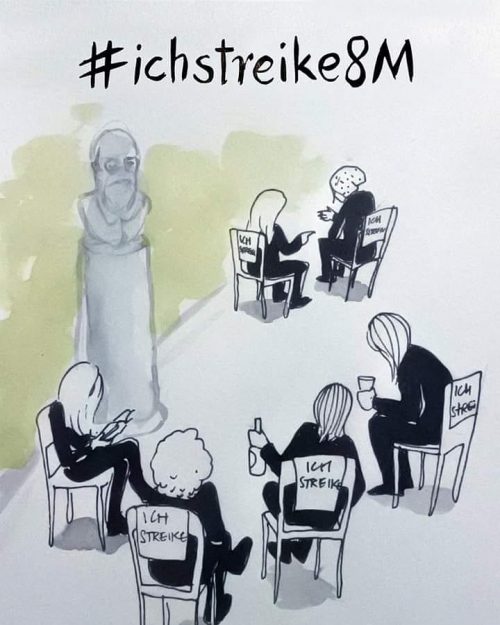
#ichstreike & #globalscream
8 March 2020 is on Sunday, so striking is less possible. Let’s strike symbolically on Sunday!
#IchStreike #Istrike #Strajkuje #WomensStrike
Are you ready?
Berlin: https://www.facebook.com/events/485240448816256/
https://www.facebook.com/events/539735906651212/

Jeśli zastanawiacie się co się będzie działo 8 marca, to będzie się działo dużo! Między innymi o 16 będzie akcja!

#GlobalScream
8.3.2020 | 4 PM
Es every year, on the International Women’s Day (8.3.2020) there will be thousands of people on the streets worldwide, all protesting for the same, against the same, regardless of nationalities, location, gender, and ideological differences. Womxn of the World will fight for their rights.

Mehr anzeigen

My Germany 2

Lech Milewski

Back home regular correspondence with Inge continued.
We both started work, she was giving lessons of singing and piano and also sang in a choir.
We both got married.
In 1968, Inge gave birth to a daughter – Nora.

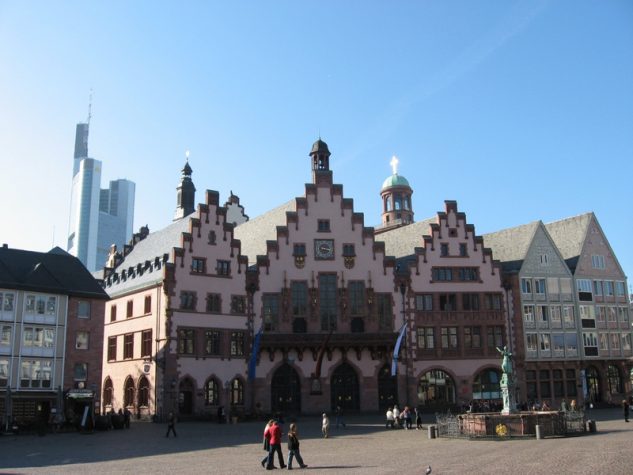
In February 1969 I traveled by train to England. As I crossed Germany I decided to go via Frankfurt and visit Inge and Norbert.

At the beginning was crossing of borders between East and West Berlin and few more. There is a separate report about it on this blog (in Polish) – CLICK.

Travel to Frankfurt was uneventful. Inge and Norbert welcomed me on the train station. Just one night and one day. Too short after 9 years of contact by mail.

Then another 9 years passed.
At some stage I suggested we write letters in German.
I had tangible gains in mind.
Firstly I could earn some supplement to my salary for knowledge of foreign language.
I had it already for English. German exam was a bit more difficult, but I passed.
Secondly, soon another opportunity appeared – an Information Technology (I.T.) training in Essen.

In June 1978 we (three of us) flew to Germany.
Sunday evening at Essen train station. There were many people, band played popular melodies, people danced, drank beer.
Our accommodation brought us to reality.
It was a modest, quite nice, clean building.
In the reception we received a letter with basic information.
It started with apologies – training organizers – IBM Deutschland – explained that for the money they received from the Polish side, they could not find any accommodation in Essen at all, so they added a bit of their money and here is the best what they could find.
It was a 3 beds room, actually quite nice, but the room was located in the basement. So through our window we could watch shoes of passers by.

Our finances: we received in Poland an allowance – 20 DM per person per day. At that time it was worth a bit less than 10 US$.
In the reception we learned, that to use a shower we have to get a key – price 2 DM.
Other information was worse – a daily return bus to IBM Education Centre costs 8 DM per person.

We did our balancing.
We brought from Poland some cans with meat and fish and a big chunk (połeć) of bacon.
12 DM per day per person – we could easily buy some bakery and cheap wine, but there was no space for a hot meal.
Of course each of us had a long list – what to bring from Germany. On top of the list were electronic watches.

Next day we traveled to beautifully located Education Centre.
During the first tea break we received brochures with options for lunch in a number of nearby restaurants. Price of the cheapest lunch was around 14 DM.
Our training colleagues invited us cordially, offered transport. Luckily we had a good excuse – we need to use some of lunch break time to prepare for coming lectures.
So we ate sandwiches with bacon and lettuce and studied.

During our earlier tea break, which we had in a cafeteria, we looked into the menu.
Cafeteria served also lunches, quite large and tasty hot meals. But our ID cards, which we received at the beginning of the training, did not open cafeteria door during lunch time.

Our training.
Actually we did not need it too much.
Each of us had already long, practical I.T. experience. Surely there were gaps and inconsistencies, but our professional career proved, that we could make a good use of it.
Training in Western country – it was a privilege. For people like us, without any connections in the Party, the only way to get there was to get it as a reward for some substantial achievement.
This was exactly our case.

Our 3-persons team leader was asked by FSO – at that time the main car producer in Poland, for a rescue. Year or two years earlier, the company ordered from IBM three modern computers (IBM S7) for real time control of industrial processes. IBM provided computers and all support and training.
Two computers have been successfully installed.
The third one… was somehow forgotten. The computer was put to a store room, trained people changed the work place. And then, in May 1977, the director received a call from the Warsaw Committee of Communist Party – comrade, just a reminder – we will come to your place on 7th November, on the 60th anniversary of Great October Revolution, to join you on the opening of a real-time computer system in a car body pressing department.
Panic! 5 months left! Somehow they found 3 desperados, I was one of them.

We put clear conditions: on the successful project completion we will receive: a monetary reward – at least our monthly salary, a voucher for a car (Yugoslav Zastawa) and 2 weeks computer training in a Western country.
Car voucher – the lucky owner had still to pay a full price for the car, but waiting time was substantially shortened – from 5 years to 2,3 months.

Task was not simple. We had to learn to use a new computer with quite new technology, two new for us programming languages. Manuals were not quite complete, many of them in German.
For the first 2 months people from IBM were quite suspicious. They did not want to be connected to a project destined to fail. Then, gradually, we gained their confidence and completed out task in time.
We managed, got our rewards and here we were.

Our tactic was – attack.
Every night in our room we studied training material for the next day and prepared a strategy – take active part from the very beginning, start with presentation of something original, ask questions. It looks like it worked.

On the second or the third day, during our lunch break, between bites of a roll with bacon, we noticed some officials approaching. They came closer and introduced themselves as a Managing Director of the Centre and his deputies.
The Director mentioned, that this was the first visit of people from Poland in their centre, which made them extremely happy and to celebrate it somehow… well they cannot do much, they just want us to feel as being part of their team. A visible proof will be a regular IBM employee card, he handed us the cards, shook our hands and left us a bit disoriented.
– Employee  ID card opens door to the cafeteria – whispered to us one of Director deputies.
:))))

Weekend.
I contacted Inge earlier and on Saturday traveled by train to Düsseldorf. She drove me to their family home in Remscheid.
Her family grew like ours to 4 people. Nora got company of a brother – Jochen.
We spent very pleasantly all Saturday and Sunday morning.
Sunday afternoon Inge and Norbert drove me to Essen. On our way we visited some museum – exhibition of ancient Egyptian art.

The rest of stay in Essen was rather uneventful.

After return to Poland my professional life took few turns and 5 years later we landed in Australia.

I continued regular correspondence with Inge and we updated each other about our lives and families.
Norbert climbed steps of his professional career. He became a Professor in the Bergische Universität Wuppertal. Among his duties were few visits to Poland for lectures, workshops and consultations.
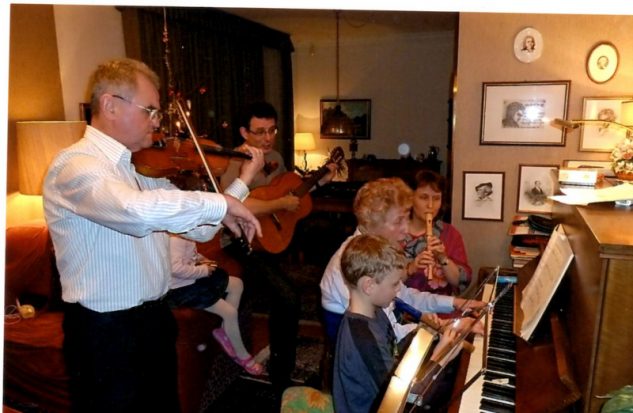
Nora is a respected specialist in Chinese medicine, Jochen – another professor, information systems. They live in different places in Germany, but when they gather at family home, there is music.

Portraits on the wall: Wagner, Mozart, Beethoven.
Inge and Norbert are frequent visitors to Bayreuth and music festivals there.

In the meantime in Australia…
My dominant hobby for number of years was cross country skiing. I discovered quite attractive places for skiing in Australia. I entered also a number of cross-country skiing marathons overseas.
This led me again to Austria and twice to Germany.
Germany meant Koenig Ludwig Lauf in Oberammergau. Very memorable event, skiing in the shade of castles in Ettal and Linderhof.

In 2001, after the race I spent few days in Munich. Music of course, opera, but this time it was not the famous Bayerische Staatsoper, but Gärtnerplatztheater – CLICK – which presented more challenging program. The Rake Progress by Igor Stravinsky.

Here I have to confess one shameful event.
At the time when I fought on European ski trails, in February 2001, Inge and Norbert visited Australia 😦
We were in not so frequent touch, I had to plan my leave to Europe many months earlier, so at the time when Inge notified me about their visit it would have been quite messy and costly to abandon my plans. So they visited our home and were hosted by my wife and I was far away.

We still remained pen-pals and then an additional German accent arrived in my life.
Our daughter got married to Peter, young man of German origin. His parents, both originally from Königsberg, live permanently in Melbourne. In our opinion they run a very German home.

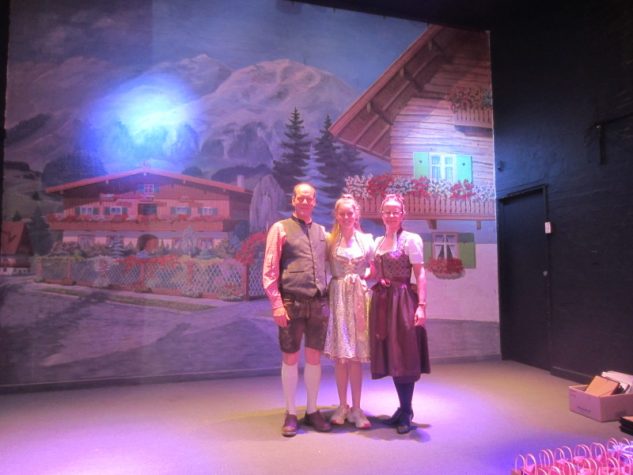
Our granddaughter, Sabina, now in year 10 of school, learns German and last year participated in an interschool German Poetry Competition.

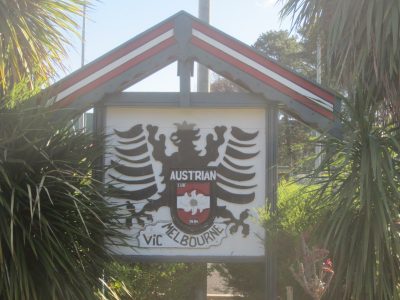
The finals were held in Austrian Club in Melbourne.

And the winners were…

Well, Sabina won the second place. Above with her parents, all in dresses bought one year earlier during Oktoberfest in Munich.

More than a week ago I rang Inge and thanked her for 60 years of contact. We reminisced these times – solid, friendly times.

Let me finish with another of poems recited long, long ago by me – CLICK.

Worldwide Screening

Worldwide Screening on 75th International Day of Remembrance of the Victims of the Holocaust

We called for participation in the worldwide screening of “Shoah” by Claude Lanzmann. This can take place privately in a small circle, in a school, in a cinema, in a cultural institution or through a TV channel.

In the 9½-hour film “Shoah” both, surviving victims and perpetrators of the systematic extermination of Jews by the German Reich, have a chance to speak. Lanzmann worked on the film for eleven years, from 1974–1985. The Berlinale awarded the director the Honorary Golden Bear for his life’s work in 2013. His film is regarded as an »epochal masterpiece of memory studies«.

January 27, International Day of Remembrance of the Victims of the Holocaust, was introduced by the United Nations in 2005 to commemorate the Holocaust and the liberation of the Auschwitz-Birkenau concentration camp on January 27, 1945. The Auschwitz-Birkenau concentration camp was the largest German extermination camp during National Socialism. About 1.1 million people were murdered there. A total of over 5.6 million people fell victim to the Holocaust.

Until January 20th we will collect information about the screening you have organized. Please send us an to worldwidescreening@literaturfestival.com so that we can communicate the events on our website www.worldwidereading.com.

Here you find a list of participants. There will be screenings in Austria, Canada, Chile, France, Germany, Great Britain, Greece, Italy, Nigeria, Spain, USA.

Worldwide Screening am 75. Internationalen Gedenktag für die Opfer des Holocaust

Das internationale literaturfestival berlin [ilb] rief Personen, Schulen, Universitäten, Medien und kulturelle Institutionen zu einer weltweiten Filmvorführung von »Shoah« von Claude Lanzmann am 27. Januar 2020 auf. Damit knüpft das ilb an die Serie der weltweiten Lesungen an, die es seit 2006 zu verschiedenen Themen, vor allem auf die Menschenrechte bezogen, organisiert hat.

In dem 9½-stündigen Film kommen überlebende Opfer wie Täter der systematisch betriebenen Vernichtung der Juden durch das Deutsche Reich zu Wort. Lanzmann arbeitete an dem Film elf Jahre, 1974-1985. Die Berlinale verlieh dem Regisseur 2013 den Goldenen Ehrenbären für sein Lebenswerk.

Der 27. Januar, Internationaler Tag des Gedenkens an die Opfer des Holocaust, wurde 2005 von den Vereinten Nationen eingeführt, um dem Holocaust und der Befreiung des Konzentrationslagers Auschwitz-Birkenau am 27. Januar 1945 zu gedenken. Bei dem Konzentrationslager Auschwitz-Birkenau handelte es sich um das größte deutsche Vernichtungslager während des Nationalsozialismus. Etwa 1,1 Millionen Menschen wurden hier ermordet. Insgesamt fielen über 5,6 Millionen Menschen dem Holocaust zum Opfer.

Bis zum 20.1. nehmen wir gern noch Veranstaltungshinweise an. Bitte schicken Sie uns eine Nachricht über Ihre Veranstaltung an worldwidescreening@literaturfestival.com. Auf unserer Website www.worldwidereading.com werden wir diese Informationen einstellen.

Eine aktuelle Veranstaltungsübersicht finden Sie hier. Es wird Veranstaltungen in Chile, Deutschland, Frankreich, Griechenland, Großbritannien, Italien, Kanada, Nigeria, Österreich, Spanien und USA geben.

Trailer #ilb19
With this video we commemorate a great festival in 2019 and look forward to the 20th ilb in Septembre 2020.

https://www.literaturfestival.com/%2B%2Bresource%2B%2Bcollective.flowplayer/flowplayer.swf

Mit diesem Video blicken wir zurück auf ein großartiges Festival in 2019 und schauen vorfreudig auf das 20. Jubiläum des ilb im September 2020.

internationales literaturfestival berlin
Chausseestr. 5
10115 Berlin
Fon +49 (0) 30 – 27 87 86 65
Fax +49 (0) 30 – 27 87 86 85
presse@literaturfestival.com

www.litfestodessa.com
www.worldwide-reading.com
www.comics-berlin.de
http://www.wordalliance.org
20. internationales literaturfestival berlin | 9-19. September 2020
#ilb20 #ilb2020


In Berlin gibt es Vorführungen sowohl heute als auch morgen:

Heinrich-Böll-Stiftung – Bundesstiftung Berlin
Schumannstr. 8
10117 Berlin
Sonntag, 26.01.2020
10.00 – 21.00 Uhr
Eintritt frei, Anmeldung unter
https://calendar.boell.de/de/civi_register/139583
https://calendar.boell.de/de/event/claude-lanzmann-shoah

Akademie der Künste
Hanseatenweg 10
Berlin
27.01.2020
10 Uhr
https://www.adk.de/de/programm/index.htm

Brotfabrik Berlin
Caligariplatz 1
13086 Berlin
27.01.2020
13 Uhr
Eintritt pro Teil: 5 EUR. Alle vier Teile: 15 EUR
https://www.brotfabrik-berlin.de

KulturMarktHalle
Hanns-Eisler-Str. 93
10409 Berlin
26.01., 12.00 Uhr (mit vier kleinen Pausen)
www.kulturmarkthalle-berlin.de

Container
Am Weidendamm 3
10117 Berlin-Mitte (Nähe Bahnhof Friedrichstraße, der Eingang wird ausgeschildert)
Sonntag, 26.01.2020, ab 13 Uhr in drei Etappen  (3,5h, 3h, 3h – jeweils eine Stunde Pause zwischen den Teilen)
Alle Mitschauenden werden gebeten, Essen und Getränke mitzubringen, damit in den Pausen zusammen gegessen werden kann
Interessierte werden gebeten ihr Kommen kurz per Mail an
verfolgt-verschwiegen-vergessen@riseup.net anzukündigen

Janusz-Korczak-Bibliothek
Berliner Straße 120
13187 Berlin
26. Januar, 10.00 – 19.30 Uhr
http://stadtbibliothek-pankow.berlin.de

SANDALIA – Un’isola a Berlino
Schillerstraße 106, 10625 Berlin-Charlottenburg
Montag, 27. Januar 2020, 11.00 Uhr – 21.00 Uhr
Eintritt frei
www.sandalia.org


My Germany 1

Lech Milewski

First days of January 1960.
I just returned from Christmas holidays to student dormitory in Warsaw. For a while I was alone in 4-persons room. I looked into freshly bought monthly magazine Radar.

Radar, magazine for youth, it tried to introduce some new trends in Polish People’s Republic’s press.
One of such novelties was a Pen-Pal Club. Radar published each month addresses of young people from other countries who would like to exchange letters with young people in Poland.
Strangely, majority of these people were from Western Europe, mostly Sweden and Finland, mostly females.

But on this day I noted a girl from Germany, West Germany – Inge from Frankfurt am Main.
I wrote a letter in English and few weeks later received an answer – letter with a postcard – Frankfurt Rathaus.

Above my photo taken in 2007

I already had some bad experience with such correspondence – first few letters were the introduction of pen-pals, then… a trouble – what to write about?

First letter from Inge gave some hope, she was very interested in classical music, she studied singing at Frankfurt Musikakademie.

Music. For me it was connected to Germany, German language.
In high school we had in curriculum 3 foreign languages – Russian and in my case – German and English.

In all 3 cases we had exceptionally good language teachers.
German teacher, Mr Miętus, always immaculately shaved and dressed.
After entering the class he greeted students and started the lesson with the same phrase: gentlemen, take out your preparation, please.
Preparations meant our exercise books.

He put a lot of effort in teaching us German poems – J.W. Goethe, F. Schiller.
I think we learned them with pleasure and this caused a trouble.
On a day when learning the poem was due, he called few student to recite it and when the result was satisfactory, he proposed: maybe the whole class would recite it together.
For the first few lines it went smoothly, Mr Miętus, with delightful smile on his face, recited with us and marked pace with his hand, like an orchestra conductor.
Then, some students started to accelerate the pace, other shouted loudly only some words, other just shouted or made some strange sounds.
– Stop! Stop it! – shouted the teacher with tears in his eyes, but the class went on like a steam train..
Finally we ran out of steam, there was silence in the class. Mr Miętus sat at the table totally devastated. I think most of us felt sorry for him.
Still, after few weeks, he could not resist a temptation, and we turned it again into a disaster.

This passion for directing a collective recitation covered his real passion – music.
At that time I was already enchanted by the classical music, but the only source of it was a loudspeaker in our flat transmitting Program 1 of Polish radio.
Mr Miętus introduced me to live music performed in a very modest concert hall in provincial town – Kielce. He also was very keen to talk about music, about composers.
For the most of the class it was time to relax. For me it was more interesting than the German lesson. No wonder quite often my colleagues asked me to start some music discussion with the teacher, they had at least 20 minutes of rest.

Anyway, music stayed with me for the rest of my life. In the meantime it helped me to keep in touch with Inge. Other subject was – books. It looked, she was quite sensitive on human misery and found some answers in Charles Dickens books.
I have to admit that for me an important motivation for this correspondence was practice of English.

So passed 3 years and some new German accent arrived – student excursion to Austria.
There were some 20 participants, we traveled on a group passport.
Great excitement – visit to the country behind an “Iron Curtain”.

First was Czechoslovakia.
Meticulous control on two borders. Controllers crawled under the train, rolled mirrors under passenger seats.
On the border station between Czechoslovakia and Austria I noticed few men in strange uniforms entering our carriage.
When, eventually, our train moved and crossed the border, they pinned some emblems on their uniforms and greeted us: welcome to free Austria.

Atmosphere in our compartment relaxed. Some people revealed US dollars hidden in some clever places. It looked as I was the only one who did not smuggle anything.
Another revelation was an address of a shop in Vienna run by a Polish migrant: Mr Szumilas, Wipplinger Str. 11.

On arrival in Vienna we were greeted by our Austrian guides, they were members of a program of reconciliation run by some religious association.
They paid us our allowance for 2 weeks stay in Austria – some 280 Austrian Schillings. Exchange rate was about 24 Schillings per 1 US dollar.
With my knowledge of English and also limited German my help was frequently needed.

We spent one week in Vienna visiting most popular tourist venues: Hofburg, St Stephan Cathedral, Schonbrunn Palace and also a Soviet War Memorial – CLICK.
Note: from 1945 till 1955 Austria was occupied by Soviet Union, US, Great Britain and France.

In free time we visited a shop at 11 Wipplinger Str.
Shop attendant greeted us cordially: welcome to Polish working class.
– This is already communist bourgeoisie – corrected her Mr Szumilas.
I bought some novelty – non-iron shirt.

Our accommodation was in Student home at Pfeilgasse. We got our breakfast and supper there. Just sandwiches. Dinner we had in Mensa House in early afternoon.
I remember it so well as it was my first taste of Coca Cola.
Coca Cola, somehow for me was a symbol of rotten West. No wonder I drank it with some concern – will it make me dizzy or maybe there will be other side-effects?
There were none. Much later I read somewhere that it tastes like ping-pong balls. Absolutely right.

After one week in Vienna we traveled to Salzburg where we stayed in old US Army barracks near the airport.
Visit was dominated with W.A. Mozart memories.

Then to the mountains – Zell am See.
At one point our bus driver announced that we will be crossing to West Germany.
Our Polish tour guide protested – we haven’t got German visa!
– What a nonsense – commented the driver – everybody travels this way. This is the shortest route.
Our Austrian guides exchanged smiles – there is a strict control on the borders between friendly Communist countries – they explained to the driver.
Few minutes later Grenzpolizei sent us back to the longer route. Doubtful satisfaction.

Zell am See – CLICK – a mountain wonderland.
We visited Kaprun, Kitzsteinhorn Glacier, had a mountain walk.

On the last day we had an easy stroll around the lake.
Someone asked about the date – First of September.
And at that moment I realized that people around me speak German.
Somehow I felt that on this date I was in an improper place.

Finally back to Vienna and a nice surprise – a concert, Beethoven’s VII Symphony. I never heard it before, just listen to the II part, Allegretto – CLICK.

Here my memory from school – J.W. Goethe’s poem, also a song by F. Schubert – CLICK.