The Guardian, Sunday 25 January 2015 18.22 GMT
Thanks to the Facebook Group Róża Jerychońska for sharing this text
The third-generation Polish Jews rediscovering long-buried roots
Judaism has a history dating back 1,000 years in Poland but most see the country as a site of Jewish death and suffering
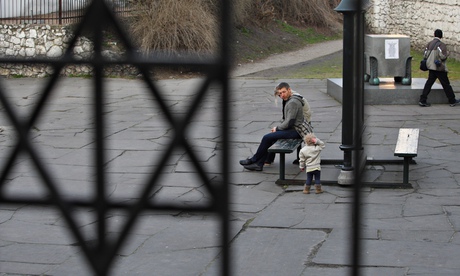
A family in Szeroka Street at the heart of the Jewish quarter in Krakow. Photograph: Eastway Pictures
First Agnieszka Markowska found a suspicious baptism certificate, then a trail of false names and invented hometowns. Hidden behind them was a Jewish family history her grandmother had sworn she would take to the grave.
“When I showed her what I had discovered, she still denied she knew anything,” said Markowska. So she made her way to Krakow’s Jewish Community Centre, the heart of resurgent Jewish life in a city that has long been more associated with Jewish tragedy.
“If my great-grandparents were Jewish, I wanted to know what they believed, what festivals they celebrated, how they lived. I exist because of them, and want to preserve their memory,” said Markowska, who now marks Jewish holidays herself.
The 45-year-old is part of a growing number of “third-generation” Polish Jews – they count back to the first generation of Holocaust survivors – who are rediscovering roots assiduously buried by parents and grandparents trying to escape death camps and then antisemitism, and helping to rebuild Jewish life in Poland.
Judaism has a history going back more than 1,000 years in the country, but because the Nazis carried out most of the murderous work of the Holocaust in occupied Poland, and reduced a population of more than three million to just a few thousand, many outside the country see it only as a site of Jewish death and suffering. Krakow was particularly notorious, with an infamous ghetto, and just an hour’s drive from Auschwitz.
“Many people in Israel have a very dark view of Poland,” said Kfir Katz, an Israeli with Polish roots who has settled in Krakow after months of research into family roots that allowed him to claim Polish citizenship.
His mother warned him the country her parents had fled was just a “vast cemetery”, but instead he found a community several hundred strong, four active synagogues, and a Jewish cultural festival that draws thousands of visitors each summer.
If some of the Jewish-quarter restaurants with Hebrew names sell pork dishes, there is also a better supply of kosher food than there has been for decades, and shabbat dinners are celebrated by open windows.
It was a slow journey, though, for the handful of Holocaust survivors who decided to stay on in the ruins of a city that was once home to more than 60,000 Jews.
“I was never in hiding, but I was never saying ‘Hi, I’m Henryk Meller, I’m Jewish,’ either,” said one community leader, who was born in 1931 and lost both parents and his only sister during the war. “My friends know, some of them are antisemitic. But that’s the thing in Poland, each antisemite has his own Jew who is his best friend.”
Poles are the single largest group on the Yad Vashem Holocaust memorial’s list of “righteous among the nations” in Israel, those who risked their own lives to save Jewish friends, neighbours, colleagues or acquaintances.
But prejudice also has deep roots. Many Polish Jews survived the Holocaust only because they had fled pogroms before the Nazis arrived. And within months of the liberation of Auschwitz, dozens more had died in new pogroms and fights over confiscated property.
In 1968, one faction within the communist government launched a cynical antisemitic campaign, as part of an internal power struggle, which cost hundreds of people their jobs and prompted thousands more to leave for Israel.
For decades there was not even a rabbi based in the city, said Meller, whose own son has immigrated to Israel. Meller never wanted to leave, and was key to the founding in 2008 of the Jewish Community Centre (JCC) in Krakow, a welcoming building which hosts everything from shabbat dinners and Torah study to make-up lessons and belly dancing.
Funded by UK charity World Jewish Relief, with support from Prince Charles, who opened it, it provides a meeting place for the existing community, but also somewhere for Poles who uncover a secret family history to explore Jewish culture, religion and history.
Olga Danek grew up in a house full of Jewish books and artefacts, and was taken several times as a child to Auschwitz and the spooky, deserted former Jewish quarter of Krakow. Still, she celebrated Christmas and Easter, and was stunned to be told, aged 12, “your grandmother was Jewish”.
“My first feeling when my mother told me I was Jewish was ‘OK, but maybe the community don’t want me’,” said Danek, now 28 and head of the student group at the JCC.
“You don’t have the papers, you don’t have the Jewish knowledge, what are you going to do? I think I was afraid, that I was not Jewish enough for them.”
In her group of 16 young Poles, only one grew up knowing she was Jewish. The rest share dramatic stories of deathbed confessions, fearfully guarded secrets or reluctant admissions drawn out after months of research in dusty archives. In many of their families Jewish identity in effect skipped a generation. Some Holocaust survivors lied to their children to protect them. Others, such as Danek’s mother, knew the family secret but felt it was too dangerous to acknowledge.
“She was born in 1961, and after 1968 we didn’t have an official Jewish life. You were told, ‘If you are Jewish you must go to Israel, you are not Polish’ – it was very difficult. I think she is afraid to be Jewish,” Danek says.
Pope John Paul II did much to tackle antisemitic attitudes, condemning them outright, visiting Auschwitz to pray in 1979, on his first visit to the country since becoming leader of the world’s Catholics, and forging high-profile relationships with Jews and Jewish communities.
The spectre still haunts Krakow, though. On a road near the JCC, a large piece of football graffiti reads Cracovia JG – or Krakow Jewish Gang, with a star of David. When Markowska told one friend that she was Jewish, the woman replied “Don’t worry, I will still like you”, and Danek’s mother frets about her wearing a star of David in public.
For Danek that lingering prejudice, and the long shadow cast by the horrors of the Holocaust, is just one more reason to celebrate Jewish life in Krakow.
“Many people think the Jewish community doesn’t exist here, and so it’s important to me to show that we do,” Danek said. “I want to show that we are not prisoners of the Holocaust. We are living here in Poland.”
Mandala City Jolandy Jeklin – iskanje dusevnega centra
Na Veleposlanistvu Republiki Slovenije v Berlinu, trenutno poteka razstava slikarskih in graficnih del Jolande Jeklin, ki je umetniško povezana tako s Slovenijo kot tudi, že 15 let, s Poljsko, pojasnjuje tako:
Slike, katere so predstavljene na tej razstavi, me je navdihnilo vprašanje „Kje je moje mesto, moj dom…?“
V postkomunistični resničnosti smo ponovno postali državljani sveta, združene Evrope. Čas in razdalja sta postali relativni. Meje izginjajo. Pogosto se selim, zato nisem več vezana na nobeno mesto, ne vem niti to, kje je pravzaprav mesto, ki mi je namenjeno. Moj stalno spreminjajoč se dom je postal miselni svet čustev in meditacije, ki mi nudi oporo in svobodo. Mesta, ki jih prikazujem na mojih slikah, so mi blizu. V njih iščem odgovore na vprašanja o svojem smislu in prihodnosti. Verjamem, da imajo v sebi nekaj „posebnega“, nekaj kar si prizadevam izkusiti. Morda se bo izkazalo, da gre pri tem za moje ime, moj cilj in s tem izpolnitev.
Jeklin Jolanda je vsestranska umetnica. Ustvarja slikarska platna v razlicnih tehnikah, kot tudi grafike v tehniki linorezu, pastelne portrete, mozaike in instalacije.
Njene slike zapeljujejo z lahkotnostjo in čutom za okrasja, zato globina ostaja gledalcu sprva prikrita. Predstavljena mesta, skoraj enake podobe svetlečih in oddaljenih, pa vendarle v zgolj nekaj urah dostopnih mest, brez jasno določnih lastnosti, izhodiščnih točk ali meja, dihajo v nemirnem ritmu drsne, tekoče, nomadske modernosti. V podobah, kjer je zajeto vodoravno gibanje morskih valov upodablja kontrapunkt poindustrijskim mestnim okoljem – degradirano, vendar še vedno mogočne in neskončne narave urbanih svetov. Nemirni torzi androgenih oblik predstavljajo metaforo brezimnosti in simbolizirajo pomanjkanje opredelitev trdnega jaza, medtem ko kobaltno modro in turkizno lesketajoče se mandale prikličejo čarobnost orientalnih kopeli ali eskapistične miselne igre in nezemeljska sanjarjenja. Utripajoč navznoter, izpričujejo vztrajno iskanje miru, duševnega središča.
Na videz se med seboj mocno razlikujejo tako, po temi, kot stilu in tehniki obsežna serija del, kot so Mandala in Mesta, so pomemben element te razstave, mentalna vizualizacija procesa na ravni makro in mikro skali. Tako, kot mandala, ima vsako mesto svoj center, svoj vir energije v tem divjem ritmu zivljenja. V poskusu, da bi nasla svoje mesto v zunanji realnem svetu, se hkrati tudi sprasuje o smislu človeškega obstoja, narave naše duhovnosti, poslanstvo v tem postoru in casu.
Jolanda Jeklin mandale steje, kot neke vrste posrednika med nami in vibracijami katere oddajajo in prodirajo v svet okrog nas. Prav tako je lahko medij pri procesu meditacije in koncentracije, iskanje, samo-analiza, biti bližje sebi, svoji notranjosti, iskanje in prepoznavanje ciljev, prave poti, in pri tem spoznavanje kaj nas na nasi poti podpira in kaj nas ovira.
Recept za autorealizacijo s svetom vidi v usklajevanju lastnega mentalnega prostora in sveta okoli nas – na osi “Sinhronizacija … – Motivacija … – Sreca”.
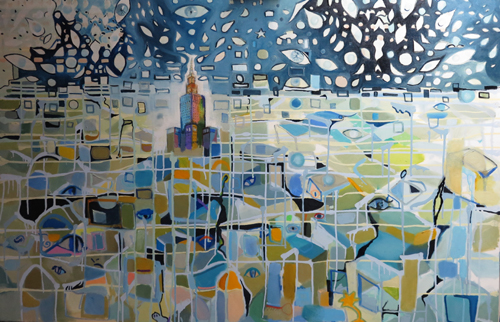
Warszawa, 2014, oil on canvas, 100 x 150 cm
Mandala City Jolandy Jeklin – in search of a mental center
Jolanda Jeklin, artistically bound with Slovenia and – for 15 years now – with Poland as well, explains the genesis of her works which are currently being presented at the Slovenian Embassy in Berlin:
„The inspiration for the paintings presented here was the question: „Where is my place, my home?” In post-communist reality we have once more become citizens of the world, of a united Europe. Time and distance have become relative. The borders are vanishing. Having moved often, I am not bound by any of the places where I stay temporarily, I also don’t know my destination. My mobile home then, has become the mental world of feelings and meditations, which gives me stability and freedom. I’m fond of the cities which I preserve in my paintings; in them, I search for prompts to answer questions about my future, my calling. I trust that maybe they have that „something” that I’m pursuing, and that I have not yet experienced. Something that will turn out to be my aim, my fulfillment…”
Jolanda Jeklin is a versatile artist. She creates both city and marine landscapes in oil, as well as graphic works in linocut or monochromatic blind printing techniques, pastel portraits and even mosaics and installations.
On the semblance enchanting only with lightness and decorative charm, the oeuvre of Jolanda Jeklin also has a something under the surface. The twin-like similar, lambent panoramas of metropolises, which are only a few hours away but nevertheless distant, breath with the rhythm of nomadic, continuous contemporariness – without prominent attributes, points of reference or borders. The horizontal rhythm of the sea waves stopped in time – monotonous, repetitive, perpetual – it reflects in her visual world a counterpoint of post-industrial urbanism – the degraded, but still limitless and powerful nature.
Just as the disturbing torsos of androgenic figures are a metaphor of anonymity and lack a stable definition of the “I”, the feerical, cobalt-turquoise mandalas bring to mind the charm of oriental baths and escapist memories or perhaps dreams. Pulsating with a centripetal rhythm, they also document a persistent search for relief – a mental center.
Her ample cycles of works seemingly so different from one another in terms of topics, styles and techniques, such as ‘Mandala’ or ‘Cities’ which solidify the character of the current exhibition are a visualization of an analogical mental process on the macro and micro scale. ‘Mandala’ and each of the metropolises she presents, they all have their center, a source of energy of the hectic pace of life. In an attempt to picture the process of locating herself in an outside reality, the artist simultaneously asks what the sense of human existence is, the nature of our spirituality and our existence in this ephemeral and changing space-time.
Jolanda Jeklin regards the ‘Mandala’ as a sort of medium between the human and the world which vibrates around him, penetrating him. That is, at the same time, a reference to the process of meditation and focusing, allowing for auto-analysis and a coming closer to one’s own interior or recognizing one’s individual aims, but also to that which helps us fulfill those aims and what hinders us in fulfilling them and at the same time what draws us apart from one another.
As a solution for self-fulfillment in harmony with the world that the artist sees in the coordination of her own mental space and that, which surrounds us “Synchrony… – Motivation… – Happiness”.
Dynamizm, 2010, akryl na płótnie 100 x 70 cm
Jolanda Jelkins Mandala City oder auf der Suche nach dem mentalen Zentrum
Jolanda Jeklin, künstlerisch mit Ihrem Heimaltland Slowenien und seit 15 Jahren mit Polen verbunden, erläutert zur Genese ihrer Arbeiten, die derzeit in der Botschaft Sloweniens in Berlin präsentiert werden, Folgendes.
„Die Inspiration für die hier präsentierten Gemälde war für mich die Frage: „Wo bin ich zu Hause, wo ist meine Heimat…?“ In der postkommunistischen Wirklichkeit wurden wir wieder Bürger der Welt, des vereinten Europa. Zeit und Distanz sind überschaubar geworden. Die Grenzen verschwanden. Nun bin ich ständig in Bewegung, an keinen Ort gebunden, ich weiß nicht einmal, wo ich hingehöre und wo der Ort sein soll, der für mich bestimmt ist. Mein Zuhause wurde schließlich die geistige Welt der Gefühle und der Meditation. Sie bietet mir Stabilität und Freiheit. Ich habe eine starke Affinität zu allen hier präsentierten Städten. Sie begleiten mich auf der Suche nach Antworten auf die Frage nach Sinn und Zukunft. Ich glaube, in all den Orten ist etwas verborgen, was mich anzieht und für mich eine Erfüllung sein wird. Etwas, was ich noch nicht erfahren habe…”
Jolanda Jeklins urbanes und maritimes Sujet machen sie zu einer vielseitigen Künstlerin. In ihrem Schaffen finden sich sowohl Ölbilder als auch grafische Arbeiten (Linolschnitt, monochromer Reliefdruck), Pastellporträts sowie Mosaiken und Installationen.
Ihre Malkunst verführt vordergründig nur durch Leichtigkeit und dekorativen Charme. Ihr doppelter Boden bleibt einem zunächst verborgen. Doch ihre zum Verwechseln ähnlichen, schimmernden Bilder von fernen und dennoch binnen weniger Stunden zugänglichen Metropolen, ohne ausgeprägte Attribute, Bezugspunkte oder Grenzen atmen den unruhigen Rhythmus einer gleitenden, nomadenhaften Moderne. Die im Bild festgehaltene horizontale Bewegung der Meereswellen spiegelt im Visuellen den Kontrapunkt der postindustriellen Stadtbilder – die degradierte, aber dennoch mächtige und unendliche Natur.
Während die beunruhigenden Torsos androgyner Gestalten als Metapher für Anonymität stehen und die fehlende Definition eines stabilen Ich symbolisieren, evozieren die kobaltblau-türkis schillernden Mandalas den Zauber orientalischer Bäder oder eskapistischer Gedankenspiele und weltferner Träumereien. Nach innen pulsierend dokumentieren sie die beharrliche Suche nach Beruhigung, nach einem mentalen Zentrum.
Ihre thematisch, stilistisch und technisch scheinbar unterschiedlichen Zyklen wie Mandalas und Städte, die den Charakter der aktuellen Ausstellung prägen, sind Visualisierungen eines analogen mentalen Prozesses in der Mikro- und Makroskala. Jede der dargestellten Metropolen hat – analog zu Mandalas – ihr Zentrum: Es ist die Quelle ihrer Energie und Quelle des hektischen Lebenstempos. Bei ihrem Versuch, sich selbst in der äußeren Welt zu verorten, stellt die Künstlerin gleichzeitig die Frage nach dem Sinn des menschlichen Lebens, nach der Natur unserer Geistigkeit und generell nach dem Sinn der Existenz in der unbeständigen, flüchtigen Raumzeit.
Das Mandala erscheint Jolanda Jeklin als ein Medium zwischen den Menschen und der vibrierenden und sie durchdringenden Welt. Es hat gleichzeitig einen Bezug zu inneren Prozessen der Meditation und Konzentration, die eine Selbstanalyse und die Annäherung an das eigene Innere, das Erkennen der individuellen Ziele ermöglichen sowie einen Bezug zu dem, was bei der Realisierung dieser Ziele hilft, sie gleichzeitig aber erschwert, indem es die Individuen voneinander entfernt.
Ein Rezept für die Selbstverwirklichung im Einklang mit der Welt sieht die Künstlerin in der Koordination des eigenen mentalen Raums mit dem, was uns umgibt – in der Achse „Synchronisierung… – Motivation… – Glück”.
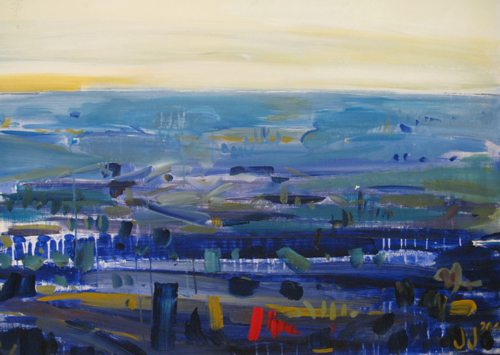
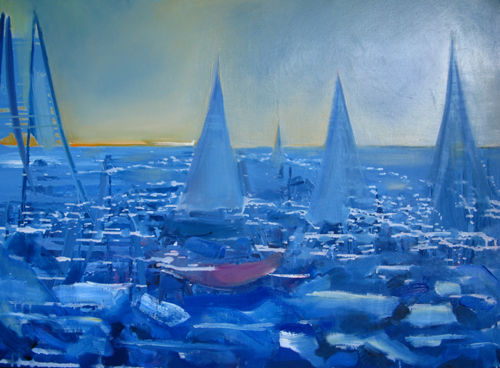
Horyzont 2013, olej na płótnie, 70 x 100 cm
Mandala City Jolandy Jeklin czyli w poszukiwaniu mentalnego centrum
Genezę swoich prac prezentowanych obecnie w Ambasadzie Słowenii w Berlinie Jolanda Jeklin, artystycznie związana zarówno ze swoją ojczyzną, jak i – od ponad 15 lat – także z Polską, wyjaśnia następująco: „Inspiracją do powstania prezentowanych tu obrazów było pytanie: „Gdzie jest moje miejsce, mój dom?…”
W postkomunistycznej rzeczywistości staliśmy się ponownie obywatelami świata, zjednoczonej Europy. Czas i odległość stały się względne. Granice znikają. Często się przeprowadzając, nie wiążę się na stałe z żadnym z czasowo zamieszkiwanych miejsc, nie znam też swego przeznaczenia. Moim mobilnym domem stał się więc mentalny świat uczuć i medytacji, dających mi stabilność i wolność. Miasta, które utrwalam w obrazach budzą moją sympatię, szukam w nich podpowiedzi na pytanie o moją przyszłość i powołanie (il. 1-2/3). Ufam, że być może mają w sobie „to coś”, do czego dążę, czego jeszcze nie doznałam, co okaże się moim celem, spełnieniem…”
Jolanda Jeklin jest artystką wszechstronną. Tworzy zarówno olejne pejzaże miejskie czy marynistyczne, jak i prace graficzne w technice linorytu czy monochromatycznego druku ślepego, pastelowe portrety, a nawet mozaiki i instalacje.
Jej z pozoru urzekające lekkością i dekoracyjnym wdziękiem malarstwo ma i ukryte, drugie dno. Bliźniaczo do siebie podobne, migotliwe widoki dostępnych w kilka godzin, choć odległych metropolii, tchną rytmem nomadycznej, płynnej nowoczesności – bez wyrazistych artybutów, punktów odniesienia i granic. Horyzontalny rytm zatrzymanych w czasie morskich fal z refleksem gwiazd czy słonecznego nieba – monotonny, powtarzalny, nieustanny – odzwierciedla zaś w jej wizualnym świecie kontrapunkt postindustrialnej urbanistyki – degradowaną, lecz ciągle bezkresną i władczą naturę.
Jak niepokojące torsa androgynicznych postaci są tu metaforą anonimowości i braku stabilnej definicji „ja”, tak feeryczne, kobaltowo-turkusowe mandale przywołują na myśl czar orientalnych łaźni i eskapistycznych wspomnień czy marzeń. Pulsując dośrodkowym rytmem, dokumentują one także uporczywe poszukiwanie ukojenia – mentalnego centrum.
Jej z pozoru tak odmienne pod względem tematycznym, stylistycznym i technolo-gicznym obszerne cykle prac jak Mandala i Miasta, wyznaczające charakter aktualnej wystawy, są wizualizacja analogicznego procesu mentalnego w skali makro i mikro. Tak jak mandala, tak i każda z przedstawianych przez nią metropolii ma swe centrum, źródło energii, hektycznego tempa życia. Probując zobrazować proces lokalizowania siebie w zewnętrznej rzeczywistości, artystka pyta jednocześnie o sens ludzkiej egzystencji, naturę naszej duchowości oraz istnienia w ulotnej i zmiennej czasoprzestrzeni.
Mandalę Jolanda Jeklin uważa za rodzaj medium pomiędzy człowiekiem a wibrującym i przenikającym wokół niego światem. Jest to zarazem odniesienie do procesu medytacji i koncentracji, pozwalajacej na autoanalizę i zbliżenie się do własnego wnętrza czy rozpoznanie indywidualnych celów, a także tego, co pomaga w ich realizacji, i co ją utrudnia, oddalając nas jednocześnie od siebie.
Receptę na autorealizację w zgodzie ze światem artystka widzi w koordynacji własnej przestrzeni mentalnej i tego, co wokół nas – na osi „Synchronizacja… – Motywacja… – Szczęście”.
Foto oder Grafik? »Kabinett der historischen Fototechniken« von Mariusz Kubielas bei dem Europäischen Monat der Fotografie in Berlin 2014
Der Fotozyklus „Bruno Schulz – Mariusz Kubielas – In Transitu“ ist das Ergebnis eines 2004 initiierten Kunstexperiments, das vom literarischen und bildkünstlerischen Werk des polnisch-jüdischen Künstlers Bruno Schulz aus Drohobytsch (früher Österreich-Ungarn und Polen, heute Westukraine) inspiriert wurde. Sein Effekt bilden inszenierte und auf dem Negativ festgehaltene Szenen aus dem Grenzbereich zwischen Performance und Pantomime, die an eingefrorene Bildausschnitte aus einem Stummfilm erinnern.
Dieses transmediale Projekt, das auch durch Auszüge aus Schulz’s Prosa und die metaphorischen Titel der Arbeiten bereichert wird, dient der Aktivierung des internationalen und generationsübergreifenden Diskurs über das multinationale und multikonfessionelle Kulturerbes Mittelosteuropas.
Die größte Attraktion dieser Fotoschau ist jedoch das »Kabinett der historischen Fototechniken«, welches ca. 20 einmaliger Aufnahmen umfasst, welche Zeichen des persönlichen Stils des Künstlers tragen. Wie kaum einem zeitgenössischen Fotografen ist es Kubielas (geb. 1953) gelungen, einige um die Wende des 19. und 20. Jahrhunderts verwendete manuelle Techniken der Fotografie und deren Varianten zu rekonstruieren. Damit erreichte er Effekte von genauester Wiedergabe der Wirklichkeit sowie schärfster Licht-Schatten-Kontraste oder bis zur „impressionistischen“ Körnigkeit und edlen Matts der Bildoberfläche.
Der Realisierung des Kabinetts gingen Kubielas Studien zur Rekonstruktion archivalischer Technologien zur Schaffung von Lichtbildern voraus, die er 2004 an der Hochschule für Fotografie in Jelenia Góra/Hirschberg begann und bis heute in Zusammenarbeit mit führenden polnischen Experten, wie Cezary Chrzanowski, Roman Michalik, Janusz Sochacki und Rafał Warzecha weiterführt. Der Initiator dieser Arbeiten war Andrzej Pytliński, Patron des informellen Freundeskreises der historischen Fototechniken.
Das „Kabinett der historischen Techniken” von Mariusz Kubielas ist ein offenes Projekt: auch nach Ablauf des Europäischen Monats der Fotografie wird es fortgeführt und um weitere Varianten derselben Motive in weiteren Techniken ergänzt. In näherer Perspektive ist die Präsentation des Zyklus in Belgrad, Helsinki, Brüssel, Bratislava und Prag geplant – vorbereitet von dem Künstler in Zusammenarbeit mit der Kuratorin Dr. Lidia Głuchowska.
Ausstellung Bruno Schulz – Mariusz Kubielas – In Transitu
Kuratorin: Dr. Lidia Głuchowska
Vernissage: Donnerstag, 2. Oktober 2014, 19.00 Uhr
Ausstellungsdauer: 4. Oktober bis 14. November 2014
Begleitpublikation: Lidia Głuchowska (Hg.): Bruno Schulz – Klisza Werk – Transgresiones, Wrocław: Ośrodek Kultury i Sztuki we Wrocławiu, 2013.
Fotogalerie Friedrichshain, Helsingforser Platz 1, 10243 Berlin
Öffnungszeiten: Di, Mi, Fr, Sa 14 bis 18 Uhr, Do 10 bis 18 Uhr
Tel. (030) 296 16 84, Fax (030) 29 04 98 02
fotogalerie@kulturring.org • www.kulturring.org
S- und U-Bahnhof Warschauer Straße, Tram M10 und M13
Abbildungen
1. Mariusz Kubielas, Das große Glas oder Damals war die Mutter noch nicht da, jedoch…, 2010/14, 42 x 54,5 cm, 3 Paralell-Aufnahmen aus dem „Kabinett der historischen Techniken”
2. Mariusz Kubielas, Gebadet, Gummi-4-chromatschicht, „Kabinett der historischen Techniken”, 2011/14 (Im Rahmen).
2a. Mariusz Kubielas, Gebadet, Gummi-4-chromatschicht, „Kabinett der historischen Techniken”, 2011/14 (ohne Rahmen)
***
Photo or Graphics? “Cabinet of Historic Techniques” by Mariusz Kubielas during the European Month of Photography in Berlin 2014
The photography cycle „Bruno Schulz – Mariusz Kubielas – In Transitu“ is a result of an artistic experiment inspired by the literary and fine arts oeuvre of the Polish-Jewish artist of Drohobycz (previously Austria-Hungary and Poland, today located in Western Ukraine). Its result are scenes from the edge of performance and pantomime, recorded on the negative, which resemble the stopped frames of a silent movie.
That trans-media project also comprises fragments of Schultz’s poetry and metaphorical titles of the works. It aims at activating an international and beyond-generational discourse about a collective future, and the future of the multicultural and multi-confessional cultural heritage of Central-Eastern Europe.
The very special attraction of the show is the “Cabinet of Historic Techniques”, to which belong c. 20 versions of the unique photographs, which carry the hallmarks of inimitability as well as the artist’s style. Unlike many contemporary artists, Kubielas (1953) has managed to reconstruct numerous photographic methods from the turn of the 19th and 20th centuries, as well as their abbreviations. Using traditional manual techniques, he achieved not only a precise reflection of details of the reality or the sharp light-shadow effects but also the sophisticated mat of the picture’s surface up to its “impressionist” graininess.
The development of “Cabinet” was preceded by Kubielas’ study on the reconstruction of archival methods of creating photographs which he had started in 2004 at the Photography Professional School in Jelenia Góra and has continued up to today in cooperation with leading Polish experts, such as Cezary Chrzanowski, Roman Michalik, Janusz Sochacki and Rafał Warzecha. The initiator of these works was Andrzej Pytliński, patron of the informal Society of Historic Photographic Techniques.
“Cabinet of Historic Techniques” by Mariusz Kubielas is an open project: also continued after the end of the European Month of Photography it will be enriched by further variants of the same motifs in other techniques. In the nearest future it will be shown in Belgrade, Helsinki, Bratislava and Prague prepared by the artist in cooperation with the curator Dr. Lidia Głuchowska.
Fotogalerie Friedrichshain, Helsingforser Platz 1, 10243 Berlin Opening times: Tuesday, Wednesday, Friday, Saturday 2-6pm, Thursday 10am-6pm
Tel. (030) 296 16 84, Fax (030) 29 04 98 02
fotogalerie@kulturring.org • www.kulturring.org
S- and U-Station Warschauer Straße, Tram M10 and M13
Images
1. Mariusz Kubielas, The Great Glazing – The Mother Was Still not Present Then, Though 2010/14, 42 x 54,5 cm, 3 Paralell-Photographs from the “Cabinet of Historic Techniques”
2. Mariusz Kubielas, Bathed, gum 4-chromate technique, “Cabinet of Historic Techniques”, 2009/14 (in the frame)
2a. Mariusz Kubielas, Bathed, gum 4-chromate technique, “Cabinet of Historic Techniques”, 2011/14 (without the frame)
Dear Mr Fries, I missed you on Saturday morning when I came to your shop to deliver the poem that I have promised to write for you. So I left it on your desk and do sincerely hope that you enjoy it. It was so very nice meeting you, thank you. With best regards, K.K.
The Chair
by Kasia Krenz
For Ulrich Fries, 7th of August, 2014
Traditionally made of wood that was once a tree, a chair is a living object.
Hence a chair has a life of its own, a genealogy and roots, and a role to play here on Earth. In the beginning it was an elm, a chestnut, or perhaps an oak or an ash, and sometimes, rarely, it might have been even a rose tree — a challenge in its own right.
On our demand a tree becomes an object apparently inanimate and lifeless, or even dull and insensate. Something to be set on fire, a shelter for our birth and death. A witness to our love and betrayal. A place to sit and cry.
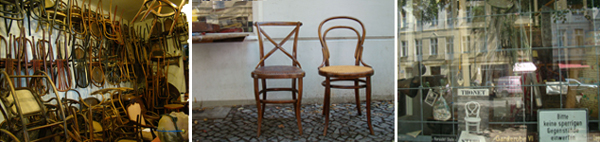
Neither its inventor Herr Thonet, nor the model’s number should you forget. Better known as Konsumstuhl Nr. 14, a bistro chair, or simply: the Thonet, this chair of chairs was made of bentwood with a unique steam-bending technology that required years to perfect. With its affordable price and simple design, it has become one of the best-selling chairs ever made. Some 50 million No. 14’s were sold only between 1859 and 1930, did you know that?
Ever since it entered our social life, on 4 legs, in the year 1859, it has remained essential. Ave!
The tree was not prepared to serve our purpose — as a witness to our wars and stories, a companion to our morning coffee-and-journal, or to a letter written in solitude on a bleak Winter night. It has experienced and learned so much, and thus became such an educated tree.
The chair: an actor on the stage of my life.
In front of the shop – Fotos Kasia Krenz
Re: The poem / Ulrich Fries / Aug 10 at 4:02 PM / To: Kasia Krenz Dear Kasia,
…i was gone to a family meeting near Bremen. It is ok with the pics and the publication and i added a little material for it. First, there is a rebound of your poem:
To be A chair As heir Of a tree
Needs me To make A fake Of a she…
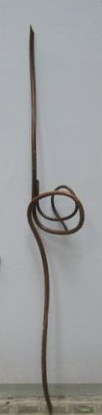
And second, here is the pic of the “She”:
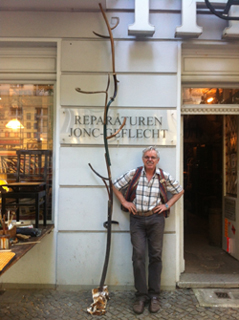
You can see the No 14 chair upside down in the center of “She”. (By the way She is 2.6 meter high). A friend from the Scottish border, a devoted bird watcher, found the name “She” since she saw a “pregnant lady”- as she expressed it – in the sculpture. I did not yet go to the shop, but i´ll read your poem tomorrow… …i just came back from Bremen and will have a nap now. When you have your poem published, you might suggest your sister to tell the whole story, that i´m doing sculptures from bentwood chairs… Third, here is me in front of the shop with another sculpture, “Jack And The Beanstalk”.
Have a nice time and enjoy the summer XXXXXXXXXXXXUlrich
XXXXXXXXXXXXIn front of the shop – Fotos Ulrich Fries
Alles worüber ich hier schreibe, findet man in Wikipedia. Ausser… Weißt jemand, weshalb Polen nichts zum Immaterielles Kulturerbe zugefügt hat?
Everything I write here about, you find in Net, but… Could somebody explain me, why there is nothing from Poland in that list?
To, o czym tu piszę, każdy może znaleźć w Wikipedii. Ale nigdzie nie ma wyjaśnienia, dlaczego Polska nie dodała nic do tej listy?
Immaterielles Kulturerbe
Puppentheater, Poetry Slam, Prozessionen, Heilwissen und Geigenbaukunst – all das spiegelt die Bandbreite des gelebten Kulturerbes wider. Die Formen immateriellen Kulturerbes sind entscheidend von menschlichem Wissen und Können getragen. Sie sind Ausdruck von Kreativität und Erfindergeist, vermitteln Identität und Kontinuität. Sie werden von Generation zu Generation weitergegeben und fortwährend neu gestaltet. Zu den Ausdrucksformen gehören etwa Tanz, Theater, Musik und mündliche Überlieferungen wie auch Bräuche, Feste und Handwerkskünste.
Damit das weltweit vorhandene traditionelle Wissen und Können erhalten bleibt, hat die UNESCO 2003 das Übereinkommen zur Erhaltung des immateriellen Kulturerbes verabschiedet. Mehr als 150 Staaten sind inzwischen der völkerrechtlich verbindlichen Konvention, die 2006 in Kraft trat, beigetreten. Die drei Listen des immateriellen Kulturerbes veranschaulichen die Vielfalt lebendiger kultureller Ausdrucksformen aus allen Weltregionen.
In Deutschland ist das UNESCO-Übereinkommen 2013 in Kraft getreten. Schrittweise wird ein Verzeichnis des hierzulande gepflegten immateriellen Kulturerbes erstellt. Das bundesweite Verzeichnis soll von Jahr zu Jahr wachsen und langfristig die Vielfalt kultureller Ausdrucksformen in und aus Deutschland sichtbar machen.
Czym jest niematerialne dziedzictwo kulturowe?
Bardzo ważną częścią dziedzictwa oprócz zabytków, dzieł sztuki i kolekcji cennych eksponatów jest także tradycja, żywe niematerialne przejawy kultury odziedziczone po przodkach i przekazywane kolejnym pokoleniom.
Tradycje i przekazy ustne między innymi bajki, przysłowia, pieśni, oracje, opowieści wspomnieniowe i wierzeniowe, historie, przemowy, lamenty pogrzebowe, zawołania pasterskie i handlowe, w tym język jako nośnik niematerialnegodziedzictwa kulturowego;
sztuki widowiskowe i tradycje muzyczne w tym tradycje muzyczne wokalne, instrumentalne i taneczne, widowiska religijne, karnawałowe i doroczne;
praktyki społeczno-kulturowe takie jak zwyczaje, rytuały i obrzędy
doroczne, sytuacyjne i rodzinne, chrzciny, wesela, pogrzeby, ceremoniały lokalne i środowiskowe, zwyczaje odpustowe i pielgrzymki, gry i zabawy, folklor dziecięcy, sposoby świętowania, praktyki służące nawiązywaniu kontaktów międzyludzkich, sposoby składania życzeń, tradycyjne wyobrażenia o wszechświecie na przykład meteorologia ludowa;
wiedza i praktyki dotyczące przyrody i wszechświata; tradycyjne sposoby leczenia; zamawiania miłosne i medyczne, a także
wiedza i umiejętności związane z rzemiosłem tradycyjnym……wszystko to i wiele innych, niewymienionych tu zjawisk w całym ich bogactwie i różnorodności określamy jednym terminem – niematerialne dziedzictwo kulturowe.
UNESCO Intangible Cultural Heritage Lists
are established by UNESCO aiming to ensure the better protection of important intangible cultural heritages worldwide and the awareness of their significance. Through a compendium of the different oral and intangible treasures of humankind worldwide, the program aims to draw attention to the importance of safeguarding intangible heritage, which has been identified by UNESCO as an essential component and a repository of cultural diversity and creative expression.
The programme currently compiles two lists. The longer Representative List of the Intangible Cultural Heritage of Humanity comprises cultural “practices and expressions [that] help demonstrate the diversity of this heritage and raise awareness about its importance.” The shorter List of Intangible Cultural Heritage in Need of Urgent Safeguarding is composed of those cultural elements that concerned communities and countries consider require urgent measures to keep them alive.
The programme was established in 2008, when the Convention for the Safeguarding of Intangible Cultural Heritage took effect. Prior to this, a project known as the Masterpieces of the Oral and Intangible Heritage of Humanity has already been active in recognizing the value of intangibles such as tradition, custom and cultural spaces and the local actors who sustain these forms of cultural expressions through a Proclamation. Identification of the Masterpieces also entails the commitment of states to promote and safeguard these treasures, while UNESCO finances plans for their conservation. Started in 2001 and held biennially until 2005, a total of three Proclamations occurred, encompassing 90 forms of intangible heritage around the world.
The 90 previously proclaimed Masterpieces have been incorporated into the Representative List of the Intangible Cultural Heritage of Humanity as its first entries, to be known as elements.Subsequent elements will be added following the assessment of nominations submitted by national governments acceding to the UNESCO Convention, termed as member states, who are each allowed to submit a single candidature file, in addition to multi-national candidatures. A panel of experts in intangible heritage and an appointed body, known as the Intergovernmental Committee for the Safeguarding of Intangible Cultural Heritage, then examine each of the nominations before officially inscribing the candidates as elements on the List.
76 more elements were added on 30 September 2009, during the fourth session of the Committee, and a further 47 in 2010.
Widzicie, prawda, co dziś rebloguję? No! Dziękuję Pewnej Pannie, za to że mogłam jej wydrukować ten tekst i przy okazji zobaczyć, że jest to tekst z New York Timesa, że napisała go Joyce Carol Oates, bo to tak, jakby artykuł w Polityce napisał nie Dehnel, nie Witkowski i nie Masłowska, tylko, no, Szymborska.
I jeszcze takie cudne zdjęcie.
To tam mieszkam. Za-mieszkam.
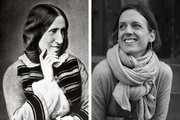
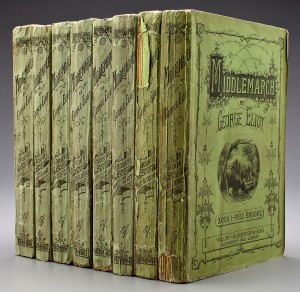
Joyce Carol Oates recenzuje książkę o tym jak autorkę Rebekę Mead (Rebecca Mead) zainspirowało czytanie innej autorki, piszącej, co oczywiście wszyscy wiemy, pod męskim pseudonimem:George Eliot. Zaczyna jednak od długiej i zabawnej listy innych książek opisujących czytanie innych książek.
She “makes Middlemarchers of us all”: George Eliot, left, and her admirer Rebecca Mead. Photographs: Left, from London Stereoscopic Company/Getty Images; right, by Elisabeth C. Prochnik
Chodzi o książkę:
MY LIFE IN MIDDLEMARCH
By Rebecca Mead
293 pp. Crown Publishers. $25
zainspirowaną czytaniem książki Eliota Middlemarch:
XXX A oto fragment tekstu Joyce Carol Oates:
… Rebecca Mead’s “My Life in Middlemarch” is a beguilingly straightforward, resolutely orthodox and unshowy account of the writer’s lifelong admiration for George Eliot and for “Middlemarch: A Study of Provincial Life” in particular — the Victorian novel, first published in the early 1870s, that was described by Virginia Woolf as “one of the few English novels written for grown-up people.”
There is no irony or postmodernist posturing in Mead’s forthright, unequivocal and unwavering endorsement of George Eliot as both a great novelist and a role model for bright, ambitious, provincially born girls like herself, eager to escape their intellectually impoverished hometowns — “Oxford was my immediate goal, but anywhere would do.” At the age of 17, when Mead first reads “Middlemarch,” her identification with Eliot’s 19-year-old heroine, Dorothea Brooke, is immediate and unqualified, and it will last for decades. The book’s theme, “a young woman’s desire for a substantial, rewarding, meaningful life,” was “certainly one with which Eliot had been long preoccupied… And it’s a theme that has made many young women, myself included, feel that ‘Middlemarch’ is speaking directly to us. How on earth might one contain one’s intolerable, overpowering, private yearnings? Where is a woman to put her energies? How is she to express her longings? What can she do to exercise her potential and affect the lives of others? What, in the end, is a young woman to do with herself?”
Today such earnest questions are more likely to be found in young adult fiction, but Victorian writers took seriously their duties, as Mead puts it, to “instruct and enlighten.” Eliot’s “inspiring principle,” she adds, was to create work that would “gladden and chasten human hearts.” Nor are these questions likely to have been applicable to Victorian women of the working class: Dorothea Brooke is the daughter of a well-to-do family, and financial concern will not guide her life choices. Instead, not unlike Henry James’s equally idealistic, naïve and well-to-do young heroine, Isabel Archer, in “The Portrait of a Lady,” Dorothea makes a disastrous marriage guided by bourgeois Victorian marital expectations: “The really delightful marriage must be that where your husband was a sort of father, and could teach you even Hebrew, if you wished it.”
27 stycznia zmarł w wieku 94 lat Pete Seeger. W celu upamiętnienia tego wybitnego muzyka proponuję ogłosić na blogu plebiscyt na najlepszy cover Where have all the flowers gone. Przesłuchałem na youtube sporo wersji i zgłaszam następujące kandydatury:
Czuję, że istnieje jakaś piękna wersja hiszpańska, niestety te, które odnalazłem były dość słabe.
Warto wspomnieć jeszcze dwa słowa o powstaniu utworu. Niezawodna Wikipedia donosi, że Seeger zainspirował się kozacką pieśnią przytoczoną w Cichym Donie i połączył ją z tradycyjną rosyjską melodią. Ostateczny kształt angielskiemu tekstowi nadał Joe Hickerson w 1960 roku.
А где ж гуси?
В камыш ушли.
А где ж камыш?
Девки выжали.
А где ж девки?
Девки замуж ушли.
А где ж казаки?
На войну пошли …
Und wo sind die Gänse?
Sie liefen ins Schilf.
Und wo ist das Schilf hin?
Von Mädchen gemäht.
Und wo sind die Mädchen?
Verheiratet längst!
Und wo die Kosaken?
Sind fort in den Krieg!
Where are the geese?
They ran into the reeds.
Where have the reeds gone?
Gathered by the girls
Where are the girls?
They’ve all taken husbands.
Where are the men?
They have gone off to war.
Zwróciłem też uwagę na pewną różnicę w wymowie oryginału i polskiego przekładu. To niuans, ale wydaje mi się, że regularna budowa angielskiego tekstu bardzo mocno eksponuje wizję wojen, które powtarzają się cyklicznie dziesiątkując każde kolejne pokolenie. “Oh, when will they ever learn?” pyta podmiot liryczny, ale kwiaty porosły już mogiły tych, którzy mogli tę naukę wyciągnąć.
Polski przekład nie jest tak jednoznacznie antywojenny. Przeciwnie, można go potraktować jako piosenkę patriotyczną, a w każdym razie martyrologiczną. Szkoda, ale taka jest polska kultura – strasznie zmilitaryzowana. A jaki jest przekład niemiecki? Sądzę, że analiza innych tłumaczeń też okaże się interesująca i liczę na blogobywalców.
Gdzie są kwiaty z tamtych lat? Piękne kwiaty…
Gdzie są kwiaty z tamtych lat? – Czas zatarł ślad…
Gdzie są kwiaty z tamtych lat? Każda z dziewcząt wzięła kwiat…
Kto wie czy było tak… Kto wie czy było tak…
Gdzie dziewczęta z tamtych lat? Jak te kwiaty…
Gdzie dziewczęta z tamtych lat? – Czas zatarł ślad…
Gdzie dziewczęta z tamtych lat? Za chłopcami poszły w świat…
Kto wie czy było tak… Kto wie czy było tak…
Gdzie są chłopcy z tamtych lat? Dzielne chwaty…
Gdzie są chłopcy z tamtych lat? – Czas zatarł ślad…
Gdzie są chłopcy z tamtych lat? Na żołnierski poszli szlak…
Kto wie czy było tak… Kto wie czy było tak…
Gdzie żołnierzy naszych kwiat? Tych sprzed laty
Gdzie żołnierzy naszych kwiat? – Czas zatarł ślad…
Gdzie żołnierzy naszych kwiat? Tam gdzie w polu krzyża znak…
Kto wie czy było tak… Kto wie czy było tak…
Gdzie mogiły z dawnych lat? – Tam gdzie kwiaty…
Gdzie mogiły z dawnych lat? – Czas zatarł ślad…
Gdzie mogiły z dawnych lat? Tam gdzie kwiaty posiał wiatr…
Kto wie czy było tak… Kto wie czy było tak…
Pozdrowienia, Adam Slaski
EMS: Nie ma jakMarlena Dietrich!
Do Czytelników po 13 latach, czyli 10 stycznia 2026 roku: większości tych nagrań nie ma, w każdym razie nie pod tymi linkami, które znalazł autor. Bo jest tak, że mój blog istnieje nieprzerwanie od grudnia 2012 roku (pamiętajmy! co noc jeden wpis! ani jednej nocki przerwy!), a inne blogi, strony i portale dawno zniknęły, tak jak owe kwiaty z dawnych lat.
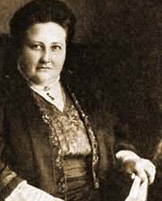
Urodziła się 9 lutego 1874 roku, równo 140 lat temu. Amy Lowell (1874 – 1925), jedna z najbardziej oryginalnych poetek amerykańskich, pochodziła z tak bogatej rodziny, że w jej rodzinnym mieście Brookline w stanie Massachusetts mieszkańcy mawiali, iż Cabotowie są tak bogaci, że przestają tylko z Lowellami, a Lowellowie – tylko z Bogiem. Była zaprzyjaźniona z Ezrą Poundem, który nazywał ją hippopoetess, poetką-hipopotamem. I rzeczywiście była ogromną ogromną dziwaczką. Sypiała codziennie do 13, w łóżku z 16 poduszkami (ani jednej mniej!), paliła cygara (i to dużo!), miała 7 psów i przyjaciółkę, Adę Dwyer Russell, aktorkę. Współczesne feministki twierdzą, że angażowała się w walkę o prawa kobiet, z kolei jej współcześni głoszą tezę wręcz przeciwną, że mianowicie nie znosiła feminizmu. Jej poezja, głównie wiersz wolny, należy do modernistycznego nurtu zwanego imaginizmem, o którym Pound mawiał, że w jej wydaniu jest to jednak raczej amyginizm.
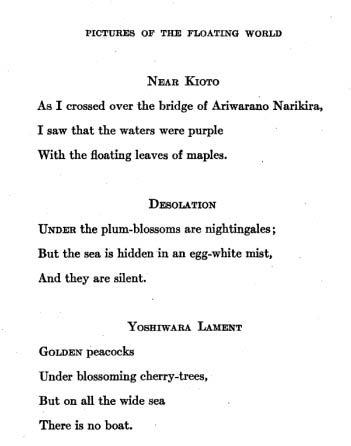
Argentyński kompozytor Juan María Solare, który od lat mieszka w Niemczech, napisał w latach 2007-08 muzykę na śpiew i perkusję do cyklu wierszy Amy Lowell “Lacquer Prints” /”Obrazki z laki”. Były to wiersze naśladujące bądź interpretujące hokku, japońską poezją XVIII-wieczną, którą dziś znamy lepiej jako haiku, poezję zncznie bardziej niż hokku zdyscyplinowaną, uprawianą jednak dopiero od XIX wieku.
A ponieważ kilka dni temu był chiński, japoński i wietnamski Nowy Rok, rozpoczynający rok Konia, zacytuję tu hokku Amy Lowell na Nowy Rok
z tomu “Pictures of the floating world. Lacquer Prints and Chinoiseries”.
Again the New Year Festival
I have drunk your health
In the red-lacquer wine cups,
But the wind bells on the bronze lanterns
In my garden
Are corroded and fallen.
Wieder das Neujahrfest
Ich trank auf deine Gesudheit
Vom rot lackierten Becher,
Aber die Windglocken in den bronzenen Laternen
In meinem Garten
Sind gerostet und fallen runter.
Übersetzt von Ewa Maria Slaska
Es ist nicht ausgeschloßen, dass Amy Lowell dabei an das traditionelle japanische Glockenspiel dachte, das am Neujahrsvortag in den buddhistischen Tempeln veranstaltet wird, damit man die Sünden des alten Jahres von sich abschüttelt. Wenn also die Glocken runterfallen, wäre es, ganz privat, ein schlechtes Zeichen für das kommende Jahr.
I znowu Nowy Rok
Wypiłem twoje zdrowie
Z polakierowanego na czerwono kielicha,
Ale dzwonki zawieszone w brązowych latarniach
W mym ogrodzie
Zardzewiały i spadły.
Tłumaczyła Ewa Maria Slaska
Niewykluczone, że Amy Lowell nawiązuje tu do japońskiej tradycji uderzania w wigilię Nowego Roku 108 razy w dzwony w świątyniach buddyjskich, co pozwala wiernym zrzucić z siebie stare grzechy. Jeżeli zatem dzwonki zardzewiały i spadły, to jest to być może w mikro wymiarze zły omen.
For Begin of December / Dla godnego uczczenia grudnia
Nevermore by Alice Vegrova
Edgar Allan Poe The Raven
Once upon a midnight dreary, while I pondered, weak and weary,
Over many a quaint and curious volume of forgotten lore,
While I nodded, nearly napping, suddenly there came a tapping,
As of some one gently rapping, rapping at my chamber door.
‘Tis some visitor, I muttered, tapping at my chamber door-
Only this, and nothing more.
Ah, distinctly I remember it was in the bleak December,
And each separate dying ember wrought its ghost upon the floor.
Eagerly I wished the morrow;- vainly I had sought to borrow
From my books surcease of sorrow- sorrow for the lost Lenore-
For the rare and radiant maiden whom the angels name Lenore-
Nameless here for evermore.
And the silken sad uncertain rustling of each purple curtain
Thrilled me- filled me with fantastic terrors never felt before;
So that now, to still the beating of my heart, I stood repeating,
‘Tis some visitor entreating entrance at my chamber door-
Some late visitor entreating entrance at my chamber door;-
This it is, and nothing more.
Presently my soul grew stronger; hesitating then no longer,
Sir, said I, or Madam, truly your forgiveness I implore;
But the fact is I was napping, and so gently you came rapping,
And so faintly you came tapping, tapping at my chamber door,
That I scarce was sure I heard you- here I opened wide the door;-
Darkness there, and nothing more.
Deep into that darkness peering, long I stood there wondering, fearing,
Doubting, dreaming dreams no mortals ever dared to dream before;
But the silence was unbroken, and the stillness gave no token,
And the only word there spoken was the whispered word, Lenore!
This I whispered, and an echo murmured back the word, Lenore!-
Merely this, and nothing more.
Back into the chamber turning, all my soul within me burning,
Soon again I heard a tapping somewhat louder than before.
Surely, said I, surely that is something at my window lattice:
Let me see, then, what thereat is, and this mystery explore-
Let my heart be still a moment and this mystery explore;-
‘Tis the wind and nothing more.
Open here I flung the shutter, when, with many a flirt and flutter,
In there stepped a stately raven of the saintly days of yore;
Not the least obeisance made he; not a minute stopped or stayed he;
But, with mien of lord or lady, perched above my chamber door-
Perched upon a bust of Pallas just above my chamber door-
Perched, and sat, and nothing more.
Then this ebony bird beguiling my sad fancy into smiling,
By the grave and stern decorum of the countenance it wore.
Though thy crest be shorn and shaven, thou, I said, art sure no craven,
Ghastly grim and ancient raven wandering from the Nightly shore-
Tell me what thy lordly name is on the Night’s Plutonian shore!
Quoth the Raven, Nevermore.
Much I marvelled this ungainly fowl to hear discourse so plainly,
Though its answer little meaning- little relevancy bore;
For we cannot help agreeing that no living human being
Ever yet was blest with seeing bird above his chamber door-
Bird or beast upon the sculptured bust above his chamber door,
With such name as Nevermore.
But the raven, sitting lonely on the placid bust, spoke only
That one word, as if his soul in that one word he did outpour.
Nothing further then he uttered- not a feather then he fluttered-
Till I scarcely more than muttered, other friends have flown before-
On the morrow he will leave me, as my hopes have flown before.
Then the bird said, Nevermore.
Startled at the stillness broken by reply so aptly spoken,
Doubtless, said I, what it utters is its only stock and store,
Caught from some unhappy master whom unmerciful Disaster
Followed fast and followed faster till his songs one burden bore-
Till the dirges of his Hope that melancholy burden bore
Of ‘Never- nevermore’.
But the Raven still beguiling all my fancy into smiling,
Straight I wheeled a cushioned seat in front of bird, and bust and door;
Then upon the velvet sinking, I betook myself to linking
Fancy unto fancy, thinking what this ominous bird of yore-
What this grim, ungainly, ghastly, gaunt and ominous bird of yore
Meant in croaking Nevermore.
This I sat engaged in guessing, but no syllable expressing
To the fowl whose fiery eyes now burned into my bosom’s core;
This and more I sat divining, with my head at ease reclining
On the cushion’s velvet lining that the lamplight gloated o’er,
But whose velvet violet lining with the lamplight gloating o’er,
She shall press, ah, nevermore!
Then methought the air grew denser, perfumed from an unseen censer
Swung by Seraphim whose footfalls tinkled on the tufted floor.
Wretch, I cried, thy God hath lent thee- by these angels he hath sent thee
Respite- respite and nepenthe, from thy memories of Lenore!
Quaff, oh quaff this kind nepenthe and forget this lost Lenore!
Quoth the Raven, Nevermore.
Prophet! said I, thing of evil!- prophet still, if bird or devil!-
Whether Tempter sent, or whether tempest tossed thee here ashore,
Desolate yet all undaunted, on this desert land enchanted-
On this home by horror haunted- tell me truly, I implore-
Is there- is there balm in Gilead?- tell me- tell me, I implore!
Quoth the Raven, Nevermore.
Prophet! said I, thing of evil- prophet still, if bird or devil!
By that Heaven that bends above us- by that God we both adore-
Tell this soul with sorrow laden if, within the distant Aidenn,
It shall clasp a sainted maiden whom the angels name Lenore-
Clasp a rare and radiant maiden whom the angels name Lenore.
Quoth the Raven, Nevermore.
Be that word our sign in parting, bird or fiend, I shrieked, upstarting-
Get thee back into the tempest and the Night’s Plutonian shore!
Leave no black plume as a token of that lie thy soul hath spoken!
Leave my loneliness unbroken!- quit the bust above my door!
Take thy beak from out my heart, and take thy form from off my door!
Quoth the Raven, Nevermore.
And the Raven, never flitting, still is sitting, still is sitting
On the pallid bust of Pallas just above my chamber door;
And his eyes have all the seeming of a demon’s that is dreaming,
And the lamplight o’er him streaming throws his shadow on the floor;
And my soul from out that shadow that lies floating on the floor
Shall be lifted- nevermore!
Kruk
tłumaczenie: Zenon Przesmycki
Raz w północnej, głuchej dobie, gdym znużony siedział sobie
Nad księgami dawnej wiedzy, którą wieków pokrył kurz –
Gdym się drzemiąc chylił na nie, usłyszałem niespodzianie
Lekkie, ciche kołatanie, jakby u drzwi moich tuż.
“To gość jakiś – wyszeptałem. – Puka snadź przy drzwiach mych tuż.
Nic innego chyba już”.
Ach – pamiętam, jakby wczoraj – była przykra grudnia pora,
Głownie mrąc to cień rzucały, to blask jakichś krwawych zórz.
Tęsknom czekał, by świat biały błysł, bo księgi nie sprawiały
Ulgi w mej boleści stałej, odkąd znikł mój anioł stróż,
Dziewczę słodkie, które zwie Lenorą anioł stróż…
Tu bez nazwy ona już!
Strach zdejmował mnie nieznany, pełny grozy niezbadanej,
Kiedy u drzwi zaszeleścił purpurowy kotar plusz:
By ukoić serca trwogę, rzekłem sobie: “Pojąć mogę:
To podróżny – zgubił drogę – zbłąkał się wśród śnieżnych wzgórz…
W drzwi me puka, Zabłądziwszy pośród białych śnieżnych wzgórz…
Tak – nikt inny chyba już!”
Więc nabrawszy męstwa wstałem, z ugrzecznieniem mówiąc całem:
“Panie albo pani, błagam, nie obrażaj się ni chmurz,
Bo zasnąłem ze zmęczenia, a twe lekkie uderzenia
W drzwi mojego tu schronienia nie zbudziły mnie. Więc cóż
W tym dziwnego, żem nie słyszał?” Tu otwarłem drzwi – i cóż?
Ciemność w krąg – nic więcej już.
Patrząc w mrok ten na wsze strony, stałem trwożny i zdumiony,
Rojąc mary, jakich dotąd głąb nie znała ludzkich dusz.
Lecz milczenie głuche trwało, ciszy nic nie przerywało,
Tylko lekki szept nieśmiało drgnął: – “Lenora?” – gdzieś tuż, tuż.
Tom ja szepnął – i: “Lenora!” – wyszeptało echo tuż.
Tylko to, nic więcej już.
Powróciwszy do pokoju, w niesłychanym już rozstroju,
Posłyszałem znów stukanie, jakby gdzieś przy ścianie wzdłuż.
“Pewnie – rzekłem – coś kołacze w okno: wiatry snadź tułacze?
Zaraz, co to jest, zobaczę, nie bij, serce, ni się trwóż –
Wnet wyjaśnię tę zagadkę, serce, nie bój się ni trwóż.
Tak, to wiatr – nic więcej już!”
Otworzyłem okno zatem… Szumiąc skrzydły, z majestatem,
Wzleciał ciężko Kruk wspaniały, jakby czarny piekieł stróż.
Nie pozdrowił mnie ukłonem, okiem powiódł w krąg zamglonym
I siadł z pańskim jakimś tonem pośród dwóch kamiennych kruż –
Na Pallady biuście przy drzwiach, pośród dwóch kamiennych kruż.
Usiadł tam – nic więcej już.
Ptak ten sprawił, że przy całym rozsmętnieniu mym musiałem
Rozśmiać się z poważnej nader jego miny: “Tyś nie tchórz,
Widzę, stary, chmurny ptaku, co – choć piór już ani znaku
Na swym czubie – szukasz szlaku wśród posępnych nocy mórz?
Mów, jak zwą cię na plutonskim brzegu czarnych nocy mórz?”
Kruk rzekł na to: “Nigdy już!”
Zadziwiłem się nie lada, że ptak tak wyraźnie gada,
Choć żem jego odpowiedzi nie mógł pojąć ani rusz,
Boć to przyzna nawet dziecię, że nikt z ludzi dotąd w świecie
Nie oglądał chyba przecież ptaka przy drzwiach izby tuż.
Ptaka, co by przed nim usiadł na popiersiu przy drzwiach tuż.
Z takim mianem: “Nigdy już”.
Ale Kruk ten z łysą głową wyrzekł jedno tylko słowo,
Jak ci, którzy w jeden wyraz całą głąb wlewają dusz.
Potem milczał znów nieśmiele, Pióro mu nie drgnęło w ciele,
Aż gdym szepnął: “Przyjaciele opuścili mnie wśród burz.
I on też za dniem mnie rzuci, jak Nadzieje pośród burz”.
Ptak mi odrzekł: “Nigdy już!”
Zadziwiony niewymownie odpowiedzią tak stosownie
Wyrzeczoną: “Widać – rzekłem – umie tylko to. A nuż
Dar to pana, co w niewoli poznał tylko to, co boli,
I swe pieśni jął powoli echa kłaść przeżytych burz,
Aż pieśń każda w smętnej zwrotce brzmiała niby echo burz:
“Nigdy, nigdy, nigdy już!”
Lecz że w rozsmętnieniu całym wciąż się z Kruka śmiać musiałem,
Przysunąłem miękki fotel na wprost ptaka, do drzwi tuż,
I usiadłszy nań co żywo, jąłem myśli snuć przędziwo,
Co te stare, chmurne dziwo, czarne jakby piekieł stróż –
Co ten ptak złowróżbny, groźny, czarny jakby piekieł stróż –
Mniemał, kracząc: “Nigdy już!”
Myśląc, czego to oznaka, nie mówiłem ni do ptaka,
Który swe płonące oczy w serce wbijał mi jak nóż.
Tak siedziałem, wsparłszy głowę o poduszki fioletowe,
A blask lampy światło płowe lał na ich matowy plusz.
Ach, niestety, Ona o ten fioletowy, miękki plusz
Skroni swej nie oprze już!
Wtem powietrze się zamgliło, jakby wkoło się dymiło
Sto anielskich trybularzy, tchnących słodką wonią róż.
“Bóg na bóle, co trapiły serce, lek ci zsyła miły –
Zawołałem – zbierz swe siły i wspomnienia ciężkie zgłusz,
Wdychaj lek ten i wspomnienia o Lenory stracie zgłusz!”
Kruk zakrakał: “Nigdy już!”
“Zły wróżbiarzu – rzekłem – ptaku czy czarciego sługo znaku!
Czy cię szatan przysłał tutaj, czy pęd wściekły zagnał burz
Na brzeg smutku i boleści, gdzie żal tylko pustka mieści,
Gdzie noc każda zgrozę wieści – powiedz, błagam, wzrusz się, wzrusz!
Jestże, jestże balsam w Gilead? – powiedz, powiedz, wzrusz się, wzrusz!”
Rzekł Kruk na to: “Nigdy już!”
“Zły wróżbiarzu – rzekłem – ptaku czy czarciego sługo znaku!
Na to niebo, co nad nami, i na Pana ziemi, mórz
Powiedz duszy mej zbolałej, czy w Edenie szczęścia chwały
Znajdzie dziewczę, które biały zwie Lenorą anioł-stróż,
Dziewczę święte, słodkie, które zwie Lenorą anioł-stróż?”
Kruk mi odrzekł: “Nigdy już!”
“Niech to będzie pożegnanie – krzyknę – ptaku czy szatanie!
Precz na burzę, na plutońskie brzegi czarnych nocy mórz!
Niech mi żadne czarne pióro nie przypomni, jak ponuro
Mroczysz wszystko kłamstwa chmurą! Ruszże się z popiersia, rusz!
Wyjmij dziób z mojego serca – i rusz się z nade drzwi, rusz!
Kruk mi odrzekł: “Nigdy już!”
I kruk wcale nie odlata, jakby myślał siedzieć lata
Na Pallady biuście przy drzwiach, pośród dwóch kamiennych kruż,
Krwawo lśni mu wzrok ponury, jak u diabła spod rzęs chmury
Światło lampy rzuca z góry jego cień na pokój wzdłuż,
A ma dusza z tego cienia, co komnatę zaległ wzdłuż,
Nie powstanie – Nigdy już!”
Der Rabe Übersetzung: Carl Theodor Eben
Mitternacht umgab mich schaurig, als ich einsam, trüb und traurig,
Sinnend saß und las von mancher längstverklung’nen Mähr’ und Lehr’ –
Als ich schon mit matten Blicken im Begriff, in Schlaf zu nicken,
Hörte plötzlich ich ein Ticken an die Zimmerthüre her;
„Ein Besuch wohl noch,“ so dacht’ ich, „den der Zufall führet her –
Ein Besuch und sonst Nichts mehr.“
Wohl hab’ ich’s im Sinn behalten, im Dezember war’s, im kalten,
Und gespenstige Gestalten warf des Feuers Schein umher.
Sehnlich wünscht’ ich mir den Morgen, keine Lind’rung war zu borgen
Aus den Büchern für die Sorgen – für die Sorgen tief und schwer
Um die Sel’ge, die Lenoren nennt der Engel heilig Heer –
Hier, ach, nennt sie Niemand mehr!
Jedes Rauschen der Gardinen, die mir wie Gespenster schienen,
Füllte nun mein Herz mit Schrecken – Schrecken nie gefühlt vorher;
Wie es bebte, wie es zagte, bis ich endlich wieder sagte:
„Ein Besuch wohl, der es wagte, in der Nacht zu kommen her –
Ein Besuch, der spät es wagte, in der Nacht zu kommen her;
Dies allein und sonst Nichts mehr.“
Und ermannt nach diesen Worten öffnete ich stracks die Pforten:
„Dame oder Herr,“ so sprach ich, „bitte um Verzeihung sehr!
Doch ich war mit matten Blicken im Begriff, in Schlaf zu nicken,
Und so leis scholl Euer Ticken an die Zimmerthüre her,
Daß ich kaum es recht vernommen; doch nun seid willkommen sehr!“ –
Dunkel da und sonst Nichts mehr.
Düster in das Dunkel schauend stand ich lange starr und grauend,
Träume träumend, die hienieden nie ein Mensch geträumt vorher;
Zweifel schwarz den Sinn bethörte, Nichts die Stille draußen störte,
Nur das eine Wort man hörte, nur „Lenore?“ klang es her;
Selber haucht’ ich’s, und „Lenore!“ trug das Echo trauernd her –
Einzig dies und sonst Nichts mehr.
Als ich nun mit tiefem Bangen wieder in’s Gemach gegangen,
Hört’ ich bald ein neues Pochen, etwas lauter als vorher.
„Sicher,“ sprach ich da mit Beben, „an das Fenster pocht’ es eben,
Nun wohlan, so laß mich streben, daß ich mir das Ding erklär’ –
Still, mein Herz, daß ich mit Ruhe dies Geheimniß mir erklär’
Wohl der Wind und sonst Nichts mehr.“
Riß das Fenster auf jetzunder, und herein stolzirt’ – o Wunder!
Ein gewalt’ger, hochbejahrter Rabe schwirrend zu mir her;
Flog mit mächt’gen Flügelstreichen, ohne Gruß und Dankeszeichen,
Stolz und stattlich sonder Gleichen, nach der Thüre hoch und hehr –
Flog nach einer Pallasbüste ob der Thüre hoch und hehr –
Setzte sich und sonst Nichts mehr.
Und trotz meiner Trauer brachte er dahin mich, daß ich lachte,
So gesetzt und gravitätisch herrscht’ auf meiner Büste er.
„Ob auch alt und nah dem Grabe,“ sprach ich, „bist kein feiger Knabe,
Grimmer, glattgeschor’ner Rabe, der Du kamst vom Schattenheer –
Sprich, welch’ stolzen Namen führst Du in der Nacht pluton’schem Heer?“
Sprach der Rabe: „Nimmermehr.“
Ganz erstaunt war ich, zu hören dies Geschöpf mich so belehren,
Schien auch wenig Sinn zu liegen in dem Wort bedeutungsleer;
Denn wohl Keiner könnte sagen, daß ihm je in seinen Tagen
Sonder Zier und sonder Zügen so ein Thier erschienen wär’,
Das auf seiner Marmorbüste ob der Thür gesessen wär’
Mit dem Namen „Nimmermehr.“
Dieses Wort nur sprach der Rabe dumpf und hohl, wie aus dem Grabe,
Als ob seine ganze Seele in dem einen Worte wär’.
Weiter Nichts ward dann gesprochen, nur mein Herz noch hört’ ich pochen,
Bis das Schweigen ich gebrochen: „Andre Freunde floh’n seither –
Morgen wird auch er mich fliehen, wie die Hoffnung floh seither.“
Sprach der Rabe: „Nimmermehr!“
Immer höher stieg mein Staunen bei des Raben dunklem Raunen,
Doch ich dachte: „Ohne Zweifel weiß er dies und sonst Nichts mehr;
Hat’s von seinem armen Meister, dem des Unglücks finstre Geister
Drohten dreist und drohten dreister, bis er trüb und trauerschwer –
Bis ihm schwand der Hoffnung Schimmer, und er fortan seufzte schwer:
„O nimmer – nimmermehr!“
Trotz der Trauer wieder brachte er dahin mich, daß ich lachte;
Einen Armstuhl endlich rollte ich zu Thür und Vogel her.
In den sammt’nen Kissen liegend, in die Hand die Wange schmiegend,
Sann ich, hin und her mich wiegend, was des Wortes Deutung wär’ –
Was der grimme, finst’re Vogel aus dem nächt’gen Schattenheer
Wollt’ mit seinem „Nimmermehr.“
Dieses saß ich still ermessend, doch des Vogels nicht vergessend,
Dessen Feueraugen jetzo mir das Herz beklemmten sehr;
Und mit schmerzlichen Gefühlen ließ mein Haupt ich lange wühlen
In den veilchenfarb’nen Pfühlen, überstrahlt vom Lichte hehr –
Ach, in diesen sammtnen Pfühlen, überstrahlt vom Lichte hehr –
Ruhet sie jetzt nimmermehr!
Und ich wähnte, durch die Lüfte wallten süße Weihrauchdüfte,
Ausgestreut durch unsichtbare Seraphshände um mich her.
„Lethe“, rief ich, „süße Spende schickt Dir Gott durch Engelshände,
Daß sich von Lenoren wende Deine Trauer tief und schwer!
Nimm, o nimm die süße Spende und vergiß der Trauer schwer!“
Sprach der Rabe: „Nimmermehr!“
„Gramprophet!“ rief ich voll Zweifel, „ob Du Vogel oder Teufel!
Ob die Hölle Dich mir sandte, ob der Sturm Dich wehte her!
Du, der von des Orkus Strande – Du, der von dem Schreckenlande
Sich zu mir, dem Trüben, wandte – künde mir mein heiß Begehr:
Find’ ich Balsam noch in Gilead! ist noch Trost im Gnadenmeer?“
Sprach der Rabe: „Nimmermehr!“
„Gramprophet!“ rief ich voll Zweifel, „ob Du Vogel oder Teufel!
Bei dem ew’gen Himmel droben, bei dem Gott, den ich verehr’ –
Künde mir, ob ich Lenoren, die hienieden ich verloren,
Wieder find’ an Edens Thoren – sie, die throhnt im Engelsheer –
Jene Sel’ge, die Lenoren nennt der Engel heilig Heer!“
Sprach der Rabe: „Nimmermehr!“
„Sei dies Wort das Trennungszeichen! Vogel, Dämon, Du mußt weichen!
Fleuch zurück zum Sturmesgrauen, oder zum pluton’schen Heer!
Keine Feder laß zurücke mir als Zeichen Deiner Tücke;
Laß allein mich dem Geschicke – wage nie Dich wieder her!
Fort und laß mein Herz in Frieden, das gepeinigt Du so sehr!“
Sprach der Rabe: „Nimmermehr!“
Und der Rabe weichet nimmer – sitzt noch immer, sitzt noch immer
Auf der blassen Pallasbüste ob der Thüre hoch und hehr;
Sitzt mit geisterhaftem Munkeln, seine Feueraugen funkeln
Gar dämonisch aus dem dunkeln, düstern Schatten um ihn her;
Und mein Geist wird aus dem Schatten, den er breitet um mich her,
Sich erheben – nimmermehr!
Dziś w nocy obchodzimy 75 rocznicę pogromu ludności żydowskiej zwanego Nocą Kryształową. Dlatego publikuję tu słynną piosenkę Donna Donna, o cielaczku, który nie mógł być jaskółką. Każdy z nas to znał i śpiewał na rajdach lub przy ognisku. Ale czy każdy wiedział – bo ja nie wiedziałam – że podobnie jak Dance me to the end of love, również i ta piosenka była lamentem na śmierć milionów ofiar Shoah? Cielaczek, który nie ma skrzydeł i nie może cieszyć się wolnością jak jaskółka, to symbol żydowskiego losu. Piosenka powstała w czasie wojny, śpiewana była w musicalu Esterka, jej autorem był Aaron Zeitlin, muzykę skomponował Shalom Secunda. Donna Donna to inwokacja do Boga.
Adonai Adonai! Donna Donna! Panie!
Donna Donna (דאָנאַ דאָנאַ „Dana Dana“, דאָס קעלבל „Dos Kelbl“ oder „Dona Dona“) ist ein in weiten Teilen der Erde bekanntes Lied. Es handelt von einem Kälbchen, das sich nicht dagegen wehren kann, zur Schlachtbank geführt zu werden. Es ist abhängig wie ein Arbeitnehmer oder Knecht. Die Schwalbe hingegen bestimmt ihr Schicksal selbst, symbolisiert Eigenständigkeit und Selbstverantwortung. Sie ist die Freiheit. Das Lied ist entstanden in der Zeit des Dritten Reichs und reflektiert die Situation der Juden. Es wurde für das Musical Esterke (1940–1941) von den jüdischen Künstlern Aaron Zeitlin (Text) und Shalom Secunda (Musik) geschrieben. “Donna Donna” – auf hebräisch Donaj, Donaj – bedeutet Adonai, Gott.
Ich publiziere es heute am 75. Jahrestag der Kristallnacht.
Yiddish (transcription)
Dos Kelbl
Oyfn furl ligt dos kelbl
Ligt gebundn mit a shtrik
Hoykh in himl flit dos shvelbl
Freydt zikh, dreyt zikh hin un krik.
Chorus
Lakht der vint in korn
Lakh un lakht un lakht
Lakht er op a tog a gantsn
mit a halber nakht.
Hey Dona, dona, dona…
Shrayt dos kelbl, zogt der poyer
“Ver zhe heyst dikh zayn a kalb?
Volst gekert tsu zayn a foygl
Volst gekert tsu zayn a shvalb?”
Chorus
Lakht der vint in korn…
Bidne kelber tut men bindn
Un men shlept zey un men shekht
ver s’hot fligl, flit aroyf tzu
iz bay keynem nit keyn knekht
Chorus
Lakht der vint in korn…
Hebrew (transcription)
Egel rakh kashour bekhevel
al ha’agala moutal
velamala bashamayim
efroni mamri el al.
Rou’akh stav tzokhek lo
tzokhek ou mit’holel
tzokhek ou tzokhek miboker or
ve’ad khatzi halel.
Dona, Dona, Dona, Dona,
Dona, Dona, Dona, Don.
Dona, Dona, Dona, Dona,
Dona, Dona, Dona, Don.
Lama ze tige’e?
omer ikar la egel hamoutal
lou tzamakhta shte knafayim
vehimreta gam ata.
Rou’akh stav tzokhek lo
tzokhek ou mit’holel
tzokhek ou tzokhek miboker or
ve’ad khatzi halel.
Dona, Dona, Dona, Dona,
Dona, Dona, Dona, Don.
Dona, Dona, Dona, Dona,
Dona, Dona, Dona, Don.
Agalim bli da’at lama
el atevakh holkhim tamid
ve’asher libam lakhofesh
mamrim ke’efroni.
Rou’akh stav tzokhek lo
tzokhek ou mit’holel
tzokhek ou tzokhek miboker or
ve’ad khatzi halel.
Dona, Dona, Dona, Dona,
Dona, Dona, Dona, Don.
Dona, Dona, Dona, Dona,
Dona, Dona, Dona, Don.

 A family in Szeroka Street at the heart of the Jewish quarter in Krakow. Photograph: Eastway Pictures









 Ewa Maria and Friends