Sorry, Peter, I think, it is a story from the category, what the men think the women want… But interesting 🙂
(c) Peter Wortsman
The nun sat with a tin cup in Penn Station. She sat there silently, clutching the cup in her lap, and stared down at the ground. She never once looked into the faces that belonged to the anonymous hands that dropped coins into her cup. For years I saw her seated at that same spot.
Shoe styles changed from heavy Irish brogues to the flimsier narrow-toed Italian imports. Pennies turned to nickels to dimes, and then—she did not know how old she was, how many years she had been sitting there in that station—then it was the clink of quarters by which she measured time, not clock time—God’s time, she called it. Each clink of a coin marked a celestial second; sixty clinks made a minute; sixty times sixty an hour of eternity. And when she felt the cup grow heavy, she knew it was time to go.
She folded the stool, clasped it under her arm, slipped the cup and its precious contents into a hidden pouch, and joined the crowd of shuffling shoes.
Not that she’d never had the urge to look up.
It was the frenzied click of running high heels on one particular evening that forced her eyes upward. The click of heels and a woman’s shriek: “No, Johnny, don’t!”
The nun pressed her frail body up against a column. It was late. Later than usual. The commuters had already disbursed for the day. She was alone in the station with high heels and Johnny. And from behind the column she watched as a tall lanky man dressed in white chased after a woman in red.
“Stop, Johnny, stop!” the young woman pleaded.
The nun shivered.
She watched as the man caught up with the woman, grabbed her by the back of her dress. Sister Maria shut her eyes and bit her lips as she heard the rip of cloth and the slap of an open palm across a face, and a howl that tore through the surrounding silence.
The man’s footsteps retreated and the nun took all the courage she possessed and stepped out from the shadow of her hiding place. There on the filthy floor of the station lay the woman, shaking and sobbing, her dress split open, her shoes scattered about.
Sister Maria was overcome.
How long had it been since she’d touched or been touched by anyone but God?
She knelt down, lowered her head and kissed the woman’s back. “Oh Holy Mother of God!” she prayed aloud.
The woman stopped weeping. She turned and smiled: “I have been waiting for you, Sister—remove your habit!”
And without hesitation, the nun did as she was told, stripped herself naked and let the sacred garment fall to her feet.
“Now put on this torn red dress!” the woman whispered, kissing the nun on her pale white breast.
“Yes, Mother,” said Sister Maria, her eyes downcast, as she heard the woman slip into her habit.
“You will walk out into the street,” said the Mother of God, “and you will smile at the first man you see. And he will take you to a hotel and kiss your back and bosom. And the tin cup will no longer be large enough to hold the holy offerings.”
–“But what of my shaven head, Mother? Will the man not laugh?”
–“Yes, my daughter, he will laugh and he will call you mad. And he will take care of his lust and leave you lying naked on a strange mattress in a strange room.”
–“But am I not too old for a man’s touch, Mother?”
The Mother of God laughed. Her bosom shook under the black cloth of her habit.
“Jesus!” she cried, and the man in white came running. “Take her, Jesus, my son,” said the Mother of God, “and teach my daughter what it is to be alive before her time comes to die.”
And Jesus led Sister Maria, now dressed in the torn red dress, to a public toilet.
“Lie down!” he commanded.
She felt his hands tear away the remains of the dress. She felt him roughly part her legs. And then she felt a fiery pain and something pierced her there between the legs, something like a giant thorn.
“Jesus! Jesus!” she wailed, as the blood of her womanhood ran down her legs.
The nun heard the clink of a coin in her cup. She heard the click of high heels receding among the shuffling shoes and, as I watched, she shivered for she knew she had had a holy vision.
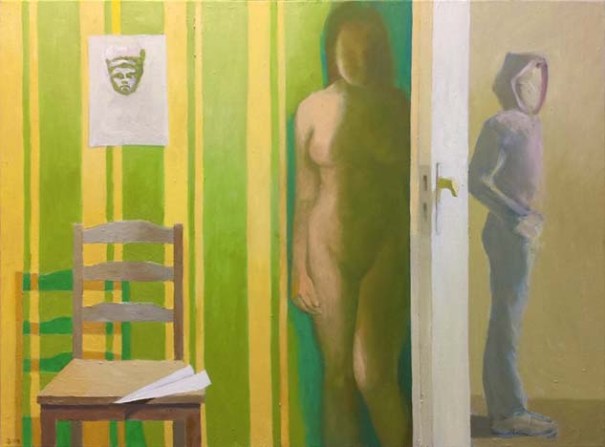
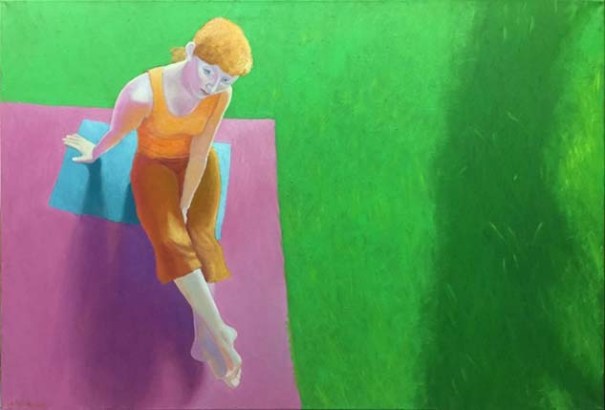
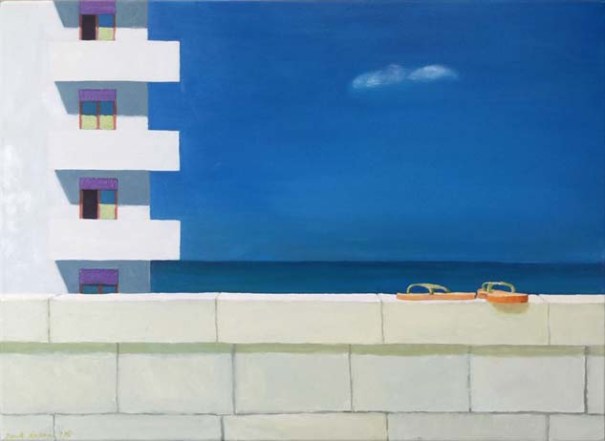
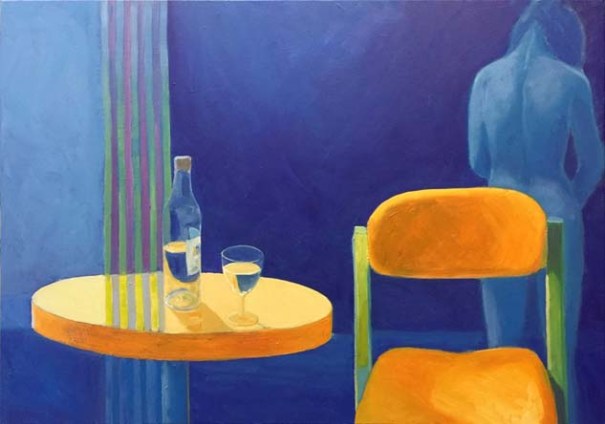
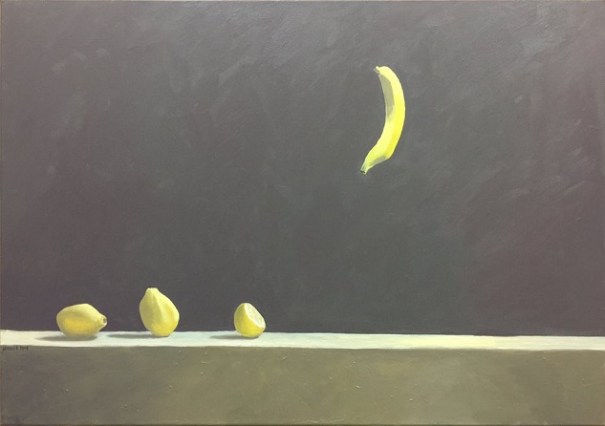
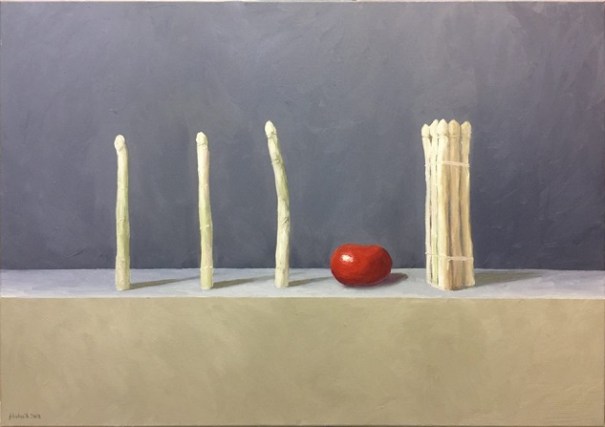
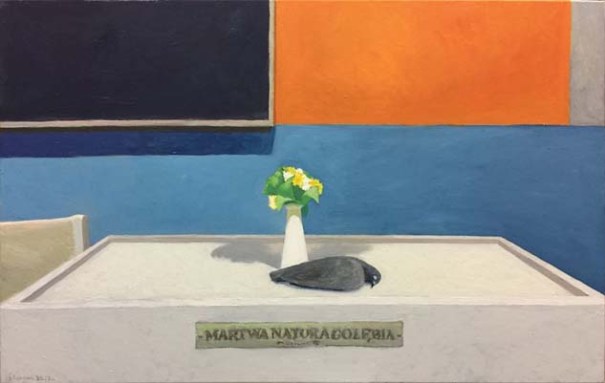
Przedtem malował meble, bezkrwawo pokawałkowane kobiety oraz męskie garnitury bez wypełnienia, teraz zmienił tematykę i światło, teraz jest lato, nawet w nocnym barze jest słonecznie… Japonki na wakacjach, Penelopa na wakacjach… Wakacyjne martwe natury z warzywami, no chyba że…
I was reading a wonderful book of W. G. Sebald, a German writer which left Germany in early 60. and went to Manchester. He is one of the best writer I ever read in my whole life, better as Marcel Proust. It means something when I say something like that. His book, Die Ausgewanderten / The Emigrants I am reading ever and ever again… It was published in German 1992 and in English 1996. Sebald won with it the Berlin Literature Prize, the Literatur Nord Prize, and the Johannes Bobrowski Medal. Wikipedia says: The Emigrants is largely concerned with memory, trauma, and feelings of foreignness. All the characters in the work are emigrants who have left Germany, mostly Jewish and mostly self-murder. In the 3rd novel in a scene which takes place in a bar in Deauville, he writes.
Die Instrumentalisten waren vier schon etwas gealterte Jünglinge mit lockigem Haar. Sie spielten songs aus den sechziger Jahren, die ich in der Union Bar in Manchester ich weiß nicht wie oft gehört hatte. It is the evening of the day. Hingebungsvoll hauchte die Vokalistin, ein blondes Mädchen mit noch sehr kindlicher Stimme, hinein in das Mikrofon, das sie mit beiden Händen ganz dicht an ihre Lippen hielt. Sie sang in englischer Sprache, aber mit deutlichen französischen Akzent. It is the evening of the day, I sit and watch the children play. Manchmmal, wenn sie die Worte nicht richtig erinnern konnte, ging ihr Gesang in ein wundervolles Summen über. Ich setzte mich auf einen der weißen Schleiflacksessel. Die Musik erfüllte den ganzen Raum. Rosarote Quellwolken bis unter den goldumrankten Plafond. Procol Harum. A whiter shade of pale. Die reine Rührseligkeit.
I needed urgently to listen to it…
Original lyrics were written by Keith Reid
We skipped the light fandango
turned cartwheels ‘cross the floor
I was feeling kinda’ seasick
the crowd called out for more
the room was humming harder
as the ceiling flew away
when we called out for another drink
the waiter brought a tray
and so it was that later as a mirror
told its tale that her face
at first just ghostly turned
a whiter shade of pale
She said: “There is no reason
and the truth is plain to see”
but I wandered through my playing cards
would not let her be one
of sixteen vestal virgins
who were leaving for the coast
and although my eyes were open
they might just as well’ve been closed
and so it was that later
as the miller told his tale
that her face at first just ghostly
turned a whiter shade of pale.
But all that was nothing in comparison to what was written underneath. So I just quote it, reading a book of Sebald and listening ever und ever again to Procol Harum, which I liked so much as I was young, and then forgot them totally till bei reading Sebald the 10th time or so I found them again. Rührselig.
Anyway, did you know it?
could you please stop commenting about it being ‘originally written by’ Johann Sebastian Bach? I tried to find similarities with “Air on G String”, “Ich steh mit einem Fuß im Grabe” (BWV 156), “O Mensch bewein dein’ Sünde groß” (BWV 622), “Sleepers, Wake!” from Bach, but honestly: None of them warrant the claim that the melody is borrowed from any of them. It’s quite a stretch to find similarities, even, between chord-schemes, bass-lines, and the two or three tone-sequences that match with aforementioned pieces by Bach; You could then say the same about ALL pop hits! To claim it borrows ideas from “When a Man Loves a Woman” (Percy Sledge) is like saying every pop-song in C-minor borrows ideas from songs with the same tempo. This composition stands tall on its own. Every song out there is *inspired* by those from other songwriters, you don’t need to brag about your miracle discovery; I’m holding a do-I-give-a-shit-o-meter in my hand, and the needle’s not moving.
Mmmmm… it was published on you tube on 09.09.2007 and since then people listened to it (only here of course) 89.577.793 times (the last ten times it was me listening to it). 89 millions! It was commented 22 009 times.
I copied only comments from today and yesterday, I finished by a comment from somebody remembering Poland…
I first saw this video on a “video jukebox” in a corridor in a mall in Quebec City in about 1967. There was a selection of less than a dozen videos to choose from, and you had to stand at the jukebox to see the film projected onto a small screen within the box. In the meantime, the music was almost drowned out by the passing shoppers and tourists. This was truly groundbreaking at the time.
When I was a teenager I would leave the radio on all night….this is the only song that would wake me up no matter what time in the wee hours it came on….always gave me goosebumps
A whiter shade of pale has been N0 one a long time in 1967. One of the greatest year for music. What a thrill it was on Radio Caroline. How great it was to be in England for sweet Summer of Love..!!!
música lindona por demais que nós envolve por inteiro dessa banda inglesa que arrebatou os corações apaixonados em 1.976 na Hippoputumus disco Club em São Paulo, Dancei por demais.
En complacencias en tj,México yo escuchaba esta canción en 1972, mi hermana, Yani,amigas Irma,laya,maria vivíamos en colonia libertad p/a saturnino herrant,serca de iglesia Loreto y tienda maiza, my novio que quise mucho Victor lo recuerdo con estas cansiones,samba pa ti Santana ,color my world,Chicago,have you seen her,chi-lites,my world bee gees, my mama ya se fue en enero 22,2017 en San Diego ella escuchaba complacencias radio de tj, los Freddy’s moonlights,solitarios,los dos oros cros,
Les arbres sont des poèmes que la terre écrit sur le ciel.
Kahlil Gibran
Budda powiedział, że jeśli uczepisz się jakiegoś wyobrażenia i uznasz je za “prawdę”, stracisz szansę poznania prawdy. Nawet kiedy prawda osobiście zapuka do twych drzwi, nie będziesz chciał otworzyć przed nią umysłu. Jeśli więc masz wyobrażenie tego, co jest prawdą albo jakie warunki muszą zostać spełnione, byś był szczęśliwy – bądź ostrożny.
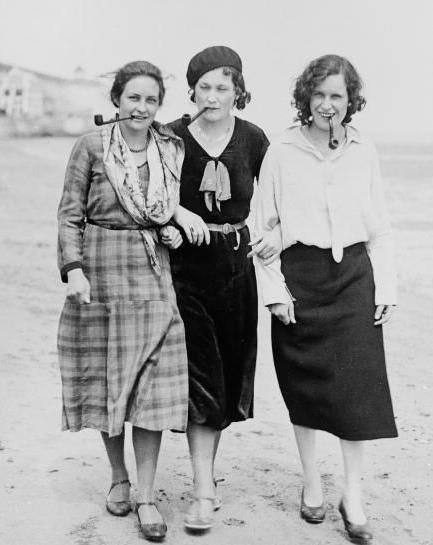
Well… That pic was posted in Facebook, with funny and cute and awesome text underneath: Rosa Luxemburg, Simone de Beauvoir, and Emma Goldman on the beach, smoking pipes (1930’s.)
I shared it on my FB wall and my dear friend Esther Schulz-Goldstein wrote as a comment: Ungefähr 30 Jahre später, habe ich als junge Frau im Museumsrestaurant in Tübingen Zigarre geraucht und da zischte ein für mich damals alter Herr am Nebentisch, “eine deutsche Frau raucht nicht”. Ich zischte zurück, “deutsche Männer hätten lieber nicht soviele Menschen umgebracht”.
I was so taken over by this beautiful foto, that I did not notice, it could be a fake and in fact it is, what my two Polish friends – Ula Ptak and Elżbieta Jagiełło – immediately noticed. Sure it is a fake. The authors do not even try to say you it is not. Just look at it: Emma Goldman 1869-1940 Rosa Luxemburg 1871-1919 Simone de Beauvoir 1908-1986
But obviously I am not alone in my being mistaked. Somebody found out, that that foto with it’s purposely false caption was shared 13,268 times. Well, so… I was the 13,269th one…
But I found the true story about that pic, it was so called WOPS in Mexico:
The Womens’ Pipe Smoking Group affectionately known as the WOPS or Borkum Riffs because of the sweet smells that trail behind them. They meet every early morning of the week and stroll along Olas Altas smoking and discussing shag tobacco. This wonderfully relaxed group sometime mix a blend of prime Moroccan hashish with their fine Borkum Riff fine cut shag from the Netherlands.
There is a waiting list to join these women of the below the knee dress wearing persuasion who want to become involved in this sedate pursuit of strolling and chatting and puffing away on their smooth Calabash Meerschaum pipes like steam locomotives struggling up a hill. The youthful countenances of this group suggest tobacco smoke is good for the complexion and has general health benefits.
Searching for the text above I found another two interesting texts about women and smoking and pipes and now I am rebbloging them for you:
By 1615 in England, the first consignments of Virginia tobacco for pipe smoking had arrived and some 7,000 shops in London sold tobacco .
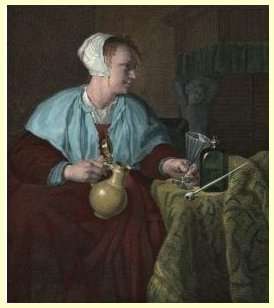
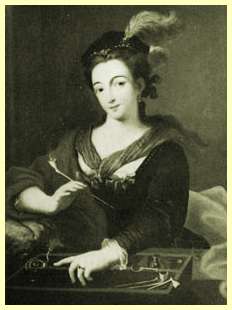
Women Pipe smokers are rare today but female smoking was very popular in the 17th and 18th centuries. Respectable women were commonly seen smoking pipes in public. Many famous paintings exist of noble women of the period drinking in the smoke from a clay pipe. The middle classes were eager to enjoy this new pastime as well. In the Elizabethan times clays were quite delicate with graceful thin bowls and long stems. The Dutch redesigned these clays by enlarging the bowl and lengthened the stem.
Dutch, French and English women all enjoyed the “Indian Weed”. For centuries the favorite way of enjoying tobacco was to smoke it in clay pipes. As early as about 1575 pipes were being made in England, but by the 17th century Holland had become the dominant center for the manufacture of clay pipes. Clays were made in many other European countries at this time, as well. Such pipes were usually white, with small bowls and long stems. They were extremely fragile and did not last long. However, by the 1850s, when pipe smoking in general became associated with the working class, female smoking began to decline, at least in public. The acceptance of female smokers seemed to vary between regions at this time. It is believed that many women kept their old habits. It is more than likely it was done in secret while they outwardly treated the act as a disgrace.’
Marquise de Pompadour, the favorite mistress of Louis XV, was a passionate smoker and owned more than three hundred pipes!
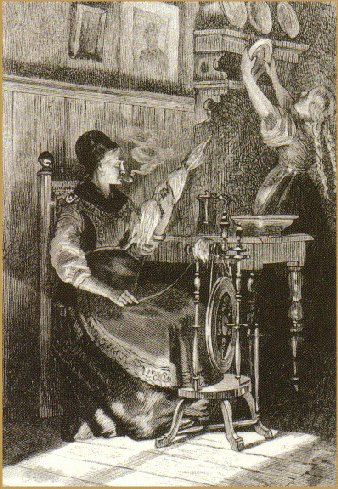
In rural areas such as the Highlands of Scotland and in Ireland the women smoked without shame. Women in the Hebrides smoked well into the 1930s due to the cultural isolation just as Appalachian women in the US did. It was seen as a very crude and backwards habit by most of polite society but little changes in any society without contact with urban centers. Today a women smoking a pipe draws immediate notice and sometimes ridicule.
I was rather disturbed to find out recently that some folk I admire are giving up smoking.
I was startled to say the least. No matter what anyone says, smoking remains the hallmark of cool. It’s as synonymous with art as booze, and as chic as any Euro fantasy.
Besides my obvious initial concerns (the loss of revenue for large faceless corporations and a drop in “cool” for those I admire) which are the same I think we all have when a dear one suggests they want to give up smoking, I had some broader concerns after giving the issue some thought.
Clarice Lispector. Smoking.
What about the health care professionals who are kept in a job because they have to care for the ill as a result of smoking all their life? (approx 48 billion a year is spent in smoking related health problems – approximately $11.00 of the cost of your cigarettes goes to health care professionals and their industries). The local tabac merchant, and all the other smaller stores that make the bulk of their revenue from cigarette sales. What of the poor governments loss of revenue (approximately $4 per pack) the drop of approximately 12.4 billion dollars from the advertising industry in the US alone (I think they’d notice this decrease, don’t you?) not to mention the drop in work for the legal industry. Tobacco is grown in 21 states of the United States, a leading producer of tobacco along with China and India. Think of all those farms and farmers, all those small communities kept alive – schools, libraries and hospitals because the local farmers grow tobacco.
Margurite Duras and Michelangelo Antonioni. Both Smoking.
And finally, the most poignant argument of all – almost everyone in Paris smokes.
Or is that all just bullshit?
If existence precedes essence, then I need to smoke in order to ‘be’ the writer I want to be. I know how the writer I want to be appears, because it has been determined (in essence preceding existence) by the writers I most want to emulate. Above you can see images of them smoking in the years before I took to the passion of writing. If I am determined by what surrounds me (according to Spinoza) the pressure to give up smoking is in direct confrontation with my experience of free will. It is in the world being a mirror of my free will that I am obliged to react. To overtake myself. The question here, is what self am I overtaking? Am I oppressed by my desire to give up cigarettes or my desire to smoke them in the first place?
Like Sartre’s waiter, I need to ‘play’ at being a writer until whatever (mysterious) criterion has been fulfilled that will have my inner self belive I am a writer. Scoff if you will, but this is a small charade that works for me. I had a blissful afternoon of writing today, in an atmosphere conducive to writing. Sometimes it is my desk and sometimes I will go mad if I have to look at my desk any longer and sometimes I need to play at being a writer just to feel its direction on my skin for the smallest while. Existence is defined by my concrete interactions with the world. Is it completely absurd that writers usually drink and smoke to excess? Of course it is – but again (if you adhere to the tenants of existentialism) that absurdism gives the action more meaning and puts us in touch with the basic humanity of existence.
Then, of course, we get into the nature of the cigarette itself. Should we roll our own? Can I still be an artist if the Gauloises are replaced by B & H extra mild?
And here comes the unpalatable truth. I have actually tried to smoke at several points in my life, and always given up in bitter disappointment, because I just can’t do it. I tend to be a very healthy person. The slightest upset in health regime sits poorly with me. I’ve never been able to smoke properly. I get too sick. For the most part, I’ve had to hang out with artists who do smoke, drinking in the second-hand, and wishing my little healthy body could tolerate it a little more hard-core.
And perhaps at the end of the day that is the source of my disappointment. Those around me giving up smoking results in me giving up the possibility of smoking. If I don’t see it, I wont remember it and horror of all horrors – I wont’ miss it. Perhaps my primal cry is more about the final shedding of the connection I have with the old artist image that fed me for so long. Just as I know the day of the depressed artist is over, perhaps the day of the drinking, smoking artist is over also.
The text was published on 15th of March 2018 on the blog 20th century Typographers; the idea of that post was proposed to me by our Avant-Garde specialist, our author doctor Lidia Głuchowska.
PS. Written on Mai 2025 – unfortunately after years are all pictures gone.
Steven Heller
Stamp Of Approval For Polish Avant Garde
On November 11, 2018, Poland marks the 100th anniversary of the Second Polish Republic and independence from foreign domination upon signing the armistice that ended World War I (until the Nazis and Soviets carved it up again in 1939 prior to the start of World War II).
As a contribution to the celebration, Dr. Piotr Rypson, Polish design historian and deputy director for research at the National Museum in Warsaw, conceived a project that commemorates the 100th anniversary of the first Polish avant-garde exhibition of Polish Formists-Expressionists on October 27, 1917. The result is four postage stamps with illustrative and typographic work represented by Poland’s leading progressive artists.
The series was designed by Agata Tobolczyk, together with the date stamp and commemorative envelopes featuring constructivist sculpture by Katarzyna Kobro and a functionalist Warsaw villa by architect duo Lachert & Szanajca. The edition of 120,000 is sold by the Polish Post Office.
Below are stamps with covers of three avant-garde periodicals in the Formist (akin to the Constructivist) style and a theater program in an Expressionist manner.
Otrzymałem niedawno list od Andreja Frołowa, o którego zainteresowaniach pisałem już raz na tym blogu. Jako że stanowi on uzupełnienie wpisu sprzed dwóch lat, a odnosi się do prezentowanych zdjęć Petersburga sprzed ponad stu lat – publikuję go z małymi skrótami.
Andrej pisze:
“…Members of our group are still discussing your wonderful photos – we all admire them, without exaggeration. Some depicted locations were newly determined. So, we have amended our first suggestion that the picture
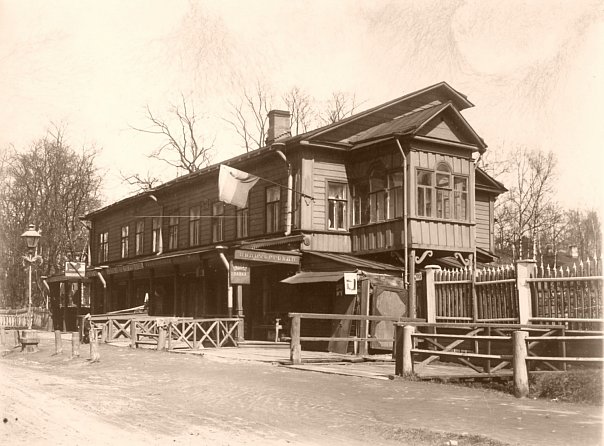
“Hrebnicki 3_Institutskiy shopping mall” (photo 1) had been taken on Malaja Spasskaja street. Instead,it was Institutskiy Prospekt, clearly visible signboards of various stores led us to this conclusion – all the stores are listed in the phone books of that time (they have been recently scanned by our Russian National Library website). At least one food store is still existing on this place:
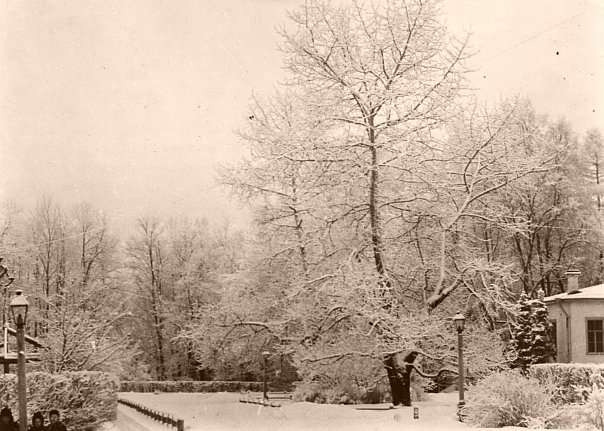
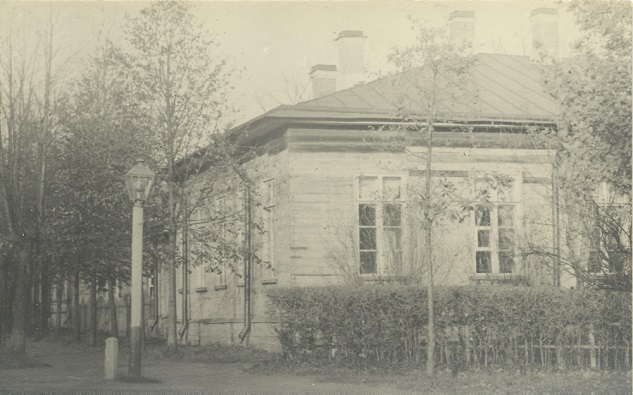
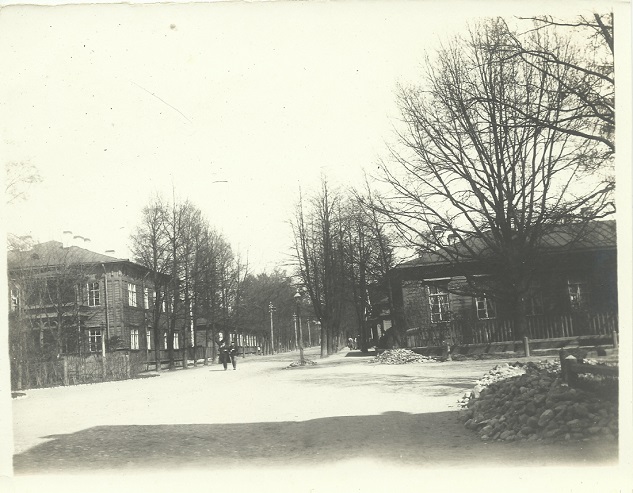
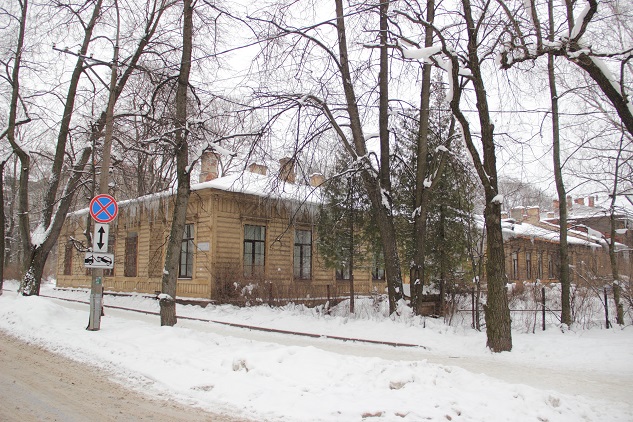
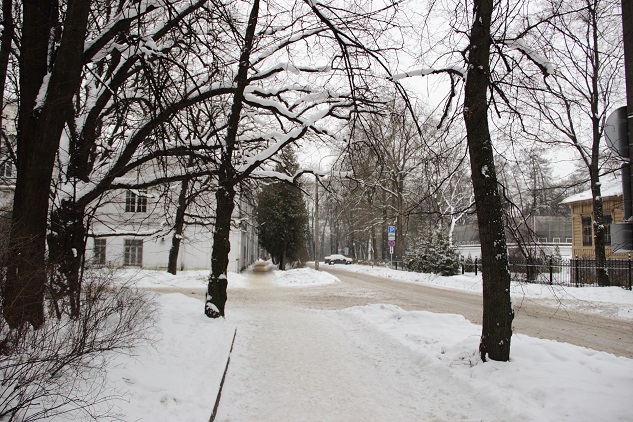
The depicted shopping mall was very close to Institutskiy Pereulok (not Prospekt, these are two different streetnames), where the family of your grandfather probably used to live. You’ve sent two pictures that allow the suggestion about the photographer’s special relationship to the house with the current adress Institutskiy Pereulok 5-9. One of these photos was probably the view from the flat window of Institutskiy Pereulok in the south direction (fot. 2 ). The other photo depicts the house itself (fot 3). There is also a general view of Institutskiy Pereulok in the north direction (fot 4 ). Another picture (fot 5) shows how does it look like right now (was taken on 17th February 2018). The current general view of Institutskiy lane (south direction) should not be missed (fot 6).
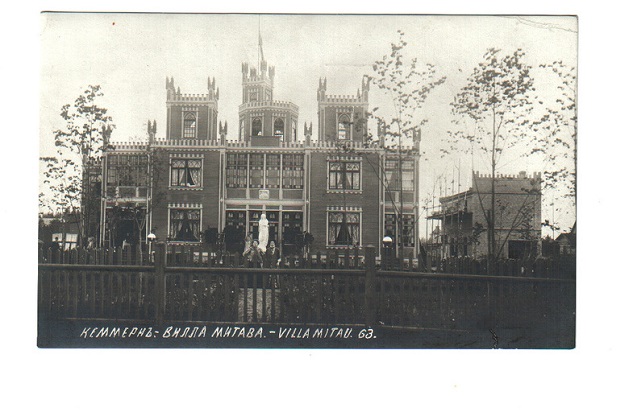
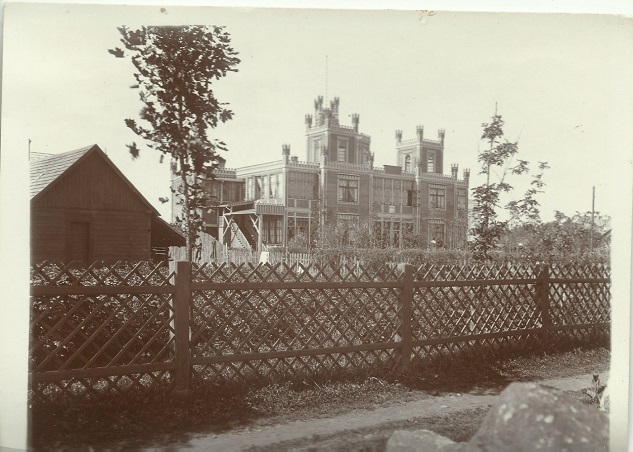
The view from the photo “Kemeri_Villa Mitau” (fot 8 ) is not belonging to our neighborhood, it has been taken in the Latvian resort Kemeri (or Kemmern) near Jurmala. One member of our community managed to find an other photo of this marvellous building in the Internet (fot 7).
Oryginalne zdjęcie Hrebnickiego
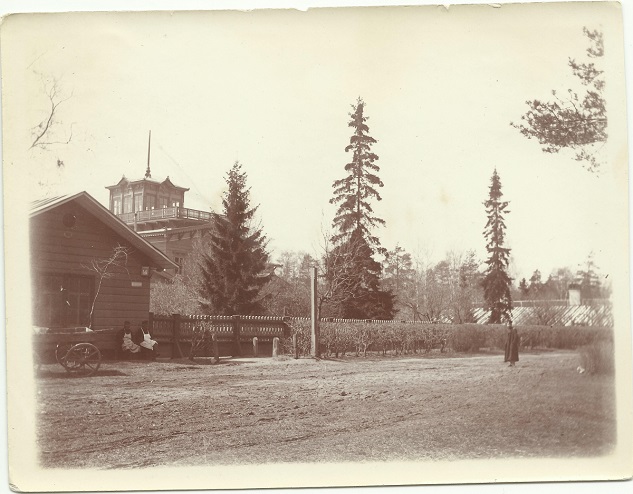
The next photo (fot 9 ) grants us a rare view of the villa with an informal name “Three wells”. It was located approximately here:
Thank you very much again for the photos! It was a huge step forward for the local history of our district Lesnoy. I hope our correspondence will continue and I could provide you with the news about depicted locations. …”
Andrej Frolov, St. Petersburg
*** I ja dziękuję Andrejowi za szczegółowe opisy i pasję w kultywowaniu pamięci o jego mieście, które było też miastem młodości moich przodków…













 Ewa Maria and Friends