Dagny Juel. Ducha. Madonna?

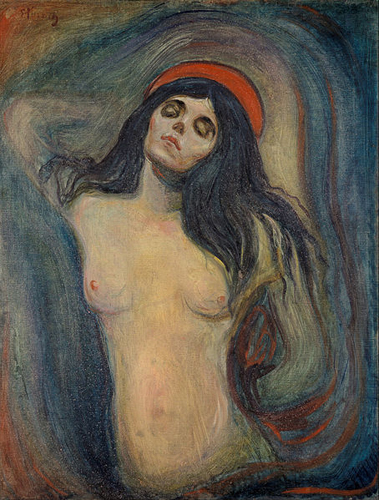
Edvard_Munch_-_Madonna_-_Google_Art_ProjectLidia Głuchowska
Tekst po polsku:

Dagny Juel Madonna

Dagny Juel – Madonna von Munch?

… Auch wenn Munch diese schon zu seiner Lebenszeit verbreitete Deutung geleugnet hat, gestand er trotzdem: “Es hat eine gewisse Ähnlichkeit mit Dagny (…), es gibt eine definitive Ähnlichkeit (…)” und war bereit, auf Wunsch von ihr und ihres Vaters, dieses wie auch andere ihr gewidmeten Bilder aus der Ausstellung in Christiania zu entfernen. Später schrieb er auch: “Ich habe einige Bilder von diesen Leuten gemalt, unter anderen eines, das ich ‘Eifersucht’ nannte (…). Diese Frauenzimmergeschichte hat mir vieles verdorben.” Zahlreiche Metamorphosen von Dagny und Stachu füllen Munchs Bilderwelt als Einkörperungen des psychischen Dramas, welches sich in Folge von Dreieck-Beziehungen ergibt. Munch und Dagny kannten dieses noch aus der Zeit der Christiania-Boheme. Mit seinem Holzschnitt Im Gehirn des Mannes (1897), welcher die Qual der Leidenschaft veranschaulicht, reimt sich ein Fragment Przybyszewskis Romans Über Bord (1896): “War dies Liebe? Er empfand Angst. Wie war es möglich, daß eine Frau im Laufe einer Stunde wie ein Fremdkörper in sein Gehirn glitt?”

Munch, Dagny und Stachu gehörten zu den bekanntesten Figuren des Berliner Kreises um den Schwarzen Ferkel, welcher teils mit der Friedrichshagener Bohème identisch war. Stachu galt dort als “vielleicht der legitimste König der Bohème”, “der letzten Bohème des großen Stils”. Julius Meier-Graefe erinnerte sich an seinen “Kopf eines slawischen Christus, den man sich am Kreuz vorstellen konnte” und meinte : “Stachu machte uns eine Tür auf. (…). [Seine] Lebensweise deckte sich nicht mit dem üblichen Begriff der Boheme. Dafür tändelte er zu wenig. Seine Verluderung übertraf Pariser und Berliner Maß. Wir anderen taten, was wir konnten, aber unsere wildesten Exzesse blieben knabenhaft”.  Er, der “vampyrblasser Stachu” war der “dekadenteste der Dekadenten” unter den deutschsprachigen Schriftstellern der Jahrhundertwende. Munch selbst hebt seine Rolle als “die Seele der breit angelegten aber leider gar zu früh hinschlafenden Zeitschrift Pan” hervor. Dieser markante, polnisch-griechische Titel, geht auf Dagny zurück : “Pan sollte das neue Unternehmen heißen, weil die geheimnisvolle dämonische Urkraft des alten Heidengottes Natur und Kunst miteinander zu verbinden schien. Eine schlaue Norwegerin hatte das Wort gefunden, und sie dachte dabei an ihren polnischen Gatten und daß ‘Pan’ im polnischen Herr bedeutet. Zugleich aber war das Wort eine geschickte Huldigung an Bierbaum, in dessen Gedichten der alte Pan eine so große Rolle spielte (…).”

In seinem berühmter Nachruf an den alten Freund beschrieb Munch noch Stachus Chopinspiel:  “So konnte er (…) auf einmal in Ekstase aufspringen und zum Klavier hinlaufen und in solcher Eile als ob er inneren Stimmen folgte, die ihn riefen. Und während der Totenstille, die nach dem ersten Akkord folgte, die unsterbliche Musik Chopins durch den engen Raum und verwandelte ihn plötzlich zu einem strahlenden Festsaale, zu einer Festhalle der Kunst. Und so tief war seine eigene Benommenheit und mit solcher Meisterschaft gab er die wunderschönen Malereien seines großen Landsmannes wieder, daß er uns im atemlosen Lauschen, fasziniert, Zeit und Stelle vergessend hielt, bis der letzte Ton hinstarb.” Andere Teilnehmer der Ferkeleien waren von seinem charismatischen Seil nicht weniger begeistert, so auch Max Dauthendey: “Das sonst öde Klavier wurde dann zu einer Hölle, die er mit wild tastenden Händen öffnete. Und die Töne fraßen Ordnung und Gesetze aus den Hirnen aller Zuhörer fort, und Töne, Menschen und Zeiten wurden zum Chaos. Kein Leben behielt mehr seine Form und seinen Sinn. Nur der Einsturz alles Lebens und die Vernichtungsfreude schien in den Tönen zu funkeln. Stachu selbst sah Musik – und nicht Literatur – als seine eigentliche Leidenschaft. Dies war wohl der Grund seiner Seelenverwandtschaft mit Ducha (Polnisch: die Seele, ein Kosename, den er Dagny gab). Sie war ja, als sie Munch am 9. März 1893 in den Ferkel-Kreis eingeführt hat, Absolventin des Klavierkonservatoriums, leidenschaftliche Beethoveninterpretin. Sein satanischer Spiel und ihr Salome-Tanz gehörten zu Legenden dieser Zeit. “Das Zusammensein Stachus und Duchas […] war Improvisation von ersichtlicher Willkür”. Als “Zwei-Einheit” galten sie als Verwirklichung des von Przybyszewski gepredigten androgynischen Liebesmythos. Vereinigt im Walztanz hat sie der norwegische Bildhauer Gustav Vigeland dargestellt. Er gestaltete auch eine Büste Stachus und zwei andere, von Dagny und Munch, die er im Eifersuchtsanfall vernichtet haben sollte – so die Geschichte, die ihm zu vielen zählt, die Przybyszewskis Frau verfallen waren. Das berühmte Paar haben auch Julia Wolfthorn, Fidus, Anna Costenoble sowie zahlreiche polnische Künstler verewigt. Ducha und er, “als Außenseiter unter den Außenseitern”, inspirierten auch unzählige Erinnerungen, Gedichte, Romane und Dramen, um nur auf Inferno Strindbergs, wohl das markanteste davon, hinzuweisen.

Der ganze Text mit Fußnoten veröffentlicht:
Lidia Głuchowska, Totenmesse, Lebensfries und Die Hölle. Przybyszewski, Munch, Vigeland und die protoexpressionistische Kunsttheorie. Deshima 1 (2009), S. 93-130.

23.04.2013 – Welttag des Buches / Światowy Dzień Książki

Mężczyzna. Der Mann.

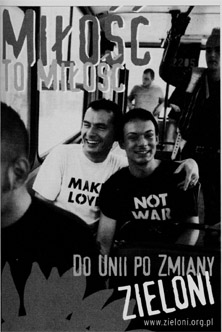
zieloni2004. Plakat wyborczy Partii Zielonych / Wahlposter der Grünen (Liebe ist Liebe. In die EU, damit sich etwas ändert)

Lidia Głuchowska

Mężczyzna. Zmiany obrazu

„Nikt nie rodzi się jako kobieta”, to stwierdzenie Simone de Beauvoir analizuje się często w odniesieniu do polskiej sztuki współczesnej także w związku z opresyjnymi, konotowanymi kulturowo i politycznie konstrukcjami męskości. Działania i strategie społeczno-kulturalnej interakcji obnażają „niebezpieczne związki sztuki z ciałem”, by przywołać tytuł książki Izabeli Kowalczyk (…). Demaskacja ta dokonuje się poprzez przeniesienie w nowy, nietypowy kontekst określonych gestów, póz, sformułowań i reguł etykiety. Dekontekstualizacja wywołuje efekt obcości, choćby w takich pracach jak Archiwum gestów Zofii Kulik, Krzesło 2 (2000) Katarzyny Kozyry czy Kompania Reprezentacyjna Wojska Polskiego (2000) Artura Żmijewskiego, w którym artysta zestawia schematycznie upozowane umundurowane i nagie ciała.

Nagi człowiek jest bezbronny. Jak komentuje Artur Żmijewski w wywiadzie z Izabelą Kowalczyk, mężczyźni też są słabi: „(…) My słabi eksponujemy nasze różowe pupy i (…) zaświadczamy nimi o własnej miękkości, o własnej słabości. Nasze pośladki i nasze majtające się fiutki, są ambasadorami naszej delikatności”. Artyści wskazują więc na to, iż poza mówcy, mężczyzny w garniturze bądź w mundurze oddziałuje często jak konwencjonalna zbroja, oddzielająca sferę prywatną od intymnej.

Interesujące jest, iż to samo w odniesieniu do pozornie równouprawnionych społecznie kobiet udokumentowała w sztuce polskiej już przed laty choćby Ewa Partum w pracy Autoidentyfikacja (1980), w której na zdjęciu sceny ulicznej naprzeciw siebie pokazane zostały: kierująca ruchem policjantka w mundurze i naga kobieta w szpilkach.

Przemoc, którą instytucje totalitarne bądź działające na zasadzie surowego rygoru i hierarchii – takie jak armia, szkoła czy szpital – wywierają na sferę prywatną jednostki, ukazana tu zostaje jako oczywistość. Ponadto krytycznej analizie poddana zostaje także natura prywatnych związków heteroseksualnych. Ich charakter demaskuje np. Dorota Nieznalska w pracy Bez tytułu (1999), ukazując problem rodzinnej, nierzadko psychicznej przemocy mężczyzny nad partnerką, która w omawianym dziele utożsamiona i traktowana jest jak pies.

Cały tekst po polsku
z ilustracjami i przypisami w czasopiśmie Pro Libris 2009

Der Mann. Änderungen der Abbildung.

„Niemand wird als Frau geboren“. Diese Feststellung von Simone de Beauvoir wird in der polnischen gegenwärtigen Kunst auch in Bezug auf oppressive, kulturell und politisch bedingte Konstruktionen von Männlichkeit analysiert. Solche Verfahren und Strategien der interaktiven sozial-künstlerischen Koexistenz entblößen die „gefährlichen Beziehungen der Kunst und des Leibes“ (…). Dies geschieht, indem bestimmte Verhaltensmuster, Gesten, Posen und verbale Zeichen des traditionellen maskulinen Codes in neue Kontexte gesetzt werden. Häufig erzeugt dies einen Aufmerksamkeit erregenden Verfremdungseffekt, wie z. B. in den Werken Archiwum gestów von Zofia Kulik (Archiv der Geste, 1987-1991), Krzesło 2 (Der Stuhl 2, 2000) von Katarzyna Kozyra und Kompania Reprezentacyjna Wojska Polskiego (Die Repräsentationskompanie der Polnischen Armee, 2000) von Artur Żmijewski, in dem wirklich oder metaphorisch uniformierte und nackte Körper zusammengestellt sind.

Nackt ist der Mensch wehrlos: „Wir, die Schwachen, Männer, stellen unseren rosa Po zur Schau und verwenden ihn als unseren Stempel. Damit bezeugen wir unsere Weichheit und Schwäche. Unsere Hinterbacken und unsere schwingenden Schwänzchen sind Botschafter unserer Zartheit“, kommentiert der Künstler Artur Żmijewski selbst. Die Pose des Redners, der Anzug oder die Uniform erscheinen dadurch als eine Art konventionelle Rüstung, welche die Sphären des offiziellen und des privaten Männerbildes voneinander trennt.

Interessanterweise dokumentierte die polnische Kunst Offenbarungen solcher Art in Bezug auf die angeblich sozial gleichgesetzte Frau bereits von vielenJahren, so z. B. in der Autoidentyfikacja (Selbstidentifikation, 1980) von Ewa Partum, wo auf einem mitten auf der Straße aufgenommenen Foto einer uniformierten Polizistin eine nackte Frau in Pumps gegenübergestellt wird.

Die Gewalt, die besonders in den totalitären Institutionen – wie etwa Armee, Schule oder Krankenhaus – auf die Privatsphäre ausgeübt wird, erscheint somit als offensichtlich. Doch auch die Natur privater heterosexueller Beziehungen wird in der Kunst der kritischen Analyse unterzogen. So entblößt z. B. Dorota Nieznalska in ihrem Werk Bez tytułu (Ohne Titel, 1999) die familiäre, nicht selten auch psychische Gewalt des Mannes über seine Partnerin, die hier, wie auch in vielen anderen Werken, als Hündin bezeichnet und behandelt wird.

Der ganze Text auf Deutsch mit Fußnoten und Abbildungen: Endfassung_Gluchowska_autoris

Mojżesz

Rok temu, po Wielkanocy spędzonej w Poznaniu, miałam kilka godzin do pociągu i poszłam własnymi śladami (studiowałam byłam w Poznaniu) – do Biblioteki Uniwersyteckiej i do Muzeum. Myślałam, że idę oglądać Malczewskich, ojca i syna, ale okazało się, że naprawdę zajął mnie “Mojżesz” Stanisława Kubickiego. Oczywiście, wiedziałam, kim był Kubicki, w końcu wydawałam kiedyś książki jego i o nim, znałam też ten obraz, podobnie jak wiszący obok Autoportret VII (1922). Wiedziałam również, że oba obrazy są w Poznaniu. Ale teraz je zobaczyłam. I o ile sposób ekspozycji autoportretu tylko mnie zdenerwował, o tyle widok sali awangardy polskiej zorganizowanej w całości wokół i w relacji do Mojżesza zrobił wrażenie.

Minął rok, nadeszła kolejna Wielkanoc, chrześcijańska wersja żydowskiej Paschy, ta zaś jest świętem Mojżesza.  Zwróciłam się zatem do Lidy Głuchowskiej z prośbą o przygotowanie na tegoroczne święta wpisu o Mojżeszu.

Dostałam…

1_mojzesz_dobryXLidia Głuchowska

Ostatni obraz
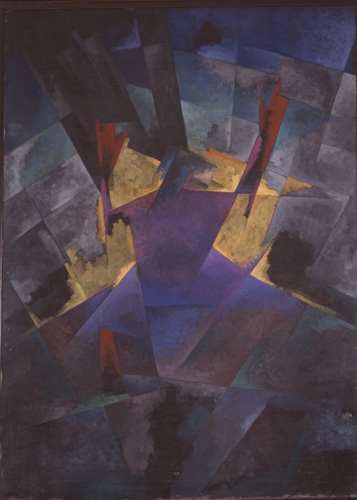
Mojżesz przed krzewem gorejącym Stanisława Kubickiego

Po licznych międzynarodowych wystawach, na których w ostatnich latach ‘prezentowano prace Stanisława Kubickiego, nastąpił swoisty renesans recepcji jego dorobku. Obrazem Mojżesz przed krzewem gorejącym zainteresowały się Muzea Watykańskie, ostatecznie jednak dzieło to, podejmujące tematycznie wątki z okresu współpracy Kubickiego z ekspresjonistyczną grupą Bunt, trafiło do Poznania, jednego z dwóch – obok Berlina – najważniejszych centrów jego działalności.

W tamtejszym Muzeum Narodowym obraz eksponowany jest na jednej z głównych osi w galerii malarstwa współczesnego, w bezpośrednim sąsiedztwie dzieł takich twórców jak Stażewski czy Heyden, a wyróżnia się dużym formatem, intensywnym kolorytem, konsekwentną geometryzacją kubo-konstruktywistycznej kompozycji i wreszcie – zaakcentowaną także w tytule – tematyką religijną. Staje się tym samym  przyczynkiem do rozważań o polifoniczności i wielonurtowości sztuki polskiej w okresie międzywojennym.

Mojżesz przed krzewem gorejącym to ostatni obraz Kubickiego, interesujący w kontekście dyskusji o fenomenie późnych dzieł, ale również dlatego, że różni się wyraźnie od znanych dotychczas w Polsce, najczęściej wczesnych – graficznych dzieł tego artysty (…). Mojżesz jest również zjawiskiem szczególnym na tle dojrzałej twórczości Kubickiego z lat dwudziestych i trzydziestych XX wieku, dla której charakterystyczne są kompozycje konstruktywistyczne (…). Większość z nich jest plastyczną analizą elementów natury i rządzących nią procesów, wpisującą się w nurt teozoficzno-geometrycznych poszukiwań awangardy.

Mojżesz, jeden z największych pod względem rozmiarów i najistotniejszych ideowo obrazów Kubickiego, nietypowy jest również na tle dzieł innych artystów jego pokolenia. Jego forma – z pogranicza geometrycznej abstrakcji i figuracji –  różni się zarówno od twórczości awangardowej tego czasu (…), jak i od dzieł powstałych w obrębie niemieckiej Neue Sachlichkeit, ale też nurtów klasycyzujących bądź dekoracyjnych.

Nietypowa jest też jego treść, zasugerowana tytułem i aluzyjnym wyobrażeniem realnych obiektów. Biblijne odwołania obce są milczącej metafizyce czystej mondrianowsko-malewiczowskiej geometrii (…). Mojżesz przed krzewem gorejącym to rzadki na tle dokonań awangardy przypadek aktualizacji treści starotestamentowych. (…)

Narratywny charakter ostatniego obrazu Kubickiego, jeszcze silniej niż jego tytuł, ewokuje rozbudowany, powszechnie znany kontekst biblijnej opowieści o proroku, prawodawcy i przywódcy narodu żydowskiego. Uniesione ramiona Mojżesza są być może nie tylko aluzją do modlitwy na górze Nebo, lecz również do historii zwycięskiej walki Izraelitów z Amalekitami, w której gest ten miał mieć znaczenie magiczne. Wskazywać na to mógłby swoisty apokryf na temat roli Mojżesza – obszerny poemat Krzew gorejący, ideowo korespondujący z obrazem, powstały niemal w tym samym czasie, w 1934 roku. Składa się on z trzech części: Powołanie, Synaj i Skarga Mojżesza na górze Nebo. Tu z kolei artysta analizuje wątki złotego cielca, buntu, hedonizmu gawiedzi, dylematu przywódcy i wreszcie wyprowadzenia narodu żydowskiego do Ziemi Obiecanej. W obu dziełach Mojżesz pojawia się jako figura silnego przywódcy, który zamienił naród niewolników w naród wolnych ludzi, przeprowadzając go przez pustynię na znak zerwania z przeszłością oraz początku nowej kultury i cywilizacji.

W twórczości Kubickiego postacie ze Starego Testamentu – Noe i Mojżesz – były wprawdzie rzadkie, ale, jeśli się pojawiły – ważne jako wypowiedzi o idealnym modelu społeczeństwa. Noe – bohater dwujęzycznych Psalmów z lat 20 – symbolizował awangardową utopię „nowego człowieka” i „nowej wspólnoty”, społeczność anarchistyczną, wolną od hierarchii i represji (…). W 10 lat później pojawi się prawodawca – Mojżesz, a wraz z nim następuje zmiana paradygmatu. Czym była ona podyktowana? Co wydarzyło się w ciągu minionych lat?

Amorficzny anarchizm nie sprawdził się w konfrontacji z rzeczywistością, a w Europie zapanował kult autorytarnej władzy. W Niemczech doszedł do władzy Hitler, co oznaczało śmierć bądź emigrację przyjaciół Kubickiego, a w efekcie również jego własną. (…)

Mojżesz przed krzewem gorejącym  to praca nieukończona, choć  (…) niewiele na to wskazuje. Jednak porównanie tego monumentalnego dzieła (201 x 145)  ze studiami wstępnymi – akwarelą i pastelem – pozwala dostrzec, iż płomień, który przesłania tam złotą łuną horyzont, na obrazie ledwie zarysowuje się na tle nocnego nieba. Niedawna konserwacja płótna wrażenie to jeszcze spotęgowała – wydobywając niuanse barwne i finezję krystalicznej struktury kompozycji w centralnej partii obrazu, przytłumiła zarazem jaskrawsze pierwotnie żółcienie. Przy wnikliwszym oglądzie dostrzec można także zalążki trójfiguralnej sceny. Po lewej i prawej stronie Mojżesza pojawić się miały najwyraźniej jeszcze dwie tańczące postacie. Ten niezrealizowany zamysł zdradzają nieregularne, symetrycznie rozmieszczone czarne plamy po obu stronach centralnej postaci. Kubicki w czasie II wojny światowej, podczas swych pobytów w Berlinie, dokąd wyjeżdżał jako kurier polskiego ruchu oporu, próbował dokończyć obraz. Śmierć z rąk gestapo przyszła jednak wcześniej.

Jednak nawet wówczas, gdy malarz pierwotnie zarzucił pracę nad Mojżeszem, w 1934 roku, obraz ten był w zaawansowanym stadium realizacji. Jego precyzyjna kompozycja świadczy o wyciągnięciu konsekwencji formalnych z kubistyczno-konstruktywistycznych eksperymentów awangardy. Zarys tytułowej postaci wpisany jest w mozaikowo-krystaliczny układ plam intensywnego fioletu, szmaragdowej zieleni, oranżu, czerni i żółcieni. (…) Margarete Kubicka, żona artysty, interpretowała wybór takiej kolorystyki, zwłaszcza akcentowanie fioletów, jako deklarację skrywanego, może nawet nieuświadomionego, głębokiego katolicyzmu Kubickiego, mimo iż wyobrażenie ma przecież charakter starotestamentowy, a więc niekoniecznie katolicki. (…).  Kubicki zawarł tu wyraźne odniesienia do sztuki początków chrześcijaństwa, gdy jeszcze przesycone było ono duchem asymilacji dokonań starszych od niego religii. (…)

Te ideowo-formalne odniesienia pozwalają sytuować obraz z jednej strony w kontekście nurtu bizantynizującego, który w sztuce polskiej pierwszej połowy XX wieku miał rozmaite oblicza, z drugiej – w obrębie awangardowego dyskursu o fragmentaryzacji i nieobecności ciała – symbolu braku spójnej wizji świata.

Mojżesz przed krzewem gorejącym nawiązuje ideowo do zainspirowanych tematyką religijną wczesnych prac artysty (…). Powstał na krótko przed tym, jak artysta, po sukcesach w kręgu międzynarodowej awangardy artystycznej Berlina, w obliczu kryzysu politycznego i artystycznego powrócił do Poznania. Wobec umacniania się faszyzmu zamilkł jako malarz. Czy gest ten oznaczał świadomość bezsilności artystycznego protestu? A może raczej deklarację twórczego wypalenia, kres malarskich poszukiwań, uzasadniony przecież w obliczu gasnącego impetu awangardy i rozproszenia środowisk twórczych w Niemczech? W 1939 roku Kubicki opublikował jeszcze tom Poezje, którego niemal cały nakład spłonął w drukarni w Poznaniu wraz z wybuchem wojny. On sam – romantyczny rewolucjonista – zginął w 1942 roku z rąk gestapo jako działacz polskiego ruchu oporu.

Ostatni obraz Kubickiego – Mojżesz przed krzewem gorejącym (…) to artystyczna (…) koncepcja Boga karzącego, odsyłająca do aktualnej wówczas dyskusji na temat związku władzy, religii i sztuki. (…)

***
Obraz: Stanisław Kubicki Mojżesz przed krzewem gorejącym III, 1933/1934, olej na płótnie, 201 x 145 cm. Poznań, Wojewódzka Biblioteka Publiczna (depozyt w Muzeum Narodowym w Poznaniu)

FILM We, the Berliners – the avant-garde section – the history of the Polish-German neighborhood, Obieg.TV, 25.06.2009 (film ma tematykę szerszą niż ten wpis, ale ukazuje kontekst)

Publikacja (pełna wersja z przypisami): Lidia Głuchowska, Ostatni obraz. Mojżesz przed krzewem gorejącym Stanisława Kubickiego/ In: Poprzęcka, Maria (ed.): Wielkie dzieła – wielkie interpretacje. Warszawa/Stowarzyszenie Historyków Sztuki, 2007, pp. 215-228
Informacje po niemiecku: Lidia Głuchowska, Avantgarde und Liebe, Margarete und Stanislaw Kubicki 1910-1945, Gebr. Mann Verlag, Berlin 2007, s. 73, 155, 156, 197, 198, 243, 260, 263, 361, 425, 499

Jutro: wiersz Kubickiego z cyklu “Moses” Krzew gorejący / Der brennende Dornbusch. Die Berufung

Halle poza sezonem

Dorota Cygan

Halle, Kaminer i my. Albo odwrotnie.

Halle to wyzwanie. Nie tylko dla inwestorów, którzy, jak pisał przed 10 laty Władimir Kaminer w zbiorku historyjek Moja niemiecka księga dżungli, odeszli jeden po drugim, zostawiając to niebywałe eldorado na pastwę kolejnych inwestorów, w efekcie czego miasto przez chwilę o mały włos nie zasłużyłoby na przemianowanie go na Spielhalle. To wyzwanie także dla turystów, którzy wszak przyjeżdżają, żeby coś podziwiać, a nie pokrytykować dla zabawy. Lepiej sobie nie używać na takim mieście jak Halle i nie bawić się na koszt tych niewielu mieszkańców, którzy jeszcze się opierają trendowi migracyjnemu w zachodnim kierunku i trzymają fason. A że trudno się tej (poniekąd tradycji) oprzeć, skoro już Haendel opuścił Halle w wieku 17 lat, trzeba przyjąć, że tak to już jest.

halle1

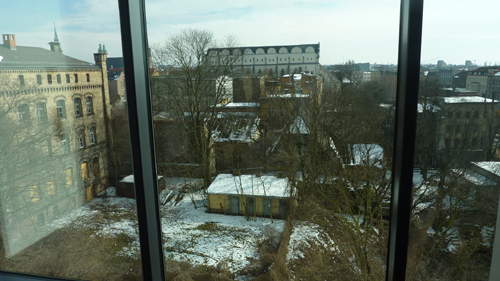
Jako że pisarze bynajmniej nie rozpieszczają Halle opisami literackich podróży (a do traumatyzującej prozy rozliczeniowej Edgara Hilsenratha po prostu bałybyśmy się sięgnąć, by sprawdzić, czy Halle tam się w ogóle pojawi),  poczułyśmy trochę z przekory chęć okazania temu miastu spoza znanych tras turystycznych choć na krótko trochę uwagi. Jak tu nie poczuć solidarności na widok wielkopłytowych pomników socjalizmu, o których Kaminer pisał, że przeniosły go w myślach w czasy jego moskiewskiej młodości? Wiedzione tym impulsem i  prawdę mówiąc  trochę po to, aby z bezpiecznego dystansu naszych berlińskich domostw poczuć za darmo lekki horrorek, pojechałyśmy szukać Neustadt, spodziewając się, że dzielnica robotnicza będzie miała coś z dawnej zwartości, dumy i siły wczesnego socjalizmu. Ale nie. Rozstrzelona w przestrzeni na wiele kilometrów, może być jedynie metaforą dysocjacji osobowości lub jej zapowiedzią – dla tych eksperymentatorów, którzy jednak chcieliby autentyzmu na dłużej niż nasza krótka i intensywna przejażdżka.

halle2

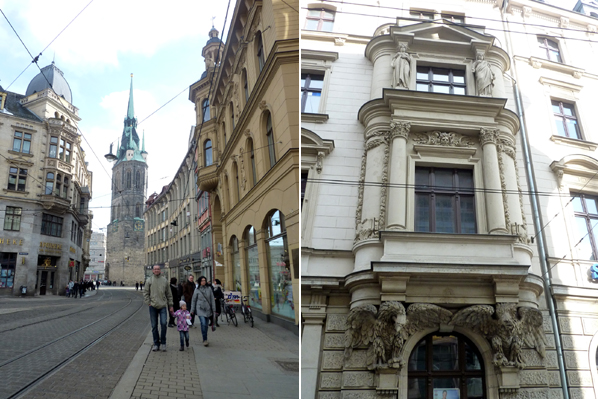
Dajemy jednak miastu szansę, inaczej niż nasz wspomniany berliński autor o rosyjskich korzeniach (i uprzedzeniach). I widzimy: bogate wille  z czasów grynderskich, na wielu ozdobne fasady z przełomu wieków, bardziej wyważone proporcje niż ich odpowiedniki w Berlinie, czyli takie trochę jak w Dreźnie, widzimy starania konserwatorskie całkiem nowej daty i (mniej lub bardziej udane) próby adaptacji starych murów zamkowych do potrzeb wystawienniczych, tereny spacerowe i – no niestety, nie da się  skłamać – zupełny, uderzający i bolesny… brak ludzi. Jest oczywiście jakieś prawdopodobieństwo, że w niedzielne popołudnie w swoich czterech ścianach popijają lokalnego (!) szampana marki Rotkäppchen lub Mumm, testując realną lub fikcyjną różnicę między nimi po fuzji obu firm, ale nie jest ono wielkie. Ale być może w tej degustacji (fakcie kulturowym!), którą zawdzięczam właśnie Kaminerowi i którą regularnie praktykuję  na lekcjach niemieckiego, prosząc uczniów o arbitralne rozstrzygnięcie wewnątrzniemieckiego sporu intrakulturowego o wyższości jednego trunku nad drugim, tkwi rozwiązanie? Nie wiem, co pijał Lyonel Feininger, kiedy jeszcze przed dojściem nazistów do władzy i wymuszoną emigracją mieszkał półtora roku w Halle i malował tutejsze kościoły i wieże, ale w tym, co zostawił naszym oczom, jest magiczne zaklęcie rzeczywistości tego miasta – zaklęcie tych uliczek i placów, wyniesienie ich ponad realizm w rejony magiczne. Bo po pierwsze trzeba umieć patrzeć, żeby widzieć. Ale po drugie można nałożyć filtr wyobraźni i dopiero ruszyć w miasto. Albo wrócić jeszcze kiedy indziej, o innej porze roku. Zobaczymy.

Lidia Głuchowska

„Martwy sezon” w Halle

– we wszystkich tego słowa znaczeniach – nie tak mało wcale ma do zaoferowania. Niemal nie zniszczone podczas wojny, w pewnych zakątkach przypomina nie tylko zamożny niegdyś Lipsk, rezydencjonale Drezno, lecz i kurortową Jelenią Górę.

Hallepodwojne1

Jeśli nieopatrznie rozpocząć wycieczkę przy tutejszej Leopoldinie (niemiecka Akademia Nauk, założona w roku 1652, mieszcząca się w dawnym budynku loży masońskiej z roku 1820; informacja dla wrocławiaków – ich Aula Leopoldina jest starsza, bo zbudowano ją w latach 1728-1741), przez zamkniętą bramę będzie można popatrzeć na dziedziniec pełen róż chronionych przez pałuby, posępnie emanujący pustką.

Leopoldina

Po chwili jednak, nawet przy pochmurnej pogodzie, dostrzec można i „spolia” z lepszych czasów, które budzą refleksje i prawdziwy zachwyt.

Pobliski Moritzburg pozostawia wrażenie jeszcze bardziej ambiwalentne. Z tą perłą późnogotycko-renesansowej architektury, z portalami przywodzącymi na myśl i Wawel, i Chocim, i Lwówek Śląski, nie nazbyt życzliwie bowiem obeszli się konserwatorzy.

2_Halle pieknebrzydkieTak jedno ze skrzydeł wewnętrznych dziedzińca, ogołocone z balkonów, jak i monumentalne, zewnętrzne mury od strony „fosy”, z pewnościa odstraszą jak obronny gród…

Wewnątrz – podobna konsternacja – przyjazna obcokrajowcom obsługa „na piękne oczy” uwzględnia zniżkę dla dziennikarzy i historyków sztuki, stoi w kontraście z kubistyczno-więzienną szatnią i prowizorium aranżacji znakomitej skądinad wystawy fotografii z arcydziełami podpisanymi: Sudek, Sander, Man Ray, Witkacy, Rodczenko, Cindy Shermann…

Za chwilę znów zaskoczenie – stała ekspozycja: Die Brücke – Nowa Rzeczowość, konstruktywizm – przyciąga i koi wyważonym rytmem barw poprzecznych ścian – z początku dyktowanym staccato tonów harmonizujących z obrazami Schmidta-Rottluffa – stopniowo wyciszanych monochromią prounów Lissitzky’ego, rzeźb Lemmbrücka i protorenesansowych okien z marionetkami tutejszego teatru, rodem z wczesnych lat trzydziestych.

4 halle ekspopodw

Za progiem uwagę przykuwają Meduzy-maszkarony, i te z dziedzinca zamku, i te z bram wyburzanych kamienic

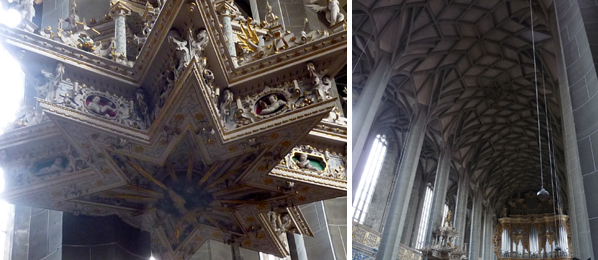
5 halle MaszkaronypodwojneKolejna perła to kościół w rynku – i jego cztery wieże – dwie od frontu i dwie z tyłu. Piąta, ta na zewnątrz, góruje ponad placem, za wielkim jakby dziś wobec rangi miasta.

8 halle-kosciolWewnątrz – arcydzieło proporcji – zgrabne i maleńkie – regencyjno-rokokowe organy dźwigają atlanty. A naprzeciw – jak żart architekta – „organki” – cukierkowe jak z dziecinnego pokoju, no i strojne w herby – na tle malowanej protestanckiej przypowieści.

Ponad wszystkim – sieciowe sklepienie, wykreślone regularnie, rodem z wzornika. Jest tu i ambona – kryta rozgwiazdą, jak po jubilersku zdobiona wieńcem manierystycznych putt.

10 ambona-sklepienie

Znak czasu to wystawa: a jakże –  ruch oporu – rodzeństwo Scholl – przestroga – byliśmy tu – raz jeszcze.

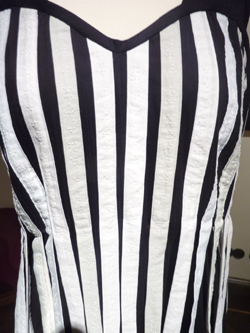
Trzecią odsłonę sztuki określa inny duch – „Piękno niewidomych”. To wystawa mody projektowanej wyłącznie z myślą o nich – ze smakiem i społecznym zmysłem – niewątpliwie potrzebnym.

gorset
Designerskie ubrania w minimalistycznym zestawie barw – bieli i czerni – zdobi tekst w alfabecie Braille’a, często wiersze lub myśli niewidomych modeli, dla widzących tłumaczone w folderach.

To przesłanie imponuje – idea integracji – czy dostrzeże ją świat poza Halle? Media? Internet?

12 moda-podwoj

Ewa Maria Slaska

Halle monochromatyczne

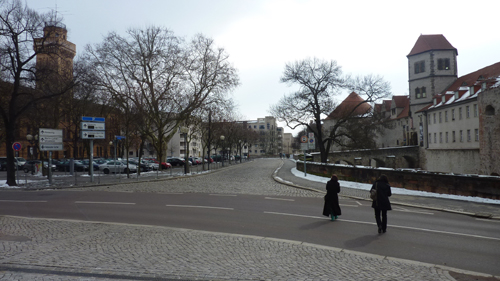
To ja byłam praprzyczyną wyjazdu do tego zimnego i pustego miasta, ponieważ miałam swój (bardzo skromny) udział w przygotowaniu wystawy mody dla niewidomych – pięknej mody dla pięknych niewidomych. Obejrzałyśmy wystawę, owszem, ale spóźniłyśmy się na wernisaż. Ale nie żałujemy. Wchłonęło nas miasto, miasto poza sezonem, martwe miasto, miasto monochromatyczne. Halle. Monochromatyczne z plamami czerwieni w strojach dwóch kobiet na moście.

***
O wystawie były już na blogu dwa wpisy:
https://ewamaria2013texts.wordpress.com/2013/02/26/die-schonheit-der-blinden/

https://ewamaria2013texts.wordpress.com/2013/03/09/modenschau-fur-blinden/

I jeszcze tu (choć już nie u nas): http://www.kunstforum-halle.de/veranstaltungen/die-schoenheit-der-blinden.html

halle-koniec

Yiddishland

Lidia Głuchowska

Yiddishland and the utopie of Avant-Garde

adler-berlewi-chagall-lissitzky(…) …„Yiddishland“, the patria of the new, secular Yiddish culture of the Central East European Diaspora. To its inhabitants or rather residents belonged pro-Russian Litvaks, sympathising with socialism and rooted in the misnagda tradition; pro-Austrian Galitsianers influenced by Haskala and open to assimilation; and Hasidic pious Polakes, loyal to the pre-partioned Poland. This population was subject to migration and urbanisation processes, which additionally differentiated it. The cultural revival of the “Yiddishland” depicts in an especially evident way the problem of the deterriorisation of the international avant-garde.The interdisciplinary and transborder Yiddish avant-garde was active mainly in the former “Ansiedlungsrayon” of the Russian Empire, which means in Poland, Ukraine and Belarus, but also in other parts of Central Europe – like in Latvia, Romania or Germany – and in the United States. Its representatives emphasised ties with the Yiddish language and culture – common among the inhabitants of these areas, so called Yiddishism. This movement was considered to be a conception opposite to the Haskala renaissance, the revival of Hebrew and Zionism, aiming at founding an independent Jewish state and based on the restitution of Hebrew as an official literary language.

The following essay presents the structure of Yiddish avant-garde within the universal network of international avant-garde consisting of such components as art groups, magazines exhibitions, cafés, cabaret and theatre, and communicating with its own lingua franca. (…)

The avant-garde network has been often compared with the Diaspora. A paradigmatic avant-garde artist was cosmopolitan, multilingual and mobile – acting in the transborder cultural space and the distribution radius of the avant-garde manifestos extending from Scandinavia to the Balkans, and from Paris to Moscow. Against this background, Central Eastern Europe, which could be geographically identified with the area of the utopian “Yiddishland“, was more specifically “a region of constant migration, immigration and emigration, of people arriving, departing and moving around”. “Nomadic modernism” was another essential phenomenon of artistic internationalism in this period. (…)

katznelson-golfaden-borderzon… it has to be pointed out, that while, in general, in looking for the realisation of the utopia of a borderless “new world”, most of the émigrés were outsiders acting as insiders, the members of the Yiddish avant-garde were always outsiders, acting in foreign national or international contexts.

According to the political limitations, for example after a period of the flourishing of the avant-garde tendencies in the Soviet Union, several Jewish artists felt pushed to emigration. As a consequence of less or more convenient political or economical conditions the process of the deterriorisation considered not only actors of the cultural process themselves, but also their works. A number of art journals also appeared initially at one, then at another place, sometimes abroad (…) or been published in the German Metropolis parallel in Yiddish and Hebrew and was addressed to the different competing fractions of the Jewish national-artistic movement, divided between the Yiddishists and Zionists.  Lissitzky, Berlewi or Marc Chagall – who in opposition to his two colleagues did not explicitly support the idea of Yiddishism – were active in different countries and published their manifestoes in various languages.

The fact of a great relevance is that in a way, the Yiddish avant-garde was a Diaspora in a double sense. It participated in an avant-garde network on two levels. On an international level its members cooperated locally with Russian, Polish, Romanian or German groups in the singular national “household” countries and their representatives abroad. Simultaneously, on the national level they had several other local and cross-border contacts and were involved in the artistic life of their Yiddish-speaking communities. (…)

Some characteristics of the international avant-garde as a utopian borderless “new world” seem to fit to the Yiddish avant-garde in a particular way. The “Yiddishland” as a political utopia generated several images of the cultural transfer associated with its maps as a whole. (…) Such maps gave a glimpse of a major myth for a whole generation of artists, their collaborative project, a dream like imago mundi. Attempts in creating the artistic topography, sometimes in a comprehensive global way, sometimes on a smaller scale, were also the Panslavism, the zenitist aim of the Balkanisation of Europe or – much less researched idea of Yiddishism concerning the bigger part of Central-Eastern Europe. (…)

aronson-ravitch-markish-segalowiczThe echo of these historical maps or symbols of the cultural transfer are the schemes of the network, which correspond with the current historiographical concepts (…). While the first one seems to symbolize the stable construction of the right angled lines, the other one, through the usage of the diagonals, suggest the dynamic of the exchange-processes, a motion. (They are) not identical; this means on the one side that the Yiddish network has got partly other exchange centres, and, on the other side it also evaluated in the time. After the limitations of the artistic autonomy in the Soviet Union, the Yiddish avant-garde network became smaller and shifted to the West… (…)

In the past two decades, the avant-garde have been examined as an intellectual and spiritual alliance, as a model of a “new community” pursuing a “new world”, consisting of the interconnected locations of cosmopolitan artistic life in Central Europe such as Bucharest, Budapest, Łódź, Prague and Zagreb, with links to Amsterdam, Berlin, Dessau, Moscow, Paris, Vienna and many other cities in other parts of Europe and the world. In this way the newer narratives contribute to overcoming the previous dualistic approach to the European avant-garde, which divided the artistic map of the continent between Western “centres” and Eastern “peripheries”. The old canon has meanwhile been replaced by a more sophisticated approach, in which the geographical centre of the continent is no longer perceived as its periphery. In opposition to that the visualisations of the network of the Yiddish avant-garde, with its centres in Minsk, Kiev, Kharkov, Riga, Odessa, Saint-Petersburg, Odessa, Moscow, Vilna, Łódź and Warsaw, as well as in Berlin, Paris and New York, are of a much younger datum and the discussion on it in the more general, supranational context is still a desideratum of new cultural historiography.

Apart of the comparison of the imaginative maps of the avant-garde and Yiddish avant-garde universe, also a closer glance at another self-advertising strategy of the(se) movement(s), shows both interesting similarities and differences. One of their major media promoting the universal spirit of art were the little magazines, which all together contributed to a “worldwide network of periodicals”. (…)

Warsaw thereby acquired the status of a European centre for Yiddish literature, with Paris and Berlin serving as its satellites. (…) However, what has to be pointed out is that, even if Yiddish as a language was represented here, the magazine popularised not the idea of Yiddishism, but the opposite one – Zionism. (…)

Paradoxically, both in the case of the international avant-garde and the Yiddish one as its very specific case, their cartography, manifestos and the network of magazines presented a new sphere of the transborder artistic exchange, which can be seen as the anticipation of a future perfect, of modernisation projects characterised by new forms, frequently with an emphasis on ethics rather than aesthetics. In both cases they refer to a utopian community, neglecting the political reality of the period.

Almanac Yung-Yidish – Songs in word and image (…)

One of its innovative qualities was the breaking the rules of the Jewish tradition, such as the biblical ban on images. The typical avant-garde integration of word and image, (…) the domination of the forbidden image over the word was a kind of redefinition of a cultural code and its extension into the zone of taboo. (…) The three issues of Yung-Yidish were published on packing paper between February and December 1919 with a print-run of 350 to 500 copies. (…) Like most avant-garde periodicals, it was an ephemeral publication, even if it grew more interesting and bigger with each new issue. (…) Despite the advanced plans, the 4th issue, dedicated to the biblical Ruth, never came out because of financial reasons. (…)

The Yung-Yidish magazine, representing the main ideas of Yiddish avant-garde, set out its programme in two manifestos. The first, unsigned, in the periodical’s first issue, rebelled against the chaos and materialistic character of the present, and defended the eternal values of God, beauty, and truth. Yung-Yidish artists defined themselves as realists in a mystical faith, admiring art and both Jewish languages: the young one – Yiddish – and the ancient one – Hebrew – the language of the prophets. In the manifesto of the second issue, Broderzon stressed the ties of the Yiddish avant-garde with the millennium tradition of universal culture. Invoking the Bible, including the Psalms and “The Song of Songs”, and thus the tradition of Judaism, he once again pointed to the metaphysical concept of art. Adler too, in the same issue, evoked the Chasidic tradition in his “Prayer”. (…)

Historiography of the avant-garde, written by representatives themselves or by specialised scholars since World War II, often assumes that at the end of the first decade of the twentieth century an internationalist inclination superseded nationalist tendencies which had typified the nineteenth century, when art and architecture were instrumentalised as true manifestations of nationhood. In Central Eastern Europe the internationalist avant-garde conception of a “new world” had to compete with the predominance of conceptions of national modernisation and the idea of a national responsibility of the arts in the “new states”. (…) Internationalism, multiculturalism and multilingualism though not desired in the official life, belonged to the reality of art and present life. (…)

turkow-rotbaum-schwarz-weichertOne of the consequences of this process, intensified by the multilingualism and multiculturalism on a personal level, was the cultural syncretism both in the form and content of artistic production. Among others, this syncretism is apparent in a non-confessional religiousness which combined Christianity or Jewish religious conceptions, via theosophy, with Buddhism and other Eastern religions. (…) there was an explicit demand for a plurality of styles (…) and it was Futurism that played the key role in “new art”. (…)

The problem of the national awakening (…) concerns, however, not only the real existing “new” national states in Central Eastern Europe, but also (re)constructing the national consciousness and culture of the “Yiddishland” being in general the “underground structure” of the really existing political organisms in the interwar period, the same way as the literature of the Yiddish avant-garde was an exterritorial one, which but did not have any foundation in any specific national country.

Yiddish, which since the 1908 conference in Czernowitz was recognised as the language of Jewish culture on a par with Hebrew, was here the prime token of identity. In contrast to it, other languages like German, Russian and Polish, were the means of communication of assimilated Jews, whereas Hebrew, the language of religion, was unknown to the general Jewish population and was removed from its Central and Eastern European roots. The style of the poetry of the Yiddish avant-garde is characteristic of the entire literature of a community that survived the atrocities of World War I and a history of pogroms and revolutions. It expressed less the beauty than the horror. Its poetics bear the imprint of Yiddish Expressionism. (…)

In this context one has to maintain a paradoxical fact: not only as a literary but also as a communicative medium Yiddish often has to be constituted/restituted among the members of the Yiddishist movement. (…) And – which is not a well known fact – they mostly communicated in the languages of the “household” states (…). On the other hand, the Yiddish poets, like e.g. Peretz Markish, creatively used the polysemiotic senses of the Slavic languages, even in their programmatic manifestoes.

Yiddish as a language of the Diaspora which before World War II appealed to readers in most parts of Central Eastern Europe (…) …transgressed political borders, but at the same time had a national function. Because of that, with time however some of the representatives of the Yiddish avant-garde (…) looking for broader recognition decided to use mainly other languages and in a way lost this part of their identity, at least as a means of artistic expression. (…)

barcinski-kaminska-horowitz-nazoIn Central Eastern Europe the tensions between the universal and the particular, the international and national, were stronger than elsewhere on the continent. The modernisation impulse from the respective political centres in the single new states contributed to hybrid results privileging local materials, ornaments and themes. Artists tried (…) to transform foreign artistic patterns, creating local idioms of the international avant-garde code (…). Sometimes these permutations and hybridisations of Central European art are perceived as a consequence of the Jewish influence, with the affinity to richness and orientalism. Sometimes, however, both the whole (Central) Eastern European art and the new secular Jewish one being one of the main aims of the Yiddish avant-garde, has been associated with the hybrid components and the biomorphic metaphor of a world in statu nascendi (…)

In a special way, the avant-garde interest in new universal signs in the visual arts and design also resulted in a standardised typography. Innumerable examples which can be found in books, little magazines or posters, including collages or photomontages and especially exotic and impressive when printed in Cyrillic or Hebrew letters, established “a sort of international hieroglyph”. And often – only this one component of the Jewish identity, the language being, next to the culture and religion – Judaism a proof of “Jewishness”. In its written form it was used not only as and artistic medium, but also as a symbol of identity (…)

Efforts to create a universal style and an avant-garde corporate identity were crowned with an International Art Collection in Łódź in 1931, the first presentation of contemporary art to be permanently exhibited in a state museum in Europe. (…)

Jankel Adler in his article (1920) about expressionism which at that the time was still generally identified with the whole of progressive art stressed out its links with the sacral sphere: “We are the children of the 20th century. […] Stuffy air was our first breath. Our first walk are accompanied by the thousand fold by a choir of ringing trams, the staccato of horse-cabs, whimpering freight trains, speeding automobiles and a choir and noisy passages with criss-cross the streets with a thousand diagonals […] Art of the 20th century, the art of expressionism was born at that longing [after the God LG] and became the seventh day of the working week.”

Two years later his colleague Berlewi already after his return from Germany became a follower of the “new form” and meant: “I had to give up purely Yiddish problems completely and then I devoted myself to cubists and the constructivist’s experiments. Currently my task is to create something European”. (…)

lindenfeld-zarnower-aronson-altmanTo the general components of the avant-garde paradigm belongs the performative character of its manifests and manifestations. Regarding the Yiddish avant-garde, the most authentic and most long lasting emanations of its identity was, next to the programmatic texts and new secular visual art, the theatre, reflecting the every day life experience of the Yiddish population. In its carnival-like art (…) it appeared as especially attractive to a wide audience in Central Europe. In this sense, being even a mirror and mimicry of life and the part of life itself, it can be considered as the most and thus effective, performative manifesto of the Yiddish avant-garde.

Due to the hostility of orthodox religious communities it was formed relatively late, in 1876 in Jassy (Romania). The name of its founder, Graham Goldfaden, inspired the description of the whole genre, inspired by such folk songs and the traditions like the Purim-spiel of Biblical motifs. Between 1878 and 1905 the Tsar had forbidden the staging of performances in Yiddish, but Goldfaden’s theatre still used this “Jargon”. It was partly disregarded also among Jewish intellectuals, opting for the revival of Hebrew or the assimilation, concerning it as shund (garbage). (…) As an alternative to it several other theatre groups were grounded (…) (also) small artistic theatres and cabarets…(…), performances (…).

If internationalism is generally considered a conditio sine qua non of the avant-garde, the national question can be perceived as the contrasting intertext, as a negative point of reference for an international avant-garde ideology, or at least as a set of ideas which had to be addressed. The artists of the Yiddish avant-garde gathered e.g. around such magazines as Yung-Yidish or Yung-Vilne (…) deserve special attention. They were major platforms of Yiddishism, (…) unlike the rest of the Jewish artists who were often assimilated (…). They represented a second generation of new Jewish culture. Whereas the first one tried to create a European opening for Yiddish culture, the second, on the contrary, strove to introduce “the Jewish world” into European culture. As such, the Yiddish avant-garde operated “in-between”, addressing the issue of “the other” in a more poignant way than the rest of the avant-garde, provoking a deconstruction of the official conception of the “new state” as an ethnic and cultural monad, which they considered to be merely a political construct. As “universal others”, they were predestined to become spokespeople for an ‘inter-national’ avant-garde. The motivation for their stylistic choices was, however, not underpinned by a universal aesthetic based in an “escape from history”, but rather by a symbolic discourse of the marginalised in relation to the relevant national cultural context and historiography.(…)

shor-shifrin-ryback-ingerTheir common work and the three issues of Yung-Yidish over the previous two decades are treasured by a handful of libraries in the world as an imposing body of work by the Yiddish avant-garde, arriving at its dire epilogue in the Nazi Entartete Kunst (Degenerate Art) exhibition of 1937 and the Holocaust. (…)

Because of its national aims and structures, but possibly also a missing recognition from the outside, it can be, on the one hand perceived as a hermetic or maybe separate/isolated network, parallel to a universal one and not its subdivision. On the other hand, its exterritorial character and numerous transborder links predestined it to be even a model of the international network as its pars pro toto.

In opposition to the predominant meanings it was not isolated from the local context of the “household” countries. In contrary, following the own national aims, it also looked for the universal perspectives and acceptance in Central Eastern European “new states”, which in opposition to the “Yiddishland” became real political organisms. (…)

For the Yiddish avant-garde attempts of the transmission of their own heritage and ideological proposals were a difficult compromise. Often the transfer from the different “householders’” cultures appeared as dominant and the transmission turned out into cultural transgression. (…)

In fact, in a great scale, after the revolution in the Soviet Union the Yiddish avant-garde network became smaller and its idea of an independent national modern culture failed. It was misused by the propaganda and became “an art for the masses”. According to the Lissitzky’s conception it was the third stage of the transgression. The fourth one was represented by the stylistic turn of the Yiddish avant-garde, e.g. by his own pangeometry. (…)

Not only the idea of Jewish art, but also – in particular, the message transferred in the name of the prominent group of the Yiddish avant-garde – Jung Vilne – were perceived as oxymorons. The last one, created in the old centre of Jewish culture – the Jerusalem of the North ceased to exist much later than the other groups of the Yiddish avant-garde movement – in the Nazi time (…)

Arie Ben-Menachem created an album of photomontages Ghetto. Terra Incognita (…) Its title seems to define the status of the “Yiddishland” and its new secular art, as well as its little reception in the international avant-garde studies.

All the mentioned examples of the contradictory attitude towards the perspectives of the proper milieu for the development of their own identity stand on the one side for the tendency to transgress and as a consequence a compromise of partly assimilation and acculturation in the foreign context, and on the other side – for a strong opposition against it. In this sense the history of the Yiddish avant-garde is a document of both – plurality of Judaism on the one side and of the – (pre)modern liquid identity of Jewish artists in general – on the other one.
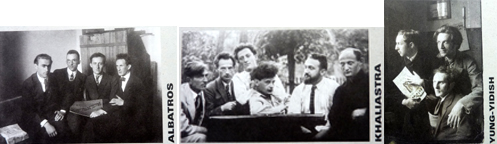
albatros-khalistra-jung-jidysz

Yiddishland Image captions:
Pola Lindenfeld with her sister Eugenia, Photo, courtesy S. Karol Kubicki, Berlin
Teresa Żarnower, c. 1920, Photo from: Andrzej Turowski, Budowniczowie swiata, Cracow 2000.
Other photos:
Nathalie Hazan-Brunet and Ada Ackerman (eds.): Futur antérieur: L’avant-garde et le livre yiddish (1914–1939), Paris 2009.
& Wikipedia Commons, http://www.ecoledeparis.org, http://www.infocenter.co, http://www.e-teatr.pl, http://www.rp.pl, US Holocaust Memorial Museum, http://www.museumoffamilyhistory.com, http://www.jewishgen.org

Full text version with footnotes published in: Lidia Głuchowska, From Transfer to Transgression. Yiddish Avant-Garde – a Network within the Universal Network of the International Movement or a Complementary One? In: Harri Veivo (ed.): Transferts, appriopriations et fonctions de l’avant-garde dans l’Europe intermédiataire et du Nord [Cahiers de la nouvelle Europe, hors serie], Paris 2012, pp. 143-168.
http://www.fabula.org/actualites/harri-veivo-sous-la-dir-de-transferts-appropriations-et-fonctions-de-l-avant-garde-dans-l_52704.php

Also to read: about “Jidyszland” in Polish press

Okno – Wnętrze – Ściana

Lidia Głuchowska
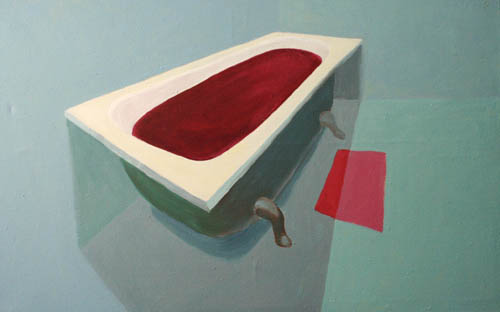
Jarosław Łukasik “Okno – Wnętrze – Ściana” / “Fenster – Raum – Wand”

Staniszów d. Stonsdorf
Lidia Głuchowska przesłała tekst laudatio znakomitej retrospektywnej wystawy poznańskiego malarza Jarosława Łukasika, który inauguruje cykl ekspozycji „Barometr: Sztuka – Architektura – Społeczeństwo” w dolnośląskim Staniszowie (dawniej Stonsdorf) pod Jelenią Górą
http://www.forumstaniszow.pl/news/261/

http://www.forumstaniszow.pl/artist/77/

>> Übersetzung ins Deutsche: LukasikLaudatioDE

3_Nun, alles vorbei, Oel auf Leinwand, 2009, 140 x 90

Po wszystkim / Nun ist alles vorbei, olej na płótnie /Öl auf Leinwand, 2009

2006, Wspomnienie Wroblewskiegoolej na plotnie, 90x55cm

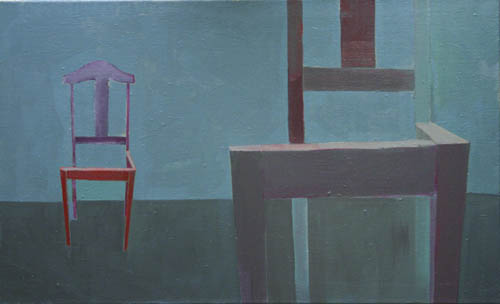
Wspomnienie Wróblewskiego /Hommage an Wróblewski, olej na płótnie /Öl auf Leinwand, 2009, własność / Eigentum: Lidia Głuchowska
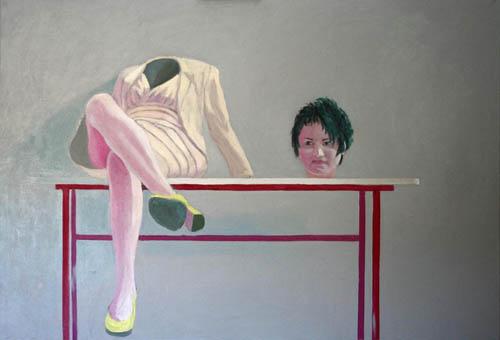
2011 Judyta i Holofernes 2in1, olej na ploltnie, 90x145cm

Judyta i Holofernes. Dwa w jednym & Judith und Holofernes. 2 in 1. olej na płótnie /Öl auf Leinwand, 2011

jarek wenus zielonogorska 2011

Wenus zielonogórska / Venus aus Zielona Góra (Grünberg),  olej na płótnie /Öl auf Leinwand, 2011

jarek konajacy Slowianin 2011

Konający Słowianin / Sterbender Slawe, olej na płótnie /Öl auf Leinwand, 2011

Lidia Głuchowska
Tytuł najnowszej wystawy malarstwa Jarosława Łukasika jest próbą syntezy jego metody twórczej realizowanej w pracach z ostatnich siedmiu lat. Sekwencja pojęć „Okno – Wnętrze – Ściana” odnosi się tak do wizualnej, jak i mentalnej dominanty jego prac. Po pierwsze sygnalizuje ona – w  sensie kompozycyjnym – znaczenie nieortodoksyjne stosowanej przez artystę perspektywy geometrycznej, od czasów renesansu tworzącej złudzenie głębi na płaszczyznie, intencjonalnie zapraszającej widza do wnętrza wykreowanych na płótnie sytuacji. Tytuł „Okno – Wnętrze – Ściana” pozwala więc wyobrazić sobie umowne, zbieżne linie po akademicku komponowanych obrazów, w różny sposób modyfikowane w prezentowanych tu eksperymentach twórczych. Po drugie – w sensie mentalnym – przywołane w tytule okno jest synonimem wolności, wnętrze zaś – bezpieczeństwa bądź osaczenia, i wreszcie ściana – sytuacji bez wyjścia. W obu tych znaczeniach triada pojęć „Okno – Wnętrze – Ściana” wyznacza horyzont interpretacyjny dokonań malarza, który potencjał twórczy łączy ze świadomością krytyka sztuki. Dotychczas prace swe prezentował na kilkunastu wystawach indywidualnych w Polsce i w Niemczech.

Jak wyznaje sam autor, malarstwo jest jego nałogiem – remedium na smutek i pustkę współczesnej egzystencji. „Jako uzależniony – twierdzi – nie potrafię inaczej myśleć o swoim życiu jak tylko poprzez kadry następnych obrazów.”  Jego żmudny, refleksyjny proces koncepcyjny kończy więc nagła, kompulsywna eksplozja malarskich wizji i erupcja optymistycznych barw. Jak Opus quinque dierum Dürera – jedna z renesansowych fascynacji autora – obrazy te dokumentują przełamywanie ograniczeń tworzywa. Ich nieco lunatyczna aura i nokturnowe odrealnienie nie są bynajmniej przypadkiem. Powstają one bowiem w nocy, jak ekran filtrując koturnowe uniesienia i emocje. Stąd i kontur rzeczywistości rozmyty przez sztuczne światło znikąd wskazujące na drugie dno trywialnych sytuacji.

Na pozór panuje tu poetyka dokumentacji, autor stroni jednak od arbitralnych rozstrzygnięć, traktując uwieczniane fakty (czy imaginacje) z przymrużeniem oka. Jest to więc dokument filtrowany przez krytyczne refleksje i finezyjne rozstrzygnięcia formalne, bliższy surrealistycznej niż hiperrealistycznej, parafotograficznej wizji. To polemika z voyeurystycznym duchem postnowoczesności, niwelującej intymność i bezpośredniość doznań, w której wszystko trzeba utrwalić i podejrzeć w internecie.

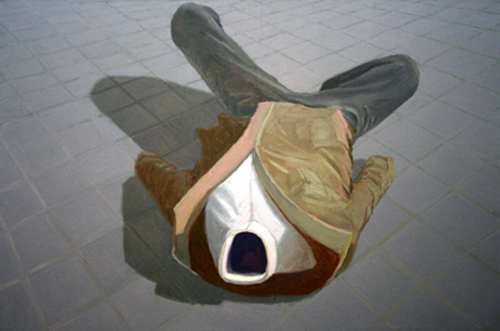
Jako przyklad niech posłużą tu obrazy z prezentowanego na wystawie częściowo cyklu o przewrotnym tytule „Obrazy nieostatnie”, ukazujące – na wpół żartobliwie, na wpół autoironicznie – do bólu rzeczowy katalog potencjalnych form rozważanych przez artystę form samozagłady. Wspomnę tu tylko trzy prace, przykładowo ilustrujące poetykę zgrzytu i czarny humor twórcy: – wanna krwi ukazana „Po wszystkim” (2008), zielonym cieniem odgrodzona od oswojonego świata, „Autoportret pośmiertny” (2008) – ciemna rozlana plama o amebowatym kształcie – i – „przytulne” różowe(!) kapcie w pomieszczeniu żółtym jak pokój van Gogha na moment przed tym, jak zagarnął go obłęd. I wreszcie – stryczek, cień wisielca w pośmiertnych drgawkach i pomarańczowe siedzisko stołka – oglądany zza węgła kadr filmu – „Po zeskoku taboret się przewrócił” (2008).

Te z pozoru chłodne i hermetyczne, obrazy określa coincidentia oppositiorum dysonans intelektualnej dyscypliny i liryzmu, oszczędnych w walor, matowych płaszczyzn i fluorescencyjnie połyskujących detali, zwartej kompozycji i rozległych przestrzeni, budowanych na kontraście geometrycznych plam i niespodziewanych w tym kontekście organicznych form – jakby z innego ontologicznie porządku.

Milczące płótna ewokują narrację. Zaskakującą ich cechą jest to, iż nawet gdy rozległe, jednobarwne tło stanowi większość kompozycji, nigdy nie jest głuche. Geometrię rodem z klasycznej awangardy przełamuje pobrzmiewający w tle niepokój i aura magicznego realizmu, filtrowana przez osobiste doświadczenia malarza oraz kilka dziesięcioleci krytycznej i autokrytycznej refleksji innych twórców drugiej połowy XX wieku.

Przestrzeń definiują przedmioty magiczne – lewitujący stół („Stół dla państwa Hopperów”, (2006), „Podniesienie”, 2007/2011)  – substytut nieosiagalnej domowości, i kapcie –„ciepłochody” – na czarodziejskim dywanie ulatujące do krainy wiecznych spełnień („Mały dywanik”, 2008). Mała apokalipsa i mała stabilizacja.

Dominuje atmosfera oczekiwania – napięcia – stagnacji (?), Chiricowski niemal niepokój – choć obrazy te nie ukazują bezkresnych przestrzeni antycznych miast i mitologicznego rekwizytorium, lecz kameralne niemal wnętrza czy ustronne zaułki – kulisy ledwo minionego czy spodziewanego dramatu. Krzesła agresywnie napierające na siebie i widza – ich krwista czerwień przecinająca poszarzały błękit – („Wspomnienie Wróblewskiego”, 2006), przywołują na myśl niezastygłe konflikty, czas nie do cofniecia. Aktorzy opuścili scenę, a może dopiero się pojawią. Pozorny dystans i bezosobowość narracji nie pozwalają wyśledzić tych, których dotyczy ona bezpośrednio. Anonimowy komunikat apeluje jednak do widza, przenikając tyleż zamkniętą co niedookreśloną przestrzeń.

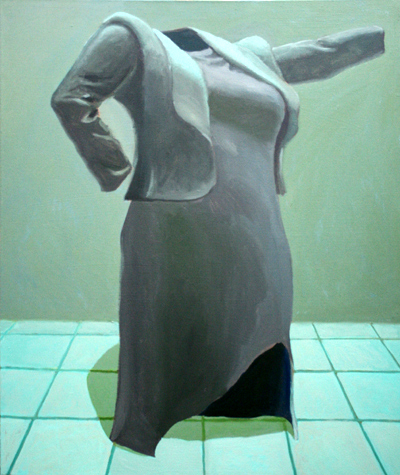
To bezludne i – w swym zdystansowanym okrucieństwie niekiedy nieludzkie – obszary. Niemalże brak tu twarzy. Rzadko jedynie bezgłowe torsa rodem z katastroficznych wizji dwudziestolecia, czy odzianych w zjadliwie pogodną barwę „Rostrzelań” Wróblewskiego dokumentują skarlenie wielkich mitów historii, zatęchły frazes z życia prowincji. „Konający Słowianin” (2011), poległy na chodniku, tuż przed reanimacją na izbie wytrzeźwień – to zdegradowany bohater, parodia narodowej martyrologii. Znakomicie rzeźbiarska, dostojna „Wenus Zielonogórska” en grisaille – parodia Nike z Samotraki – i jej groteskowy pendant –„Adonis Poznański” (oba 2011) w polarze – obnażają zaś farsę pomników „ku czci”, prowincjonalny zmierzch bogów. W tytule „Judyta i Holofernes. Dwa w jednym” (2011) tradycja kultury wysokiej i marketingowy slogan sąsiadują ze sobą w wiwisekcji współczesności. Ta dekapitacja à la Carravaggio ma „feministyczne” dno. Wskazuje na stereotypy walki płci, i spetryfikowane wizje ról społecznych, z binarnym podziałem – intelekt (męski) / (żeński) seks-apealu –„bezmyslność”, materia. Judyta – intelektualistka – ucieleśnia wewnętrznego wroga. Jej obcięta głową obok ponętnego ciała, przygląda mu się z ironią, męskim spojrzeniem „innego“. Niemożność zespolenia obu ról skutkuje autodestrukcją.

Wszędzie tu jednak dominuje niedopowiedzenie, amor vacui i magiczny realizm à la Giorgio Morandi czy Wilhelm Hammevsvøj. Oniryczna atmosfera wypełnia przestrzeń tej przedziwnie uwodzicielskiej ekspozycji.

Głębię modeluje tu nie światłocień lecz kolor. Światło, barwa i baśniowa aura na podszewce z codzienności mają moc narkotyczną. Odurzają, wciągając do intelektualnej i estetycznej gry. Stąd perspektywa jest arbitralna i anty-naukowa, o krok dalej niż w dziełach manierystów i profetów antysztuki rodem z awangardy. Wewnętrzny impuls góruje zatem nad regułą costruzzione leggitima Albertiego, a intuicja nad matematycznym wykresem i werystycznym odwzorowaniem zjawisk. Rozproszone światło konotuje emocje, rozbijając linearny schemat „Okno – Wnętrze – Ściana”  – kontur materialnego konkretu, zapraszajac do mentalnej podróży, ewokowanej przez jej ekwiwalenty – „Perspektywę barową”, „Ołtarz hotelowy” i… „Ostatni tramwaj” (2011).