Hommage á Jan Buk III/1

Dr Lidia Głuchowska

Přeprošenje
na wotewrjenje dwójneje wustajency:

WŠO JE KRAJINA. SERBSKI MOLER JAN BUK“

Měšćanski muzej Wrócław

15.09.2023, w 17.00 a 18.30 hodźinach

Chcemy Was přeprosyć na wurjadne dwójne wotewrjenje wustajeńcow, kotrejž wukonjetej wažny přinošk k diskursej wo stawiznach a přichodźe swěta, Europy a wosebje kulturnych zarjadnišćow pólskich zapadnych kónčin, kaž tež k druhim wažnym temam kaž zakorjenjenje, přiswojenje/přichilnosće k městnam a ludźom, wosobinske a zjawne podawki a prašenja wo wuznamje indiwidualneje a narodneje identity a zhromadnosće w dobje globalizacije, masoweje migracije a ekologiskeje katastrofy.

Wustajeńcy we Wrócławskim měšćanskim muzeju – „Wšo je krajina. Serbski moler Jan Buk” a „Hommage à Jan Buk (III): PŘICHILENI“– pokazujetej na korjenje pólskeho kulturneho žiwjenja w zapadnych kónčinach. Wustajeńca w Kralowskim palasće pokazuje na wukony nestorow Eugeniusza Geppertoweje akademije rjanych wuměłstwow we Wrócławju a na pokročowanje jeje tradicijow a idejow.
Nimo wobšěrneho wuběra twórbow Jana Buka – jednoho z najzažnišich adeptow a nana serbskeje moderny – su tu widźeć dźěła jeho mištra Jana Cybisa a jeho docentow, kolegow a šulerjow. „Hommage à Jan Buk“ w Měšćanskim arsenalu je pokazka na pochad a přitomnosć wuměłstwa w „znowa zdobytych kónčinach“, inkluziwnje fenomena „Wrócław/Breslau – městno zetkawanja“ a wudobyćow Instituta za wizuelne wuměłstwa uniwersity Zielona Góra, kotrehož předchadnicy Jana Buka wjele lět pola tak mjenowanych energijowych pleinairow w Delnjej Łužicy zetkawachu a jich přećelstwa z nim dołhe lěta traajachu.

Continue reading “Hommage á Jan Buk III/1”

Hommage á Jan Buk 2

Lidia Głuchowska

FILM “Hommage à Jan Buck (II)”

Cottbus/Chóśebuz

Am Freitag, den 25.08.2023 fand in der Kunsthalle Lausitz in Cottbus die Finissage der Ausstellungen aus der Reihen „Alles ist eine Landschaft. Der sorbische Maler Jan Buck“ und „Hommage à Jan Buck (II)“ – „Wir haben den Ort gesehen“ und „Nach der Kohle … – Landschaften und Gesichter der Lausitz“ statt, über die wir bereits geschrieben haben.

Anlässlich der Finissage veröffentlichen wir einen Film, der einen Einblick in die wichtigsten Ereignisse des ganztägigen „Deutsch-wendisch/sorbisch-polnischen Festtags – Begegnung und Dialog“ anlässlich der Eröffnung der genannten Ausstellungen am 2.06.2023 im Wendischen Museum/Serbski Muzej, in der Stadt und in der Kunsthalle Lausitz gibt, der auch Teil des Projektes des Instituts für Visuelle Künste der Universität Zielona Góra „Hommage à Jan Buck (II)“ unter der wissenschaftlichen Leitung von Dr. Lidia Głuchowska bildet.

Continue reading “Hommage á Jan Buk 2”

Jan Buck Hommage

Lidia Głuchowska

for English & Polski scroll down / zeskroluj

Film

FILM „Hommage an Jan Buck (II): Nach der Kohle… Gesichter und Landschaften der Lausitz“
Fotoausstellung, Symposium und Exkursion

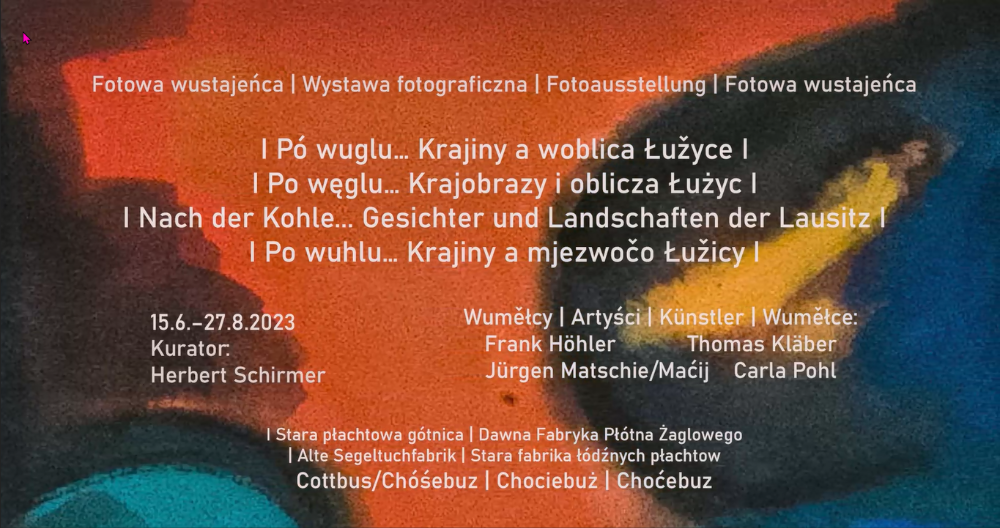
Noch bis zum 27.08.2023 ist in der Alten Segeltuchfabrik/ Stara płachtowa gótnica in Cottbus/ Chósebuz die Fotoausstellung „Nach Kohle… Gesichter und Landschaften der Lausitz“ mit Werken von Frank Höhler, Thomas Kläber, Jürgen Matschie/ Maćij und Carla Pohl zu sehen.
Organisiert wurde sie im Rahmen des Projektes „Hommage à Jan Buck“ (II) unter der wissenschaftlichen Leitung von Dr. Lidia Głuchowska vom Institut für Visuelle Künste der Universität Zielona Góra, als zweite – nach der Ausstellung „Hommage an Jan Buck (II): Wir haben den Ort gesehen“. Den Film zu der letzteren haben wir am 9. Juli 2023 präsentiert.

Siehe HIER

Continue reading “Jan Buck Hommage”

Jan Buk (2)

Dr Lidia Głuchowska

English & Polski scroll down

FILM: Vernissage: „Hommage à Jan Buck (II): WIR HABEN DEN ORT GESEHEN”

Alte Segeltuchfabrik/Stara płachtowa gótnica,
Cottbus/Chóśebuz
| Chociebuż – 2.06.2023

Wir präsentieren einen Film, der sich auf die Eröffnung der Ausstellung in der ehemaligen Segeltuchfabrik in Cottbus/Chóśebuz | Choćebuz (2.06–27.08.2023) bezieht.

Dieser Teaser/Einblick ist ein Teil vom viel größeren Ganzen – ist keineswegs lediglich eine Dokumentation eines Ereignisses, sondern soll in erster Linie eine Vorstellung vom Forschungsaspekt des Projekts “Hommage à Jan Buck” (2022–2025) vermitteln. Die Anklänge an die „ästhetische Forschung“ werden durch die Aussagen der Künstler:innen vermittelt. Der Bezug zum wissenschaftlichen Teil wird hingegen durch visuelle und textliche Überblenden hergestellt, die sich u.a. auf die Reise der Projektteilnehmer in die Lausitz „Auf den Spuren von Jan Buck“ im Jahr 2022 beziehen.

Continue reading “Jan Buk (2)”

Hommage à Jan Buck

Lidia Głuchowska

Please scroll down for English / Po relację w języku polskim proszę zjechać na dół

Deutsch-sorbisch/wendisch-polnischer Festtag – Begegnung und Dialog”
„Alles ist eine Landschaft. Der sorbische Maler Jan Buck“
„Hommage à Jan Buck (II): Wir haben den Ort gesehen“

Nimsko-serbski-pólski swěźeń – zmakanje a dialog
Wšykno jo krajina. Serbski mólaŕ Jan Buk“
Hommage à Jan Buk (II): Wiźeli smy městno“

Cottbus/Chóśebuz | Choćebuz | Chociebuż, 2.06.2023


Deutsch-sorbisch/wendisch-polnische Festtage dieser Größenordnung gibt es viel zu selten, und leider ist das Bewusstsein über die gemeinsamen Verbindungen in der jüngeren Generation gering. Anlass für diese mit großem Elan und monatelanger Vorbereitung organisierte Veranstaltung ist der 100. Geburtstag des sorbischen Malers Jan Buk/Buck. Er gilt als Erneuerer der sorbischen Kunst, die sich bis dahin auf provinzielle Folklore beschränkte. Sein Studium in Breslau in den ersten Jahren nach dem Zweiten Weltkrieg gab ihm den Anstoß, sie in die Umlaufbahn der europäischen Moderne zu lenken.

Der Festtag in der Hauptstadt der Niederlausitz war zugleich die feierliche Eröffnung der zweiten Teile der Ausstellungsreihen „Alles ist eine Landschaft. Der sorbische Maler Jan Buck“ und „Hommage à Jan Buck“. Die erstere wurde vom Sorbischen Museum in Bautzen (Serbski muzej, Budyšin, Direktorin: Christina Bogusz/Boguszowa) mit einem retrospektiven Überblick über das Werk des Künstlers initiiert. Das zweite Projekt – realisiert vom Institut für Visuelle Künste der Universität Zielona Góra unter der wissenschaftlichen Leitung von Dr. Lidia Głuchowska – zielt darauf ab, die Bedeutung der internationalen Beziehungen im Grenzgebiet der Region, symbolisiert durch Leben und Werk von Jan Buk/Buck, hervorzuheben und einen damit verbundenen Diskurs über die Umwelt, postindustrielle Kultur, die politischen Bedingungen des künstlerischen Lebens und die Prozesse der Herausbildung individueller und kollektiver Identität auf beiden Seiten der deutsch-polnischen Grenze zu führen.

Continue reading “Hommage à Jan Buck”

Zaginiony wpis

Ewa Maria Slaska i Lidia Głuchowska

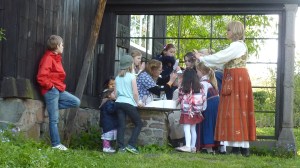
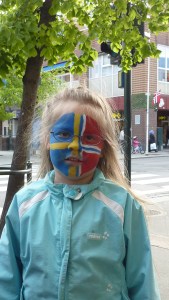
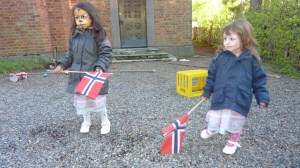
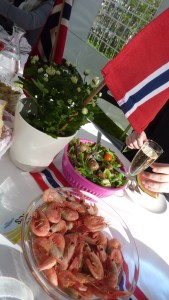
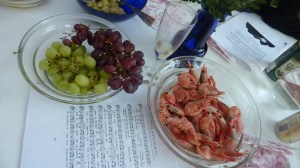
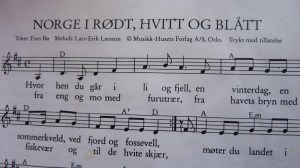
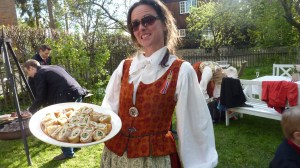
Dziś 17 maja, święto narodowe Norwegii. Wiem to “od zawsze”, bo piękny opis tego święta czytałam w dzieciństwie wielokrotnie w mojej ulubionej książce Nad dalekim cichym fiordem. Zaplanowałam na dziś reblog świetnego wpisu Lidii o święcie narodowym Norwegii, ale nie udało mi się go w ogóle znaleźć. Był na pewno, umieściłam go w roku 2012 na (nieistniejącym już) blogu zwanym Jak udusić kurę, ale szukałam i szukałam, i ja, i wyszukiwarka, wpisu nie ma. Zostały tylko zdjęcia.

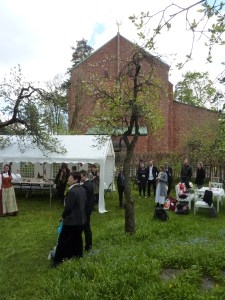
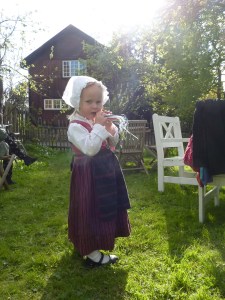
Z załączonych zdjęć wynika, że dzień święta narodowego Norwegii jest patriotyczny, wesoły, kolorowy i ludowy, a ponadto jest na pewno smakowicie. Najbardziej podobają mi się zwykli ludzie w strojach ludowych. W Polsce bywa tak chyba tylko na Podhalu, że nosi się stroje ludowe czasem nawet nie tylko od święta. Nigdzie więcej tego nie widziałam. W każdym razie w Oslo to święto wygląda trochę inaczej od podobnego święta w Warszawie. Ale pewnie wszędzie święto narodowe wygląda lepiej niż to, jak się prezentuje Warszawa 11 listopada.

ReReblog: Tokarczuk. Grzyby.

Wstęp Ewy Marii Slaskiej: Ten tekst był powodem, dla którego przestałam współpracować z blogiem QRA czyli kuchnia i kultura, co z kolei doprowadziło do zlikwidowania tamtego bloga i powstania dwóch nowych. Tak powstały Altana i Salon Ewy Marii czyli ten blog, na którym teraz gościcie. Oczywiście to, co osiem lat temu wywołało masę emocji, dawno przestało być emocjonujące. Salon i Altana współpracują ze sobą, reblogują się nawzajem, a autorzy z jednego bloga swobodnie mogą publikować i publikują na blogu u przyjaciół. Kilka dni temu spotkaliśmy się tak ponownie z okazji urodzin Seniorki Rodu i Bloga.

We wpisie, który doprowadził do secesji, a generalnie dotyczył grzybów, “poszło” o Tokarczuk. Wiele się teraz pisze o Oldze Tokarczuk. Każdy, jeśli tylko ma zdjęcie z Olgą (traktuje ją wtedy familiarnie), natychmiast je publikuje, a jeśli przypadkiem ma coś jeszcze więcej do pokazania lub opowiedzenia, to też to robi. Pomyślałam, że w pewnym szerokim sensie, Tokarczuk stała się “matką założycielką” tego bloga. A ponieważ w inkryminowanym poście pisałyśmy o grzybach, to, dedykując ten wpis grzybiarzom, przypominam go, póki jeszcze lasy i łąki pełne są grzybów.

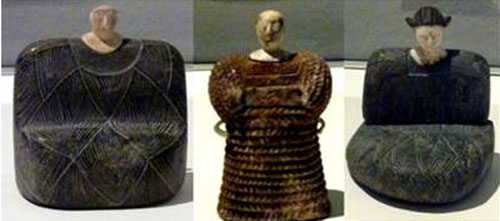
trzyksiezniczkiTekst był wspólnym dziełem Ewy Marii, Panny Dorotek czyli Doroty Cygan oraz Panny L czyli Lidii Głuchowskiej. Został opublikowany na blogu QRA 10 listopada 2012 roku. Na zdjęciu u góry – figurki trzech baktryjskich księżniczek z 2 lub może 3 tysiąclecia przed naszą erą, które sfotografowałyśmy wspólnie na dOCUMENTA w Kassel.

Część Ewy Marii Slaskiej

Nieznany (bo nie podany) autor zachomikowanego na chomiku opracowania tak pisze o grzybach w Domu dziennym, dom nocnym Olgi Tokarczuk:

Często pojawiają się grzyby. Opisy różnych gatunków, przepisy na potrawy z grzybów, a po opisie śmierci dziecka, które zatruło się grzybami – przepis na muchomory w śmietanie. Autorka mówi, że gdyby nie była człowiekiem, byłaby grzybem. Rosłaby na tym co umarło. Byłaby nietrwała, ale ludzie też są nietrwali. Broniłaby się przez grzybiarzami, hipnotyzując ich, ukrywając się wśród liści. Oddawałaby swoje ciało ślimakom i robactwu. Nie bałaby się niczego. Nie groziłaby jej śmierć – jedyne co grozi grzybowi, to, że go zerwą i zjedzą. Grzyby: flammulina  – grzyb zimowy, jest jak człowiek nie pasujący do swoich czasów. Olszówka – grzyb, którego toksyny odkładają się w organizmie. Jedząc go człowiek nie ginie od razu, staje się w jakiejś części żywy, a w jakiejś martwy. Autorka nie rozumie dlaczego ludzie boją się momentu, kiedy stają się bardziej martwi. Ludzie boją się jedzenia grzybów, ona się nie boi. Ludzie dzielą grzyby na jadalne i trujące, a nie np. ładne i brzydkie. Autorka je wszystkie grzyby i nigdy nie umarła, zdarzało jej się umierać z powodu innych rzeczy. Nie wierzy, że grzyby mogłyby chcieć ją zabić.

Część Doroty Cygan – cytat z Olgi Tokarczuk. Dom dzienny, dom nocny:

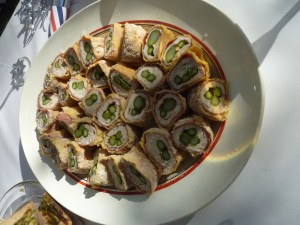
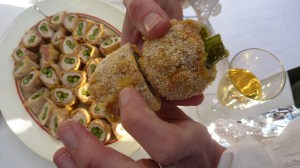
Tort z muchomora

3 duże świeże kapelusze muchomora
5 dkg suszonego muchomora
2 bułki
szklanka mleka
garść rodzynek
1 cebula
nać pietruszki
całe jajko
żółtko jajka
bułka tarta
sól, pieprz do smaku

Namoczyć bułki w mleku. Cebulę podmażyć na tłuszczu, dodać namoczone i drobno pokrojone suszone grzyby, wbić żółtko, dodać posiekaną natkę, przyprawić nadzienie do smaku. Panierowane w jajku i bułce tartej kapelusze usmażyć na złoty kolor. Przekładać nadzieniem i zapiec w piekarniku.

Część Ewy Marii Slaskiej

Panna Dorotek poszukiwała jeszcze dwóch zdań kończących ten cytat, które ona tak dobrze zapamiętała, że teraz nie może się nadziwić, że ich  nie ma: „Dokładnie przeżuwać. Czekać”. Niestety bezlitosne metody poszukiwawcze komputera pozwalają stwierdzić, że słowa „czekać” w bezokoliczniku nie ma w tekście ani razu! Nawet znacznie mniej dramatyczne „poczekać” czy „odczekać” też się nie pojawiają.

Przypomniały mi się wizyty na Mazurach u szalonego wujka pisarza. Prawdopodobnie każdy z nas ma jakiegoś szalonego wujka. Nasz mieszkał na wsi pod Olsztynem, dużo pił i często wieczorem jechali z sąsiadem traktorem po wódkę do jakiejś dość odległej wioski, bo tam GS był dłużej czynny. Miał w Olsztynie żonę i córkę, a na wsi przyjaciółkę, też zresztą z Olsztyna, która mieszkała u niego z mężem i dwoma synami. Kiedyś, gdy się kochali, byli tacy głośni, że obudzili psa na podwórku. Przestraszony zwierzak zaczął szczekać, budząc sąsiednie psy, które też zaczynały szczekać, budząc następne psy…  Wuj i jego kobieta kochali się pod akompaniament szczekania wszystkich psów w całej wsi. Wydaje mi się, że księżyc powinien był być w pełni. Niestety, gdy mi to oboje opowiadali, nie zapytałam, a teraz już nie mam kogo zapytać. Dlatego zawsze powtarzam, jak chcecie o coś zapytać, pytajcie, pytajcie, pytajcie, bo kiedyś będzie za późno.

W każdym razie wujek świetnie i oryginalnie gotował, często korzystając z zebranych lub zabranych bez pytania dobrodziejstw pól, lasów i łąk. Jadaliśmy kukurydzę, masy grzybów, ciasto z rumiankiem i pestkami sosen, zupę z młodych pokrzyw, pieczoną pietruszkę pastewną… Pewnego dnia wujaszek pokazał przyniesione właśnie z lasu muchomory. Nie było wątpliwości, to ewidentnie były muchomory, miały odpowiedni pokrój i kropki, tyle że kapelusze nie były intensywnie czerwone, lecz raczej rudoceglaste. To muchomory jadalne, oznajmił wujaszek i podsmażył je na maśle. Popatrzyliśmy z mężem na siebie, niepewni, ale i zainteresowani. Obudź dziecko powiedziałam, niech też zje kawałek, bo jeśli mamy umrzeć, to umierajmy wszyscy razem…

Nie martwcie się, muchomory były jadalne.

Część Lidii Głuchowskiej

Skoro wpis jest o jedzeniu grzybów powszechnie uznanych za niejadalne, ja też dodam coś do tej opowieści. Znam osoby, które uważają, że opieńki są niejadalne.

Zupa z opieniek  i pierwszy śnieg

Jakieś trzy lata temu Rodzice po raz pierwszy ugotowali zupę z opieniek, którą zapamiętali ze swych pierwszych wspólnych wczasów. Jest znakomita i prosta w wykonaniu. Jest taka pyszna, że nie mogłam pojąć dlaczego tyle lat trzymali ją w tajemnicy. Dziś wreszcie poprosiłam ich o przepis.

Potrzebne są następujące składniki:

Spora kobiałka opieniek (lub dwie, gdy więcej gości)
W obróbce dużo tracą na objętości, więc lepiej trochę więcej
a ja od razu kupiłam 3 za całe 10 zł
włoszczyzna na wywar
2 –3 kostki rosołowe
1 lub 2 pory (zależnie od ilości grzybów)
3-4 łyżki masła (najlepiej klarowanego – nie przypala się i jest wydajniejsze)
śmietana
ew. trochę maki do zagęszczenia
pieprz i sól do smaku
oraz
duży garnek, patelnia, cedzak i durszlak

A przygotowuje się ją tak:
Z włoszczyzny i kostek rosołowych ugotować wywar.
Grzyby  bardzo dokładnie umyć i odsączyć. Kapelusze grzybów pokruszyć na ćwiartki (nóżki są twarde, więc jeśli mimo wszystko chcemy je wykorzystać, należy pokroić je w bardzo cienkie paseczki, o grubości 2 mm), a następnie podgrzać w wodzie i odszumować (tzn. zebrać pianę), jednak nie gotować. Dokładnie odcedzić.
Pora umyć i jego białą część pokroić w bardzo cienkie półtalarki, zeszklić na maśle. Nie dopuszczać do zbrązowienia.
Dorzucić odcedzone grzyby i smażyć, a potem dusić ok. pół godziny, co jakiś czas mieszając.
Po zdjęciu z ognia połączyć z wywarem warzywnym, doprawić solą i pieprzem.
Gdy przestygnie, do kubeczka wlać śmietanę i rozprowadzić ją z kilkoma łyżkami zupy, a potem powoli połączyć z jej pozostałą częścią, tak by się nie zwarzyła.
Ewentualnie można zagęścić zasmażką z mąki, którą ostrożnie  jeszcze na patelni miesza się z częścią zupy, a następnie przelewa do garnka, ciągle mieszając, tak, by nie powstały grudki.

UWAGA – zupa ma bardzo silny faktor uzależniający. Ja serwować ją będę w kuchni, z której okien widać pierwszy śnieg. W Jeleniej Górze spadł tej nocy.

PS. Ewy Marii Slaskiej z 13 listopada 2012 roku skierowany do jednej z komentatorek blogu QRA

Konsti! Zdarzył się dziś przedziwny przypadek – wróciła z wojaży Panna Dorotek, z którą wspólnie przygotowałyśmy wpis o jedzeniu muchomorów i innych jadalnych grzybów niejadalnych. Być może akurat tego nie zauważyłaś, ale wpis spotkał się z krytyką współautorek i współredaktorek, wyrażoną publicznie i prywatnie, i w końcu – z przykrością – go usunęłam.
Główną osią tego wpisu był wybrany przez Pannę Dorotek cytat z Domu dziennego, domu nocnego Olgi Tokarczuk – przepis na przygotowanie tortu z muchomorów. Cytat wzięłam z portalu Chomik i nie było tam dwóch zdań, które zdaniem Panny Dorotek musiały tam być, ale ich nie znalazłyśmy: “Jeść powoli. Czekać.”
Panna Dorotek twierdziła, że jest w internecie jeszcze inny blog, w którym też jest ten cytat-przepis i kończy się on tak właśnie, jak jej zdaniem powinien się kończyć.
I jest to twój blog i twój wpis, a ty jesteś naszą autorką!
apparecchiamo.blogspot.de/2012/02/tort-z-muchomora-czerwonego.html
Dziękuję!

Awangarda jidisz. Łódź i Wrocław / wystawa, konferencja, projekt badawczy

Ekspresje wolności

Latem 2019 roku odnotować trzeba kilka ważnych wydarzeń kulturalno-naukowych nt. historii awangardy jidisz w Polsce.

Od 1 do 7 czerwca 2019 roku w Synagodze pod Białym Bocianem we Wrocławiu odbywa się
21. Festiwal Kultury Żydowskiej SIMCHA
połączony z koncertami i prezentacjami książek
Więcej… i więcej…

W ramach festiwalu 6.06.2019 będzie miało miejsce spotkanie uczestników
projektu badawczego, wspieranego przez Narodowy Fundusz Rozwoju Humanistyki, „Łódzka awangarda jidisz”
pod kierunkiem prof. Krystyny Radziszewskiej.
Oprócz jidyszystów i literaturoznawców w spotkaniu udział biorą dwie historyczki sztuki – dr Irmina Gadowska i dr Lidia Głuchowska.

Wystawa

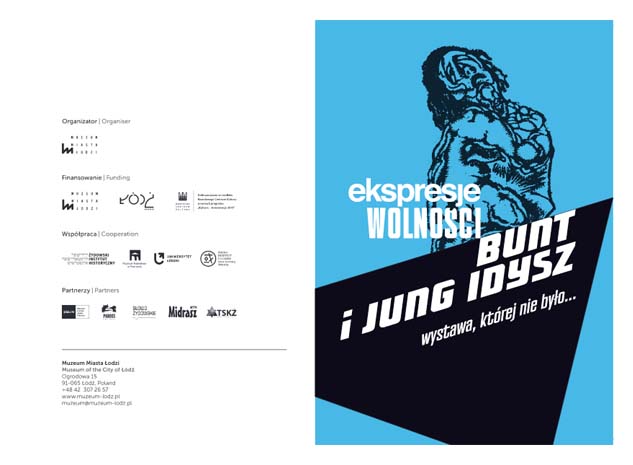
W dniach 12-13.06.2019 w Muzeum Miejskim w Łodzi odbędzie się wernisaż wystawy
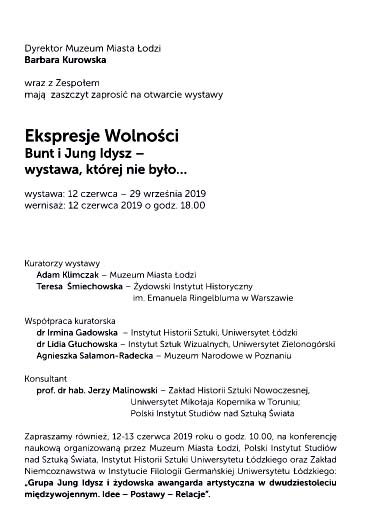
Ekspresje wolności. Bunt i Jung Idisz. Wystawa, której nie było…
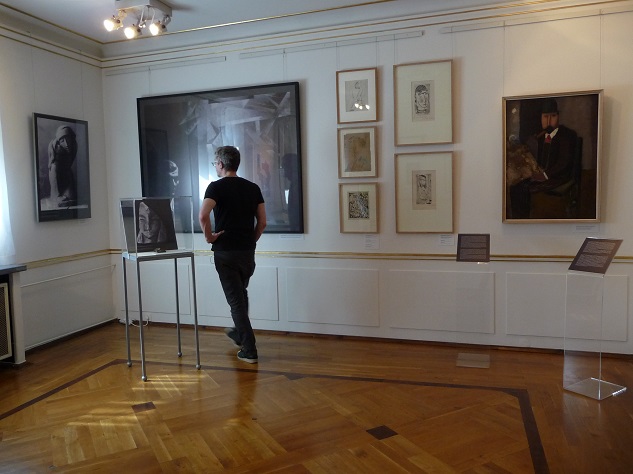
z prezentująca prace działających w okresie międzywojennym w Poznaniu, Łodzi i Berlinie grup “Bunt” i “Jung Idisz”. Na wystawie pokazane zostaną m.in. dzieła artystów “Buntu” pochodzące z donacji profesora St. Karola Kubickiego, o której tu na blogu obszernie pisaliśmy.
Wystawie towarzyszy międzynarodowa konferencja naukowa. Z tej okazji ukażą się tłumaczenia czasopisma Jung Idisz na język polski i angielski oraz
publikacja towarzysząca.
Wystawa potrwa do października.

Podczas wystawy zaprezentowane też zostaną prace współczesnych twórców z Poznania, Łodzi i Izrael, stanowiące hommage dla artystów klasycznej awangardy.

Dr Lidia Głuchowska pisze:

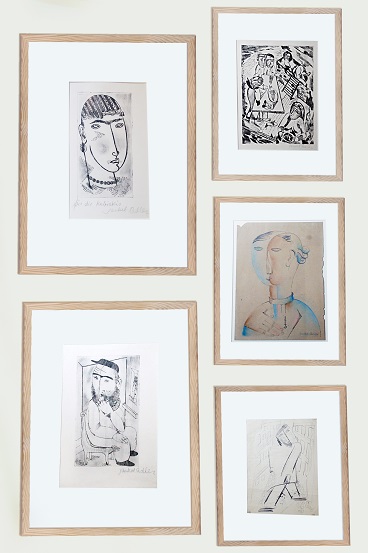
Na wystawie prezentowane będą m.in. prace artystów z poznańskiej grupy Bunt i łódzkiej Jung Idysz (Yung Yiddish), pochodzące z byłej kolekcji Margarete i Stanisława Kubickich.
Oba ugrupowania współpracowały ze sobą nie tylko w Polsce, planując w 1919 r. wystawę,
która nie dosyła do skutku (skąd tytuł obecnej ekspozycji), lecz także na terenie Niemiec – w Berlinie i Nadrenii.
Jankiel Adler, Pola Lindenfeldówna i prawdopodobnie Artur Nacht-Samborski mieszkali
nawet przejściowo w atelier Kubickich w Berlinie. W domu polsko-niemieckich artystów czasy wojny przetrwały m.in. prezentowane prace
Głowa kobiety, autorstwa Lindenfeldówny (ok. 1922)


i grupa prac Adlera

z których jedna dedykowana jest Kubickim, a także wykonany przez niego portret Kubickiej.

Kubiccy, Adler, Lindenfeldówna, Marek Szwarc i Henryk Berlewi spotkali się w 1922 roku na Kongresie Międzynarodowej Unii Artystów Postępowych w Düsseldorfie.
Kolejnym wspólnym przedsięwzięciem artystów z tej grupy była Międzynarodowa Wystawa Artystów Rewolucyjnych w Berlinie. Zaproszenie na tę wystawę zdobił linoryt Kubickiego Samotnik.


Wspólnie ich prace prezentowane były m.in. w sali Awangarda na wystawie My, berlińczycy. Historia polsko-niemieckiego sąsiedztwa (Berlin, 2009, kuratorka: Lidia Głuchowska)

Więcej na ten temat w moim wystąpieniu na konferencji towarzyszącej otwarciu wystawy
oraz w planowanej publikacji.

Prezentowane prace pochodzą z dawnej kolekcji Margarete i Stanisława Kubickich.
Fot. 3 – Anna Kraśko / Fot. 1, 2, 4, 5 – Lidia Głuchowska

Konferencja

Grupa Jung Idysz i żydowska awangarda artystyczna w dwudziestoleciu międzywojennym. Idee – postawy – relacje.
Konferencja organizowana przez Muzeum Miasta Łodzi, Polski Instytut Studiów nad Sztuką Świata, Instytut Historii Sztuki Uniwersytetu Łódzkiego oraz Zakład Niemcoznawstwa w Instytucie Filologii Germańskiej Uniwersytetu Łódzkiego
Łódź, 12-13 czerwca 2019 roku.

Muzeum Miasta Łodzi, ul. Ogrodowa 15

PROGRAM
ŚRODA 12.06
Otwarcie konferencji
10.00-10.15 – Barbara Kurowska, Adam Klimczak – oficjalne otwarcie konferencji
10.15-10.45 – prof. Jerzy Malinowski, dr Małgorzata Geron,
Badania żydowskiej awangardy artystycznej w Polsce. Historia – perspektywy – najnowsze publikacje
10.45-11.15 – dr hab. Eleonora Jedlińska, Uniwersytet Łódzki,
Grupa Jung Idysz i tradycja ekspresjonizmu – malarstwo amerykańskiej sztuki figuratywnej w XX wieku
11.15-11.45 – dr hab. Artur Kamczycki, Uniwersytet im. Adama Mickiewicza w Poznaniu,
Kilka refleksji nad sztuką Jankiela Adlera
11.45-12.20 – dyskusja i przerwa
Panel I
12.20-12.40 – dr Renata Piątkowska, Muzeum Historii Żydów Polskich POLIN /
Polski Instytut Studiów nad Sztuką Świata,
Sztuka narodowa czy sztuka narodu?
Wystawy artystów z kręgu awangardy w Żydowskim Towarzystwie Krzewienia Sztuk Pięknych w Warszawie
12.40-13.00 – dr Tamara Sztyma, Muzeum Historii Żydów Polskich POLIN /
Uniwersytet Warszawski,
„Nowa sztuka żydowska” jako wyraz nowych postaw ideologicznych i przemian tożsamości polskich Żydów w pierwszych dekadach XX wieku
13.00-13.20 – Teresa Śmiechowska, Żydowski Instytut Historyczny,
Jidyszland – fotografia jako środek tworzenia mitu narodu
13.20-13.40 – dr Karol Jóźwiak, Uniwersytet Łódzki,
Problem tożsamości w twórczości Stefana Themersona
13.40-14.00 dyskusja
14.00-15.00 obiad
Panel II
15.00-15.20 – dr Małgorzata Stolarska-Fronia, Centrum Badań Historycznych
Polskiej Akademii Nauk w Berlinie,
Kolektywy młodych gniewnych? Portret grupowy Jung Idysz na tle awangardowych grup z Niemiec
15.20-15.40 – dr Lidia Głuchowska, Uniwersytet Zielonogórski,
Bunt i Jung Idisz. Między Poznaniem, Łodzią a Berlinem. Kontakty, koncepcje i wydarzenia artystyczne
15.40-16.00 – Agnieszka Salamon-Radecka, Muzeum Narodowe w Poznaniu,
Kontakty Giny i Marka Szwarców ze środowiskiem poznańskiego „Buntu” w
okresie dwudziestolecia międzywojennego w świetle zachowanych materiałów
źródłowych
16.00-16.20 dyskusja i przerwa
Panel III
16.20-16.40 – David Mazower, Yiddish Book Center, Fun’m opgrunt /
Out of the Abyss: The Women Artists of Farlag Achrid – A Forgotten Chapter of Yung Yidish
16.40-17.00 – dr Ewa Rybałt, Uniwersytet Marii Curie-Skłodowskiej w Lublinie,
Margit Sielska-Reich w poszukiwaniu środka ciężkości
17.00-17.20 – dr Magdalena Maciudzińska-Kamczycka, Uniwersytet Mikołaja
Kopernika w Toruniu,
Żydowska, kobieca, feministyczna? Artystki Jung Idysz i ich sztuka
17.20-17.30 – Anna Małaczyńska, Muzeum Miasta Łodzi,
Felicja Pacanowska (1907-2002) – przyczynek do biografii
(komunikat)
17.30-17.50 – dyskusja
18.00 – wernisaż wystawy „Ekspresje Wolności. Bunt i Jung Idysz – wystawa,
której nie było…”

CZWARTEK 13.06
10.00-11.00 – Oprowadzanie kuratorskie po wystawie „Ekspresje Wolności. Bunt i
Jung Idysz – wystawa, której nie było…”
Panel IV
11.00-11.20 – dr Monika Polit, Uniwersytet Warszawski,
Ludowy inteligent na obrzeżach Awangardy
11.20-11.40 – Izabella Powalska, Polski Instytut Studiów nad Sztuką Świata,
„Wiersze słowem i grafiką”. Ilustrowane wydawnictwa z kręgu Jung Idysz
11.40-12.00 – Dariusz Dekiert, Uniwersytet Łódzki,
Między Jidyszlandem a Palestyną. Twórczość jidyszowa i hebrajska Icchoka Kacenelsona
12.00-12.20 – dr Krzysztof Cichoń, Uniwersytet Łódzki,
Nieuchronność etnosu. Letryzm i mesjanizm po „la rafle du Vel’ d’Hiv”
12.20-12.50 – dyskusja i przerwa
Panel V
12.50-13.10 – prof. Małgorzata Leyko, Uniwersytet Łódzki,
Mojżesz Broderson i żydowska awangarda teatralna
13.10-13.30 – dr hab. Agata Chałupnik, Uniwersytet Warszawski,
Tango judío i asymilacja przez muzykę
13.30-13.50 – dr Joanna Podolska, Uniwersytet Łódzki,
Niedaleko Jung Idysz. Bracia Bajgelmanowie i ich muzyka
13.50-14.10 – dr Adam Sitarek, Uniwersytet Łódzki,
Żydowscy artyści i Zagłada. Przypadek getta łódzkiego
14.10-14.30 – podsumowanie konferencji

Yddishland. Reblog from my own blog

because it is really worth of reblogging. Just so!

Dr Lidia Głuchowska

Yiddishland and the utopie of Avant-Garde

adler-berlewi-chagall-lissitzky(…) …„Yiddishland“, the patria of the new, secular Yiddish culture of the Central East European Diaspora. To its inhabitants or rather residents belonged pro-Russian Litvaks, sympathising with socialism and rooted in the misnagda tradition; pro-Austrian Galitsianers influenced by Haskala and open to assimilation; and Hasidic pious Polakes, loyal to the pre-partioned Poland. This population was subject to migration and urbanisation processes, which additionally differentiated it. The cultural revival of the “Yiddishland” depicts in an especially evident way the problem of the deterriorisation of the international avant-garde.The interdisciplinary and transborder Yiddish avant-garde was active mainly in the former “Ansiedlungsrayon” of the Russian Empire, which means in Poland, Ukraine and Belarus, but also in other parts of Central Europe – like in Latvia, Romania or Germany – and in the United States. Its representatives emphasised ties with the Yiddish language and culture – common among the inhabitants of these areas, so called Yiddishism. This movement was considered to be a conception opposite to the Haskala renaissance, the revival of Hebrew and Zionism, aiming at founding an independent Jewish state and based on the restitution of Hebrew as an official literary language.

The following essay presents the structure of Yiddish avant-garde within the universal network of international avant-garde consisting of such components as art groups, magazines exhibitions, cafés, cabaret and theatre, and communicating with its own lingua franca. (…)

The avant-garde network has been often compared with the Diaspora. A paradigmatic avant-garde artist was cosmopolitan, multilingual and mobile – acting in the transborder cultural space and the distribution radius of the avant-garde manifestos extending from Scandinavia to the Balkans, and from Paris to Moscow. Against this background, Central Eastern Europe, which could be geographically identified with the area of the utopian “Yiddishland“, was more specifically “a region of constant migration, immigration and emigration, of people arriving, departing and moving around”. “Nomadic modernism” was another essential phenomenon of artistic internationalism in this period. (…)

katznelson-golfaden-borderzon… it has to be pointed out, that while, in general, in looking for the realisation of the utopia of a borderless “new world”, most of the émigrés were outsiders acting as insiders, the members of the Yiddish avant-garde were always outsiders, acting in foreign national or international contexts.

According to the political limitations, for example after a period of the flourishing of the avant-garde tendencies in the Soviet Union, several Jewish artists felt pushed to emigration. As a consequence of less or more convenient political or economical conditions the process of the deterriorisation considered not only actors of the cultural process themselves, but also their works. A number of art journals also appeared initially at one, then at another place, sometimes abroad (…) or been published in the German Metropolis parallel in Yiddish and Hebrew and was addressed to the different competing fractions of the Jewish national-artistic movement, divided between the Yiddishists and Zionists. Lissitzky, Berlewi or Marc Chagall – who in opposition to his two colleagues did not explicitly support the idea of Yiddishism – were active in different countries and published their manifestoes in various languages.

The fact of a great relevance is that in a way, the Yiddish avant-garde was a Diaspora in a double sense. It participated in an avant-garde network on two levels. On an international level its members cooperated locally with Russian, Polish, Romanian or German groups in the singular national “household” countries and their representatives abroad. Simultaneously, on the national level they had several other local and cross-border contacts and were involved in the artistic life of their Yiddish-speaking communities. (…)

Some characteristics of the international avant-garde as a utopian borderless “new world” seem to fit to the Yiddish avant-garde in a particular way. The “Yiddishland” as a political utopia generated several images of the cultural transfer associated with its maps as a whole. (…) Such maps gave a glimpse of a major myth for a whole generation of artists, their collaborative project, a dream like imago mundi. Attempts in creating the artistic topography, sometimes in a comprehensive global way, sometimes on a smaller scale, were also the Panslavism, the zenitist aim of the Balkanisation of Europe or – much less researched idea of Yiddishism concerning the bigger part of Central-Eastern Europe. (…)

aronson-ravitch-markish-segalowiczThe echo of these historical maps or symbols of the cultural transfer are the schemes of the network, which correspond with the current historiographical concepts (…). While the first one seems to symbolize the stable construction of the right angled lines, the other one, through the usage of the diagonals, suggest the dynamic of the exchange-processes, a motion. (They are) not identical; this means on the one side that the Yiddish network has got partly other exchange centres, and, on the other side it also evaluated in the time. After the limitations of the artistic autonomy in the Soviet Union, the Yiddish avant-garde network became smaller and shifted to the West… (…)

In the past two decades, the avant-garde have been examined as an intellectual and spiritual alliance, as a model of a “new community” pursuing a “new world”, consisting of the interconnected locations of cosmopolitan artistic life in Central Europe such as Bucharest, Budapest, Łódź, Prague and Zagreb, with links to Amsterdam, Berlin, Dessau, Moscow, Paris, Vienna and many other cities in other parts of Europe and the world. In this way the newer narratives contribute to overcoming the previous dualistic approach to the European avant-garde, which divided the artistic map of the continent between Western “centres” and Eastern “peripheries”. The old canon has meanwhile been replaced by a more sophisticated approach, in which the geographical centre of the continent is no longer perceived as its periphery. In opposition to that the visualisations of the network of the Yiddish avant-garde, with its centres in Minsk, Kiev, Kharkov, Riga, Odessa, Saint-Petersburg, Odessa, Moscow, Vilna, Łódź and Warsaw, as well as in Berlin, Paris and New York, are of a much younger datum and the discussion on it in the more general, supranational context is still a desideratum of new cultural historiography.

Apart of the comparison of the imaginative maps of the avant-garde and Yiddish avant-garde universe, also a closer glance at another self-advertising strategy of the(se) movement(s), shows both interesting similarities and differences. One of their major media promoting the universal spirit of art were the little magazines, which all together contributed to a “worldwide network of periodicals”. (…)

Warsaw thereby acquired the status of a European centre for Yiddish literature, with Paris and Berlin serving as its satellites. (…) However, what has to be pointed out is that, even if Yiddish as a language was represented here, the magazine popularised not the idea of Yiddishism, but the opposite one – Zionism. (…)

Paradoxically, both in the case of the international avant-garde and the Yiddish one as its very specific case, their cartography, manifestos and the network of magazines presented a new sphere of the transborder artistic exchange, which can be seen as the anticipation of a future perfect, of modernisation projects characterised by new forms, frequently with an emphasis on ethics rather than aesthetics. In both cases they refer to a utopian community, neglecting the political reality of the period.

Almanac Yung-Yidish – Songs in word and image (…)

One of its innovative qualities was the breaking the rules of the Jewish tradition, such as the biblical ban on images. The typical avant-garde integration of word and image, (…) the domination of the forbidden image over the word was a kind of redefinition of a cultural code and its extension into the zone of taboo. (…) The three issues of Yung-Yidish were published on packing paper between February and December 1919 with a print-run of 350 to 500 copies. (…) Like most avant-garde periodicals, it was an ephemeral publication, even if it grew more interesting and bigger with each new issue. (…) Despite the advanced plans, the 4th issue, dedicated to the biblical Ruth, never came out because of financial reasons. (…)

The Yung-Yidish magazine, representing the main ideas of Yiddish avant-garde, set out its programme in two manifestos. The first, unsigned, in the periodical’s first issue, rebelled against the chaos and materialistic character of the present, and defended the eternal values of God, beauty, and truth. Yung-Yidish artists defined themselves as realists in a mystical faith, admiring art and both Jewish languages: the young one – Yiddish – and the ancient one – Hebrew – the language of the prophets. In the manifesto of the second issue, Broderzon stressed the ties of the Yiddish avant-garde with the millennium tradition of universal culture. Invoking the Bible, including the Psalms and “The Song of Songs”, and thus the tradition of Judaism, he once again pointed to the metaphysical concept of art. Adler too, in the same issue, evoked the Chasidic tradition in his “Prayer”. (…)

Historiography of the avant-garde, written by representatives themselves or by specialised scholars since World War II, often assumes that at the end of the first decade of the twentieth century an internationalist inclination superseded nationalist tendencies which had typified the nineteenth century, when art and architecture were instrumentalised as true manifestations of nationhood. In Central Eastern Europe the internationalist avant-garde conception of a “new world” had to compete with the predominance of conceptions of national modernisation and the idea of a national responsibility of the arts in the “new states”. (…) Internationalism, multiculturalism and multilingualism though not desired in the official life, belonged to the reality of art and present life. (…)

turkow-rotbaum-schwarz-weichertOne of the consequences of this process, intensified by the multilingualism and multiculturalism on a personal level, was the cultural syncretism both in the form and content of artistic production. Among others, this syncretism is apparent in a non-confessional religiousness which combined Christianity or Jewish religious conceptions, via theosophy, with Buddhism and other Eastern religions. (…) there was an explicit demand for a plurality of styles (…) and it was Futurism that played the key role in “new art”. (…)

The problem of the national awakening (…) concerns, however, not only the real existing “new” national states in Central Eastern Europe, but also (re)constructing the national consciousness and culture of the “Yiddishland” being in general the “underground structure” of the really existing political organisms in the interwar period, the same way as the literature of the Yiddish avant-garde was an exterritorial one, which but did not have any foundation in any specific national country.

Yiddish, which since the 1908 conference in Czernowitz was recognised as the language of Jewish culture on a par with Hebrew, was here the prime token of identity. In contrast to it, other languages like German, Russian and Polish, were the means of communication of assimilated Jews, whereas Hebrew, the language of religion, was unknown to the general Jewish population and was removed from its Central and Eastern European roots. The style of the poetry of the Yiddish avant-garde is characteristic of the entire literature of a community that survived the atrocities of World War I and a history of pogroms and revolutions. It expressed less the beauty than the horror. Its poetics bear the imprint of Yiddish Expressionism. (…)

In this context one has to maintain a paradoxical fact: not only as a literary but also as a communicative medium Yiddish often has to be constituted/restituted among the members of the Yiddishist movement. (…) And – which is not a well known fact – they mostly communicated in the languages of the “household” states (…). On the other hand, the Yiddish poets, like e.g. Peretz Markish, creatively used the polysemiotic senses of the Slavic languages, even in their programmatic manifestoes.

Yiddish as a language of the Diaspora which before World War II appealed to readers in most parts of Central Eastern Europe (…) …transgressed political borders, but at the same time had a national function. Because of that, with time however some of the representatives of the Yiddish avant-garde (…) looking for broader recognition decided to use mainly other languages and in a way lost this part of their identity, at least as a means of artistic expression. (…)

barcinski-kaminska-horowitz-nazoIn Central Eastern Europe the tensions between the universal and the particular, the international and national, were stronger than elsewhere on the continent. The modernisation impulse from the respective political centres in the single new states contributed to hybrid results privileging local materials, ornaments and themes. Artists tried (…) to transform foreign artistic patterns, creating local idioms of the international avant-garde code (…). Sometimes these permutations and hybridisations of Central European art are perceived as a consequence of the Jewish influence, with the affinity to richness and orientalism. Sometimes, however, both the whole (Central) Eastern European art and the new secular Jewish one being one of the main aims of the Yiddish avant-garde, has been associated with the hybrid components and the biomorphic metaphor of a world in statu nascendi (…)

In a special way, the avant-garde interest in new universal signs in the visual arts and design also resulted in a standardised typography. Innumerable examples which can be found in books, little magazines or posters, including collages or photomontages and especially exotic and impressive when printed in Cyrillic or Hebrew letters, established “a sort of international hieroglyph”. And often – only this one component of the Jewish identity, the language being, next to the culture and religion – Judaism a proof of “Jewishness”. In its written form it was used not only as and artistic medium, but also as a symbol of identity (…)

Efforts to create a universal style and an avant-garde corporate identity were crowned with an International Art Collection in Łódź in 1931, the first presentation of contemporary art to be permanently exhibited in a state museum in Europe. (…)

Jankel Adler in his article (1920) about expressionism which at that the time was still generally identified with the whole of progressive art stressed out its links with the sacral sphere: “We are the children of the 20th century. […] Stuffy air was our first breath. Our first walk are accompanied by the thousand fold by a choir of ringing trams, the staccato of horse-cabs, whimpering freight trains, speeding automobiles and a choir and noisy passages with criss-cross the streets with a thousand diagonals […] Art of the 20th century, the art of expressionism was born at that longing [after the God LG] and became the seventh day of the working week.”

Two years later his colleague Berlewi already after his return from Germany became a follower of the “new form” and meant: “I had to give up purely Yiddish problems completely and then I devoted myself to cubists and the constructivist’s experiments. Currently my task is to create something European”. (…)

lindenfeld-zarnower-aronson-altmanTo the general components of the avant-garde paradigm belongs the performative character of its manifests and manifestations. Regarding the Yiddish avant-garde, the most authentic and most long lasting emanations of its identity was, next to the programmatic texts and new secular visual art, the theatre, reflecting the every day life experience of the Yiddish population. In its carnival-like art (…) it appeared as especially attractive to a wide audience in Central Europe. In this sense, being even a mirror and mimicry of life and the part of life itself, it can be considered as the most and thus effective, performative manifesto of the Yiddish avant-garde.

Due to the hostility of orthodox religious communities it was formed relatively late, in 1876 in Jassy (Romania). The name of its founder, Graham Goldfaden, inspired the description of the whole genre, inspired by such folk songs and the traditions like the Purim-spiel of Biblical motifs. Between 1878 and 1905 the Tsar had forbidden the staging of performances in Yiddish, but Goldfaden’s theatre still used this “Jargon”. It was partly disregarded also among Jewish intellectuals, opting for the revival of Hebrew or the assimilation, concerning it as shund (garbage). (…) As an alternative to it several other theatre groups were grounded (…) (also) small artistic theatres and cabarets…(…), performances (…).

If internationalism is generally considered a conditio sine qua non of the avant-garde, the national question can be perceived as the contrasting intertext, as a negative point of reference for an international avant-garde ideology, or at least as a set of ideas which had to be addressed. The artists of the Yiddish avant-garde gathered e.g. around such magazines as Yung-Yidish or Yung-Vilne (…) deserve special attention. They were major platforms of Yiddishism, (…) unlike the rest of the Jewish artists who were often assimilated (…). They represented a second generation of new Jewish culture. Whereas the first one tried to create a European opening for Yiddish culture, the second, on the contrary, strove to introduce “the Jewish world” into European culture. As such, the Yiddish avant-garde operated “in-between”, addressing the issue of “the other” in a more poignant way than the rest of the avant-garde, provoking a deconstruction of the official conception of the “new state” as an ethnic and cultural monad, which they considered to be merely a political construct. As “universal others”, they were predestined to become spokespeople for an ‘inter-national’ avant-garde. The motivation for their stylistic choices was, however, not underpinned by a universal aesthetic based in an “escape from history”, but rather by a symbolic discourse of the marginalised in relation to the relevant national cultural context and historiography.(…)

shor-shifrin-ryback-ingerTheir common work and the three issues of Yung-Yidish over the previous two decades are treasured by a handful of libraries in the world as an imposing body of work by the Yiddish avant-garde, arriving at its dire epilogue in the Nazi Entartete Kunst (Degenerate Art) exhibition of 1937 and the Holocaust. (…)

Because of its national aims and structures, but possibly also a missing recognition from the outside, it can be, on the one hand perceived as a hermetic or maybe separate/isolated network, parallel to a universal one and not its subdivision. On the other hand, its exterritorial character and numerous transborder links predestined it to be even a model of the international network as its pars pro toto.

In opposition to the predominant meanings it was not isolated from the local context of the “household” countries. In contrary, following the own national aims, it also looked for the universal perspectives and acceptance in Central Eastern European “new states”, which in opposition to the “Yiddishland” became real political organisms. (…)

For the Yiddish avant-garde attempts of the transmission of their own heritage and ideological proposals were a difficult compromise. Often the transfer from the different “householders’” cultures appeared as dominant and the transmission turned out into cultural transgression. (…)

In fact, in a great scale, after the revolution in the Soviet Union the Yiddish avant-garde network became smaller and its idea of an independent national modern culture failed. It was misused by the propaganda and became “an art for the masses”. According to the Lissitzky’s conception it was the third stage of the transgression. The fourth one was represented by the stylistic turn of the Yiddish avant-garde, e.g. by his own pangeometry. (…)

Not only the idea of Jewish art, but also – in particular, the message transferred in the name of the prominent group of the Yiddish avant-garde – Jung Vilne – were perceived as oxymorons. The last one, created in the old centre of Jewish culture – the Jerusalem of the North ceased to exist much later than the other groups of the Yiddish avant-garde movement – in the Nazi time (…)

Arie Ben-Menachem created an album of photomontages Ghetto. Terra Incognita (…) Its title seems to define the status of the “Yiddishland” and its new secular art, as well as its little reception in the international avant-garde studies.

All the mentioned examples of the contradictory attitude towards the perspectives of the proper milieu for the development of their own identity stand on the one side for the tendency to transgress and as a consequence a compromise of partly assimilation and acculturation in the foreign context, and on the other side – for a strong opposition against it. In this sense the history of the Yiddish avant-garde is a document of both – plurality of Judaism on the one side and of the – (pre)modern liquid identity of Jewish artists in general – on the other one.

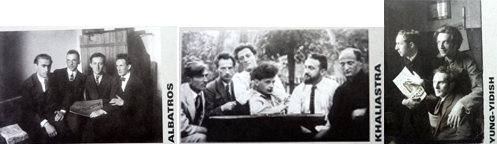
albatros-khalistra-jung-jidysz

Yiddishland Image captions:
Pola Lindenfeld with her sister Eugenia, Photo, courtesy S. Karol Kubicki, Berlin
Teresa Żarnower, c. 1920, Photo from: Andrzej Turowski, Budowniczowie swiata, Cracow 2000.
Other photos:
Nathalie Hazan-Brunet and Ada Ackerman (eds.): Futur antérieur: L’avant-garde et le livre yiddish (1914–1939), Paris 2009.
& Wikipedia Commons, http://www.ecoledeparis.org, http://www.infocenter.co, http://www.e-teatr.pl, http://www.rp.pl, US Holocaust Memorial Museum, http://www.museumoffamilyhistory.com, http://www.jewishgen.org

Full text version with footnotes published in: Lidia Głuchowska, From Transfer to Transgression. Yiddish Avant-Garde – a Network within the Universal Network of the International Movement or a Complementary One? In: Harri Veivo (ed.): Transferts, appriopriations et fonctions de l’avant-garde dans l’Europe intermédiataire et du Nord [Cahiers de la nouvelle Europe, hors serie], Paris 2012, pp. 143-168.
http://www.fabula.org/actualites/harri-veivo-sous-la-dir-de-transferts-appropriations-et-fonctions-de-l-avant-garde-dans-l_52704.php

Also to read: about „Jidyszland” in Polish press

Otto Müller Ausstellung & Buch / Wystawa & książka

Tekst po polsku na dole


MALER. MENTOR. MAGIER.

Otto Mueller
und sein Netzwerk
in Breslau

Der Expressionist Otto Mueller (1874–1930) ist als Mitglied der Künstlergruppe Brücke international bekannt. Kaum jemand weiß jedoch um seine über zehn Jahre andauernde
Lehrtätigkeit an der Staatlichen Akademie für Kunst und Kunstgewerbe in Breslau.
Vor allem in den 20er-Jahren beflügelte diese – aufgrund ihrer liberalen und weltoffenen
Atmosphäre – innovative Ideen in der Malerei. Besonders Otto Mueller genoss
enormen Einfluss in einem weitgespannten Netzwerk aus befreundeten Kunst- und
Kulturschaffenden. Zu seinem Kreis zählten Künstler und Künstlerinnen, Architekten,
Kunstkritiker, Schriftstellerinnen und Schriftsteller, Sammlerinnen und Sammler
sowie seine Studierenden.
Das Buch macht es sich zur Aufgabe, Muellers dreifache Rolle als Maler, Mentor und Magier aus unterschiedlichen Perspektiven zu beleuchten. Es ist das Ergebnis eines
deutsch-polnischen Ausstellungs- und Forschungsprojektes.


Otto Mueller, Selbstbildnis mit Pentagramm, um 1924 (Detail) © Von der Heydt-Museum Wuppertal / Foto: Antje Zeis-Loi, Medienzentrum Wuppertal

MALER. MENTOR. MAGIER.
Otto Mueller und sein Netzwerk in Breslau

12.10.2018 bis 03.03.2019
Hamburger Bahnhof – Museum für Gegenwart – Berlin

Die Ausstellung „MALER. MENTOR. MAGIER.“ stellt erstmalig den enormen Einfluss des ehemaligen Brücke-Künstlers und Expressionisten Otto Mueller (1874–1930) in den Mittelpunkt: Der Maler lehrte länger als zehn Jahre an der Staatlichen Akademie für Kunst und Kunstgewerbe in Breslau, die seinerzeit zu den fortschrittlichsten Kunstschulen in Europa zählte. Vor allem seit den 1920er Jahren – durch die zahlreichen Neuberufungen des damaligen Direktors Oskar Moll – genoss die Breslauer Akademie den Ruf von Weltoffenheit und Liberalität. Hier standen gleichberechtigt die vielfältigen Strömungen der modernen Malerei nebeneinander: der Expressionismus mit Otto Mueller, die französische Peinture der Académie Matisse mit Oskar Moll, die Neue Sachlichkeit mit Alexander Kanoldt und Carlo Mense sowie das Bauhaus mit Oskar Schlemmer, Georg Muche oder Johannes Molzahn.

Das Hauptaugenmerk der Ausstellung gilt der Malerei der Moderne: Otto Mueller und sein Netzwerk erlebten in Breslau eine schöpferische Phase, die sie angeregt durch Austausch und gegenseitige Einflussnahme als höchst produktiv beschrieben. Ersichtlich wird diese Beeinflussung der Maler-Kollegen untereinander durch thematische Übereinstimmungen und andere Querverweise: in Gemälden, Arbeiten auf Papier, schriftlichen Äußerungen oder Fotografien. Vor allem der charismatische, von Sehnsucht und Freiheitsdrang getriebene Otto Mueller hatte maßgeblichen Einfluss auf die Breslauer Kunstszene. Ein „Romantiker“ und sogar ein „Magier“ soll Otto Mueller nach Aussagen seines unmittelbaren Umfeldes, darunter auch Kunstkritiker und Schriftsteller, gewesen sein. Carl Hauptmann setzte ihm bereits in der Künstlerbiografie „Einhart der Lächler“ (1907) ein Denkmal – damit leistete der Dichter seinen entscheidenden Beitrag für die Grundsteinlegung eines „Künstler-Mythos“.

Muellers auffällige Erscheinung und sein unbürgerlicher Lebenswandel übten eine enorme Faszination auf seine Schüler und Schülerinnen an der Akademie aus. Sie schätzten dessen vollkommene Hingabe an die Kunst, dessen unkonventionelle Lehrmethode und Humor. Einige seiner Schüler – wie Alexander Camaro oder Horst Strempel – gingen von Breslau aus nach Berlin und erlebten hier den Höhepunkt ihrer Maler-Karrieren.

Eine Besonderheit des kuratorischen Konzeptes von „MALER. MENTOR. MAGIER.“ ist das Prinzip des „Gastes“: gemeint sind hiermit ausgewählte Bilder, durch die spotlightartig, epochenübergreifend und interkulturell, insbesondere im deutsch-polnischen Kontext, auf Gemeinsamkeiten und Unterschiede verwiesen werden kann. Das Einbeziehen „Polnischer Expressionisten“ ermöglicht einmalige Sehvergleiche und neue Zusammenhänge, zugleich verschränken sie die deutsch-polnische Ausrichtung dieser Ausstellung.

Die immense Wertschätzung von Otto Muellers Wirken – aus der Perspektive seines Künstlernetzwerks – reicht bis in die Nachkriegsmoderne: Ein wichtiges Kapitel deutsch-polnischer Kunstgeschichte wird unter besonderer Berücksichtigung der Wechselbeziehung zwischen den Städten Berlin und Breslau/Wrocław neu erzählt.

Denn auch die Beziehungen zwischen der Nationalgalerie in Berlin und dem ehemaligen Schlesischen Museum der bildenden Künste in Breslau (heute Muzeum Narodowe in Wrocław) waren durch intensiven Austausch und Zusammenarbeit charakterisiert. Paradigmatisch ist die Otto-Mueller-Gedächtnisausstellung, die 1931 – kurz nach dem Tod des bedeutenden Expressionisten – durch Direktor Erich Wiese in Breslau initiiert und noch im gleichen Jahr von Ludwig Justi, Direktor der Nationalgalerie, als Gedenk-Ausstellung nach Berlin übernommen wurde.

Die aktuelle Schau „MALER. MENTOR. MAGIER.“ nimmt den umgekehrten Weg. Erarbeitet in Berlin, wird sie danach in modifizierter Form in Breslau/Wrocław zu sehen sein. In Berlin setzt die Ausstellung die Folge von Präsentationen zur Klassischen Moderne fort, die während der Sanierung der Neuen Nationalgalerie im Hamburger Bahnhof – Museum für Gegenwart – Berlin gezeigt wurden: „Die schwarzen Jahre. Geschichten einer Sammlung. 1933–1945“, „Ernst Ludwig Kirchner. Hieroglyphen“ und „Rudolf Belling. Skulpturen und Architekturen“.

Künstler*innenliste: Jankel Adler, Alexander Archipenko, Isidor Aschheim, Henryk Berlewi, Alexander Camaro, Johnny Friedlaender, Grete Jahr-Queißer, Alexander Kanoldt, Ernst Ludwig Kirchner, Ludwig Peter Kowalski, Margarete Kubicka, Stanisław Kubicki, Wilhelm Lehmbruck, Carlo Mense, Oskar Moll, Marg Moll, Johannes Molzahn, Georg Muche, Otto Mueller, Żdzisław Nitka, Oskar Schlemmer, Willy Schmidt, Horst Strempel, Heinrich Tischler, Witkacy, u.a.

Zur Ausstellung erscheint ein gleichnamiger, umfangreicher Katalog im Kehrer Verlag, der von deutschen und polnischen Wissenschaftler*innen erarbeitet wurde. Herausgegeben von Dagmar Schmengler, Agnes Kern und Lidia Głuchowska. Zwei separate Sprachausgaben (deutsch und polnisch) sind ab Oktober 2018 erhältlich. Der Katalog wird realisiert durch: ZEIT-Stiftung, Ernst von Siemens-Kunststiftung

1. Station
12.10.2018-3.3.2019, Hamburger Bahnhof – Museum für Gegenwart – Berlin
2. Station
8.4.2019-30.6.2019, Nationalmuseum Wrocław, Breslau

Eine Ausstellung der Nationalgalerie, Staatliche Museen zu Berlin, in Zusammenarbeit mit der Alexander und Renata Camaro Stiftung und dem Muzeum Narodowe we Wrocławiu.

Die Ausstellung wird gefördert durch: Freunde der Nationalgalerie, Hauptstadtkulturfonds, Kulturstiftung der Länder, Ernst von Siemens-Kunststiftung, Stiftung für deutsch-polnische Zusammenarbeit, Stiftung Preußische Seehandlung

Im Rahmen von 100 Jahre Bauhaus.
Neue Galerie

Die Neue Galerie im Hamburger Bahnhof fungiert als Dependance für die Neue Nationalgalerie während der Dauer ihrer Sanierung. In wechselnden Präsentationen werden hier Ausschnitte aus der Sammlung zur Kunst des frühen 20. Jahrhunderts vorgestellt. Ganz bewusst und vor dem Hintergrund der Planungen für einen Neubau am Kulturforum dient die Neue Galerie dabei der Erprobung neuartiger Sichtweisen auf die „klassisch” gewordene Moderne.

Inhalt-Otto-Mueller

Otto Mueller, Zwei Mädchen, um 1925, Leimfarbe auf Rupfen (Detail) © bpk / Staatliche Museen zu Berlin, Nationalgalerie / Jörg P. Anders

MALARZ. MENTOR. MAG.
Otto Mueller a środowisko artystyczne Wrocławia

Od 12 października 2018 do 13 marca 2019
Wystawa w Hamburger Bahnhof w Berlinie

Jest to pierwsza wystawa, która skupia się na ogromnej sile oddziaływania Ottona Muellera (1874–1930), ekspresjonisty i artysty grupy Die Brücke. Przez ponad dziesięć lat był on wykładowcą w Państwowej Akademii Sztuki i Rzemiosła Artystycznego we Wrocławiu, która za jego czasów należała do najbardziej postępowych uczelni artystycznych w Europie. Od lat 20 ubiegłego wieku ówczesny dyrektor szkoły, Oskar Moll, sprowadzał tu licznych wykładowców, co sprawiło, że Wrocławska Akademia Sztuki cieszyła się opinią uczelni liberalnej i otwartej na świat. Na równi stały tam ze sobą różnorodne prądy współczesnego malarstwa: ekspresjonizm, reprezentowany przez Ottona Muellera, francuskie malarstwo Académie Matisse – przez Oskara Molla, Nowa Rzeczowość – przez Alexandra Kanoldta i Carlo Mensego oraz Bauhaus – przez Oskara Schlemmera, Georga Muchego i Johannesa Molzahna.

Wystawa poświęcona jest przede wszystkim malarstwu modernistycznemu. Otto Mueller przeszedł we Wrocławiu wraz ze swoim środowiskiem przez etap twórczości opisywany przez nich jako niezwykle produktywny, zainspirowany wymianą i wzajemnym oddziaływaniem. To, jak pracujący ze sobą malarze wpływali na siebie nawzajem pod względem artystycznym, ujawnia się w obrazach, pracach na papierze, w wypowiedziach pisemnych i na fotografiach. To właśnie charyzmatyczna, przepełniona tęsknotą i pragnieniem wolności postać Ottona Muellera miała największy wpływ na wrocławską scenę artystyczną. Był on „romantykiem” a nawet „magiem”, jak wynika z przekazów jego najbliższego otoczenia, do którego należeli również krytycy sztuki i pisarze. Carl Hauptmann już w 1907 r. upamiętnił malarza w biografii artystycznej „Einhart der Lächler” – przyczyniając się w znacznym stopniu do powstania „mitu artysty”.

Niezwykła powierzchowność Muellera i jego wolny od konwenansów styl życia budziły ogromną fascynację w jego uczniach i uczennicach na Akademii. Cenili oni jego całkowite oddanie sztuce, niekonwencjonalne metody nauczania i poczucie humoru. Niektórzy spośród jego uczniów – tacy jak Alexander Camaro czy Horst Strempel – z Wrocławia udali się do Berlina, gdzie ich kariera malarska sięgnęła szczytu.

Cechą szczególną kuratorskiej koncepcji wystawy MALARZ. MENTOR. MAG. jest wybranie obrazów wiodących, pozwalających dostrzec istotne podobieństwa i różnice, a także kontekst ponadepokowy i międzykulturowy, w tym polsko-niemiecki. Włączenie „polskich ekspresjonistów” daje wyjątkową szansę dokonania porównań i odkrywania nowych związków, a jednocześnie pozwala połączyć ze sobą polskie i niemieckie motywy przewodnie wystawy.

Ogromne uznanie dla twórczości Ottona Muellera – z perspektywy jego środowiska artystycznego – sięga aż do modernizmu powojennego, gdy ten ważny rozdział w polsko-niemieckiej historii sztuki napisano na nowo z uwzględnieniem wzajemnych powiązań między Berlinem a Wrocławiem, niegdyś Breslau.

Stosunki między Nationalgalerie w Berlinie a dawnym Śląskim Muzeum Sztuk Pięknych w Breslau [obecnie Muzeum Narodowe we Wrocławiu] charakteryzowały się bowiem również intensywną wymianą i współpracą. Najlepszym przykładem jest retrospektywa Ottona Muellera, zorganizowana przez dyrektora Muzeum we Wrocławiu, Ericha Wiese, w 1931 r., tuż po śmierci wybitnego ekspresjonisty, która jeszcze w tym samym roku została przeniesiona przez Ludwiga Justiego, dyrektora Nationalgalerie do Berlina.

Obecna wystawa MALARZ. MENTOR. MAG. podąża w odwrotnym kierunku. Opracowana w Berlinie, zostanie następnie pokazana w zmodyfikowanej formie we Wrocławiu.
W Berlinie wystawa stanowi kontynuację serii prezentacji na temat klasycznego modernizmu, które podczas renowacji Neue Nationalgalerie zostały pokazane w Hamburger Bahnhof – Museum für Gegenwart: „Die schwarzen Jahre. Geschichten einer Sammlung. 1933–1945” [Mroczne lata. Opowieści z kolekcji. 1933–1945], „Ernst Ludwig Kirchner. Hieroglyphen” [Ernst Ludwig Kirchner. Hieroglify] i „Rudolf Belling. Skulpturen und Architekturen” [Rudolf Belling. Rzeźby i architektury].

Lista artystów: Jankel Adler, Alexander Archipenko, Isidor Aschheim, Henryk Berlewi, Alexander Camaro, Johnny Friedlaender, Grete Jahr-Queißer, Alexander Kanoldt, Ernst Ludwig Kirchner, Ludwig Peter Kowalski, Margarete Kubicka, Stanisław Kubicki, Wilhelm Lehmbruck, Carlo Mense, Oskar Moll, Marg Moll, Johannes Molzahn, Georg Muche, Otto Mueller, Zdzisław Nitka, Oskar Schlemmer, Willy Schmidt, Horst Strempel, Heinrich Tischler, Witkacy i inni.

Wystawie towarzyszy obszerny katalog pod tym samym tytułem, opracowany przez polskich i niemieckich naukowców, wydany przez wydawnictwo Kehrer Verlag pod redakcją Dagmar Schmengler, Agnes Kern i Lidii Głuchowskiej. Katalog zrealizowany dzięki wsparciu: ZEIT-Stiftung, Ernst von Siemens-Kunststiftung

Wystawa Nationalgalerie, Staatliche Museen zu Berlin we współpracy z Alexander und Renata Camaro Stiftung i Muzeum Narodowym we Wrocławiu.

Sponsorzy wystawy: Freunde der Nationalgalerie, Hauptstadtkulturfonds, Kulturstiftung der Länder, Ernst von Siemens-Kunststiftung, Fundacja Współpracy Polsko-Niemieckiej, Stiftung Preußische Seehandlung