Poesis – Poetry – Poesie – Poezja / Carl Orff

Carl Orff “Carmina Burana”

Carmina Burana is a scenic cantata composed by Carl Orff in 1935 and 1936. It is based on 24 of the poems found in the medieval collection Carmina Burana. Its full Latin title is Carmina Burana: Cantiones profanæ cantoribus et choris cantandæ comitantibus instrumentis atque imaginibus magicis (“Songs of Beuern: Secular songs for singers and choruses to be sung together with instruments and magic images.”) Carmina Burana is part of Trionfi, the musical triptych that also includes the cantata Catulli Carmina and Trionfo di Afrodite. The best-known movement is “Fortuna Imperatrix Mundi” (“O Fortuna”) that opens and closes the piece.
Carl Orff (July 10, 1895 – March 29, 1982) was a 20th century German composer, best known for his cantata Carmina Burana (1937). In addition to his career as a composer, Orff developed an influential method of music education for children.

FORTUNA IMPERATRIX MUNDI
O Fortuna
velut luna
statu variabilis,
semper crescis
aut decrescis;
vita detestabilis
nunc obdurat
et tunc curat
ludo mentis aciem,
egestatem,
potestatem
dissolvit ut glaciem.Sors immanis
et inanis,
rota tu volubilis,
status malus,
vana salus
semper dissolubilis,
obumbrata
et velata
michi quoque niteris;
nunc per ludum
dorsum nudum
fero tui sceleris.Sors salutis
et virtutis
michi nunc contraria,
est affectus
et defectus
semper in angaria.
Hac in hora
sine mora
corde pulsum tangite;
quod per sortem
sternit fortem,
mecum omnes plangite!
O Fortune
like the moon
you are changeable,
ever waxing
and waning;
hateful life
first oppresses
and then soothes
as fancy takes it;
poverty
and power
it melts them like ice.Fate – monstrous
and empty,
you whirling wheel,
you are malevolent,
well-being is vain
and always fades to nothing,
shadowed
and veiled
you plague me too;
now through the game
I bring my bare back
to your villainy.Fate is against me
in health
and virtue,
driven on
and weighted down,
always enslaved.
So at this hour
without delay
pluck the vibrating strings;
since Fate
strikes down the strong man,
everyone weep with me!
Fortune plango vulnera
stillantibus ocellis
quod sua michi munera
subtrahit rebellis.
Verum est, quod legitur,
fronte capillata,
sed plerumque sequitur
Occasio calvata.In Fortune solio
sederam elatus,
prosperitatis vario
flore coronatus;
quicquid enim florui
felix et beatus,
nunc a summo corrui
gloria privatus.Fortune rota volvitur:
descendo minoratus;
alter in altum tollitur;
nimis exaltatus
rex sedet in vertice
caveat ruinam!
nam sub axe legimus
Hecubam reginam.
I bemoan the wounds of Fortune
with weeping eyes,
for the gifts she made me
she perversely takes away.
It is written in truth,
that she has a fine head of hair,
but, when it comes to seizing an opportunity
she is bald.On Fortune’s throne
I used to sit raised up,
crowned with
the many-coloured flowers of prosperity;
though I may have flourished
happy and blessed,
now I fall from the peak
deprived of glory.The wheel of Fortune turns;
I go down, demeaned;
another is raised up;
far too high up
sits the king at the summit –
let him fear ruin!
for under the axis is written
Queen Hecuba.
O Fortuna!
Wie der Mond
So veränderlich,
Wachst du immer
Oder schwindest! –
Schmähliches Leben!
Erst mißhandelt,
Dann verwöhnt es
Spielerisch den wachen Sinn.
Dürftigkeit,
Großmächtigkeit
Sie zergehn vor ihm wie Eis.Schicksal,
Ungeschlacht und eitel!
Rad, du rollendes!
Schlimm dein Wesen,
Dein Glück nichtig,
Immer im Zergehn!
Überschattet
Und verschleiert
Kommst du nun auch über mich.
Um des Spieles
Deiner Bosheit
Trag ich jetzt den Buckel bloß.Los des Heiles
Und der Tugend
Sind jetzt gegen mich.
Willenskraft
Und Schwachheit liegen
Immer in der Fron.
Drum zur Stunde
Ohne Saumen
Rührt die Saiten! –
wie den Wackeren
Das Schicksal
Hinstreckt; alle klagt mit mir!Die Wunden, die Fortuna schlug,
Beklage ich mit nassen Augen,
Weil sie ihre Gaben mir
Entzieht, die Widerspenstige.
Zwar, wie zu lesen steht, es prangt
Ihr an der Stirn die Locke,
Doch kommt dann die Gelegenheit,
Zeigt sie meistens ihren Kahlkopf.Auf Fortunas Herrscherstuhl
Saß ich, hoch erhoben,
Mit dem bunten Blumenkranz
Des Erfolges gekrönt.
Doch, wie ich auch in der Blüte stand,
Glücklich und gesegnet:
Jetzt stürze ich vom Gipfel ab,
Beraubt der Herrlichkeit.Fortunas Rad, es dreht sich um:
Ich sinke, werde weniger,
Den anderen trägt es hinauf:
Gar zu hoch erhoben
Sitzt der König auf dem Grat:
Er hüte sich vor dem Falle!
Denn unter dem Rade lesen wir:
Königin Hecuba.
O Fortuno
niby Księżyc
nieustannie zmienna,
ciągle rośniesz
lub zanikasz
ciemna lub promienna.
Życie podłe
wciąż kapryśnie
chłodzi nas lub grzeje,
niedostatek
lub bogactwo
jak lód w nim topnieje.Kołem toczy
się Fortuna
zła i nieżyczliwa,
nasze szczęście
w swoich trybach
miażdży i rozrywa,
z twarzą szczelnie
zasłoniętą
często u mnie gości,
by na kręgach
mego grzbietu
grać swe złośliwości.Los zbawienia,
cnót zasługi
przeciw mnie są teraz,
w mej słabości
albo woli
wspierały mnie nieraz.
A więc zaraz
nie mieszkając
uderzajcie w struny
i użalcie
się nade mną,
ofiarą Fortuny!Rany od Fortuny ciosów
opłakuję łzami
nigdy zresztą mnie nie psuła
skąpymi łaskami.
Wprawdzie mówię, że jej czoło
zdobią pukle złote,
lecz czas spod nich też obnaży
łysiny sromotę.Na Fortuny złotym tronie
siedziałem wyniosły,
zdobny w wieniec powodzenia
z wszystkich darów wiosny.
Lecz choć stałem u zenitu
o swe szczęście wsparty,
nagle spadłem z wszystkich darów
do szczętu obdarty.Obróciło się Fortuny
koło nieżyczliwe,
innego już po mnie wznosi
na szczyty zdradliwe,
król im wyżej nad tłum siędzie,
tym pewniejsza zguba,
gdyż na kole tym czytamy:
“Królowa Hekuba”.

Reblog: Woman’s work 2


Woman’s work: Columbia Journalism Review

A dark, rancid corner Borri says journalists have failed to explain Syria’s civil war because editors only want ‘blood.’ (Alessio Romenzi)

He finally wrote to me. After more than a year of freelancing for him, during which I contracted typhoid fever and was shot in the knee, my editor watched the news, thought I was among the Italian journalists who’d been kidnapped, and sent me an email that said: “Should you get a connection, could you tweet your detention?”

That same day, I returned in the evening to a rebel base where I was staying in the middle of the hell that is Aleppo, and amid the dust and the hunger and the fear, I hoped to find a friend, a kind word, a hug. Instead, I found only another email from Clara, who’s spending her holidays at my home in Italy. She’s already sent me eight “Urgent!” messages. Today she’s looking for my spa badge, so she can enter for free. The rest of the messages in my inbox were like this one: “Brilliant piece today; brilliant like your book on Iraq.” Unfortunately, my book wasn’t on Iraq, but on Kosovo.

People have this romantic image of the freelancer as a journalist who’s exchanged the certainty of a regular salary for the freedom to cover the stories she is most fascinated by. But we aren’t free at all; it’s just the opposite. The truth is that the only job opportunity I have today is staying in Syria, where nobody else wants to stay. And it’s not even Aleppo, to be precise; it’s the frontline. Because the editors back in Italy only ask us for the blood, the bang-bang. I write about the Islamists and their network of social services, the roots of their power— a piece that is definitely more complex to build than a frontline piece. I strive to explain, not just to move, to touch, and I am answered with: “What’s this? Six thousand words and nobody died?”

Actually, I should have realized it that time my editor asked me for a piece on Gaza, because Gaza, as usual, was being bombed. I got this email: “You know Gaza by heart,” he wrote. “Who cares if you are in Aleppo?” Exactly. The truth is, I ended up in Syria because I saw the photographs in Time by Alessio Romenzi, who was smuggled into Homs through the water pipes when nobody was yet aware of the existence of Homs. I saw his shots while I was listening to Radiohead—those eyes, staring at me; the eyes of people being killed by Assad’s army, one by one, and nobody had even heard of a place called Homs. A vise clamped around my conscience, and I had to go to Syria immediately.

But whether you’re writing from Aleppo or Gaza or Rome, the editors see no difference. You are paid the same: $70 per piece. Even in places like Syria, where prices triple because of rampant speculation. So, for example, sleeping in this rebel base, under mortar fire, on a mattress on the ground, with yellow water that gave me typhoid, costs $50 per night; a car costs $250 per day. So you end up maximizing, rather than minimizing, the risks. Not only can you not afford insurance—it’s almost $1,000 a month—but you cannot afford a fixer or a translator. You find yourself alone in the unknown. The editors are well aware that $70 a piece pushes you to save on everything. They know, too, that if you happen to be seriously wounded, there is a temptation to hope not to survive, because you cannot afford to be wounded. But they buy your article anyway, even if they would never buy the Nike soccer ball handmade by a Pakistani child.

With new communication technologies there is this temptation to believe that speed is information. But it is based on a self-destructive logic: The content is now standardized, and your newspaper, your magazine, no longer has any distinctiveness, and so there is no reason to pay for the reporter. I mean, for the news, I have the Internet—and for free. The crisis today is of the media, not of the readership. Readers are still there, and contrary to what many editors believe, they are bright readers who ask for simplicity without simplification. They want to understand, not simply to know. Every time I publish an eyewitness account from the war, I get a dozen emails from people who say, “Okay, great piece, great tableaux, but I want to understand what’s going on in Syria.” And it would so please me to reply that I cannot submit an analysis piece, because the editors would simply spike it and tell me, “Who do you think you are, kid?”—even though I have three degrees, have written two books, and spent 10 years in various wars, first as a human-rights officer and now as a journalist. My youth, for what it’s worth, vanished when bits of brain splattered on me in Bosnia, when I was 23.

Freelancers are second-class journalists—even if there are only freelancers here, in Syria, because this is a dirty war, a war of the last century; it’s trench warfare between rebels and loyalists who are so close that they scream at each other while they shoot each other. The first time on the frontline, you can’t believe it, with these bayonets you have seen only in history books. Today’s wars are drone wars, but here they fight meter by meter, street by street, and it’s fucking scary. Yet the editors back in Italy treat you like a kid; you get a front-page photo, and they say you were just lucky, in the right place at the right time. You get an exclusive story, like the one I wrote last September on Aleppo’s old city, a UNESCO World Heritage site, burning as the rebels and Syrian army battled for control. I was the first foreign reporter to enter, and the editors say: “How can I justify that my staff writer wasn’t able to enter and you were?” I got this email from an editor about that story: “I’ll buy it, but I will publish it under my staff writer’s name.”

And then, of course, I am a woman. One recent evening there was shelling everywhere, and I was sitting in a corner, wearing the only expression you could have when death might come at any second, and another reporter comes over, looks me up and down, and says: “This isn’t a place for women.” What can you say to such a guy? Idiot, this isn’t a place for anyone. If I’m scared, it’s because I’m sane. Because Aleppo is all gunpowder and testosterone, and everyone is traumatized: Henri, who speaks only of war; Ryan, tanked up on amphetamines. And yet, at every torn-apart child we see, they come only to me, a “fragile” female, and want to know how I am. And I am tempted to reply: I am as you are. And those evenings when I wear a hurt expression, actually, are the evenings I protect myself, chasing out all emotion and feeling; they are the evenings I save myself.

Because Syria is no longer Syria. It is a nuthouse. There is the Italian guy who was unemployed and joined al-Qaeda, and whose mom is hunting for him around Aleppo to give him a good beating; there is the Japanese tourist who is on the frontlines, because he says he needs two weeks of “thrills”; the Swedish law-school graduate who came to collect evidence of war crimes; the American musicians with bin Laden-style beards who insist this helps them blend in, even though they are blonde and six-feet, five-inches tall. (They brought malaria drugs, even if there’s no malaria here, and want to deliver them while playing violin.) There are the various officers of the various UN agencies who, when you tell them you know of a child with leishmaniasis (a disease spread by the bite of a sand fly) and could they help his parents get him to Turkey for treatment, say they can’t because it is but a single child, and they only deal with “childhood” as a whole.

But we’re war reporters, after all, aren’t we? A band of brothers (and sisters). We risk our lives to give voice to the voiceless. We have seen things most people will never see. We are a wealth of stories at the dinner table, the cool guests who everyone wants to invite. But the dirty secret is that instead of being united, we are our own worst enemies; and the reason for the $70 per piece isn’t that there isn’t any money, because there is always money for a piece on Berlusconi’s girlfriends. The true reason is that you ask for $100 and somebody else is ready to do it for $70. It’s the fiercest competition. Like Beatriz, who today pointed me in the wrong direction so she would be the only one to cover the demonstration, and I found myself amid the snipers as a result of her deception. Just to cover a demonstration, like hundreds of others.

Yet we pretend to be here so that nobody will be able to say, “But I didn’t know what was happening in Syria.” When really we are here just to get an award, to gain visibility. We are here thwarting one another as if there were a Pulitzer within our grasp, when there’s absolutely nothing. We are squeezed between a regime that grants you a visa only if you are against the rebels, and rebels who, if you are with them, allow you to see only what they want you to see. The truth is, we are failures. Two years on, our readers barely remember where Damascus is, and the world instinctively describes what’s happening in Syria as “that mayhem,” because nobody understands anything about Syria—only blood, blood, blood. And that’s why the Syrians cannot stand us now. Because we show the world photos like that 7-year-old child with a cigarette and a Kalashnikov. It’s clear that it’s a contrived photo, but it appeared in newspapers and websites around the world in March, and everyone was screaming: “These Syrians, these Arabs, what barbarians!” When I first got here, the Syrians stopped me and said, “Thank you for showing the world the regime’s crimes.” Today, a man stopped me; he told me, “Shame on you.”

Had I really understood something of war, I wouldn’t have gotten sidetracked trying to write about rebels and loyalists, Sunnis and Shia. Because really the only story to tell in war is how to live without fear. It all could be over in an instant. If I knew that, then I wouldn’t have been so afraid to love, to dare, in my life; instead of being here, now, hugging myself in this dark, rancid corner, desperately regretting all I didn’t do, all I didn’t say. You who tomorrow are still alive, what are you waiting for? Why don’t you love enough? You who have everything, why you are so afraid?

With the exception of Alessio Romenzi, the names in this article have been changed for reasons of privacy.


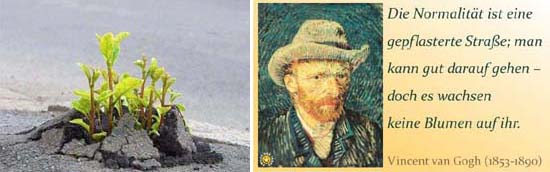
Jak to się czasem dziwnie składa; oba zdjęcia znalazłam podczas tej samej wizyty na Facebooku, choć wstawili je do FB zupełnie inni ludzie. /Wie sich manchmal die Dinge merkwürdig ergänzen; beide Bilder fand ich bei demselben Besuch im Facebook; sie wurden aber von verschiedenen Leuten gepostet.
vangogh-roslina
Obok portretu van Gogha cytat: “Normalność to wybrukowana ulica; dobrze się po niej chodzi – ale nie urosną tu rośliny”.

Miasta w sezonie / Städte in Saison

Das Rätsel wurde von Anne Schmidt gelöst: Das Städtchen heißt Köpenick, das Buch von Carl Zuckmayer – “Hauptmann von Köpenick. Ein deutsches Märchen in drei Akten” und der wahre Held der Geschichte – Friedrich Wilhelm Voigt.

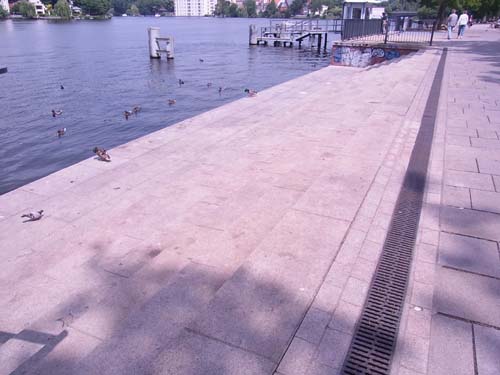
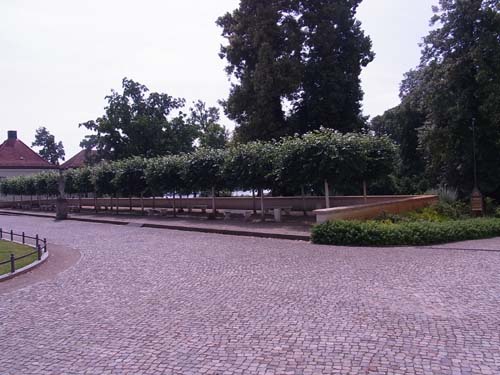
Jest początek lipca 2013 roku. Godzina 12 w południe. Piękna pogoda. Słońce, ciepło, ale nie upalnie, lekki wietrzyk. Pojechałam służbowo do małego miasteczka nad jeziorem.
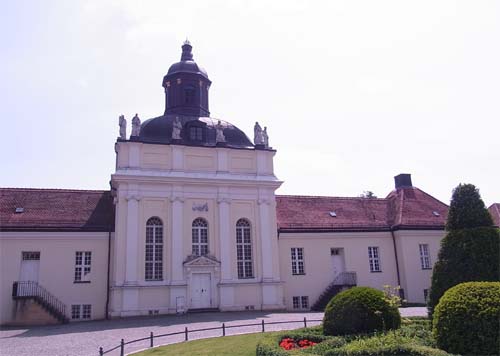
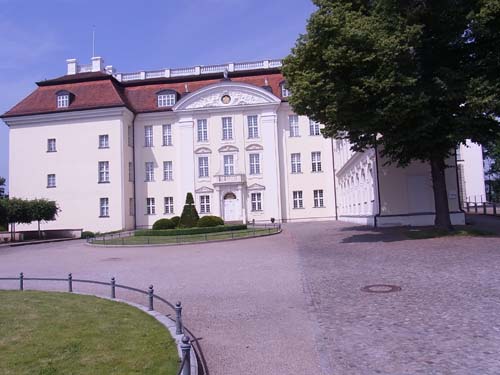
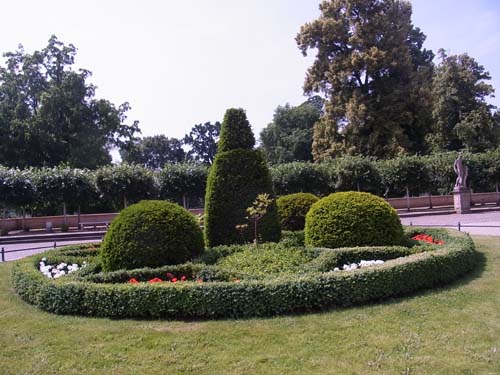
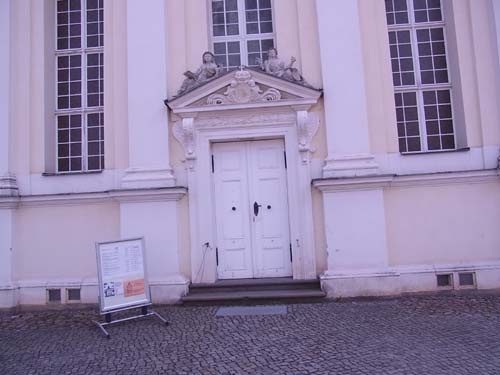
W miasteczku jest kompleks ładnych budynków barokowych położonych na wyspie w pięknym parku.

I jest pusto. pusto. Pusto. Pusto….

Co to za miasteczko? Was ist das für ein Städtchen?

puste10 puste01 puste02 puste03 puste04 puste05 puste05a puste05b puste05c puste06 puste07 puste08
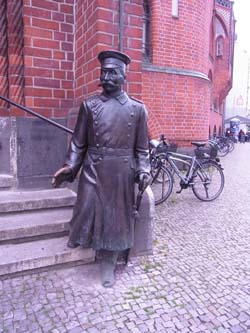
hauptmannW tym miasteczku stoi pomnik pewnego bohatera literackiego, który wzorowany był na losach pewnej autentycznej postaci.

er

Kto to? Wer ist es? Friedrich Wilhelm Voigt.
Co zrobił? Was hat er gemacht? Am 16. Oktober 1906 hat er als Hauptmann verkleidet einen Überfall auf das Rathaus der Stadt Cöpenick bei Berlin organisiert;  mit einem Trupp gutgläubiger Soldaten drang er ins Rahaus ein, verhaftete den Bürgermeister und raubte die Stadtkasse.
Kto o nim napisał? Wie hieß der Autor? Carl Zuckmayer
Jak się nazywała książka o nim? Wie hieß das Buch?
– “Hauptmann von Köpenick. Ein deutsches Märchen in drei Akten” (1931); es war nicht das erste (und nicht das letzte) Theaterstück über Voigt, dafür aber das berühmteste.

I notatka dla polskich czytelników: http://pl.wikipedia.org/wiki/Kapitan_z_K%C3%B6penick

Poezja – Poesie – Poetry – Poésie / Baudelaire

It is a virtual movie of the legendary French poet Charles Baudelaire (1821 — 1867) reading his poem L’Albatros” The Albatros. Kind Regards Jim Clark All rights are reserved on this video recording copyright Jim Clark 2011

Charles Baudelaire L’Albatros / Albatros / Albatross / Der Albatross 1861

L’Albatros

Souvent, pour s’amuser, les hommes d’équipage
Prennent des albatros, vastes oiseaux des mers,
Qui suivent, indolents compagnons de voyage,
Le navire glissant sur les gouffres amers.

À peine les ont-ils déposés sur les planches,
Que ces rois de l’azur, maladroits et honteux,
Laissent piteusement leurs grandes ailes blanches
Comme des avirons traîner à côté d’eux.

Ce voyageur ailé, comme il est gauche et veule!
Lui, naguère si beau, qu’il est comique et laid!
L’un agace son bec avec un brûle-gueule,
L’autre mime, en boitant, l’infirme qui volait!

Le Poëte est semblable au prince des nuées
Qui hante la tempête et se rit de l’archer;
Exilé sur le sol au milieu des huées,
Ses ailes de géant l’empêchent de marcher.

Albatros

Czasami dla zabawy uda się załodze
Pochwycić albatrosa, co śladem okrętu
Polatuje, bezwiednie towarzysząc w drodze,
Która wiedzie przez fale gorzkiego odmętu.

Ptaki dalekolotne, albatrosy białe,
Osaczone, niezdarne, zhańbione głęboko,
Opuszczają bezradnie swe skrzydła wspaniałe
I jak wiosła zbyt ciężkie po pokładzie wloką.

O jakiż jesteś marny, jaki szpetny z bliska,
Ty, niegdyś piękny w locie, wysoko, daleko!
Ktoś ci fajką w dziób stuka, ktoś dla pośmiewiska
Przedrzeźnia twe podrygi, skrzydlaty kaleko!

Poeta jest podobny księciu na obłoku,
Który brata się z burzą, a szydzi z łucznika;
Lecz spędzony na ziemię i szczuty co kroku –
Wiecznie się o swe skrzydła olbrzymie potyka.

Tłumaczyła Bronisława Ostrowska

Albatross

Often, to amuse themselves, the men of a crew
Catch albatrosses, those vast sea birds
That indolently follow a ship
As it glides over the deep, briny sea.

Scarcely have they placed them on the deck
Than these kings of the sky, clumsy, ashamed,
Pathetically let their great white wings
Drag beside them like oars.

That winged voyager, how weak and gauche he is,
So beautiful before, now comic and ugly!
One man worries his beak with a stubby clay pipe;
Another limps, mimics the cripple who once flew!

The poet resembles this prince of cloud and sky
Who frequents the tempest and laughs at the bowman;
When exiled on the earth, the butt of hoots and jeers,
His giant wings prevent him from walking.

Translated by William Aggeler

Der Albatros

Oft kommt es dass das schiffsvolk zum vergnügen
Die albatros • die grossen vögel • fängt
Die sorglos folgen wenn auf seinen zügen
Das schiff sich durch die schlimmen klippen zwängt.

Kaum sind sie unten auf des deckes gängen
Als sie • die herrn im azur • ungeschickt
Die grossen weissen flügel traurig hängen
Und an der seite schleifen wie geknickt.

Er sonst so flink ist nun der matte steife.
Der lüfte könig duldet spott und schmach:
Der eine neckt ihn mit der tabakspfeife
Ein andrer ahmt den flug des armen nach.

Der dichter ist wie jener fürst der wolke
Er haust im sturm • er lacht dem bogenstrang.
Doch hindern drunten zwischen frechem volke
Die riesenhaften flügel ihn am gang.

Übersetzt von Stefan George

Poezja – Poetry – Poesie / Tuwim

2013 to rok Tuwima. Niezależnie od tego, czy Sejm tak chciał (a w końcu jednak chciał), albo czy Młodzieszy Wrzehpolskiej się to podoba czy nie (się nie podoba).  Poeta urodził się w roku 1894, zmarł w 1953. Ale jest inny powód, dla którego obchodzimy rok tuwimowski. Przed stu laty – 6 stycznia 2013 roku – Kurier Warszawski opublikował wiersz Prośba. Autor miał wtedy 18 lat i była to jego pierwsza publikacja. Wiersz, który dziś publikuję – Berlin 1913 – powstał dopiero kilkanaście lat później, ale chyba jasne jest, dlaczego z całego bogactwa wierszy Tuwima wybrałam właśnie ten.

Julian Tuwim, Berlin 1913, śpiewa Leszek Długosz, muzyka Leszek Długosz albo Zygmunt Konieczny, źródła plączą się w zeznaniach.

O, smętne, śnieżne, nevermore!
Dni utracone, ukochane!
Widzę cię znów w Cafe du Nord
W mroźny, mglisty poranek.

Strach, słodki strach od stóp do głów,
Dygot błękitnych, czułych nerwów,
I sen był znów, i list był znów:
Mgła legendarnych perfum.

Lecz nie ma mnie i nie ma mnie,
I nigdy w życiu mnie nie będzie.
Zostanę w liście, zostanę w śnie,
W tkliwej, śnieżnej legendzie.

Nic o tym nie wiesz. Czekasz, drżąc.
Dzień sennie sypie się i szepce.
Ach, serce moje i młodość mą
W srebrnej nosisz torebce.

Wczoraj? A co to było? Tak:
Carmen, kareta, wino, walce…
Mignęło w oczach. Nie – to ptak,
Wyszyty na woalce.

Pusto i ciepło w tym Cafe.
Zima się w oknie szronem perli.
Nie przyjdę. Idź. Nie spotkasz mnie.
… Wielki, Wielki jest Berlin.

Wiersz powstał w roku 1926. Podobno poeta nie znał Berlina, ani w roku 1913 ani 1926. Podobno było to miasto symbol wolności twórczej i mit pięknej epoki.

Oh klägliches verschneites nevermore!
Verlorene geliebte Tage!
Ich seh´dich erneut im Café du Nord
An einem frostigen Morgen im Nebel.

Angst, süßer Angst, vom Scheitel bis zur Sohle.
Ein Zittern der blauen, empfindsamen Nerven.
Und der Traum war wieder da, und der Brief war wieder da:
Der Nebel der legänderem Pärfume.

Doch ich bin nicht da und bin nicht da,
und nie im Leben werde ich da sein.
Ich bleibe im Brief, ich bleibe im Traum,
in der zärtlichen, verschneiten Legende.

Nichts weißt du darüber. Du wartest zitternd.
Der Tag plätschert schlaftrunken dahin und flüstert.
Ach, mein Herz und meine Jugend
trägst du in einer silbernen Handtasche.

Gestern? Und was war das? Ja:
Carmen, Kutsche, Wein, Walzer…
Es blinkte in den Augen. Nein – es war ein Vogel,
Gestickt an einem Hutschleier.

Leer und warm ist´s in diesem Café.
Der Winter perlt am Fenster mit Rauhreif.
Ich komme nicht. Du triffst mich nicht.
… Groß, groß ist Berlin.

Übersetzt RL Andreas, wobei RL “Reiseleiter” bedeutet. Er ist nämlich einer.

Oh, dismal, snowy nevermore!
Days lost and adored!
I see you again in the Café du Nord
On a frosty, foggy morn.

Fear, sweet fear from head to toe,
The quiver of blue and tender nerves,
A dream came so, and a letter came so:
Fog of legendary perfumes.

Though I am not and I am not,
And I will never be.
In a letter caught; in a dream, caught
In a gentle, snowy mythology.

You know not of this. Only wait, trembling.
As the day sleepily spills and whispers.
Oh, this heart of mine, this youth,
You carry with you in your silver purse.

Yesterday? But what was that?
Carmen, coaches, wine, and waltzes…
Flash before my eyes. No – a bird,
Sewn onto the veil around your hat.

It’s empty and warm in this Café.
Winter frosts the glass like skin,
I won’t come. You won’t see me. Go away.
…Great, great is the city of Berlin.

Translation Pacze Moj

Poezja – Poetry – Poesie – Poesía / Lorca

IGANCIO SANCHEZ MEJIAS – a las cinco de la tarde

Federico García Lorca „LAMENT NA ŚMIERĆ IGNACIA SANCHEZ MEJIAS” (Llanto por Ignacio Sánchez Mejías, 1934, wyd. 1936). Utwór uważany za najwybitniejsze dzieło poety, a może nawet za jeden z najważniejszych wierszy współczesnych w ogóle. Czteroczęściowa, pełna przejmującego bólu, elegia poświęcona sławnemu toreadorowi, a jednocześnie przyjacielowi poety, który zginął podczas walki. Irena Kuran-Bogucka, moja matka, tłumaczka Lorki, tak napisała w komentarzach do poezji poety (Wydawnictwo Morskie 1982): Ignacio Sanchez Meijas – słynny torero rodem z Sewilli, rówieśnik grupy poetów pokolenie 27, ich mecenas i serdeczny przyjaciel. Zginął na arenie w Manzanares w sierpniu 1934.

“Cios i śmierć” – refren “O piątej po południu” powtarza się tu 30 razy, jak bicie dzwonu, stanowiąc i litanijny odzew, i afisz corridy, i godzinę rozpoczęcia akcji i preludium tragicznego finału. Kolejne metafory stanowią zapowiedź śmierci, opis ran, agonię najpierw widzianą z zewnątrz, potem odczuwaną przez konającego torera, żałobę tłumu.

1. Cios i śmierć

O piątej po południu.
Była dokładnie piąta po południu.
Niósł mały chłopiec białe prześcieradło
o piątej po południu.
A reszta była śmiercią, tylko śmiercią
o piątej po południu.

Wicher unosił kłęby białej waty
o piątej po południu.
Tlen zgasił połysk niklu i kryształu
o piątej po południu.
Synogarlica już walczy z lampartem
o piątej po południu.
Żałobnym tonem zadźwięczały dzwony
o piątej po południu.
Dzwonił arszenik i dymy dzwoniły
o piątej po południu.
Stali w milczeniu ludzie na ulicach
o piątej po południu.
W sercu byk tylko miał triumf i radość!
o piątej po południu.
Kiedy pot w zimny chłód śniegu zastygał,
o piątej po południu.
Kiedy arena jodem się okryła,
o piątej po południu.
Śmierć zniosła jajka wprost w otwartą ranę
o piątej po południu.
O piątej po południu.
Równo
o piątej po południu.

W trumnę na kołach przemienia się łoże
o piątej po południu.
W uszach mu dźwięczą flety i piszczele
o piątej po południu.
Byk już zaryczał wewnątrz jego czoła
o piątej po południu.
Pokój się mienił tęczami agonii
o piątej po południu.
Z niezmiernej dali już idzie gangrena
o piątej po południu.
W zieleni pachwin ostre trąby lilii
o piątej po południu.
Rany płonęły jak ogromne słońca
o piątej po południu.
Szyby pękały pod naporem tłumów
o piątej po południu.
Ach, jak straszliwa piąta po południu!
Wybiła piąta na wszystkich zegarach.
Wybiła czarna godzina piąta.

Tłumaczyła Irena Kuran-Bogucka

grobISM-SewillaSewilla – Grób/ Grab / Grave – Ignacio Sanchez Meijas

1. Cogida and death

At five in the afternoon.
It was exactly five in the afternoon.
A boy brought the white sheet
at five in the afternoon.
A frail of lime ready prepared
at five in the afternoon.
The rest was death, and death alone.
at five in the afternoon.

The wind carried away the cottonwool
at five in the afternoon.
And the oxide scattered crystal and nickel
at five in the afternoon.
Now the dove and the leopard wrestle
at five in the afternoon.
And a thigh with a desolated horn
at five in the afternoon.
The bass-string struck up
at five in the afternoon.
Arsenic bells and smoke
at five in the afternoon.
Groups of silence in the corners
at five in the afternoon.
And the bull alone with a high heart!
at five in the afternoon.
When the sweat of snow was coming
at five in the afternoon.
when the bull ring was covered with iodine
at five in the afternoon.
Death laid eggs in the wound
at five in the afternoon.
At five in the afternoon.
At five o’clock in the afternoon.

A coffin on wheels is his bed
at five in the afternoon.
Bones and flutes resound in his ears
at five in the afternoon.
Now the bull was bellowing through his forehead
at five in the afternoon.
The room was iridiscent with agony
at five in the afternoon.
In the distance the gangrene now comes
at five in the afternoon.
Horn of the lily through green groins
at five in the afternoon.
The wounds were burning like suns
at five in the afternoon.
and the crowd was breaking the windows
at five in the afternoon.
Ah, that fatal five in the afternoon!
It was five by all the clocks!
It was five in the shade of the afternoon!

Translated by Alan S. Trueblood

1. Hornstoß und Tod

Am Nachmittage um fünf Uhr.
Am Nachmittag war es um fünf Uhr genau:
Ein Knabe brachte das weiße Leintuch
am Nachmittage um fünf Uhr.
Ein Korb mit Kalk stand längst bereit
am Nachmittage um fünf Uhr.
Alles andre war Tod und nur Tod
am Nachmittage um fünf Uhr.

Der Wind trug die Watte hinweg
am Nachmittage um fünf Uhr.
Der Sauerstoff säte Kristall und Nickel
am Nachmittage um fünf Uhr.
Schon kämpfen Taube und Pardel
am Nachmittage um fünf Uhr.
Und ein Schenkel mit trostlosem Horn
am Nachmittage um fünf Uhr.
Die tiefsten der Saiten erbrummten
am Nachmittage um fünf Uhr.
Die Glocken des Dunsts, des Arsens
am Nachmittage um fünf Uhr.
An den Ecken Gruppen aus Schweigen
am Nachmittage um fünf Uhr.
Und der Stier nur erhobenen Herzens!
am Nachmittage um fünf Uhr.
Als dann der Schneeschweiß hervorbrach
am Nachmittage um fünf Uhr,
als mit Jod sich bezog die Arena
am Nachmittage um fünf Uhr,
legte Eier der Tod in die Wunde
am Nachmittage um fünf Uhr.
Am Nachmittage um fünf Uhr.
Am Nachmittage um fünf Uhr genau.

Ein Sarg ist, mit Rädern, das Bett
am Nachmittage um fünf Uhr.
Knochen und Flöten tönen im Ohr ihm
am Nachmittage um fünf Uhr.
Ihm brüllte der Stier in der Stirn schon
am Nachmittage um fünf Uhr.
Das Zimmer erschillert vor Todkampf
am Nachmittage um fünf Uhr.
Von weither kriecht schon der Wundbrand
am Nachmittage um fünf Uhr.
Lilienjagdhorn um grüne Weichen
am Nachmittage um fünf Uhr.
Die Wunden brannten wie Sonnen
am Nachmittage um fünf Uhr,
und die Leute zerbrachen die Fenster
am Nachmittage um fünf Uhr.
Am Nachmittage um fünf Uhr.
Ach welch gräßliche fünf Uhr nach Mittag!
Auf allen Uhren wars fünf Uhr.
In des Nachmittags Schatten wars fünf Uhr!

Übersetzung von Enrique Beck

 
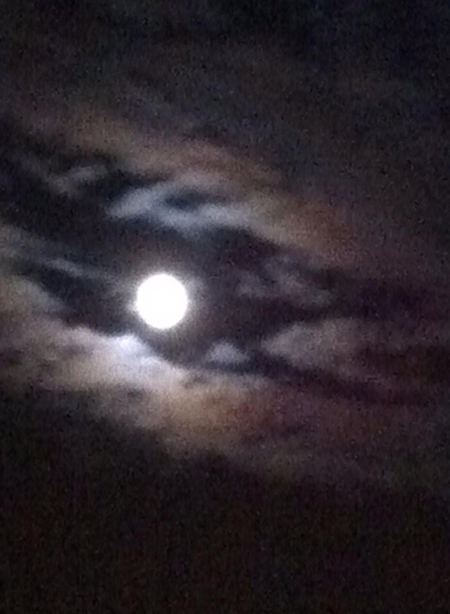
Dziś była najpiękniejsza i najjaśniejsza pełnia księżyca w roku 2013, już druga zresztą – zdjęcie Kamila Dobosz. Dziękuję!

ksiezyc-kamiladobosz

Poezja – Poesie – Poetry / Eliot

Kolejny wpis na niedzielę, przypominający wiersze, o których nie sposób zapomnieć, a których przecież nie pamiętamy. W poprzednią  niedzielę był tu utwór niemieckiego poety Hölderlina, dziś przypomnę niezwykły wiersz T.S. Eliota o spacerze J. Alfreda  Prufrocka. Pod tekstem wiersza jego recytacja – najlepiej słuchać i czytać jednocześnie. Główną część wpisu stanowi zawsze utwór w języku oryginału i jego recytacja. Tym razem jest to więc wpis po angielsku.
Tekst po polsku                                                                             Text auf Deutsch

T.S. Eliot

The Love Song of  J. Alfred Prufrock

S’io credesse che mia risposta fosse
A persona che mai tornasse al mondo,
Questa fiamma staria senza piu scosse.
Ma perciocche giammai di questo fondo
Non torno vivo alcun, s’i’odo il vero,
Senza tema d’infamia ti rispondo.

Dante Inferno (XXVII, 61-66)

LET us go then, you and I,
When the evening is spread out against the sky
Like a patient etherized upon a table;
Let us go, through certain half-deserted streets,
The muttering retreats
Of restless nights in one-night cheap hotels
And sawdust restaurants with oyster-shells:
Streets that follow like a tedious argument
Of insidious intent
To lead you to an overwhelming question….
Oh, do not ask, “What is it?”
Let us go and make our visit.

In the room the women come and go
Talking of Michelangelo.

The yellow fog that rubs its back upon the window-panes,
The yellow smoke that rubs its muzzle on the window-panes
Licked its tongue into the corners of the evening,
Lingered upon the pools that stand in drains,
Let fall upon its back the soot that falls from chimneys,
Slipped by the terrace, made a sudden leap,
And seeing that it was a soft October night,
Curled once about the house, and fell asleep.

And indeed there will be time
For the yellow smoke that slides along the street,
Rubbing its back upon the window panes;
There will be time, there will be time
To prepare a face to meet the faces that you meet;
There will be time to murder and create,
And time for all the works and days of hands
That lift and drop a question on your plate;
Time for you and time for me,
And time yet for a hundred indecisions,
And for a hundred visions and revisions,
Before the taking of a toast and tea.

In the room the women come and go
Talking of Michelangelo.

And indeed there will be time
To wonder, “Do I dare?” and, “Do I dare?”
Time to turn back and descend the stair,
With a bald spot in the middle of my hair—
(They will say: “How his hair is growing thin!”)
My morning coat, my collar mounting firmly to the chin,
My necktie rich and modest, but asserted by a simple pin—
(They will say: “But how his arms and legs are thin!”)
Do I dare
Disturb the universe?
In a minute there is time
For decisions and revisions which a minute will reverse.

For I have known them all already, known them all:
Have known the evenings, mornings, afternoons,
I have measured out my life with coffee spoons;
I know the voices dying with a dying fall
Beneath the music from a farther room.
So how should I presume?

And I have known the eyes already, known them all—
The eyes that fix you in a formulated phrase,
And when I am formulated, sprawling on a pin,
When I am pinned and wriggling on the wall,
Then how should I begin
To spit out all the butt-ends of my days and ways?
And how should I presume?

And I have known the arms already, known them all—
Arms that are braceleted and white and bare
(But in the lamplight, downed with light brown hair!)
Is it perfume from a dress
That makes me so digress?
Arms that lie along a table, or wrap about a shawl.
And should I then presume?
And how should I begin?

.      .      .      .      .      .      .      .

Shall I say, I have gone at dusk through narrow streets
And watched the smoke that rises from the pipes
Of lonely men in shirt-sleeves, leaning out of windows?…
I should have been a pair of ragged claws
Scuttling across the floors of silent seas.

.      .      .      .      .      .      .      .

And the afternoon, the evening, sleeps so peacefully!
Smoothed by long fingers,
Asleep … tired … or it malingers,
Stretched on the floor, here beside you and me.
Should I, after tea and cakes and ices,
Have the strength to force the moment to its crisis?
But though I have wept and fasted, wept and prayed,
Though I have seen my head (grown slightly bald) brought in upon a platter,
I am no prophet — and here’s no great matter;
I have seen the moment of my greatness flicker,
And I have seen the eternal Footman hold my coat, and snicker,
And in short, I was afraid.

And would it have been worth it, after all,
After the cups, the marmalade, the tea,
Among the porcelain, among some talk of you and me,
Would it have been worth while,
To have bitten off the matter with a smile,
To have squeezed the universe into a ball
To roll it toward some overwhelming question,
To say: “I am Lazarus, come from the dead,
Come back to tell you all, I shall tell you all”—
If one, settling a pillow by her head,
Should say: “That is not what I meant at all;
That is not it, at all.”

And would it have been worth it, after all,
Would it have been worth while,
After the sunsets and the dooryards and the sprinkled streets,
After the novels, after the teacups, after the skirts that trail along the floor—
And this, and so much more?—
It is impossible to say just what I mean!
But as if a magic lantern threw the nerves in patterns on a screen:
Would it have been worth while
If one, settling a pillow or throwing off a shawl,
And turning toward the window, should say:
“That is not it at all,
That is not what I meant, at all.”

.      .      .      .      .      .      .      .

No! I am not Prince Hamlet, nor was meant to be;
Am an attendant lord, one that will do
To swell a progress, start a scene or two,
Advise the prince; no doubt, an easy tool,
Deferential, glad to be of use,
Politic, cautious, and meticulous;
Full of high sentence, but a bit obtuse;
At times, indeed, almost ridiculous—
Almost, at times, the Fool.

I grow old … I grow old …
I shall wear the bottoms of my trousers rolled.

Shall I part my hair behind? Do I dare to eat a peach?
I shall wear white flannel trousers, and walk upon the beach.
I have heard the mermaids singing, each to each.
I do not think that they will sing to me.

I have seen them riding seaward on the waves
Combing the white hair of the waves blown back
When the wind blows the water white and black.

We have lingered in the chambers of the sea
By sea-girls wreathed with seaweed red and brown
Till human voices wake us, and we drown.

The Love Song of J. Alfred Prufrock (in: Prufrock and other Observations 1917)
T.S. Eliot (September 26, 1888–January 4, 1965), was a major Modernist Anglo-American poet, dramatist, and literary critic.  Here the record of poet speaking his poem himself.

Translation of Dante’s verses:

“If I but thought that my response were made
to one perhaps returning to the world,
this tongue of flame would cease to flicker.
But since, up from these depths, no one has yet
returned alive, if what I hear is true,
I answer without fear of being shamed.”

Poezja – Poesie – Poetry / Hölderlin

Wpis po niemiecku. Beitrag auf Deutsch. Post in German.

Rozpoczynam nowy cykl na niedzielę. Chciałabym przypominać tu wiersze, o których nie sposób zapomnieć, a których przecież nie pamiętamy. Na razie poprzestanę na naszych trzech głównych językach – angielskim, niemieckim i polskim. Główną część każdego wpisu będzie stanowił utwór w języku oryginału i jego recytacja, jako linki dodam – w miarę możności – teksty wierszy w dwóch pozostałych językach.

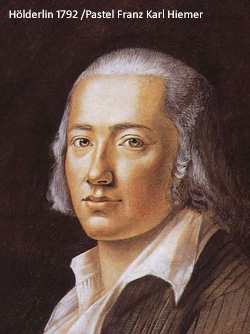
Hoelderlin_1792Zaczynam od Hölderlina czytanego przez Stéphane Hessela (1917 – 2013), autora manifestu Indignez-vous!  współczesnego patrona ruchu Occupy, ruchów protestu w Hiszpanii, Grecji, Francji i Portugalii i wszystkich Oburzonych.

Wpis ten dedykuję mieszkańcom Istambułu i Turcji, którzy zaczęli od protestu w obronie drzew, potem wydawało się, że chodzi im o zmianę polityczną, a dziś już wiadomo, że
walczą o godne ludzkie życie.

Wersja polska:        Hyperion-pol
Wersja angielska:   Hyperion-Engl

Stéphane Hessel spricht Hyperions Schicksalslied von Friedrich Hölderlin im Herbst 2010

Friedrich Hölderlin (1770 – 1843)

Hyperions Schicksalslied

Ihr wandelt droben im Licht
Auf weichem Boden, selige Genien!
Glänzende Götterlüfte
Rühren euch leicht,
Wie die Finger der Künstlerin
Heilige Saiten.

Schicksallos, wie der schlafende
Säugling, atmen die Himmlischen;
Keusch bewahrt
In bescheidener Knospe,
Blühet ewig
Ihnen der Geist,
Und die seligen Augen
Blicken in stiller
Ewiger Klarheit.

Doch uns ist gegeben,
Auf keiner Stätte zu ruhn,
Es schwinden, es fallen
Die leidenden Menschen
Blindlings von einer
Stunde zur andern,
Wie Wasser von Klippe
Zu Klippe geworfen,
Jahr lang ins Ungewisse hinab.

Dies wurde 1871 von Johannes Brahms vertont: Schicksalslied Op.54
Instrumente: zwei Flöten, zwei Oboen, zwei Klarinetten, zwei Fagotte, zwei Hörner, zwei Trompeten, drei Posaunen, Pauken, Streicher und ein SATB Chor (sopran, alt, tenor, bas).

Moshe & Paula reblog

On 19th of April as I was looking for somebody who send me the report from the just opened Jewish Museum in Warsaw incidentally my friend Viola living in Sweden sent me a mail she got from Jewish Gen. It was announcing Eli Rabinowitz from Perth, Australia planned to visit Warsaw on 10th of Mai and to report about it in his blog. I wrote Mr Rabinowitz immediately and asked for permission to reblog his report here. Waiting for that day I searched his blogs and sites to find a lot of truly amazing stories.

I asked Eli for a permission to reblog one of his stories titled Moshe & Paula http://elirab.com/

The Amazing Story of Uncle Moshe and Paula Lichtzier
The Tale of Two Orla Families Reunited by Two Photos

Uncle Moshe Orla 1920 s Orla School 2, MCcue
1920 Photo of Orla Yiddisher Folk School with Moshe Rabinowitz, teacher, bottom left, sent to Wojciech Kononczuk by Eli Rabinowitz Australia in June 2011 1920 Photo of Orla Yiddisher Folk School with Moshe Rabinowitz, teacher, bottom left, sent to Wojciech Kononczuk by Eli Rabinowitz Australia in June 2011

The Story of these two photos taken in Orla in the early 1920s:

Eli’s great uncle Moshe Rabinowitz (after whom he is named) is born in Orla and in 1922 moves to South Africa.Paula Lichtzier and her family live in Orla.
Moshe proposes to Paula and arranges to bring her out to Cape Town, South Africa.
Moshe is killed in a motor accident six weeks before they are to be married.
Paula later marries Joseph Pinn, but Paula (Polly) remains close to the Rabinowitz family, until she passes away in 1976.In May 2011 Eli visits Orla, Poland.
Ten days later in Israel Eli is given the 1920 photo on the left by his aunt Sarah Stepansky, Moshe’s niece.
Eli emails the photo to Wojciech Kononczuk, who is researching the Jews of Orla for his book.
In July 2011 Wojciech emails Eli a similar photo which has been sent to him by another researcher interested in Orla.  She puts Eli in touch with Ray Hengy, Paula’s daughter, who lives in Freiburg, Germany.
Eighty years after Moshe is tragically killed and 35 years after Paula passes away, the two families are reunited through the amazing and fortuitous exchange of photos taken so many years ago in a shtetl called Orla!

Extract from memoirs written by Sylvia Kaspin, niece of Paula Lichtzier.
Sent to Eli in September 2011 by Ray Hengy, Paula’s daughter via Wojciech Kononczuk

Microsoft Word - Paula Lichtzier and Moshe (her fiancee) and hisPhoto by Best DSC!
Photo of Paula Lichtzier, her fiancee Moshe Rabinowitz and his sister Chana Rabinowitz; sent to Eli in July 2011 & The engagement ring that Moshe gave Paula

Extract from memoirs of Sarah Stepansky, niece of Moshe Rabinowitz and aunt of Eli Rabinowitz. Just completed Nov 2011

Dear Mr Murakami

Ewa Maria Slaska

Dear Mr Murakami,
this letter is a novel written at the beginning of the New Chinese Year 2009.

Dear Mr Murakami,
just for you to know: You were born January 12, 1949. (Many happy returns!) I was born 9 months later, on 2nd September. I am a cow and you are a rat. Your year finished shortly after your birthday. Now it is my year. The Year of a Cow. La vache qui rit. It began on January, 26th.

We are both writer. You the famous one, me not. I am a Polish writer living in Germany, you  a Japanese one  once living in USA.

Last week I decide, I have to write a letter to you. You will see, why. I will send it to your publishing house in Köln and they will send it to you. It is very nice of them and I am grateful they are ready to do it.

This letter is a long story with some other stories inside, Mr Murakami, so be prepared.

With many many greetings
Yours sincerely
Ewa Maria Slaska

PS. Berlin, 21st February 2013

Either Dumont did not send my letter to Murakami or he just did not answer. Both is possible. Meanwhile the Polish magazine “Odra” published that “letter” in Polish.

Writing a letter to Haruki Murakami

Reading Blind Willow, Sleeping Woman 1

Dear Mr Murakami, I begin with a quotation of your own text “Chance Traveller” as it was published in Harpers. You, Haruki Murakami, are speaking to us as the narrator staying before the curtain, delivering prologue.

“The reason I´ve turned up here is I thought it best to relate directly several so-called strange events that have happened to me. Actually, events of this kind happen quite often. Some of them are significant and have affected my life in one way or another. Others are insignificant incidents that have no impact at all. At least I think so.
Whenever I bring up these incidents, say, in a group discussion, I never get much of reaction. Most people just make some noncommittal comment, and it never goes anywhere. It never jumpstarts the conversation, never spurs someone else to bring up something similar that´s happened to him. The topic is like so much water flowing down the wrong channel and being sucked up in a nameless stretch of sand. No one says anything for a while, then invariably someone changes the subject.
At first I thought I was telling the story wrong, so one time I tried writing it down as an essay. I figured if I did that maybe people would take it more seriously. But no one seemed to believe what I have written. “You´ve made it all up, right?” I don´t know how many times I´ve heard that. Because I´m a novelist, people assume that anything I say or write must have a touch of make-believe. Granted, my fiction contains more than its share of invention, but when I´m not writing fiction I don´t go out of my way to make up meaningless stories.”

So, Mr Murakami, I believe you, I take up, what you have said, it jumpstarts the conversation (one-sided, well, but it doesn´t matter), it spurs me to bring up something similar, that´s happened to me or to somebody I know very well. Vous l´avez voulu, George Dandin.

Reading A Wild Sheep Chase

At the beginning there was a novel A Wild Sheep Chase. Your first novel I’ve red. Reading in a tube. Absolutely inside this book suddenly I looked up and saw a young man sitting opposite to me reading the same novel. At the same time he also looked at me. We didn’t spoke to each other. We only noticed the merely fact. Nothing important.

Your books are good. But you know it. For me they are more. They do things. In me and around. Supposedly you know it too.

They meet in a tube. Read in German. Doesn’t matter. I red your books in German, English and Polish.

Reading The Wind-Up Bird Chronicle

It happened on 1st April last year. A fool day. But you know it. I think you know the all details about the European culture better than most of us.

It happened to me (to me?) on 1st April. One week before I borrowed your novel The Wind-Up Bird Chronicle from my nephew. I already read it almost to the end, but as there were only few pages left, I fall asleep (it was because of the spring time change, which make me always falling out of sleep balance). After an hour I waked up and started to read further. I read already a scene in a hotel. Toru Okada, the main person, is in hotel, where he probably meets his lost wife. He is not sure, he never saw this person in hotel. It was always dark as he was there. If he was there at all. Now he is in that hotel and there is a light in, but in that very moment, he will see that woman, the light suddenly switched off. As I read it, a lamp in my room switched off too. I thought it was a bulb, but no, it was not a bulb, all lights in my flat were off. I went to check the security plugs, but, halas, no, they were also ok. So I knew I have to check also the entire house security. I went out of my flat. The neighbours were already in the hall, they said, the main security plug is fully ok. We went out. The whole street was without light. I went back home, made a candle light and read your book to the end. Then Martha, a young woman renting a room in my flat, came back from the university. We didn’t want to sit in a dark flat, not even being able to make tea (we have only an electrical stove and / or cooking machine), so we went to the walk. We found a lot of people doing the same, so the streets were really crowdy.  Everybody spoke about the light being out of operation. Strange, but people were not nervous. They were rather jolly and friendly to each other. It was almost like Sylvester or carnival. Everybody said, it was funny, while there were some streets with light and other ones without. Nobody understood why. On the Bergmannstrasse, the main street in our part of the town, which was dark, we saw the ambulance car of electricity service. It had flashing orange warning lights. We went to it, wanting to ask the security men, whether they know, our street, which is quite far away, is also without light. But the car was dark inside and there was nobody to ask. We stood there a while looking at the orange bulbs. Do something, said Martha and in that very moment the light revived in the whole street. People shouted “hurray!” and it was even better than Sylvester. Hallelujah!

Mr Murakami, you switched the light off in the whole district, but Martha and me repaired it, just looking at the service car. Here you are!

So, you see, Mr Murakami, it is like that with you and me in Berlin.

Reading Blind Willow, Sleeping Woman 2

Eight months are gone. Now it is January 2009. I am reading Blind Willow, Sleeping Woman. In Polish. By “The Seventh Man” I asked myself, what I will tell being in such an imaginary situation as in that story. We are sitting in a room, everybody is telling about something strange, what had happened to him. Or to her.  It is a similar situation in “Crabs”. Or even better. The story teller was telling you and only you his story. He had your full attention only for what he was saying. Whatever. If I have a chance of telling you the story, what will I say you?

Next day I went to visit my friend, Anna. She was ill, lying in bed, wanting something, not really knowing what. Shall we see a film together? No, I answered, I have no time. I have to go soon. So tell me the story. She said I shall tell her a story.

They were many stories. They had to be. First about you. Than about us. And than the proper story. The story for you. My friend Anna is a reader but she read just another books. So I had to tell her about you. I gave her a short explanation. You are a very good Japanese writer, who’s books we used to read since years. “We” means my son, my nephew and me. My son gave me the first book of you to read. A Wild Sheep Chase. Then I started to buy your books for him. Kafka on the Shore for example. As you already know, last year I borrowed The Wind-Up Bird Chronicle from my nephew and as Christmas gift last year he gave me the Blind Willow, Sleeping Woman. Well, I tell her, you write strange stories, but no fantasy. They are neither magicians nor witches in your books, no magical utensils and not a trace of parapsychology. But they are strange.

Mister Murakami, please believe me that I did not read yet your novel “Chance Traveller”. That I first read a day after and it is why I write that letter. In “Chance Traveller” you spoke exactly about those matters I told my friend a day before. Whatever. So, I said, since yesterday I am thinking about the stories I could tell Murakami being a sort of “The Seventh Man”. Of course, I could tell her the story about electricity crash and The Wind-Up Bird Chronicle, or even about meeting a man in a tube, reading A Wild Sheep Chase. But they are not that sort of stories. They are good, no question, but they are stories about you. Not for you.

For you I found another stories. One of them I told my friend Anna. It is about normality. It is a long story. Another ones are short and I begin with them, just for having it done.

Keukenhof

Some years ago I went to Holland for a short trip. Some sightseeing, some meetings with friends and a visit in Mauritshuis in Den Haag (The Hague) to see a gorgeous exhibition of Jan Vermeer van Delft. I used to travel all around the world to see his pictures. He is my best painter as you are my best writer, taking this place as third, because Marcel Proust and than Gabriel Garcia Marquez possessed this place before you. On the last day I went to Keukenhof. It was spring, a proper time to visit the park there. The park people write on their homepage: “Nowhere else in the world are the flowers and colours of the spring as glorious as at Keukenhof. You get the opportunity to see millions of bulbs in flower, fantastic flower shows and the largest sculpture park in the Netherlands and is the most photographed place in the world. Enjoy the spring!” Truly it is impressively, how many flowers they show. Tulips, irises, daffodils, crocuses, narcissus. In thousands. But not lily of the valley! I was sure I am wrong. There must be also the lily of the valley. Somewhere. It was as being Gerda in that Andersen story of Snow Queen, wandering through the witch garden and looking for roses and finding not a one. I went systematically through the whole park of Keukenhof, path for path, looking right, looking left. Nothing. Tulips, irises, daffodils, crocuses, narcissus.  Even first roses. Amaryllis. Tulips, irises, daffodils, crocuses, narcissus. And no one lily of the valley! I went fully resigned out of the park into the economic part of it, hidden behind a tiny little forest. Nobody erred there. The trees were still dark, sheetless, greenless. That colourful park was prepared for the tourists making photos, the real nature was not so photogenic. But there I found my lilies of the valley. They were pale, weak and thin. Nobody cared about them, they were not for show. They were only for me.

Well, the question is, did I made them or did I found them? You shall be sure, I wanted to find them, so it happened like I wanted. I am rather not so sure.

Kreuzberg

Writing about tourists making photos one think immediately about Japanese. Sorry, but it is like that. I mean in Europe it is like that. Japanese tourists making photos are proverbial. I am living in Kreuzberg. It is a famous part of Berlin. No, it is not. It used to be. In 80 an alternative way of life was invented and practiced there. You could find every sort of strange people in Kreuzberg, punks and old hippies, lesbians and gays, pacifists, softies, vegetarians and vegans, and even florans, if you know, what I mean,  foreigners, artists without success, singles, not married couples, mothers with illegitimately children, preferably coloured, looser, being proud of being a looser, junkies and unemployed, you see, every sort of opponents of  normal social structures including clothes and hair style were to meet in Kreuzberg.

Now almost 30 years later we are not so wild, we became more calmly and are not so in fashion as we used to be, but it is still nice to live here. We have two big public parks in Kreuzberg, one with a high hill, one of the highest in Berlin. We call it mountain! 66 meter! On the top of it there is a monument erected in 19 century for a German victory against France. It is why it is called Victoria Park. Belonging to the „mountain“ and to the monument there is also an artificial waterfall of 24 meter height.

I am living in a street leading directly to waterfall. It makes me always happy even thinking about it. I am really happy living to the foot of a mountain with a waterfall. In winter there is no water in waterfall. They close the water for a cold half of the year, mostly on the 1st of November and open it again in April. But there are some years there is no water in a waterfall even in a warm half of a year. It is because of money. Yes, it costs money, to keep the water running in waterfall. But even then sometimes the waterfall would be open again for some days or weeks and you can never tell why or when. It takes a bit of my happiness away if in summer there is no water running in Victoria waterfall. If so, getting out I always use to look to the waterfall to check, let say, the water situation.

It was a sunny summer work day. Let say Tuesday. Nothing special on that day. Just Tuesday. I went shopping and a short look to the waterfall said me snafu, situation as usually, no water. Half an hour later coming back home suddenly I saw water glistening in the sun. They let the water flow! Hallelujah!! I run into my flat, let my bags lay, took sun glasses, book and cigarettes and run to the waterfall. I was one of the first there but soon there were many people at the waterfall. Mothers with Kids, old couples, some vagabonds, young women wearing glasses, all with books in their hands. A Turk family. We were quite a party. All of us sitting on the benches or stones or just staying on a small bridge, looking eagerly to the troubled water. I thought, it was like a Miracolo a Milano, everybody coming out to see sunshine, or maybe like in Japan, when thousands are going to see the plum trees in blossom. And the Word became Flesh. After half an hour three Japanese, two young women and one boy, came to the bridge and made photos. They posted themselves with water in a fond, separately and all together, making all sorts of obligatory photos to the topic “Me and a waterfall in Berlin”.

Why did they come? There was not such a question by all the others. They were like me, people living in the neighbourhood, looking every day to the waterfall, checking almost automatically, whether there is water or not. But how did that Japanese get the new? No idea. But they did. They did, they come, they made photos and went. We stay somewhat longer, but it was not the same. Something was gone. So we went too. Taken away as a photo the miracle was over as soon as it happened.

Normality

It is a true story. Because one person who is concerned in this story is still alive, I feel obliged to change some details, even if the chance she read these lines is rather small.

I was growing up in a strange family of artists and voyagers. My mother was a painter, my father musician and seaman. The friends of them, mostly ten or more years younger then they both, were also artists, art students, or at least interested in film, music, poetry, paintings and all that jazz. Of course also jazz. With the exception of my mother they all were also interested in exploring the world. Alpinists, sailors. Overwhelming the elements. Strong men and interesting women trying to keep a pace. In this group of maybe ten or fifteen people the most important was K. He was older than the rest of them, just slightly younger then my parents. He was the first who came. The rest, they all came to us because of his recommendation. There were ones which came just a couple of time and than vanished, but the “hard core” stayed truthfully through years and even decades. K. and his girl friend, Maria, with whom he parted after some years, but she also stayed as a home friend in a group. Then D. and three brothers J. and their young beautiful sister, which became the next girl friend of K. and which is my main person in that story, let say, Agnes.

They were coming every day. They ate with us, they slept on a guest couch or just on the floor. The house was full of loudly played music and smoking people. Always discussing, always finding something new and exiting, laying a lot of weight in interests, behaving and looking different as the “normals”.

I am not sure, but I think, they came as I was six or almost seven, shortly before I started going to the school.  At least ten years they lived partly in our home rejecting all forms of stabilisation. After ten years the group began to loose its homogeneity. In the time coming, the young women left, getting married to somebody else, with the exception of Agnes. Then the first male member of the group married too. They were still friends, but there was no more that group of young angry men as it used to be such a long time. They were not angry any more, and maybe also not so young.

Only K. stayed himself from yore, intelligent, brisk, critical and angry, difficult, still living in informally relationship with Agnes. But Agnes, even Agnes, was with years floating tired of that form of life. They were together ten, maybe even fifteen years, but she was in a first line a sinister, strange and unpleasant situation in communistic-catholic Poland.

She wanted a normal life.

They married. My God, how long time it was before they did it at least. In that time I finished my study and married also, only one year later.

Then he went to a sailor trip. Maybe it was that proverbial last drop. Agnes decided to divorce. In her letter send to him overseas she wrote, she need stability and a normal life. She doesn’t want to be a wife of never settled angry man.

His yacht never turned back. Only her letter came back. The sailors’ community in the whole world searched it two years long in all waters, passable or not passable. Live or dead. Nothing was found. It vanished and the story went to the chronicles of world yachting.

Her letter came back and was opened by her mother in law. Which hated Agnes. And hated her even more after reading, what she wrote. She told it everybody and everybody told it again and again.

Agnes was neither divorced nor widow. And she was pregnant. Our sons were born in almost the same time. But her son was born incurably ill. Abnormally.

So, it is my story for you. A story about a woman wanting a normal life.

If you have read it till now, I thank you.

But of course, you did not read it.

***

Anyway, I send this letter to him and he never answered.