sent me a beautfiul Easter post card with Funny Bunnies and Chicks from the firm PIESKOT which means DOGCAT… Inside the traditional Easter greetings and two great limericks, which are their speciality. Both, post cards and limericks.
X
X
X
X X
That is for me and about me:
There once was a woman so regal,
who worked to defend the white eagle.
Her blog was her tool,
to point out the fool,
who decides this limerick’s illegal.
The other one, well…
There once was a VIP cat,
who wanted to have his own flat.
His roommate quite soon
comes back from the Moon …………………………………………………….
The last line is left for us, for me and for you to complete. I made it as a first one. Thinking about my cat Schyzia who desecened last month (and thinking I am not a VIP but my CAT!), I wrote: bringing the cat an awesome Moon hat. But of course there are another possibilities…
Hania była już u nas na blogu. To ta dziewczyna, która zaprosiła rodziny uciekinierów syryjskich na święta do Krakowa. Dziś, w Niedzielę Palmową, Hania jako doradczyni życiowa.
Hania Hakiel
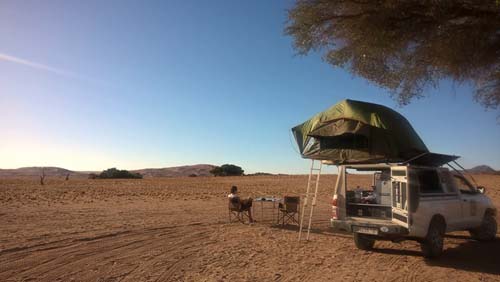
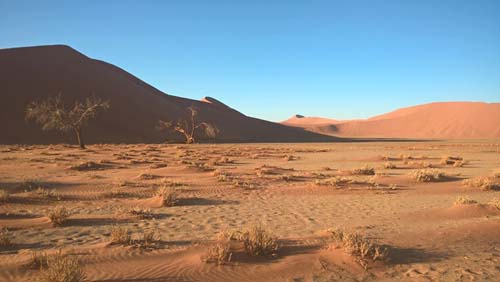
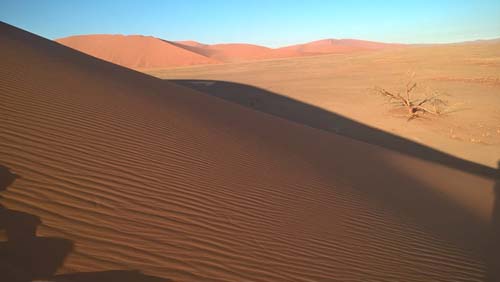
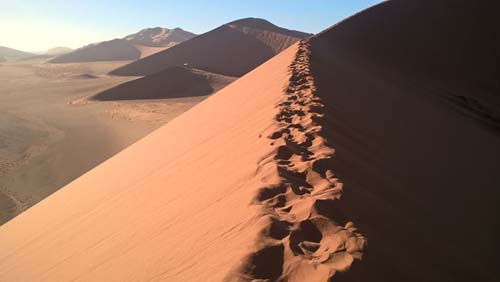
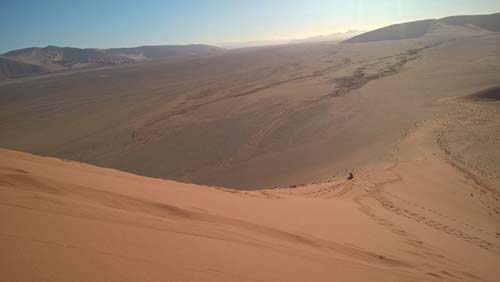
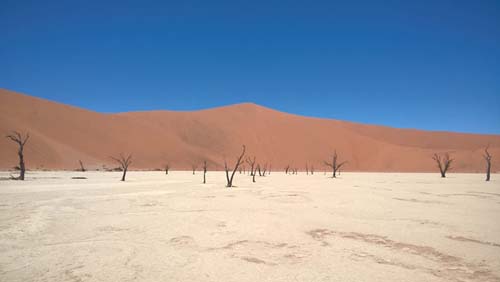
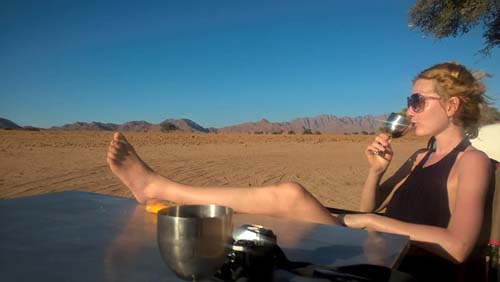
I am thinking about writing one of those Instant Happiness Self Help Smartass Books: “1 step to recognize if she/he is a right person to marry”. This one step is “Go for a road trip through Namibia”. Imagine driving hundreds of kilometres through the desert without even seeing another person and being passed by maybe a few cars. Imagine climbing sand dunes in enormous heat. Imagine having your food being stolen by shakals and your road blocked by stubborn (beautiful!!!!!) gazelles and zebras. Imagine planing the road together when there is no info about the lonely roads you want to take. Imagine taking care for water and fuel supplies so you can always survive 3 days without any civilization. Imagine listening together to perfect silence…Imagine ending up in paradise … (or on a different planet)… And camping on a desert will allow you to verify what your potential long term partner knows about the stars and scary looking bugs bigger than your hand, about initiating fire, cooking yummy dinner out of can food… And when doing all these things you also get to know yourself– how good life-long partner are you for yourself? Are you allowing yourself to scream like a child when spotting Pumba (a friend of Lion King)? But before I write this bestseller I send you love from paradise.
List w sprawie patronatu / ein Brief über Patenschaften
Szanowni Państwo,
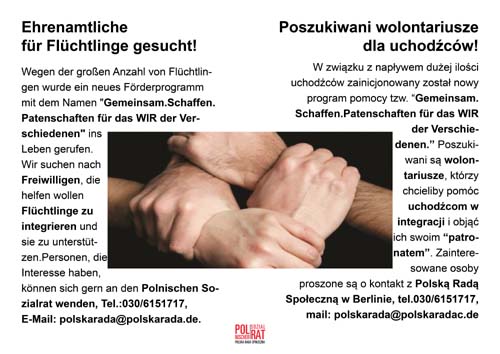
w związku z napływem dużej ilości uchodźców zainicjonowany został nowy program pomocy tzw. “Gemeinsam.Schaffen.Patenschaften für das WIR der Verschiedenen.” Poszukiwani są wolontariusze, którzy chcieliby pomóc uchodźcom w integracji i objąć ich swoim “patronatem”. Zainteresowane osoby proszone są o kontakt z Polską Radą Społeczną w Berlinie:
wegen der großen Anzahl von Flüchtlingen wurde ein neues Förderprogramm mit dem Namen “Gemeinsam.Schaffen. Patenschaften für das WIR der Verschiedenen” ins Leben gerufen. Wir suchen nach Freiwilligen, die helfen wollen Flüchtlinge zu integrieren und sie zu unterstützen.Personen, die Interesse haben, können sich gern an den Polnischen Sozialrat wenden:
“Wir gehen zum Bowling” / Idziemy na kręgle Unsere polnische Patin, Iwona, mit den syrischen Jungs aus einem der Flüchtlingswohnheime von AWO / Iwona, polska wolontariuszka, z syryjskimi chłopakami z jednego ze schronisk prowadzonych w Berlinie przez AWO (Arbeiterwohlfahrt)
During the 17 century Warsaw was occupied by Swedish army. In this time there was a process of taking away the works of art from Warsaw to Sweden. Intensity of this process increased at the moment of pulling the army back from Poland. Swedish soldiers were loading the masterpieces to the barges so much, and so quickly – that very often they were overloaded… and sinking.
When Warsaw was liberated from Swedish army, Poles interested in treasures in the bottom of Vistula for the first time. But – after war – Warsaw was exhausted and had a lot of difficulties to overcome, so they stopped searching. And until the 20 century nobody remembered the treasures in Vistula.
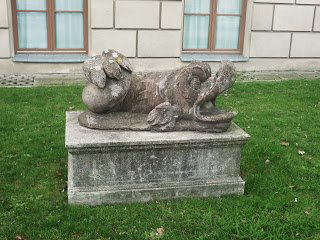
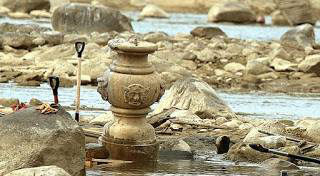
And just before the I world war the men, who were taking away the sand from the bottom of the river, discovered an amazing archeological find. Among the sand there were parts of architectural elements, garden sculptures, columns and capitals – and very famous dolphin made of marble (!). This dolphin was a part of a garden fountain from the summer royal residence of Waza dynasty – Villa Regia. At present this palace is called Kazimierzowski Palace and it is one of the buildings of Warsaw University. In the past – there was a sculpture of a little boy who was sitting on the dolphin. And why do we know that? Because this dolphin is mentioned in the 17th century‘s guide book. The author – Adam Jastrzębski – described it as a “strange kind of a fish with a cruel muzzle”.
The copy of the famous dolphin of marble in the Royal Castle garden. The original sculpture is stored in Museum of Warsaw. Photo by Anna Dobrzyńska
In those time they took out about 100 historical objects. But not everybody were happy because of this discovery. The imperial Russian authorities regarded this fact as unnecessary interest of Polish history. And when the eagle relief was found at the bottom – they forbidden the searching continuation. The treasures were hidden in “Zachęta” National Gallery of Art and until 1936 nobody remembered about them. In this year in independent Poland the Museum of Warsaw came into existence and the exhibits were deposited there. The other precious objects were delivered by inhabitants of Warsaw who were encouraged to this action by newspapers.
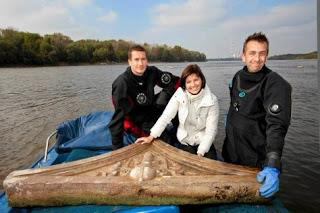
When – in 2009 – young scientists of the Polish Science Academy took up a challenge of bottom research, nobody believed in their success. People though the treasures had been moved very far away or were covered by a thick layer of sand. However – using the special equipment – they managed to took out precious discovery. After renovation, treasures were deposited in Museum of Warsaw.
So, the treasures came back again to Warsaw after – 350 years of getting soaked in Vistula…
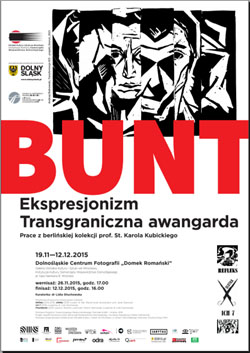
Today we present the preview (teaser) of the film Bunt. Re-Vision. 100 Years of Bunt/ Revolt, which shows the entire tour of the donated art exhibition Bunt – Expressionism – Transborder avant garde. Works from the Berlin collection of prof. St. Karol Kubicki (2015) from Berlin via the Nationalmuseum Poznań, Regionalmuseum Leon Wyczółkowski in Bydgoszcz, Kraszewski Museum Dresden and the Lower Silesian Center of Photography “Roman House” [Dolnośląskie Centrum Fotografii „Domek Romański”] in Wrocław.
The exhibition finale will take place on Saturday 12 December 2015 at 16.00 in the Lower Silesian Center of Photography “Roman House” [Dolnośląskie Centrum Fotografii „Domek Romański”]. The event will be a combination of the premiere of the documentary-artistic film Bunt. Re-Vision and the presentation of a book concurrent to the exhibition written by the exhibition’s curator Dr. Lidia Głuchowska.
Dziś prezentujemy wglądówkę (teaser) filmu Bunt – Re-Wizja. 100 lat Buntu, ukazującego wszystkie stacje międzynarodowego tournée wystawy donacyjnej Bunt – Ekspresjonizm – Transgraniczna awangarda. Prace z berlińskiej kolekcji prof. St. Karola Kubickiego, która wyruszyła z Berlina do Muzeum Narodowego w Poznaniu, Muzeum Okręgowego im. Leona Wyczółkowskiego w Bydgoszczy i Dolnośląskiego Centrum Fotografii „Domek Romański” we Wrocławiu
Finisaż w sobotę, 12.12.2015 o godz. 16.00 w Dolnośląskim Centrum Fotografii „Domek Romański”, połączony będzie z premierą filmu dokumentacyjno-artystycznego Bunt – Re-Wizja,a także prezentacją towarzyszącej jej książki autorstwa kuratorki, dr Lidii Głuchowskiej.
Heute zeigen wir die Vorschau (Teaser) des Films Bunt – Re-Vision. 100 Jahre von Bunt / Revolte über alle Stationen der internationalen Ausstellungstour Bunt – Expressionismus – Grenzübergreifende Avantgarde. Werke aus der Berliner Sammlung von Prof. St. Karol Kubicki. Die Kunstwerke aus Berlin sind die Werke im Nattionalmuseum Poznań, Leon-Wyczółkowski-Bezirksmuseum in Bydgoszcz, Kraszewski-Museum in Dresden sowie Bezirksmuseum im Niederschlesischen Zentrum für Fotografie „Domek Romański” [Romanisches Haus] präsentiert worden.
Bei der Finissage am Samstag, den 12. Dezember 2015 um 16.00 im Niederschlesischen Zentrum für Fotografie „Domek Romański” [Romanisches Haus], wird die Erstpräsentation des dokumentarisch-künstlerischen Films Bunt – Re-Vision sowie eine Präsentation der Begleitpublikation, ein Buch der Kuratorin Dr. Lidia Głuchowska, stattfinden.
We invite you to the first presentation at the finissage Zapraszamy na premierę na finisażu Wir laden Sie herzlich zur Erstpräsentation auf der Finissage ein
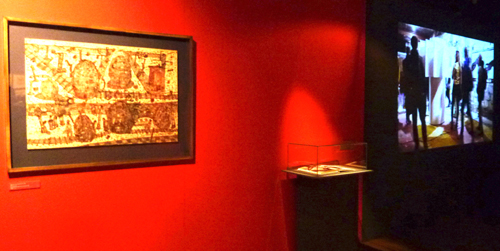
The initial shots of the film were presented in the Regional Museum Leon Wyczółkowski in Bydgoszcz in so called “Cinema”, one of the three parts of the arrangement of the exhibition, next to the “Street” and the “Café”, inspired by the atmosphere of the artistic centres of the 1920s. Next to the “Cinema” is to be seen the presentation of the artistic book Refleks / Relfex (2014) and the drawing by Jacek Szewczyk Alley without work (1999), part of the presentation Ich 7 / The 7 of them (They 7)
Początkowe sceny filmu zaprezentowane zostały w Muzeum Okręgowym im. Leona Wyczółkowskiego w Bydgoszczy, w części ekspozycji zatytułowanej „Kino“, która – podobnie jak pozostałe części aranżacji, czyli „Ulica“ i „Kawiarnia“ – zainspirowane były atmosferą centrów artystycznych dwudziestolecia międzywojennego.
Obok „Kina” widoczna prezentacja książki artystycznej Refleks (2015) oraz rysunek Jacka Szewczyka Aleja bez pracy (1999), część prezentacji Ich 7.
Die Anfangsszenen des Filmes wurden präsentiert im Leon- Wyczółkowski-Bezirksmuseum in Bydgoszcz im so genanten „Kino“, einem der drei Teile des Ausstellungsarrangements, welcher, neben der „Straße“ und dem „Café“, an die Aura der künstlerischen Zentren der 1920er inspiriert wurden. Neben dem Kino – die Präsentation des Kunstbuchs entstanden im Rahmen des Projekts Refleks / Reflex sowie die Zeichnung von Jacek Szewczyk Allee der Arbeitslosen (1999), Teil der Kunstpräsentation Ich 7 / Sie 7.
BUNT – RE-Vision. 100 Years of Bunt / Revolt artistic-documentary film Concept: Lidia Głuchowska, An Kraśko Technical production: An Kraśko Text: Lidia Głuchowska
At the exhibition closing event in Wrocław the film’s final version will be screened including 8 episodes:
1/ Acceptance of the donation from prof. Kubicki in Berlin-Hufeisensiedlung and transport to the National Museum in Poznań, 16 March 2015.
2/ Exhibition opening in the National Museum in Poznań, 19 April 2015.
3/ The long Museum Night and curator-guided exhibition viewing in the National Museum in Poznań, 16 May 2015.
4/ Opening of the premiere showing of the project Flyer, squat Od-Zysk, 16 May 2015. Handing over a gift by Polish contemporary artists and a letter of intent – thanking for the donation by prof. Kubicki from Germany, to the hands of the curator dr. Lidia Głuchowska.
5/ Presentation of the gift by Polish contemporary artists to prof. Kubicki in Berlin-Hufeisensiedlung.
6/Exhibition opening and conference in the Leon Wyczółkowski District Museum in Bydgoszcz.
7/ Press conference, exhibition opening and the exhibition in Kraszewski-Museum Dresden; handing over of a miniature of the installation by Karolina Ludwiczak and Marcin Stachowiak and the order of the Leon Wyczółkowski District Museum in Bydgoszcz to prof. St. Karol Kubicki in Berlin by the artists and the Museum’s director prof. dr. hab. Ryszard F. Woźniak.
8/ Vernissage at the Gallery of the Culture and Art Centre OKiS, Lower Silesian Centre for Photography “Domek Romański” in Wrocław.
There were also two other films presented during the exhibition –Refleks [Reflex] and Ulotka [Flyer] by Marek Glinkowski (sound: Radosław Włodarski, 2015)
Authors of the works presented in the movie:
Krzysztof Balcerowiak, Andrzej Bobrowski, Magdalena Czerniawska, Zuzanna Dyrda, Stefan Ficner, Agata Gertchen, Marek Glinkowski, Mariusz Gorzelak, Paweł Frąckiewicz, Jarosław Janas, Aleksandra Janik, Dorota Jonkajtis, Anna Kodź, Wojciech Kołacz, Katarzyna Krawczyk, Marta Kubiak, Maciej Kurak, Maryna Mazur, Agnieszka Mori, Christopher Nowicki, Grzegorz Nowicki, Mirosław Pawłowski, Max Skorwider, Jacek Szewczyk, Piotr Szurek, Michał Tatarkiewicz, Anna Trojanowska, Przemysław Tyszkiewicz, Małgorzata ET BER Warlikowska, Radosław Włodarski.
In Dresden Kraszewski Museum the movie was presented already during the press conference and the opening, in one of the exhibition rooms. It allowed the visitors to imagine the parallellity of the different moments of the exhibition tour – the signing of the donation contract in Berlin by Professor Kubicki, the vernissage of the first station of the exhibition in Nationalmuseum in Poznan and the vernissage of the Ulotka / Flyer project in squat Od-Zysk as well as the presentation at the second station of the exhibition in Bydgoszcz.
At the photo-exhibition curator, Lidia Głuchowska and exhibition coordinator, Bronislaw Kowalewski at the vernissage in Dresden.
In the background – the movie: Prof. St. Karol Kubicki, his wife – Petra, as well as the curator, Lidia Głuchowska, after the forwarding the artpieces from his Berlin collection to the Nationalmuseum in Poznań and the regional Museum Leon Wyczółkowski Museum in Bydgoszcz.
W Muzeum im Józefa Ignacego Kraszewskiego w Dreźnie film prezentowany był w jednej z sal wystawowych i to już w trakcie konferencji prasowej i wernisażu, co wśród zwiedzających budzić mogło wrażenie paralelności różnych momentów tournée wystawy donacyjnej – począwszy od podpisania umowy donacyjnej przez prof. Kubickiego w Berlinie, otwarcia pierwszej odsłony w Muzeum Narodowym w Poznaniu oraz premiery projektu Ulotka na sqacie Od-Zysk, a także pokazu podczas na drugiej stacji wystawy – w Bydgoszczy.
Na zdjęciu – kuratorka, dr Lidia Głuchowska i kordynator wystawy, Bronisław Kowalewski podczas wernisażu w Dreźnie. W tle- film: prof. St. Karol Kubicki, jego żona Petra oraz kuratorka, Lidia Głuchowska, po przekazaniu daru dla Muzeum Narodowego w Poznaniu i Muzeum Okręgowego im. Leona Wyczółkowskiego w Bydgoszczy.
Im Kraszewski Museum Dresden wurde der Film in einem der Ausstellungsräume bereits während der Pressekonferenz und der Ausstellungseröffnung gezeigt. Dies könnte bei den Besuchern den Eindruck von der Parallelität unterschiedlicher Momente der Ausstellungstour erweckten – der Unterzeichnung des Schenkungsvertrags durch Prof. Kubicki in Berlin, der Eröffnung der Erstausstellung im Nationalmuseum Poznan und der Vernissage des Projekts Ulotka / Flyer im Squat Od-Zysk sowie der Schau in der zweiten Ausstellungsstation in Bydgoszcz.
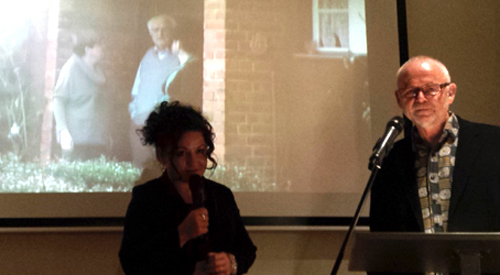
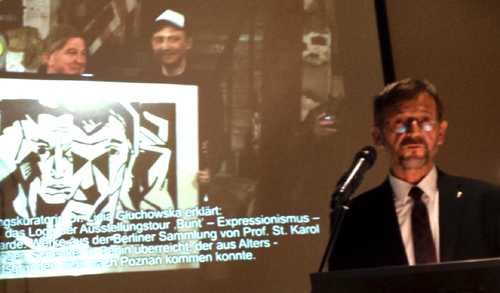
Director of the Regional Museum Leon Wyczółkowski in Bydgoszcz, prof. Michał Woźniak during the opening in Dresden. In the background – the movie: presentation of the Logo of the touring exhibityion by Andrzej Bobrowski and Radosław Włodarski at the vernissage of the Ulotka / Flyer project in squat Od- Zysk in Poznań.
Dyrektor Muzeum Okręgowego im. Leona Wyczółkowskiego w Bydgoszczy, prof. dr Michał Woźniak podczas wystąpienia na wernisażu w Dreźnie. W tle – film: Andrzej Bobrowski i Przemysław Włodarski prezentują logo wystawy donacyjnej na wernisażu projektu Ulotka na squacie Od-Zysk w Poznaniu.
Direktor des Leon-Wyczółkowski-Bezirksmuseums in Bydgoszcz, Prof. Ryszard F. Woźniak während der Eröffnungsrede in Dresden. Im Hinterngrund der Film: Andrzej Bobrowski und Przemysław Włodarski present ieren das Logo der Ausstellungstour auf der Vernissage des Projekts Ulotka / Flyer in the squat Od-Zysk in Poznań.
BUNT – RE-Wizja. 100 lat Buntu Film dokumentacyjno-artystyczny
Koncepcja: Lidia Głuchowska, An Kraśko
Realizacja techniczna: An Kraśko
Tekst: Lidia Głuchowska
Premierowy pokaz całego filmu na finisażu odsłony wrocławskiej obejmuje 8 epizodów:
1/ Przejęcie donacji prof. Kubickiego w Berlinie-Hufeisensiedlung i transport do Muzeum Narodowego w Poznaniu, 16.03.2015.
2/ Wernisaż w Muzeum Narodowym w Poznaniu, 19.04.2015.
3/ Długa Noc Muzeów i oprowadzanie kuratorskie po Muzeum Narodowym w Poznaniu, 16.05.2015.
4/ Wernisaż premierowej odsłony projektu „Ulotka”, squat Od-Zysk, 16.05.2015.
Przekazanie daru polskich artystów współczesnych i listu intencyjnego – podziekowania za donację z Niemiec dla prof. Kubickiego na ręce kuratorki, dr Lidii Głuchowskiej.
5/ Wręczenie daru polskich artystów współczesnych prof. Kubickiemu w Berlinie-Hufeisensiedlung.
6/ Wernisaż i konferencja naukowa w Muzeum Okręgowym im. Leona Wyczółkowskiego w Bydgoszczy.
7/ Konferencja prasowa, wernisaż i wystawa w Muzeum Józefa Ignacego Kraszewskiego w Dreźnie oraz przekazanie miniatury instalacji Przenikanie Karoliny Ludwiczak i Marcina Stachowiaka oraz medalu Muzeum Okręgowego im. Leona Wyczółkowskiego prof. St. Karolowi Kubickiemu w Berlinie przez artystów i dyrektora muzeum, prof. dra. hab. Ryszarda F. Woźniaka
8/ Wernisaż we Wrocławiu.
Na wystawie prezentowane były jeszcze dwa filmy artystyczne autorstwa Marka Glinkowskiego (dźwięk: Radosław Włodarski, 2015) – Ulotka i Refleks
Prezentowano w nich prace graficzne nastepujących artystów:
Krzysztof Balcerowiak, Andrzej Bobrowski, Magdalena Czerniawska, Zuzanna Dyrda, Stefan Ficner, Agata Gertchen, Marek Glinkowski, Mariusz Gorzelak, Paweł Frąckiewicz, Jarosław Janas, Aleksandra Janik, Dorota Jonkajtis, Anna Kodź, Wojciech Kołacz, Katarzyna Krawczyk, Marta Kubiak, Maciej Kurak, Maryna Mazur, Agnieszka Mori, Christopher Nowicki, Grzegorz Nowicki, Mirosław Pawłowski, Max Skorwider, Jacek Szewczyk, Piotr Szurek, Michał Tatarkiewicz, Anna Trojanowska, Przemysław Tyszkiewicz, Małgorzata ET BER Warlikowska, Radosław Włodarski.
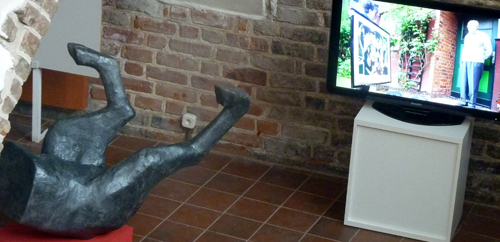
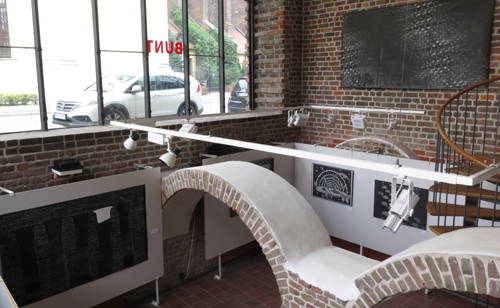
During the display in the Lower Silesian Photography Centre „Domek Romański“ the movie was to bee seen already from the street, through the windows. It invited the passengers to come in and to see the whole exhibition. In the movie is to be seen the moment of forwarding of the gratitude presents of the Poznań contemporary artists to Prof. St. Karol Kubicki in Berlin.
Next to the screen is to be seen the sculpture by Małgorzata Kopczyńska Cerberus (c. 2013), part of the artistic presentation Ich 7 / The 7 of Them.
Podczas wystawy w Dolnośląskim Centrum Fotografii Domek Romański film było widać już przez okna, z ulicy. Zapraszał on przechodniów do wejścia do środka i zapoznania się z całą ekspozycją.
W filmie udokumentowano m.in. moment przekazania daru współczesnych artystów z Poznania prof. St. Karolowi Kubickiemu w Berlinie.
Obok monitora – rzeźba Małgorzaty Kopczyńskiej Cerber (ok. 2013), część prezentacji artystycznej Ich 7.
Während der Ausstellung im Niederschlesischen Zentrum für Fotografie, „Domen Romański” der Film war zu sehen schon aus der Straße, durch die Fenster. Das lud die Passanten ein, damit sie reinkommen, um die gesamte Ausstellung anzusehen. In dem Film ist u.a. der Moment der Übergabe des Ausstellungslogos – des Dankbarkeitsausdrucks der Gegenwartskünstler aus Poznań to Prof. St. Karol Kubicki in Berlin.
Neben dem Bildschirm- Plastik von Małgorzata Kopczyńska Cerberus (ca. 2013), Teil der Kunstpräsentation Ich 7 / Sie 7.
BUNT– RE-Vision. 100 Jahre Bunt / Revolte Künstlerisch-dokumentarischer Film
Konzeption: Lidia Głuchowska, An Kraśko Technische Umsetzung: An Kraśko Text: Lidia Głuchowska
Die Erstaufführung des gesamten Films während der Finissage der Schau in Wrocław umfasst 8 Episode:
1/ Übernahme der Schenkung von Prof. Kubicki in der Hufeisensiedlung/Berlin und Transport in das Nationalmuseum Poznań, 16.03.2015.
2/ Vernissage im Nationalmuseum Poznań, 19.04.2015.
3/ Lange Nacht der Museen und kuratorische Führung im Nationalmuseum Poznań, 16.05.2015.
4/ Vernissage der Erstpräsentation des Projekts Ulotka [Flyer], im Squat Od:Zysk, 16.05.2015.
Übergabe des Geschenks und Dankschreibens von den zeitgenössischen Künstlern aus Poznań für Herrn Prof. Kubicki an die Kuratorin Dr. Lidia Głuchowska.
5/ Aushändigung des Geschenks an Herrn Prof. Kubicki in Berlin.
6/ Vernissage und wissenschaftliche Konferenz im Leon-Wyczółkowski-Bezirksmuseum in Bydgoszcz.
7/ Vernissage und Ausstellung im Kraszewski-Museum Dresden. Anschließend Übergabe einer Miniatur der Installation Przenikanie [In-Einander-Greifen] von Karolina Ludwiczak und Marcin Stachowiak sowie der Medaille des Leon-Wyczółkowski-Bezirksmuseums in Bydgoszcz an Prof. St. Karol Kubicki in Berlin durch die Künstler und den Museumsdirektor Prof. Dr. Ryszard F. Woźniak.
8/ Vernissage in der Galerie des Kultur- und Kunstzentrums in Wrocław, dem Niederschlesischen Zentrum für Fotografie „Domek Romański“.
In der Ausstellung wurden ferner zwei weitere Filme:Refleks [Reflex] and Ulotka [Flyer] von Marek Glinkowski ((Klang: Radosław Włodarski, 2015) gezeigt, in denen Werke folgender Grafikkünstler präsentiert wurden: Krzysztof Balcerowiak, Andrzej Bobrowski, Magdalena Czerniawska, Zuzanna Dyrda, Stefan Ficner, Agata Gertchen, Marek Glinkowski, Mariusz Gorzelak, Paweł Frąckiewicz, Jarosław Janas, Aleksandra Janik, Dorota Jonkajtis, Anna Kodź, Wojciech Kołacz, Katarzyna Krawczyk, Marta Kubiak, Maciej Kurak, Maryna Mazur, Agnieszka Mori, Christopher Nowicki, Grzegorz Nowicki, Mirosław Pawłowski, Max Skorwider, Jacek Szewczyk, Piotr Szurek, Michał Tatarkiewicz, Anna Trojanowska, Przemysław Tyszkiewicz, Małgorzata ET BER Warlikowska, Radosław Włodarski.
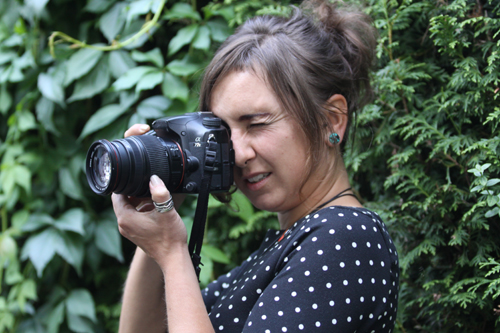
Here is An Kraśko, responsible for the technical production and the artistic shape of the movie.
Oto An Kraśko odpowiedzialna za techniczną realizację i artystyczny kształt filmu.
Das ist An Kraśko, verantwortlich für die künstlerische Umsetzung und die künstlerische Gestalt dieses Films.
Foto: Mariola Nehrebecka
At the screen part of the glas instalation Interference-Re-Integration/ Przenikanie /In-Einander-Greifen by Karolina Ludwiczak & Marcin Stachowiak
Arrangement with the posters of the first “Bunt” exhibition in Poznań in 1918 and the last one, in Berlin, 1922
The Wrocław edition of the exhibition Bunt – Expressionism – Transborder Avant-Garde.Artpieces from the Berlin Collection of Prof. Stanisław Karol Kubicki is a closing event of the touring display of donated art which includes exhibitions in essential pre-war centers of expressionism and the development of graphic arts. So far it has been shown in Poznań, Bydgoszcz and Dresden. It was organized to honour the donation received by the Leon Wyczółkowski Regional Museum in Bydgoszcz and the National Museum in Poznań from Professor Stanisław Karol Kubicki, son of the Polish-German avant-garde artists Margarete and Stanisław Kubicki.
About these tourning exhibition we already have written here, here, here, here, here and at many other places – just look in the index or searching.
The exhibition finale on 12 December 2015 will be connected with the aid of four bilingual publications accompanying the exhibition, among them the book by the curator, Lidia Głuchowska, Stanisław Kubicki – in transitu. Poeta tłumaczy sam siebie / Ein Poet überestzt sich selbst, and the premiere screening of a documentary-artistic film Bunt – Re-visions showing the entire tournée.
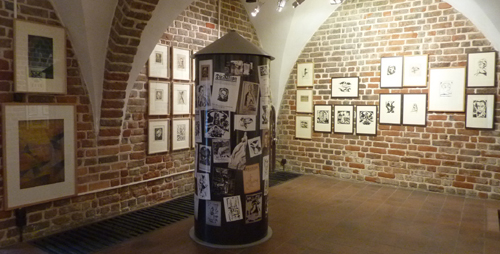
Exhibition ”Bunt” – Expressionism – Transborder Avant-garde: prints of the group “Bunt”
The core of the exhibition consists of prints, drawings and pastels created by members of the artistic association from Poznań known as Bunt (“Revolt”), focused around the Poznań magazine Zdrój (1917-1922).
Margarete and Stanisław Kubicki, the co-founders of the group, began its cooperation with Polish and foreign galleries as well as such magazines as Die Aktion and Der Sturm from Berlin. The exhibit also includes works by other members of the group: Jerzy Hulewicz, Władysław Skotarek, Stefan Szmaj, Jan Jerzy Wroniecki and Jan Panieński. Proceeding the donation, the prints and drawings had remained abroad since the “Bunt” exhibitions in Berlin (1918-1922).
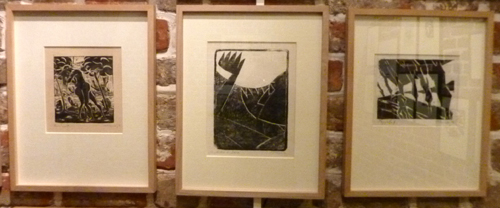
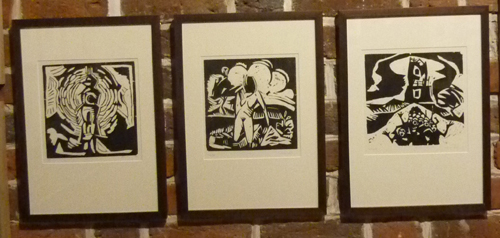
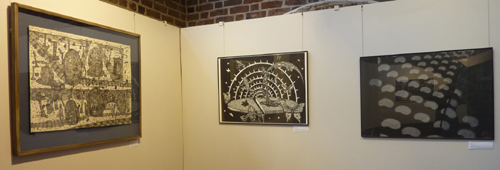
Linocuts by Stefan Szmaj
In Wroclaw it should be especially mentioned, that the first expressionist linocuts of the “Bunt” circle, among them The Tower of Babel from the poster of its first exhibition, were created by Stanisław Kubicki in Schömberg/ Chełmsko Śląskie, Silesia.
The Silesian linocuts by Stanisław Kubicki, among them The Tower of Babel
Logo of the exhibition is the linocut by Andrzej Bobrowski Transformation M/S. Just as the artists of the “Bunt” never create a group portrait, Margaret and Stanisław Kubicki never did a portrait of themselves as a couple.
The linocut by Andrzej Bobrowski Transformation M/S [Transformation M(argarete)/ S(tanisław)] refers to the self-portrait of Margarete Kubicka from 1917 and the Self-portrait IV of her husband which was not preserved but is only known from the publications of Zdrój and Die Aktion magazines in 1918. This contemporary work of graphic art of a hybrid and panoramic composition in a form that refers to the banner is a reflection on the creative and personal relationship of the Kubickis. It is also a reflection on the passing of time and the details of artistic biographies receding in group memory, but also on group identity and the lack of integrity of an artifact in the epoch of its technical reproduction.
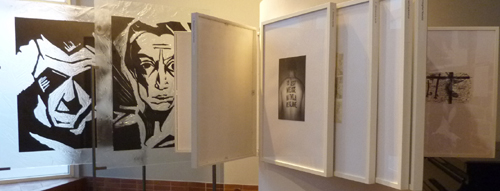
Part of the presentation Flyer: print by Małgorzata EtBER Warlikowska and the installation Interference – Re-Integration by Karolina Ludwiczak and Marcin Stachowiak
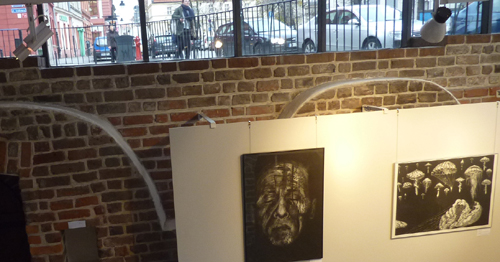
The exhibition of these works created towards the end of World War I and shortly after is accompanied by the contemporary artistic projects: Refleks [Reflex, 2014-2015], Ulotka [Flyer] and Ich 7 [They 7, 2015], inspired by the art and ideology of “Bunt” and created by contemporary graphic artists from Poznań and Wrocław and a sculptor, Małgorzata Kopczyńska. The latter’s participation is a symbolic allusion to August Zamoyski, who was also a sculptor and a member of the Expressionist group from Poznań. In addition to works on paper, sculptures and documentary photography, the exhibition includes artistic films and a monumental glass installation Przenikanie [Interference – Re-Integration, 2015].
The contemporary artistic presentations demonstrate the stylistic and ideological influence of “Bunt” on the works of present-day artists, especially to its idea of critical art, and constitute a symbolic artistic response to the donation of works from Germany. Expressionist inspirations are particularly evident in the social involvement of the installations; the artworks unmask rigid conventions, instances of provincialism and xenophobia, combat the idealization of reality and the reinforcement of socio-political hypocrisy by the media as well as the limitations imposed on citizens by institutions.
The distribution of art through public media, a practice to which Reflex and Flyer also refer, was one of the typical modes of expression used by “Bunt” and other artists of the pre-war European avant-garde. The primary media used at that time were art books and political leaflets with informative and propaganda content. Distributed at rallies, they reinforced the message of artistic manifestos and supported the ideas of social and political emancipation.
The installation Przenikanie makes one understand the paradox related to the technique used to create it. The artifact made by Ludwiczak and Stachowiak is an example of a peculiar interdisciplinary game – the work they created is partly fine art and not a print on a flat screen. That way they also refer to the relief nature of linocut slabs out of which the Kubickis printed their images of themselves.
Presentation They 7: Prints by Jacek Szewczyk, Przemysław Tyszkiewicz and Agata Gertchen
The presentation They 7 concerns works of a larger format, programmatically and technologically inspired by “Bunt” traditions, executed by an informal group of seven artists. The works demonstrate the timelessness of avant-garde ideas and aesthetics as well as their potential for reinterpretation. The name of the project (containing the word ich, meaning “they” in Polish and “I” in German) echoes the bilingual name of “Bunt” (“Revolt”, “rebellion” in Polish, “colourful” in German), which reflected the supranational nature of Expressionist ideology.
Presentation They 7 corresponding with the architecture and life of Wroclaw. From left to the right: prints by Andrzej Bobrowski, Przemysław Tyszkiewicz and Agata Gertchen.
The scale of the objects of the presentation They 7 similar to the installation Przenikanie. Significantly larger than the ones from the time of the classic avant-garde, is supposed to epitomise for the viewers a change of status and the recipient paradigm. In the times of “Bunt”, graphic art was reproduced in magazines which were the main media of international artistic exchange. Today the art, which is often exhibited in large formats, has gained autonomy and dominated the contemporary iconosphere.
Presentation They 7 corresponding with the architecture and life of Wroclaw. From left to the right: prints by Piotr Szurek and Przemysław Tyszkiewicz
The artists of “Bunt” in their operations considered both the national and transnational perspective, constructing our network of artistic contacts from amongst all the Polish artistic groups of that time.
There are not many documents of the international cooperation between the members of the group and other artistic associations, even though the pages of Zdrój [Source] magazine, co-created by “Bunt” artists, are proof of their relationships with creative communities not only in Germany, which is widely known, but also in France, Belgium, Italy, Russia, the Czech Republic, Iceland and even India.
The impressive impact of the inter-partition and international exhibitions and publishing initiatives of these artists were also documented in their personal correspondence and some photos.
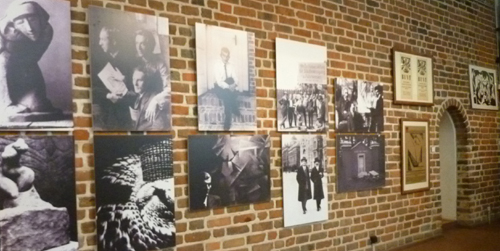
The photographic re-creation of one of the Expressionist linocuts printed in Zdrój (and Die Aktion), the Self-portrait of Stanisław Kubicki from 1918 shot by Berlin ex-Dadaist Raoul Hausmann, shows an expert use of light and shadow. Although Hausmann went on to inspire the camera masters of his time, none of them documented his meetings with Kazimierz Malewicz, the theoretician of Suprematism. The a bis z magazine is the only evidence of their discussions on the internal contradictions in proletarian art. A memento mori of the fascist period is formed from the photographs proving the existence of works condemned to erasure from official artistic life and the collective memory as part of the campaign to banish “degenerate art”. These include photographs documenting such avant-garde works as the sculptures Female torso by Otto Krischer or Mother and child by Pola Lindenfeld, destroyed by the SA and SS during searches conducted in the Berlin home of Margarete and Stanisław Kubicki.
Stanisław Kubicki, “In memoriam” (1935–1939) statue of Józef Piłsudski and the legionaries from the “Kobylepole group” who died in 1919–1920. The monument was located in the park of the palace of Count Stanisław Mycielski in Kobylepole, destroyed in the 1940s., postcard from the 1930s
Other photographs call back from oblivion the forgotten Eternal Remembrance memorial to Józef Piłsudski and his legions, erected in the suburbs of Poznań. It was the only commissioned work of Stanisław Kubicki showing classicist influences and a testament to the widespread cult of Marshal Piłsudski in 1934 in the face of the growing power of Soviet and fascist totalitarianism, but also the fascination of the Zdrój artistic community with the idea of Polish unification in the spirit of the Jagiellonian union, a concept dating back to the days of World War I.
The photographs provide a commentary on the history of transborder contacts and the patriotic fascinations of “Bunt” members. Despite their lack of objectivity and poor state of preservation, they clearly demonstrate the artists’ ambivalent attitude, fluctuating between approval of the “new Polish state” and enthusiasm for the utopian avant-garde idea of a “new international community”.
Installation Interference – Re-Integration by Karolina Ludwiczak and Marcin Stachowiak and the part of the presentation Flyer. To be seen are prints and drawings by Zuzanna Dyrda and Jacek Szewczyk
***
Initiator/curator of the tour: Lidia Głuchowska Financial support: Foundation for Polish-German Cooperation XXXXXXXXXXXXXXISamorząd Województwa Dolnośląskiego
Patronage: International Print Triennial Society in XXXXXXXXXXXXXX Kraków XXXXXXXXXXXXXXiWilly Brandt Center for German and XXXXXXXXXXXXXXiEuropean Studies at the University of xxxxxxxxxxxxxxxxxiWrocław
Showings of the exhibition:
National Museum in Poznań – 19.04-31.05.2015
Leon Wyczółkowski Regional Museum in Bydgoszcz – 25.06-23.08.2015
Kraszewski Museum (Museen der Stadt Dresden) in Dresden – 4.09-8.11.2015
“Roman House” Lower Silesian Photography Centre in Wrocław – 19.11-12.12.2015
Organizers:
Centre for Culture and Art in Wrocław, as part iof the Lower Silesian Art Festival
National Museum in Poznań
Leon Wyczółkowski Regional Museum in Bydgoszcz
Kraszewski Museum (Museen der Stadt Dresden) in Dresden
Reflex and Flyer curator: Maciej Kurak Flyer coordinator in Wrocław: Jacek Szewczyk, Małgorzata ET BER Warlikowska
They 7 (graphic art and sculpture)curator: Lidia Głuchowska
Installation Interference – Re-Integration: Karolina Ludwiczak and Marcin Stachowiak
Artistic-documentary film: Lidia Głuchowska, Anna Kraśko
Tour logo: Andrzej Bobrowski, Transformation M/S – project, linocut, 2015
Partners:
University of Arts in Poznań, Faculty of Graphic Arts and Visual Communications
Academy of Art and Design in Wrocław, Faculty of Graphic and Art of Media
University of Zielona Góra, Faculty of Arts, Institute of Visual Arts
Wroclaw Good Books Fair
“Roman House” Lower Silesian Photography Centre in Wroclaw
Rarytas Foundation, Poznań
”Zachęta“, Greater Poland Society for the Encouragement of the Fine Arts
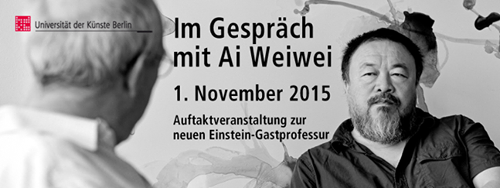
It is well known, that we are living in the city which is dirty and ugly, but, alas!, everybody wants to live here. And everybody important lives here or at least comes to visit us. We can do nothing, everything will be done for us. Look, just now, next week, comes my favorite German journalist, Meike Winnemuth, in November Ai Weiwei (yes yes THAT! Ai Weiwei) and in one month Miranda July… He comes for one year, they just for one day…
Meike Winnemuth
She is a very funny girl. She spend one year in one blue dress and wrote a book about it. So funny!
In a year 2010 she took part on TV Programmm Who becomes a millionaire?, got really half a million euro, took the money and spend one year living every month in another big city all over the world. And of course she wrote a book about living one year in the world. So funny!
I am not very fond of him though I know to appreciate his doings and deeds. He is a hero, it is interesting to meet a hero. One does not have many occasions like that in one’s life.
Sun, 1st of November 17:00
Konzertsaal der UdK Hardenbergstraße 33 10623 Berlin-Charlottenburg
There are no tickets any more, so do not try to go! But there will be a live video stream at www.livestream.udk-berlin.de – in German, English and Chinese.
Miranda July
She comes tu Huxleys New World to present her new book: “Der erste fiese Typ”.
Moderation: Thomas Böhm
German voice: Tatiana Nekrasov
Presented by Verlag Kiepenheuer & Witsch and BUCHBOX! bookstores
The event will be in German and English
Miranda July Fr, 13.11.2015 at 20:00
Huxleys Neue Welt, Hasenheide 107, 10967 Berlin
My friend Marie Forleo made this image for me, after I appeared the other day on her show, Marie TV, and we spoke about how perfectionism stops people from living their most joyful, curious, and expansive lives.
I meet so many creative souls who are not creating anything, because their perfectionism decided in advance that it would never be good enough…so why bother?
I know a brilliant and celebrated author who hasn’t been able to finish a book in nearly fifteen years, because her perfectionism refuses to allow her to release her own (always great) work.
But perfectionism doesn’t just ruin creativity. Perfectionism is a serial killer; it goes after all good things.
Perfectionism can ruin your marriage, your sex life, your friendships, your relationship with your family members, your relationship with your own poor beautiful tired human body, your relationship with the imperfect world in which we must live, and even your relationship with God. (Here’s what the perfectionist says to God: “You allow suffering and pain and injustice to exist, and therefore you are not perfect, and so you and I are DONE.”)
For me, I’m lucky enough not to suffer from perfectionism in my work (I’ve always described myself as “a discipined half-ass” which is how I’ve been able to write 7 books and let them go into the world, even though they are not perfect.) I’m very happy to let my creativity be messy, weird, exploritory, and unpredictable.
But I do suffer from perfectionism in terms of the standards to which I hold other people and myself. I have perfectionist tendancies in terms of BEHAVIOR. I expect people to be good and decent and self-accountable and reliable and kind and fair…and I expect this of myself, too. When people fail me, or when I fail myself (which is inevitable, for we are all human), I react with brittle anger, judgment, and condemnation. (In fact, I just had an episode of righteous indignation against someone this very week. And I lashed out.)
Which gets us nowhere.
I’m working on it, you guys. Because it’s taken me years to see how my perfectionism around behavior (toward others and toward myself) is a murderer of my own joy, and of my own humanity.
I would say, “I’ll try to do better”, but that sounds a bit perfectionistic, doesn’t it?
🙂
Let’s just say: I am learning how to let go of the perfect, in order to embrace the realistic, the beautiful, the messy, the true, and the good.
Because that just seems like a far, far, far happier way to live…

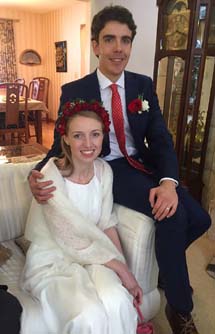 Anna & James Muus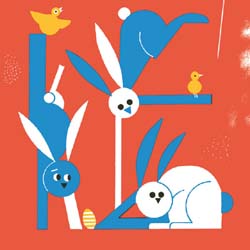







 Dr Lidia Głuchowska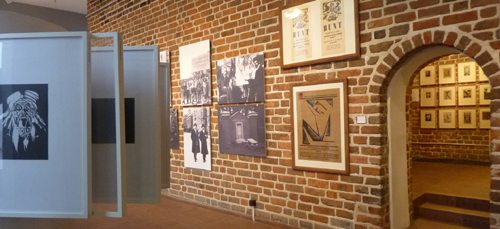
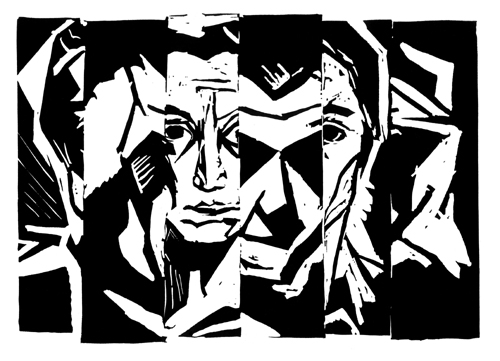 The linocut by Andrzej Bobrowski Transformation M/S [Transformation M(argarete)/ S(tanisław)] refers to the self-portrait of Margarete Kubicka from 1917 and the Self-portrait IV of her husband which was not preserved but is only known from the publications of Zdrój and Die Aktion magazines in 1918. This contemporary work of graphic art of a hybrid and panoramic composition in a form that refers to the banner is a reflection on the creative and personal relationship of the Kubickis. It is also a reflection on the passing of time and the details of artistic biographies receding in group memory, but also on group identity and the lack of integrity of an artifact in the epoch of its technical reproduction.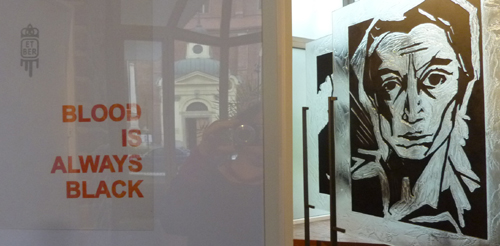

 Andrzej Rejman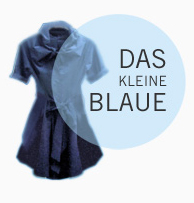

 Moderation: Thomas Böhm
 Ewa Maria and Friends