 Tomorrow, 14 years ago
Franz Eichinger
The Tulip Revolution of March 25, 2005 was the turning point of my two-year stint in the Kyrgyz Republic. I have, therefore, made it the point of reference for my assessment of the events and developments in that period.
* Deceptive Calm
A Good Start
After receiving a proper introduction in Germany, I came with a very positive attitude to Kyrgyzstan. Right from independence, German interest in Kyrgyzstan had been raised by the substantial German minority in the country. This, combined with a very promising democratic and economic take-off after independence, soon made Kyrgyzstan a high-priority country for German development assistance. Kyrgyzstan was regarded as a basically stable country with certain dangers looming: Islamic terrorism, organized crime, drug-trafficking and minority problems. The foreign policy record was exemplary: balanced between the great powers of the region: Europe acted as an important partner and model for regional integration, and eventual WTO member status.
My first impressions of the country were encouraging. The cultural atmosphere was liberal and the press seemed to be remarkably lively. I found receptive interlocutors in the Government and the opposition, and I liked the often ironic or even critical way officials talked to me about the situation. My first meeting with President Akayev was during the ceremony of handing over of my credentials, an impressive experience. He took his time, was very friendly and humble and knew every detail about cooperation with Germany.
Disenchantment
After a while I could not avoid a certain disenchantment. I learnt about the all-pervasive and, partly, well-organised corruption, including the Presidents family, the flaws in the democratic façade and – for outsiders most difficult to understand – clan, tribal and regional rivalries. Particularly annoying for many people was the discrepancy between talk and reality. Akayev‘s rhetoric on democracy and free market economy was immaculate but his rule had become more and more autocratic. The economy was in the grips of his family and a small minority around them. Mechanisms of repression were mostly geared to avoid open violation of human rights but nonetheless effective, e.g. taking unwanted opponents or journalists to court for offenses which they either had not committed or which were only punishable for people who had no Government protection.
Economy and Development
The economic situation was characterized by widespread poverty, great regional disparities and few prospects for tangible improvement. There was a strong “official” commitment to a good investment climate and support for foreign investors. In reality, investors were frightened away by red tape, corruption and the absence of the rule of law. It was especially discouraging to see the frustration of young, capable businesspeople who were deprived of opportunities by the system.
Development aid was highly appreciated and there were many very capable counterparts but they soon became part of the corrupted system when expatriate control was relieved.
I had the impression that the country – as a result of its long-time status as an assistance recipient – had developed a kind of recipient mentality with sophisticated ways to court donors and to raise aid money, sometimes at the expense of their own efforts. Even during Soviet times some 80% of the Kyrgyz budget was covered by Moscow.
From my contacts with the Opposition, I generally got the impression that they were strong in criticism of the Akayev regime but weak on ideas and vision of their own. Apart from some NGOs, I could not find much of it convincing democratic concept. This was, in fact, confirmed at a dinner with Bakiyev which friends of mine had arranged for me when he grew to be probably the most important opposition figure.
Minorities
When I came to Kyrgyzstan, the German minority had already been decimated by emigration to Germany and was not playing any significant role in the country’s economy and politics. But dealing with them drew my attention to the minority question. I raised it in every conversation with important politicians. Throughout, they expressed either pretended or genuine nonchalance. On the other hand, mirtorities were well aware of the general exclusion from core politics and big business. I came to the conclusion that the actual minority policy was at least an impediment to the country’s economic development if not a stability risk.
Conflict Potential
lt took me some time before I realized that the situation was potentially explosive. Most of the people appeared to be fed up with the regime. Some opposition members sounded quite militant and many people explained to me that based on nomadic tradition, Kyrgyz people were unruly and rebellious.
In the complex tribal, clan and regional structure, the North-South divide started to dominate the other rifts. It was epitomized by Akayev himself and his rival Kulov (by that time still in prison) who both were Northeners. Bakiyev, Beknazarov, Madumarov and Tekebayev were soon as the main representatives of the South. I felt that, with the Southerners becoming more important, a Kyrgyz nationalistic touch had been added to political life.
It soon became clear that with the forthcoming elections – municipal elections in October 2004, district, provincial and national parliamentary elections in February-March 2005, and presidential elections in the middle of 2005 – the country was moving towards a critical phase as no one thought that the regime could win elections without fraud. The unrest in the South after the arrest of popular opposition MP Beknazarov in the Aksy district during 2002 when five demonstrators were shot dead was still very much on the minds of everyone. The situation was exacerbated by the establishment of Alga Kyrgyzstan, a new party which in emulation of Putin’s United Russia, was meant to secure a two-thirds majority in Parliament for the Akayev regime. The strong person behind the party was Bermet Akayeva, the elder daughter of Akayev. It was telling of the popularity of Akayev and the elite around him that the party did not take off. In the end, a number of candidates from Alga Kyrgyzstan chose to run on a personal ticket instead of an Alga ticket. There were a number of other parties but their importance was limited because parties could only nominate 18% of the candidates. The rest was determined by direct vote, when often local issues were in the foreground.
The political discussion was dominated by Akayev’s succession. He had on several occasions declared that he would not seek re-election at the upcoming presidential elections, but people did not trust him. They thought that he might either tamper with the Constitution to secure continuing influence or renege on his commitment because “people had urged him to continue.”
Foreign influence on the political process was an important issue in the discussions. Against the background of OSCE‘s wide membership – US, Canada, Western Europe and CIS countries – OSCE representatives in Bishkek were working toward a dialogue between the regime and the opposition. It managed to maintain a high standing with both sides up until the last minute. The US Ambassador publicly urged Akayev to unequivocally renounce another term of presidency. I did not support him because I did not want to give a reason for denouncing the opposition as foreign-supported and did not want to interfere with a matter which was entirely up to the Kyrgyz people to deal with. I preferred to urge the Government to ensure fair elections.
The first results of the election campaign observation did not augur well for the elections. The media coverage was unfair for the opposition candidates. In many constituencies, wealthy businessmen were encouraged to stand against opposition candidates because they were in a better position to buy votes. As the technical conditions for correct elections had improved through donor help, the regime tried to make sure that unwanted opposition candidates were not registered or deregistered on flimsy grounds before the elections. Others were harassed or impeded in their election campaign while their opponents loyal to the regime got massive administrative support. As a result, before the elections even began people went into the streets in some constituencies.
Days of uncertainty and fear
It got worse after the first round of elections on February 27. Especially in the South, there were a number of places where mainly peaceful demonstrations against election results took place. They reached a first climax when a brother of Bakiyev, with his people, occupied the administrative building in the provincial capital of Jalal-Abad and the Government was unable to stop him. After the second election round on March 13, the situation escalated. Special Government forces only intermittently managed to win back the administration buildings in Jalal-Abad and Osh from the demonstrators.
In Bishkek, the situation had been relatively calm with small opposition rallies. But rumor had it that there would be a showdown between Government and opposition on March 25, though no one expected a decisive outcome. Everybody was shocked when the White House fell so quickly. Apart from various security forces which disappeared, after at while the Government had put up “sportsmen” to fight insurgents. I stayed in the Embassy longer that day, and when I drove home I saw the looters carrying goods away from the shops. In the middle of the night, the OSCE Ambassador called me and told me that there was systematic looting on Sovietskaya and that it seemed to be well organized. The next morning at nine, Rosa Otunbayeva called some ambassadors to a meeting in the Hyatt to brief them on the latest developments. I do not remember the details, but I was struck by remarks with Kyrgyz nationalistic overtone.
The question whether the events of March 25 were a revolution or just a coup d‘état is controversial. What happened in Bishkek was a mobilization of supporters by different opposition politicians. But the developments which led to it had traits of a popular uprising, especially in the South. So it is with this in mind when I talk about Revolution.
The days after the Revolution were tough in terms of work and my own personal situation. Nobody knew where the looting mob would move. Nobody knew what the security forces – who had virtually disappeared from the scene with their arms – would do. Thinking of the terrible things marauding soldiers had done in other places of the world, I was impressed by the relative discipline which ruled in that situation in Kyrgyzstan. At work, there was a great need for sound information, in particular, in regard to the decision whether to evacuate German citizens. The pressure to evacuate mounted when the UN, Turkey and OSCE started to fly out people or bring them to Almaty. In close connection with friendly missions, American and French in particular, we decided not to evacuate. Luckily, the situation became more relaxed ater Kulov, a rival of Akayev who had been arrested and sent to prison in connection with the presidential election in 2000, was freed from prison and managed to stop the looting and restore some fragile order after several days.
On the private side, the situation became complicated because our three grown-up children had come to Bishkek for the Easter holidays which started the day after the riots. My youngest son who was the last to arrive via Istanbul, met Turkish citizens there who were happy to have escaped the riots in Kyrgyzstan. Ater two boring (and costly) days in the Hyatt hotel, which was regarded the only safe place to go to, my family got fed up and set of to Issyk-kul, at their own risk. The Embassy had strongly discouraged German citizens from leaving Bishkek at this time of turmoil. After some calm had returned, attention was directed more to the political issues again. Most of the observers were puzzled
– that the regime had fallen so quickly and easily
– that Akayev had immediately let the country and did not or could not muster more resistance
– and that it could not be cleared up who organized the support of the looters in Bishkek. All that indicated how tenuous the state was in general.
*Restoring fragile stability
Political Developments
It seems that the decision by the opposition, now in power, not to dissolve the new Parliament and to have it confirm Bakiyev as Prime Minister and Acting President was a wise one. New parliamentary elections could have led to further turmoil and the quick formation of a government sent an important signal to the worried population and possible troublemakers. By all accounts, Bakiyev was the strongest opposition leader. But it was also clear that his new office would give him an additional headstart in the impending presidential elections.
The new Government appointed by Bakiyev did not indicate much change. The opposition members of it, including Bakiyev himself, represented the old guard who had already made an important part of their career either under the Communist regime or under Akayev. According to a familiar pattern, the new Ministers appointed old, trusted allies and relatives to key positions. One could argue that the situation called for experienced, reliable people but it was the first damper on the high hopes many people associated with the Revolution. The people remained unruly and did not hesitate to go out into the streets or to erect road blocks when their demands were not fulfilled. At district and municipal levels many new leaders appointed themselves or were appointed by the people without following legal procedures.
Right from the beginning the situation was overshadowed by the forthcoming presidential elections. The discussion continued to focus on the North-South divide. This favored Bakiyev as a heavyweight from the South. His only serious competitor at the time was Kulov, a former security chief, who had reaffirmed his reputation as a hands-on law and order man in the days after the Revolution. His main drawbacks were that he originated from the North, that he did not seem to be well rooted in clan and tribal structures, and – as an important formal point – that he had problems to meet the constitutional requirement for presidential candidates to speak Kyrgyz. So when Bakiyev and Kulov announced that they had agreed to run in tandem in the presidential elections scheduled for July 10, 2005 most of the people were happy that a North-South confrontation had been avoided. There was little doubt that Bakiyev would come out as President from the elections. The agreement provided that Bakiyev would then choose Kulov as his Prime Minister.
Under these circumstances the presidential elections were unspectacular. It did not, however, bode well for the future that in spite of Bakiyev’s strength and virtually certain victory, the elections were heavily rigged in his favor. After the elections a tug of war between Bakiyev and Kulov started in which Bakijev more and more seemed to get an upper hand, not least due to the strong position of the President in the Constitution.
In parallel to the events on the ground, a lively discussion of constitutional amendments with a view to reduce the powers of the President had started. There seemed to be general agreement that the constitutional changes initiated under Akayev had vested the President with excessive powers. However, it became clear right from the beginning that Bakiyev who was close to winning the Presidency was trying to prevent such a change, though he could not stop the dscussion.
Frustration with Bakiyev’s rule, in particular, the involvement of his family in politics and business and the perceived overweight of Southeners in positions of power, soon led to the formation of a new opposition to the Government which managed to stage important demonstrations in Bishkek in the second quarter of 2006 and forced Bakiyev to exchange some of the stalwarts of his regime.
Property and Land
The redistribution of illegally acquired property by the Akayev family and its cronies was a priority of the new Government. But there was no independent investigation, and it soon became clear that the new holders of power were not interested in a just solution but in manipulating the redistribution in their favor. Property issues became a pronounced source of instability as local leaders and criminal groups tried to solve disputes by force and violence.
Since independence, land had been a touchy issue in Kyrgyzstan, and it was no surprise that this issue flared up after the Revolution. The situation became especially critical around Bishkek where thousands of squatters from the South who had supported the Revolution were pitched against the landowners and local authorities. The fact that land speculators and criminal elements tried to benefit from the situation made a solution even more difficult. The Government temporarily managed to diffuse the conflict but it kept simmering on.
Economy
More important for the development of the Country and business, donor, and popular support for the new Government were economic reforms. There was no serious new effort to tackle the endemic deficiencies of the Kyrgyz economy: corruption, lack of rule of law, bureaucracy, lack of a consistent economic development policy and the ensuing bad investment climate. Sporadic crackdowns on corruption and the introduction of new bureaucratic control mechanisms as well as the announcement of big industrial projects evoked memories more of Soviet thinking than of a new market economy approach. Lip service to donor’s requirements continued but was less eloquent than before.
Security
A few days after the Revolution, having seen superficial calm restored, Kulov resigned from his job as coordinator of the security forces. There were, however, clear indications that the Government was not in control of the situation. The Revolution had left security forces feeling very insecure. Apart from loyalty conflicts that any change of regime raises, the police and other security forces had been exposed to a moral dilemma when asked to act against protesters. At the local level, the security forces were subject to the same pressures and actions by self-appointed leaders as other parts of the administration. At the some time, illegal arms were flooding the country and organized crime that under Akayev had mainly acted underground, raised its head and came out into the open. The police were doomed to stand aside when competing criminal groupings struggled for regional influence, new rackets were organized, and close connections between important politicians and organized crime became obvious. The situation reached a height when a leading criminal authority organized public meetings against PM Kulov in Bishkek’s central square and the police could do nothing but look on.
Human Rights
On the positive side, there was a new feeling of freedom in the media scene and less pressure on critical NGOs after the Revolution. However, it was not yet clear whether this reflected a new policy or whether the Government had just not yet managed to assert itself. The facts were difficult to establish because the new Government, like the old Govemment, preferred informal means of influence over formal ones. It took some time before it became apparent that the regime was tightening the screws again. Bakiyev’s rhetoric on democracy and human rights betrayed more old thinking than Akayev’s. His handling of the presidential elections and constitutional reforms also raised concerns, and there were no efforts to guarantee new freedoms by law.
Ethnic Minorities
Illegal actions in the aftermath of the Revolution, like looting, illegal property acquisition and land occupation, often had ethnic connotations. Members of minority groups were harder hit than others. As a consequence, many of those who were able to, left the country, especially Russians. For Kyrgyzstan this meant a loss of brains and expertise. At the same time, the Government did not pursue a reassuring minority policy. It had abolished the Akayev concept of the Common House of Kyrgyzstan with a place for all nationalities. The Assembly of Nations of Kyrgyzstan became invisible. When I asked members of the Government about this I was told that it was just a change in rhetoric but not in substance. Even if this was right it sent out negative signals. Minorities always told me that they felt the climate had changed for the worse for them.
Foreign Policy
The more or less autocratic neighbors of the Kyrgyz Republic had a skeptical attitude towards the Kyrgyz Revolution. The complicated relationship with Uzbekistan soured even more after the uprising in Andijan in Uzbekistan on June 4, 2005 where many people were killed and about 400 fled to Kyrgyzstan. Uzbekistan demanded the refugees to be sent back and Western countries and the UN High Commissioner for Refugees put pressure on the Government not to send them back in accordance with international law. The local Kyrgyz population was hostile to the refugees. In the end the Kyrgyz authorities sent back four refugees while the rest were able to travel to Romania.
The Bakiyev Government seemed to follow the same balanced policy towards the great powers in the region as its predecessor. The US was allowed to maintain its airbase at Bishkek Manas Airport which had become even more important for the operations in Afghanistan after the US was forced to leave its base in Uzbekistan. Soon after the Revolution, however, the Government demanded a renegotiation of the contract. The base had become an important factor in the Kyrgyz economy in terms of money and jobs. It is another point altogether, though, whether this “easy money“ meaningfully contributed to the development of the country.
In terms of mentality, Bakiyev seemed to be closer to his Russian partners. The Russians had very early on declared their willingness to cooperate with the new Government. They promised to strengthen the airbase in Kant and offered large investments in power stations. There were always rumors that Bakiyev was getting advice from Russian experts on “polit-technology“ for the consolidation of his power.
Conclusion
When we left Kyrgyzstan in June 2006, it was still difficult to assess the long-term effects of the Tulip Revolution which had created new dynamics in the evolution of the country. In the short run, the results were disappointing but not surprising. In a country without a democratic tradition, where power was more or less taken over by members of the old elite, it would have been overoptimistic to expect a significant change towards a more efficient democratic system. Most of the people were fed up with the Akayev regime because of their difficult living conditions, the perceived economic stagnation in the country, and a feeling of being unterprivileged as a result of corruption as well as tribal and clan politics. Above all, they blamed the people in charge, but not so much the system, for their misery. The opposition seemed to advocate democracy, rule of law and human rights only as long as it supported their claim to power. When they castigated corruption, it was mainly the corruption of others they were admonishing. I am sure there were exceptions to this rule and I would like to apologize to this minority for lumping them with the mainstream.
We can only hope that the Tulip Revolution was an irnportant step towards the realization of lasting stability and progress. They can only be achieved with new people and a more democratic and transparent system, with media that are free and capable of reporting on the deficiencies in the Government and in the country. Donors can help in this process with support to those parts of the civil society who credibly promote the above mentioned ideals in their work. Careful targeting and conditioning of aid money is more important than the amount.
As always in such a situation, my wife and I left Kyrgyzstan with mixed feelings. We were pessimistic about the chance of a rapid, thorough change to the better, but we had met many people whose professional ethics, creativity and dedication to high ideals made us optimistic about the long-term prospective of the country.
***
Published in: „20 years of Indenpendence seen from inside and outside“, The Times of Central Asia, Bishkek 2011
Franz Eichinger was German Ambassador to the Kyrgyz Republic in 2004-2006
From Wikipedia:
Kyrgyzstan, officially the Kyrgyz Republic and also known as Kirghizia, is a country in Central Asia. Kyrgyzstan is a landlocked country with mountainous terrain. It is bordered by Kazakhstan to the north, Uzbekistan to the west and southwest, Tajikistan to the southwest and China to the east. Its capital and largest city is Bishkek.
Kyrgyzstan’s recorded history spans over 2,000 years, encompassing a variety of cultures and empires. Although geographically isolated by its highly mountainous terrain, which has helped preserve its ancient culture, Kyrgyzstan has been at the crossroads of several great civilizations as part of the Silk Road. Though long inhabited by a succession of independent tribes and clans, Kyrgyzstan has periodically fallen under foreign domination and attained sovereignty as a nation-state only after the breakup of the Soviet Union in August 1991.
In October 1991, Askar Akayev ran unopposed and was elected president of the new independent Republic by direct ballot, receiving 95 percent of the votes cast. Together with the representatives of seven other Republics that same month, he signed the Treaty of the New Economic Community. Finally, on 21 December 1991, Kyrgyzstan joined with the other four Central Asian Republics to formally enter the new Commonwealth of Independent States. Kyrgyzstan gained full independence a few days later on 25 December 1991. The following day, on 26 December 1991, the Soviet Union ceased to exist. In 1992, Kyrgyzstan joined the United Nations and the Organization for Security and Co-operation in Europe (OSCE). On 5 May 1993, the official name changed from the Republic of Kyrgyzstan to the Kyrgyz Republic.
In 2005, a popular uprising known as the “Tulip Revolution”, took place after the parliamentary elections in March 2005, forced President Askar Akayev’s resignation on 4 April 2005. The revolutionaries alleged corruption and authoritarianism by Akayev, his family and supporters. Opposition leaders formed a coalition, and a new government was formed under President Kurmanbek Bakiyev and Prime Minister Feliks Kulov. The nation’s capital was looted during the protests. Askar Akayev fled to Kazakhstan and then to Russia. On April 4, 2005, at the Kyrgyz embassy in Moscow, Akayev signed his resignation statement in the presence of a Kyrgyz parliamentary delegation. The resignation was ratified by the Kyrgyz interim parliament on April 11, 2005 and it was the end of the “Tulip Revolution”.

 Matthias Nawrat, Der traurige Gast





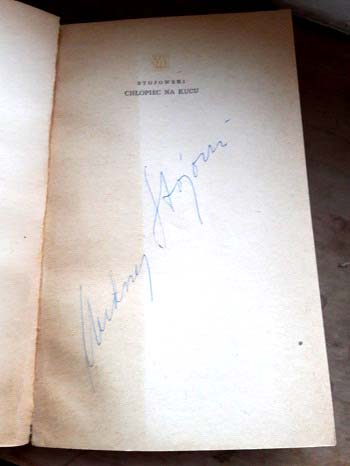 I wcale nie Żeromski. Szkoda, że już tego nie czytamy. Taka piękna wartka proza, gdzie polszczyzna oryginalna ale nieskażona, każde zdanie, każde słowo prawidłowo użyte…
 Brawo Bogusław Fleck i cała ekipa UTP czyli Uniwersytetu Trzech Pokoleń!



 Przyszła po książki. Miała ze sobą śliczną torebkę.
 Powstawały kolejne sukienki. Udało mi się odnieść pierwsze sukcesy w sferze mody – zostałam finalistką konkursu projektowania odzieży w Sieradzu. Z tej okazji powstała sukienka, do uszycia której użyłam – poza standardowym materiałem -przezroczystej folii. Nic nie wskazywało jednak na to, że to właśnie na tym elemencie w przyszłości zacznie opierać się moja marka. Czekała na mnie długa i zaskakująca (ale jakże bogata w doświadczenia!) droga, zanim doszłam do momentu, w którym jestem teraz. W tamtym czasie zawodowo zajmowałam się głównie przeróbkami i naprawą różnego rodzaju materiałów i ubrań (jak np. garniturów).
 pewną satysfakcję z tym związaną, realne piękno, jednak nie było to jeszcze „to”. Czułam, że za rogiem czeka coś więcej. 😉
 w sobie, nauczyli mnie innych rzeczy – jak wiary we własne możliwości. W głowie kiełkować zaczęła już myśl – choć jeszcze niesprecyzowana – o stworzeniu czegoś własnego. Już nie w ramach hobby. Tym razem miał to być pomysł na życie.
 idee od długiego już czasu były mi bliskie, zdecydowałam się na roczne zajęcia sztuki medytacji w buddyjskiej świątyni.
 Ewa Maria and Friends