
The Great Rot Mystery
For 60 million years trees were essentially immortal. During the Carboniferous period plants evolved a tough material called lignin to grow taller and stronger. The catch? Absolutely nothing on Earth—no bacteria, no insects, and no fungi—knew how to eat it.
When these giant trees fell, they didn’t rot. They just piled up in massive, undigested heaps for millions of years. This “evolutionary lag” is actually the reason we have fossil fuels today! Those un-rotted forests were eventually compressed into the coal we mine now.
The cycle of life as we know it didn’t truly begin until a specific type of fungi finally evolved the “molecular toolkit” to break down lignin. This single biological breakthrough ended an era, allowed nutrients to finally return to the soil, and paved the way for the modern ecosystems we see today. Nature is the ultimate problem solver—it just takes a few million years sometimes!
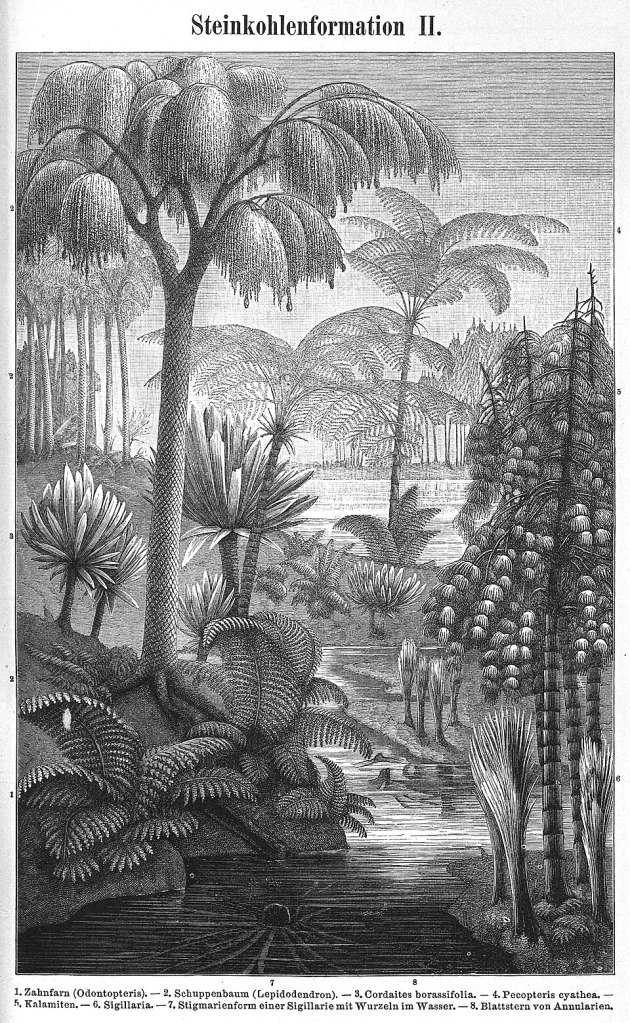
This image comes from the 4th edition of Meyers Konversationslexikon (1885–90).
The copyrights have expired and this image is in the public domain.
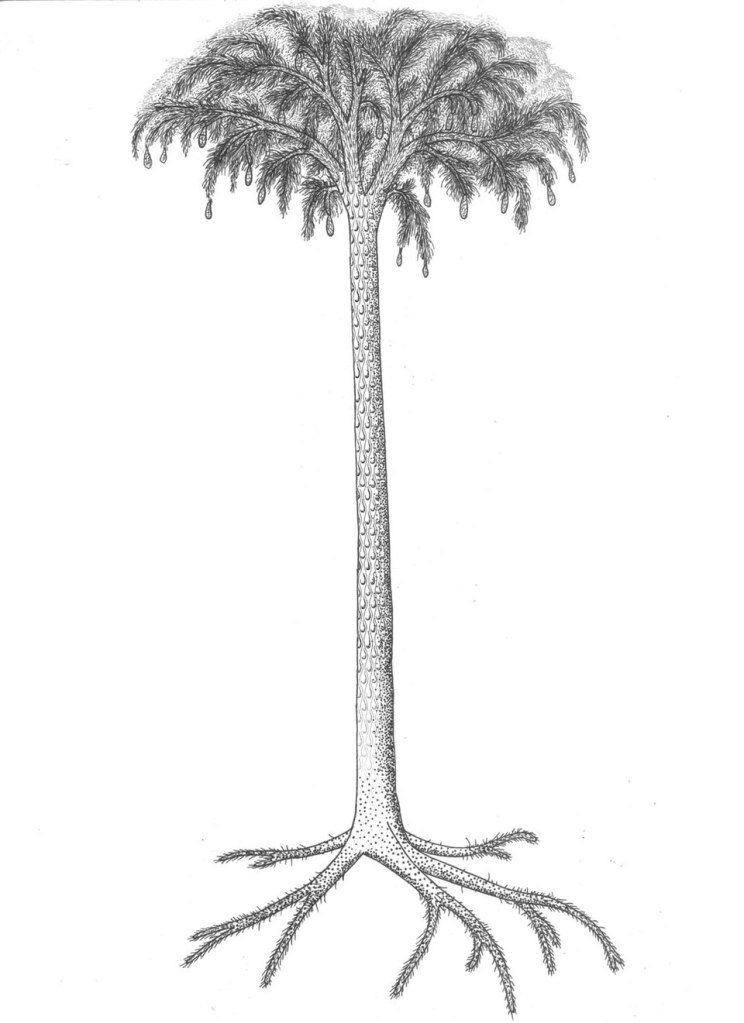
It is one of those trees, lepidendron. Picture made by Falconaumanni (CC BY-SA 3.0) – commons.wikimedia.org
The Carboniferous is a geologic period and system of the Paleozoic era that spans 60 million years, from the end of the Devonian Period 358.86 Ma (million years ago) to the beginning of the Permian Period, 298.9 Ma. It is the fifth period of the Phanerozoic eon. The name Carboniferous means “coal-bearing”, from the Latin carbo – coal and fer – carry, and refers to the many coal beds formed globally during that time.
 Ewa Maria and Friends