Lili Marleen

Dla Iwonki

Ewa Maria Slaska

Jedna z opowieści, której nie zdążyłyśmy sobie opowiedzieć, bo trzy tygodnie to stanowczo za mało czasu na dwie opowieści o życiu i tysiąc i jedną opowieść o wszystkim i o niczym.

***
Lili Marleen to niemiecka piosenka z okresu wojny śpiewana przez Lale Andersen.

Pierwotny tytuł piosenki: Lied eines jungen Wachtpostens (Piosenka młodego wartownika).
Lale Andersen, naprawdę Liese-Lotte Helena Berta Bunnenberg (1905 – 1972), była niemiecką piosenkarką, autorką piosenek i aktorką. Na całym świecie znana jest przede wszystkim właśnie jako wykonawczyni piosenki Lili Marleen.

Vor der Kaserne vor dem großen Tor
Stand eine Laterne
Und steht sie noch davor
So wollen wir uns da wiedersehn
Bei der Laterne wollen wir stehen
Wie einst
Lili Marleen
Wie einst
Lili Marleen
XXX
Unsre beiden Schatten sahen wie einer aus;
Dass wir so lieb uns hatten
Das sah man gleich daraus
Und alle Leute sollen es sehen
Wenn wir bei der Laterne stehen
Wie einst
Lili Marleen
Wie einst
Lili Marleen
XXX
Schon rief der Posten: Sie bliesen Zapfenstreich;
Es kann drei Tage kosten!
Kam’rad, ich komm ja gleich
Da sagten wir auf Wiedersehn
Wie gerne würd’ ich mit dir gehn
Mit dir
Lili Marleen
Mit dir
Lili Marleen
XXX
Deine Schritte kennt sie
Deinen schönen Gang
Aller Abend brennt sie
Doch mich vergaß sie lang
Und sollte mir eine Leids geschehn
Wer wird bei der Laterne stehn
Mit dir
Lili Marleen?
Mit dir
Lili Marleen?
XXX
Aus dem stillen Raume
Aus der Erde Grund
Hebt mich wie im Traume dein verliebter Mund
Wenn sich die späten Nebel drehen
Werd’ ich bei der Laterne stehen
Wie einst
Lili Marleen
Wie einst
Lili Marleen
XXX
(Wenn sich die späten Nebel drehen
Werd’ ich bei der Laterne stehen)
Wie einst
Lili Marleen
Wie einst
Lili Marleen
Outside the barracks, by the corner light
I’ll always stand and wait for you at night
We will create a world for two
I’ll wait for you the whole night through
For you, Lili Marlene
XXX
Bugler tonight don’t play the call to arms
I want another evening with her charms
Then we will say goodbye and part
I’ll always keep you in my heart
With me, Lili Marlene
XXX
Give me a rose to show how much you care
Tie to the stem a lock of golden hair
Surely tomorrow, you’ll feel blue
But then will come a love that’s new
For you, Lili Marlene
XXXWhen we are marching in the mud and cold
And when my pack seems more than I can hold
My love for you renews my might
I’m warm again, my pack is light
It’s you, Lili Marlene
XXXMy love for you renews my might
I’m warm again, my pack is light
It’s you, Lili Marlene

Tekst piosenki został napisany przez Hansa Leipa już w roku 1915, muzykę ułożył w roku 1939 Norbert Schultze i wtedy też piosenka została zaśpiewana i nagrana przez Lale Andersen (Electrola EG 6993). Podczas II wojny światowej piosenkę spopularyzowało radio dla żołnierzy niemieckich w Belgradzie, które nadawało ją zawsze na zakończenie audycji. Nagranie było ogromnym sukcesem finansowym – Lili Marleen była pierwszym utworem w historii dyskografii niemieckiej, który przekroczył sprzedaż miliona egzemplarzy. Piosenka była tak popularna, że przez jakiś czas śpiewali ja żołnierze po obu stronach frontu, co było jedynym takim wypadkiem w historii (ale nie wiem czy wojen, czy muzyki). To się oczywiście nie spodobało władzom hitlerowskim, które zakazały jej wykonywania – oficjalnie uznana została za utwór deprymujący i podkopujący morale żołnierza niemieckiego. Pod koniec wojny Lili Marleen śpiewali więc przede wszystkim żołnierze wojsk walczących z Niemcami. Wśród żołnierzy amerykańskich piosenkę spopularyzowla Marlene Dietrich.

Popularność piosenki wśród żołnierzy amerykańskich spowodowała, że Lale Andersen, przedtem uważana za ulubienicę Hitlera, popadła w niełaskę. Przez jakiś czas w ogóle nie wolno jej było występować, a gdy już przwrócono jej prawo występów – nie wolno jej było wykonywać Lili Marleen. Piosenka została usunięta z archiwów niemieckich. Lale Andersen wycofała się do końca wojny z życia publicznego. W podziemiu niemieckim i europejskim krążyły legendy o jej aresztowaniu, o tym że była więźniarką obozu koncentracyjnego, że została uwięziona za romans z żydowskimi twórcą. Do tych legend nawiązuje niemiecki film wojenny Lili Marleen z roku 1981 w reżyserii Rainera Wernera Fassbindera. Główne role w filmie zagrali Hanna Schygulla jako piosenkarka Lale Andersen i Giancarlo Giannini jako jej ukochany, żydowski piosenkarz i kompozytor Rolf Liebermann (w filmie Robert Mendelsson). Scenariusz filmu powstał wprawdzie w oparciu o autobiografię piosenkarki pt. Der Himmel hat viele Farben (The Heavens Have Many Colors), ale mąż artystki wielokrotnie podkreślał, że film Fassbindera niewiele ma wspólnego z prawdą.

Lili Marleen po polsku w wykonaniu Kazika.

Music in NY

Text: Ewa Maria Slaska
Video: Iwona Schweizer

New York, 12th of Oct 2018. Two days earlier I came to America, but it is my first day in New York. We came with train from Ramsey. They are my first steps in NY sms  my first “meeting” with that incredible City after 27 years. And it is, what we see:

I do not know yet that music will be a very important element of my staying in NY this time.

Next day we go to Carnegie Hall to the concert of Singing Men of Texas (see here). During the break we go to the loo and we meet Maria, an almost blind Polish woman living in Manhattan. She invites us to the Piano Concert which is organized by New York Piano Society (NYPS) on the next day in Kaufman Music Center in Lincoln Hall. Elena Leonova, founder and artistic director of NYPS presents her students, all of them men of rang and position: a professor, a manager, a scientist, playing Bach, Chopin or Debussy.  They play very good, very professional, though as a matter of fact they are amateurs. On the website of NYPS I read, they are “pianists with non-musical careers”.

Some days later, on 17th of October we go to the Public Theater on the famous Lafayette Street. In Joe’s Pub we see Adrienne Haan, a…

chanteuse featuring in a Joseph Barry Production, A Tribute to Berlin’s Golden Age. Haan’s performance celebrated the 100th anniversary of the end of World War I and the beginning of the Weimar Republic with musical selections that characterize Berlin during the 20’s and early 30’s as a time of change.  The program under the musical direction of  pianist Richard Danley included Spoliansky’s, It’s All a Swindle, Hollaender’s Falling in Love Again, Berlin’s Puttin’ on the Ritz and Porter’s Night and Day. Ms. Haan performed with the Grammy-award winning 1920’s Big Band, Vince Giordano and The Nighthawks. (…) With a diverse repertoire that ranges from chanson to jazz, blues, klezmer and Broadway, Haan has a passion for the music of the 20s and 30s.  Highlights of Haan’s 2018 season include appearances at the Théâtre National du Luxembourg, Senftöpfchen Cologne, Beethovenfest in Bonn, the Ruhrfestspiele Recklinghausen Festival, performances of her Cabaret Français in Warsaw, and Tehorah in Łódź, Poland, and a return to Asuncion, Paraguay. Her latest CD Berlin, Mon Amour, hailed as “engaging and unique,“ is a tribute to 20s and early 30s Germany.

Everywhere in New York we meet music. In the metro station 14th street on our way to famous Chelsea Market (Oreo were produced there!) and the fascinating High Line we see piano – everybody could come and play…

It was Friday. On Saturday we go to one of Off Broadway theaters to see This One’s For The Girls, a piece with four women of different ages and colors singing with amazing voices, as they call it, the “soundtrack of our life” – a new musical written by Dorothy Marcic.

Spanning over the last 100 years, This One’s For The Girls tackles what it means to be a woman through song. From mournful laments such as “A Bird in a Gilded Cage” to angry anthems such as “I Am Woman” and “You Don’t Own Me,” the new musical is a high-energy celebration of womanhood. Top 40 hits such as “RESPECT,” “Stand by Your Man,” and “Girls Just Wanna Have Fun,” are just a few of the tunes you can expect to hear throughout the performance.

What I like in America?

Ewa Maria Slaska

Iwonka (Foto somebody)

Rich (Foto Iwonka)

Manhattan seen from Brooklyn (Foto Iwonka)

and from the Atlantic Ocean (Foto Iwonka)

Perkins Memory Drive (with Manhattan skyline)

“Our” Golf and Country Club (Fotos Iwonka)

Cardinals (Foto Iwonka in a winter!)

Golf course (View from the living room. Foto Iwonka)

Fireplace inside the living room.

Israeli Couscous

“Our” train to NY and back (Foto Iwonka)

New World Trade Center Train Station (designed by Santiago Calatrava)

“Clean Cranberry Snax” with Chia- or Pumpkin seeds

Cute Halloween cakes

Mighty mighty mighty

Ewa Maria Slaska

We went to New York to concert of Singing Men of Texas (120 of them!) in Carnegie Hall! Strange!

Me in Carnegie Hall. Strange! (Foto Iwona)

120 singing men. Strange!

Everything I saw last days in America reminded me an all American movies I’ve ever seen and all American book I’ve ever read.
The farmer in a red pic up, weather-beaten dude, but handsome, in red plaid shirt.
High school kids singing Sunday morning between booths on farmers market.
Suburb train taking every morning all the kings men to work in Manhattan.
Midget waiter in an Italian Trattoria where we have our pre theater dinner serving cold water and wine. At the table near to us two families, behind us a very young and pretty woman with a wrath of red flowers looking like Frida Kahlo.
Very nice but in the same time a somewhat spooky pastor who forget to comb his hair and his curly red haired women born in Poland, singing soprano in a church.
Very handsome, very black, very tall intellectual with squared glasses better looking than almost any other men in the whole Hall.
And so on.

They singed gospel in Carnegie Hall. 120 white men and one black pastor.

They also sang that sweet song of Mosie Lister, I am feeling fine. O yeah, I am feeling mighty fine.

A great star of Gospel music, Steve Green, was singing with them. I was not very fond of him, though I had to admit, he had really mighty voice. But then he sang a capella Martin Luthers Mighty Fortress, and I thought I have never heard that song singed so mighty…

It is one of the best known hymns by the German reformer Martin Luther. He wrote the words, a paraphrase of Psalm 46, and composed the melody sometime between 1527 and 1529. It has been translated into English at least seventy times and also into many other languages.

A Mighty Fortress
XXX
A mighty fortress is our God
A bulwark never failing
Our helper He amid the flood
Of mortal ills prevailing
For still our ancient foe
Doth seek to work us woe
His craft and power are great
And armed with cruel hate
On Earth is not his equal
Did we in our own strength confide
Our striving would be losing
Were not the right man on our side
The man of God’s own choosing
You ask who that may be
Christ Jesus, it is He
Lord Saboth His name
From age to age the same
And he must win the battle
XXX
And through this world with devils filled
Should threaten to undo us
We will not fear
For God hath willed His truth to
Triumph through us
The prince of darkness grim
We tremble not for him, his rage we can endure
For lo, his doom is sure
One little word shall fell him
XXX
That word above all earthly powers
No thanks to them, Abideth
The spirit and the gifts are ours
Through Him who with us sideth
Let goods and kindred go
This mortal life also
The body they may kill, God’s truth abideth still
His kingdom is forever
His kingdom is forever and ever
XXX
Translated by Steve Green
Ein feste Burg ist unser Gott
XXX
Ein feste Burg ist unser Gott,
ein gute Wehr und Waffen.
Er hilft uns frei aus aller Not,
die uns jetzt hat betroffen.
Der alt böse Feind
mit Ernst er’s jetzt meint,
groß Macht und viel List
sein grausam Rüstung ist,
auf Erd ist nicht seins gleichen.
XXX
Mit unsrer Macht ist nichts getan,
wir sind gar bald verloren;
es streit’ für uns der rechte Mann,
den Gott hat selbst erkoren.
Fragst du, wer der ist?
Er heißt Jesus Christ,
der Herr Zebaoth,
und ist kein andrer Gott,
das Feld muss er behalten.
XXX
Und wenn die Welt voll Teufel wär
und wollt uns gar verschlingen,
so fürchten wir uns nicht so sehr,
es soll uns doch gelingen.
Der Fürst dieser Welt,
wie sau’r er sich stellt,
tut er uns doch nicht;
das macht, er ist gericht’:
ein Wörtlein kann ihn fällen.
XXX
Das Wort sie sollen lassen stahn
und kein’ Dank dazu haben;
er ist bei uns wohl auf dem Plan
mit seinem Geist und Gaben.
Nehmen sie den Leib,
Gut, Ehr, Kind und Weib:
lass fahren dahin,
sie haben’s kein’ Gewinn,
das Reich muss uns doch bleiben.

PS. For those who do not know (I did not):

Mosie Lister (1921 – 2015) was an American singer and Baptist minister. He was best known for writing the Gospel songs “Where No One Stands Alone”, “Till the Storm Passes By”, “Then I Met the Master” and “How Long Has It Been?” As a singer, he was an original member in The Statesmen Quartet, the Sunny South Quartet, and the Melody Masters. In 1976 Lister was inducted into the Gospel Music Hall of Fame and the Southern Gospel Music Association in 1997. His songs have been recorded by nearly every Southern Gospel artist. And not only. Elvis Presley recorded three of his songs in the 60s: “Where No One Stands Alone” “He Knows Just What I Need” and “His Hand in Mine”.

Kosciasko… Kosciusco…

Ewa Maria Slaska

I was invited to America by my friend. Thank you Iwona! It is great to be with you here!

It is already my third day in America.
Yesterday I was told that today we will visit West Point.
Do you know what West Point is? Oh, I said, something military.
I visited USA 27 years ago so I was aware that Kosciuszko was involved in the  revolutionary war here.
I asked my friends “do Americans know that he was Polish?; they pronounce his name as Kosciusko?”  I was assured that Americans know that he was a Pole but I still had doubts.
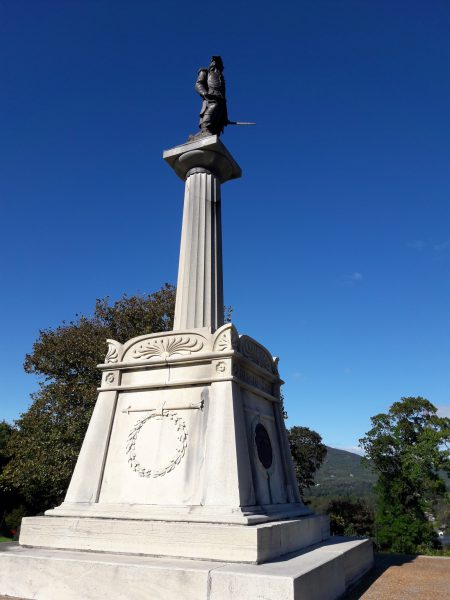
Shortly after we were in the United States Military Academy, also called West Point. Originally established as a fort, it is a national landmark full of historic monuments and buildings. Kosciuszko, military architect designed and managed construction of the West Point’s fortification. He even build tranquil Kosciusko Garden, overlooking stunning Hudson River, where he would retreat to relax and contemplate. Soon we approached his monument. I was proud to see how prominent Kosciuszko’s role was in Polish and American history.

Do you recognize him? Tadeusz Kościuszko!

From Wikipedia:
He was born 1746, died October 15, 1817. He was Polish-Lithuanian military engineer, statesman, and military leader who became a national hero in Poland, Lithuania, Belarus, and the United States. He fought in the Polish-Lithuanian Commonwealth’s struggles against Russia and Prussia, and on the U.S. side in the American Revolutionary War. He studied in Warsaw and Paris, then 1776 moved to America, where he took part in the American Revolutionary War as a colonel in the Continental Army. An accomplished military architect, he designed and oversaw the construction of state-of-the-art fortifications, including those at West Point, New York. In 1783, in recognition of his services, the Continental Congress promoted him to brigadier general. Upon returning to Poland in 1784, Kościuszko was commissioned as a major general in the Polish-Lithuanian Commonwealth Army in 1789. After the Polish–Russian War of 1792 resulted in the Second Partition of Poland, he organized an uprising against Russia in March 1794 (Powstanie Kościuszkowskie), serving as its Naczelnik (commander-in-chief). Russian forces captured him at the Battle of Maciejowice in October 1794. The defeat of the Kościuszko Uprising led to Poland’s Third Partition in 1795, which ended the Polish–Lithuanian Commonwealth’s independent existence for 123 years. In 1796, following the death of Tsaritsa Catherine the Great, Kościuszko was pardoned by her successor, Tsar Paul I, and he emigrated to the United States. A close friend of Thomas Jefferson’s, with whom he shared ideals of human rights, Kościuszko wrote a will in 1798 dedicating his U.S. assets to the education and freedom of U.S. slaves. He eventually returned to Europe and lived in Switzerland until his death in 1817. The execution of his will later proved difficult, and the funds were never used for the purpose he had intended.

***

My friends live in Ramsey, New Jersey, one of many bedroom communities close to New York City; 45 minutes by car or train. Ramsey is located  five minutes from the Appalachian  Mountains. On our way to West Point we drove through Seven Lakes – as name implies group of seven large and few small, picturesque lakes. Via curvy and steep Perkins Memorial Drive we reached the top of the Bear Mountain. It is breathtaking view of the Hudson Valley, Catskill Mountains.
It is sunny autumn day. We are surrounded by huge green forests. Some trees are already covered in a fall foliage, the whole landscape is shiny and golden.
We plan to visit this area in 2 weeks, hoping that Appalachian Trial and Bear Mountain  will be covered with vivid fall colors. We are stopping every now and then so I can take pictures. Once, far away behind river, lakes, forests and hills we see again skyline of New York City. I was thrilled that day.

Barataria 87 Terry Gilliam oder Don Quixote

Der Mann, der Don Quijote getötet hat (2018)

Ein Film von Terry Gilliam mit Jonathan Pryce und Adam Driver
Kinostart: 27. September 2018, 132 Min., Abenteuer, Fantasy, Komödie

Die Geschichte eines verwirrten alten Mannes, der überzeugt davon ist, er sei Don Quijote, und den Werbefilmer Toby für seinen treuen Knappen Sancho Panza hält. Vor den beiden liegt eine bizarre Reise, wobei der Film in der Zeit hin- und herspringt, zwischen dem 21. Jahrhundert und einem magischen 17. Jahrhundert. Wie der berühmt-berüchtigte spanische Ritter selbst wird Toby nach und nach von der Scheinwelt verzehrt und kann seine Träume irgendwann nicht mehr von der Realität unterscheiden. Wenn er letztlich und aus Versehen Don Kichote getötet hat, wird er selber Don Kichote werden, der in die Welt geht…

Sancho Pansa trifft die Fürstin, die ihm im Buch seine Insel (Insel auf dem Land) Barataria geschenkt hatte; im Vorfilm, Lost in La Mancha, kam es lediglich einmal zu Wort, dass Sancho Pansa einen Preis bekommt – er soll ein König werden. Im neuen Film bekommt er gar nicht und niemand verpricht ihm auch was. Auch diese Szene gibt es nicht mehr.

Der Film bekam sehr schlechte Kritiken, ich muss aber sagen, mir gefiel er sehr gut. Er ist verrückt, springt stets in sieben Dreiecken, nichts ist hier logisch und gerade das Bizarre im Film fesselt Einem erbarmungslos.

***
Die Geschichte der Filmentstehung ist selbst Don Kichote würdig und Terry Gilliam kann man ohne weiteren Windmülenkämpfer nenen. Schon vor 30 Jahren wollte er einen Film über Don Quixote machen.

Josef Grübl

Es gibt jene Regisseure, die bekannt sind für das, was sie gemacht haben. Die sich ihr Lebenswerk auf silberne Scheiben gepresst ins Regal stellen können, feinsäuberlich nach Titel, Genre oder Entstehungsjahr geordnet. Und dann gibt es noch die anderen Regisseure. Die sind für Filme berühmt, die sie nicht gemacht haben, die auf halber Strecke verloren gegangen sind und es nie ins Kino geschafft haben, geschweige denn ins Regal.

Terry Gilliam gehört eher zur zweiten Kategorie, trotz seiner vielen großartigen Regiearbeiten: Brazil, Der König der Fischer oder Die Ritter der Kokosnuss sind moderne Klassiker, letzterer entstand gemeinsam mit seinen Kollegen von der legendären Komikergruppe Monty Python. Das Filmfest zeigt diese Werke, man hat ihren Regisseur eingeladen und ehrt ihn mit dem Cinemerit Award. Doch für Gilliam geht es nicht so sehr ums Preisabholen, er hat einen neuen Film gemacht, den er in Deutschland vorstellen will. Dieser galt etwa 20 Jahre lang als der berühmteste nicht verfilmte Film aller Zeiten. Die Entstehungsgeschichte von The Man Who Killed Don Quixote ist lang und hat etwas mit Düsenjägern, Regenstürmen, Bandscheibenvorfällen und wackligen Finanzierungskonzepten zu tun. Einzeln hätte man die Probleme vermutlich lösen können, in ihrer Gesamtheit führten sie aber dazu, dass die im Jahr 2000 begonnen Dreharbeiten abgebrochen werden mussten. In den Jahren darauf versuchte der Regisseur immer wieder, das Projekt wiederzubeleben, mit neuen Partnern, überarbeiteten Drehbüchern, anderen Schauspielern als den ursprünglich vorgesehenen Stars Jean Rochefort und Johnny Depp. Doch nichts klappte, es war ein sprichwörtlicher Kampf gegen die Windmühlen – den übrigens auch schon Gilliams Regiekollege Orson Welles verloren hatte, der zwölf Jahre lang an einem Don-Quixote-Film drehte, ihn aber nie vollenden konnte.

In der legendären britischen Komikergruppe Monty Python war er der einzige Amerikaner

Doch Terry Gilliam gab nicht auf, er ist nicht nur kreativer Bilderstürmer, sondern auch unermüdlicher Kämpfer. Und so konnte er im Juni 2017 auf seiner Facebook-Seite den Abschluss der Dreharbeiten zu The Man Who Killed Don Quixote bekannt geben – fast 30 Jahre nach der ersten Idee zu diesem Film. Die Dreharbeiten verliefen angeblich ohne größere Komplikationen, doch ganz ohne Katastrophe ging es auch dieses Mal nicht: Kurz vor der Premiere bei den Filmfestspielen Cannes im Mai 2018 klagte ein portugiesischer Produzent auf Urheberrechtsverletzung, er war vor Jahren an dem Film beteiligt und wollte die Aufführung verhindern. Es hätte also gut sein können, dass Gilliams Herzensprojekt auf den letzten Metern doch noch gestoppt worden wäre – und so ganz in trockenen Tüchern ist es wohl immer noch nicht. Hinter den Kulissen tobt immer noch eine Anwaltsschlacht, die selbst ihm zu viel wurde. Wenige Tage vor Cannes erlitt er einen Schwächeanfall und musste ins Krankenhaus. Britische Medien spekulierten sogar über einen Schlaganfall des 77-Jährigen, was sich glücklicherweise nicht bestätigte. Und so konnte er doch noch nach Cannes, der Film wurde aufgeführt, der Regisseur zeigte sich gut gelaunt auf dem roten Teppich.

Sein Monty-Python-Kollege Terry Jones sagte einmal, dass Gilliam nur arbeiten könne, wenn er einen Gegner hätte. Erst dann laufe er zu großer Form auf. An Gegnern hat es ihm nie gemangelt, davon zeugen auch die Filme, die er nicht machen konnte: Er war J. K. Rowlings erste Wahl für den ersten Harry Potter-Film, auch Charlie und die Schokoladenfabrik oder die Comicverfilmung Watchmen sollten unter seiner Regie entstehen. Doch den jeweiligen Produzenten erschien Gilliams überbordende Fantasie als unkontrollierbar. Im Jahr 1993 arbeitete er an einem Hollywoodfilm namens The Defective Detective, Nicolas Cage und Robin Williams wollten die Hauptrollen spielen, es sah ziemlich lange ziemlich gut aus – doch irgendwann zog das Studio den Stecker. Genauso lief es bei der Dickens-Verfilmung A Tale of Two Cities mit Mel Gibson, danach hatte Terry Gilliam von Amerika die Nase voll.

Es war nicht das erste Mal in seinem Leben: 1940 im amerikanischen Minneapolis geboren, arbeitete er nach einem Studium in Los Angeles als Zeichner für ein New Yorker Satiremagazin. Ein junger Engländer, den er dort kennenlernte, vermittelte ihm einen Job bei der BBC. Sein Name lautete John Cleese, gemeinsam mit anderen Komikern gründeten sie Monty Python. Terry Gilliam war der einzige Amerikaner in der Gruppe, er kümmerte sich vor allem um die schrägen Animationen, die die Sketche in ihrer Fernsehserie Monty Python’s Flying Circus zusammenhielten. Im Jahr 1975 kam Die Ritter der Kokosnuss ins Kino, es war der erste Spielfilm der Pythons, Gilliam führte gemeinsam mit Terry Jones Regie. In den Jahren darauf arbeitete er neben den Monty-Python-Projekten auch schon an eigenen Filmen.

Die Liste an Leuten, die sich an dem Tischlersohn aus Minnesota aufgerieben haben, ist lang, sein Verhältnis zu John Cleese ist schwierig. 1988 brachte er den deutschen Produzenten Thomas Schühly mit gewaltigen Budgetüberschreitungen bei Die Abenteuer des Baron Münchhausen in finanzielle Schieflage, im Jahr 2005 legte er sich mit dem mächtigen Harvey Weinstein an: Dessen ständiges Einmischen habe den Film Brothers Grimm verhunzt, behauptete Gilliam später. Der längst in England sesshaft gewordene Regisseur war schon öfter in München zu Gast, 2009 eröffnete er mit Das Kabinett des Doktor Parnassus sogar das Filmfest. Auch bei diesem Film gab es große Probleme, Hauptdarsteller Heath Ledger starb während der Dreharbeiten – und Gilliam musste kämpfen. Wieder einmal.

Ledgers noch fehlende Szenen übernahmen die Hollywoodstars Johnny Depp, Colin Farrell und Jude Law. Das funktionierte wider Erwarten sogar, dementsprechend erleichtert zeigte sich der Regisseur am Eröffnungsabend. Er brachte sogar seine Produzentin mit, die Zusammenarbeit mit ihr sei einfach großartig gewesen, schwärmte er. Ein Zeichen von Altersmilde? Nicht wirklich: Amy Gilliam ist seine Tochter, sie war auch jetzt beim Don-Quixote-Projekt beteiligt. Die beiden wissen vermutlich sehr genau, was sie aneinander haben.

Ryszard Ka schrieb Fogendes für allocine:

Pour moi décidément le meilleur film de Gilliam après Brazil. Une aventure de deux heures que je n’ai pas vu passer. Une histoire ficelée de main de maitre qui sillonne la limite de l imaginaire et de la réalité. Celles ci s’entremelant a chaque séquences au gré de la folie du personnage avec plusieurs couches de lecture possible.. Mise en scene d un Don Quichote dans ce monde moderne aussi impitoyable que le moyen âge le plus sombre auquel le rêve fou d un idéal est le seul echapatoire. Le Don de Terry est aussi touchant que le personnage de Cervantes. Loin d etre un auto portrait, le réalisateur s’amuse à coller des épisodes de sa galère de 25ans pour produire ce qui a mon avis restera le film le plus complexe qu il a réalisé. J espère que le film aura son succès,il le mérite amplement.

Wieder eine Buchseite auf der Strasse

…am Tag der Deutschen Einheit in Berlin gefunden. Eine Seite auf der Strasse direkt vor meinem Haus liegend. Ich kann nicht umhin, jetzt muss ich einfach all diese aus den Büchren rausgerissenen Seiten IMMER aufheben und entdecken, was für ein Buch es ist. Es ist inzwischen eine Sucht geworden…

Ich bin schon geübt, ich weiss schon, was ich aus dem sorgfältig gelesenem text als Keywords herauspicken muss, um das Buch im Google zu identifizieren. Diesmal schrieb ich die Reihe nach alle Namen, die auf den beiden Seiten auftauchen in die Suchspalte: Travis Amy Leiche David George Frankie Craig. Die Antwort kam prompt:

Craig Morgenstern is a total scaredy cat, even with his reputation as such being well known amongst everyone. But as of late, things are looking up for Craig! He has moved to a new town and even saved a baby from being hurt in a car accident. Everyone is then considering Craig to now be very brave for what he did. Despite him falling off of his bike and nearly getting hit by the careening car. Not to mention, accidentally getting inside of it and managing to stop it. The car slows to a stop in front of his new school on his first day of classes, branding him a hero to the entire student body, save a few skeptical students. The mother of the baby rushes over to thank him, having accidentally left the car for just a moment while the baby was still inside.

Craig’s good fortune continues to escalate even higher! He befriended the cutest girl in school, Amy. Who is very impressed with his bravery. Unfortunately, her best friends Travis and Brad happen to be Craig’s harshest critics. They refuse to be won by the boys charms, even after he saves a bird’s nest. Other random lucky streaks happen to strike Craig also. Such as screaming in horror during a scary movie, which Amy agrees that it is fun to scream along with characters in films.

But jealous of all the attention Craig receives, Travis becomes obsessed with trying to prove that Craig is a scaredy cat. He then talks with a cousin, who happens to know about Scaredy Cat Craig from his previous town/school. So Travis shows up with a jar full of spiders and dares Craig to stick his hand in the jar for five minutes. Craig is goaded on by Amy and does so, only to be bitten so many times that he can’t even remove his swollen hand after five minutes are up. So Amy talks Travis into going double-or-nothing and Craig has to keep his hand submerged twice as long.

Travis pledges to go double or nothing again the following day. The bravery challenge this time will be to kiss a poisonous snake on the lips, but really what one boy does it pluck out a single eyeball of his own and shove it into Craig’s mouth. Craig comes out of this one looking brave by spitting out the eyeball and nobody is really surprised when they find it is a fake gag eyeball. They do not think this is enough to prove how brave Craig is however and Travis reveals that his father works at a funeral parlor. So now the newest bravery test involves Craig sneaking into the funeral home and sitting in a coffin.

But unfortunately for him, the coffin he chooses is occupied. His “friends” egg him on anyways, as a truly brave person would sit in a corpse-filled coffin no problem. The corpse then comes to life and tries to choke Craig, but Craig allows himself to be choked by the “corpse”. This shocks Travis, who had been the corpse in hopes of outing him. But then Amy challenges Travis to let Craig repeat the challenge again the next day. At some point, Craig comes clean with Amy, but Amy just thinks he is not only brave but sweet to not want to take Travis’ money by pretending to be afraid.

Sometime after then, Craig accidentally beats up Brad’s older brother! Once again everyone is at the funeral home when all of the corpses rise and begin to attack! Everyone runs away, but Craig stays to bravely defend those who abandoned him. Proving to them all that he really was brave all along.

It turns out that the corpses were all set up by Craig, with some help from Brad. Who felt bad about how devoted Travis was to proving Craig’s bravery. The zombies were actually Brad’s older brother (the one Craig “beat up”) and his friends. Brad’s brother walks in and apologizes for his friends not being able to make it to the cemetery, which results in Brad racing away to vomit in horror.

It turns out Brad’s brother just said that to get back at Brad! Craig walks home and remarks to the reader on how it turns out he really is brave… even if he is still afraid of the dark.

Reblog: Bizary i skurile w Szczecinie

Kochani czytelnicy/czki. Przepraszam, bo w tym wpisie nic już nie ma.  Minęły lata i zniknęły wszystkie zdjęcia, które tu kiedyś umieściłam. Gdzie są? 

Bizary… czy ktoś jeszcze pamięta w Polsce to słowo? My w Niemczech prędzej je zrozumiemy, nawet jeśli polskiego słowa wcale już nie znaliśmy, bo po niemiecku jak coś jest dziwaczne, to można o tym powiedzieć, że jest bizarr. A jak człowiek się zachowuje dziwacznie, to jego zachowanie może być określone jako skurril. Wydaje mi się, że tego słowa polszczyzna, również ta dawna, w ogóle nie miała, ale co tam. Byłam na wycieczce w Szczecinie i zobaczyłam taką ilość bizarów i skurili, że postanowiłam się z wami podzielić.

To Krzyżak ze Sztumu. W Szczecinie.

W restaracji “Na kuncu korytarza” w Zamku oferta obejmuje kacze biusty.

Ogłoszenie “Klubu śledziojadów”.  W tym Szczecinie oni wciąż tylko o jedzeniu.

Na zdjęciu (a raczej na plakacie) Anita, ongiś zakochana (“na zabój”) w Polaku ze Szczecina hinduska miss piękności, dziś dobrze prosperująca właścicielka kilku egzotycznych restauracji  w Szczecinie, które pozostają w rodzinnych rękach – bo syn poszedł w ślady rodziców.

O Anicie powstaje właśnie film w koprodukcji Film Polski – Bollywood. Rolę jej samej otrzyma siostra Anity, słynna aktorka bollywoodzka.

A jak nie o jedzeniu, to o piciu.Zanim Wyszak został piwowarem, był… piratem, ale – i teraz dopisek z kwietnia 2025 roku – umiał sobie załatwiać różne sprawy. Prawie 30 zdjęć zniknęło, a to jedno, jedyne zostało.

Pompy w Szczecinie nie są niestety czynne (w Berlinie są), ale za to mają zabójczy niebieski kolorek.

A tu święto dyni – i pomyśleć, że za czasów mojej młodości dynia znana była w Polsce tylko jako rodzaj pikli na słodko w occie (były paskudne).

Wszędzie można dojść, wszędzie blisko, i do podziemi i pod opiekę niebieską…

Artystyczny wyrzut śmieci

“Wkurw” – wersja rozbrajająco łagodna

Szklany sufit najpiękniejszej poczty na świecie. Przed wojną Szczecin miał więcej abonentów telefonicznych niż Berlin, choć był od stolicy Niemiec czterokrotnie mniejszy. Było 30 telefonistek i pracowały na dwie zmiany.

Orzech czarny, najstarsze drzewo w Szczecinie

W oddali para młoda, niestety więcej nie można było sfotografować. Panna młoda bacznie pilnowała RODO. A szkoda, bo miała ciekawą suknię, haftowaną złotem jak obrus na ołtarz.

Ciekawe ostro czerwone hydranty, aż się proszą, żeby nimi trochę poszarpać. No a jak się za mocno pociągnie, no to hydrant się rozpada – część ląduje na bruku, a część w kwiatkach

Na bruku lądują też serca, białe, być może niewinne

Bardzo ciekawe faktury

Ta firma ze Szczecina ma też swą filię w Berlinie na Kreuzbergu…

Idzie nowe…

Lub jedzie do pracy…

Plakat w Szczecinie zachęca Polki do pracy w Niemczech, ale coś się tłumaczowi pokręciło, nie zrozumiał co jest czym czego i teraz plakaty głoszą, iż w Niemczech zaopiekują się nami – szczecinianami – osoby starsze i godne zaufania. No to niech tam…

Barataria 86 Lafitte wg Łysiaka

Oczywiście od zawsze wiedziałam, że Waldemar Łysiak to ukryty (nieświadomy?) baratarysta. Cytowałam już w tej serii jego Wyspy zaczarowane i Wyspy bezludne. Tymczasem jednak w nieznanej mi dotąd (a chyba i nieco zapomnianej) książce Łysiaka o podróży po Ameryce, Asfaltowy salon, zupełnie przypadkowo odkryłam, że słynny twórca słowa “blaskomiotny”, pisząc o wszystkim, co się może kojarzyć z Ameryką, napisał również o Baratarii. Pojawia się ona u Łysiaka bez najmniejszego związku Cervantesem – trochę szkoda, bo można by sobie wyobrazić, że byłaby to soczysta dygresja, gdyby Nowy Orlean i pirat Jean Lafitte pociągnęli autora w stronę Don Kichota i Sancho Pansy… Nazwa Barataria nie wywołała jednak u autora żadnych skojarzeń, co o tyle dziwne, że Łysiak pisze (a ja jak dotąd wcale się tego jeszcze nie dowiedziałam), że słynny pirat założył na wyspie “Państwo Barataria” i teraz, skoro Łysiak tego nie zrobił, trzeba będzie się zająć zagadnieniem, jak owo państwo funkcjonowało? No ale to kiedy indziej.

Wg wstępnej metodologii baratarystyki, Asfaltowy salon plasuje się w dziale – wyspa na Morzu Karaibskim, na której w XVIII wieku mieszkali piraci; dziś skansen historyczny i rezerwat przyrody.

Waldemar Łysiak, Asfaltowy salon, księgozbiór DIGG 2011, pdf wykonany na podstawie wydania książki z roku 2005 (wydawnictwo Nobilis), ale sama książka, wydana w roku 1980,  opisuje podróż z roku 1977. Jest to wciąż jeszcze produkt komunistyczny, w którym, mimo iż czasy służalczej czołobitności wobec Sojuzu już przecież minęły, autor co i raz powołuje się na radzieckie książki, artykuły i osiągnięcia naukowe.

Etap XV Nowy Orlean

Te domy pamiętają wielkich piratów, szalejących w dorzeczu Missisipi i w Zatoce Meksykańskiej. Największym z nich był Jean Lafitte, znamienity kontynuator klasycznego piractwa karaibskiego à la Morgan i bukanierzy (nowoorleański urzędnik, Walker Gilbert, nazwał go: „największym łotrem, jaki kiedykolwiek działał w jakimkolwiek miejscu na ziemi”), który wraz z bratem opanował w dobie napoleońskiej przybrzeżne wody Luizjany oraz jej świętą rzekę, łupiąc co tylko popadło, towary i Murzynów, i sprzedając to wszystko kupcom z Nowego Orleanu. Kiedy gubernator Claiborne wyznaczył za jego głowę wysoką nagrodę, Lafitte wyznaczył za głowę gubernatora nagrodę o wiele wyższą, co Nowy Orlean skwitował wybuchem śmiechu. Ale kiedy w grudniu 1814 roku wojska brytyjskie uderzyły z Jamajki na Nowy Orlean i angielski generał Pakenham zwrócił się do Lafitte’a z propozycją współpracy, oferując mu stopień kapitana, pirat natychmiast ostrzegł gubernatora Claiborne’a, po czym na czele korpusiku piratów wziął udział po stronie amerykańskiej w bitwie o miasto (8 stycznia 1815), w której Brytyjczycy zostali rozgromieni. Generał Jackson nazwał wówczas piratów „wiernymi i bohaterskimi dżentelmenami”, a prezydent Madison w podzięce darował im wszystkie stare przewiny, za co Jean Lifitte porzucił w kontrrewanżu piracki proceder, itd, itp. Sielanka.
Historycy są raczej zgodni, że bez bijących się jak tygrysy bandziorów Lafitte’a Amerykanie mieliby mniejsze szanse w bitwie o Nowy Orlean, różne książeczki o masowych nakładach podają zaś Jeana jako budujący przykład człowieka, który w odpowiednim momencie zeskoczył z brudnej ścieżki i zamienił się w anioła. Gdyby jednak czytelnicy tych książeczek zapytali się o dalszy ciąg umoralniającej bajki, to okazałoby się, że przykład jest nieco lipny.
Pozbawiony majątku i źródeł swego dotychczasowego utrzymania, napastowany przez wierzycieli i sądy, Lafitte szybko znalazł się na granicy nędzy. Słowem poprawa nie wyszła mu na zdrowie, uleczył się więc wstępując po cichu na służbę wywiadu hiszpańskiej Inkwizycji, wyjechał na jakiś czas do Europy (tam rzekomo próbował po Waterloo pomóc Napoleonowi w ucieczce do Ameryki), a po powrocie jął się znowu piractwa i to tak intensywnie, że do dzisiaj poszukuje się ukrytych przez niego skarbów w kilkunastu miejscach na południowo-wschodnich wybrzeżach USA. Ale o tym podłym „happy endzie” głośno się nie mówi. Jean Lafitte, „król nowoorleańskich piratów”, jest romantycznym bohaterem we wspomnieniach miasta.
Czyż niepiękne są te wspomnienia? Przybłęda nie wiadomo skąd, Francuz, a może Hiszpan, wyrafinowany światowiec i łotrzyk w jednym ciele, trochę „playboy”, trochę komandos, magazynujący gigantyczne łupy z rabunków na wysepkach Barataría i Galveston, a wieczorami odwiedzający wraz ze swą watahą wilków operę w Nowym Orleanie. Bo piraci mieli w tym mieście własny gmach operowy, do którego wozili swoje kobiety, by mogły się pokazywać w najwspanialszych klejnotach świata! Czyż nie były to piękne czasy?

Mnie najwięcej mówi Dom Napoleona, wybudowany w latach 1797-1814 na rogu ulic Chartres i St. Louis przez braci Girod. Dwupiętrowy, niezbyt bogaty, o surowych, nieco posępnych fasadach bez ozdób, nosi w sobie wielką tajemnicę.
Mikołaj Girod, burmistrz Nowego Orleanu w latach 1812-1815, przeznaczył ten dom na mieszkanie cesarza, który miał uciec ze Świętej Heleny. Cudu tego miało dokonać grono spiskowców bonapartystowskich, wśród których byli oczywiście Polacy, między innymi Jacek Colonna-Walewski. Na czele stało pięciu ludzi. Bracia Mikołaj i Klaudiusz Girodowie, bracia Henryk i Karol
Lallemandowie, generałowie napoleońscy, którzy po Waterloo zostali skazani przez Burbonów na śmierć i zbiegli do Ameryki. Oraz pochodzący z San Domingo tajemniczy korsarz Dominik You, który w roku 1811 dołączył do koczujących w Zatoce Barataria braci Lafitte, stał się członkiem wyjętego spod prawa „Państwa Barataria” i po bitwie o Nowy Orlean skorzystał z amnestii, osiadając w Vieux Carré. Legenda głosi, że udało się im i że „bóg wojny” zamieszkał w domu na rogu ulic Chartres i St. Louis, a jego miejsce na Świętej Helenie zajął sobowtór.


A jeszcze trzeba będzie sprawdzić jak się ma pirat do Maison Laffitte, gdzie przez dziesięciolecia Książę Jerzy Giedroyc tworzył Historię Literatury Polskiej. No i spróbować koniaku, który też się tak nazywa. O Baratario! O transmogryfikacjo! Ile tematów!

Tematy tatarskie: muzyka

Ewa Maria Slaska

Krzysztofowi Nowakowi z Leszna dedykuję w podziękowaniu za płytę
Moją siostrę Katarzynę pytam, czy to właśnie na tej płycie słychać ten opisany przez nią biały śpiew, czy to jeszcze coś innego?
Mojej raz w życiu widzianej przyjaciółce, Viktorii Borisownej
🙂

Premiera płyty odbyła się w roku 2017, ale ja dostałam tę płytę dopiero teraz. Odsłuchałam i początkowo pomyślałam, że to bardzo nieciekawa muzyka. Puściłam jeszcze raz i jeszcze raz… I nagle poczułam, że już na zawsze będę nosić w sobie te dziwne pozornie monotonne dźwięki, które, tak mi się wydało, nie służą rozrywce tylko medytacji. Wydało mi się, że te tatarskie dźwięki odtwarzają muzykę Kosmosu, zasłuchałam się, zapadłam… I.

I…

I obejrzałam dokładnie płytę, i zdumiałam się, bo w zeszyciku dołączonym do płyty są słowa tych utworów, i widzę, że nie mam racji, że to jednak zwykła muzyka, zwykłe piosenki ludowe, i teraz dopiero nic nie rozumiem.

Pocieszam się, że muzyki nie trzeba rozumieć.


Ej guziel Kyrym

anonimowa pieśń krymskotatarska z 1944 roku

Wiatr od Ałuszty musnął mą twarz
Wspomnienia rodzinnego domu
wzruszyły mnie do łez

Nie mieszkałem tu dość długo
nie nacieszyłem się młodością
Przepełnia mnie tęsknota za ojczyzną
Hej piękny Krymie

Owoce w twych sadach są słodkie
jak miód
Nie napiłem się do syta z twoich
słodkich wód

Dzieci płaczą za ojczyzną
Starcy wznoszą modlitwy

Tłum. Nedim Useinov


Aranżacje i produkcja Karolina Cicha i Bart Pałyga

Ona śpiewa, gra na akordeonie, klawiszach, samplerze, darbuce, janczarach i “innych przeszkadzajkach”

On uprawia śpiew gardłowy i alikwotowy, gra na kobyzie, dotarze, korycie, fideli płockiej, dangyrze i szankauyzie czyli harfie żydowskiej

Karolina potwierdza moją opinię:

W tekstach tatarskich jest dużo elementów wspólnych z innymi kulturami. Mówi się o miłości, ale też obficie używa metafor przyrodniczych. Żeby opowiedzieć o losie człowieka, Tatarzy śpiewają o przebiśniegu albo o samotnej brzozie, która czeka na jarzębinę i gubi liście kolejny rok, a tej jarzębiny jak nie było, tak nie ma. Niektóre metafory są ściśle przypisane do ich kultury. Piękno kobiece ma u Tatarów czarne krzaczaste brwi, a takiego waloru urody żeńskiej nie spotkamy w ludowych pieśniach polskich. Kiedy Tatarzy śpiewają o dobrej imprezie, to dębowa podłoga do tańca musi być wyściełana dywanem, a my w naszej kulturze tańczymy głównie na gołych dechach. Poza tym na tych dywanach muszą stać stoły, na nich talerze, a na talerzach daktyle. Daktyle to kolejny element kultury, który wytrąca nas z codzienności cywilizacji Europy Zachodniej.

Ten cytat znalazłam na stronie takgrajapolacy.pl


Karolina Cicha i Bart Pałyga kolejny raz wracają w swojej muzycznej wędrówce na Podlasie. Nowy materiał, zebrany na „Płycie tatarskiej”, choć zupełnie inny będzie kontynuacją tatarskiego wątku płyty “Wieloma językami”.

Muzyczne dziedzictwo Tatarów polskich to temat niezwykle rozległy. Poszukiwania materiału na tę płytę trwały trzy lata. Powstaje jednak krążek dopracowany w każdym szczególe. Usłyszymy na nim archaiczne skale stepów azjatyckich oraz tureckobrzmiące melodie krymskotatarskie. Usłyszymy instrumenty takie jak kobyz czy stepowy dotar, na którym można grać podczas jazdy konnej. Usłyszymy utwory z kanonu pieśni tatarskich takie jak „Tugan tyl” (pieśń z XIX wieku o pięknie narodowego języka Tatarów nadwołżańskich) czy „Ej Gizel Kirim” (pieśń powstała po wypędzeniu Tatarów z Krymu w 1944 roku).
Oryginalna muzyka Tatarów przybyłych do Polski w XV wieku nie zachowała się. Kultywowali oni swoją orientalną kuchnię, łucznictwo, obyczaje i odrębność religijną, a muzyka nie była ich domeną. Prawdopodobnie zamilkła wraz z ich rodzimym językiem. Tymczasem tradycje muzyczne, które przetrwały u ich pobratymców na terenie Azji są bardzo bogate. I te właśnie ślady są dla Cichej i Pałygi pomocą w rekonstrukcji tego, jak kiedyś mogła brzmieć muzyka przybyła do Polski wraz z Tatarami.

Choć dziś nie istnieje coś takiego jak tradycyjna muzyka Tatarów polskich, to wciąż jest w Polsce mniejszość tatarska, bardzo związana z naszym krajem, ale pamiętająca o swoim pochodzeniu. Poznanie tajników języka tatarskiego, dokonanie wyboru pieśni na płytę, czy odkrycie na jakich powinna być ona zagrana instrumentach udało się tylko dzięki ogromnej pomocy tych właśnie osób.

Tekst zaczerpnęłam ze strony etnosystem.pl


Jesteśmy, jesteśmy

Słowa Musa Caxarxan Czachorowski (oryginał po polsku)
Muzyka Karolina Cicha
r. 2016

Rodziliśmy się w stepie niczym dzikie wilczęta
Matki karmiły nas baraniną i kobylim mlekiem.
Wieczorami zaś śpiewały długie rzewne pieśni